Car battle
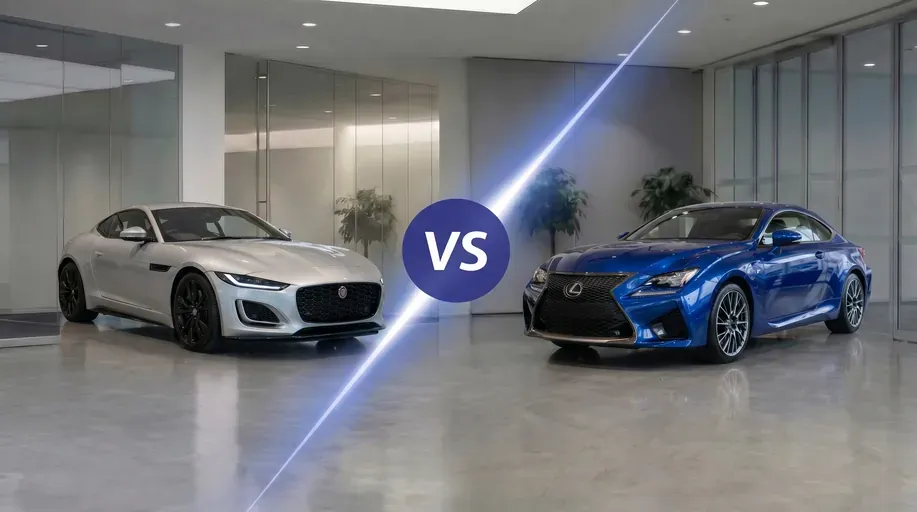
Jaguar F-Type vs. Lexus RC F: Complete comparison 2026
Jaguar F-Type vs. Lexus RC F: A detailed comparison of performance, driving characteristics, and reliability. Find out which used sports coupe is the better choice.
May 4, 2026
Articles
Car battle
Detailed comparison of Ford Focus ST vs Hyundai i30 N. Discover the real differences in driving characteristics, performance, and equipment. Which hot hatch should you choose?
May 13, 2026
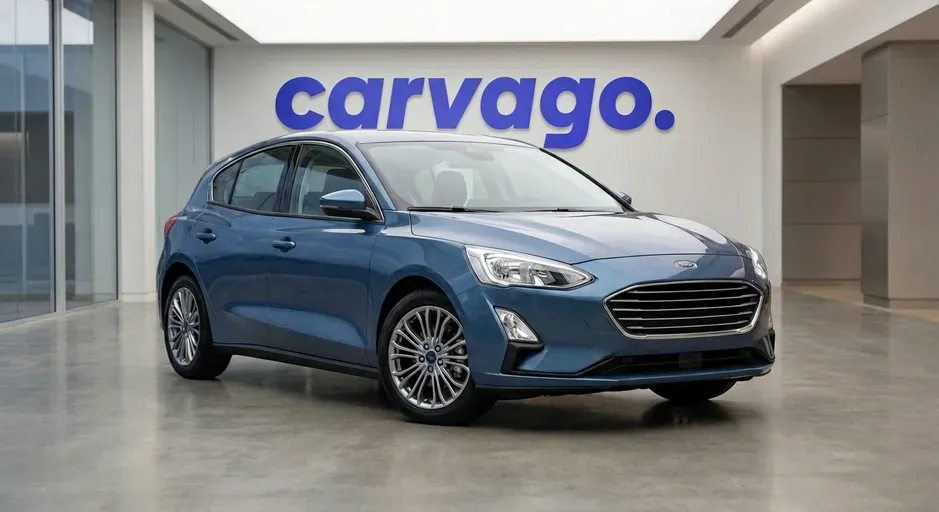
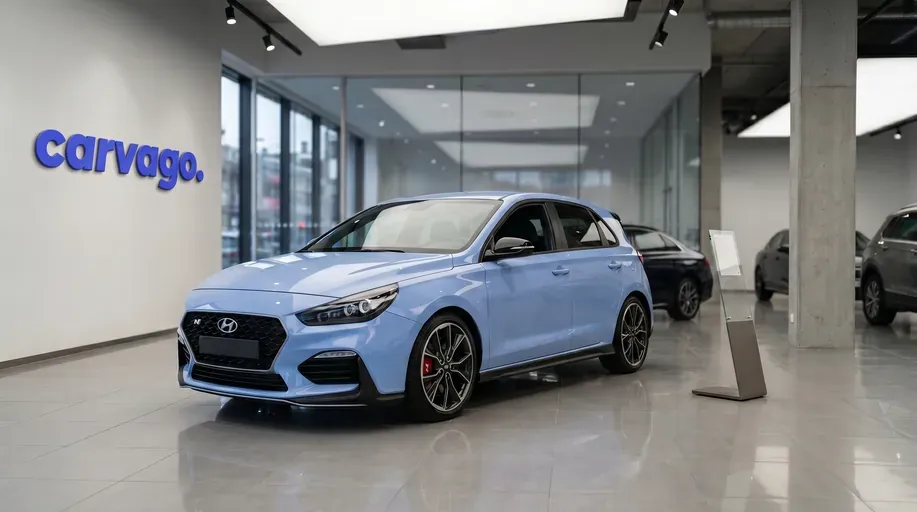
Ford Focus ST is a legendary hot hatch that has long defined the standards of its class by naturally combining everyday practicality with exhilarating performance and precise handling. Standing against it is the Hyundai i30 N, a relentless challenger that has taken the automotive world by storm in recent years, offering drivers uncompromising driving pleasure complemented by overt track-bred genes. Let's now take a detailed look at how these two exceptionally capable competitors stack up in a direct comparison to find out which one offers the best dose of adrenaline and deserves a spot in your garage.
C-segment hot hatches have grown slightly in recent years; however, when directly comparing the fourth-generation Ford Focus ST (produced since 2019) and the third-generation Hyundai i30 N (on the market since 2017), we find interesting differences. Both of these popular generations are well-represented on the used car market and represent the so-called "grown-up" hot hatch. The Ford Focus ST is a slightly larger car overall, which is reflected in almost all key exterior dimensions. While the Hyundai retains the somewhat more compact proportions of a classic sports hatchback, Ford bets on a more elongated silhouette and a generally larger exterior footprint, which may play a role when choosing the ideal all-rounder for every day.
Looking at the specific figures for the standard hatchback body, the Focus ST, with a length of 4388 to 4393 mm, is roughly 50 mm longer than the i30 N, whose length ranges around 4335–4340 mm. There is also a significant difference in width, where Ford's 1825 mm exceeds Hyundai's (1795 mm) by a non-negligible 30 mm. Combined with a longer wheelbase (2700 mm for the Ford versus 2650 mm for the Hyundai), the Focus ST can provide a more stable stance and slightly more longitudinal and lateral space for passengers. On the other hand, the i30 N can benefit from its smaller dimensions in confined spaces – offering slightly better maneuverability in tight city streets and during parallel parking.
However, a fundamental difference between the two competitors can be found in the range of body styles offered. If you require maximum carrying capacity, Ford offers the ST model in a full-fledged estate (Estate) variant with an impressive length of 4668–4675 mm, which can easily fulfill the role of a sporty family hauler. Hyundai does not produce a classic estate for its top-of-the-line N model, but it entered the market with the stylish Fastback body. With its length of 4455 mm and lowered roofline (1417–1419 mm), it represents an elegant compromise in shape, featuring a slightly longer boot than the base hatchback, but serving more as an aerodynamic and design-focused car. The choice of a suitable body style thus creates a fairly sharp contrast for buyers – families preferring space will certainly reach for the long estate from Ford, while style hunters will find appeal in the sloping rear of the i30 N Fastback.
| Parameter | Ford Focus ST Hatchback | Hyundai i30 N Hatchback | Ford Focus ST Estate | Hyundai i30 N Fastback |
|---|---|---|---|---|
| Width (mm) | 1825 | 1795 | 1825 | 1795 |
| Length (mm) | 4388 - 4393 | 4335 - 4340 | 4668 - 4675 | 4455 |
| Height (mm) | 1438 - 1440 | 1439 - 1451 | 1462 - 1466 | 1417 - 1419 |
| Wheelbase (mm) | 2700 | 2650 | 2700 | 2650 |
Luggage space is an often overlooked but actually absolutely key parameter for sports models referred to as "hot hatches". Most buyers of these vehicles on the four-year-old used car market are looking for the ideal compromise between everyday practicality and weekend fun behind the wheel. For family use, weekend trips, or just transporting larger items, trunk volume plays a vital role. Both automakers approach practicality slightly differently, which can tip the scales one way or the other when choosing the perfect sports car.
In the most common hatchback body style, both models offer very similar values, yet they hide important specifics. The third-generation Hyundai i30 N has a standard trunk volume of 395 liters, but in the highly sought-after Performance version, this capacity is slightly reduced to 381 liters (and 1287 liters with the rear seats folded) due to the installation of a stiff steel body brace immediately behind the rear seats. The fourth-generation Ford Focus ST offers up to 392 liters in its base form (or 1354 liters with the seats folded), but you will often come across a limited volume of 301 liters in many used cars. This significant loss of space is caused by the large subwoofer of the optional premium B&O audio system and a possible space-saver spare wheel hidden under the floor.
A fundamental difference in the overall concept comes when a standard hatchback trunk simply isn't enough. While Hyundai does not offer the N sports variant in an estate version at all and introduced the elegant i30 Fastback N (liftback) with a very generous 450 liters (max. 1351 liters) as a more practical alternative, Ford aims directly at parents with the full-fledged Focus ST Kombi (Estate). This takes utility to a completely different league. Its luggage compartment holds 608 to 635 liters of cargo and creates a massive cavernous space of 1653 liters when the second row is folded. In practice, this means the popular space for several extra suitcases, absolutely trouble-free loading of a stroller, and enough reserve for any longer vacation.
| Parameter | Ford Focus ST Hatchback | Hyundai i30 N Hatchback | Hyundai i30 Fastback N (Liftback) | Ford Focus ST Estate |
|---|---|---|---|---|
| Base volume (liters) | 301 – 392 | 381 – 395 | 436 – 450 | 608 – 635 |
| Max. volume with seats folded (liters) | 1280 – 1354 | 1287 – 1301 | 1337 – 1351 | 1653 |
If you are looking for maximum family practicality and need to carry a stroller or bulkier cargo without compromise, the huge Focus ST Estate is the clear choice on the used car market. Conversely, the i30 Fastback N scores as an exceptionally attractive liftback that, with its enlarged trunk, can satisfy even more demanding weekend travelers without the need to buy a traditional estate.
Although the towing capacity of sporty hatchbacks and estates is usually not the main reason for purchase, for many drivers it represents a key element of everyday practicality. Whether you plan to head out with a caravan over the weekend or just need to transport a motorcycle trailer, both cars have plenty to offer in terms of utility. When comparing used vehicles around four years old (specifically the fourth-generation Ford Focus ST and the third-generation Hyundai i30 N), it turns out that despite their performance potential, they do not forget their role as versatile family cars.
Looking at the specific values, the standard petrol Ford Focus ST (with the 2.3 EcoBoost engine) offers a maximum braked trailer weight of 1600 kg. However, if you are looking for a real workhorse and don't mind a diesel, the Focus ST also offers a 2.0 EcoBlue diesel variant, where the towing capacity increases to a very solid 1800 kg. In contrast, the Hyundai i30 N maintains completely consistent and unchanging limits across all its available versions from this period. Both the i30 N and the more powerful i30 N Performance models can tow a braked trailer weighing 1600 kg. The South Korean automaker does not offer any hybrid or diesel alternatives in its N sports division, so there are no fluctuations. For a standard unbraked trailer, the Ford Focus ST offers a limit of 750 kg, while the Hyundai is limited to 700 kg.
From a practical standpoint, the 1600 kg value is more than sufficient for a weekend purchase of bulky materials, towing a small boat, or hitching up a favorite caravan for a longer holiday. The slightly higher unbraked trailer weight of the Ford may play a marginal role during minor moves. In the final tally, both models are completely equal in their classic petrol variants and can handle even heavier work. However, Ford has a significant advantage for drivers who regularly tow larger loads and opt for the more economical diesel engine, which provides a 200 kg greater towing reserve.
| Model and motorization | Braked weight of trailer (kg) | Unbraked weight of trailer (kg) |
|---|---|---|
| Ford Focus ST 2.3 EcoBoost (206 kW) | 1600 | 750 |
| Ford Focus ST 2.0 EcoBlue (140 kW) | 1800 | 750 |
| Hyundai i30 N (184 kW) | 1600 | 700 |
| Hyundai i30 N Performance (202 - 206 kW) | 1600 | 700 |
When comparing the engines of these two hot hatches, we encounter different approaches from the manufacturers, which fundamentally influence the decisions of buyers in the used car market. While the Hyundai i30 N relies purely on petrol engines focused on maximum driving pleasure and track dynamics, the Ford Focus ST offers a more flexible range in the generation relevant for roughly four-year-old used cars. At Ford, you will find both a charismatic petrol engine and an unorthodox diesel engine intended for drivers who spend a lot of time on long motorway routes. The top petrol units of both rivals offer an identical output of 206 kW (280 hp) on paper, but they differ in their behavior. The larger displacement of the petrol Focus ST (2.3 liters) gives the car more massive torque from the lowest revs, while on the other hand, the turbocharged two-liter in the i30 N features a more aggressive delivery, a popping sound, and a phenomenal dual-clutch transmission.
The engine range for the used fourth-generation Ford Focus ST (manufactured around 2022) pleases with its wide scope and muscular technology. The main hero is the proven turbocharged 2.3 EcoBoost petrol four-cylinder, the basis of which is drawn from the legendary Focus RS of the previous generation. This engine has a great output of 206 kW (280 hp) and a massive torque of 420 Nm. It can be purchased with a traditional six-speed manual transmission or a seven-speed automatic. However, if you look at the car from a more practical angle and swallow high mileage on motorways, until the beginning of 2022, it was possible to purchase the Focus ST with a reliable 2.0 EcoBlue diesel two-liter. This produced 140 kW (190 hp) and exactly 400 Nm of torque, providing a smooth pull while maintaining excellent fuel consumption. However, as available data proves, after this date, the diesel gradually disappeared from the ST version's range, making it a rare and desirable piece for a specific clientele on today's used car market.
| Engine type | Fuel | Power (kW) | Torque (Nm) | Transmission |
|---|---|---|---|---|
| 2.3 EcoBoost | Petrol | 206 | 420 | 6MT / 7AT |
| 2.0 EcoBlue | Diesel | 140 | 400 | 6MT / AT |
The Hyundai i30 N after the facelift (available from roughly 2021) is available on the three- to four-year-old used car market exclusively with the 2.0 T-GDI petrol four-cylinder, which you can, however, choose in two tuning levels. The basic version of the car offers a respectable 184 kW (250 hp) and a torque of 353 Nm, which is sent to the front wheels strictly via a precise six-speed manual. For true enthusiasts and the clear majority of used car buyers, however, the Performance version makes sense, where the power is increased to a full 206 kW (280 hp) and the torque peaks at 392 Nm. It was with this more powerful engine that Hyundai began offering its highly praised eight-speed N DCT dual-clutch transmission with wet clutches as part of the facelift. It is packed with special modes for maximum acceleration and aggressive behavior on the track, works incredibly fast, and adds to the car's dynamics and user-friendliness in the city.
| Engine type | Fuel | Power (kW) | Torque (Nm) | Transmission |
|---|---|---|---|---|
| 2.0 T-GDI | Petrol | 184 | 353 | 6MT |
| 2.0 T-GDI Performance | Petrol | 206 | 392 | 6MT / 8DCT |
When deciding between this hot pair, it very much depends on what the primary purpose of your car will be. If your priority is long-distance travel combined with occasional driving on favorite backroads, the diesel Focus ST 2.0 EcoBlue represents a practically extinct compromise today between a very stiff sports chassis and excellent fuel consumption. In contrast, the petrol Focus ST 2.3 EcoBoost works as an excellent fast "daily" with a bear-like pull at low revs. But if you are looking for the ultimate driving experience, the scales tip towards the Hyundai i30 N. Its engine is wilder, louder, and in combination with the brilliant N DCT automatic dual-clutch transmission, it offers a significantly more explosive performance that will bring a smile to the faces of track day lovers and weekend drivers alike.
While the Ford Focus ST scores with a strong engine originating from the RS and the availability of a diesel version for high-mileage drivers, the Hyundai i30 N wins hearts with its genuine racing nature and the unrivaled N DCT transmission.
Choosing the right engine is crucial for these sport hatchbacks, not only for long-term satisfaction but also for achieving maximum driving pleasure. Therefore, our recommendations are based on performance, real-world fuel consumption, owner feedback, and mechanical reliability. Both the Ford Focus ST (4th generation) and the Hyundai i30 N (3rd generation) are among the most respected "hot hatches" on the four-year-old used car market, representing the very pinnacle of the internal combustion engine era. While the Focus ST relies on raw power and the massive torque of the 2.3 EcoBoost engine, which shares its architecture with the Mustang, Hyundai offers a purist experience with a precisely tuned 2.0 T-GDI, developed and rigorously tested directly on the legendary Nürburgring circuit. Interestingly, while Ford attempted to appeal to a wider range of buyers by offering the ST in a more economical 2.0 EcoBlue diesel variant, Hyundai remained faithful to strictly petrol-powered joy, which resonated much better with sports enthusiasts.
As is often the case in the automotive world, official paper fuel consumption figures often differ slightly from everyday reality. Especially with sportier models or, conversely, small-displacement turbocharged engines, your specific driving style plays a huge role. For the most accurate comparison, we analyzed not only laboratory tables but also user data from the independent platform Spritmonitor.de, which collects long-term real-world experience from thousands of drivers. Furthermore, our selection of engines specifically reflects the generations and versions of cars that currently appear most frequently on the market as roughly four-year-old used cars (2020 to 2022 models).
According to these real-world statistics and editorial testing, the average combined fuel consumption is as follows:
| Model and engine | Average consumption (l/100 km) |
|---|---|
| Ford Focus 1.0 EcoBoost Hybrid 92 kW | 5.4 |
| Hyundai i30 1.0 T-GDI 88 kW | 6.2 |
| Hyundai i30 1.5 T-GDI 48V 118 kW | 6.5 |
| Ford Focus 1.5 EcoBlue 88 kW | 4.6 |
| Hyundai i30 1.6 CRDi 100 kW | 5.4 |
| Ford Focus ST 2.0 EcoBlue 140 kW | 5.5 |
| Ford Focus ST 2.3 EcoBoost 206 kW | 8.1 |
| Hyundai i30 N Performance 206 kW | 8.4 |
Looking closely at the data, several interesting trends emerge. Perhaps the biggest surprise for average buyers will be the fact that basic one-liter three-cylinder engines do not bring such dramatic fuel savings as manufacturers often try to claim. In real-world driving, typically on the highway or with a full load, smaller engines have to work harder. At Hyundai, the larger and noticeably more refined 1.5 T-GDI four-cylinder with mild-hybrid technology consumes on average only three-tenths of a liter more than the weaker one-liter engine, making it a much more logical choice for used car buyers. Ford, on the other hand, managed to tune its 1.0 EcoBoost mild-hybrid version exceptionally efficiently, making it the only gasoline representative to consistently stay below the six-liter mark.
Regarding modern diesels, they still clearly dominate when it comes to covering long highway distances. Ford's 1.5 EcoBlue diesel engine manages to push the average down to an excellent 4.6 l/100 km. An unexpected trump card is the diesel version of the sporty Focus ST (2.0 EcoBlue), which, despite its pleasant dynamics, runs at a great 5.5 l/100 km. A completely different story is, of course, written by the top-tier gasoline "hot hatches." With the Focus ST 2.3 EcoBoost and the renowned Hyundai i30 N Performance, you have to expect an average of over 8 liters of fuel. Furthermore, data from Spritmonitor.de shows that as soon as you start using these cars for what they were created for – dynamic weekend drives – consumption can easily jump above the 10-liter mark.
What does this mean for the typical used car buyer? Customers commuting shorter distances and moving around the city will do best with sensible gasoline versions, while highway travelers requiring the lowest possible operating costs should reach for diesel engines, where Ford offers a slight efficiency advantage. However, fuel consumption completely fails as a deciding factor in the case of the sharpest specifications. True enthusiasts choosing between the full-fat "N" and the ST model will likely skip the range tables altogether, as both cars charge practically the same at the gas station for their speed, joy, and emotion behind the wheel.
The market for roughly four-year-old used cars (typically from 2021 and 2022) offers a great opportunity for both of these sports cars to save hundreds of thousands compared to their original purchase prices. At the same time, these are model years where buyers have access to attractive and refined top-tier versions – the facelifted Hyundai i30 N (206 kW) and the fourth-generation Ford Focus ST (Mk4) with its characterful 2.3 EcoBoost engine.
The Focus ST with 206 kW (280 hp) profiles itself as a somewhat rarer commodity on the secondary market. This is reflected not only in the smaller number of used cars on offer but also in slightly more stable and higher price tags.
The i30 N has become an absolute hit, which logically means a much richer selection on the used car market. Model years around 2021 already fall into the post-facelift era, where the Performance version boasted 206 kW (280 hp) and could be paired with the fast eight-speed N DCT dual-clutch transmission.
| Model and body style | Price of more affordable units | Price of well-maintained / premium units |
|---|---|---|
| Ford Focus ST (Hatchback/Estate) | €25,000 | €32,000 |
| Hyundai i30 N (Hatchback/Fastback) | €23,000 | €31,000 |
Both models bring immense driving fun for fair money. Overall, the Hyundai i30 N benefits from a wider range of used cars and therefore a slightly more friendly lower price limit. The Ford Focus ST wins over buyers with a certain exclusivity and the very valuable fact that it can also be purchased as a family estate.
Although both cars can boast earning the maximum five-star rating in independent Euro NCAP tests, these results must always be viewed in the context of the time when the specific testing took place. The methodology and testing protocols of this organization are constantly evolving and becoming stricter every year. Percentage scores obtained in different years cannot be directly compared. Newer methodologies place significantly greater emphasis not only on the passive resistance of the body itself, but especially on advanced active safety systems, the presence of complex sensors, cyclist detection, or the car's ability to autonomously react to crisis situations at intersections.
Ford Focus STThe current fourth generation of the Ford Focus model (whose data also covers the top-tier ST version) underwent Euro NCAP crash tests in 2019 and took home a full five-star rating. This test was already conducted according to significantly more demanding criteria that took into account modern active safety standards and new crash scenarios. The result of 96% for adult passenger protection is among the absolute best in its class. The car demonstrated a high level of confidence in the area of safety assistants as well, where it earned an excellent 75%. Ford thus clearly confirmed a very strong deformation structure and the deployment of sophisticated technologies for collision prevention.
Hyundai i30 NThe base third generation of the Hyundai i30 model, on which the popular N sports variant is based, was tested by Euro NCAP in 2017. This car also achieved the maximum five-star rating at the time; however, it did so under older and milder testing protocols. It is also important to note that due to the more than six-year gap, this certification recently officially expired. Although the Hyundai i30 N has a highly rigid base and a good level of passive safety (rated 88% for adult passengers), modern active assistance features were not nearly as strictly assessed at the time of its introduction.
| Parameter | Ford Focus ST | Hyundai i30 N |
|---|---|---|
| Year of testing | 2019 | 2017 |
| Adult protection | 96 % | 88 % |
| Child protection | 87 % | 84 % |
| Vulnerable road user protection | 72 % | 64 % |
| Safety assistance systems | 75 % | 68 % |
When comparing these data in a broader context, a relatively clear result emerges. Although the Hyundai i30 N is a robust car in terms of traditional passive safety that reliably protects its crew in an accident, the Ford Focus ST comes out on top in this duel. It benefits from an architecture subjected to newer and much stricter standards from 2019. It thus provides a more modern and comprehensive package of systems that can more effectively prevent crisis situations in real traffic.
While both models provide solid passive protection for the crew, the Ford Focus ST, thanks to its rating under the stricter 2019 methodology, offers more advanced assistance systems and a more comprehensive level of active safety.
In addition to standard equipment, each of the models offers several unique features and technological solutions that can be decisive for the customer during the final selection, whether they are looking for absolute driver connection or everyday versatility.
With the Focus ST, Ford has deployed the best technologies from its purist models (such as the Focus RS or Mustang) and adapted them for fast yet comfortable daily use.
The South Korean model, under the direction of the N division (Namyang/Nürburgring), has bet on a rawer character and a huge degree of individualization, allowing the driver to set up the car exactly to their liking.
Great chassis and very communicative steering with a quick ratio
The 2.3 EcoBoost engine offers strong pull and high torque from low revs
Better everyday usability thanks to a more compliant adaptive chassis (in normal mode)
Availability in a more practical estate body style with a huge boot
Overall more spacious interior with plenty of room in the rear seats
Less distinctive and more artificial exhaust sound compared to the i30 N
Higher purchase price on the used car market
More dated dashboard architecture and occasionally slower SYNC 3 infotainment
Absence of a classic mechanical handbrake (features an electronic one only)
The Ford Focus ST is an ideal choice for drivers looking for a fast and fun car that can be used every day without any issues. Thanks to the brilliantly tuned adaptive chassis and the option of an estate body style, it offers an excellent compromise between sporty performance and family practicality.
Uncompromising driving experience and a huge fun factor behind the wheel
Fantastic exhaust sound with characteristic pops and bangs (especially in the Performance version)
Great electronically controlled limited-slip differential (e-LSD) ensuring phenomenal grip
Rich standard equipment and a very favorable price-to-performance ratio
Five-year factory warranty with unlimited mileage (often still valid even on 4-year-old used cars)
Very stiff chassis, which can be almost unpleasant on rough roads
Luggage compartment is partially limited by a rear stiffness bar
A slightly higher seating position, which may not suit every sporty driver
More average quality of some interior plastics compared to European competitors
The Hyundai i30 N will primarily appeal to enthusiastic drivers who prioritize pure emotion, mechanical feedback, and track capabilities over maximum driving comfort. It is a purist hot hatch that offers an unrivaled fun-to-price ratio, although it requires certain compromises for daily commuting.
Based on long-term user feedback, service reports, and statistics from our own inspections, such as the detailed Comprehensive Car Audit, we have compiled an overview of the most common problems that buyers of these hot hatches should watch out for.
The fourth generation Ford Focus ST (models from approximately 2019) with the 2.3 EcoBoost engine is mechanically a very solid car, yet it exhibits several typical and recurring ailments.
The fourth-generation Ford Focus ST is a very well-engineered driver's car, where most problems consist of a temperamental infotainment system and minor interior rattles rather than fatal engine failure. When buying, pay attention primarily to the condition of the adaptive dampers and the maintenance history.
The Hyundai i30 N (primarily PD generation cars from 2018–2022) has built a reputation as a very durable "backroad brawler," but given its frequent use at the limit, it suffers from its own specific faults.
The Hyundai i30 N is mechanically very robust, but due to its sporty nature, it often suffers from faster clutch wear and paint prone to chipping. While the occurrence of problems with the fuel pump (HPFP) or exhaust valve is frequent, in the context of high-performance sports cars, they are relatively easy to resolve.
When buying a used car, a thorough inspection is key, especially in the hot hatch category, where vehicles may have been subjected to harsh treatment or frequent track days. Here are several specific points to focus on for these two models, for which a professional Physical inspection of a used car is always worth it before purchase.
Hyundai i30 N is famous for its very aggressive and loud sound, which significantly pops and bangs in sport mode. The Ford Focus ST, on the other hand, has a slightly deeper and more refined tone that doesn't get as tiring on long journeys. If you are looking for a maximum and undiluted acoustic experience, the South Korean model will please you more.
The adaptive suspension in the Focus ST offers much better bump filtration in comfort mode, making it a more ideal car for broken roads. The i30 N remains quite stiff and uncompromising even in its softest setting. For daily driving and longer trips, the American-European competitor is therefore a significantly more pleasant choice.
Both cars use an electronically controlled limited-slip differential (eLSD), which ensures huge grip when accelerating out of corners. The Focus benefits from extremely sharp and fast steering, thanks to which it changes direction willingly and feels lighter. The South Korean hatchback, on the other hand, is more mechanical, more predictable at the limit, and gives the driver more pure confidence on the track.
The basic hatchbacks have a very similar trunk volume of around 380 liters, but the Ford offers slightly more legroom for rear passengers. A huge advantage of the Ford is also the possibility to get it in a practical estate version with a luggage compartment of 608 liters. Hyundai counters with a more stylish and elegant Fastback version, but it does not offer a classic family estate in the high-performance N version.
Due to the high power of around 280 hp, an average combined consumption between 8.5 and 9.5 liters per 100 kilometers must be expected for both models. The car with the blue oval badge and the larger 2.3 EcoBoost engine tends to be about half a liter thirstier in normal city traffic than the 2.0 T-GDi from Hyundai. During spirited track driving, however, the consumption of both candidates commonly exceeds the 15-liter mark.
The duel between these two exceptional hot hatches on the used car market has no clear loser, as each appeals to a slightly different group of drivers. Ford Focus ST represents the ideal choice for those looking for a mature, excellently handling, and more comfortable daily driver, whose huge advantage is also its availability in an exceptionally practical estate body style. In contrast, the Hyundai i30 N embodies an uncompromising back-road brawler with a fantastic sound, which will thrill genuine car enthusiasts with its raw emotions, stiff chassis, and track talent. So, if you prefer family versatility and touring comfort, go for the Focus ST, while for pure weekend adrenaline and the biggest smile behind the wheel, the wilder South Korean "N" will be a significantly better companion.
Sources: ADAC, forbes.cz, idnes.cz, techfocus.cz, autoweb.cz, autoemotion.cz
This article was prepared using artificial intelligence tools. The section guarantor is Petr Dušek.
Jaguar F-Type vs. Lexus RC F: A detailed comparison of performance, driving characteristics, and reliability. Find out which used sports coupe is the better choice.
May 4, 2026
Mercedes-AMG A 45 (A45 AMG) vs Volkswagen Golf R (VW Golf R). Detailed comparison of performance, driving characteristics, and real-world costs. Which hot hatch to choose?
Apr 19, 2026
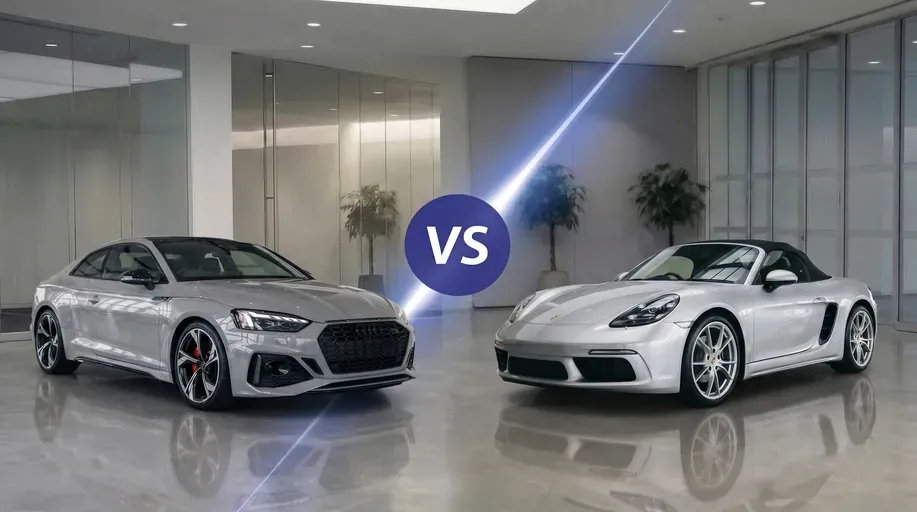
The ultimate comparison: Audi RS 5 (RS5) vs Porsche 718 Boxster. Discover real-world experiences, performance differences, and a clear verdict that will make choosing your used car easier.
May 2, 2026