Articles

Car battle

Jaguar F-Type vs. Lexus RC F: Complete comparison 2026

Jaguar F-Type vs. Lexus RC F: A detailed comparison of performance, driving characteristics, and reliability. Find out which used sports coupe is the better choice.

May 4, 2026

VS
Jaguar F-Type

Jaguar F-Type

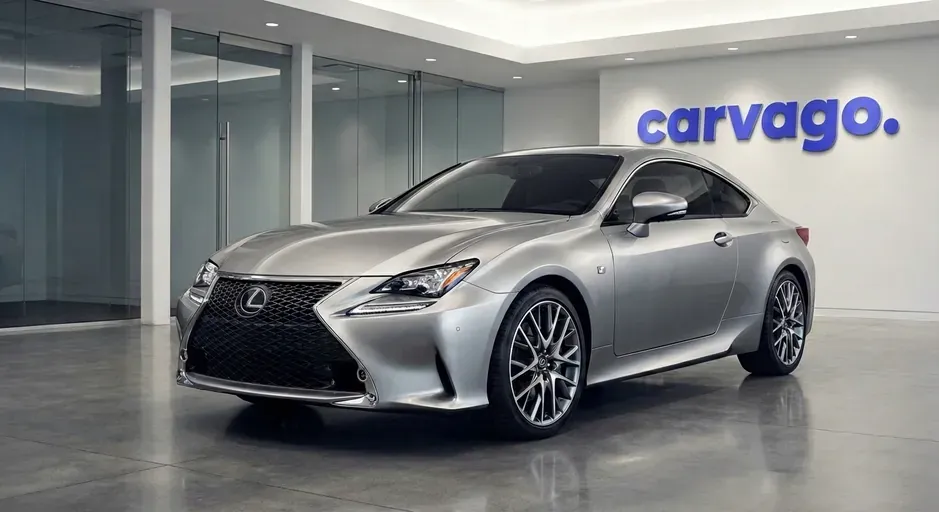
Lexus RC F

Lexus RC F

Introduction

The Jaguar F-Type, also known by its internal designation X152, represents the British take on a purebred sports car, combining dramatic design with an exceptionally emotional driving experience. Its challenger is the Lexus RC F (often styled as RC-F or known within its model family as the Radical Coupe F), an uncompromising Japanese coupe combining premium luxury with a traditional naturally aspirated V8 under the hood. Let's take a detailed look at how these two distinctive representatives of sports cars stand in a direct comparison and which of them is the better choice for enthusiastic drivers on today's market for nearly-new used cars.

Comparison of External Dimensions

When looking at the exterior dimensions of both sports cars, representing models manufactured around 2020 to 2022, the difference in their overall concept is immediately apparent. The Lexus RC F is, with a length of 4,710 mm (4,705 mm for older model years), a significant 240 mm longer than its British rival, the Jaguar F-Type, which measures a compact 4,470 mm in length. Added to this is the substantially longer wheelbase of the Lexus, at 2,730 mm compared to 2,622 mm for the Jaguar. In practice, this means for the driver that the Lexus offers better directional stability at high speeds on the motorway and provides a more practical 2+2 seating configuration inside. The more compact Jaguar, by contrast, is strictly a two-seater. Choosing the longer Lexus therefore makes sense for those looking for a more usable everyday grand tourer, while the shorter Jaguar will please drivers who prefer maximum agility on winding backroads, albeit at the cost of noticeably less interior space.

The Jaguar F-Type clearly dominates here with a width of 1,923 mm, making it 78 mm wider than the Lexus RC F (1,845 mm). This extra width gives the British beast not only an incredibly aggressive and low-slung stance but also means a wider track, which contributes to excellent grip and stability in fast corners. On the other hand, such a wide body can be a disadvantage for the F-Type when parking in narrow garages or maneuvering in historic city centers. If a confident look and maximum mechanical grip are your priorities, the wider Jaguar clearly has the upper hand. For more relaxed everyday weaving through the city, however, the narrower body of the Lexus will be a significantly friendlier choice.

The height profile of both models only further underlines their different characters. The Jaguar F-Type Coupé hunkers down just 1,311 mm above the road (or only 1,307 mm for the Jaguar F-Type Cabriolet model), while the Lexus RC F is just under 8 centimeters taller at 1,390 mm. The Jaguar's noticeably lower build ensures a center of gravity closer to the asphalt, which enhances the feeling of connection with the road and helps suppress body roll. Conversely, the Lexus's taller silhouette brings slightly easier entry and more generous headroom for passengers, which the occupants will appreciate especially on longer journeys. The decision in this regard thus depends on your preferences – sports purists will gladly sacrifice ease of entry for the uncompromising driving characteristics of the low Jaguar, while proponents of higher travel comfort will prefer the slightly more accessible cabin of the Japanese coupé.

ParameterJaguar F-Type CoupéLexus RC F CoupéJaguar F-Type Cabriolet
Width (mm)192318451923
Length (mm)44704705 - 47104470
Height (mm)131113901307
Wheelbase (mm)262227302622

Trunk Volume

Trunk capacity is usually not one of the main reasons for buying a sports car, but it plays a crucial role in their everyday usability. Whether you're planning a weekend getaway for two or need to comfortably carry a regular grocery shop, a sufficiently large and practically shaped trunk can make living with the car much more pleasant. In this regard, the Jaguar F-Type and Lexus RC F differ significantly, with not only the overall brand philosophy coming into play, but primarily the available body style.

The British Jaguar F-Type can be purchased on the market for approximately four-year-old used cars both in the Coupé version and as the attractive Jaguar F-Type Convertible with a soft top. The choice of body style radically dictates how much luggage you can carry. In updated cars (from model year 2020), the Coupé version offers a base capacity of 336 liters (older pre-facelift models even had 408 liters), which is a solid space sufficient for a weekend shop or a shorter holiday. The open-top Convertible version, however, pays a heavy price for the roof folding mechanism – its trunk in newer models holds only a modest 132 liters. This is barely enough space for two small soft bags, and packing thus requires significant compromises.

In contrast, the Lexus RC F is offered exclusively as a classic two-door coupé and fully benefits from the traditional "GT" concept. The standard volume of its trunk has remained a stable 366 liters throughout its production across all model years, making it the clear winner in this comparison in terms of touring practicality. It provides space for several extra suitcases and, thanks to the better usability of the trunk shape, can even accommodate a golf bag if necessary. So if you're looking for an uncompromising sports car where you won't have to worry about every extra jacket, the Japanese V8 offers much greater user comfort.

Below you will find a comparison of trunk capacity for the respective body styles for cars approximately four years old (current for generations sold after 2020). Since these are two-seater sports cars (F-Type) and coupés with a fixed rear bulkhead (RC F), values with the seats folded down are not listed.

ParameterJaguar F-Type CoupéLexus RC F CoupéJaguar F-Type Convertible
Base capacity (liters)336 l366 l132 l
Max. capacity with seats folded (liters)---

Practical GT or a compromise on style? 🧳

The Lexus RC F pleases with a stable and decent capacity of 366 liters, allowing you to head off on a longer holiday without any problems. With the Jaguar F-Type, you can pack quite comfortably into the coupé version, but with the attractive convertible, you must expect very strict limitations on your travel luggage.

Discover the true condition of the car thanks to an independent inspection

Order CarAudit™

Trailer Weights

When evaluating the overall practicality of vehicles, the permitted trailer weight often plays a crucial role, but for purist sports models such as the Jaguar F-Type and Lexus RC F, it is necessary to have completely different expectations. While in common passenger cars a tow bar easily provides space for a few extra suitcases and offers capacity sufficient for weekend shopping or a longer holiday with a caravan, the situation is diametrically different for these driving icons. As a look at the used car market with vehicles roughly four years old shows (Jaguar F-Type generation X152 and Lexus RC F generation XC1), both cars do not differ at all in this parameter and consistently offer buyers no towing option.

The official standard and maximum weight of both braked and unbraked trailers for both cars is exactly 0 kg. Manufacturers simply did not homologate these purely performance-oriented models for the installation of a tow bar at all.

This absolute rule applies across the entire range of both manufacturers without any deviations:

  • For the Jaguar F-Type, a tow bar is not considered for the base two-liter four-cylinder, nor for the top-of-the-line five-liter supercharged V8 in the R version.
  • In the case of the Lexus RC F, naturally none of the variants with the revered naturally aspirated V8 engine offer any towing capacity.
  • Naturally, we will not find any specific hybrid versions with reduced capacity in the portfolio of either model, as towing capacity is completely absent across all modifications and engine options.

Practical consequences in the real world

In practice, this technical limitation brings clear limits. Not only can no trailer be attached behind these sports models, but it is also impossible to install the popular tow-bar-mounted bike racks that many drivers are accustomed to. For weekend trips, you must therefore rely fully on the basic luggage compartment volume, which is considerably limited in both cars.

What does this mean for your choice?

The conclusion for those interested in these beautiful used sports cars is quite clear. If you are considering a Jaguar F-Type or a Lexus RC F, you are buying an uncompromising car primarily for the joy of dynamic driving and exceptional design, not for moving bulky cargo. If a tow bar is an absolute necessity for you, neither of these coupes (or the British convertibles) will satisfy your needs, and you will have to look instead in the category of high-performance SUVs.

(Given that no values for permitted trailer weight are available in the official database for either of the compared models, a classic comparison table with engine parameters is not attached to this section.)

Overview of Most Common Motorizations

When it comes to comparing powertrains, the Jaguar F-Type and Lexus RC F represent two completely different worlds. While the British aristocrat relies on a wide range of engines, gradually replacing aging six-cylinders with modernized supercharged V8s, the Japanese samurai sticks stubbornly to a traditional approach. The Lexus RC F is one of the last of its kind, hiding a large naturally aspirated 5.0-litre V8 under its hood without any forced induction or hybrid assistance. In contrast, for roughly four-year-old used cars (since the 2020 facelift), the Jaguar F-Type offers a significantly broader choice. The range starts with the P300 turbocharged 2.0-litre four-cylinder (221 kW) and ends with the monstrous 5.0-litre supercharged V8 in the R version with 423 kW. For used car buyers, this presents a clear dilemma: Jaguar offers more customization options, including a more economical base or the security of all-wheel drive (AWD), while the Lexus RC F will primarily appeal to driving purists looking for instant response, linear power delivery, and an unmistakable sound sent exclusively to the rear axle.

Jaguar F-Type

Under the hood of the Jaguar F-Type, several interesting engines have taken turns over the years, but if we focus on models from around 2020 and newer, the range has settled on three main variants. All are paired as standard with the fast-shifting eight-speed Quickshift automatic transmission. The base is the P300 2.0-litre turbocharged four-cylinder, which, with 221 kW (300 hp), is surprisingly nimble and, thanks to a noticeably lighter front end, ensures agile handling in corners. The previously popular 3.0-litre supercharged V6s (P340 and P380 versions) were gradually phased out around 2019/2020. In the role of the middle ground on the nearly-new used car market, they were replaced by a detuned P450 5.0-litre V8 with 331 kW (450 hp), which can be had with either rear-wheel or all-wheel drive. The absolute pinnacle is the F-Type R version (or the limited R75), where the same supercharged V8 produces a breathtaking 423 kW (575 hp) and sends it to all four wheels as standard.

The table below primarily lists the engines available in newer models. Production of the six-cylinder versions ended for four-year-old used cars just before or concurrently with the introduction of the facelift.

Engine typeFuel typePower (kW)Torque (Nm)Transmission
2.0 P300 (Turbo)Petrol2214008AT
3.0 V6 Supercharged (P340)*Petrol2504508AT
3.0 V6 Supercharged (P380)*Petrol2804608AT
5.0 V8 Supercharged (P450)Petrol3315808AT
5.0 V8 Supercharged (R / P575)Petrol4237008AT

(Note: The P340 and P380 six-cylinder engines were mostly available only until 2019/2020; in newer model years, their place was taken by the P450 V8).

Lexus RC F

While European competitors were mass-downsizing and adding turbochargers, Lexus decided to go boldly against the grain with the Lexus RC F. As a result, this car features only a single, yet completely unique and characterful engine: a giant naturally aspirated 5.0-litre V8. The engine is mated to a smooth but precisely shifting eight-speed automatic transmission, and power goes exclusively to the rear wheels. In the European specification, which was toned down after 2018 due to stricter WLTP emission standards, the engine offers 341 kW (464 hp) and 520 Nm of torque (historically, the very first Lexus RC F units had 348 kW). The absence of a turbocharger means that for maximum dynamics and pull, you have to rev the engine high towards the redline, but the reward is a fantastic resonating sound and an instant, linear throttle response that modern turbocharged units often cannot offer.

Engine typeFuel typePower (kW)Torque (Nm)Transmission
5.0 V8 (Naturally Aspirated)Petrol3415208AT

Final Evaluation:
From the perspective of powertrain choice, the Jaguar F-Type is significantly more accessible and flexible. The P300 variant will satisfy buyers looking for a beautiful car for daily commuting with reasonable fuel consumption. For drivers craving brutal dynamics and year-round usability thanks to all-wheel drive, the F-Type R or P450 model is a revelation. The Lexus RC F, on the other hand, clearly targets a narrow group of enthusiasts. Its naturally aspirated V8 might not win acceleration races in a straight line against modern turbocharged competition, and the car's higher weight masks some of its performance, but for collectors and traditionalists who appreciate exemplary Japanese reliability and pure mechanical character, the Lexus RC F represents an absolute gem.

A Celebration of V8s 🚀

Whether you reach for the crushing supercharged pull of the Jaguar or the captivating naturally aspirated concert of the Lexus, in both cases, you are getting some of the last honest driving experiences on the current used car market.

Choosing the right engine is crucial for long-term satisfaction, with our recommendations based on real-world experience, fuel consumption, user-friendliness, and mechanical reliability. The approach of both manufacturers to the powertrain is a fascinating clash of two different worlds. While the Jaguar F-Type offers a diverse range on the used car market, from a turbocharged four-cylinder to a supercharged V8, Lexus puristically and strictly sticks to a single naturally aspirated large-displacement unit. Interestingly, at a time when most European competitors were switching to smaller turbo engines for four-year-old used cars (models around 2021), both of these coupes and convertibles retained characterful old-school engines. You can thus choose between the mechanical whine of the British supercharger and the linear roar of the Japanese "naturally aspirated" engine.

For the Jaguar F-Type, we recommend: P450 (5.0 V8 Supercharged, 331 kW / 450 hp)

The P450 engine, which appeared in the lineup after the 2020 facelift, represents the absolute golden middle ground on the four-year-old used car market. It combines the unmistakable, wild sound of the five-liter V8 with more reasonable operating costs and better everyday usability than the top-tier and often very stiff R version (575 hp), while confidently overshadowing the base P300 four-cylinder in terms of dynamics and character. From a technical standpoint, it benefits from a supercharger that delivers a massive 580 Nm of torque from low revs with immediate response and no turbo lag. The mechanics of the AJ-V8 engine are very robust after years of tuning, but it has its known pitfalls. The cooling system is a critical point – when choosing a used car, focus on dried coolant traces at the front of the engine (around the water pump) and under the supercharger itself, where plastic connecting pipes tend to crack. You can eliminate the risk of premature timing chain wear by verifying in the vehicle's service history (or implementing after purchase) a shortened oil change interval of a maximum of 10 to 15 thousand kilometers. This unit is absolutely ideal for drivers looking for a purebred Grand Tourer for fast weekend trips, who appreciate massive low-end pull and a theatrical soundtrack, but do not plan to push the car on a race track.

For the Lexus RC F, we recommend: 5.0 V8 (341 kW / 464 hp)

For the Lexus RC F, the choice is exceptionally easy, as the manufacturer offers only a single engine (internally designated as 2UR-GSE), but it is a technological gem. In models available from roughly 2021, it offers 341 kW (464 hp) due to the WLTP emission standard and embodies one of the last reliable, high-revving naturally aspirated V8s on the market. Power builds linearly and peaks at an ecstatic 7,300 rpm, which will be appreciated by old-school enthusiasts who like to "work" for power with the throttle. In terms of reliability, it is an absolute extreme in a good way. D-4S technology, combining direct and port (into the intake manifold) fuel injection, effectively washes the intake valves and prevents carbon buildup – a dreaded bogeyman for many European used cars. The engine itself is practically bulletproof, so the greatest risk with a used unit is hidden damage from track use. Given the car's higher weight (over 1.8 tons), pay attention to the condition of expensive brake components during inspection (tangible grooves or "lips" on the discs, or squealing) and have the front axle play checked on a lift. This car is ideal for automotive purists, calmer collectors, and long-distance drivers looking for uncompromising mechanical reliability and who prefer a soothing and smooth power delivery over raw agility.

Real Fuel Consumption

In high-performance sports cars, there is traditionally a vast difference between officially stated values and reality on the road. While manufacturers' laboratory tests can push paper fuel consumption surprisingly low, the true appetite of large-displacement engines only fully reveals itself in everyday use. To determine the real-world consumption of roughly four-year-old vehicles (from 2020–2022, which are most relevant for the used car market), we used data from the community portal Spritmonitor.de, where owners themselves record their refueling over the long term.

Model and engineAverage consumption (l/100 km)
Jaguar F-Type 2.0 P300 221 kW9,6
Jaguar F-Type 5.0 V8 R 423 kW10,7
Jaguar F-Type 5.0 V8 P450 331 kW10,8
Lexus RC F 5.0 V8 341 kW13,5

When interpreting this real-world data, several interesting trends surface:

  • The pitfalls of downsizing: The small turbocharged two-liter P300 in the Jaguar may appear on paper as the clearly most economical choice. In practice, however, the small engine has to struggle with a relatively heavy car, which means it does not save fuel as effectively as one might expect.
  • Surprising efficiency of the supercharged V8: The supercharged five-liter V8s in the Jaguar (P450 and R versions) possess an enormous power reserve. During steady driving, they operate with unexpected ease, and consumption does not rise as dramatically compared to the base four-cylinder.
  • The naturally aspirated tax on the Lexus: The traditional naturally aspirated five-liter in the Lexus RC F pays its price for lightning-fast throttle response and a classic non-turbocharged design. An average exceeding 13 liters makes it the thirstiest car compared to its British competition.
  • Absence of diesel: If you were looking for economical diesel engines for long distances in this class, you would come up empty. Both manufacturers naturally bet exclusively on gasoline units, which furthermore require high-quality high-octane fuel to reach their full potential.

For the typical user, this brings a clear recommendation. Neither of these vehicles can be rationally cast in the role of an economical car for daily commuting or crawling through congested cities. In such conditions, average consumption can easily climb over 15 to 18 liters per hundred kilometers. However, if you plan to use the car for weekend joys on open country roads or as a fast "grand tourer" for longer highway journeys, the differences in consumption between the four-cylinder and eight-cylinder concepts largely blur in terms of total operating costs.

In conclusion, it can be summarized with certainty that fuel consumption should not play a key role when deciding between the Jaguar F-Type and the Lexus RC F. You buy both cars primarily for the highly emotional experience, charismatic design, and the thrilling mechanical orchestra they produce. The bill at the gas station is thus, for both rivals, merely an understandable and necessary tax for first-class driving emotions.

Price Range and Used Car Offerings

When looking at the used car market for models approximately four years old (predominantly 2021–2023 model years), the availability and pricing of both cars differ significantly. This is due not only to different engine strategies but also to the overall market perception of both brands and their level of exclusivity. Following its last major facelift, the Jaguar F-Type offers a diverse range of versions, while the Lexus RC F relies exclusively on a single traditional naturally aspirated V8.

Jaguar F-Type (2021–2023)

Thanks to a wider range of engines and greater popularity in Europe, the Jaguar F-Type is much more accessible on the used market, and the selection is disproportionately larger. Naturally, the engine hidden under the long hood has a fundamental influence on the purchase price:

  • Four-cylinder versions (P300): The most affordable entry point into the F-Type family is the four-cylinder models. Prices for roughly four-year-old vehicles start at around €45,000. These variants show the steepest drop in value, making them a visually very attractive but affordable used car.
  • V8 models (P450): The version with the detuned supercharged V8 offers an excellent price-to-performance ratio. Used models in good condition can most often be found in the price range of €62,000 to €74,000.
  • Top-tier version (F-Type R / P575): The most powerful "R" models with their aggressive sound and all-wheel drive hold their value better. These well-maintained top models usually approach the €82,000 to €94,000 mark.

Lexus RC F (2021–2023)

The Lexus RC F from the post-facelift period (2020+) is a great rarity on the European used car market. The fact that it is one of the absolute last coupes with a purely naturally aspirated V8 engine without any electrification makes it a huge draw for automotive purists. This has a fundamental impact on slowing down its depreciation:

  • Standard RC F models: Regular 4-year-old models with the five-liter V8 appear only rarely in European listings. If you do come across them, their price typically ranges between €66,000 and €78,000.
  • Special editions (e.g., Track Edition): Lightweight and more track-focused variants with carbon fiber body elements, a fixed wing, and carbon-ceramic brakes command immense respect on the market. Nearly new or very well-maintained Track Edition units steadfastly hold their price and often exceed the €92,000 mark.
Model (2021–2023 years)Estimated price (base engines)Estimated price (standard V8)Special and top-tier versions
Jaguar F-Typefrom €45,000 (P300 four-cylinder)€62,000 – €74,000 (P450)€82,000 – €94,000 (R version)
Lexus RC FN/A (only offered with V8)€66,000 – €78,000€92,000 and more (Track Edition)

Depreciation and Investment Potential
In terms of value retention (depreciation), the forces are clearly distributed. The Jaguar F-Type loses its value significantly faster, which is great news for used car buyers – you get a car with stunning design and high performance for a fraction of the original price. The Lexus RC F, on the other hand, benefits from its legendary mechanical reliability and the "dying breed" configuration of a naturally aspirated V8. As a result, its depreciation curve is much flatter, and in the long run, it represents a very stable investment that could transition into sought-after collector car status over time.

Reason vs. Emotion in the Wallet 💰

While the faster-falling price of the Jaguar makes it an irresistible choice for an immediate purchase, the rarer Lexus offers much better residual value stability for the future.

Safety and Euro NCAP Rating

Although related models sharing the same platforms have achieved five-star Euro NCAP ratings for both manufacturers, in the case of niche sports coupes, it is always crucial to emphasize the context. Independent testing protocols are constantly evolving and becoming stricter. While tests in the last decade were more lenient, today's tests standardly include complex simulations of small overlap frontal crashes, advanced cyclist detection, or handling crisis scenarios at intersections. This is also why percentage scores from different years cannot be objectively compared, and safety in older architectures must be viewed through a different lens.

Jaguar F-Type was never officially tested by the Euro NCAP organization during its long production run, which is quite common for such low-volume models. The car's basic technology dates back to 2013, and although approximately four-year-old models on the used market benefit from an extensive 2020 facelift, from a safety perspective, it represents an older school of engineering. While the car is equipped with an active hood to minimize pedestrian injuries, emergency brake assist, a lane-keeping system, and six airbags, it lacks the most modern proactive systems. Due to the complete absence of crash test data, no percentage results are available for this model.

An identical situation exists for the Lexus RC F. This charismatic coupe with a naturally aspirated V8 has not undergone official crash tests, as its robust, track-tuned platform dates back to 2014 (while its relative at the time, the Lexus IS sedan, earned a full five stars). However, Lexus compensates for the disadvantage of an older base to some extent by standardly integrating the comprehensive Lexus Safety System+ package. This offers adaptive cruise control, a pre-collision system with pedestrian detection, blind spot monitoring, and lane departure warning. Just like its British rival, we cannot fill in specific numerical values for the Lexus RC F either.

In an overall comparison, both cars offer a very solid level of passive safety thanks to their sturdy and rigid bodies, but in the area of the latest active assistants, they no longer meet today's standards. Thanks to the more comprehensive Safety System+ package, the Lexus RC F provides a slightly more sophisticated safety net in everyday traffic, while the Jaguar F-Type relies only on the most essential elementary assistants. For buyers on the used market, it is important to know that both cars prioritize the driving experience over modern semi-autonomous standards.

ParameterJaguar F-TypeLexus RC F
Year of testingNot testedNot tested
Adult occupant protectionNo dataNo data
Child occupant protectionNo dataNo data
Vulnerable road user protectionNo dataNo data
Safety assist systemsNo dataNo data

Old-school passive security 🛡️

Although neither car has an official Euro NCAP certificate and both rely on older platforms, the Lexus RC F offers a significantly more modern level of preventive safety thanks to its rich standard package of active assistants.

Comparison of Interesting Equipment Features

In addition to the standard equipment, each of the models offers several unique elements and a specific approach to enhancing the driving experience and improving the daily use of the car.

Jaguar F-Type: British Elegance and a Roaring Orchestra

  • Infotainment and Dashboard: In cars following the significant facelift (model years 2020 and up), you will find a 12.3-inch fully graphical interactive driver display. This replaced traditional analog gauges and allows for detailed screen customization, including displaying a 3D navigation map across the entire display.
  • Smart Design and Aerodynamics: An iconic feature of this British coupe and convertible are the elegant flush door handles that automatically extend when unlocked. Another functional detail is the active rear spoiler, which deploys on its own when a certain speed is exceeded to ensure maximum rear axle downforce, and discreetly blends back into the trunk line after slowing down.
  • Exhaust System and Smart Solutions: Sound performance is absolutely key for the Jaguar F-Type. Vehicles equipped with a V8 offer a special "Quiet Start" function. Thanks to electronically controlled valves in the exhaust, the car allows for a quieter start so that morning departures do not disturb the neighbors. However, as soon as you switch to dynamic mode, the valves open and the car fully reveals its predatory character.
  • Premium Audio: For music lovers, the British manufacturer installed a Meridian audio system in higher trim levels, whose acoustics are modeled precisely for the specific space of the compact two-seater cabin.

Lexus RC F: A Naturally Aspirated Gem and Japanese Precision

  • Unique Power Unit: A fundamental differentiator and a masterpiece from Lexus is the naturally aspirated five-liter V8 engine. In an era of widespread turbocharging, this is an exceptional piece of engineering that scores points with immediate throttle response and an absolutely unmistakable, purely mechanical sound that builds as the RPMs rise.
  • Advanced Chassis and Torque Vectoring: Selected RC F models are equipped with a TVD (Torque Vectoring Differential) active rear differential system. This gives the driver a choice of three modes (Standard, Slalom, Track) and electronically distributes torque between the rear wheels. This system helps the relatively heavy car rotate into corners with surprising agility and lightness.
  • Audio That Sets Standards: As is customary with top-tier Lexus models, the interior can be equipped with a high-end Mark Levinson audio system. Specifically, the 17-speaker version in the Lexus RC F is among the absolute best in automotive audio systems, offering crystal-clear sound regardless of volume.
  • Track Edition Packages: For those interested in uncompromising sporty driving, models from around 2020 and newer offer special Track Edition versions. These variants differ visually and technically through the extensive use of carbon fiber (carbon hood, roof, and fixed rear wing instead of the standard active one) and Brembo carbon-ceramic brakes. All of this significantly reduces the car's weight and pushes its track limits much further.

Key Advantages and Disadvantages

Jaguar F-Type

Pros

Stunning and timeless exterior design that catches the eye

Fantastic exhaust sound, especially with the V8 engines

Choice between a classic coupe body and an attractive convertible

Great dynamics and agile handling thanks to the aluminum construction

Availability of all-wheel drive for better traction and year-round usability

Cons

Very cramped interior and minimal luggage space

More outdated multimedia system compared to modern German and Japanese competitors

Steeper depreciation on the used car market and potentially more expensive servicing

The Jaguar F-Type is the embodiment of an emotional British sports car that you buy primarily with your heart for its character and charisma. It is an ideal choice for drivers looking for stunning looks, a thrilling soundtrack, and an uncompromising driving experience, while being able to forgive its lesser everyday practicality.

Lexus RC F

Pros

Beautiful naturally aspirated 5.0 V8 engine with linear power delivery and instant response

Lexus's legendary reliability and top-notch build quality

Extremely comfortable front seats, ideal for long journeys

2+2 configuration providing at least emergency rear seats, unlike the Jaguar

Great balance between sporty aggression and comfortable grand touring (GT)

Cons

Higher curb weight, which reduces the car's agility in tight corners

Outdated infotainment with very frustrating and imprecise touchpad controls

Very high fuel consumption even during normal driving

Less communicative steering compared to purebred sports models

The Lexus RC F will appeal to automotive enthusiasts who appreciate the now very rare charm of large-displacement naturally aspirated V8s and unrivaled long-term durability. It is more of a very fast, luxurious, and comfortable GT than a track weapon, making it a great companion for devouring highway miles with a touch of Japanese exclusivity.

Common Problems and Owner Complaints

Based on long-term owner experience, service reports, and our own data provided by the Independent car condition check, we have compiled an overview of the most common problems for approximately four-year-old used cars of both models.

Jaguar F-Type

The British sports car, especially in the facelifted version produced from roughly 2020, brings a captivating design and sound, but suffers from specific ailments that can slightly complicate operation.

  • Electronics and infotainment: One of the most common complaints is the unreliable infotainment system. Slow responses, Bluetooth connection drops, or screen freezes are quite common and can often only be resolved by a software update at an authorized service center.
  • Cooling system: In the powerful supercharged V8 engines, coolant leaks occur relatively often. The culprits are usually cracking plastic hoses and connectors. Preventive inspection is recommended, as a subtle leak and subsequent overheating could lead to fatal engine damage.
  • Rear differential: Owners of more powerful versions may quite often encounter a leaking rear differential oil seal. If too much oil escapes from the differential, it starts to hum unpleasantly while driving, which already means the necessity of an expensive overhaul or replacement of the entire unit.
  • Active exhaust flaps: The mechanism of the sports exhaust can get stuck in one position due to carbon deposits, moisture, and high temperatures. In the better case, mechanical cleaning and lubrication will help; in the worse case, the servomotors need to be replaced.

Jaguar F-Type: Beautiful, but more demanding

Jaguar F-Type offers unique character and emotion, but as a typical British sports car, it requires more careful maintenance and a more forgiving approach to occasional electronic whims.

Lexus RC F

The facelifted Lexus RC F from 2019 and newer is the embodiment of the old school and renowned Japanese precision. Its technology is somewhat more conservative, but thanks to that, it is highly above-average reliable.

  • Engine and mechanics: The naturally aspirated 5.0-liter V8 (2UR-GSE) is considered by experts and users alike to be nearly indestructible and does not suffer from the common ailments of modern turbocharged engines. Mechanical failures of the unit are an absolute rarity in cars 4 to 5 years old.
  • High wear of consumables: The car's higher curb weight combined with crushing power takes its toll elsewhere. In used cars, you often encounter the need for early replacement of brake discs, pads, and expensive sports tires, which represents a quite significant investment for this model.
  • Outdated infotainment: This problem is not a failure in the true sense of the word, but it is the most common source of frustration. Owners complain heavily about the imprecise and complex control of the multimedia system using the touchpad, which unnecessarily distracts from driving.
  • Air conditioning: Occasionally, records of refrigerant leaks or problems with the AC compressor may appear in the service history of younger used cars, leading to significantly reduced interior cooling performance, especially on hot summer days.

Lexus RC F: A mechanical unique

Lexus RC F is an exceptionally reliable car with a nearly bulletproof V8 engine; the only major financial burden remains the more frequent replacement of expensive brakes and tires.

Tips for Buying a Used Car

When buying a used car, a thorough inspection is key. Here are some specific points to focus on for these two models to avoid unpleasant surprises. Even if you feel you understand cars, a detailed physical inspection of the used car by a professional mechanic who can detect even well-hidden defects is always worth it before the final decision.

When choosing a Jaguar F-Type:

  • Supercharger noise: On the popular V6 and V8 engines, listen carefully to the engine sound at idle. If you hear a metallic rattling or knocking from the top of the engine (especially when cold), it often indicates a worn supercharger coupler (isolator). This is a known issue with these engines, and the repair is not the cheapest.
  • Functionality of deployable door handles: Before driving, try locking and unlocking the car repeatedly. The stylish flush handles must extend smoothly. The mechanism is prone to moisture and wear, which can lead to sticking. Failure of the electronic module in the door then necessitates an expensive replacement.
  • Rear differential condition: During the test drive, turn down the radio and listen for any humming from the rear axle at speeds above 80 km/h. The F-Type quite often suffers from differential oil leaks, which, if neglected, lead to rapid and fatal wear.
  • Stuck active exhaust valves: The Jaguar F-Type is famous for its dramatic sound. Switch driving modes during the drive and verify that the sound profile changes distinctly. The valves in the exhaust system tend to seize due to heat, soot, and moisture, which limits the acoustic experience and can trigger an error message on the dashboard.
  • Infotainment stability and smoothness: The InControl system (even on newer models from 2020+) can suffer from slow responses or screen freezing. Click through the menus and check the response smoothness. Lagging or freezing often requires at least uploading the latest software version at an authorized service center.

When choosing a Lexus RC F:

  • Extreme brake system wear: The Lexus RC F is a relatively heavy car equipped with powerful Brembo brakes. Visually check the edge of the brake discs and, during the test drive, feel if the pedal pulses during hard braking (a sign of warped discs). Replacing the large two-piece discs and pads on the Lexus RC F version is extremely expensive.
  • Alignment and front tire condition: The heavy naturally aspirated V8 over the front axle and more aggressive factory alignment take their toll on the tires. Check the inner edges of the front tires – if they are significantly "shaved," it indicates the need for an alignment adjustment or worn front lower control arm bushings (a common issue with heavier Lexus vehicles).
  • Coolant leaks (Valley Plate Leak): Although the 5.0-liter V8 engine (2UR-GSE) is a benchmark of Japanese reliability, it has one minor weakness. Rarely, a slow coolant leak appears from under the intake manifold in the middle of the engine (the so-called "valley plate"). During inspection, look for dried pinkish traces on the sides of the block or, after warming up, check for a sweet smell of coolant.
  • 8-speed automatic transmission behavior: The Aisin transmission in the RC F should shift perfectly smoothly, even when cold immediately after starting. During the test drive, try the more aggressive Sport+ mode and manual shifting with paddles. The transmission must respond briskly, and downshifting (often accompanied by automatic rev-matching) must not be accompanied by harsh mechanical jolts.
  • Touchpad wear: Check the sensitivity and physical condition of the touch control surface on the center console. In heavily used cars, the touchpad surface can be worn and lose precision, making the already somewhat challenging infotainment control during driving significantly more difficult.

FAQ: Most Frequently Asked Questions

Lexus RC F is significantly more practical because it offers a 2+2 seating arrangement, although the rear seats are more for emergencies or children. Jaguar F-Type on the other hand is a strictly two-seater car focused on a pure sports experience. The Japanese model also has a slightly larger luggage compartment, which better accommodates bags for a weekend trip.

The Lexus RC F is generally considered much more reliable thanks to its honest naturally aspirated V8 and traditional Japanese build quality. The Jaguar F-Type has a reputation for being more demanding to maintain and used models can occasionally suffer from minor electronic faults. Long-term service costs and overall reliability will thus be noticeably friendlier with the Lexus.

The Lexus RC F relies on a classic naturally aspirated five-liter V8 with a beautifully smooth pull and a thick mechanical sound at high revs. The Jaguar F-Type, in roughly four-year-old used cars, offers turbocharged four-cylinders or top-of-the-line supercharged V8s with huge torque. The British car is world-famous for its extremely loud exhaust with significant popping on downshifts.

The Japanese coupe works much better as a comfortable grand tourer (GT), as it has excellent cabin soundproofing and top-notch, exceptionally comfortable seats. The British competitor, on the other hand, is overall stiffer, noisier, and has worse visibility from the driver's seat due to the long hood. For daily driving and swallowing highway miles, the Lexus is a significantly more pleasant choice.

The Jaguar F-Type benefits from slightly lower weight and aluminum construction, making it more agile in tight corners and giving it a more nimble feel. The Lexus RC F is a relatively heavy car, which it partially masks with clever electronics and adaptive suspension, but you will feel its high weight during sharp braking. If you are looking for uncompromising and sharper behavior on twisty backroads, the British beast will offer you a more immediate driving experience.

Conclusion: Which Model to Choose?

Our Verdict

The decision between the Jaguar F-Type and the Lexus RC F ultimately depends on whether you prefer uncompromising sporty emotions or rather reliable everyday comfort in the format of a traditional grand tourer. With its aggressive design, phenomenal sound of supercharged engines, and a more agile strictly two-seater chassis, the British Jaguar F-Type is the ideal choice for drivers looking for pure weekend fun and an immediate driving experience. In contrast, the Lexus RC F will appeal to automotive purists who worship a proper naturally aspirated V8, exemplary mechanical reliability, and a more compliant interior in a more practical 2+2 configuration, which makes it a great companion even for longer journeys. While a nearly new Jaguar F-Type currently scores with a more attractive purchase price for used cars due to its faster depreciation, the robust Japanese coupe represents a more stable long-term investment for lovers of honest and slowly disappearing old-school technology.

Find your ideal car

Sources: ADAC, denik.cz, novinky.cz, hybrid.cz, mobilmania.cz, ceskyautoblog.cz

This article was prepared using artificial intelligence tools. The section guarantor is Petr Dušek.

Related articles

Car battle

Renault Mégane vs. Toyota Corolla: Complete comparison 2026

Detailed comparison: Renault Mégane vs Toyota Corolla. Discover the differences in engines, equipment, and reliability, and find out which used car is the best for you.

Apr 13, 2026

Car battle

Jaguar F-Type vs. Mercedes-AMG C 63 Coupé: Complete comparison 2026

Detailed comparison of Jaguar F-Type vs. Mercedes-AMG C 63 Coupé (C63 AMG). Real-world experience, performance test, and final verdict. Which sports car to choose?

Apr 14, 2026

Car battle

Mercedes-AMG C 63 Coupé vs. Porsche 718 Cayman: Complete comparison 2026

A major comparison of the Mercedes-AMG C 63 Coupé and the Porsche 718 Cayman. We reveal the differences in performance, driving characteristics, and equipment. Which sports coupé to choose?

May 1, 2026

We accept online card payments as well as wire transfers.

visa payment provider logovisa-electron payment provider logomastercard payment provider logomaestro payment provider logodiners-club payment provider logodiscover payment provider logo