Articles

Car battle

Fiat 500 vs. Volkswagen up!: Complete comparison 2026

Fiat 500 vs Volkswagen up! (VW up!) Comparison: Which used city car to choose? Find out details about fuel consumption, reliability, and equipment. Read our verdict!

May 16, 2026

VS
Fiat 500

Fiat 500

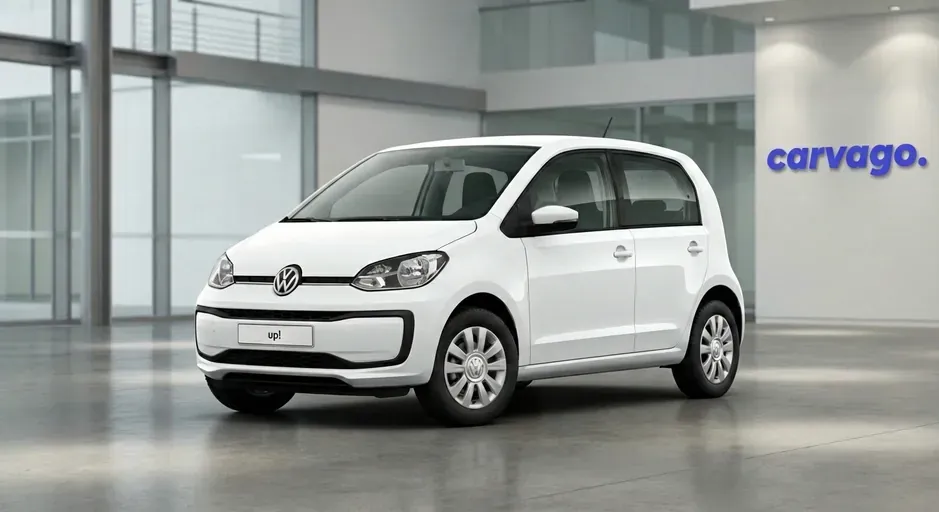
Volkswagen up!

Volkswagen up!

Introduction

Fiat 500, a stylish Italian icon often affectionately nicknamed "Cinquecento", has long been winning the hearts of drivers looking for unmistakable retro charm and perfect agility in city traffic. In contrast, the Volkswagen up!, which shares its proven technology on the market with sister models Škoda Citigo and SEAT Mii, represents a highly rational choice focused on maximum use of interior space and everyday practicality. Let's take a detailed look together at which of these two very different approaches to the ideal small car will emerge as the overall winner from our direct comparison.

Comparison of External Dimensions

Exterior dimensions and proportions

When choosing a city car approximately four years old, exterior dimensions play an absolutely key role. Comparing the Fiat 500 and Volkswagen up! models reveals two different approaches to building a small car. While the most common versions of the Volkswagen up! on the used car market maintain a length of exactly 3600 mm, the newer electric generation of the Fiat 500 (F1A) has stretched to 3632 mm. Conversely, the classic hybrid versions of the Italian icon are slightly shorter (3571 mm). In terms of width, the electric version of the Italian model dominates with a value of 1683 mm compared to 1645 mm for its German rival. In practice, this means the Fiat feels slightly more stable and planted on the road, while the Volkswagen, thanks to its narrower body, retains an advantage when maneuvering in the tightest parking spots or narrow streets.

The most significant difference lies in the wheelbase, a parameter that directly dictates overall interior spaciousness. The Volkswagen up! excels here with a wheelbase ranging from 2407 to 2417 mm (depending on the specific engine and trim level). The Fiat 500, on the other hand, offers only 2300 to 2322 mm. This difference of approximately 100 mm gives the Volkswagen a clear advantage – minimized body overhangs mean not only surer directional stability at higher speeds but, above all, significantly more generous legroom for rear-seat passengers. Fiat partially compensates for this shortcoming with a slightly taller body (up to 1527 mm compared to a maximum of 1504 mm for the up!), which improves headroom and gives the car its unmistakable bubble-like silhouette.

Ultimately, the choice between these two models depends primarily on how you plan to use the vehicle. If your priority is maximizing interior space within a minimal exterior footprint and you know you'll occasionally carry passengers in the back, the Volkswagen up! is the more rational and practical choice thanks to its long wheelbase and boxy shape. However, if you're looking for a stylish car for traveling mostly alone or as a couple and appreciate more interesting design proportions, the Fiat 500's dimensions won't limit you in any way.

ParameterFiat 500 HatchbackVolkswagen up! HatchbackFiat 500 Cabriolet
Length (mm)3571 - 363236003632
Width (mm)1627 - 168316451683
Height (mm)1488 - 15271483 - 15041527
Wheelbase (mm)2300 - 23222407 - 24172322

Trunk Volume

When choosing a city car, the trunk capacity is often a decisive factor that determines its daily practicality and usability. Although we are talking about one of the smallest car segments on the market, the differences between individual models can be surprisingly vast. The size of the trunk fundamentally affects whether the car will serve only as a stylish accessory for minimalist commuting or whether it can handle the role of a smaller family helper for transporting sports equipment or a stroller without stress.

In this discipline, the Volkswagen up! offers a very significant advantage over its Italian competitor. With its basic volume of 251 liters, it ranks among the most spacious cars in its class. The Fiat 500, on the other hand, has a more modest trunk of 185 liters. In practice, this difference on paper means that while you can comfortably fit an average grocery shop or two smaller travel bags into the elegant Fiat, the Volkswagen up! easily provides space for several extra suitcases and is perfectly sufficient for a large weekend family shop.

The fundamental differences in overall practicality become fully apparent after folding down the rear seats. The Volkswagen up! can offer a maximum capacity of up to a respectable 959 liters, which you will clearly appreciate when transporting larger items or packing for a longer holiday for two. The Fiat 500 in the hatchback version reaches a significantly lower value after folding the seats, ranging from 550 to 610 liters depending on the engine. It is also important to monitor versions with alternative powertrains, which often take their share of the space. The eco-friendly Volkswagen eco up! (CNG) has its basic space reduced to 213 liters, while the electric e-up! maintains a solid 250 liters. For the Fiat 500, the older factory LPG variant limits the trunk to just 165 liters, but the more modern mild-hybrids and the purely electric generation (500e) fully retain the standard 185 liters of basic and 550 liters of maximum volume.

ParameterFiat 500 HatchbackVolkswagen up! HatchbackFiat 500 Cabriolet
Basic volume (liters)185251185
Maximum volume with seats folded (liters)550 - 610959550

📦 Practicality wins over style

While the Fiat 500 scores mainly with its unmistakable retro design, the Volkswagen up! is the clear choice for used car buyers looking for maximum daily practicality, thanks to its significantly larger and more usable trunk.

Discover the true condition of the car thanks to an independent inspection

Order CarAudit™

Trailer Weights

Towing capacity is not usually a priority for the smallest city cars, yet the Fiat 500 and Volkswagen up! differ vastly in this regard, which can be a crucial parameter for many buyers when choosing a more practical vehicle. Traditional versions of the Fiat 500 with pure internal combustion engines (such as the 1.2 8V or 0.9 TwinAir petrol units or the 1.3 Multijet diesel) offered surprising utility. These models were capable of towing a braked trailer with a maximum weight of 800 kg and a standard unbraked trailer weighing 400 kg. In practice, such towing capacity means valuable space for a few extra suitcases, the possibility of attaching a small trailer, and is fully sufficient for weekend shopping or longer holidays with additional cargo.

However, the situation on the market for typical four-year-old used cars (manufactured around 2022) is changing radically and brings strict limitations. If you opt for the modern mild-hybrid variant of the Fiat 500 (1.0 GSE Hybrid) or the fully electric 500e generation, you will find that in most cases, these models have lost their towing homologation and their maximum towing capacity has been reduced to zero. Its German rival, the Volkswagen up!, is even a step worse in this regard – across all its versions (from the naturally aspirated 1.0 engines to the sporty GTI and the fully electric e-up!), it does not allow for a factory-fitted towing hitch at all.

This leads to a clear conclusion for buyers: if you need to use a towing hitch at least occasionally, neither the Volkswagen up! nor the modern electrified generations of the Fiat 500 will meet your requirements, and the only rational choice between the two remains the older pure internal combustion engine versions of the Italian "500". Given the zero towing capabilities of the entire Volkswagen up! model range and the lack of homologation for the latest hybrids and electric vehicles from Fiat, no data is provided for these cars in the overview, and the table below summarizes exclusively the permitted values for the traditional internal combustion versions of the Fiat 500.

Model and engineBraked trailer weight (kg)Unbraked trailer weight (kg)
Fiat 500 0.9 TwinAir (63–77 kW)800400
Fiat 500 1.2 8V (51 kW)800400
Fiat 500 1.3 JTD Multijet (55–70 kW)800400
Fiat 500 1.4 16V (73 kW)800400

Overview of Most Common Motorizations

The engine lineups of these two cars represent completely different approaches to powering small city cars. For someone looking for a roughly four-year-old used car, this means a choice between modern electrification and classic internal combustion technology. In recent years, the Fiat 500 has focused significantly on ecology – its standard power unit has become the mild-hybrid three-cylinder 1.0 GSE Hybrid (51 kW), which uses a small electric motor to reduce fuel consumption and ensure smoother starts. The Volkswagen up!, on the other hand, relies on the proven naturally aspirated three-cylinder 1.0 MPI, which, although lacking hybrid technology, is considered an exceptionally reliable workhorse for daily use on the used car market. Fundamental differences also exist among the most powerful variants. While Volkswagen delights driving enthusiasts with the traditional and spirited petrol up! GTI model with 85 kW and a precise manual gearbox, Fiat has shifted its performance peak exclusively to the all-electric 500e version, which offers up to 87 kW and intoxicating instant torque. Both manufacturers also considered alternative fuels or zero-emission driving, ensuring that both the thrifty pragmatist and the lover of quiet electric driving will find something in used car dealerships.

Engine range for Fiat 500

The range of power units for the Italian icon underwent a significant transformation at the turn of the decade. If you are looking for a used car around four years old, you will most often encounter the mild-hybrid one-litre three-cylinder 1.0 GSE Hybrid, paired with a pleasant six-speed manual transmission. This economical engine gradually replaced the long-standing and indestructible staple in the form of the naturally aspirated 1.2 8V four-cylinder. Until 2020, it was offered, among other things, with the five-speed Dualogic automated manual transmission, and it also existed in a factory LPG version. A completely new chapter is represented by the modern generation of the car, the Fiat 500e model. It is a pure electric vehicle that can be found in two power versions depending on the battery size (23.8 kWh or 42 kWh). Thanks to an output of up to 87 kW and lightning-fast reactions, it is the nimblest standard "500" in the range. Although the lively turbocharged 0.9 TwinAir two-cylinder appeared in the past, you can practically no longer count on it in the context of younger used cars.

Engine typeFuelPower (kW)Torque (Nm)Transmission
1.0 GSE HybridPetrol / MHEV51926MT
1.2 8VPetrol511025MT / 5AMT
1.2 8V LPGPetrol / LPG511025MT
0.9 TwinAirPetrol63 / 771455MT / 6MT / 5AMT
500e (23.8 kWh)Electricity702201AT
500e (42 kWh)Electricity872201AT

Engine range for Volkswagen up!

Under the bonnet of the Volkswagen up!, petrol one-litre three-cylinders absolutely dominate, with a range covering a diverse spectrum of needs. The basis for younger used cars is the naturally aspirated 1.0 MPI engine, which most often has an output of 48 kW after the facelift. In slightly older model years, you will come across its 44 kW or 55 kW power variants. In addition to the five-speed manual, these engines could also be paired with the ASG automated manual transmission, though you cannot expect the smoothness of a classic automatic from it in stop-and-go traffic. For drivers who also used the car outside the city, the turbocharged 1.0 TSI (66 kW) engine was an excellent choice, though it unfortunately disappeared from the standard range during 2019. The real pride, however, is the Volkswagen up! GTI (85 kW). Thanks to its powerful turbo engine and six-speed manual, it is considered a fantastic and fun driver's machine. For maximum efficiency, the exceptionally economical eco up! (1.0 EcoFuel) version, burning compressed natural gas (CNG), was available until 2022. Volkswagen also has a very strong presence in the field of electromobility – the quiet and agile e-up! (61 kW) model offers excellent efficiency and a solid range, making it one of the most sought-after affordable second-hand electric cars today.

Engine typeFuelPower (kW)Torque (Nm)Transmission
1.0 MPIPetrol44 / 48 / 5591 / 955MT / 5AMT
1.0 TSIPetrol661605MT
up! GTI (1.0 TSI)Petrol852006MT
1.0 EcoFuel (CNG)Petrol / CNG50905MT
e-up!Electricity612121AT

Electrification versus classic hot-hatch ⚡

While the Fiat 500 appeals with its modern mild-hybrid and excellent quiet 500e electric car, the Volkswagen up! attracts drivers with proven petrol three-cylinders, led by the immensely fun GTI driver's version.

Choosing the right powertrain is key to long-term satisfaction with a used city car. While the Fiat 500 has undergone an interesting transformation in its modern history and, in the generation sold around 2022, bet primarily on mild electrification, the Volkswagen up! relies on the absolute mechanical simplicity of classic naturally aspirated three-cylinder engines in the four-year-old used car market. Our recommendations are based on real-world experience, fuel consumption data, owner ratings, and the ability of these engines to survive demanding city traffic.

For the Fiat 500, we recommend: 1.0 GSE Hybrid, 51 kW (70 hp)

This modern one-liter three-cylinder from the FireFly family (available in our database for the years 2020 to 2024) is the smartest choice for a roughly four-year-old used "500". It reliably replaced the iconic but structurally older 1.2 8V engine in the lineup and added a simple 12V mild-hybrid system with a small battery. The result is an ideal powertrain for city users – you will be pleased by its very refined operation and real-world fuel consumption, which easily stays around 5 l/100 km with the supplied six-speed manual transmission. Mechanically, it is a very robust engine without serious design flaws. However, a weakness of direct-injection engines can be carbon buildup on the intake valves, especially if the car is driven exclusively on short cold trips around town.

  • How to identify and solve the problem: During the test drive, focus on the idle of the warmed-up engine – it must not fluctuate. If the car jerks noticeably when starting off, it could be a sign of advanced carbonization. As a great prevention, we recommend regularly (ideally at least twice a month) warming up the car and driving it more dynamically on a longer route outside the city, which naturally "burns off" the engine.

For the Volkswagen up!, we recommend: 1.0, 48 kW (65 hp)

As the absolute ideal for the Volkswagen up!, we choose the basic one-liter naturally aspirated three-cylinder with MPI indirect injection (listed in the manufacturer's specifications simply as up! 1.0, available for both 3-door and 5-door variants from 2019 to 2022). If you are looking for an absolutely indestructible workhorse for commuting around the metropolis and its surroundings, this unit makes the most sense in terms of operating costs. It does not suffer from complex technology like the more powerful TSI turbo engines, does not know the problems with carbon buildup like direct-injection cars, and its fuel consumption consistently stays below the 5-liter mark. It handles short trips absolutely brilliantly.

  • How to identify and solve the problem: The engine itself is almost indestructible, but VW up! cars often served in company fleets, as delivery vehicles, or as car-sharing vehicles, where the clutch suffered extremely. During the test drive, carefully monitor the operation of the clutch pedal. If it engages at the very top of the stroke, is unusually stiff, or you feel vibrations when releasing it, an early replacement awaits you. Detecting this issue is key for you – it gives you a strong argument for negotiating a discount that will easily cover the subsequent replacement. Also, demand clear proof of timely oil changes with a maximum interval of 15,000 km, which is a guarantee of engine longevity.

Real Fuel Consumption

Manufacturer-stated fuel consumption figures often differ from everyday reality, which is why it is much more reliable to look at real-world data when choosing a used car. To get an objective picture, we used user statistics from the independent portal Spritmonitor.de, where thousands of drivers meticulously record every refueling. We focused on generations and engines typical for approximately four-year-old used cars on the market, although for a complete comparison, we also included an older but very popular diesel variant. The results show that even in the segment of the smallest city cars, there are interesting differences between individual technologies.

Model and engineAverage consumption (l/100 km)
Fiat 500 1.3 JTD Multijet (70 kW)3.7
Fiat 500 1.0 GSE Hybrid (51 kW)5.3
Volkswagen up! 1.0 MPI (48 kW)5.2
Volkswagen cross up! 1.0 TSI (66 kW)5.3
Fiat 500 1.2 8V (51 kW)5.4
Volkswagen up! GTI 1.0 TSI (85 kW)5.5

When interpreting the data, we encounter several important trends. While the absolute king of efficiency is the diesel Fiat 500 1.3 Multijet with real-world consumption well below 4 liters, you will no longer find a diesel in roughly four-year-old used cars – it completely disappeared from the market for these small cars years ago. Among the more current gasoline engines, the Volkswagen up! proves that its basic naturally aspirated 1.0 MPI engine is excellent and, with an average of 5.2 l/100 km, even slightly more efficient than the Italian automaker's more modern solution. For its newer model years, Fiat introduced the mild-hybrid Fiat 500 (1.0 GSE Hybrid), which slightly reduced consumption compared to the older 1.2 8V four-cylinder but does not reach the very top. A surprising finding is the behavior of small turbo engines (TSI) from Volkswagen – even the sportily tuned up! GTI does not demand much more fuel in normal driving and proves that extra power in small turbo engines does not have to mean disproportionately high consumption.

For the typical user, several key points emerge from these figures. If you are looking for a purely urban runabout for traffic jams, the mild-hybrid Fiat 500 can recover energy excellently and shut off the engine, pushing consumption in queues to a minimum. However, for those who more frequently head out of town or commute on the highway, the Volkswagen up! makes more sense. Its naturally aspirated one-liter engine does not struggle as much at higher speeds, and in the TSI version with a turbocharger, it offers a very dynamic drive that won't break the family budget even at a brisker pace.

In the end, real-world fuel consumption will likely not be the main deciding factor that tips the scales in favor of one model or the other. Differences on the order of tenths of a liter will have only a minimal impact on your wallet. The key will rather be which driving style you prefer – whether you long for the inimitable Italian retro design for the city, or if you are convinced by the somewhat more aggressive and practical German efficiency.

Price Range and Used Car Offerings

Price comparison on the used car market (2021–2022 models)

When choosing a used city car approximately four years old, you will encounter fundamental differences in how both models hold their value. Fiat 500 and Volkswagen up! from 2021 to 2022 represent an ideal compromise for drivers who want modern technology but also want to save compared to buying a brand-new car.

Fiat 500: You pay extra for Italian style

On the used car market from this period, the 1.0 Mild-Hybrid engine absolutely dominates for the Italian representative. These cars hold their residual value very well, mainly thanks to the undying popularity of the retro design and richly equipped editions. Style simply sells, and this is doubly true on the secondary market.

  • Base and mild-hybrid versions: Prices for attractive four-year-old models with mileage around 20,000 to 40,000 km typically range from €10,000 to €13,000.
  • Electric Fiat 500e: If you are aiming for the modern all-electric platform from these years, prepare a substantially higher sum, as prices for well-maintained battery versions often exceed the €16,000 mark.

Volkswagen up!: The rational choice for the city

The Volkswagen up! from the end of its production will appeal more to practically-minded buyers. Refreshed versions from 2021–2022 do not suffer from such a strong "style surcharge," making conventional petrol versions more affordable. However, an extraordinary hit on the used car market is its electric variant e-up!, which has seen stable demand after production ended.

  • Petrol engines (1.0 MPI): These petrol models tend to be more affordable as used cars than a comparable Fiat. You can find four-year-old cars in very good condition from roughly €8,000 to €10,000.
  • Electric VW e-up! (32.3 kWh): This popular and very reliable city electric car holds its price excellently thanks to low operating costs. Its price tag on the used market commonly starts at around €14,000.

Overview of indicative prices (~4-year-old cars)

Model (2021–2022)Most common engineEstimated price range (€)
Fiat 5001.0 Mild-Hybrid10,000 – 13,000
Volkswagen up!1.0 MPI (petrol)8,000 – 10,000
Volkswagen e-up!Electric motor (32.3 kWh)14,000 – 15,000

Note: Final prices on the market always depend on the overall technical condition, documented service history, mileage, and specific equipment level.

Reason vs. Emotion 💸

While the petrol Volkswagen up! offers a more rational price tag and excellent value for money as a used car, you will always pay extra for a used Fiat 500 purely for its unique style and status as a fashion accessory.

Safety and Euro NCAP Rating

Looking back at history, we find that both the Fiat 500 and the Volkswagen up! proudly received the maximum five-star Euro NCAP rating in their time (Fiat in 2007, VW in 2011). However, this fact must be viewed in the proper context, taking into account the year of testing. Euro NCAP testing protocols are constantly evolving and becoming dramatically stricter. Today's methodology requires advanced frontal crash simulations, cyclist detection, and evaluations of intersection assist systems. For this reason, percentage results from different years cannot be directly compared. Furthermore, Euro NCAP certificates expire six years after the test, meaning that for these older platforms, the original rating no longer corresponds to current market demands.

The classic Fiat 500, as we know it from the four-year-old used car market (often with a mild-hybrid powertrain), relies on an older design. In 2017, the refreshed model underwent a new evaluation according to the rules of the time and earned a total of 3 stars. Adult protection reached 66%, but child protection (49%) and the safety assist systems score (a mere 27%) showed the limits of the aging bodywork. At the time, the car lost valuable points mainly due to the absence of modern active features such as Autonomous Emergency Braking (AEB) or Lane Keep Assist. (The all-new electric generation Fiat 500e, tested in 2021, fares significantly better, earning a very solid 4 stars under the stricter modern methodology.)

The Volkswagen up! underwent a similar re-evaluation in 2019 as part of testing for the facelifted version. The car lost its original five-star rating and dropped to 3 stars, mainly because the AEB system was no longer offered as standard equipment. Nevertheless, in tests, it demonstrated a much more robust level of passive safety than its Italian competitor. Adult protection reached an excellent 81% and child protection even 83%. Assistance systems scored 55%, partly thanks to the availability of a lane-keeping system. Even after years, the Volkswagen up! construction offers a highly stable space for the occupants.

In conclusion, for a used car buyer who prioritizes safety, the Volkswagen up! represents a more secure and comprehensive choice in terms of occupant protection, thanks to its sturdier body structure. However, if you desire the Fiat design and require modern safety standards, it makes the most sense to look for the newer electric version, the Fiat 500e.
ParameterFiat 500Volkswagen up!
Year of testing20172019
Adult occupant protection66%81%
Child occupant protection49%83%
Vulnerable road users protection53%46%
Safety assist systems27%55%

Occupant protection first 🛡️

Although both platforms date back to earlier times and struggle to compete with modern standards, the Volkswagen up! clearly wins in structural robustness and offers significantly more reliable passive protection for both adults and children.

Comparison of Interesting Equipment Features

In addition to standard equipment, both models offer more than just basic mobility, with each approaching added value in its own way and with a different philosophy aimed at a different type of driver.

Fiat 500: Italian style and endless personalization options

  • Design and body styles: The biggest draw is the iconic retro design that never ages. As one of the few cars in this class, the Fiat 500 also offers a semi-convertible version (500C) with a retractable canvas roof, which adds an unmistakable driving experience in the summer months.
  • Smart city features: The legendary "City" button on the dashboard, which, when pressed, significantly increases the power steering assistance. Maneuvering and parking in narrow streets can then be done literally with one finger.
  • Interior and materials: The car's interior focuses on emotion. The painted part of the dashboard in the body color and specific upholstery (including Seaqual recycled plastic materials in newer models) turn the interior into a fashion accessory.
  • Powertrains and innovation: Models from recent years use mild-hybrid technology as standard (1.0 FireFly three-cylinder), which intelligently recuperates energy and helps reduce fuel consumption in the city without the need for plug-in charging. For tech enthusiasts, there is also the completely newly developed electric 500e version on the used car market, featuring advanced Uconnect infotainment and fast-charging support.

Volkswagen up!: A miracle of space and unexpected sportiness

  • Interior space utilization: The clever boxy design allows for maximum passenger space from a minimal external footprint. It offers an unexpectedly airy interior and practical details such as a variable double luggage compartment floor or pop-out rear windows on five-door versions.
  • Infotainment and connectivity: Instead of rapidly aging displays, Volkswagen chose a smart solution for most versions with a smartphone holder on top of the dashboard. Through the "Maps + More" app, your phone connects to the car's electronics and serves as a full-fledged navigation system and trip computer.
  • Sporting spirit: For connoisseurs, there is the exceptional up! GTI version. With a sports suspension, typical plaid seats, an output of 85 kW (115 hp), and a manual transmission, it revives the legacy of the original 1976 Golf GTI.
  • Driving characteristics and maturity: The Volkswagen chassis is tuned to make the car feel like it's from a class above. Unlike many city competitors, it offers high stability, good sound insulation, and confidence even at highway speeds. The fully electric e-up! version is also highly sought after on the used car market, offering a great range for city and suburban driving thanks to surprisingly efficient battery management.

Key Advantages and Disadvantages

Fiat 500

Pros

Iconic retro design that doesn't age and maintains its appeal over the long term

Unrivaled maneuverability and trouble-free parking in narrow city streets

Wide range of exterior and interior personalization options on the used car market

Low operating and service costs, especially with the reliable 1.0-liter mild hybrids (from 2020 onwards)

Very good residual value thanks to the model's enduring popularity

Cons

Significantly cramped rear seat space and a small trunk (only 185 liters)

Poorer ergonomics and driving position for taller drivers due to limited steering column adjustment

Older structural platform with a smaller range of modern active safety assistants

Commonly available only as a three-door model, which makes rear access more difficult

The Fiat 500 is the perfect choice for those looking for a stylish city car who don't need to transport adult passengers in the back or large grocery hauls daily. Its emotive look and ultra-compact dimensions make it an ideal fashion accessory, for which owners are happy to overlook minor compromises in practicality.

Volkswagen up!

Pros

Excellent interior packaging ensuring surprisingly enough room even for adult passengers

Significantly larger and more usable trunk (251 liters)

Very mature driving characteristics and stability, thanks to which the car handles highway trips well

Availability in a much more practical five-door body style

Excellent visibility from the vehicle in all directions thanks to larger glass areas and a boxy shape

Cons

Austere and conservative design that lacks Italian charm and emotion

Cheaper-feeling hard plastics and exposed metal in the interior on lower trim levels

Absence of a classic built-in infotainment display in newer model years (solved by a smartphone docking station)

Higher level of aerodynamic noise at highway speeds

The Volkswagen up! will appeal more to rational-minded drivers who demand maximum practicality, comfortable rear-door access, and a confident chassis from a city car. It is an exceptionally cleverly designed city car that, thanks to its spacious interior, can easily fulfill the role of a second family car.

Common Problems and Owner Complaints

Based on data from the CarAudit service, long-term user reviews, service bulletins, and findings from detailed physical inspections of used cars, we have compiled an overview of the most common problems for both models that you should watch out for when choosing.

Fiat 500

The Fiat 500 is an unmistakable Italian style icon, but as a typical city car, it often suffers from specific chassis wear and has its historically known quirks in the area of electronics.

  • Engine and Drivetrain: The established 1.2 Fire four-cylinder engine is mechanically almost indestructible, but minor oil leaks under the valve cover may occur. In more modern 1.0 Mild-hybrid versions (from roughly 2020), the propulsion system is relatively reliable but generally more sensitive to the state of the batteries. Furthermore, the exhaust system, specifically the rear silencer, rusts quite quickly if the car is driven exclusively on short city routes.
  • Transmission: We strongly recommend avoiding the Dualogic robotized gearbox. It tends to be very jerky when shifting, requires more frequent service calibrations, and its repairs are expensive. With the classic manual transmission, on the other hand, a humming clutch bearing may be heard earlier in high-mileage units.
  • Chassis: Due to daily mounting of curbs and hitting potholes, premature wear of the front axle occurs. Most often, play in the steering joints, worn-out stabilizer links, and worn front shock absorbers appear in used cars.
  • Electronics and Infotainment: The Uconnect multimedia system is prone to occasional screen freezing or loss of Bluetooth pairing with the phone. A well-known and somewhat annoying ailment is the above-average frequency of blown bulbs in the headlights.
  • Body and Interior: A common defect you'll encounter, especially in winter months, is breaking exterior door handles. The internal plastic hinge breaks due to the material becoming brittle.

Fiat 500: Watch out for the robotic automatic and the chassis

While Fiat 500 petrol engines are considered very durable workhorses, when buying a used car, avoid the problematic Dualogic robotized gearbox and focus on a thorough inspection of the front axle, which suffers the most on broken city streets.

Volkswagen up!

The Volkswagen up! is built exceptionally solidly and robustly for the smallest car segment, yet several recurring weaknesses appear—especially in units coming from intensive city traffic.

  • Engine and Drivetrain: The basic 1.0 MPI three-cylinder is extremely reliable, but coolant leaks due to a faulty water pump occasionally occur. In more powerful turbocharged 1.0 TSI versions, there is a risk of excessive carbon buildup on the valves during frequent very short trips with a cold engine.
  • Transmission: As with the Fiat, the robotized automatic transmission (ASG) is uncomfortable to drive, shifts with noticeable delays, and tends to be unreliable in the long run. With manual transmissions, owners encounter more difficult reverse gear engagement (which lacks synchronization) or premature clutch shudder when starting on a hill.
  • Chassis: A very common and mostly acoustic problem is squeaking bushings on the front axle. This is heard especially in cold weather when driving over speed bumps. Brake pads and discs wear out faster due to "stop-and-go" traffic in queues.
  • Electronics and Infotainment: Most newer models rely on connecting a smartphone via the dedicated Maps + More app instead of built-in navigation. Unfortunately, the system and the app itself often suffer from connectivity drops, disconnections from the vehicle, and slower responses.
  • Body and Interior: A more serious hidden nuisance is occasional water leakage into the luggage compartment. The culprits are usually leaking body ventilation flaps hidden under the rear bumper or a perished rubber grommet for the rear wiper. A sticking fuel filler flap opening mechanism also frequently appears.

Volkswagen up!: Solid foundation, but with minor flaws

The Volkswagen up! pleases with solid mechanics and an exceptionally durable 1.0 MPI engine; however, we recommend carefully checking the smoothness of the manual transmission and checking whether you find unwanted traces of moisture under the carpet in the trunk.

Tips for Buying a Used Car

When buying a used car, a thorough inspection is key. Here are some specific points to focus on for these two models, ideally during a test drive or when a comprehensive car audit is taking place.

When choosing a Fiat 500:

  • Chassis and suspension condition: The front axle of the Fiat 500 is prone to play, especially when frequently driven on broken city streets. During the test drive, listen for any knocking or dull thuds from the front wheels when driving over bumps. This often indicates worn upper shock absorber mounts or worn-out control arm ball joints.
  • Dualogic robotized gearbox performance: If you are considering a version with an automatic, carefully test the smoothness of the shifts in all modes. Jerking, significant delays when changing gears, or warning messages on the dashboard can indicate a worn clutch or an expensive problem with the hydraulic actuator (the "robot"), which can suffer from leaks.
  • Infotainment and electronics functionality: Check the Uconnect onboard system (or the older Blue&Me system in earlier models). Test phone pairing via Bluetooth, and the stability of the radio and navigation. A freezing display, delayed responses, or non-functional connectivity are common issues and require at least a software reflash.
  • Oil leaks on the 1.2 Fire engine: Although this older four-cylinder engine is legendarily durable and a great choice for a used car, it very often suffers from oil leaks under the valve cover. When inspecting the engine bay, look for fresh oil stains. Also, check if the timing belt has been replaced – it should be changed after a maximum of 5 years of operation.
  • Belt system on the 1.0 Mild-Hybrid version: On more modern mild-hybrid engines (usually from 2020 onwards), check the condition of the belt that drives the starter-generator (BSG). If the car makes squeaking sounds when starting or during recuperation while braking, it may indicate a loose or worn belt, without which the hybrid system will not function correctly.

When choosing a Volkswagen up!:

  • Clutch operation and reverse gear engagement: In manual transmissions, it is quite common for reverse (which lacks a synchromesh ring) to engage stiffly or with a slight grinding of the gears. However, a warning sign is significant jerking or vibration of the entire car when pulling away smoothly in first gear, which indicates a worn clutch kit that will soon require replacement.
  • Air conditioning functionality and condenser condition: The Volkswagen up! has relatively large openings in the lower part of the front bumper, through which stones from cars in front can easily fly and puncture the air conditioning radiator (condenser). During the test, always verify that the air conditioning actually blows ice-cold air, and use a flashlight to check the radiator fins behind the grille.
  • Coolant leaks from the water pump: The reliable and economical one-liter engines (both the naturally aspirated 1.0 MPI and the turbocharged 1.0 TSI) occasionally suffer from leaking water pumps. During the inspection, look for traces of dried pink coolant on the left side of the engine block (from the perspective of someone standing in front of the car) and check that the level in the expansion tank is not below the minimum mark.
  • ASG gearbox behavior: The ASG automated manual transmission in the VW up! takes some getting used to. A long interruption in power during shifting is a technical characteristic, but significant metallic clunks, strong jerking during parking maneuvers, or an inability to pull away smoothly uphill mean that the gearbox urgently needs software calibration or a clutch lining replacement.
  • Condition of the rear drum brakes: City cars often sit stationary for long periods in variable weather, which can lead to the rear drum brake mechanism seizing on the up!. Test the correct function of the handbrake (it should not engage too high) and, while driving slowly with the window open, listen for any dragging sound from the rear wheels indicating constant slight braking.

FAQ: Most Frequently Asked Questions

Volkswagen up! offers a significantly more practical luggage space with a volume of 251 liters. Fiat 500 lags behind in this regard, providing only 185 liters, which is more suitable for smaller city shopping. After folding the rear seats, the difference in spaciousness increases even further in favor of the German car.

Thanks to its shorter body and special "City" power steering mode, the Fiat 500 is the absolute top for maneuvering in narrow Italian and Czech streets. However, the Volkswagen up! has a boxier shape and large glass surfaces, ensuring excellent visibility from the car in all directions. Ultimately, you can park both cars with minimal effort even in the smallest gaps.

Both cars are exceptionally economical, and their average consumption in practice ranges between 4.5 and 5.5 liters per 100 km. Newer Fiat 500 models benefit from a one-liter mild-hybrid engine, which is extremely efficient during constant starting in traffic jams. The Volkswagen up!, with its reliable MPI engines, is on the other hand slightly more economical during smooth driving outside the city.

The Volkswagen up! surprises with a very airy interior for its class and a more mature driving position, where even taller drivers can sit relatively comfortably. The Fiat 500 focuses primarily on style, but its cabin is quite cramped, especially in the rear seats and in terms of headroom. For more frequent transport of more than two people and higher comfort, the German car is clearly the better choice.

Both models are considered very reliable choices among used cars, with the pleasing factor of cheap spare parts and easy servicing. In older Fiat 500 models, the almost immortal 1.2 Fire engine stands out, although minor faults in the chassis or electronics may occasionally appear. The Volkswagen up! is structurally very simple and honestly built, making it a trouble-free car even after many years of operation.

Conclusion: Which Model to Choose?

Our Verdict

Choosing between the Fiat 500 and Volkswagen up! models is a classic battle of emotion versus pure rationality. If you are looking for unmistakable retro style, perfect agility in narrow city streets, and you see a car more as a fashion accessory for one or two passengers, the Italian "500" will surely delight you with its charm and fuel-efficient engines. On the other hand, from the perspective of everyday usability, the Volkswagen up! represents a much more mature choice, which, thanks to its surprisingly spacious interior, larger trunk, and confident driving characteristics, can easily handle the role of a second family car. The final decision thus depends purely on whether you prefer style and agility or require maximum interior space and versatile practicality, with both popular used cars promising excellent reliability and low operating costs.

Find your ideal car

Sources: ADAC, novinky.cz, forbes.cz, dopravniinfo.cz, autotechnik.cz, f1sport.cz

This article was prepared using artificial intelligence tools. The section guarantor is Petr Dušek.

Related articles

Car battle

Fiat 500 vs. Suzuki Ignis: Complete comparison 2026

Detailed comparison: Fiat 500 vs Suzuki Ignis. We compared the Italian icon with the Japanese mini SUV. Discover the differences, fuel consumption, and verdict before buying a used car.

Apr 23, 2026

Car battle

Kia Rio vs. Renault Clio: Complete comparison 2026

Detailed comparison of Kia Rio vs. Renault Clio. Discover the differences in equipment, fuel consumption, and reliability. Our verdict will help you choose the best used hatchback.

May 3, 2026

Car battle

Dacia Sandero vs. Mazda 2: Complete comparison 2026

Comparison: Dacia Sandero (Stepway) vs Mazda 2 (Mazda2). Which used hatchback offers better reliability? Read real-world insights and our clear verdict!

May 7, 2026

We accept online card payments as well as wire transfers.

visa payment provider logovisa-electron payment provider logomastercard payment provider logomaestro payment provider logodiners-club payment provider logodiscover payment provider logo