Car battle
Peugeot 208 vs. Toyota Yaris: Complete comparison 2026
Detailed comparison: Peugeot 208 vs. Toyota Yaris. Looking for a reliable used city car? We reveal real-world fuel consumption, equipment, and deliver a clear verdict.
May 4, 2026
Articles
Car battle
Dacia Sandero (including Stepway) vs Seat Ibiza: Which used hatchback to choose? Read our detailed comparison of equipment, running costs, and our final verdict.
May 5, 2026
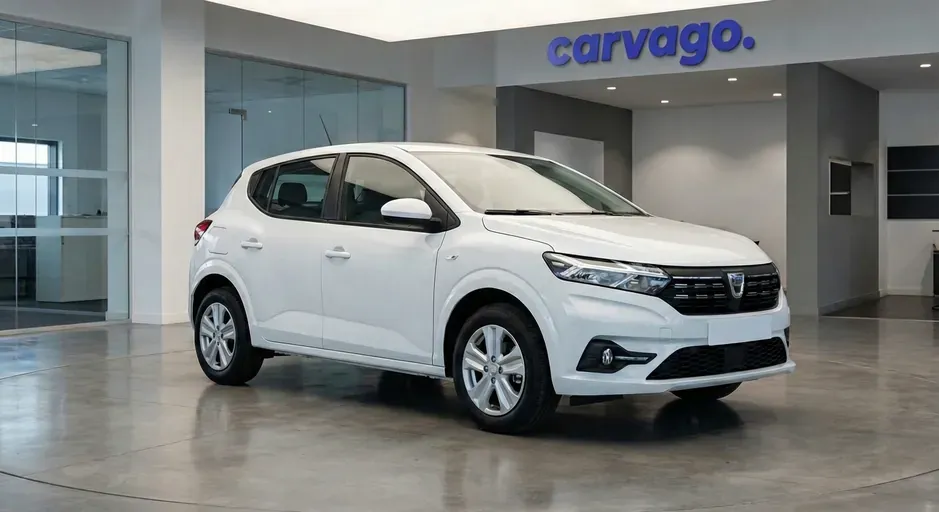
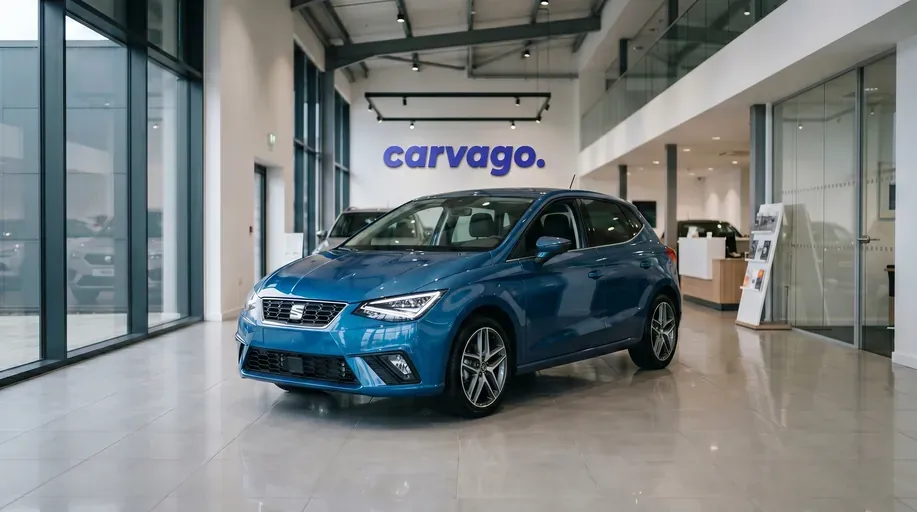
Dacia Sandero, also known as the Renault Sandero in some markets, represents an exceptionally pragmatic choice in the small car segment with an unbeatable price-to-utility ratio. Standing against it is the Seat Ibiza, a stylish Spanish hatchback from the Volkswagen Group, which attracts buyers primarily with its sharper design, modern equipment, and sportier driving characteristics. In the following comparison, let's see whether it's more sensible on the used car market to bet on maximum rationality and low operating costs, or rather to prioritize emotions behind the wheel and more sophisticated technology.
Looking at the exterior dimensions, it is clear that the third-generation Dacia Sandero (available since 2021) strikes a slightly different chord than the fifth-generation Seat Ibiza (KJ designation, since 2017). The Romanian representative is slightly larger in all respects, which is reflected in the car's overall robustness. With a length starting at 4088 mm (up to 4102 mm for newer versions and the popular Stepway variants), the Sandero is at least 29 mm longer than its Spanish competitor, which maintains a more compact and uniform length of 4059 mm. This difference may seem negligible, but in crowded city streets, it slightly favors the Ibiza, which is a bit easier to maneuver and park in tight parallel spaces.
The Dacia Sandero with its width starting from 1848 mm clearly surpasses the 1780 mm wide Ibiza – a fairly noticeable difference of 68 mm. The Sandero's greater width naturally translates to a more generous sense of spaciousness in the interior, especially in the shoulder area, although it may require more attention when parking in narrow underground garages at shopping centers. The same applies to height, where the Sandero, with values from 1496 to 1586 mm (in the raised Stepway version), exceeds the sportier, lower-slung Ibiza (1444 to 1447 mm) by more than 5 centimeters. The taller body structure makes daily entry into the Dacia easier and provides a trendier SUV feel, while the Seat, on the other hand, benefits from a lower center of gravity, which is a key prerequisite for more confident and stable handling in sharper corners.
A crucial parameter for interior space is the wheelbase. Here, Dacia holds the trump cards with a value of 2604 mm compared to 2564 mm for the Seat. The Romanian car's straight four-centimeter lead represents a clear advantage for rear-seat passengers' legroom and also contributes to a smoother and more comfortable ride on typical country roads. While the Ibiza has to settle for slightly more cramped space in the back, its shorter wheelbase and overall tighter proportions make it a more agile and nimble choice for drivers who demand a more dynamic and fun experience behind the wheel of their small hatchback.
| Parameter | Dacia Sandero Hatchback | Seat Ibiza Hatchback |
|---|---|---|
| Width (mm) | 1848 - 1853 | 1780 |
| Length (mm) | 4088 - 4102 | 4059 |
| Height (mm) | 1496 - 1586 | 1444 - 1447 |
| Wheelbase (mm) | 2604 | 2564 |
When choosing a used car in the small city car segment, every available liter of luggage space plays a surprisingly large role. Whether it's for everyday family utility, carrying a stroller, or looking for a car sufficient for weekend shopping and a longer holiday for two, the differences between models can be decisive in practice. If we focus on roughly four-year-old cars (manufactured around 2022), the third-generation Dacia Sandero and the SEAT Ibiza in the generation designated as KJ face off against each other. Although both cars target a similar clientele, they approach the use of interior space with slight differences.
In a direct comparison of standard five-door hatchbacks, the SEAT Ibiza offers slightly more generous values. In its basic configuration, it has a trunk with a volume of 355 liters, while the Dacia Sandero provides 328 liters. This difference of 27 liters represents space for several smaller pieces of luggage or one extra sports bag in practice, which you will definitely appreciate when packing for the family. After folding down the rear backrests, the total capacity of the Spanish car increases to a maximum of 1165 liters, while the Sandero can accommodate up to 1108 liters of cargo.
Alternative powertrains are a very important factor for used car buyers, as they significantly impact the practicality of the vehicles. If you are considering the SEAT Ibiza in the 1.0 TGI version (compressed natural gas - CNG), you have to expect compromises – due to the placement of the gas tanks, the basic trunk volume shrinks to a below-average 262 liters and reaches only 1072 liters after folding the seats. In contrast, the Dacia Sandero in its highly sought-after LPG version (Eco-G) handles the situation much more elegantly. The gas tank is built into the spare wheel well, which means the standard volume of 328 liters is fully preserved. It is also worth mentioning that on the market for four-year-old used cars, you won't come across the popular station wagon body styles for these models – Dacia never had this variant for the Sandero, and production of the extended SEAT Ibiza ST version ended with the previous generation.
| Parameter | Dacia Sandero Hatchback | SEAT Ibiza Hatchback |
|---|---|---|
| Basic volume (liters) | 328 l | 355 l |
| Max. volume with seats folded (liters) | 1108 l | 1165 l |
In its basic configuration, the SEAT Ibiza offers a slightly larger and more usable trunk on paper, but the Dacia Sandero counters with a well-utilized space and an LPG version that, unlike the gas-powered Ibiza, does not deprive you of valuable liters for cargo.
When choosing approximately four-year-old used cars (generations from 2021–2022), towing capacity can be a key parameter for drivers who regularly transport garden waste, building materials, or plan a caravan holiday. Both cars offer different capacities that directly affect their daily practicality.
The Seat Ibiza (KJ generation) offers very flexible values depending on the chosen engine. While the basic naturally aspirated 1.0 MPI three-cylinder can handle a braked trailer weighing only 800 kg, the popular turbocharged 1.0 TSI versions can already tow 1000 to 1200 kg. The top-of-the-line 1.5 TSI four-cylinder can handle a full 1200 kg. In contrast, the third-generation Dacia Sandero starts with a better baseline – the weakest naturally aspirated SCe 65 engine can tow 980 kg. The more powerful turbocharged TCe 90 units and the popular factory LPG version (ECO-G 100) then have a ceiling of 1100 kg.
Interestingly, while for some other models alternative powertrains (e.g., hybrids) mean a compromise in towing capacity due to additional weight, the Dacia Sandero with LPG drive (ECO-G) makes no concessions and offers the same 1100 kg as the standard petrol versions. In the case of unbraked trailer weight, the values for both cars range from 540 to 610 kg depending on equipment and the curb weight of the vehicle itself.
The difference in maximum braked trailer weight for the more powerful versions (1200 kg for the Ibiza versus 1100 kg for the Sandero) in practice represents space for a few extra suitcases, a reserve for heavier building materials, or the possibility of hitching a slightly larger caravan. Conversely, thanks to its better capacity with the base engine, the Sandero is sufficient for weekend shopping and longer holidays at the cottage where you don't need to break records in towing heavy loads.
If you plan to tow heavier trailers and opt for more powerful turbo engines, the Seat Ibiza will offer you higher limits and a slightly larger reserve. However, the Dacia Sandero is an exceptionally balanced competitor that scores with consistent values and surprises with a significantly higher capacity for the base engine.
| Model and engine | Braked trailer weight (kg) | Unbraked trailer weight (kg) |
|---|---|---|
| Dacia Sandero SCe 65 (49 kW) | 980 | 560 |
| Dacia Sandero TCe 90 / ECO-G 100 (67 - 74 kW) | 1100 | 560 |
| Seat Ibiza 1.0 MPI (59 kW) | 800 | 540 - 560 |
| Seat Ibiza 1.0 TSI (70 - 85 kW) | 1000 - 1200 | 570 - 590 |
| Seat Ibiza 1.5 TSI (110 kW) | 1200 | 610 |
When comparing the engine options of the Dacia Sandero and Seat Ibiza on the used car market with an approximate age of four years, we encounter completely different philosophies from the two manufacturers. With its third-generation Sandero (offered since 2021), Dacia focuses on maximum simplicity and affordability. An interesting feature is the strong focus on factory-fitted LPG systems (the ECO-G 100 engine), which, thanks to a combination of petrol and gas tanks, can offer a total range exceeding one thousand kilometres, while diesel engines have completely disappeared from the Romanian brand's line-up. In contrast, the fifth-generation Seat Ibiza (internal designation KJ), as a representative of the Volkswagen Group, brings a much wider range of more advanced and dynamic power units. While the entry-level for both consists of naturally aspirated 1.0-litre three-cylinder engines suitable mainly for the city, the Ibiza also satisfies more demanding drivers with a full-fledged, refined 1.5 TSI four-cylinder engine producing 110 kW (150 hp) and offers a fast DSG dual-clutch transmission. Seat previously offered economical 1.6 TDI diesels or the 1.0 TGI natural gas version for this model, although you will almost never come across them in advertisements for cars produced after 2020. The choice thus primarily comes down to the Sandero's unrivalled operating savings on LPG versus the Ibiza's wider range of dynamics and modern technologies.
The third-generation Dacia Sandero offers compact, exclusively 1.0-litre petrol three-cylinder engines that rely on proven technology with favourable maintenance costs. The entry point is the naturally aspirated SCe 65 (48 kW) engine, whose primary domain is urban traffic. However, the most sought-after choice among roughly four-year-old used cars is the turbocharged TCe 90 (66 kW) unit, which could be paired with either a manual gearbox or a CVT continuously variable automatic transmission. An absolute phenomenon for drivers seeking maximum savings is the TCe 100 ECO-G (74 kW) version, which allows for the combustion of cheaper LPG. In the popular plastic-clad Sandero Stepway variant, a more powerful TCe 110 (81 kW) version equipped with direct fuel injection can also be found. The table reflects the status for the third generation suitable for searching for a four-year-old used car, but for completeness, it also includes the future Eco-G 120 unit; it is important to remember that this will only enter the market at the end of 2025 and will not be found among older used cars.
| Engine Type | Fuel | Power (kW) | Torque (Nm) | Transmission |
|---|---|---|---|---|
| 1.0 SCe 65 | Petrol | 48 | 95 | 5MT |
| 1.0 TCe 90 | Petrol | 66 | 142 / 160 | 6MT / CVT |
| 1.0 TCe 100 ECO-G | Petrol / LPG | 74 | 170 | 6MT |
| 1.0 TCe 110* | Petrol | 81 | 200 | 6MT |
| 1.2 Eco-G 120** | Petrol / LPG | 88 | - | 6MT / EDC |
Under the bonnet of the Seat Ibiza KJ generation lies a more diverse Group range, with the roughly four-year-old cars most commonly represented on the market being powered primarily by the popular TSI petrol units. The gateway to the world of the Ibiza is the naturally aspirated 1.0 MPI (59 kW) three-cylinder, suitable more for conservative drivers in suburban settings. The real sales hit is the turbocharged 1.0 TSI, usually supplied in versions with 70 kW or 81 kW. This engine excels in excellent flexibility and low fuel consumption, and in the more powerful version, it can also be combined with a seven-speed DSG dual-clutch automatic. For those interested in a more spirited drive, the premium 1.5 TSI (110 kW) four-cylinder, equipped with ACT cylinder deactivation for maximum efficiency, is a delight. In the past, the range was also supplemented by the 1.0 TGI version adapted for burning compressed natural gas (CNG) and 1.6 TDI diesel four-cylinders. For both of these more marginal versions, it must be remembered that they were removed from price lists between 2020 and 2023; therefore, in the age category around four years, you will encounter them in used car dealerships much less frequently than before.
| Engine Type | Fuel | Power (kW) | Torque (Nm) | Transmission |
|---|---|---|---|---|
| 1.0 MPI | Petrol | 59 | 93 | 5MT |
| 1.0 TSI | Petrol | 70 / 81 | 175 / 200 | 5MT / 6MT / 7DSG |
| 1.0 TGI | Petrol / CNG | 66 | 160 | 6MT |
| 1.5 TSI | Petrol | 110 | 250 | 7DSG |
| 1.6 TDI* | Diesel | 59 / 70 / 85 | 250 | 5MT / 7DSG |
While the Dacia Sandero clearly wins with its unbeatably low operating costs thanks to the popular LPG version, the Seat Ibiza offers more mature driving dynamics and advanced turbocharged engines, also in combination with the fast DSG automatic transmission.
While both models on the used car market at roughly four years of age (manufactured around 2021–2022) rely almost exclusively on one-liter three-cylinder engines, their philosophies differ radically. The third-generation Dacia Sandero scores with unbeatable operational efficiency thanks to the massive deployment of factory LPG drive, which you will practically not find in other brands. The Seat Ibiza (KJ generation after facelift), on the other hand, benefits from Volkswagen Group technology and offers highly refined and dynamic TSI engines. The era of naturally aspirated four-cylinder engines in this class is definitively over, but modern turbocharged units offer much better dynamics and real-world fuel consumption.
The TCe 100 ECO-G engine is an absolute hit on the four-year-old used car market and represents the best you can have under the hood of a third-generation Sandero. It is a one-liter turbocharged three-cylinder that is factory-fitted with a liquefied petroleum gas (LPG) combustion system.
If you are looking for a KJ generation Ibiza (from 2017, ideally models around the 2021 production year), definitely go for the turbocharged one-liter three-cylinder 1.0 TSI from the EA211 family. While the weaker MPI is lethargic outside the city, the TSI version represents the perfect compromise.
When choosing a used car, it is good to keep in mind that official fuel consumption figures provided by manufacturers often differ significantly from reality in everyday use. Laboratory measurements cannot always accurately simulate a fully loaded car, long highway climbs, or daily crawling in congested city traffic. Therefore, it is much more reliable to base decisions on the real-world experiences of drivers themselves. For the purposes of this comparison, we analyzed user data from the well-known independent portal Spritmonitor.de to see how the Dacia Sandero (3rd generation) and Seat Ibiza (KJ generation) perform in practice, as both are currently sought-after models on the market for approximately four-year-old used cars.
| Model and engine | Average consumption (l/100 km) |
|---|---|
| Petrol engines (naturally aspirated) | |
| Dacia Sandero 1.0 SCe 65 (49 kW) | 4.8 |
| Seat Ibiza 1.0 MPI (59 kW) | 5.3 |
| Petrol engines (turbocharged) | |
| Seat Ibiza 1.0 TSI (70/81 kW) | 5.3 |
| Dacia Sandero 1.0 TCe 90 (66 kW) | 5.4 |
| Seat Ibiza 1.5 TSI (110 kW) | 5.7 |
| Alternative fuels (LPG) | |
| Dacia Sandero 1.0 TCe 100 ECO-G | 7.4 (LPG) / 5.5 (Petrol) |
| Diesel engines (older models up to 2020) | |
| Dacia Sandero 1.5 Blue dCi (70 kW) | 4.2 |
| Seat Ibiza 1.6 TDI (70/85 kW) | 4.6 |
A closer look at the table reveals several interesting trends. A very obvious and, for many, surprising finding is that the basic naturally aspirated three-cylinder engines (SCe for Dacia and MPI for Seat) do not bring any significant fuel savings compared to small turbocharged engines. Due to the lower torque, drivers have to rev them higher more often when starting off or overtaking, which means real-world consumption easily matches modern 1.0 TSI or 1.0 TCe units. Despite their better dynamics, these manage with an excellent average of around 5.3 to 5.4 liters. Regarding the comparison between diesel and petrol, older diesel engines (1.5 Blue dCi and 1.6 TDI) still clearly lead on very long routes with consumption just above the 4-liter mark, but you will no longer find them in the range of four-year-old and newer models today, as both manufacturers have discontinued them. However, the factory LPG version of the Sandero (TCe 100 ECO-G) is a completely unique chapter. Its consumption is around 7.4 liters of LPG, but thanks to the consistently half-price of gas compared to 95-octane petrol, it offers unbeatably low operating costs per kilometer.
For a typical buyer, a fairly clear buying strategy emerges from this data. If you are looking for a strictly cheap runabout exclusively for city and suburban commuting, the naturally aspirated one-liter engines from both brands will be more than sufficient. Conversely, for those who commute smoothly to work between towns daily or head onto the highway more often, the small petrol turbocharged engines (1.0 TSI and TCe 90) represent an ideal compromise between comfortable pull and exemplary efficiency. Budget-oriented motorists and long-distance "high-fliers" should primarily target the Dacia Sandero with LPG on the used car market, which has effectively replaced former diesels as the long-distance fuel-saver. In conclusion, although the Seat Ibiza can often push the average consumption a few tenths of a liter lower than its Romanian competitor thanks to Volkswagen Group's precise engineering, the final financial difference at the petrol pump is practically negligible. The fuel consumption value itself (excluding the LPG variant) should therefore not become the main deciding factor for these vehicles; instead, give preference to the car that suits you better in terms of design, ergonomics, and driving characteristics.
When choosing a roughly four-year-old used car (most often 2021 and 2022 models), you will encounter two different pricing philosophies. With the Dacia Sandero, we are talking about the current 3rd generation, which caused a revolution in design and overall equipment of this originally purely low-cost model after its introduction. With the Seat Ibiza, on the other hand, we are in the territory of the established 5th generation, which underwent a significant facelift in 2021, bringing higher-quality materials to the interior and a more modern infotainment system.
How do these two very popular used cars compare in terms of acquisition costs?
Dacia has long scored as one of the most affordable choices on the market, but it may come as a surprise how well its cars hold their value. The depreciation curve here falls much more slowly than with many more premium competitors, which is due to the huge demand for reliable cars with low maintenance costs.
The Seat Ibiza, sharing its chassis platform with Volkswagen Group cars, targets drivers looking for more advanced driving characteristics, more sophisticated safety assistants, and more precise dashboard craftsmanship. This higher standard is naturally reflected in the second-hand purchase price.
| Model (4 years old) | Starting price (Base models) | Average price (Higher trims / Stepway / FR) |
|---|---|---|
| Dacia Sandero (3rd gen) | approx. €9,000 | €11,100 – €13,500 |
| Seat Ibiza (5th gen) | approx. €10,300 | €14,400 – €18,500 |
Note: The prices listed are indicative and based on average market offers for well-maintained second-hand cars. The final amount is always significantly influenced by the actual mileage, traceable service history, and exact trim level.
While a used Sandero is an unbeatable choice from the perspective of acquisition and operating costs for drivers looking for the youngest possible car with a limited budget, the Ibiza easily justifies its higher price with a more mature chassis, richer equipment, and much higher quality interior craftsmanship.
Automotive comparisons often begin with a general remark that both compared vehicles received a full five-star Euro NCAP rating. In this duel, however, the situation is diametrically different, which further emphasizes the importance of context and the year of testing. Euro NCAP methodology and testing protocols are constantly evolving over time and becoming stricter to reflect technological progress. For this reason, percentage scores from different years are not fully and directly comparable. Currently, the emphasis is shifting from mere crash survival to the vehicle's ability to actively prevent an accident, which plays an absolutely crucial role in this comparison.
Dacia Sandero of the third generation underwent tests in 2021 and came away with a rather controversial rating of only two stars. However, this result must be interpreted correctly. In terms of passive safety, the Sandero does not perform poorly – the car's structural integrity provides adequate protection for both adults and children. However, the car lost a huge number of points due to the brand's philosophy, which bets on low price and the absence of advanced technologies. For the tests, the Sandero was not equipped with a camera system capable of reliably detecting pedestrians and cyclists, and it also lacked sophisticated active lane keeping. These shortcomings were fully revealed in strict scenarios focused on the protection of vulnerable road users.
SEAT Ibiza, on the other hand, underwent updated tests in 2022 as part of its facelift and managed to defend its full five stars with ease. The tests already followed the most modern protocols, which include, among other things, a frontal collision with a new mobile deformable barrier and advanced detection of cyclists or collision prevention at intersections. The Ibiza demonstrated excellent body rigidity and, unlike the Dacia, is equipped with an advanced autonomous emergency braking (AEB) system, which was able to completely prevent an accident or significantly mitigate its consequences in many critical situations.
| Parameter | Dacia Sandero | SEAT Ibiza |
|---|---|---|
| Year of testing | 2021 | 2022 |
| Adult occupant protection | 70 % | 83 % |
| Child occupant protection | 72 % | 82 % |
| Vulnerable road user protection | 41 % | 66 % |
| Safety assist systems | 42 % | 70 % |
In conclusion, it can be clearly stated that the SEAT Ibiza offers a significantly more modern and comprehensive safety package in line with current standards. While the Romanian hatchback can protect the occupants at a solid level during the impact itself, the Spanish competitor is able to prevent many accidents in advance thanks to its advanced assistance systems, making it a safer car not only for the occupants but also for those around it.
While the Dacia Sandero protects you acceptably during the impact itself, the SEAT Ibiza offers top-tier active assistants that can completely prevent many collisions, making it a significantly safer choice for everyday traffic.
Both models offer more than just basic equipment, with each approaching added value and user experience in its own, very distinctive way.
Unbeatable price-to-utility ratio on the used car market
Surprisingly spacious interior and practical 328-liter trunk
Availability of a factory LPG engine (Eco-G 100), which radically reduces operating costs
Thanks to the shared CMF-B platform, the third generation offers significantly more confident driving characteristics
Noticeably worse cabin soundproofing at highway speeds
Widespread use of hard and cheaper plastics in the interior
Very poor Euro NCAP safety rating (only 2 stars), mainly due to the absence of modern assistance systems
Limited dynamics of the basic naturally aspirated engines
Dacia Sandero is an ideal choice for rational drivers looking for maximum utility at the lowest possible price. The factory LPG version also makes it a master of low operating costs, which makes sense especially for daily commuting.
Top-tier driving characteristics and an agile chassis among the best in its class
Higher quality interior craftsmanship using soft-touch plastics (especially after the 2021 facelift)
Rich offer of modern technologies, infotainment, and assistance systems
Maximum five-star Euro NCAP safety rating
Successful and dynamic TSI engines with very good fuel consumption
Higher purchase price on the used car market compared to the Dacia
Stiffer chassis tuning combined with larger wheels can reduce comfort on broken roads
Slightly more expensive spare parts and higher hourly rates at authorized service centers
Less headroom for adult passengers in the rear seats
SEAT Ibiza will appeal to more demanding drivers who require a sportier driving experience, confidence behind the wheel, and a high level of passive and active safety from a compact car. Although it is more expensive on the used car market, it rewards with a more premium interior and more mature road behavior.
Based on long-term user experience, service reports, recalls, and practical insights provided by our own comprehensive car audit, we have compiled an overview of the most common problems you should watch out for with these approximately four-year-old used cars.
The third generation of the Dacia Sandero represents a huge leap in quality and technology compared to its predecessors, but even so, after a few years of operation, it faces typical teething problems that are worth focusing on.
The Dacia Sandero is a mechanically honest and robust car, but potential buyers must accept occasional software quirks of the infotainment and a cheaper interior finish. However, with careful selection and regular servicing, it is a highly reliable and low-maintenance used car.
The fifth generation of the Seat Ibiza is built on a modern platform and uses advanced Group technology, which has a positive effect on driving characteristics, yet it also has its weak points and specific faults.
The Ibiza offers great driving characteristics as well as dynamic and economical engines, but it requires a more thorough check of its technical condition, especially for fluid leaks in 1.0 TSI engines and the behavior of DSG automatics. Electronic infotainment bugs in used cars of this model year have mostly been resolved by warranty updates.
When buying a used car, a thorough inspection is crucial. Here are a few specific points to focus on for these two models, where an independent comprehensive car inspection can significantly help you before purchase.
Seat Ibiza offers a slightly larger luggage compartment with an above-average volume of 355 litres. Dacia Sandero lags only slightly behind, providing a solid capacity of 328 litres. Both hatchbacks, however, offer a very practical boot for their class, which easily accommodates regular weekend shopping and luggage for shorter holidays.
The Seat Ibiza is built on the VW Group platform and excels with precise steering and a more sportily tuned chassis, making it much more confident in corners. The Dacia Sandero, on the other hand, is focused on maximum driving comfort, and its softer suspension filters potholes on broken roads better. If you are looking for a more dynamic and fun ride, the Ibiza is clearly the better choice.
The Dacia Sandero has a huge advantage on the used car market thanks to the available factory LPG version (Eco-G 100 engine), which can bring fuel bills down to a minimum. While the Seat Ibiza offers very reliable and efficient 1.0 TSI petrol engines with low consumption, it cannot compete with Dacia's gas drive purely financially. Furthermore, spare parts and routine servicing are traditionally slightly cheaper for the Romanian brand.
The Seat Ibiza offers significantly higher quality materials, more sophisticated ergonomics, and an overall more premium feel, especially in models after the 2021 facelift. In the third-generation Dacia Sandero, you will find mostly hard plastics, although the dashboard design has taken a huge step forward compared to the past. The Ibiza is also substantially better soundproofed, which you will appreciate especially at highway speeds and on longer journeys.
The third-generation Dacia Sandero has grown significantly in width and length between generations, offering above-average legroom and headroom for rear passengers. The Seat Ibiza feels slightly more cramped in the rear seats, although it is perfectly adequate for carrying children. For families who often carry taller teenagers or adults in the back, the Dacia is thus slightly more comfortable and practical.
Dacia Sandero and Seat Ibiza represent two completely different approaches to the small car segment, each targeting a different group of customers. While the Sandero is the unbeatable master of price-to-value ratio, appealing primarily to rational buyers thanks to its more spacious interior and incomparably economical factory LPG version, its Spanish competitor strikes a more emotional chord. The Ibiza easily justifies its higher purchase price with superior driving characteristics, higher-quality dashboard craftsmanship, and a maximum five-star level of active safety. If you are looking for the newest possible car with minimal running costs, the Dacia is a purely pragmatic choice; however, for drivers requiring a more agile chassis, advanced assistance systems, and a more mature highway performance, the Seat is the ideal solution.
Sources: ADAC, novinky.cz, garaz.cz, autoservis.cz, fdrive.cz, automakers.cz
This article was prepared using artificial intelligence tools. The section guarantor is Petr Dušek.
Detailed comparison: Peugeot 208 vs. Toyota Yaris. Looking for a reliable used city car? We reveal real-world fuel consumption, equipment, and deliver a clear verdict.
May 4, 2026
Detailed comparison: Kia Rio vs Seat Ibiza. Discover the differences in driving characteristics, reliability, and space. Read the verdict before choosing a used car!
Apr 15, 2026
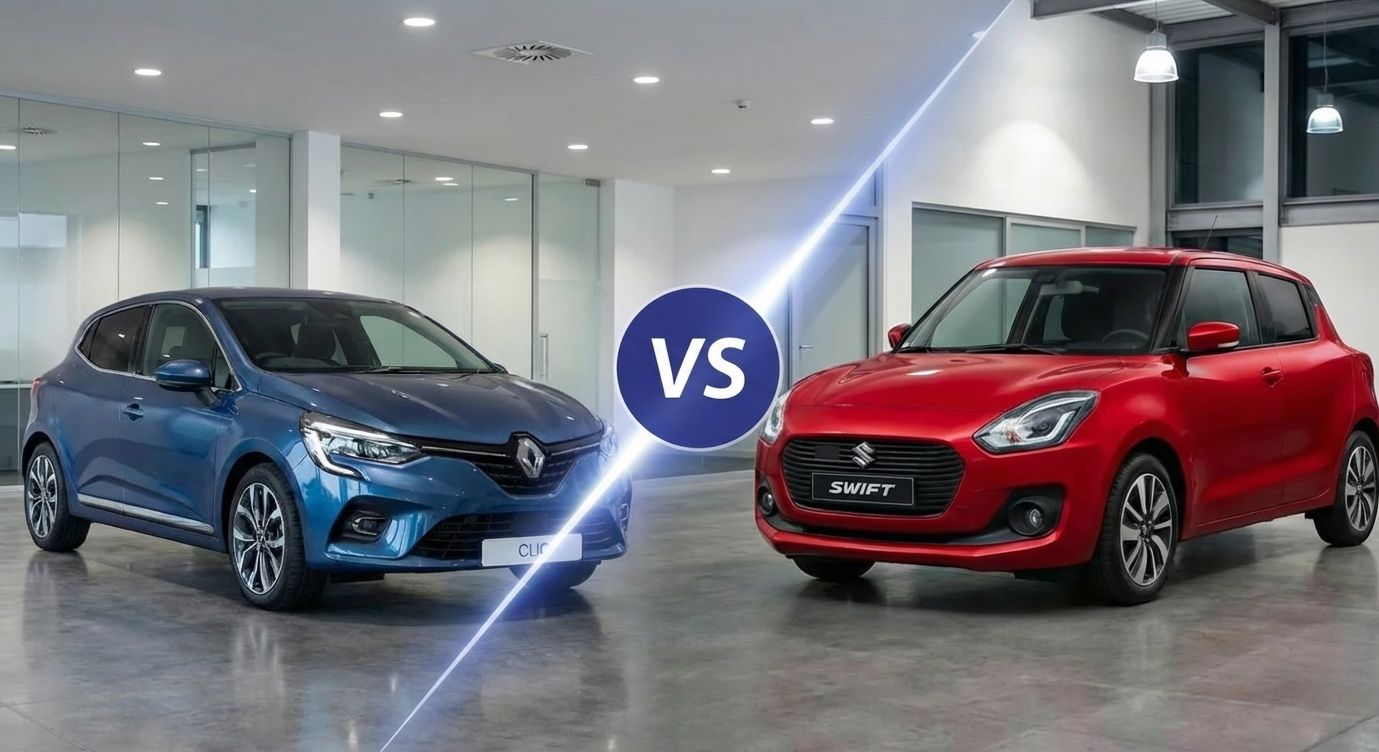
Big Comparison: Renault Clio vs. Suzuki Swift: Which used hatchback to choose? We reveal the differences in fuel consumption, equipment, and reliability. Read our verdict!
Apr 13, 2026