Car battle
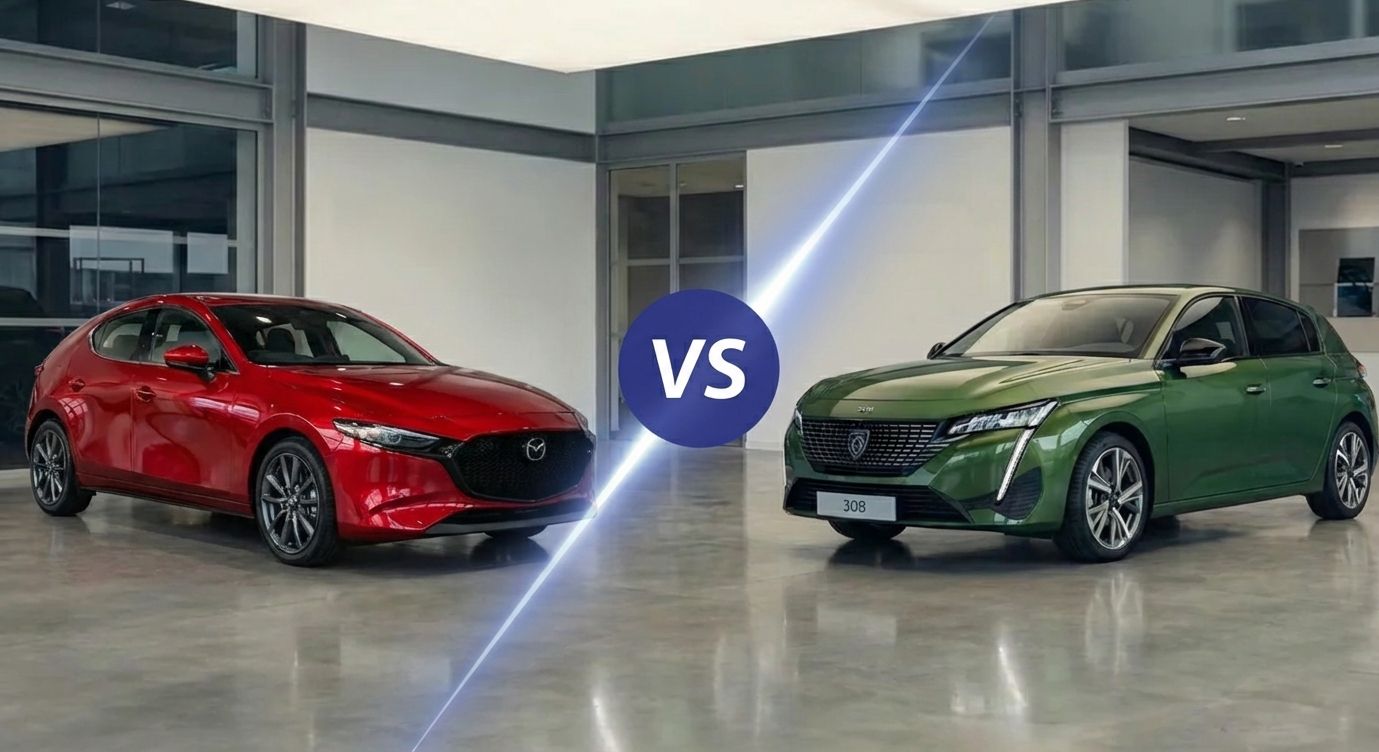
Mazda 3 vs. Peugeot 308: Complete comparison 2026
Mazda 3 vs. Peugeot 308: A detailed comparison of engines, interior, and reliability. Find out which stylish hatchback is the best choice for you.
Apr 13, 2026
Articles
Car battle
Detailed comparison: Citroën C4 vs. Renault Mégane. Find out which hatchback offers better space, engines, and reliability. Read our clear verdict!
May 21, 2026
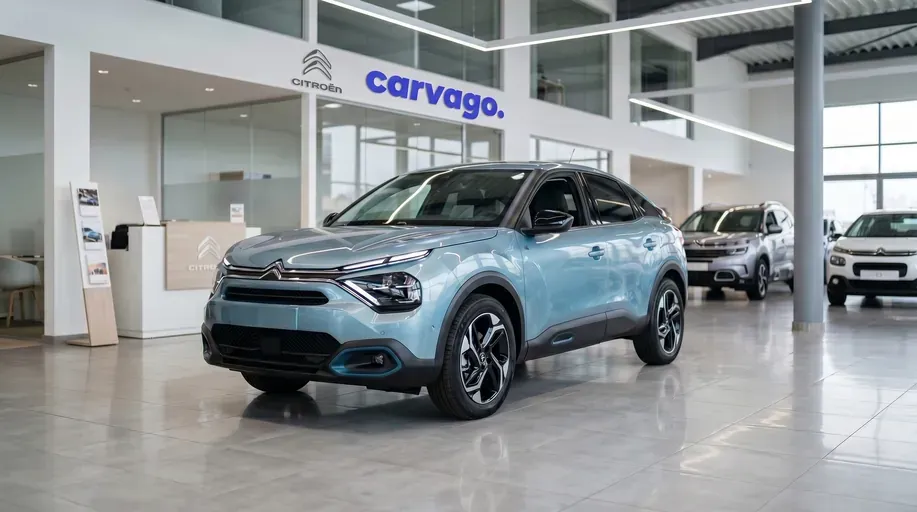
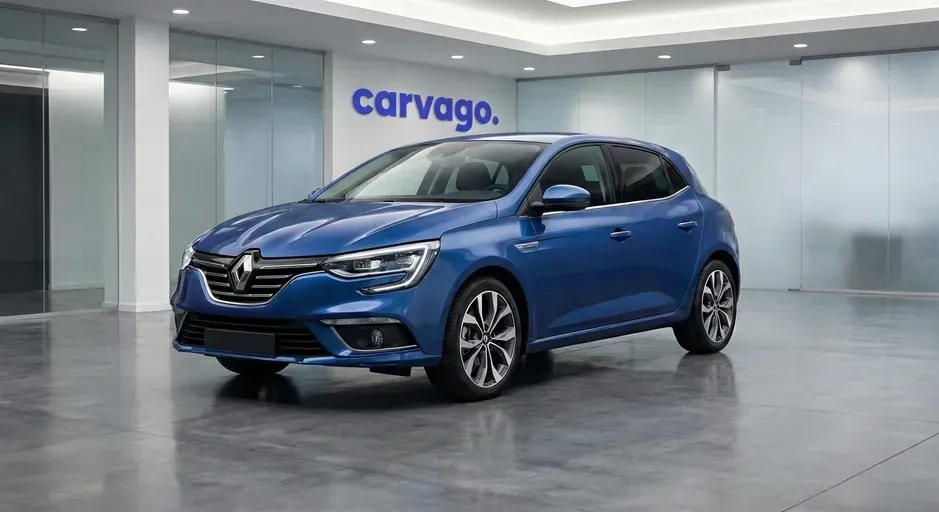
The French compact class representative Citroën C4, also known in some markets and in various body or electric variants as the ë-C4, C4 X, C-Quatre, or C-Triomphe, has always positioned itself as an extravagant car with an absolute emphasis on soft ride comfort. Its traditional domestic rival, the Renault Mégane, which can be found on global markets under alternative names such as Megane Grandtour, Grandcoupé, Megavan, Conquest, Scala, or the all-electric E-Tech depending on the version, instead focuses on more dynamically styled elegance and a more stable, driver-engaging chassis. Let's take a detailed look at which of these two French competitors offers a more attractive and practical solution for your daily travels on the market for roughly four-year-old used cars.
Looking at the external dimensions of approximately four-year-old used cars on the market, we are presented with a very interesting contrast. In its third generation (produced since 2020), Citroën radically redesigned the C4 model, giving it attractive crossover shapes that combine the footprint of a traditional five-door car with a taller body structure and a specifically sloped rear. The fourth-generation Renault Mégane (offered until 2024), on the other hand, remains faithful to the classic proportions of a low, dynamically styled hatchback, to which it adds the highly popular estate body (Grandtour). Furthermore, the image is modernized by the fifth, purely electric generation Mégane E-Tech, which brings a completely different perspective on the use of interior space to the comparison.
In terms of the overall footprint, the basic combustion versions of both rivals are surprisingly close. Both the Citroën C4 and the Renault Mégane Hatchback measure just under 4.36 meters in length and share an essentially identical wheelbase of approximately 2670 mm. However, the fundamental difference is the height of the vehicles. At 1525 mm, the Citroën is nearly 9 centimeters taller than its traditional French competitor. In practice, this concept gives the Citroën's occupants the advantage of noticeably easier entry and a better view of the traffic situation, while the lower Renault will be appreciated by drivers who prefer a sportier seating position and a lower center of gravity.
If maximum utility and family space are your priority, Renault holds a strong trump card in the form of the Estate version. With a length exceeding 4.6 meters and a wheelbase extended to a generous 2712 mm, it significantly surpasses the capabilities of the dimensionally uniform Citroën. A very specific character is then offered by the aforementioned electric Mégane E-Tech (Crossover). Thanks to a dedicated platform exclusively for electric vehicles, it has reduced its overall length to an agile 4200 mm, making it a champion of city parking. However, the designers moved the wheels to the very corners of the body, giving the car an excellent wheelbase of 2685 mm and thus maximizing the cabin volume on the smallest possible footprint.
| Parameter | Citroën C4 Crossover | Renault Mégane Hatchback | Renault Mégane Estate | Renault Mégane Crossover |
|---|---|---|---|---|
| Width (mm) | 1800 | 1814 - 1875 | 1814 | 1783 |
| Length (mm) | 4350 - 4355 | 4359 - 4364 | 4626 | 4200 |
| Height (mm) | 1520 - 1525 | 1428 - 1438 | 1449 | 1505 |
| Wheelbase (mm) | 2670 | 2669 - 2670 | 2669 - 2712 | 2685 |
The increased width values for the Renault Mégane Hatchback version (up to 1875 mm) apply to the specially widened top-of-the-line R.S. sports variant, which significantly exceeds the standard outlines of the compact model.
Luggage capacity is often a key decision factor for families and individuals looking for a reliable and practical car for daily tasks and weekend trips. Both the Citroën C4 and the Renault Mégane offer different approaches to spaciousness in the market for roughly four-year-old used cars. While Renault sticks firmly to the traditional division into a shorter five-door hatchback and a classic family estate, Citroën, with its third generation (produced since 2020), has opted for an attractive crossover silhouette that combines a higher SUV seating position with a sloping roofline evoking a coupé.
In a direct comparison of the basic five-door body versions, the Renault Mégane has a slight edge. Its standard hatchback holds a very solid 402 liters of cargo, which is a difference of exactly 22 liters compared to the 380 liters offered by the Citroën C4 in its base configuration. However, this space in the Citroën C4 is easily accessible, has a regular shape, and is fully sufficient for weekend shopping or a family trip. However, you will feel a significant difference when choosing modern powertrains. If you choose the plug-in hybrid Renault Mégane, the hatchback's trunk volume shrinks to just 308 liters due to the battery placement. Citroën is more thoughtful in this regard – the fully electric ë-C4 model and the hybrid versions maintain the standard 380 liters unchanged, which represents a huge practical advantage.
A categorical difference and a huge point for Renault comes when you try to maximize transport capacity. Renault Mégane offers the sought-after Estate version (known as Grandtour), which in newer model years features a top-tier luggage compartment with a volume of 563 liters. With the rear seats folded down, this space swells to 1,543 liters, which easily accommodates plenty of room for several extra suitcases, sports equipment, and strollers for a long holiday. The Citroën C4 does not exist in an estate version, so its absolute ceiling remains 1,250 liters after folding down the rear bench. This is a value that almost exactly matches the maximum volume of the standard Renault hatchback (1,247 liters).
| Parameter | Citroën C4 Hatchback | Renault Mégane Hatchback | Renault Mégane Estate |
|---|---|---|---|
| Base volume (liters) | 380 | 402 | 563 |
| Max volume with seats folded down (liters) | 1250 | 1247 | 1543 |
If you are looking for an alternative electrified powertrain without losing valuable liters in the trunk, the cleverly designed Citroën C4 will interest you. However, for active families requiring uncompromising luggage space, the Renault Mégane is the clear winner thanks to its exceptionally spacious estate version.
Towing capacity, or the total towing weight of a vehicle, is one of the decisive factors for drivers who regularly transport larger loads, whether it's for moving house, hauling garden waste, or going on a recreational holiday with a caravan. Looking at models approximately four years old (generations available around 2022), we find that the Renault Mégane and Citroën C4 approach this discipline quite differently. The more traditionally styled fourth-generation Renault Mégane offers an excellent maximum towing capacity of up to 1650 kg for the hatchback version and a respectable 1700 kg for the practical Grandtour estate in its internal combustion versions (for example, with 1.3 TCe or 1.5 Blue dCi engines). The third-generation Citroën C4, positioned more as a city crossover, has significantly more modest values. More powerful combustion engines, such as the PureTech 130 petrol or BlueHDi 130 diesel, can tow a braked trailer weighing a maximum of 1200 kg, while for the base PureTech 100 engine, this standard limit is reduced to 1000 kg.
Alternative and electrified powertrains bring a significant drop in towing power for both brands. If you choose the Renault Mégane in the E-Tech Plug-in hybrid version, you must expect a radical impact on the design – the capacity falls to just 750 kg. The fully electric fifth-generation Renault Mégane E-Tech can then tow only 500 to 900 kg, depending on the power output and battery. In the case of the purely electric Citroën e-C4, official homologation for a towing hitch is missing for the corresponding model years, which means the vehicle cannot be used for towing trailers.
In practical life, the values of the Renault Mégane (1650–1700 kg) mean absolute freedom – the car can easily handle transporting heavy building materials on a twin-axle trailer or towing a medium-sized caravan for a longer holiday. The 1000 to 1200 kg limit of the Citroën C4 represents a reasonable choice that is sufficient for a typical weekend trip to a DIY store or a smaller folding caravan, but the car is not built for heavier work. In terms of overall versatility and use as a "workhorse," the Renault Mégane is the clear winner.
| Model and engine | Braked trailer weight (kg) | Unbraked trailer weight (kg) |
|---|---|---|
| Citroën C4 1.2 PureTech 130 (3rd gen) | 1200 | - |
| Citroën C4 1.5 BlueHDi 130 (3rd gen) | 1200 | - |
| Citroën C4 1.2 PureTech 100 (3rd gen) | 1000 | - |
| Renault Mégane 1.3 TCe 140 GPF (4th gen) | 1650 | - |
| Renault Mégane Grandtour 1.5 BLUE dCi 115 (4th gen) | 1700 | - |
| Renault Mégane E-Tech Plug-in 160 (4th gen) | 750 | - |
| Renault Mégane E-Tech Electric EV60 220hp (5th gen) | 900 | - |
| Renault Mégane E-Tech Electric EV40 130hp (5th gen) | 500 | - |
(Note: Factory data for the electric Citroën e-C4 and unbraked trailer values are not available in the database.)
When comparing the engine options of the Citroën C4 and Renault Mégane models on the market for approximately four-year-old used cars, we encounter different approaches from the two French automakers, which is of fundamental importance for buyers when choosing in terms of consumption, dynamics, and reliability. The Citroën C4 (3rd generation, from 2020) opted for a universal platform that offers conventional internal combustion engines (e.g., 1.2 PureTech or 1.5 BlueHDi) as well as purely electric e-C4 variants under the same bodywork. In contrast, the Renault Mégane chose a strategy of two parallel but technically completely different generations during this period. The classic 4th generation brings refined and reliable 1.3 TCe petrol four-cylinder engines and advanced plug-in hybrid technologies, while the brand-new 5th generation (from 2022) arrives as a revolutionary, exclusively pure electric E-Tech Electric. Citroën's strength is thus flexibility and the presence of an efficient diesel for high-mileage travelers, while Renault dominates thanks to excellent petrol engines developed with Mercedes and a high-performance purely electric model with a long range. If you have a more limited budget or often drive on highways, the four-cylinder Mégane 1.3 TCe or the economical diesel C4 will be the ideal choice. If you are looking for eco-friendly city operation with the possibility of home charging, the plug-in hybrid Mégane or the comfortable e-C4 will interest you, while fans of modern and very dynamic electric vehicles will clearly reach for the new Renault Mégane EV60.
Under the hood of the third-generation Citroën C4, we find a rich selection of power units built on modern Stellantis group technology. The foundation consists of the proven 1.2 PureTech petrol three-cylinder engines (with outputs of 74 kW and 96 kW) and the exceptionally efficient 1.5 BlueHDi diesel four-cylinder engines (81 kW and 96 kW). While the weaker versions are always paired with a six-speed manual transmission, the more powerful variants utilize a smooth-shifting eight-speed automatic (EAT8). The fully electric e-C4 variants offer quiet, zero-emission operation, initially with an output of 100 kW, which was later joined by a slightly more powerful 115 kW version with a modified battery. However, an analysis of sales data and production years shows certain reductions in the range for the used car market: the most powerful petrol version 1.2 PureTech 155 (114 kW) was withdrawn from the range relatively quickly and was only sold between 2021 and 2022, making it a great rarity today. A very similar fate befell the entry-level diesel engine 1.5 BlueHDi 110, whose production ended in August 2022. The latest mild-hybrid units (Hybrid 100 and 136) only entered the market during 2024, so you won't encounter them in four-year-old used cars yet.
| Engine Type | Fuel | Power (kW) | Torque (Nm) | Transmission |
|---|---|---|---|---|
| 1.2 PureTech 100 | Petrol | 74 | 205 | 6MT |
| 1.2 PureTech 130 | Petrol | 96 | 230 | 6MT / 8AT |
| 1.2 PureTech 155 | Petrol | 114 | 240 | 8AT |
| 1.5 BlueHDi 110 | Diesel | 81 | 250 | 6MT |
| 1.5 BlueHDi 130 | Diesel | 96 | 300 | 8AT |
| e-C4 136 | Electric | 100 | 260 | 1AT |
| e-C4 156 | Electric | 115 | 260 | 1AT |
The range of engines for the Renault Mégane in the field of roughly four-year-old cars is diverse, as the 4th generation with internal combustion engines being phased out began to overlap with the incoming, purely electric 5th generation during this period. The conventional 4th generation stands out primarily for its extremely popular 1.3 TCe petrol four-cylinder engines, which offer smooth operation and great dynamics in the power range of 85 to 118 kW. A great innovation of this generation was the 1.6 E-Tech 160 plug-in hybrid system using a unique multi-mode automatic transmission, which can easily handle about 40 kilometers purely on electricity. Looking at the production history, it must be emphasized that the entry-level petrol engine 1.3 TCe 115 GPF disappeared from the price lists as early as spring 2022, and the powerful 1.3 TCe 160 GPF variant then definitively ended in July 2023. If you prefer innovation, since 2022 there has been a representative of the 5th generation bearing the name Mégane E-Tech Electric. It boasts a brand-new platform and electric drive without compromise – from the basic, city-oriented EV40 130hp version to the confident top-of-the-line EV60 220hp, whose instantaneous 300 Nm of torque guarantees a great experience behind the wheel.
| Engine Type | Fuel | Power (kW) | Torque (Nm) | Transmission |
|---|---|---|---|---|
| 1.3 TCe 115 | Petrol | 85 | 220 | 6MT |
| 1.3 TCe 140 | Petrol | 103 | 240 | 6MT / 7EDC |
| 1.3 TCe 160 | Petrol | 118 | 270 | 7EDC |
| 1.5 Blue dCi 115 | Diesel | 85 | 260 | 6MT / 7EDC |
| 1.6 E-Tech Plug-in 160 | PHEV | 118 | 300 | Multi-mode |
| EV40 130 | Electric | 96 | 250 | 1AT |
| EV60 220 | Electric | 160 | 300 | 1AT |
While the C4 makes life easier for customers by offering the choice of an internal combustion or electric engine in the same bodywork, Renault has clearly separated the classic four-cylinder and plug-in hybrids of the 4th generation from the revolutionary, exclusively electric 5th generation.
Choosing the right engine is crucial for long-term satisfaction with a vehicle, and our recommendations are based on real-world experience, driving dynamics, actual fuel consumption, and mechanical reliability. While both models share French origins, their approach to powertrains reveals two completely different worlds. Renault boasts a refined TCe four-cylinder engine, developed in close cooperation with Germany's Mercedes-Benz, which has become one of the highest-rated engines in its class. In contrast, Citroën relies on the well-known and very lightweight PureTech three-cylinder from the PSA Group, which scores points for its low-end torque but requires much more meticulous maintenance. In both cases, we have selected power units typical for the third (Citroën) and fourth (Renault) generations of roughly four-year-old used cars, representing the most rational compromise for buyers.
For the third generation of the Citroën C4, which became available on the market in late 2020, the 1.2 PureTech petrol three-cylinder with 96 kW (130 hp) is the best choice for daily usability. This engine offers an excellent balance between brisk dynamics and real-world fuel consumption, which consistently stays around 6 liters per 100 km. Furthermore, its low-end pull perfectly complements the supple and exceptionally comfortable tuning of the French chassis. This unit will best suit calmer drivers and family use on mixed routes. However, a critical risk of this engine is the timing belt, which runs in an oil bath. If the driver frequently takes short city trips or extends service intervals, the oil becomes diluted with petrol, and the belt material begins to degrade rapidly.
Why does this finding matter and how can you detect the problem? A crumbling belt clogs the oil pump pickup strainer, leading to a loss of oil pressure, which can result in fatal engine seizure. When inspecting a used car, simply unscrew the oil filler cap and shine a light inside at the belt itself – if you notice small cracks, a frayed surface, or ragged edges, it's better to avoid the car or insist on an immediate discount covering the timing belt replacement and oil pan cleaning. As a preventive measure for a purchased vehicle, we recommend shortening the oil change interval to a maximum of 10,000 to 15,000 kilometers.
The fourth generation of the Renault Mégane offers the 1.3 TCe petrol four-cylinder (often labeled as TCe 140 GPF) with 103 kW (140 hp) as by far the best choice. It is an exceptionally advanced power unit that gives the car great flexibility and velvety smooth operation, while still managing an average fuel consumption between 5.5 and 6 liters. In terms of development, this engine has overcome the shortcomings of the earlier 1.2-liter version – it relies on a more durable timing chain and does not suffer from such massive carbon buildup during city driving. The engine handles all types of use well, from daily city commuting to family highway trips with a full trunk. Mechanically, it is one of the most reliable petrol engines of the last decade.
However, pay close attention to the gearbox, especially if you opt for the version with the EDC dual-clutch automatic. With a cold engine, a very slight jerk may occasionally occur when pulling away, which is often just an imperfection in the control unit's software calibration. But why does it matter and what should you focus on? If the gearbox jerks significantly, makes metallic noises, or "slips" during shifts even after warming up, it could be a worn clutch pack, the replacement of which is very expensive for a used car. During the test drive, thoroughly check the automatic in various modes – during a smooth, slow start uphill, under harder acceleration, and during downshifts. Gear changes must be smooth and logical under all circumstances.
Official fuel consumption figures provided by manufacturers are often unattainable in real-world driving. For roughly four-year-old used cars, which we are focusing on here (the third-generation Citroën C4 and the fourth-generation Renault Mégane), it is therefore worth looking at real-world data from drivers themselves. According to long-term records from the independent community portal Spritmonitor.de, it is clear that the actual consumption of both cars often exceeds official laboratory values by an average of 1 to 1.5 liters.
| Model and engine | Average consumption (l/100 km) |
|---|---|
| Citroën C4 1.2 PureTech 100 | 6.2 |
| Citroën C4 1.2 PureTech 130 | 6.5 |
| Renault Mégane 1.3 TCe 115 GPF | 6.3 |
| Renault Mégane 1.3 TCe 140 GPF | 6.6 |
| Citroën C4 1.5 BlueHDi 130 | 5.4 |
| Renault Mégane 1.5 BLUE dCi 115 | 5.0 |
The data clearly shows that diesel engines from both brands maintain the lowest consumption by far. Particularly in the Renault Mégane, the popular 1.5 BLUE dCi diesel unit proves to be exceptionally economical – in normal traffic, it can achieve an excellent 5.0 liters per 100 km, which is very close to even the stricter official estimates. In contrast, with the petrol variants, we encounter the classic phenomenon of modern small turbo engines. Although the 1.2 PureTech three-cylinder in the Citroën and the 1.3 TCe four-cylinder in the Renault promise miraculous efficiency, in reality, they do not save as much fuel as one might expect. During more spirited driving or on the highway, they easily consume over 6.5 liters. An entirely unsurprising but important finding is also the fact that the difference in consumption between the more powerful and weaker petrol versions is absolutely minimal for both brands.
What does this mean for the typical user? If you spend most of your time crawling through city or suburban traffic, petrol engines will be a more reliable choice for you without the risk of clogging the diesel particulate filter (DPF), even at the cost of slightly higher fuel bills. Here, the more refined and flexible 1.3 TCe four-cylinder from Renault is particularly appealing. However, for drivers with high annual mileage and frequent highway trips, the diesel versions clearly pay off from a financial perspective. The diesel Renault stands out for its excellent economy, while the Citroën C4 scores with its 1.5 BlueHDi, which combines decent pull with stable consumption just above the five-liter mark.
From the overall comparison, it can be concluded that fuel consumption itself is unlikely to be the main deciding factor between these two cars. Both French automakers offer very comparable power units with similar real-world appetites – whether you choose petrol or diesel. The final decision should therefore be based more on preferred driving characteristics. While Renault offers the quieter operation of a sophisticated petrol four-cylinder, Citroën will primarily appeal to drivers looking for maximum travel comfort and a softer suspension setup.
When choosing a used car approximately four years old (production year around 2021–2022), we encounter the third-generation Citroën C4 and the fourth-generation Renault Mégane after its update (2020 facelift) on the secondary market. While Citroën opted for a bold design on the borderline between a hatchback and a crossover, Renault offers a more classic approach, which includes the highly sought-after estate body style (Grandtour) on the used market. Furthermore, both models offer fully electric versions, though in Renault's case, the Mégane E-Tech is a completely distinct and more premium model by design.
The third-generation Citroën C4 is a very interesting choice among four-year-old used cars for buyers looking for maximum comfort and a modern look. Thanks to a slightly faster depreciation in the first years of operation, these cars can be purchased at very attractive prices.
For a roughly four-year-old Mégane, buyers often have their sights set on the exceptionally well-engineered 1.3 TCe petrol four-cylinder, which maintains a great reputation on the market for both reliability and dynamics.
| Model and Specification | Average Used Price (Years 2021–2022) |
|---|---|
| Citroën C4 (1.2 PureTech, ICE) | €14,000 – €17,000 |
| Citroën ë-C4 (Fully Electric) | €19,000 – €23,000 |
| Renault Mégane (1.3 TCe, ICE) | €14,000 – €18,000 |
| Renault Mégane E-Tech (Fully Electric) | €21,000 – €29,000 |
In terms of residual value, the Renault Mégane performs slightly better, especially regarding internal combustion models with the 1.3 TCe engine and the estate body style, for which there is stable demand among families. The Citroën C4, on the other hand, is an excellent "value-for-money" tip. As a used car buyer, you benefit from the fact that the initial loss of value, typical for cars with a more controversial design, was paid by the first owner, allowing you to get a highly comfortable and modern-looking car for a very favorable amount. For the electric versions, the drop in value is significant for both competitors, but the more luxuriously oriented Mégane E-Tech is always several thousand euros more expensive at the starting line than the ë-C4.
In terms of price, the petrol and diesel versions of both models are very close. The decision will therefore primarily depend on preference – the Citroën C4 offers more extravagance and comfort for the same money, while the Renault Mégane counters with better ratings for the 1.3 TCe engine and a practical estate body style.
When comparing the safety of used cars, it is easy to look only at the number of stars awarded. Although both of these model series have boasted a full five-star Euro NCAP rating in the past, for nearly-new cars it is essential to perceive the broader context and the specific year of testing. Testing protocols are constantly evolving and becoming radically stricter. Nowadays, a strong body shell is no longer enough; extreme emphasis is placed on advanced active safety, flawless detection of cyclists, handling crisis scenarios at intersections, and the presence of innovative features such as center airbags. Therefore, percentage results from different years of testing can never be directly compared.
The current generation of the Citroën C4 underwent independent crash tests in 2021 with a four-star result. The reason for losing the top rating was largely due to the new, stricter methodology. The basic equipment of the tested car lacked a center airbag (designed to prevent front passengers' heads from colliding in a side impact) and the standard automatic emergency braking (AEB) system lacked sophisticated cyclist detection. Despite the missing fifth star, passive protection for adult occupants is at a solid level and the car offers a very stable cabin that reliably isolates the occupants from the main forces of impact.
In the category of approximately four-year-old used cars, the modern generation Mégane E-Tech, which underwent testing in 2022, is featured. Unlike its French rival, this model managed to obtain the full five stars even in this extremely strict testing cycle. The car is equipped with a center airbag as standard, and its safety assistance systems demonstrably and very precisely prevent collisions with pedestrians and cyclists. For completeness, let us add that older combustion versions of the Mégane last received 5 stars in 2015, but their results from that time no longer correspond to the strictest current standards.
If we compare the most relevant representatives of these models for the young used car market, Renault emerges as the winner based on current standards. While the Citroën C4 pays slightly for minor omissions in the standard equipment of active assistants, the 2022 Mégane represents an exemplary modern safety shield that covers all conceivable risks of today's traffic.
| Parameter | Citroën C4 | Renault Mégane |
|---|---|---|
| Year of testing | 2021 | 2022 |
| Adult occupant protection | 76 % | 85 % |
| Child occupant protection | 83 % | 88 % |
| Vulnerable road users protection | 57 % | 65 % |
| Safety assist systems | 63 % | 79 % |
Although both cars are safe in practice, the more modern Renault Mégane, thanks to its five-star rating from 2022, provides used car buyers with more advanced active and passive protection than the four-star Citroën C4.
In addition to standard equipment, each of these models offers several unique features that can be decisive for the customer and bring specific added value for everyday use. Both cars approach innovation in their own way – while one bets on absolute comfort and family well-being, the other attracts with modern technology and a more dynamic driving feel.
With the third generation of the C4, Citroën has taken the path of bold design with crossover elements and a maximum emphasis on travel comfort, which is reflected in unique technical and practical solutions.
The fourth generation of the Renault Mégane, following its facelift, scores with very balanced characteristics, a rich offer of modern assistance systems, and advanced connectivity that meets the needs of demanding users.
Exceptional ride comfort thanks to shock absorbers with progressive hydraulic cushions (Advanced Comfort)
Exceptionally comfortable seats that minimize fatigue on long journeys
Original and distinctive design on the border between a hatchback and a crossover with a higher driving position
A wide range of powertrains available, including the very popular fully electric version (ë-C4)
Very attractive price-to-equipment ratio on the four-year-old used car market
Significant body roll and less confident handling when attempting dynamic driving
The sloping roofline limits headroom for taller passengers in the rear seats
Slower responses and a less intuitive infotainment user interface
A higher proportion of hard and cheap-feeling plastics in the interior
The Citroën C4 is perfect for drivers who prioritize absolute comfort, softer filtering of bumps, and an unconventional look over any sporting ambitions. Thanks to its higher body structure and smooth suspension, it is an ideal companion for relaxed travel and daily weaving through broken city streets.
Excellent compromise between comfortable suspension and confident, precise handling in corners
Refined and reliable 1.3 TCe petrol engine (developed in cooperation with Mercedes-Benz)
Modernized Easy Link infotainment (in post-facelift versions) offers a fast and clear environment
Higher-quality interior craftsmanship with better soft-touch materials
Elegant and balanced design that still looks mature and attractive after years
Below-average legroom for rear-seat passengers within the compact class
Poorer rear-quarter visibility from the driver's seat caused by massive rear pillars
Higher loading sill of the luggage compartment, which has a rather average overall volume
Renault Mégane will appeal to those looking for an elegant hatchback with an excellently tuned chassis that can please the driver even on winding country roads. It is a great choice for individuals, couples, or small families who don't mind the slightly tighter space in the back but appreciate the more premium feel of the cabin and great power units.
Based on our own statistics, long-term user experience, service reports, and a comprehensive used car inspection using the CarAudit service, we have compiled an overview of the most common problems you should watch out for when choosing these models.
The third generation of the Citroën C4 (since 2020) brought a bold design and an exceptionally comfortable chassis, but like many modern cars, it has not escaped some specific technical ailments.
The model stands out for its overall comfort; however, its long-term reliability depends primarily on a meticulous approach to 1.2 PureTech engine maintenance and a thorough check of the emission system in diesel versions.
The fourth generation of the Renault Mégane (especially after the 2020 facelift) is considered a mature car where the manufacturer managed to fix most teething problems, but a few weak spots still remain.
Thanks to the successful 1.3 TCe engine, it is a mechanically highly reliable car, where usually only minor shortcomings in interior workmanship and occasional infotainment software glitches are addressed.
When buying a used car, a thorough inspection is key. Here are some specific points to focus on for these two models, whether you are buying a combustion version or looking for an electrified powertrain.
The Citroën C4 has a base boot capacity of 380 litres, which is comparable to the standard version of the Renault Mégane Hatchback, which has 384 litres in its standard internal combustion versions. However, Renault also offers the popular Grandtour (estate) body style, whose luggage compartment holds a more significant 521 litres. For families requiring more hauling capacity and better versatility, the Renault estate is the better solution.
Thanks to its innovative shock absorbers with progressive hydraulic cushions, the Citroën C4 is the unwritten king of ride comfort and can smooth out bumps very gracefully. The Renault Mégane on the other hand, has a more traditional, slightly stiffer suspension setup that provides the driver with more confidence and stability during faster cornering. If you prefer absolute comfort, the Citroën will suit you better, while the Renault is more suitable for dynamic driving.
Yes, both French manufacturers also consider alternative powertrains, although each has approached the solution slightly differently. Citroën offers the purely electric ë-C4 version, which shares the same body and interior as the combustion variants. Among roughly four-year-old used Renaults, you will find practical E-Tech plug-in hybrid versions that combine electric driving with the security of a petrol engine for longer trips.
The fourth-generation Renault Mégane sticks to the elegant, classic proportions of the compact class in its standard hatchback and estate versions. The third-generation Citroën C4, by contrast, is a bold crossover that combines higher ground clearance with SUV elements and a smoothly sloping coupe-style roof. Citroën will thus appeal to customers looking for extravagance and a higher driving position, while Renault will please fans of traditional design.
For used Renaults, the modern 1.3 TCe turbocharged four-cylinder is a safe bet, combining solid performance, quiet operation, and decent reliability. For petrol versions, Citroën relies mainly on the popular 1.2 PureTech three-cylinder, where it is critically important to monitor regular oil changes and the condition of the timing belt to maintain reliability. For those who cover long motorway distances, both manufacturers still offer very economical diesel units.
While the Citroën C4 bets on an extravagant crossover design and unrivaled driving comfort, the Renault Mégane represents a more traditional, more engaging choice for drivers with excellent reliability of its petrol engines. The raised Citroën is an ideal companion for calmer motorists looking for a smooth ride, easier entry, and originality at a very attractive price. In contrast, the Renault will clearly appeal to active families thanks to the vast space in the popular estate version and will please those who require a more dynamic chassis setup or a higher level of active safety. On the market for roughly four-year-old used cars, both French vehicles represent strong yet characteristically completely different alternatives, where your final decision will depend primarily on the preference between absolute relaxation behind the wheel and confident, universal practicality.
Sources: ADAC, garaz.cz, svetmotoru.cz, hybrid.cz, autotechnik.cz, dopravacek.cz
This article was prepared using artificial intelligence tools. The section guarantor is Petr Dušek.
Mazda 3 vs. Peugeot 308: A detailed comparison of engines, interior, and reliability. Find out which stylish hatchback is the best choice for you.
Apr 13, 2026
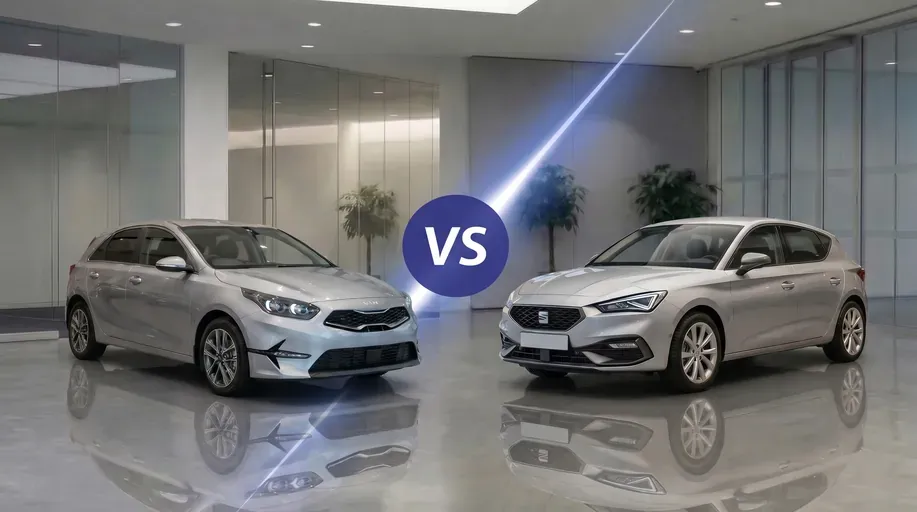
Detailed comparison of Kia Ceed vs SEAT Leon. Discover real-world experiences, differences in equipment, engine reliability, and read our verdict before buying a used car.
Apr 20, 2026
Mazda 3 vs. Toyota Corolla: Which bestseller is better? Our detailed comparison of engines, features, and handling will help you make your final choice.
Apr 13, 2026