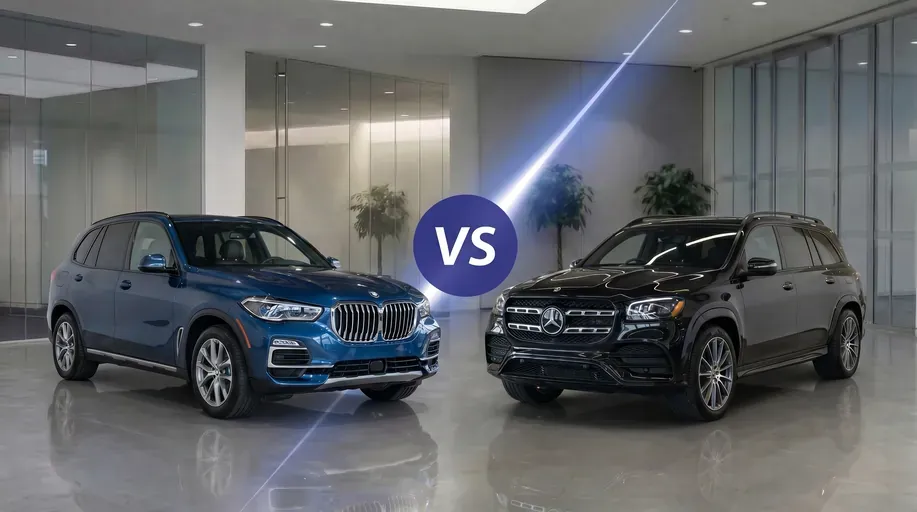
BMW X5 vs. Mercedes-Benz GLS: Complete comparison 2026
BMW X5 vs Mercedes-Benz GLS comparison. Discover real-world experiences, differences in spaciousness, engines, and equipment. Our verdict will help you choose the right SUV.
Apr 29, 2026
Articles
Car battle
Detailed comparison of Aston Martin DBX vs Bentley Bentayga. Discover the differences in performance or luxury and read our verdict for choosing the best SUV.
May 15, 2026


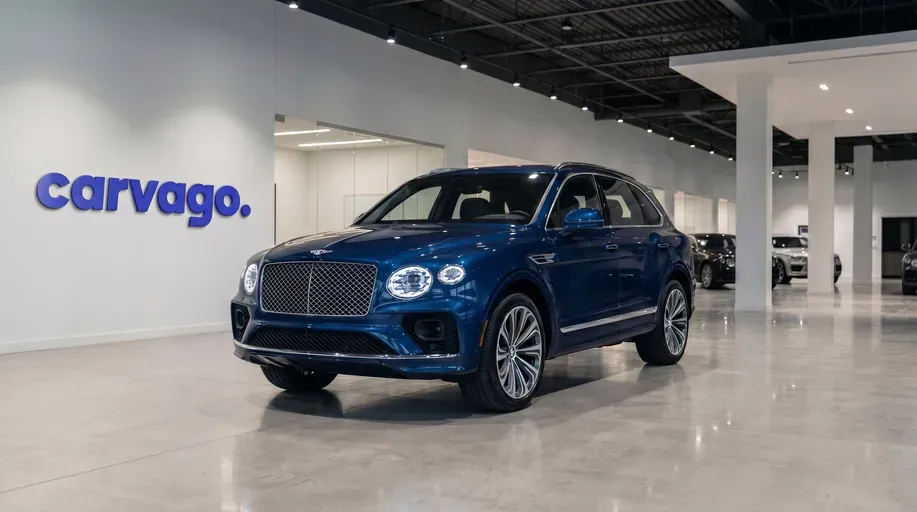
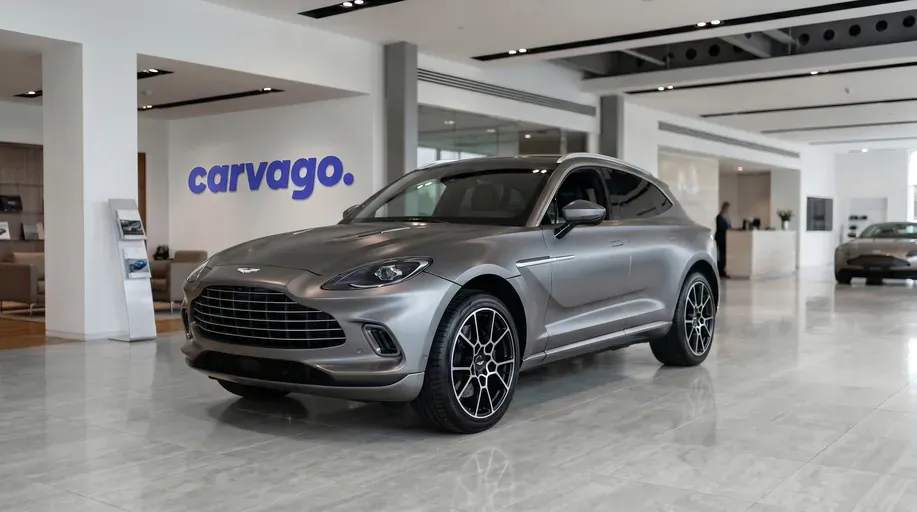
Aston Martin DBX, the very first SUV in the history of this famous British brand, brings to the market a unique combination of purely sporty driving characteristics and top-tier design craftsmanship. Standing against it is the Bentley Bentayga, a seasoned pioneer in the ultra-luxury SUV segment, long renowned among drivers for its unrivaled level of majestic comfort and uncompromising prestige. Let's take a detailed look at how these two British aristocrats fare in a head-to-head battle and which of them represents the better choice for your next premium used car purchase.
Looking at the exterior dimensions, the different approaches of the two British carmakers to the concept of a luxury sports utility vehicle are immediately apparent. While the Bentley Bentayga bets on the majestic and robust appearance of the traditional school, the Aston Martin DBX chooses the path of dynamic elegance and a sportier silhouette with a significantly lower roofline. Both cars belong to the category of large luxury SUVs, but their physical proportions target different expectations – the former embodies an unshakeable luxury cruiser, while the latter tries to look more like a raised grand tourer.
Interestingly, in terms of exterior width, both models are exactly the same – measuring a millimetre-identical 1998 mm. The main differences thus occur in the length and height of the body. The standard Bentley Bentayga, with its 5125 to 5144 mm, is approximately 86 to 105 mm longer than the Aston Martin DBX, which measures 5039 mm in length. The Bentayga is also noticeably taller, at roughly 1728 mm compared to 1680 mm for the DBX. The smaller height and length give the Aston Martin a slightly more compact feel behind the wheel and make maneuvering or parking in tighter urban spaces easier. Conversely, the Bentley benefits from its taller build with a better and more dominant view of the road and overall easier entry.
A specific paradox occurs when comparing the wheelbase, which is key for interior spaciousness. Although the standard Bentayga is longer in body, its wheelbase (2995 mm) is 65 mm shorter than that of the Aston Martin DBX (3060 mm). Thanks to wheels pushed as far as possible to the corners of the body, the Aston Martin benefits from very short overhangs, which is positively reflected in the interior proportions and overall driving stability. However, if you are looking for maximum space, Bentley has had a strong trump card up its sleeve since 2022 in the form of the extended EWB (Extended Wheelbase) version. With its 5305 mm in length and generous 3175 mm wheelbase, it clearly dominates the offer of rear passenger space, making it an ideal alternative for buyers who prefer to be driven by a personal chauffeur.
| Parameter | Aston Martin DBX SUV | Bentley Bentayga SUV |
|---|---|---|
| Length (mm) | 5039 | 5125 - 5305 |
| Width (mm) | 1998 | 1998 |
| Height (mm) | 1680 | 1722 - 1742 |
| Wheelbase (mm) | 3060 | 2992 - 3175 |
When choosing a luxury SUV from the used car market, typically for models around four years old, purely practical aspects such as trunk capacity also play a role. For families and active drivers, this seemingly unimportant parameter can represent the line between packing comfortably for a ski trip and having to make compromises. Although the first-generation Aston Martin DBX and Bentley Bentayga emphasize performance, prestige, and top-tier materials, both offer a relatively different approach to overall cargo capacity. Differences in their body shapes have a direct impact on how well they serve during daily family use.
In the standard configuration with five upright seats, the sportier Aston Martin has a noticeable lead. Aston Martin DBX models from 2021 and 2022 feature a 632-liter trunk, which is more than sufficient for weekend shopping or a longer vacation for four. The Bentley Bentayga offers a smaller base volume of 484 liters for most conventional engines (including the very popular V8 version). Those interested in greener operation should pay attention to older plug-in hybrid variants of the Bentayga (especially 2019–2020 models), where the battery module installation reduced the base capacity to 427 liters. For such a massive and otherwise spacious vehicle, this can represent a significant limitation.
A major turning point in the evaluation of utility comes when you need to transport larger cargo and decide to fold down the rear seats. In this regard, the Aston Martin DBX offers a maximum capacity of 1,530 liters, reflecting the trade-off for its elegantly sloping rear. In contrast, the Bentley Bentayga, thanks to its more traditional, boxier silhouette, can conjure up a massive maximum volume of 1,774 liters. This difference of nearly 245 liters provides exactly that much-needed space for a few extra suitcases or the hassle-free transport of bulky sports equipment. In terms of overall cargo capacity, the Bentayga is a significantly more useful vehicle, while the DBX remains more of a stylish highway express.
| Parameter | Aston Martin DBX SUV | Bentley Bentayga SUV |
|---|---|---|
| Base volume (liters) | 632 | 484 |
| Maximum volume with seats folded (liters) | 1530 | 1774 |
While the Aston Martin DBX clearly wins in base trunk volume and satisfies most common needs, the Bentley Bentayga triumphs thanks to its massive space with the seats folded, making it a much more versatile choice for moving or more demanding travelers.
When choosing a luxury SUV, towing capacity can often be an overlooked parameter, but for owners who plan to tow heavy trailers, boats, or luxury caravans behind their vehicle, it is a completely key figure. Both models represent the pinnacle of automotive engineering, but their approach to maximum trailer weight differs diametrically and reflects the different focus of both carmakers.
Aston Martin DBX offers a maximum braked trailer weight of 2700 kg for all its available engine versions on the used car market. This value does not change for either the standard version or the extremely powerful DBX707 model. Conversely, the Bentley Bentayga is a significantly more robust "towing beast," which easily offers a maximum capacity of an impressive 3500 kg.
An interesting point about the Bentayga model is the consistency of this figure across the entire range of engines. While for many competing SUVs, plug-in hybrid versions have significantly reduced towing capacity due to the higher weight of the batteries, the Bentley Bentayga Hybrid (250 kW) maintains the maximum value of 3500 kg despite its electrified system, just like the petrol V8 or W12 versions.
From a practical standpoint, both vehicles can handle common tasks without difficulty. The Aston Martin, with its 2700 kg limit, provides safe towing for a medium-sized caravan or a trailer with a smaller sports car, which is sufficient for a weekend trip or a longer holiday at the track. However, with its 3500 kg, the Bentley reaches the absolute legislative maximum for standard passenger cars. In practice, for the owner, this means trouble-free transport of large two-horse trailers or sizeable yachts without compromises regarding driving stability or safety. (The weight of an unbraked trailer is legislatively limited to the obligatory 750 kg in both cases for such massive SUVs).
If you are looking for a car where dominant towing capabilities without any restrictions are paramount, the Bentley Bentayga emerges from this comparison as the clear winner and the embodiment of maximum towing power. While the Aston Martin DBX can handle most common recreational scenarios with ease, the numbers show that the developers prioritized overall athleticism and sporty proportions over absolute towing capacity.
| Model and engine | Braked trailer weight (kg) | Unbraked trailer weight (kg) |
|---|---|---|
| Aston Martin DBX (405 kW) | 2700 | 750 |
| Aston Martin DBX707 (520 kW) | 2700 | 750 |
| Bentley Bentayga V8 (404 kW) | 3500 | 750 |
| Bentley Bentayga Hybrid (250 kW) | 3500 | 750 |
| Bentley Bentayga Speed (467 kW) | 3500 | 750 |
When choosing between the Aston Martin DBX and the Bentley Bentayga, the engine lineup represents two completely different approaches to luxury and performance. Aston Martin relies exclusively on thoroughbred V8s sourced from the Mercedes-AMG division, offering pure athletic performance starting at 405 kW (550 hp) and peaking at a breathtaking 520 kW (707 hp) in the DBX707 version. In contrast, Bentley provides a much broader and more diverse range of powertrains. A customer on the used car market can choose from a rational 3.0 V6 plug-in hybrid with a system output of 330 kW (449 hp), through a smooth and powerful 4.0 V8 (405 kW), to the majestic 6.0-liter W12 twelve-cylinder in the Bentayga Speed version with 467 kW (635 hp). If we focus on used cars approximately four years old, the choice narrows down to uncompromising sporting emotions with the Aston, or a combination of absolute silence, efficiency, and silky power with the Bentley.
The Aston Martin DBX keeps its engine range very narrow and straightforward, with maximum emphasis on dynamic driving characteristics. All first-generation versions available on the used market (introduced in 2020) are powered by a brilliant 4.0-liter twin-turbocharged V8 engine, paired with a nine-speed automatic transmission and intelligent all-wheel drive. The standard DBX offers an impressive 405 kW (550 hp) and 700 Nm of torque, ensuring excellent acceleration accompanied by a charismatic exhaust note. For those seeking absolute dominance, there is the DBX707 version (available from 2022). This pushes the boundaries of the SUV segment with a massively modified engine and a special wet-clutch transmission, producing a crushing 520 kW (707 hp) and 900 Nm. This makes the DBX707 one of the fastest luxury SUVs on the planet, with 0-100 km/h acceleration in just 3.3 seconds.
| Engine Type | Fuel | Power (kW) | Torque (Nm) | Transmission |
|---|---|---|---|---|
| 4.0 V8 Twin-Turbo (DBX) | Petrol | 405 | 700 | 9-speed auto |
| 4.0 V8 Twin-Turbo (DBX707) | Petrol | 520 | 900 | 9-speed auto |
Unlike the DBX, the Bentley Bentayga offers a significantly more varied range of engines that can satisfy a much wider spectrum of drivers. For those interested in roughly four-year-old models, the core of the range is the 4.0-liter twin-turbocharged V8. Interestingly, it produces exactly the same 405 kW (550 hp) as the base DBX but offers slightly higher torque (770 Nm) and utilizes a precise eight-speed automatic. For drivers who prioritize urban efficiency and zero local emissions, the Bentayga Hybrid is ideal. It combines a 3.0 V6 engine with an electric motor, delivering a combined system output of 330 kW (449 hp) and offering a pure electric range sufficient for typical city commutes. At the very top sits the ultimate Bentayga Speed with a massive 6.0-liter W12 engine producing 467 kW (635 hp) and 900 Nm of force. Note for used car buyers: Production of the legendary twelve-cylinders and older diesel variants has already ended. Bentayga Speed models from 2021 and 2022 thus represent one of the last and best opportunities to acquire this engineering gem on the used market.
| Engine Type | Fuel | Power (kW) | Torque (Nm) | Transmission |
|---|---|---|---|---|
| 3.0 V6 PHEV (Hybrid) | Plug-in Hybrid | 330 | 700 | 8-speed auto |
| 4.0 V8 Twin-Turbo | Petrol | 405 | 770 | 8-speed auto |
| 6.0 W12 Twin-Turbo (Speed) | Petrol | 467 | 900 | 8-speed auto |
From an engine perspective, each vehicle has its clearly defined target group. The Aston Martin DBX is the clear choice for enthusiastic drivers; its AMG-tuned V8 units are sharper, louder, and react with much greater ferocity. However, the Aston's range noticeably lacks a more economical or electrified variant for daily city commuting. The Bentayga, on the other hand, scores with its amazing versatility. Its V8 is a perfect and effortless all-rounder, the Hybrid version represents a logical choice for rational drivers, and the W12 version remains a masterpiece of silky-smooth yet crushing power. While the Bentley impresses with its British refinement and huge selection of engines, the Aston Martin wins the hearts of those looking for the soul of a true sports car in an SUV.
The Aston Martin DBX offers pure sporting emotions with explosive V8s, while the Bentley Bentayga counters with unrivaled versatility thanks to its efficient hybrid and majestic W12 twelve-cylinder.
Choosing the right engine is crucial for long-term satisfaction with luxury SUVs, as it fundamentally affects not only dynamics and fuel consumption but, above all, future service costs and reliability. Interestingly, although this comparison pits two proud British aristocrats against each other, purely German technology beats under the hoods of their most popular versions on the market for approximately four-year-old used cars. Both Aston Martin and Bentley rely on four-liter twin-turbocharged V8s with an identical base output of 550 hp for their flagship models, yet with completely different origins and characters – while the DBX utilizes a wilder heart from Mercedes-AMG, the Bentayga bets on a smoother group unit developed by Porsche engineers.
This engine represents by far the most sensible choice and an ideal compromise between sporty character and everyday usability in the first-generation lineup (available since 2020). Although you can also find the top-tier DBX707 version (offered since spring 2022) on the market, the standard V8 offers a more comfortable suspension setup for everyday life and a significantly more attractive price tag. Its greatest technical advantage is the engine itself – the unit with the code designation M177 from the AMG division is characterized by extremely fast response, a rich sound, and a massive torque of 700 Nm, which helps the car mask its actual weight. Mechanically, the engine is robust; however, when buying a used car, pay close attention to the oil change history; the interval should not exceed 15,000 km, otherwise there is a risk of expensive problems with premature turbocharger wear. Also, focus on the vehicle's behavior when cold. If the car was driven mainly on short city routes, the particulate filters may be clogged – this is indicated by rougher running after starting, excessive smoke, or the vehicle initiating exhaust system regeneration suspiciously often. We recommend this engine to drivers who demand a more emotional, sportier driving style and want an SUV with the soul of a thoroughbred "GT," while being able to accept a real-world combined fuel consumption of around 14 liters per 100 km.
In the case of the Bentayga, choosing the petrol V8 is an absolute necessity for anyone looking for maximum reliability and rational service costs in a vehicle from 2020 to 2022. The V8 Diesel and the older generation of the W12 version disappeared from the range in 2019, so you won't encounter them in four-year-old used cars, and the offered six-cylinder Plug-in Hybrid suffers from higher weight and a loss of dynamics and refinement once the battery is depleted. The V8 from the EA825 group family is therefore the ideal choice. It offers a massive 770 Nm of torque, and thanks to a lighter front end (compared to the remaining models with the heavy W12 like the Bentayga Speed), the car turns much more willingly, and the advanced cylinder deactivation system can bring real-world highway consumption down to a respectable 12 liters per 100 km. Surprisingly, the main risk with a roughly four-year-old used car is not the engine itself, but the vehicle's enormous weight exceeding 2.4 tons, which puts enormous strain on the chassis and brakes. During the test drive, listen carefully to the air suspension compressor – if it runs for an unusually long time or the car "kneels" to the ground after standing overnight, it indicates a leak in the air bellows, and a very expensive repair awaits you. Check the edge of the brake discs by touch and sight, as they often require replacement after just 40 to 50 thousand kilometers. The Bentayga V8 is the perfect machine for calmer drivers and long-distance travelers who want to swallow thousands of kilometers in absolute silence, comfort, and prestige without astronomical maintenance bills.
Official fuel consumption figures almost always differ from laboratory values in real-world driving, and this is doubly true in the category of ultra-luxury and heavy SUVs. Although owners of these vehicles usually do not count every liter of petrol, the total range on a full tank and the associated frequency of visits to filling stations can significantly affect travel comfort. Data from drivers themselves and from long-term user databases, such as Spritmonitor.de, clearly show that for large-displacement V8 or W12 engines, real-world consumption is extremely dependent on driving style. The table below is based on aggregated data for roughly four-year-old models, which are currently the most sought-after on the used car market.
| Model and Engine | Average Consumption (l/100 km) |
|---|---|
| Aston Martin DBX 4.0 V8 | 14.3 |
| Aston Martin DBX707 4.0 V8 | 14.2 |
| Bentley Bentayga Hybrid 3.0 V6 | 3.3 |
| Bentley Bentayga 4.0 V8 | 13.0 |
| Bentley Bentayga Speed 6.0 W12 | 14.3 |
Looking at the interpretation of trends, it is clear that both vehicles choose a different strategy. The Aston Martin DBX relies exclusively on traditional engineering. Its standard eight-cylinder and the extremely high-performance DBX707 version show almost identical appetites, which remain safely above the 14 liters per 100 kilometers mark. It is an interesting paradox (though not unusual for high-performance cars) that the more powerful version can, thanks to more efficient tuning and surplus power, show marginally lower consumption at normal highway speeds. In contrast, Bentley offers a much wider range of powertrains. The standard V8 is noticeably more economical than its British rival, while the majestic twelve-cylinder in the Speed version achieves values perfectly comparable to the Aston Martin. However, the absolute anomaly and attraction is the Bentayga Hybrid. The average of around 3.3 liters naturally applies to an ideal scenario with a regularly recharged battery, but it shows how much more efficient the operation of a luxury SUV can be if the technology matches the vehicle's use.
For the typical user, these differences define how the vehicle will be used on a daily basis. If you are looking for a luxury cruiser primarily for commuting within the metropolis and surrounding satellite towns and have the option to charge at home or in the office, the Bentayga Hybrid represents an exceptionally smart choice that will drastically reduce urban running costs and offer a quiet ride. On long highway routes, however, the classic V8 versions of both brands will require a larger fuel budget. Here, the eight-cylinder Bentayga will offer a slightly longer range on a single tank than the sportier but thirstier Aston Martin.
In the end, fuel consumption is not the main decision criterion for used cars with a price tag exceeding several million CZK, but it certainly shapes user-friendliness. From this comparison, the Bentley Bentayga emerges as a much more flexible vehicle. Thanks to the presence of a plug-in hybrid powertrain and a slightly more economical base V8, it can better suit a wider range of drivers, while the Aston Martin DBX represents the choice for purists who are happy to pay a higher bill at the petrol pump for uncompromising driving dynamics and the characteristic character of a British sports SUV.
The market for used luxury SUVs around 4 years old (i.e., 2021 and 2022 models) offers very interesting opportunities for both of these British aristocrats. The original price tags of both cars when new often exceeded the €206,000 mark, but the first and most dramatic wave of depreciation has already occurred. As a result, second-hand buyers can save significantly, even though we are still talking about highly exclusive and expensive vehicles.
Aston Martin entered the SUV segment with the DBX, carrying a typical sporting spirit. On the used market, this British athlete initially faces a slightly steeper decline in value compared to the Bentley, which, from a used car buyer's perspective, represents a fantastic advantage.
Individualization plays a significant role in the residual value of the DBX – cars luxuriously customized by the Q by Aston Martin division or richly equipped with exterior and interior carbon packages usually sell close to the upper end of the price range.
If you are looking for roughly four-year-old Bentley Bentayga models, you will be focusing on the significantly modernized version (the facelift). This addressed the shortcomings of the older infotainment from the previous generation and brought a more elegant exterior design inspired by the Continental GT range. This move helped the manufacturer greatly, and models from 2021 onwards hold their value slightly better and more stably.
Thanks to a wider range of powertrains (from the efficient plug-in hybrid to the mammoth W12), the overall selection of Bentaygas on the used market is significantly richer, making it easier to choose according to a specific budget.
| Model and engine | Indicative price (CZK) | Indicative price (€) |
|---|---|---|
| Aston Martin DBX V8 (2021–2022) | 2,300,000 – 3,000,000 Kč | €95,000 – €123,000 |
| Aston Martin DBX707 (from 2022) | 3,500,000 – 4,300,000 Kč | €144,000 – €177,000 |
| Bentley Bentayga V8/Hybrid (2021–2022) | 2,700,000 – 3,700,000 Kč | €111,000 – €152,000 |
| Bentley Bentayga W12/Speed (2021–2022) | 3,800,000 – 4,500,000 Kč+ | €156,000 – €185,000+ |
While the standard Aston Martin DBX represents a slightly more affordable entry point into the world of prestigious performance SUVs on the four-year-old used market due to steeper depreciation, the modernized Bentley Bentayga offers better value retention in exchange for a higher initial investment.
When evaluating the safety of premium vehicles, it is often mentioned at the outset that both representatives have earned the maximum five-star rating in Euro NCAP tests, although the context and specific year of testing must be taken into account. The protocols of independent organizations are constantly evolving and becoming more stringent over time, which is why percentage scores from different years cannot be directly compared. Current testing procedures require a comprehensive evaluation that includes new frontal impact simulations, advanced cyclist detection, and solutions for dangerous scenarios at intersections. However, for the most luxurious and expensive cars on the planet, to which both compared SUVs undoubtedly belong, one fundamental exception comes into play.
The Aston Martin DBX represents the brand's first SUV and, since the start of production in 2020, has relied on a bespoke, rigid aluminum architecture. Due to its high purchase price and low-volume production nature, this vehicle has never been, and likely will never be, officially tested by Euro NCAP. It is therefore not possible to define a testing year or provide percentage results for adult and child occupant protection. However, the absence of official figures in no way implies technological backwardness. From a protection standpoint, the vehicle meets modern standards and offers a package of assistance systems including autonomous emergency braking, blind-spot monitoring, adaptive cruise control, and lane departure warning.
The Bentley Bentayga finds itself in the same situation and has no Euro NCAP crash tests to its credit. For those interested in a vehicle around four years old, which corresponds to the modernized post-facelift version, there is a very reliable indicator of its passive safety. The Bentayga is built on the group's MLB Evo platform, which it fully shares with models such as the Porsche Cayenne and Audi Q7. Its technical siblings have been tested and earned excellent five-star ratings. Bentley's assistance equipment is among the absolute best and includes advanced night vision systems with pedestrian detection, predictive cruise control, and assistants for safe passage through urban intersections.
If we were to compare both British aristocrats in terms of real-world safety for daily use, both offer a very modern and comprehensive protection package corresponding to current used car market standards. Thanks to the massive technological background of the Volkswagen Group, the Bentley Bentayga offers slightly more sophisticated advanced assistance functions, and its robustness is evidenced by the excellent results of related models on the same platform. Aston Martin counters with a stiffer bonded aluminum body and does not lag behind in any important element of active safety.
| Parameter | Aston Martin DBX | Bentley Bentayga |
|---|---|---|
| Year of testing | ||
| Adult occupant protection | ||
| Child occupant protection | ||
| Vulnerable road users protection | ||
| Safety assist systems |
The absence of Euro NCAP test data is common in the ultra-luxury car category and should not deter a used car buyer. Both models are at the top level in terms of passive protection and the latest electronic assistants, with Bentley offering a slight advantage due to a platform shared with demonstrably five-star models from its parent group.
Beyond standard luxury equipment, both models offer much more than just basic features, and each has its own entirely different approach to added value and the definition of the perfect driving experience.
With its first SUV, Aston Martin bet on what it does best – combining top-tier driving dynamics with unmistakable aesthetics.
Bentley approaches luxury more like a mobile five-star hotel, where passenger technology, handcrafted details, and acoustic comfort play the leading roles.
Excellent driving characteristics reminiscent more of a sports car than a full-sized SUV
Attractive and elegant exterior design typical of Aston Martin models
Characterful and reliable V8 engine sourced from AMG with a fantastic sound profile
Surprisingly spacious interior with plenty of room even for adult passengers in the rear seats
Standard air suspension offers a great compromise between comfort and dynamics
Outdated multimedia system without a touchscreen (taken from older Mercedes-Benz models)
The craftsmanship of some interior details does not reach the absolute luxury quality of its British competitor
More noticeable wind noise around the frameless windows at higher highway speeds
High fuel consumption even at a normal and calmer pace
The Aston Martin DBX is the perfect choice for enthusiastic drivers who need family practicality but refuse to give up top-tier driving characteristics and a sporty character. Its main domain is winding backroads, where, thanks to a brilliantly tuned chassis, it can mask its dimensions and weight better than most luxury competitors.
Unrivaled level of luxury and interior craftsmanship with premium materials
Top-tier cabin soundproofing and maximum travel comfort even on very broken roads
A wide range of powertrains including a more economical plug-in hybrid version and a massive W12 engine
Modern and intuitive touchscreen infotainment system (available on models after the 2020 facelift)
Almost endless possibilities for personalization and optional equipment within the Mulliner program
Significant curb weight, which is clearly felt in corners and limits its overall agility
Extremely high costs for regular service, maintenance, and potential spare parts
A more cumbersome exterior design that can be visually polarizing
The optional third row of seats (if equipped) is very cramped and suitable at most for small children
Bentley Bentayga targets customers for whom absolute luxury, total silence on board, and the unquestionable prestige of the brand come first. This car functions as a perfect highway cruiser that pampers the occupants with uncompromising comfort under all circumstances, albeit at the cost of a somewhat more detached driving experience.
Based on long-term user feedback, service reports, official recalls, and insights provided by an independent vehicle technical inspection (CarAudit), we have compiled an overview of the most common problems that buyers of these roughly four-year-old luxury SUVs should watch out for.
Although the Aston Martin DBX is a mechanically quite robust vehicle, as a newcomer to the market and the brand's first SUV, it did not avoid several teething troubles and serious recalls (especially in 2021–2022 models).
The DBX model is mainly plagued by teething troubles in the chassis and electrical system, which were addressed by factory recalls. When buying a used car, it is absolutely crucial to verify whether the vehicle has undergone all necessary repairs and to check the condition of the rear axle in particular.
The Bentayga benefits from a shared platform with the Audi Q7, which gives it a solid technical foundation. However, the extreme weight and immense complexity of the onboard systems mean that any repairs are very expensive.
The Bentayga is built on a high-quality architecture, but due to its heavy weight, it takes its toll in the form of rapid brake wear and costly air suspension failures. A luxury car requires generous maintenance budgets, as neglected service quickly and drastically becomes more expensive.
When buying a used car, a thorough inspection is key. Here are some specific points to focus on for these two models:
The Aston Martin DBX offers a significantly larger luggage compartment with a volume of 632 liters. The Bentley Bentayga has a boot capacity of 484 liters in the standard five-seater version, while in the plug-in hybrid or luxury four-seater variant, this space is even smaller. For family holidays and transporting bulkier luggage, the DBX is a much more practical choice.
The Aston Martin DBX has a much sportier character thanks to its unique platform and all-wheel drive with a strong rear-axle bias. The steering feels more agile and gives the driver the sensation of sitting in a raised sports car. While the Bentley Bentayga is extremely fast in a straight line, its higher weight and overall focus on ride comfort are more apparent in corners.
The Bentley Bentayga absolutely dominates in terms of interior craftsmanship, offering unrivaled acoustic comfort and perfectly absorbing road imperfections. While the Aston Martin boasts beautifully finished leather, it loses out slightly in four-year-old used cars due to an older generation infotainment system without a touchscreen. For maximum comfort and isolation from the outside world on long journeys, the Bentley is the better candidate.
Bentley offers a significantly wider range of powertrains, including a more economical six-cylinder plug-in hybrid, the popular V8 engine, and the top-tier, highly prestigious W12 twelve-cylinder. Aston Martin relies exclusively on a characterful four-liter V8 sourced from the AMG division, which provides 550 hp in the standard DBX version. If you are looking for more eco-friendly operation or, conversely, the absolute pinnacle in the form of the W12 engine, the Bentayga gives you more options.
Both of these British SUVs are exceptionally exclusive vehicles, which is reflected in the very high prices for regular maintenance and spare parts. Bentley benefits slightly from sharing its chassis architecture (MLB Evo) with other premium Volkswagen Group vehicles, which can facilitate the availability of some technical components. Aston Martin, on the other hand, uses proven electronics and engines from Mercedes-Benz, but its authorized service network is noticeably sparser.
The duel between these two exceptional British SUVs from the used car market has no clear loser, as both vehicles approach the definition of luxury in completely different ways. Aston Martin DBX represents the perfect choice for enthusiastic drivers who will be captivated by its unrivaled sporty driving characteristics, the emotive performance of the AMG V8, and its elegant, dynamic design. In contrast, the updated Bentley Bentayga excels as an unbeatable highway cruiser that pampers its occupants with absolute acoustic silence, perfect craftsmanship, and, last but not least, unrivaled transport and towing capacity. While the DBX bets on purist emotions and behaves like a sports car on stilts, the Bentayga reliably appeals to demanding long-distance travelers requiring majestic comfort, a wider range of engines, and carefree versatility.
Sources: ADAC, auto.cz, e15.cz, automagazin.cz, hybrid.cz, autorskola.cz
This article was prepared using artificial intelligence tools. The section guarantor is Petr Dušek.

BMW X5 vs Mercedes-Benz GLS comparison. Discover real-world experiences, differences in spaciousness, engines, and equipment. Our verdict will help you choose the right SUV.
Apr 29, 2026

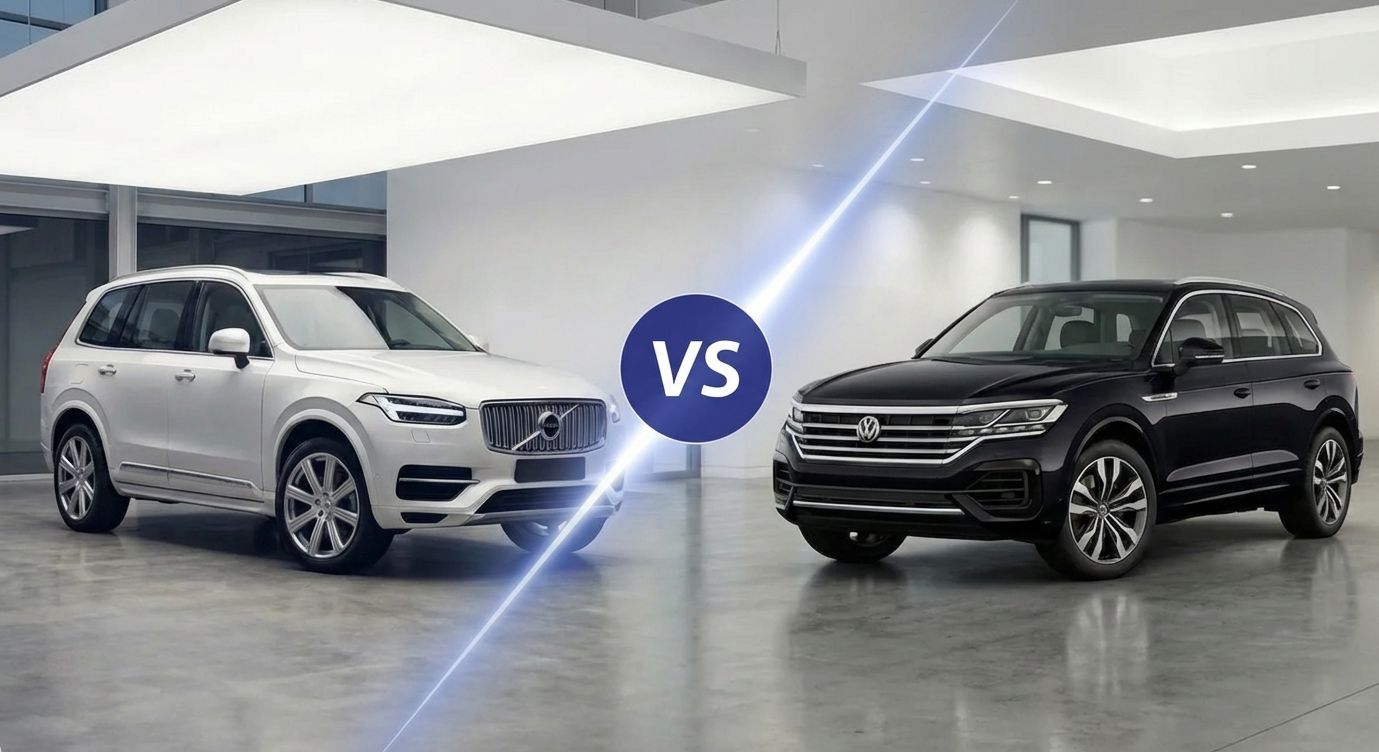
Volvo XC90 vs. Volkswagen Touareg: Which premium SUV is better? A detailed comparison, tests, and a clear verdict will help you choose.
Apr 14, 2026

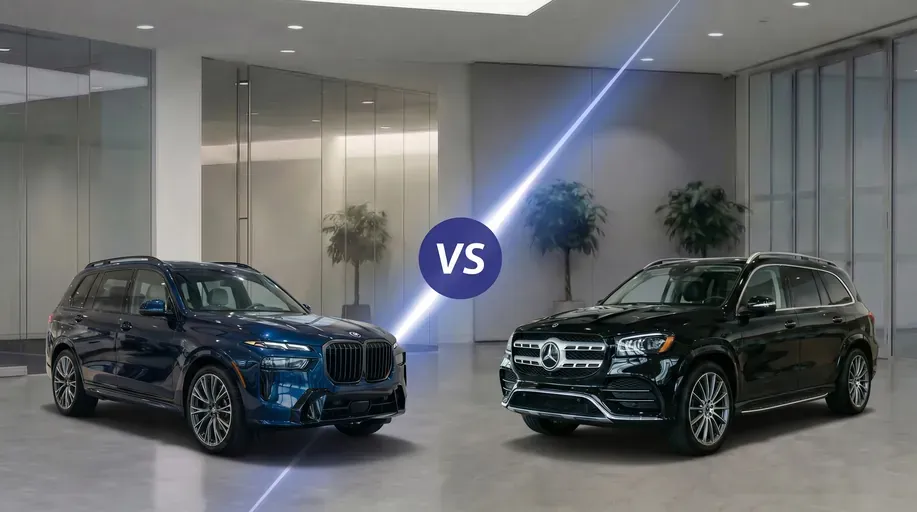
Detailed comparison of the BMW X7 vs. Mercedes-Benz GLS. Discover the real differences in equipment, driving characteristics, and spaciousness, and choose the right luxury SUV for you.
Apr 18, 2026