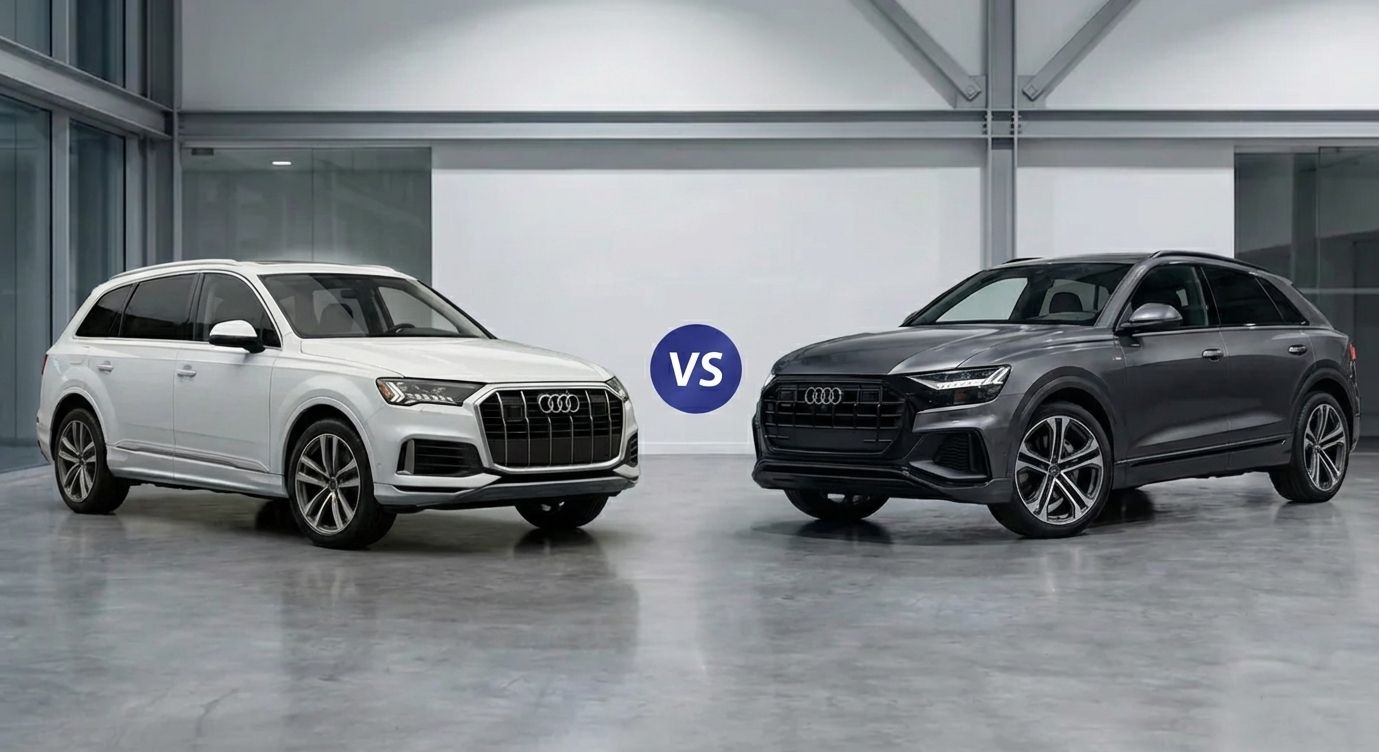
Car battle
Audi Q7 vs. Audi Q8: A Complete 2025 Comparison
Audi Q7 vs. Audi Q8: Which luxury SUV is better for you? A detailed comparison of design, practicality, and driving performance to help you decide.
Apr 13, 2026
Articles
Car battle
BMW X5 vs Mercedes-Benz GLS comparison. Discover real-world experiences, differences in spaciousness, engines, and equipment. Our verdict will help you choose the right SUV.
April 29, 2026
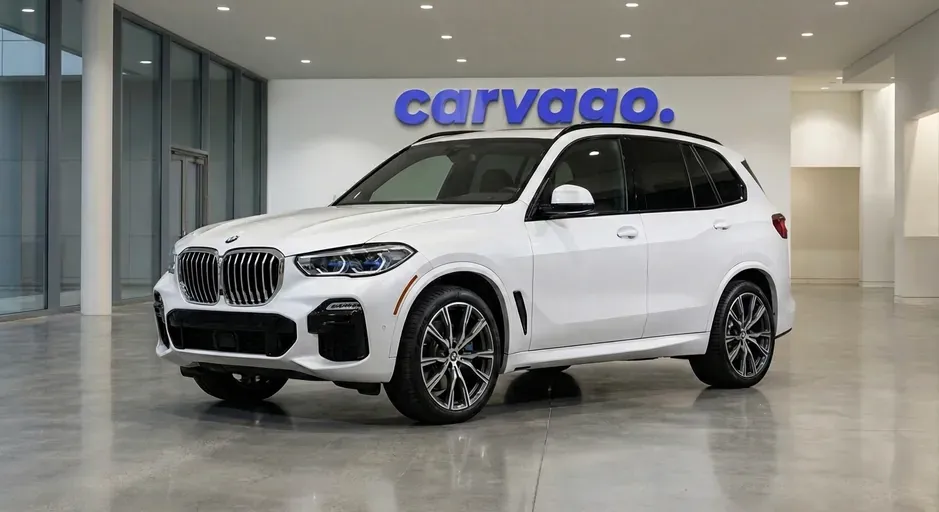
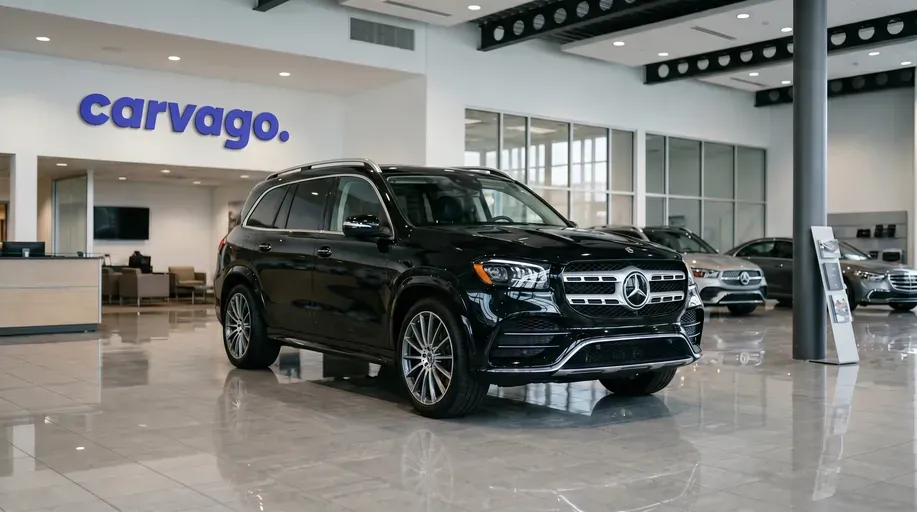
BMW X5 is a true pioneer in the luxury SUV segment, which has long and successfully combined dynamic sporty driving characteristics with premium comfort and everyday practicality. Standing against it is the majestic Mercedes-Benz GLS, formerly known as the GL-Class, which as the brand's flagship embodies the absolute pinnacle of spaciousness and luxury, earning it the unofficial title of "the S-Class among SUVs". Let's take a detailed look together at which of these two exceptional premium giants represents a better choice on the used car market and will emerge as the winner of our comparison today.
When comparing the exterior dimensions of both cars in detail, typical for the used car market at around four years of age (the G05 generation for BMW and the 167 generation for Mercedes), we encounter a fundamental difference in size categories. The Mercedes-Benz GLS is a substantial 285 mm longer than the BMW X5 (5207 mm compared to 4922 mm). This massive difference in length, combined with a 160 mm longer wheelbase (3135 mm vs. 2975 mm), means that the GLS offers incomparably more generous interior space. The Mercedes' extended cabin thus accommodates a full-fledged third row of seats without compromise, while in the BMW X5, the space for the sixth and seventh passengers is more of an emergency solution.
An interesting and often overlooked fact, however, is the width of both vehicles. Although the Mercedes-Benz GLS is overall larger and nearly 8 centimetres taller (1823 mm compared to 1745 mm for the X5), the Bavarian SUV is surprisingly 48 mm wider. The value of 2004 mm gives the BMW X5 a very wide, sporty, and aggressive stance on the road, which translates into excellent shoulder room in the interior. In contrast, thanks to its height, the Mercedes appears more majestic on the road and offers more headroom.
For everyday city driving, maneuvering in narrow streets, and parking in underground garages, the BMW X5 with its shorter body will clearly be the more accommodating and agile choice. Conversely, if your absolute priority is regularly transporting a large family over long distances in maximum comfort, the majestic dimensions of the Mercedes GLS are an irreplaceable advantage, though they come at the cost of poorer maneuverability in tight spaces.
| Parameter | BMW X5 SUV/Off-road | Mercedes-Benz GLS SUV/Off-road |
|---|---|---|
| Width (mm) | 2004 | 1956 |
| Length (mm) | 4922 - 4935 | 5207 - 5209 |
| Height (mm) | 1745 - 1765 | 1823 |
| Wheelbase (mm) | 2975 | 3135 |
Luggage space is one of the key factors for many premium SUV buyers, as these cars often serve as the primary family cruiser. When comparing approximately four-year-old used cars, namely the BMW X5 (G05) and Mercedes-Benz GLS (X167) generations, the different concepts and sizes of both models are fully revealed. While the X5 is a traditional representative of the upper mid-size class with five seats as standard, the GLS falls into the category of full-size luxury SUVs and always features three rows of seats. For everyday family use and overall practicality, this means fundamental differences that can be decisive when choosing on the used car market.
BMW X5 offers a luggage capacity of 650 liters in the standard five-seat configuration, which is a value perfectly sufficient for weekend shopping and longer holidays for four people. After folding down the second row of seats, the cargo space increases to a very respectable 1,870 liters. However, care must be taken when choosing the very popular plug-in hybrid versions on the market (for example, the xDrive45e model). In these, the total capacity is reduced due to the batteries stored under the floor – these models have a smaller trunk with a capacity of 500 liters as standard and 1,720 liters with the rear backrests folded down. Despite this reduction in volume, the X5 pleases with its popular two-piece horizontally split tailgate, which makes handling heavier items easier, and the lower part can even support an adult as a bench.
In contrast, the Mercedes-Benz GLS positions itself as the uncrowned king of interior space. If you electrically fold its third row of seats into the floor and use the car in normal five-seat mode, you get a massive 890 liters. For an average family, this represents space for several extra suitcases compared to the already large BMW. Even in a fully occupied seven-seat configuration, there are still 355 fully usable liters left behind the rear backrests. If, on the other hand, you need to transport the maximum amount of cargo, folding down both the second and third rows creates a completely flat surface with a van-like capacity of up to 2,400 liters. This comparison clearly shows that the GLS is intended for drivers requiring completely unlimited transport capacity.
| Parameter | BMW X5 SUV | Mercedes-Benz GLS SUV |
|---|---|---|
| Base volume (l) | 650 | 890 |
| Max. volume with seats folded (l) | 1870 | 2400 |
Thanks to its extra-large size, the Mercedes-Benz GLS is the clear winner for large families requiring the absolute maximum space without compromise, while the BMW X5 scores with a perfectly sufficient and practical trunk for normal everyday five-seat travel.
The ability to tow heavy trailers is often a decisive factor when buying a luxury SUV, and among roughly four-year-old used cars on today's market, both models represent the absolute top tier. Whether you plan to transport large boats or haul horses, the BMW X5 generation (G05, from 2018) and the Mercedes-Benz GLS (X167, from 2020) offer impressive towing power. The standard and also maximum permitted weight of a braked trailer for these giants is a respectable 3,500 kg, which is also the legislative maximum for this class of passenger vehicles in Europe.
While with the Mercedes GLS you can rely on the 3,500 kg figure across the board, whether you choose the GLS 450 petrol engine or the GLS 450 d diesel, with the BMW X5 you will encounter certain differences. Most popular six-cylinder and eight-cylinder BMW engines (such as the xDrive30d, xDrive40d, or the top-of-the-line M50i) can tow the 3,500 kg maximum without any problems. However, a significant difference occurs if you are considering purchasing a plug-in hybrid version (for example, the xDrive45e) or the entry-level four-cylinder xDrive25d. Due to different weight distribution and built-in batteries, their capacity is reduced to 2,700 kg. But even this reduced limit is very usable in practice – representing a performance perfectly sufficient for a weekend purchase of bulky building materials or a longer holiday with a family caravan. As for unbraked trailers, although detailed homologation data is not always explicitly listed in factory tables, both robust SUVs reliably handle the standard European maximum of 750 kg thanks to their weight.
In conclusion, for those who need to regularly tow the heaviest 3.5-ton loads, the Mercedes-Benz GLS offers maximum certainty with any engine version. With the BMW X5, you get perfectly comparable capabilities, but when buying a used car, you must pay increased attention to the chosen powertrain and avoid plug-in hybrid variants, whose limits are set slightly lower.
| Model and engine version | Braked trailer weight (kg) | Unbraked trailer weight (kg) |
|---|---|---|
| BMW X5 xDrive30d / xDrive40d / M50i (G05) | 3500 | 750 |
| BMW X5 xDrive25d / xDrive45e (G05) | 2700 | 750 |
| Mercedes-Benz GLS 450 / 450 d (167) | 3500 | 750 |
The differences in engine offerings between the BMW X5 and Mercedes-Benz GLS accurately reflect the distinct focus of both vehicles, which is a key factor for used car buyers. While the BMW X5 scores with an unusually wide range of engines, starting with an economical four-cylinder diesel and including an extremely popular plug-in hybrid version, the Mercedes-Benz GLS, as a giant luxury flagship, relies exclusively on majestic six-cylinder and V8 engines. For drivers looking for the ideal compromise between dynamics and fuel consumption in roughly four-year-old vehicles on the used car market, powerful six-cylinder diesels play a primary role for both brands. Furthermore, Mercedes standardly uses EQ Boost mild-hybrid technology for its petrol engines, which smoothes the power curve and helps with the efficiency of the large SUV, while BMW can please sports driving enthusiasts with pure internal combustion V8s from its M division.
Under the hood of the BMW X5 from the popular G05 generation (vehicles from 2018), you will find a solution for literally every type of driver. The base is the economical yet sufficient for a heavy SUV four-cylinder diesel xDrive25d. The true golden mean and the most sought-after engine on the used car market is the six-cylinder diesel xDrive30d, which increased from 195 kW to 210 kW during production and gained mild-hybrid assistance. For fans of crushing pull, there is the xDrive40d (250 kW) version or the legendary M50d with four turbochargers and a massive output of 294 kW. This top-of-the-line M50d diesel engine must be particularly emphasized – its production was permanently discontinued at the end of 2020 and it is no longer offered as new, making it an extremely desirable, almost collector's item on the used car market today. Drivers moving mainly in the city often reach for the successful xDrive45e plug-in hybrid with a real electric range of around 60 to 80 km. All BMW engines are standardly paired with the phenomenal 8-speed Steptronic automatic transmission and xDrive all-wheel drive.
| Engine type | Fuel | Power (kW) | Torque (Nm) | Transmission |
|---|---|---|---|---|
| xDrive25d | Diesel | 170 | 450 | 8-speed auto |
| xDrive30d | Diesel / MHEV | 195 / 210 | 620 / 650 | 8-speed auto |
| xDrive40d | Diesel / MHEV | 250 | 700 | 8-speed auto |
| M50d | Diesel | 294 | 760 | 8-speed auto |
| xDrive40i | Petrol | 250 | 450 | 8-speed auto |
| M50i | Petrol | 390 | 750 | 8-speed auto |
| xDrive45e | PHEV (Petrol+Electric) | 290 | 600 | 8-speed auto |
The engine range for the Mercedes-Benz GLS (X167 generation produced since 2019) is noticeably more exclusive and perfectly matches its status as the "S-Class among SUVs." In the range of roughly four-year-old used cars, you won't find any four-cylinders; the range confidently starts with the velvety smooth inline six-cylinder diesel in the GLS 350 d 4MATIC version. However, for a car with a curb weight of nearly 2.5 tons, the ideal and most common choice in advertisements is the more powerful GLS 400 d 4MATIC (243 kW) with a huge torque of 700 Nm, which guarantees carefree and fast highway travel with surprisingly reasonable fuel consumption. The petrol portfolio for pre-facelift generations (until 2023) is represented by the six-cylinder GLS 450 and the top-of-the-line V8 GLS 580. These petrol units have featured a 48V EQ Boost mild-hybrid system since the start of sales, which can briefly provide an additional 16 kW and 250 Nm, eliminating any turbo lag and lightening the vehicle's massive weight. The pinnacle for the most demanding buyers is the formidable AMG GLS 63 4MATIC+ variant. Power in the Mercedes is sent to the wheels exclusively through the smooth-shifting 9-speed 9G-TRONIC automatic transmission.
| Engine type | Fuel | Power (kW) | Torque (Nm) | Transmission |
|---|---|---|---|---|
| GLS 350 d 4MATIC | Diesel | 210 | 600 | 9G-TRONIC |
| GLS 400 d 4MATIC | Diesel | 243 | 700 | 9G-TRONIC |
| GLS 450 4MATIC | Petrol / MHEV | 270 | 500 | 9G-TRONIC |
| GLS 580 4MATIC | Petrol / MHEV | 360 | 700 | 9G-TRONIC |
| AMG GLS 63 4MATIC+ | Petrol / MHEV | 450 | 850 | 9G-TRONIC |
While the BMW X5 offers unprecedented variability, including an economical plug-in hybrid and a unique diesel quad-turbo, the Mercedes-Benz GLS bets on absolute prestige with powerful six- and eight-cylinder engines for uncompromising comfort and power reserves on long journeys.
Choosing the right engine is absolutely crucial for long-term satisfaction with a premium SUV. Our recommendations are based on real-world experience with approximately four-year-old vehicles, evaluations of their dynamics, actual fuel consumption, and proven mechanical reliability from the used car market. While the manufacturer emphasizes driver engagement and a slightly sportier response in the BMW X5, the Mercedes-Benz GLS is a typical majestic "cruiser," for which relentless and smooth towing power is essential. An interesting historical and technological fact is that with these generations (BMW G05 and Mercedes X167), both automakers returned to using advanced inline-six engines after years of experimentation. Thanks to their natural mechanical balance, these engines offer exceptional refinement and vibration-free operation, even in their diesel versions.
This three-liter diesel inline-six (internal designation B57) represents the absolute golden mean across the entire engine range for the G05 generation. It offers a well-balanced output of 286 hp and a massive torque of 650 Nm, making the dynamics perfectly confident even for a fully loaded vehicle. Unlike thirsty petrol V8s or complex plug-in hybrid systems, this diesel six-cylinder will please you with excellent real-world fuel consumption of around 8 to 9 liters per 100 km and top-tier mechanical reliability. It is the perfect choice for drivers who regularly undertake long journeys, drive to the mountains, or frequently tow a trailer. The only significant risk for four-year-old used cars (usually with a mileage of around 100,000 km) can be the clogging of the diesel particulate filter (DPF) or carbon buildup in the intake manifold if the previous owner subjected the car to long-term short city trips. Why it matters and how to tell: A clogged DPF filter creates enormous backpressure, which gradually reduces overall engine performance, significantly increases consumption, and can eventually lead to fatal and expensive turbocharger failure. Increased carbon buildup, in turn, impairs the engine's "breathing." You can tell if the system is in good condition during a test drive by the velvety smooth idle without any RPM fluctuations. The exhaust tips must be clean to the touch, without layers of greasy black soot. Certainty is then provided by connecting to OBD diagnostics and checking the current backpressure and the amount of ash directly in the DPF filter.
For a massive SUV like the GLS, weighing over 2.4 tons, a powerful diesel six-cylinder is an absolute necessity. The 2.9-liter inline engine (code OM 656) with 330 hp and a giant torque of 700 Nm ensures that such a large vehicle does not feel sluggish even when fully occupied by seven passengers. It excels in perfectly quiet, noise-insulated operation and, considering the car's gigantic dimensions, very reasonable fuel consumption oscillating between 9 and 10 liters of diesel. It is tuned for calm, smooth, and maximum comfort long-distance driving. As with all modern clean-emission diesels, great care must be taken with the complicated urea injection system (AdBlue/SCR) and exhaust gas recirculation (EGR) valves in a used car, as they can be sensitive to additive crystallization or dosing pump failure. Why it matters and how to tell: A fault in the SCR emission cleaning system usually means the control unit activates a relentless mileage countdown (the so-called no-start countdown). Once it expires, for legislative reasons, you will not be able to start the engine at all, and the subsequent repair at a service center can climb into the tens of thousands of crowns. Therefore, during the inspection of a used car, carefully monitor all messages from the on-board computer, check if the AdBlue range makes sense, and ensure the system does not require immediate service. It is again important to go through the diagnostics in detail to see if error codes for NOx sensors or AdBlue pump pressure are stored.
| Model | Recommended Engine | Power | Torque | Available Years (per database) |
|---|---|---|---|---|
| BMW X5 (G05) | xDrive30d Steptronic | 210 kW / 286 hp | 650 Nm | 2020 - 2023 |
| Mercedes-Benz GLS (X167) | 400 d 4MATIC | 243 kW / 330 hp | 700 Nm | 2019 - 2023 (see note) |
Important note on engine availability: When looking for an ideally four-year-old used car, the GLS 400 d model is the most sensible choice on the secondary market. However, as evident from available databases and the history of available model years, this specific engine is no longer available as new. In the manufacturer's current price lists and in newer model years (roughly from autumn 2023), it has been fully replaced by an updated and even more powerful version named GLS 450 d 4MATIC, whose specification is now the main diesel representative. In contrast, the recommended BMW X5 xDrive30d has consistently maintained its strong position in the lineup and forms the backbone of sales for both four-year-old used cars and the latest production years.
The difference between official paper values and real-world fuel consumption in large luxury SUVs is often vast. While laboratory measurement methodologies paint an extremely optimistic picture, real-world experiences from owners in crowdsourced databases, such as the Spritmonitor.de platform, clearly show that the physics of two-ton behemoths cannot be so easily cheated. For four-year-old used cars, which now represent the most affordable path to this category of vehicles, it is therefore important to perceive the stated brochure values more as a reference base to which you typically add another liter or two in operation. The table below summarizes the average fuel consumption for the most common engines of approximately four-year-old generations of the BMW X5 (G05) and Mercedes-Benz GLS (X167), organized clearly by powertrain type.
| Model and engine | Average consumption (l/100 km) |
|---|---|
| BMW X5 xDrive30d | 6.6 |
| BMW X5 xDrive40d | 6.9 |
| Mercedes-Benz GLS 450 d | 7.9 |
| BMW X5 xDrive40i | 8.9 |
| Mercedes-Benz GLS 450 | 9.9 |
| BMW X5 M50i | 11.6 |
| BMW X5 xDrive45e | 1.2 |
Looking at this data, it is clear that modern diesel six-cylinder engines still represent the absolute pinnacle of efficiency for such massive and heavy SUVs. The Bavarian BMW X5 xDrive30d has long been one of the most economical choices in the entire premium segment, and even its more powerful sibling, the xDrive40d, remains surprisingly modest in terms of appetite. The more robust and larger Mercedes-Benz GLS 450 d naturally demands a bit more diesel, but it still performs excellently. However, with petrol engines, operating costs soar – standard six-cylinders consistently hover between 9 and 10 liters, and the sport-oriented BMW X5 M50i with its V8 easily exceeds the 11-liter mark. The real paradox, however, is the plug-in hybrid X5 xDrive45e. The declared average consumption of 1.2 l/100 km seems unbelievable, but it only works on the condition of consistent and regular battery charging. If you set off on a long journey with a depleted battery, the savings instantly vanish, and the car begins to consume a comparable or even greater amount of fuel than a standard petrol version.
For the typical buyer of a used premium SUV, this brings several key insights. Highway mile-munchers, regular trippers, and heads of larger families will clearly find the most utility in diesel versions such as the X5 xDrive30d or GLS 450 d. Excellent torque is complemented by a fantastic range on a single tank, which you will appreciate especially on long routes across Europe. Drivers for whom long journeys are more of a rarity and who have a higher fuel budget can benefit from the above-average refinement and smoothness of petrol six-cylinders. The plug-in hybrid, on the other hand, profiles itself as a strictly urban or suburban choice that only makes sense for customers with the possibility of plugging the car in overnight every day.
In the end, however, fuel consumption will likely not be the main and only point on which the decision between these two cars hinges. Buyers of four-year-old luxury used cars usually have other priorities. The Mercedes-Benz GLS inherently consumes more fuel than the BMW X5 because it is a genuine seven-seater cruiser with generous volume and worse overall aerodynamics. The real duel here does not take place in the field of tenths of a liter of petrol or diesel, but in the fact of whether you absolutely need the maximum spaciousness of the majestic Mercedes for family life, or whether you prefer the more driver-friendly, agile, and economical BMW with a more diverse range of engines.
When comparing the prices of approximately four-year-old used cars (vehicles manufactured in 2021 and 2022), it is necessary to clarify one fundamental fact right at the start – these vehicles do not directly compete in terms of size. While the BMW X5 (G05 generation) is a premium mid-size luxury SUV (whose direct rival is the Mercedes-Benz GLE), the GLS model (X167 generation) falls into the category of giant full-size luxury SUVs, which the automaker profiles as the "S-Class among vehicles with higher ground clearance." This class difference is massively reflected in used market prices.
| Model (2021–2022 years) | Segment | Estimated price from | Estimated price to |
|---|---|---|---|
| BMW X5 (G05) | Mid-size luxury SUV | €49,000 | €74,000 |
| Mercedes-Benz GLS (X167) | Full-size luxury SUV | €66,000 | €94,000 |
Note: Values reflect average advertised prices on the market; specific amounts depend on mileage, documented service history, and optional equipment.
Luxury SUVs lose value very quickly, which represents a huge opportunity for used car buyers. Both cars experience a steep price drop during the first four years of life, often writing off 45 to 50% of their original value. However, because the Mercedes is much more expensive as new in absolute terms, the nominal financial drop for the first owner is more significant. There are, however, noticeably fewer used GLS models on the market than X5s, making it a more exclusive and rarer commodity.
Although purchasing such a four-year-old vehicle is tempting – the customer gets a premium vessel for the price of a new mid-range family car – it is necessary to remember the hidden operating costs. Whether we are talking about the G05 or the X167, both vehicles represent the absolute pinnacle of technology for their time.
Main risks for your wallet:
From a market perspective, BMW has the advantage of better availability of aftermarket spare parts due to sharing many components across the brand's models, while the GLS has many specific units corresponding to the flagship range.
While the BMW X5 offers great dynamics and everyday usability for substantially more accessible amounts, the significantly more expensive Mercedes-Benz GLS is the embodiment of giant interior space and absolute luxury for up to seven people. The choice on the used market should therefore be guided primarily by whether you truly need the majestic dimensions of a vehicle one class higher, for which you will pay a massive premium with Mercedes.
When evaluating the safety of these premium SUVs, it is appropriate to mention that in terms of architecture, both vehicles meet the five-star Euro NCAP rating standard. However, for used car buyers in today's market, it is extremely important to put this maximum number of stars into the context of the time, specifically the year in which the vehicles underwent testing.
The testing protocols of the independent organization Euro NCAP are constantly evolving and becoming stricter over time. Every few years, more sophisticated frontal impact simulations (e.g., a mobile barrier instead of a static one), more detailed methodologies for detecting cyclists and pedestrians, or entirely new scenarios for preventing collisions at intersections are introduced. For this reason, percentage scores obtained in the past cannot be directly and absolutely compared with the results of the latest models tested under today's rules.
The current generation of the BMW X5 (G05) underwent crash tests in 2018 and received a full five stars. Adult occupant protection was rated at a very above-average 89%, while child protection reached a solid 86%. The vehicle demonstrated exceptional passenger compartment stability during impact, although it lost a fraction of a point due to an incorrectly deploying driver's knee airbag. Vulnerable road user protection (pedestrians and cyclists) and safety assistance systems both received 75%. This result reflects the presence of advanced autonomous emergency braking, which worked reliably at speeds typical for city traffic. However, testing took place before the introduction of the most modern, stricter methodologies applied after 2020.
For the Mercedes-Benz GLS (X167 generation), the situation is completely different. Due to its high purchase price and relatively low sales volumes on the European market, this massive model was never independently tested by Euro NCAP. Safety assumptions are therefore usually derived from its smaller technical sibling, the GLE model, which received the maximum five stars in 2019. However, Mercedes-Benz commonly applies stricter internal crash tests to its flagship models than required by contemporary legislation, and the vehicle also benefits significantly from its massive physical construction weighing over 2.5 tons. However, because official Euro NCAP test values are missing for the GLS itself, no percentage data is listed for it in the table.
In conclusion, while the BMW X5 scores with clearly documented, specific results and the transparency of homologation tests, the Mercedes-Benz GLS relies more on its unrivaled size, sophisticated assistance systems, and safe architecture shared with the top-rated GLE model. If you are looking for a proven and officially documented safety package certified according to the standards of its time, the BMW X5 offers a more comprehensive guarantee of passive and active protection.
| Parameter | BMW X5 | Mercedes-Benz GLS |
|---|---|---|
| Year of testing | 2018 | - |
| Adult occupant protection | 89 % | - |
| Child occupant protection | 86 % | - |
| Vulnerable road user protection | 75 % | - |
| Safety assistance systems | 75 % | - |
While the BMW X5 can rely on clearly documented test results with a perfect rating for occupant protection, the Mercedes-Benz GLS relies on its impressive dimensions and assumed top-tier safety derived from the closely related GLE model.
In addition to standard equipment, each of the models offers several unique features that can be decisive for the customer and demonstrate the different approaches of both automakers to luxury, innovation, and utility.
In the G05 generation, BMW focuses primarily on dynamics, the driving experience, and assistance systems that facilitate daily movement in tight spaces as well as on the highway.
Mercedes' largest SUV, internally designated as X167, brings innovations to the segment focused primarily on maximum comfort, generous space, and fascinating chassis performance.
Excellent driving dynamics and precise steering, which are among the best in the large SUV class
Top-tier and efficient straight-six engines (for example, the popular 30d versions or the 45e plug-in hybrid)
Highly intuitive and fast iDrive multimedia system with logical physical controls
More compact exterior dimensions and lower weight make daily parking and maneuvering in the city easier
Significantly lower purchase and operating costs on the used car market compared to the GLS
Significantly less interior space, which is especially evident in the rear legroom
The optional third row of seats is very cramped and realistically usable only for small children
Stiffer chassis tuning may not suit everyone, especially on broken roads and with large wheels
BMW X5 is an ideal choice for drivers looking for a premium SUV with an emphasis on driving pleasure, top-tier onboard technology, and reasonable daily usability. Thanks to better agility and lower operating costs, it makes the most sense for typical families who do not primarily need a seven-seat layout.
Huge interior space with full-sized room for adult passengers even in the third row
Extraordinary driving comfort and top-tier cabin soundproofing thanks to the standard air suspension
Materials, equipment, and overall interior craftsmanship corresponding to the luxury S-Class
Generous luggage space, which is above average in volume even with the third row of seats up
Impressive appearance and uncompromising safety parameters
Due to its giant dimensions (length over 5.2 meters), parking in underground garages and city centers is very challenging
Significantly higher purchase price for a used car, more expensive service tasks, and spare parts prices
The MBUX infotainment with many touch surfaces is feature-rich but can feel more complex for quick operation while driving
The vehicle's high curb weight is very noticeable in corners and during evasive maneuvers
Mercedes-Benz GLS targets customers who do not want to make any compromises regarding interior space, absolute comfort, and prestige. It is the perfect highway cruiser for large families, capable of comfortably transporting up to seven adults in first-class luxury.
Based on our long-term experience, breakdown statistics from service reports, and comprehensive car inspections, we have compiled an overview of the most common problems that buyers of roughly four-year-old used premium SUVs should pay the most attention to.
The fourth generation of the BMW X5 (G05) is considered a robust and mechanically reliable choice within the luxury SUV class, but its complex electronics and all-wheel-drive system require strict adherence to maintenance.
The BMW X5 offers some of the best engines on the market; however, when buying a used one, focus primarily on the condition of the xDrive transfer case and timely prevention for the air suspension.
The largest SUV from the three-pointed star brand in the X167 generation is exceptionally technologically advanced, which brings specific risks after several years of operation and accumulated mileage.
The driving and spatial comfort of the Mercedes GLS is unprecedented, but high purchase prices are also reflected in the prices of spare parts – the greatest caution is required regarding the 48V mild-hybrid system and the condition of the air bellows.
When buying a used car, a thorough inspection is key, especially with such heavy and technologically advanced premium SUVs. Both vehicles are packed with advanced electronics, and therefore an independent technical inspection of the car via the CarAudit service can reveal hidden defects before they cost you hundreds of thousands of crowns in potential repairs. Here are some specific points to focus on with these models:
The Mercedes-Benz GLS has a significantly larger boot, as it belongs to the category of full-size large SUVs. With the third row of seats folded down, the GLS offers an impressive 890 litres of volume, while the BMW X5 has approximately 650 litres. For families carrying a large amount of luggage or oversized loads, the Mercedes is clearly the more practical choice.
The BMW X5 has long been known for its excellent driving characteristics and sportier chassis tuning, providing the driver with great feedback. In contrast, the Mercedes-Benz GLS focuses primarily on maximum driving comfort, perfect isolation from the surroundings, and smoothness on long journeys. If you prefer more dynamic steering and agile cornering, the BMW X5 is the better candidate.
The Mercedes-Benz GLS is designed as a luxury seven-seater SUV, offering plenty of space for adult passengers even in the third row. The BMW X5 is a five-seater as standard, with the third row of seats available only as an optional extra on this model and more suitable for children. Therefore, if you regularly transport more than five people, the GLS will provide you with an incomparably higher level of comfort.
Given that the BMW X5 falls into a class below among mid-size SUVs, its purchase and operating costs are generally lower. The Mercedes-Benz GLS is the brand's technological flagship, which for four-year-old used cars means higher spare parts prices, more expensive service tasks, and higher insurance premiums. Thus, the BMW represents a more rational choice for the wallet, while the GLS is a more exclusive but costlier option.
Roughly four-year-old used cars from both brands feature the best the premium car market has to offer. The iDrive system in the BMW X5 is often praised by motoring journalists for its exceptional intuitiveness and the retention of a physical rotary controller. The Mercedes-Benz GLS offers the MBUX system with giant connected displays and great voice control, but its touch interface may require a bit more getting used to.
Choosing between these two popular premium used cars depends primarily on your actual space requirements and driving preferences. BMW X5 represents a more rational, agile, and more economical choice with excellent dynamics, which, with its dimensions and characteristics, perfectly meets the needs of an average family in daily use. In contrast, the majestic Mercedes-Benz GLS fulfills the role of the ultimate highway cruiser, which, for significantly higher purchase and maintenance costs, offers the absolute pinnacle of luxury and full comfort for seven adult passengers. While the Bavarian SUV thus makes the most sense as a driver-appealing and versatile car, the Stuttgart giant is the clear winner for large families requiring unrivaled transport capacity and maximum prestige without any compromises.
Sources: ADAC, denik.cz, lidovky.cz, mobilmania.cz, elektromobil.cz, cistadoprava.cz
This article was prepared using artificial intelligence tools. The section guarantor is Petr Dušek.
Audi Q7 vs. Audi Q8: Which luxury SUV is better for you? A detailed comparison of design, practicality, and driving performance to help you decide.
Apr 13, 2026
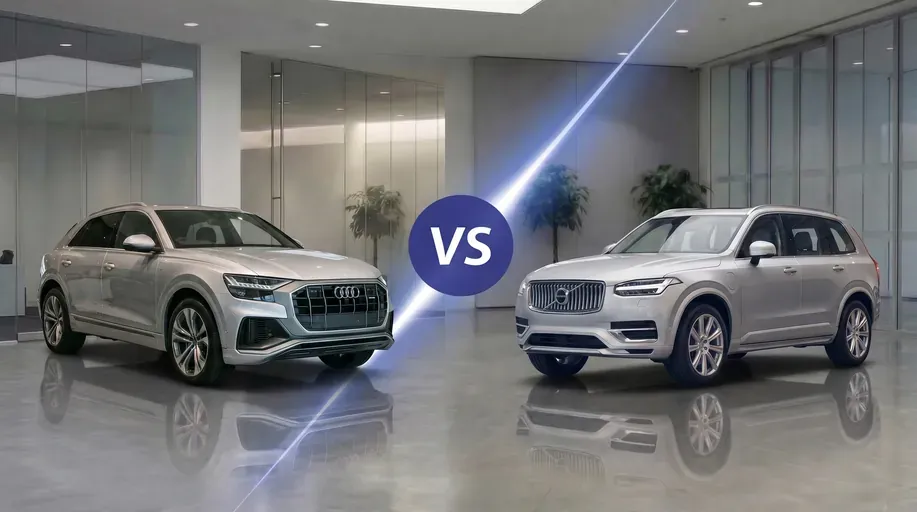
Audi Q8 vs Volvo XC90: Detailed comparison of premium SUVs. Discover details about equipment, driving characteristics and read our verdict. Which one to choose?
Apr 20, 2026
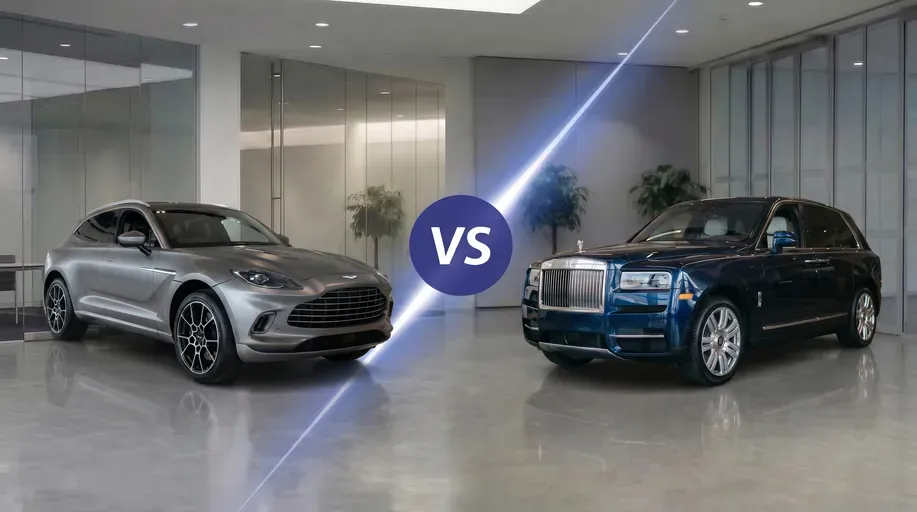
Aston Martin DBX vs. Rolls-Royce Cullinan: A detailed comparison of performance, luxury, and features. Read our verdict and find out which premium SUV to choose.
Apr 18, 2026