Articles

Car battle

Alfa Romeo Giulia vs. Volvo V60: Complete comparison 2026

Detailed comparison of Alfa Romeo Giulia vs Volvo V60. Discover the differences in driving characteristics and equipment, and read our verdict for a safe used car choice.

May 3, 2026

VS
Alfa Romeo Giulia

Alfa Romeo Giulia

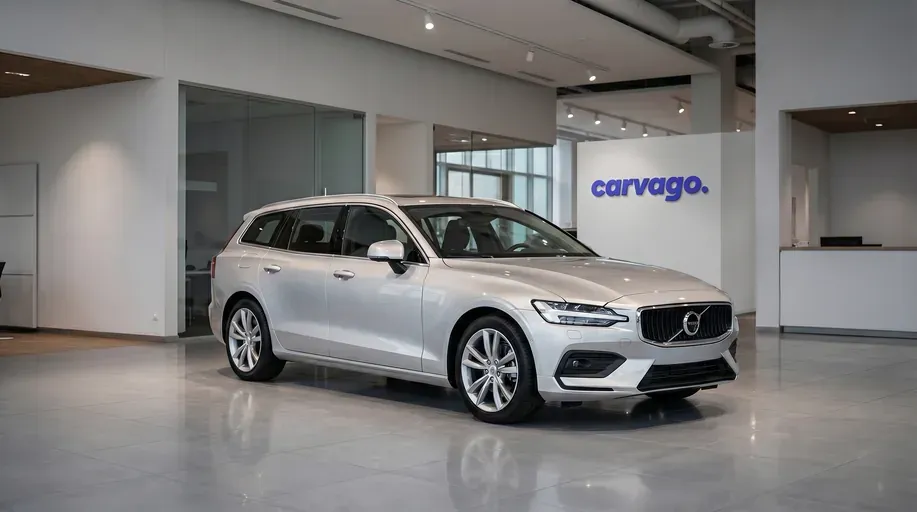
Volvo V60

Volvo V60

Introduction

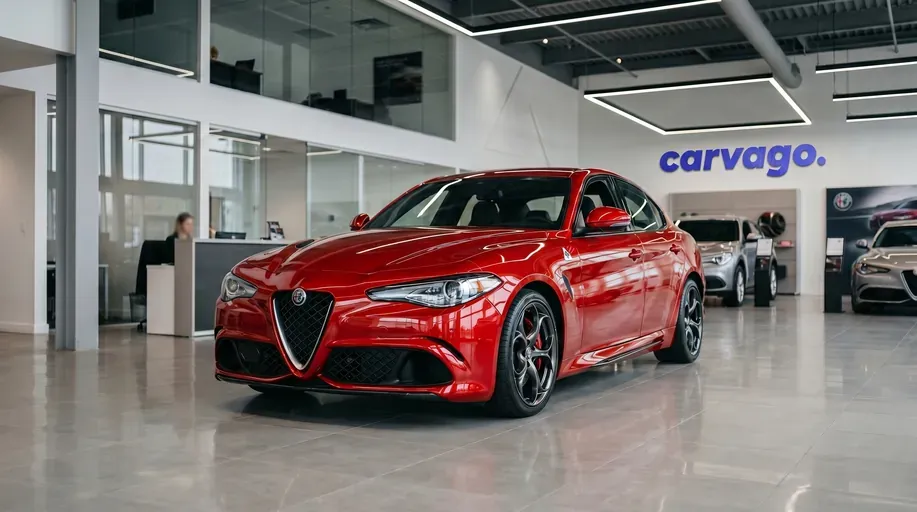
Alfa Romeo Giulia represents the embodiment of Italian passion for sporty driving, masterfully wrapped in the exceptionally elegant body of a premium sedan. Standing against it is the Volvo V60, a representative of traditional Swedish family estates that bets on Scandinavian practicality, minimalist design, and an unrivaled level of safety. In this detailed comparison, we will look together at whether emotions and dynamics from the Apennine Peninsula will win in your choice, or if you will rather prefer rational Nordic comfort for everyday travel.

Comparison of External Dimensions

Looking at the exterior dimensions of both cars, the difference in their body styles is immediately apparent. While the Alfa Romeo Giulia appears on the four-year-old used car market exclusively as a sporty sedan, the Volvo V60 (in its current second generation) confidently represents the popular category of practical family estates. This fundamental difference is strongly reflected in the overall proportions. With a length of 4,778 mm, the Volvo is 128 mm longer than the standard version of its Italian competitor. On one hand, this value adds to the Volvo's visual majesty and interior volume, but on the other hand, it means the Italian sedan will be slightly more maneuverable when looking for a parallel parking space.

The wheelbase, which is a key parameter for passenger interior space, also speaks in favor of the Swedish representative. The Volvo's value of 2,872 mm exceeds the Alfa Romeo's wheelbase (2,820 mm) by a significant 52 mm. In practice, this means noticeably more generous legroom for rear-seat passengers and slightly more confident directional stability at highway speeds. The Alfa Romeo Giulia, on the other hand, benefits from its shorter build and slightly greater width (standard 1,860 mm, top versions up to 1,874 mm compared to 1,850 mm for the Volvo). A wider stance and shorter wheelbase help the Alfa achieve better dynamic properties and phenomenal agility in corners.

In terms of overall height, both models are surprisingly similar, both opting for a low-slung, almost sporty silhouette. The Volvo's height is 1,432 mm, while the Giulia ranges between 1,433 and 1,450 mm depending on the version and chassis. Overall, the dimensions clearly define the character of both cars. If you are looking for maximum interior space and a generous family car, the longer and more spacious Volvo V60 is objectively the more practical choice. The Alfa Romeo Giulia, by contrast, bets on a more compact and athletic footprint, which will be appreciated especially by drivers looking for a sportier feel and easier handling in the city.

ParameterAlfa Romeo Giulia SedanVolvo V60 Estate
Length (mm)4643 - 46504778
Width (mm)1860 - 18741850
Height (mm)1433 - 14501432
Wheelbase (mm)28202872

Trunk Volume

When choosing a roughly four-year-old used car, trunk capacity is a key factor for many families and practical-minded drivers. Here we encounter completely different approaches from the two compared models, which clearly define their body styles. While the Alfa Romeo Giulia is a classic sports-oriented sedan where design and driving dynamics take center stage, the Volvo V60 is a traditional representative of family estates. This difference fundamentally determines how well the cars serve in daily family duties, long trips, or when transporting bulkier items.

The Alfa Romeo Giulia offers a base trunk capacity of 480 liters in its three-box body. This value is perfectly sufficient for weekend shopping or a longer holiday for two to three people. However, as is typical for sedans, practicality is limited by a smaller loading opening and a physically separate luggage compartment. Although the rear backrests can be folded down in some versions to transport longer items, the overall usability does not reach the quality of an estate body, which significantly complicates the loading of larger boxes or bulky sports equipment.

The second-generation Volvo V60 plays in a completely different league from the perspective of family usability. The standard trunk capacity for regular engines from 2021 to 2024 is a solid 519 liters. For older model years or plug-in hybrid versions (Recharge T6 and T8), where the battery and electric drive components take up some space under the floor, the volume decreases slightly to 481–495 liters. The main advantage of this estate, however, is the generous opening and the ability to fold the rear seats, creating a maximum transport capacity of up to 1431 liters (or 1393 liters for hybrids). In practice, this means space for several extra suitcases, completely trouble-free transport of a stroller or pets, and overall excellent versatility for everyday life.

Trunk Capacity Comparison

ParameterAlfa Romeo Giulia SedanVolvo V60 Estate
Base capacity (liters)480 l519 l
Maximum capacity with seats folded (liters)Not specified1431 l

📦 The Battle of Family Practicality

If maximum versatility and family usability are key for you, the Volvo V60 with its spacious and easily accessible trunk is the clear choice. While the Alfa Romeo Giulia offers a decent base capacity for regular travel, its sedan concept logically limits the transport of larger and less manageable items.

Discover the true condition of the car thanks to an independent inspection

Order CarAudit™

Trailer Weights

The ability to tow a trailer is often a deciding factor for active families, caravan owners, or drivers with a weekend cottage. It is in this practical figure that the different character and focus of the two compared cars are fully revealed.

The Alfa Romeo Giulia (current generation 952, which is a typical representative on the four-year-old used car market) offers a rather basic standard as a sportily-styled sedan. Whether there is a 2.0 Turbo 16V petrol engine or a 2.2 Diesel engine under the hood, the maximum braked trailer weight is always a flat 1,600 kg. It is also important to mention that for the top sporting variants like the Quadrifoglio or the extreme GTA and GTAm versions, towing capacity data is not provided at all, as these models are not designed for towing from the factory.

Conversely, the second-generation Volvo V60 (on the market since 2018) proves its genes as a practical family estate and pushes towing possibilities much further. While the weaker and older D3 versions handle 1,600 to 1,800 kg, the vast majority of petrol mild-hybrids (B3, B4, B5, or T4) can cope with a trailer weighing 1,800 kg. The real workhorses are the more powerful diesel variants (B4 Diesel, D4) and the high-performance plug-in hybrids (T6 and T8 Twin Engine). These confidently handle a braked trailer weighing up to 2,000 kg. A major benefit of the Swedish model is the fact that even in hybrid variants with heavy batteries, there is no unpleasant reduction in towing capacity, which is not always the rule with competitors.

In practice, these values mean that the 1,600 kg of the Giulia is a capacity fully sufficient for weekend transport of a smaller caravan, a trailer with garden waste, or motorcycles. The two-tonne maximum of the Volvo V60, on the other hand, provides immense scope for towing a large family caravan, heavy construction materials, or a larger boat. So, if you are looking for a tireless helper for regular towing of heavy loads, the Volvo V60 emerges as the clear winner of this duel.

Model and engineBraked trailer (kg)Unbraked trailer (kg)
Alfa Romeo Giulia 2.0 Turbo 16V (147 - 206 kW)1600750
Alfa Romeo Giulia 2.2 Diesel (100 - 154 kW)1600750
Volvo V60 B3 / B4 / B5 / T4 (2nd Gen)1800750
Volvo V60 D3 (2nd Gen)1600 - 1800750
Volvo V60 B4 Diesel / D4 (2nd Gen)2000750
Volvo V60 T6 / T8 Twin Engine PHEV (2nd Gen)2000750

Overview of Most Common Motorizations

Engine Comparison: A Heart for Purists vs. an Electrified Future

The engine ranges of the Alfa Romeo Giulia and Volvo V60 perfectly reflect the differing philosophies of both brands and represent a crucial decision factor for used car buyers (especially those looking at cars around four years old). Alfa Romeo targets driving enthusiasts and purists. Its lineup relies on classic longitudinally mounted internal combustion engines without heavy electrified components, sending power primarily to the rear wheels (or all wheels in Q4 versions). The result is top-tier agility and a pure driving feel. On the other hand, the second-generation Volvo V60 is synonymous with emerging electrification, quiet operation, and reduced emissions. Most younger used V60s are equipped with mild-hybrid (B) or extremely powerful plug-in hybrid (T) systems, relying on front- or all-wheel drive. While the Alfa appeals to those who expect a sporty character and prefer traditional diesel and petrol engines, the Volvo is perfectly suited for drivers requiring maximum smoothness, highway comfort, and the possibility of a purely electric daily commute.

Alfa Romeo Giulia (Generation 952)

The engine range of the Alfa Romeo Giulia from recent years will delight all fans of Italian engineering. The engineering foundation relies primarily on two reliable units (excluding high-performance sports derivatives): the 2.0 Turbo petrol four-cylinder (147 kW and 206 kW) and the 2.2 Diesel turbocharged engine (most commonly with outputs from 118 kW to 154 kW). All current engine options are paired with an excellently tuned eight-speed ZF automatic transmission, which shifts gears lightning-fast and perfectly smoothly. Availability data shows that older fuel-efficient versions like the "2.2 Diesel Advanced Efficiency" ended their run back in 2018 and are therefore not found among younger used cars – more robust and powerful specifications are currently preferred. The absolute pinnacle of dynamics is, of course, the Quadrifoglio model with its massive 2.9 V6 Bi-Turbo engine, delivering a staggering 375 kW (510 hp) and representing a direct ticket to the world of supercars.

Engine TypeFuelPower (kW)Torque (Nm)Transmission
2.0 Turbo 16VPetrol147 / 206330 / 4008AT
2.2 DieselDiesel110 / 118 / 140 / 154450 / 4708AT
2.9 V6 Bi-TurboPetrol375 / 3976008AT

Volvo V60 (2nd Generation)

Unlike its Italian competitor, the Swedish estate has taken the path of extensive modernization and fuel savings through electrification. The original, purely internal combustion diesel engines bearing the iconic D3 and D4 designations ceased production in 2020. If you are hunting for roughly four-year-old used cars today, you will primarily encounter the emerging generation of sophisticated mild-hybrids (designated "B"). The B4 engine (available as both petrol and diesel) with 145 kW (197 hp) has become a highly sought-after standard, harvesting braking energy and providing the car with silky-smooth take-offs. Efficient power delivery is handled by reliable eight-speed automatics or fast seven-speed dual-clutch DKG gearboxes. For owners seeking the technological pinnacle while also having the option to charge the car from a socket, Volvo offers the high-performance T6 and T8 Recharge models. The combination of a large internal combustion engine and an electric motor on the rear axle delivers breathtaking performance and acceleration figures (with the T8 version reaching a total output of over 288 kW), while the car remains exceptionally refined and efficient.

Engine TypeFuelPower (kW)Torque (Nm)Transmission
B3Petrol (MHEV)1202657DKG / 8AT
B4 / B4 DieselPetrol / Diesel (MHEV)145300 / 4207DKG / 8AT
B5 / B6Petrol (MHEV)184 / 220350 / 4208AT
D3 / D4 (only until 2020)Diesel110 / 140320 / 4006MT / 8AT
T6 RechargePetrol (PHEV)250 / 257590 / 6598AT
T8 RechargePetrol (PHEV)288 / 335640 / 7098AT

⚡ Emotion versus Rational Efficiency

While the Alfa Romeo Giulia, with its classic engines and rear-wheel drive, will delight anyone who loves precise and purist handling, the Volvo V60 scores full points with its mild-hybrids and quiet plug-in hybrids, which offer total peace and superior efficiency on long journeys.

Choosing the right engine is absolutely crucial for long-term satisfaction with a used car. Our recommendations are therefore based on real-world performance, actual fuel consumption, feedback from long-term owners, and, most importantly, mechanical reliability in practice. Both manufacturers have approached their engine lineups quite differently. While Alfa Romeo maintained an emphasis on pure driving passion, rear-wheel drive, and a classic layout of pure internal combustion engines for the Giulia model, Volvo completely switched to two-liter four-cylinders with a very strong focus on mild-hybrid and plug-in hybrid systems for its second-generation V60.

For the Alfa Romeo Giulia, we recommend: 2.0 Turbo (206 kW / 280 hp)

In the range of roughly four-year-old used cars (mostly 2020–2023 models), the two-liter petrol engine in the Veloce version is clearly the best choice, perfectly matching the Giulia's agile chassis. This all-aluminum four-cylinder, paired with the fantastic ZF eight-speed automatic, offers an excellent balance of dynamics and reliability. Contrary to the established (and often unfair) reputation of Italian cars, this power unit has proven to be very robust – it doesn't suffer from timing chain stretching or extreme oil consumption, which is unfortunately common with some German competitors.

The technical advantage is the strong 400 Nm of torque, which kicks in nicely from low revs and gives the car the necessary lightness, while real-world consumption can be kept between 8 and 9 liters with sensible driving. Nevertheless, even this engine has its specifics. Since it is a direct-injection unit, there is a risk of carbon buildup on the intake valves if short city trips predominate. It is simply a car for someone who enjoys a more dynamic style and drives mostly outside the city. Although a very decent 2.2 Diesel is also available, the petrol Turbo makes much more sense in this sports sedan in terms of emotion and front-end lightness.

What to watch out for before buying:

  • Battery condition: The Alfa is extremely sensitive to voltage fluctuations. Random error messages on the dashboard (assistant failures, infotainment glitches) are often caused simply by an old or weak 12V battery. Check its age and, if in doubt, replace it immediately.
  • Maintenance history and oil quality: Ask for shortened oil change intervals. Oil changed every 15,000 kilometers at most will ensure a long life for the turbocharger and internal components. Avoid cars operated on long "long-life" intervals.
  • Coolant leaks: Inspect the engine bay with a flashlight. On some units, minor coolant leaks appear around the water pump or on the turbocharger cooling circuit.

For the Volvo V60, we recommend: B4 (145 kW / 197 hp)

For the modern second-generation Volvo V60 (typically 2021–2024 models), the B4 mild-hybrid unit is the "golden middle." Although you may come across powerful plug-in hybrids (T6 and T8 Recharge) on the market, these combine not only a turbocharger and a complicated electrical system but sometimes also a mechanical supercharger. From the perspective of a used car out of warranty, this represents a significant risk of expensive repairs. Therefore, we recommend the much simpler B4 engine (available as both petrol and B4 Diesel), which offers 145 kW. This is perfectly sufficient for safe and comfortable family travel.

The petrol B4 version benefits from a 48V electrical system and an integrated starter-generator (ISG). The system smooths out the shifts of the DKG dual-clutch transmission or the Geartronic planetary automatic, ensures imperceptible starts within the stop-start system, and provides valuable extra torque when pulling away. In practice, it is an exceptionally quiet and smooth engine tailored for defensive, long-distance drivers and family users, with consumption typically around 7 l/100 km. If you opt for the B4 Diesel version, it is perfect for long highway hauls; however, for mixed city traffic, the petrol variant is a significantly more reliable choice given the risks associated with a clogged DPF filter.

What to watch out for before buying:

  • Software updates: Check with a dealer when the software was last updated. Many minor "faults" (infotainment freezing or restless gearbox behavior) in recent Volvos are resolved purely through software updates via an authorized service center.
  • Oil condition and leaks: Engines from the VEA family can suffer from higher oil consumption if treated harshly or if service is neglected. Visually check for leaks from the gasket under the plastic cylinder head cover.
  • Mild-hybrid functionality: During the test drive, focus on whether the engine shuts off and restarts smoothly and without jerking. If you notice any hesitation when the 48V system engages, there is a risk of needing investment in expensive electronics.
Real Fuel Consumption

Paper promises versus reality

Official fuel consumption figures provided by manufacturers are often overly optimistic and can differ from everyday reality by several liters. While official brochures for modern cars list extremely low numbers, real-world driving with cold starts, city traffic jams, or fast motorway journeys shows a different picture. To find out the actual appetite of used cars, which most often appear on the market at around four years of age (i.e., model years roughly 2020 to 2022), it is therefore most reliable to base findings on the real experiences of thousands of drivers. The data in the following comparison comes from the renowned independent portal Spritmonitor.de, which has been accurately collecting real refueling records for a long time.

Model and engineAverage fuel consumption (l/100 km)
Diesel engines
Alfa Romeo Giulia 2.2 Diesel6.2
Volvo V60 B4 Diesel6.3
Petrol engines
Volvo V60 B4 (Mild-hybrid Petrol)7.6
Alfa Romeo Giulia 2.0 Turbo 16V8.4
Plug-in hybrid engines
Volvo V60 T6 Recharge (PHEV)4.8*

*The value for the plug-in hybrid depends heavily on the frequency of charging from the grid.

Data interpretation: Diesel remains the king of efficiency

Looking at specific engines, it is clear that both manufacturers offer exceptionally efficient diesel units, which in the real world easily manage with values just slightly above 6 liters per 100 km. Diesel thus represents the most balanced and, in terms of operating costs, the most rational choice for both representatives. On the other hand, a more significant difference occurs with petrol engines. The turbocharged 2.0 Turbo four-cylinder in the Alfa Romeo is dynamically excellent, but due to its sporty focus and purely mechanical concept without electrification, its consumption for most drivers exceeds the eight-liter mark. The Volvo V60, with its modern mild-hybrid petrol units (e.g., the popular B4 version), can recuperate part of the energy and thus averages about a liter more efficiently. A completely specific category is the plug-in hybrid Volvo V60 Recharge series (T6 and T8). While on paper they promise absurd consumption well below two liters, the real average of all users is close to five liters.

What this means for typical users

For buyers in the four-year-old used car market, this brings a fairly clear recommendation. If you spend a lot of time on long motorway routes and don't want to stop at petrol stations too often, the diesel variants – whether the 2.2 Diesel in the Alfa or the B4 Diesel in the Volvo – will serve you fantastically in terms of range and money savings. Conversely, if you are looking for a versatile family car for shorter daily trips (such as typical suburban commuting), it makes huge sense to go for the electrified versions. With honest and regular home charging, most of these routine trips can be covered purely on electricity. For car enthusiasts who consciously prefer the petrol Giulia for its top-tier driving characteristics and Italian charm, the slightly higher fuel consumption will be an entirely excusable price to pay for genuine driving pleasure.

Will fuel consumption decide the overall winner?

Overall, fuel efficiency should not be the primary reason to lean towards one brand or the other – at least when comparing equivalent engines. Within the diesel specifications, the Italian sedan and the Swedish estate are extremely close in terms of cost. However, the fundamental difference lies in the technological approach: Volvo offers top-tuned hybrid systems for more economical or city-oriented families, which can be very efficient. In contrast, the Alfa Romeo Giulia proudly sticks to its purist philosophy, where the main role is not played by the absolute hunt for every saved drop of fuel, but rather by unmistakable emotions and sporty lightness.

Price Range and Used Car Offerings

If you are looking for roughly four-year-old cars (2021 to 2022 models), you will encounter two different worlds on the used car market. The Volvo V60 benefits from its huge popularity as a premium company car, which means a wide selection and more affordable base models. Conversely, the Alfa Romeo Giulia is a typical choice for driving enthusiasts; the supply is significantly more limited, and the sought-after petrol versions hold their market value surprisingly well.

Alfa Romeo Giulia (2021–2022 models):

  • Base engine (2.2 JTDm): Prices for diesel versions usually start around €25,000 to €29,000 depending on mileage and overall condition.
  • Higher trims (2.0 Turbo Veloce, 280 hp): Some of the most desirable petrol specifications most often range between €33,000 and €45,000.
  • Top version (Quadrifoglio): If you crave uncompromising performance of 510 hp with an engine tuned in collaboration with Ferrari, prepare €62,000 or more.

Volvo V60 (2021–2022 models):

  • Base engine (B3/B4): Thanks to high representation in corporate fleets, well-maintained units can be found from €23,000, while solidly equipped versions with mileage under 100,000 km can be bought for approximately €27,000 to €33,000.
  • Plug-in hybrids and Cross Country: Desirable T6/T8 Recharge versions and the more adventurous raised Cross Country models typically cost €33,000 to €45,000.
  • Top version (Polestar Engineered): Here, prices move similarly to the higher Recharge trims, around €49,000, but they fall far short of the extremes seen with its Italian competitor.

Depreciation and real availability

In terms of depreciation, both cars lost a significant portion of their original list price in their first years, making them excellent candidates for second-hand purchase.

The Volvo V60 has a significantly larger presence on the market, which favors buyers. Greater competition among listings pushes the prices of standard versions down, and it is much easier to choose a preferred body color or specific equipment features.

The Giulia, on the other hand, is a rarer commodity. Especially models after the minor interior facelift (from 2020) with the two-liter petrol engine and Veloce trim disappear from listings quite quickly. Those interested in this Italian sedan are willing to pay extra for cars with a verified service history, as this specific configuration represents the ideal compromise between daily usability and a sporty experience.

Model (approx. 4 years old)Starting used priceAverage price of equipped modelPrice of top sports version
Alfa Romeo Giuliafrom approx. €25,000€35,000€62,000+
Volvo V60from approx. €23,000€31,000approx. €49,000

Reason vs. Emotion ⚖️

While the Volvo V60 offers more favorable prices for common versions thanks to the abundant supply from corporate fleets, the Alfa Romeo Giulia surprisingly holds its value for popular petrol variants due to enormous interest from driving enthusiasts.

Safety and Euro NCAP Rating

Both models, the Alfa Romeo Giulia and the Volvo V60, boast a maximum five-star rating in independent Euro NCAP crash tests. When choosing a used car, however, it is crucial to put these attractive results into the correct context. The Euro NCAP methodology is constantly evolving and significantly tightens its requirements every year, especially regarding the functioning of assistance systems and the protection of vulnerable road users. For this reason, percentage scores from different years are not directly comparable – newer tests represent a much larger and more complex technological challenge for car manufacturers.

Alfa Romeo Giulia: Brute Strength and Safety

The Alfa Romeo Giulia underwent Euro NCAP tests in 2016 and absolutely stunned safety experts at the time. It earned a full five stars and took home an unprecedented 98 % for adult occupant protection, demonstrating the exceptionally strong and sophisticated construction of its body made from modern materials. Child protection was rated at a very good 81 %. Although the car is at the top level in terms of passive safety, the result of 69 % for pedestrian protection and 60 % for safety assistants reflects the age of the protocol at the time. The vehicle was not subjected to today's demanding tests examining advanced cyclist detection or crisis intersection scenarios, and from the perspective of current strict Euro NCAP standards, this safety certificate is now considered expired.

Volvo V60: Uncompromising Standard

The second generation of the Volvo V60 entered testing in 2018, when significantly tougher and more complex evaluation criteria were already in place. This year included, for the first time, highly demanding tests of emergency lane-keeping systems and automatic braking responding to cyclists. Even under these more difficult conditions, the car confidently achieved five stars. The Volvo V60 earned 96 % for adult protection and a solid 84 % for child protection. Reflecting the traditional Nordic emphasis on the safety of the surroundings is the 74 % rating for the protection of vulnerable road users. The 76 % score for the assistance systems themselves is also very convincing, proving that Volvo's active technologies were already designed with maximum regard for accident prevention in treacherous city traffic.

Modern Times Demand Modern Solutions

If we compare the pure passive safety and structural resilience of both cars, both Alfa Romeo and Volvo represent the best in their class. From an overall perspective, however, the Volvo V60 offers a more advanced and comprehensive safety package. The fact that the car was able to pass the significantly stricter 2018 tests guarantees that its modern arsenal of assistance systems is better calibrated to the dynamic demands of contemporary traffic, making it a more secure choice.

ParameterAlfa Romeo GiuliaVolvo V60
Year of testing20162018
Adult occupant protection98 %96 %
Child protection81 %84 %
Vulnerable road user protection69 %74 %
Safety assistance systems60 %76 %

A more modern Volvo provides greater peace of mind 🛡️

In terms of mechanical passive safety, both models can provide top-tier protection in an accident, but the Volvo V60, thanks to testing in a stricter year, offers a more sophisticated and reliable active prevention system that you will appreciate during the hazards of daily travel.

Comparison of Interesting Equipment Features

In addition to standard equipment, each model offers several unique features and technologies that can be decisive for the customer during the final selection, with both cars approaching added value in completely different ways.

Alfa Romeo Giulia: Emotion, Dynamics, and Driving Purism

The Italian sedan focuses primarily on the driving experience. Its equipment and technical solutions are designed to maximize the connection between the driver and the machine.

  • Advanced Construction and Materials: The Giulia is unique in this class for using a carbon fiber driveshaft as standard. This solution, borrowed from expensive supercars, reduces weight, improves acceleration, and contributes to an ideal 50:50 weight distribution.
  • Alfa DNA Driving Modes: The rotary selector on the center console allows for an immediate change in the car's character. The Dynamic, Natural, and Advanced Efficiency modes adjust engine response, automatic transmission shifting logic, and the behavior of assistance systems.
  • Sport Versions and Packages: The Veloce trim brings not only a more aggressive exterior look but, above all, excellent sports seats with adjustable side bolsters that hold the driver in place even in the sharpest corners. The pinnacle is the Quadrifoglio version with an engine developed in collaboration with Ferrari.
  • Innovative Braking System: Brake-by-wire technology (IBS - Integrated Brake System) replaces the traditional brake booster by combining mechanics and electronics. The result is an absence of pedal vibration when ABS is engaged, lightning-fast response, and a noticeable reduction in braking distance.
  • Modernized Connectivity and Assistance: In models manufactured from 2020 onwards, you will find an improved 8.8-inch touchscreen infotainment system with a new user interface and an expanded range of Level 2 Advanced Driver Assistance Systems (ADAS). These can smoothly keep the car in its lane and adapt speed to traffic, significantly easing long highway journeys.

Volvo V60: Scandinavian Calm, Innovation, and Uncompromising Safety

The Swedish estate represents the exact opposite – focusing on creating a peaceful oasis full of clever details, maximum occupant protection, and top-tier comfort.

  • City Safety Systems: Volvo prides itself on absolute protection. Its radar and camera systems can detect not only pedestrians and cyclists but also large animals. In a crisis situation, the car not only brakes on its own, but the steering support system helps the driver with a safer evasive maneuver.
  • Advanced Pilot Assist: One of the best-tuned semi-autonomous driving systems on the market. It can smoothly and naturally control the throttle, brakes, and steering in traffic jams or on the highway, providing the driver with immense relief during daily commutes.
  • Minimalism and Premium Materials: The interior is dominated by a vertically oriented display and clean design. In higher trim levels (such as Inscription), you will encounter unique details, headlined by an automatic transmission selector handmade from Swedish Orrefors crystal.
  • Next-Generation Infotainment: While older model years rely on the Sensus system, newer cars use the Android Automotive operating system with integrated Google services. This gives the driver access to the most up-to-date Google Maps, a voice assistant, and the ability to easily update software over-the-air (OTA) directly in the car.
  • A Gem for Audiophiles: The optional premium Bowers & Wilkins audio system with over 1,400 watts of power is among the absolute best that can be heard in automobiles. It offers special acoustic modes, including a unique simulation of the surround sound of the Gothenburg Concert Hall.
  • Smart Luggage Management: As a traditional estate, the V60 offers a perfectly designed trunk. From fold-out panels with hooks for securing shopping bags to a cleverly integrated net separating the luggage or dog area from the passenger cabin.

Key Advantages and Disadvantages

Alfa Romeo Giulia

Pros

Fantastic driving characteristics and top-tier steering feedback

Rear-wheel drive platform with ideal 50:50 weight distribution

Attractive and unmistakable Italian exterior design

Powerful petrol and diesel engines with excellent dynamics

Cons

Available exclusively as a sedan, which significantly limits overall practicality

Cramped rear seat space and a less accessible trunk

Older generation multimedia system that lags in speed and features

Narrower network of specialized service centers and a historically weaker reputation regarding minor electronics

The Alfa Romeo Giulia is built for enthusiastic drivers who prioritize emotion, perfect balance, and sporty driving characteristics over maximum utility. If you are looking for a premium sedan with character and enjoy every corner you drive through, it is one of the best choices on the market, though you must accept compromises in family practicality.

Volvo V60

Pros

Unrivaled level of active and passive safety features

Excellent utility value thanks to the estate body style with a regularly shaped trunk

Top-tier interior craftsmanship with a minimalist design and exceptionally comfortable seats

Wide range of economical and powerful plug-in hybrid powertrains

Cons

More detached driving feel and overall higher weight reducing agility in corners

Integration of climate control and other key functions exclusively into the touchscreen

For models from mid-2020 onwards, the top speed is factory-limited to 180 km/h

Higher prices for spare parts and regular authorized servicing

The Volvo V60, on the other hand, represents an ideal choice for families and managers seeking safety, peace on board, and a premium level of comfort in an elegant package. It is an exceptionally practical and relaxing highway cruiser that you will appreciate when covering long distances, but it will not appeal to drivers with a desire for a sporty drive.

Common Problems and Owner Complaints

Based on long-term user experience, service reports, data from the Spritmonitor portal, and insights regularly provided by our comprehensive car inspection (CarAudit), we have compiled an overview of the most common problems for both models that prospective used car buyers should watch out for.

The Alfa Romeo Giulia has significantly improved the Italian brand's reputation for reliability, yet specific faults still appear, primarily related to the on-board electrical system and chassis settings.

  • Electronics and infotainment: In models from before the major facelift (up to 2020), users often report freezing, slower responses, or blackouts of the central display. Problems with the starter and fuel pump relays in the engine compartment are also known, where moisture can penetrate, causing starting issues.
  • Engines: In the otherwise popular 2.2 JTDM diesel engines, the diesel particulate filter (DPF) tends to clog and the EGR valve gets dirty during frequent short trips. The 2.0 Turbo petrol versions occasionally suffer from coolant leaks in the area of the main radiator or water pump.
  • Chassis and tires: The Giulia has a very aggressive factory sports geometry with significant front wheel camber. The result is excellent handling, but also exceptionally fast and uneven wear on the inner edges of the front tires.
  • Transmission: The eight-speed ZF automatic is considered bulletproof, provided previous owners haven't neglected oil changes, which should take place every 80,000 km to 100,000 km.

Alfa Romeo Giulia: Watch out for electronics and geometry

Mechanically, the Giulia is a surprisingly solid car; the biggest headaches are usually caused by the quirks of the on-board electronics, sensitive relays, and a tendency for rapid front tire wear.

The second generation of the Volvo V60 is a benchmark for safety and calm travel, but even it has its weak points, typically associated with complex software architecture and emission systems in diesel units.

  • Infotainment and software: The vertical Sensus system (and newer versions based on Android Automotive) can occasionally suffer from slower booting after starting the car and disconnections of Bluetooth or Apple CarPlay. However, many of these "teething troubles" are resolved by regular software updates.
  • Engines: In the popular four-cylinder diesel engines of the VEA family (D3, D4), carbon buildup in the intake and known leaks or cracks in the EGR valve cooler often occur, which can lead to coolant loss. In the more powerful D5 versions, the pressure hoses of the PowerPulse system occasionally burst.
  • Chassis and brakes: Rear brake pads and discs wear out faster than average – the culprit is the stability system and braking of the inner wheel in corners (Torque Vectoring). The specific rear suspension using a composite transverse leaf spring can squeak on more heavily used units.
  • Electronics: Faults occur in various driver assistance system sensors (for example, BLIS blind spot monitoring or parking sensors), which sometimes requires not only part replacement but also complex diagnostic radar calibration.

Volvo V60: Software quirks and emission systems

Serious mechanical faults are rare in the Volvo V60, but buyers should focus on flawless software operation, timely replacement of rear brakes, and checking the condition of the EGR circuit in diesel engines.

Tips for Buying a Used Car

When buying a used car, a thorough inspection is key, and even though both of these premium models offer a great drive, they have their specifics to watch out for in roughly four-year-old used cars. For certainty and peace of mind, a comprehensive car audit is always the ideal first step.

When choosing an Alfa Romeo Giulia:

  • Electrical behavior and battery: The Giulia is extremely sensitive to voltage drops or a weak battery. A test drive should reveal if various system warning lights randomly light up on the instrument cluster or if the Start-Stop system fails. A weak battery in this model typically causes a cascade of false error messages.
  • Knocking from the front axle at full lock: When maneuvering on the spot at full lock, typically when pulling out of a parking space, you may notice "hopping" of the front wheels and dull thuds. This is a manifestation of the specific sporty geometry of the front axle (the so-called Ackermann angle), which is a normal phenomenon. Nevertheless, a physical inspection of the used car on a lift should definitively rule out worn bushings on the control arms.
  • Condition of the infotainment and central display: Check for system freezes, slow responses, or spontaneous navigation restarts. In cars from these years, delamination (peeling) of the central display cover glass also occasionally appears, which visually manifests as small cracks or "spider webs" at the edges of the screen.
  • ZF automatic transmission performance: The eight-speed automatic is hardware-wise very robust and reliable. During the test drive, however, thoroughly test gear changes when cold, in stop-and-go traffic, and under full throttle. Transitions must be perfectly smooth under all circumstances. Jerking, hesitation when downshifting, or metallic sounds often indicate a software problem or a neglected transmission oil change.

When choosing a Volvo V60:

  • Smoothness of the plug-in hybrid powertrain (Recharge versions): If you are buying an electrified version, focus during the test drive on the transition between the electric and petrol engine – it must be completely smooth and imperceptible. At the same time, listen carefully for any humming or metallic clicking from the rear electric motor (ERAD) during sharp acceleration or recuperation, which indicates wear.
  • Infotainment software stability: V60 models from roughly the 2022 model year began transitioning to the Google Android Automotive system. In its early versions, this system was prone to freezing, connection drops, and slow starts. Check the screen boot-up speed after starting and verify in the car's history that it has undergone all essential software updates (so-called OTA updates).
  • Rear brake wear: In the V60 model, excessive and faster wear of the rear brake pads and discs occurs quite often. The frequent engagement of the electronic parking brake, assistance systems (adaptive cruise control), and the torque vectoring system are to blame. A detailed technical inspection of the car should carefully measure the thickness of the friction segments.
  • Chassis and optional air suspension: The standard rear axle with a composite leaf spring is trouble-free and maintenance-free. However, if the tested car is equipped with the optional adaptive air suspension at the rear, test the changes in ride height under load. When driving over larger bumps, have the windows down and listen for any disproportionate hissing from the compressor or dull thuds from the shock absorbers, which indicates an approaching expensive repair for pressure leaks.

FAQ: Most Frequently Asked Questions

The Volvo V60, as a practical estate, clearly wins with a luggage compartment volume of 529 liters. The Alfa Romeo Giulia, being a sedan, offers only 480 liters and has more difficult access to luggage due to its body shape. Furthermore, the Swedish model provides significantly more legroom and headroom in the rear seats.

Thanks to its perfect weight distribution, rear-wheel drive, and precise steering, the Alfa Romeo Giulia is one of the best-driving cars in its class. In contrast, the Volvo V60 focuses on maximum comfort, a smooth ride, and effortless highway cruising. If you are looking for a true driving experience and dynamics, the Italian sedan is the clear choice.

For roughly four-year-old vehicles, Volvo is considered the more reliable choice with robust build quality, though potential repairs to plug-in hybrid systems can be costly. Alfa Romeo significantly improved reliability after the 2020 facelift, yet it still requires very careful and regular servicing. In any case, with both premium brands, one must expect higher prices for spare parts and labor.

The Volvo V60 is much more practical for a family, offering generous interior space and excellent cabin versatility. Furthermore, it has long dominated safety tests and features the most advanced assistance systems on the market. The Giulia is a driver-oriented car, and for a family with children or a stroller, the more cramped interior may be limiting.

The Volvo V60 excels thanks to its Recharge plug-in hybrid versions, which allow for pure electric range for daily emission-free city trips. The Alfa Romeo Giulia relies on traditional internal combustion engines and does not offer fuel-efficient hybrid powertrains in these model years. For economical city driving with the possibility of home charging, the Swedish estate is unrivaled.

Conclusion: Which Model to Choose?

Our Verdict

The choice between the Alfa Romeo Giulia and the Volvo V60 is ultimately a choice between unbridled driving passion and Nordic rationality. If you are looking for maximum family practicality, top-tier passive and active safety, and a comfortable highway cruiser with the option of an efficient hybrid powertrain, the more spacious Volvo V60 will be an absolutely ideal companion for you. On the other hand, the Alfa Romeo Giulia targets automotive enthusiasts who are willing to sacrifice some interior versatility in favor of uncompromising sporty driving characteristics, precise steering, and unmistakable Italian charm. It thus depends purely on your personal priorities whether, when choosing a used car, everyday family utility or the desire for pure driving pleasure ultimately wins out.

Find your ideal car

Sources: ADAC, forbes.cz, lidovky.cz, autohome.cz, autozive.cz, automakers.cz

This article was prepared using artificial intelligence tools. The section guarantor is Petr Dušek.

Related articles

Car battle

Jaguar XE vs. Volkswagen Arteon: Complete comparison 2026

Detailed comparison of Jaguar XE vs Volkswagen Arteon. Discover the differences in driving characteristics, equipment, and reliability, and choose the best used car for you.

Apr 26, 2026

Car battle

Jaguar XE vs. Volvo V60: Complete comparison 2026

Detailed comparison of the Jaguar XE and Volvo V60. We compared the driving characteristics, engines, and interior space of these used cars. Read our verdict and make the right choice!

Apr 18, 2026

Car battle

Toyota Camry vs. Honda Accord: A Complete 2025 Comparison

Toyota Camry vs. Honda Accord: Which sedan to choose? Our detailed comparison helps you find the right car based on key differences and our verdict.

Apr 13, 2026

We accept online card payments as well as wire transfers.

visa payment provider logovisa-electron payment provider logomastercard payment provider logomaestro payment provider logodiners-club payment provider logodiscover payment provider logo