Articles

Car battle

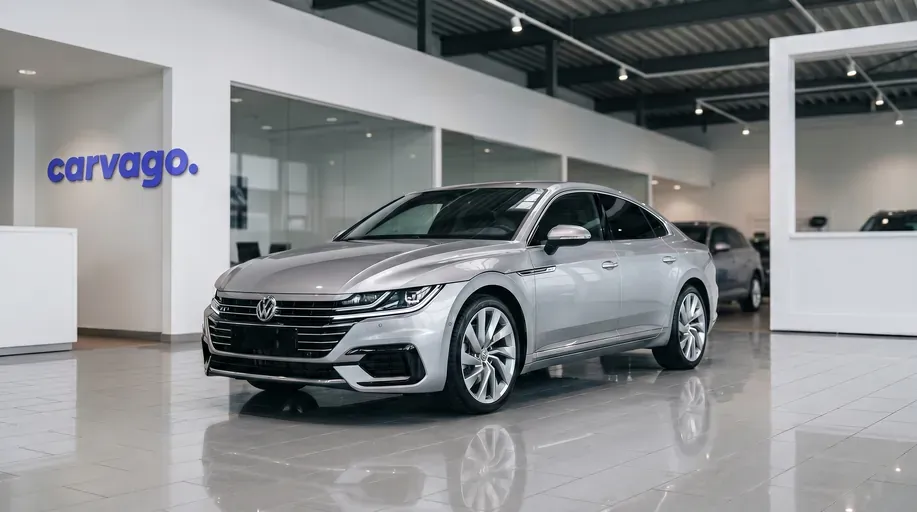
Alfa Romeo Giulia vs. Volkswagen Arteon: Complete comparison 2026

Detailed comparison of Alfa Romeo Giulia vs Volkswagen Arteon. We bring real-world experience with used cars, equipment comparison, and a clear verdict. Which car to choose?

May 4, 2026

VS
Alfa Romeo Giulia

Alfa Romeo Giulia

Volkswagen Arteon

Volkswagen Arteon

Introduction

Alfa Romeo Giulia represents the embodiment of Italian passion and sporting elegance, bringing excellent driving dynamics and unmistakable design to the premium sedan segment. Standing against it is the Volkswagen Arteon, an attractive German fastback (known and sold on the Chinese market as the Volkswagen CC), which bets on sophisticated practicality, a spacious interior, and avant-garde curves. The following comparison will reveal the strengths and weaknesses of both rivals in detail and help you find out whether driving temperament will ultimately win you over, or if you will prefer cool rational precision.

Comparison of External Dimensions

When looking at the exterior dimensions, both cars profile themselves differently, which clearly reflects their overall focus. The Volkswagen Arteon, whether in the fastback version (often listed as a hatchback in technical data) or as the stylish Shooting Brake estate, is a significantly larger vehicle. In length, it measures 4862 to 4866 mm, which means it is a substantial 212 to 227 mm longer than the sportily tuned Alfa Romeo Giulia with a length of 4639 to 4650 mm. In practice, this means that the Arteon offers excellent directional stability on fast highway journeys and overall more interior space. The more compact Giulia, on the other hand, benefits from its smaller dimensions in the city, where it is noticeably easier to park, and on country roads, it feels much more agile. The choice between these models therefore depends on whether you are looking for a representative highway cruiser or an agile sports sedan.

As for width and height, the physical differences narrow slightly, but still affect the overall proportions of both cars. The width of the Arteon is a stable 1871 mm, while the standard Giulia measures 1860 mm (high-performance versions like the Quadrifoglio or GTA widen up to 1874 mm). The Volkswagen is therefore slightly wider in its standard versions, which is positively reflected in the airiness of the cabin at shoulder level. The Arteon is also slightly taller (1450–1460 mm for the hatchback version compared to 1433–1450 for the Alfa Romeo); only the Shooting Brake version has a slightly lower build. The Volkswagen's taller body makes daily entry easier, while the Giulia scrupulously maintains the lowest possible center of gravity. From the perspective of daily usability, both cars meet comfort requirements, but the Alfa Romeo offers a more authentic sporty seating position close to the asphalt.

The wheelbase, which is a key parameter for longitudinal space in the cabin (primarily in the rear seats), also plays in favor of the Volkswagen. The Arteon boasts a wheelbase of 2835 to 2838 mm, while the Alfa Romeo Giulia relies on a value of 2820 mm. Although the absolute difference is only about 15 to 18 mm, it translates into the interior quite significantly. The Arteon's longer wheelbase combined with the transverse engine layout guarantees rear passengers truly regal legroom. The Giulia, with its classic layout (front longitudinal engine and rear-wheel drive), must instead sacrifice part of the wheelbase to accommodate the mechanical components, which partially limits longitudinal space in the rear. For frequent transport of adult passengers in the rear seats, the Arteon's elongated profile makes much more sense, while the Giulia remains a car focused mainly on the driver's joy behind the wheel.

Comparison of exterior dimensions

ParameterAlfa Romeo Giulia SedanVolkswagen Arteon HatchbackVolkswagen Arteon Estate
Length (mm)4639 - 46504862 - 48664866
Width (mm)1860 - 187418711871
Height (mm)1433 - 14501450 - 14601434 - 1451
Wheelbase (mm)28202835 - 28382836 - 2838

Trunk Volume

When choosing a used car around four years old, practicality often plays a key role. The luggage compartment volume of these two models shows a vast difference in their concept and target group. The Alfa Romeo Giulia is a purebred sports sedan, where family utility partially gives way to elegant design and perfect balance. In contrast, the Volkswagen Arteon scores as a versatile grand tourer with a huge tailgate, offering families significantly better access and space for several extra suitcases.

The Alfa Romeo Giulia (generation 952) has a basic trunk volume of 480 liters. Although this capacity is fully sufficient for weekend shopping or a longer holiday for two to three people, the smaller loading opening typical of classic sedans naturally limits the transport of strollers or boxes. Furthermore, the Giulia in this generation is produced exclusively as a sedan. Although the rear backrests can be partially folded, the automaker does not officially state the total maximum luggage compartment volume.

The Volkswagen Arteon is a level higher in terms of transport capacity. As an elegant liftback, it offers an excellent basic volume of 563 liters with a huge loading opening, while the space increases to 1,557 liters after folding the seats. To maximize volume and family comfort, the stylish Shooting Brake (estate) version is the ideal choice, providing 590 liters in the base and a respectable 1,632 liters in a full two-seater configuration.

When choosing on the used car market, however, it is good to pay attention to plug-in hybrid variants. In the Arteon eHybrid model, the installation of high-voltage batteries significantly limits the storage space under the trunk floor. Because of this, the real basic capacity of these eco-friendly versions drops to approximately 445 liters (for the liftback) and 455 liters (for the Shooting Brake version), respectively.

The decision between the two cars is quite straightforward in this regard. If you plan to carry a stroller and are looking for maximum family utility, the Volkswagen Arteon is the clear winner with a trunk that won't disappoint even during a big move. The Alfa Romeo Giulia will suit those who are satisfied with a standard trunk and are willing to sacrifice a bit of versatility in favor of unrivaled driving characteristics.

Luggage Compartment Overview
ParameterAlfa Romeo Giulia SedanVolkswagen Arteon LiftbackVolkswagen Arteon Estate
Base volume (liters)480563590
Max volume with seats folded down (liters)Not specified15571632

Family Hauler vs. Driver's Ideal 🎒

While the Arteon's giant trunk easily accommodates gear for the whole family, the Giulia relies on traditional sedan space for drivers who prioritize dynamics over absolute practicality.

Discover the true condition of the car thanks to an independent inspection

Order CarAudit™

Trailer Weights

Towing capacity is often a decisive parameter for drivers looking not only for a prestigious car but also for a practical helper for towing a caravan or transporting heavier loads. In this regard, the approach of the two manufacturers differs significantly, which is important to consider when choosing an approximately four-year-old used car.

For the Alfa Romeo Giulia (952 generation), the situation is quite straightforward. All common internal combustion engines from 2020–2022, whether the 2.0 Turbo petrol versions or the 2.2 Diesel, offer a standard and maximum braked trailer weight of 1600 kg. While this capacity doesn't top the class charts, it is perfectly sufficient for weekend shopping or a longer holiday if you hitch up a smaller trailer to gain useful space for a few extra suitcases. Values for unbraked trailers are not listed in the official data for this generation.

The Volkswagen Arteon (1st generation) represents a much more variable and overall more capable alternative in terms of towing capacity. The standard capacity for base engines starts similarly to the Alfa Romeo – the 1.5 TSI models and the 1.4 eHybrid plug-in hybrid version both handle 1600 kg (hybrid technology takes its toll here in the form of reduced towing capacity). However, more powerful internal combustion engines take the car's utility to a completely different level. The 2.0 TSI petrol units can tow 1800 to 2200 kg, and the popular 2.0 TDI diesel versions provide a capacity ranging from 2000 to 2200 kg. Similar to the Alfa Romeo, exact figures for unbraked trailers are not available in the database here either.

Conclusion
While the Alfa Romeo Giulia sticks to its sporty character and its towing capabilities serve more as an occasional practical addition, the Volkswagen Arteon is a full-fledged workhorse. If you plan to regularly transport heavy boats or large family caravans, a more powerful diesel or petrol Arteon is clearly the better choice.

Model and motorizationBraked weight of trailer (kg)Unbraked weight of trailer (kg)
Alfa Romeo Giulia 2.0 Turbo (147 - 206 kW)1600-
Alfa Romeo Giulia 2.2 Diesel (100 - 154 kW)1600-
VW Arteon 1.4 eHybrid / 1.5 TSI1600-
VW Arteon 2.0 TSI1800 - 2200-
VW Arteon 2.0 TDI2000 - 2200-

Overview of Most Common Motorizations

When comparing the engine lineups of the Alfa Romeo Giulia and the Volkswagen Arteon, we encounter two completely different technical approaches that fundamentally influence both the driving experience and operating costs. While the Giulia relies on traditional purist driving pleasure, longitudinal engines, rear-wheel drive (with the option of Q4 all-wheel drive), and high-performance power units oriented towards dynamics, the Arteon represents the embodiment of everyday practicality with a wide range of exceptionally efficient engines, including modern plug-in hybrid technology. In terms of standard engines, the Arteon offers an economical 1.5 TSI petrol four-cylinder with 110 kW or the resilient 2.0 TDI diesel, which are ideal choices for pragmatic drivers with high annual mileage. In contrast, the Giulia declares its sporting intentions from the base model with a powerful 2.0 Turbo 16V petrol engine producing 147 kW. The top-tier versions then fully reveal the differing philosophies of both brands: Volkswagen scores with the surgically precise Arteon R featuring a 2.0 TSI engine (235 kW) and the 4MOTION torque vectoring system, but Alfa Romeo pushes the technical bar into the realm of supercars with the exclusive 2.9 V6 Bi-Turbo unit delivering a staggering 375 kW (derived from Ferrari development) for the legendary Quadrifoglio version. For budget-conscious and eco-minded used car buyers, the versatile Arteon makes significantly more sense, while lovers of precise steering and mechanical feedback will naturally reach for the Italian choice.

Alfa Romeo Giulia (Generation 952)

The engine range for the Alfa Romeo Giulia (generation 952, dominating the market for roughly four-year-old used cars) has always focused primarily on premium performance and top-tier dynamic characteristics. In cars from these production years, you will encounter almost exclusively the lightning-fast eight-speed automatic transmission from ZF (referred to as AT8), as manual transmissions were soon completely phased out due to lack of interest. Petrol engines in standard versions are represented by an aluminum 2.0 Turbo 16V four-cylinder tuned to 147 kW and 206 kW, with the more powerful variant relying on the sophisticated Q4 all-wheel drive as standard. The diesel section is served by a reliable aluminum 2.2 Diesel unit, which in more recent years after modernization settled at outputs of 118 kW, 140 kW, and 154 kW. Thanks to its displacement reserve and torque climbing up to 470 Nm, the powerful diesels offer a huge amount of pulling power from low revs. The absolute crown jewel for the most demanding drivers remains the twin-turbocharged six-cylinder with 375 kW for the Quadrifoglio version.

Engine typeFuel typePower (kW)Torque (Nm)Transmission
2.0 Turbo 16VPetrol147 / 206330 / 4008AT
2.9 V6 Bi-TurboPetrol3756008AT
2.2 DieselDiesel100 / 118 / 140 / 154450 - 4708AT

Volkswagen Arteon (1st Generation)

The Volkswagen Arteon (1st generation) offers a more conventional, yet for the vast majority of buyers, highly sophisticated and efficient engine portfolio compared to the Giulia, built on the ubiquitous MQB group architecture. The mainstay of the offering in the four-year-old used car market consists of the updated 2.0 TDI Evo SCR diesel engines in 110 kW and 147 kW versions. If you were looking for the older 140 kW engines or the twin-turbocharged top-tier BiTDI version (176 kW), you will no longer find them in newer models produced after 2020, as they were gradually phased out for emissions reasons. Petrol engines start with the mild-hybrid technology equipped 1.5 TSI unit (110 kW), above which sit the more agile 2.0 TSI versions (140 kW and 206 kW). The performance ceiling of the family is occupied by the Arteon R with a 2.0 TSI unit producing 235 kW. A huge advantage over the Italian sedan is the availability of the innovative 1.4 eHybrid version – a plug-in hybrid combining a turbocharged petrol four-cylinder and an electric motor for a total system output of 160 kW. In the vast majority of cases, the transmissions are precise seven-speed dual-clutch automatics (DSG), while the reliable six-speed DSG is used for the eHybrid model for structural reasons.

Engine typeFuel typePower (kW)Torque (Nm)Transmission
1.5 TSIPetrol1102506MT / 7DSG
2.0 TSIPetrol140 / 206 / 235320 / 400 / 4207DSG
2.0 TDIDiesel110 / 147340 / 4007DSG
1.4 eHybridPlug-in Hybrid1604006DSG

Driving Passion vs. Rational Efficiency 🏎️🔌

While the Alfa Romeo Giulia delights many an automotive enthusiast with its powerful, longitudinal engines and precisely tuned rear-wheel drive, the Volkswagen Arteon strikes back with the top-tier highway efficiency of its TDI units and an innovative plug-in hybrid for everyday operation without any compromises.

Choosing the right engine is key to long-term satisfaction with a car. While Alfa Romeo builds its models on emotions and technical uniqueness – did you know, for example, that every Giulia comes standard with a carbon fiber driveshaft, a feature otherwise reserved for purebred supercars? – the Volkswagen Arteon, on the other hand, bets on unwavering efficiency on long routes and advanced emission reduction systems. The recommendations below for four-year-old used cars are based on real-world experience, proven mechanical reliability, real-world fuel consumption, and overall user-friendliness.

For Alfa Romeo Giulia, we recommend: 2.0 Turbo 16V (147 kW / 200 hp or 206 kW / 280 hp)

The turbocharged two-liter gasoline engine in the current generation (952) is a total bullseye for the Giulia. It offers a perfectly balanced ratio between strong dynamics, everyday usability, and excellent mechanical reliability. The more powerful Veloce version (280 hp) brings fantastic pull and, in four-year-old cars, is exclusively paired with the confident Q4 all-wheel drive; however, even the basic 200-horsepower variant is more than enough for very brisk driving, with real-world consumption around 8 liters per 100 km. From a technical standpoint, the engine has a beautifully flat torque curve and works perfectly with the lightning-fast ZF eight-speed automatic transmission. What to watch out for: The MultiAir electro-hydraulic valve timing system is extremely sensitive to the quality and cleanliness of the engine oil. To eliminate the risk of an expensive failure of this module, it is critically important to shorten the factory oil change interval to a maximum of 10,000 to 15,000 km (or strictly once a year). This engine is the ideal choice for drivers with a more dynamic driving style who want to enjoy the Giulia's precise chassis to the fullest and combine backroads with highways without worrying about clogging emission systems.

For Volkswagen Arteon, we recommend: 2.0 TDI SCR (147 kW / 200 hp) DSG

For the Arteon, and especially for cars after the facelift at the end of 2020 (including the popular Shooting Brake estate), the most rational and user-friendly choice on the used car market is the two-liter diesel from the improved EA288 Evo family. The 147 kW (200 hp) output provides the heavier car with confident flexibility when overtaking, while real-world consumption stays comfortably under 6.5 liters per 100 km even at a brisk pace. Furthermore, the new generation of this unit uses "Twin Dosing" technology (double AdBlue urea injection with two catalytic converters), which dramatically reduces nitrogen oxide emissions and guarantees trouble-free future entry into low-emission zones. What to watch out for: As with all modern diesels, there is a risk of premature clogging of the diesel particulate filter (DPF) or the EGR valve if you were to torture the car exclusively with short-distance city hopping. It is also essential to check the service history of the DSG dual-clutch automatic transmission – an oil change every 60,000 km is an absolute necessity to preserve its lifespan. This engine is tailor-made for corporate drivers and travelers who often swallow hundreds of highway kilometers at a time and require maximum comfort and a range exceeding 1,000 kilometers on a single tank.

Real Fuel Consumption

Paper Promises vs. Real-World Consumption

In the automotive world, it is an open secret that official fuel consumption figures provided by manufacturers often differ significantly from reality in everyday use. While the on-paper figures in brochures may look exceptionally tempting, the engine's true thirst only becomes apparent after thousands of kilometers on real roads. To achieve the most accurate comparison possible, we did not rely on idealized WLTP laboratory cycles, but instead analyzed extensive real-world data from drivers themselves on the popular community portal Spritmonitor.de. We focused on four-year-old used cars from generations delivered to the market between 2020 and 2023.

The following table shows the average real-world fuel consumption values for the most popular powertrains of both cars. For better clarity, the data is sorted from the most economical hybrid and diesel versions to the more fuel-intensive petrol models.

Model and EngineAverage Consumption (l/100 km)
Volkswagen Arteon 1.4 eHybrid 160 kW4.5
Volkswagen Arteon 2.0 TDI 147 kW5.8
Alfa Romeo Giulia 2.2 Diesel 140 kW6.0
Volkswagen Arteon 2.0 TSI 140 kW8.2
Alfa Romeo Giulia 2.0 Turbo 147 kW8.6

What Do the Hard Data Tell Us?

Looking at the real-world results, several interesting trends and specifics of both these models can be clearly derived:

  • Diesel staples continue to reign: Both the more powerful version of the 2.0 TDI in the Arteon and the distinctive Italian 2.2 Diesel unit in the Giulia manage to keep consumption comfortably around the six-liter mark, despite the significant size and weight of both vehicles. Neither model has a significant edge in this discipline, and both offer fantastic efficiency on long hauls.
  • Thirstier petrol units: A surprising finding is that the four-cylinder petrol turbo engines can be quite "hungry" in both rivals. While Volkswagen's 2.0 TSI shows a solid average of 8.2 liters per hundred kilometers, the Italian two-liter in the Giulia averages 8.6 liters in practice. The tax for the Alfa Romeo's sportier chassis tuning is very clearly visible here, as it much more frequently tempts drivers behind the wheel into dynamic driving and a faster pace.
  • Hybrid as a wild card: The plug-in hybrid Arteon eHybrid is a chapter of its own. If you faithfully charge the vehicle daily, you can easily drive for the advertised 4.5 liters (or even less). However, if you set off on a long motorway journey with a depleted battery, its temporary economic advantage quickly evaporates, and the figures level out with the purely petrol competition.

Who Will Be Most Pleased?

What do these results mean for the average buyer in the used car market? If you are a motorway traveler who covers hundreds or thousands of kilometers a month, the choice should clearly fall on traditional diesel engines. Both the diesel Arteon and Giulia will save significant funds in this regard and both offer excellent range on a single tank. Conversely, for drivers who only complete shorter routes across the city every day and also have the option of easy home or company charging, the plug-in hybrid eHybrid version makes enormous sense for the Volkswagen. Petrol engines from both camps then remain purely a choice for enthusiasts who are happy to pay extra for the more linear power delivery of a petrol engine and for whom saving a few deciliters of fuel plays no role when purchasing a sportily-styled car.

In the end, however, we can state that fuel consumption itself will not be the main or deciding factor that tips the scales in favor of the Alfa or the Volkswagen. Since the operating costs of the most popular diesel versions for both brands differ only by negligible tenths of a liter, the real decision will have to lie elsewhere. It will depend primarily on whether you prefer the avant-garde design and cool efficiency of the voluminous Arteon, or whether you would rather reach for the genuine passion and precise driving performance of the Italian Giulia.

Price Range and Used Car Offerings

When choosing a roughly four-year-old used car (model years 2021–2022), both cars are in a similar initial price range, but their value on the secondary market depreciates at different rates and depends heavily on the specific configuration chosen.

Volkswagen Arteon (post-2020 facelift)
The Arteon maintains a relatively stable value on the used car market, primarily due to the popularity of the practical Shooting Brake body style and the efficient 2.0 TDI engines, which are a frequent choice for corporate fleets.

  • Base and mid-range trims (Elegance, lower-powered TDI/TSI): Prices for four-year-old models typically start around €25,000 to €27,000, depending on mileage and service history.
  • R-Line versions and more powerful engines (often with 4Motion drive): Here, prices most often range between €29,000 and €37,000.
  • Top-of-the-line Arteon R: Price tags for well-maintained, low-mileage sports models can easily exceed the €41,000 mark.

Alfa Romeo Giulia (updated 2020+ model)
For Alfa Romeo, it is worth looking for versions from the 2020 model year onwards, which brought significantly higher-quality interior materials and a more modern infotainment system. The Giulia suffers from a slightly steeper depreciation for base diesel versions, while petrol variants and sports models hold their value much better.

  • Base trims and diesel versions (2.2 JTDM): These models can be found at very attractive prices on the used market. Prices for well-maintained four-year-old units start as low as €21,000 to €23,000.
  • Popular Veloce version (2.0 Turbo petrol or more powerful diesel with Q4 drive): For this highly sought-after driver-focused specification, you will pay roughly €31,000 to €39,000.
  • Top-tier Giulia Quadrifoglio: This is a completely specific category for automotive enthusiasts. The value of this super sedan drops very slowly, and for four-year-old units, it remains well above the €62,000 mark.

Overview of estimated used car prices (approx. 4-year-old vehicles)

ModelBase models and dieselsMid-range trims (R-Line / Veloce)Top-tier models (R / Quadrifoglio)
VW Arteon€25,000 – €27,000€29,000 – €37,000€41,000+
Alfa Romeo Giulia€21,000 – €25,000€31,000 – €39,000€62,000+

While the Arteon represents a safe bet with predictable depreciation and easy resale (especially for diesel estates), the Giulia attracts with significantly more affordable entry prices for lower-powered engines, offering a great price-to-driving-experience ratio.

Buying with your heart vs. playing it safe 💶

While a base diesel Giulia will please your budget with an exceptionally attractive purchase price as a used car, the Arteon holds its value better, and in the popular Shooting Brake version, you will find it much easier to sell on the market in the future.

Safety and Euro NCAP Rating

Both compared vehicles earned a prestigious five-star score from the independent organization Euro NCAP in their initial assessment. However, when choosing a four-year-old used car, it is essential to perceive these results in the context of the time they were created. Crash test methodology is constantly evolving and becoming stricter. Percentage scores from older years cannot be directly compared with current certifications, as newer protocols require advanced frontal collision simulations, precise cyclist detection, or emergency braking at intersections. Furthermore, given the age of both designs, the validity of their original certificates has already officially expired under current and stricter Euro NCAP rules.

The Alfa Romeo Giulia passed through the testing laboratory in 2016. Its results literally shocked the automotive world at the time, as the car earned a record 98% for adult passenger protection thanks to its extremely rigid platform and strong body. However, safety assistance systems became a weaker point, for which the Italian sedan received a rather below-average 60% by today's standards.

The Volkswagen Arteon underwent crash tests a year later, in 2017. With a result of 96% for adult protection, it confirmed top-tier passive safety, but unlike its Italian rival, it also recorded great success in the field of active accident prevention. The Arteon benefited from a robust electronic system architecture, which brought it a significantly better 82% for safety assistants and an excellent 85% for the protection of vulnerable road users.

ParameterAlfa Romeo GiuliaVolkswagen Arteon
Year of testing20162017
Adult occupant protection98 %96 %
Child occupant protection81 %85 %
Vulnerable road user protection69 %85 %
Safety assistance systems60 %82 %

From the perspective of today's safety standards, the Volkswagen Arteon appears to be a more complete and modern car. While the Giulia offers absolutely uncompromising mechanical protection during the impact itself, the Arteon brings a much smarter range of technologies and electronic assistants that can actively prevent many critical situations on the road.

🛡️ Arteon wins thanks to smarter assistants

While the Alfa Romeo Giulia excels with an exceptionally rigid body and top-tier passive protection for adults, the Volkswagen Arteon represents a safer and more comprehensive choice from a used car perspective thanks to its substantially more advanced active assistance systems.

Comparison of Interesting Equipment Features

In addition to standard equipment, each of the models offers several unique features that can be decisive for the customer. While one car targets primarily emotions and a genuine driving experience, the other focuses on top-tier digitalization, spatial generosity, and comfort for long highway journeys. Both thus show their completely distinct approach to added value.

Alfa Romeo Giulia: Uncompromising Driving Passion and Sporty Details

  • Construction and Chassis: Every Giulia, regardless of the chosen engine, is equipped with a carbon fiber driveshaft as standard. This premium solution, unique in its class, reduces rotating mass and speeds up drivetrain response. The resulting benefit, along with a perfect 50:50 weight distribution, is absolutely precise and agile vehicle behavior.
  • Driving Modes and Electronics: The iconic Alfa DNA driving mode selector (Dynamic, Natural, Advanced Efficiency) fundamentally changes the car's character. It adjusts not only the throttle mapping and gearbox behavior but, on versions with active suspension, also allows for independent softening of the dampers directly in sports mode for driving on broken backroads.
  • Ergonomics and Controls: The interior is strictly driver-oriented. Following the example of supercars, the start button is located directly on the steering wheel. Another fascinating element is the massive aluminum shift paddles, which are fixed to the steering column. Thanks to this, the driver always knows where plus and minus are, even during complex maneuvering in sharp turns.
  • Sporty Derivatives: Higher Veloce trim levels add a sharper look and the intelligent Q4 all-wheel drive, which strongly favors the rear axle and engages the front only at the moment of traction loss. The icing on the cake is the top-of-the-line Quadrifoglio variant with a V6 Bi-Turbo engine with Ferrari roots and an active aerodynamic carbon fiber splitter.

Volkswagen Arteon: Practical Elegance and Technological Precision

  • Design and Everyday Comfort: At first glance, the Arteon impresses with its stylish frameless door windows, which give it a characteristic coupe look. However, a huge advantage for everyday use is the liftback body style (or the derived Shooting Brake station wagon). Under the elegant silhouette, these hide a massive and, thanks to the huge tailgate, easily accessible luggage space.
  • Chassis and Suspension: The DCC (Dynamic Chassis Control) adaptive chassis is one of the car's strongest points. Beyond the preset modes, it offers the driver the possibility of continuously fine-tuning the damper stiffness on a touch slider in the infotainment system in up to 15 steps. The customer thus gets a choice ranging from maximum floating comfort to a firm and precise sporty setup.
  • Infotainment and Digitalization: The onboard systems, led by the top-tier Discover Pro panel, excel in great readability and logic. The system is complemented by the Digital Cockpit with very detailed personalization options and also a gesture control function, where a simple wave of the hand in the air can skip a track or scroll through the menu without the driver having to take their eyes off the road.
  • Advanced Assistance Systems: The Arteon is a champion of highway travel. The intelligent Travel Assist system combines lane-keeping with predictive adaptive cruise control. The car can thus use data from the navigation and camera to completely automatically and smoothly slow down before curves, roundabouts, or when entering municipalities, which significantly saves the brakes and the driver's energy.
  • Seats and Relaxation: On long routes, the optional ergoComfort seats with AGR (Campaign for Healthier Backs) orthopedic certification excel. They offer not only adjustable side bolsters and extendable seat cushion length but also a massage function that effectively prevents back pain and fatigue behind the wheel.

Key Advantages and Disadvantages

Alfa Romeo Giulia

Pros

Excellent driving characteristics and communicative steering thanks to the rear-wheel-drive platform

Attractive and unmistakable Italian design that doesn't age

Great driving position with a driver-oriented interior

Charismatic and powerful engines across the entire range, including great turbodiesels

Cons

Smaller trunk volume and poorer accessibility due to the sedan body style

More outdated and slower multimedia system compared to German competitors

More cramped space for rear-seat passengers

Faster depreciation of residual value and lower availability of specialized service centers

The Alfa Romeo Giulia is made for enthusiastic drivers who prioritize emotion, a top-tuned chassis, and pure driving pleasure over maximum family practicality. It is a car for those who want to stand out from the crowd and can forgive the car for minor compromises in modern technology or interior space.

Volkswagen Arteon

Pros

Huge interior space, excelling especially in legroom for rear passengers

Highly practical and voluminous trunk thanks to the liftback (or Shooting Brake) body style

Excellent sound insulation and top-tier comfort for long highway journeys

Proven and economical engine range (TDI, TSI) with a wide and accessible service network

Advanced assistance systems and a fast, modern infotainment

Cons

The driving experience is safe and stable, but it lacks a sporting spark and emotion

The dashboard architecture is too similar to the common and cheaper Passat model

Noticeably higher purchase price on the used car market in this category

Controversial touch controls on the steering wheel in post-facelift models, which worsen ergonomics

The Volkswagen Arteon is an ideal choice for customers looking for a representative, comfortable, and exceptionally spacious gran turismo for devouring highway miles every day. It perfectly combines elegance with family or business practicality and the reliability of group technologies, but it is not suitable for drivers seeking sporty experiences on back roads.

Common Problems and Owner Complaints

Based on long-term user experience, service reports, and our independent comprehensive car inspection, we have compiled an overview of the most common problems that buyers of both models should watch out for.

Alfa Romeo Giulia is a very attractive car to drive, but it requires specific and regular care, with most problems stemming from sensitive electronics and the chassis.

  • Electronics and infotainment: The Giulia is extremely sensitive to the state of the car battery. If the voltage drops slightly, the system preventively disconnects functions like Stop-Start, and the car may report random false errors on the dashboard. The infotainment occasionally suffers from freezing or restarts while driving. In addition, some units experienced micro-cracks on the display, leading to poor readability.
  • Engine and powertrain: With the widely represented 2.2 JTDm diesel engines, the diesel particulate filter (DPF) and EGR valve clog quickly during frequent short trips, leading to loss of power and limp mode. A peculiarity of the Giulia is moisture-damaged starter relays located underneath in the right front wheel arch – if they oxidize, the car simply won't start.
  • Chassis and steering: The Giulia has a more aggressive front axle geometry from the factory, which logically causes faster and often asymmetrical wear of the inner edges of the front tires. Occasionally, there is also an unpleasant squeaking from the front axle, caused by dried out or worn control arm silentblocks.

Alfa Romeo Giulia: Rewards diligence

The Giulia requires constant vigilance regarding battery status and careful chassis maintenance, but mechanically it is a surprisingly robust car.

Volkswagen Arteon benefits from proven modular technology, but it does not escape the teething troubles of modern onboard systems and specific complications arising from its design.

  • Electronics and infotainment: Post-facelift cars (manufactured after 2020) are equipped with the MIB3 system, where owners very often report slow system starts, interface freezing, or dropouts of wireless Apple CarPlay and Android Auto. On R-Line models, drivers also often complain about the touch-sensitive capacitive buttons on the steering wheel, which are easily pressed unintentionally during more dynamic driving.
  • Engine and transmission: For both 2.0 TSI and 2.0 TDI engines, the most well-known mechanical weakness is coolant leakage from the plastic thermostat housing or the water pump. The DSG dual-clutch automatic transmission (DQ381) can jerk at low speeds or when pulling away in higher-mileage units. Prevention consists of strictly adhering to oil changes at least every 120,000 km; for 4Motion (Haldex) all-wheel drive, the oil must be changed every 60,000 km.
  • Body and design: The beautiful frameless doors come with a price in the form of increased aerodynamic noise at highway speeds, especially if the rubber window seals degrade over the years. In winter months, the windows also tend to freeze to the sealing strips, making it difficult to open the doors and putting excessive strain on the window regulator mechanism.

Volkswagen Arteon: A corporate classic with style

The Arteon is a mechanically reliable highway cruiser, but a buyer should thoroughly check the functionality of the DSG transmission and be prepared for occasional software quirks of the MIB3 system.

Tips for Buying a Used Car

When buying a used car, a thorough inspection is key. Here are a few specific points to focus on for these two models, and why it pays to invest in independent services such as a comprehensive car audit before purchasing.

When choosing an Alfa Romeo Giulia:

  • Chassis and steering condition: The Giulia stands out with its very sharp and precise steering, which defines its driving character. During a test drive on uneven surfaces, listen carefully for any knocking sounds from the front axle, which would indicate worn bushings or lower control arm ball joints. The steering must respond to any input absolutely immediately and without any play.
  • Functionality and smoothness of the ZF automatic: The eight-speed automatic transmission is generally very robust and reliable. Nevertheless, test its behavior when cold. Any jerking when downshifting, hard thuds when engaging reverse, or delayed responses when pulling away can indicate that the oil hasn't been changed for a long time or very rough handling by the previous owner.
  • Electronics and infotainment: Even with roughly four-year-old used cars that already have the updated interior (from 2020 onwards), carefully check the functionality of the onboard system. Focus on the smoothness of the interface, phone pairing, and especially the physical condition of the screen. Earlier model years often suffered from so-called display delamination (bubbles or micro-cracks appear), which can only be resolved by replacing the part.
  • Coolant leak check: On the popular 2.0 Turbo petrol engines, check the coolant level in detail. Weak points include the sealing rings at the water pump and in the turbocharger cooling circuit. Any obvious leak or a sweet smell of hot liquid under the hood requires attention.
  • DPF condition and regeneration in diesel versions: If you are buying the 2.2 JTDM engine, try to read from the diagnostics what mode the car was operated in. Frequent short city trips cause rapid clogging of the diesel particulate filter (DPF) and dilution of the engine oil with unburnt diesel. After starting, the engine should not suffer from fluctuating RPMs or excessive noise.

When choosing a Volkswagen Arteon:

  • DSG gearbox behavior: Dual-clutch transmissions (typically seven-speed with wet clutches) are great but sensitive to maintenance and timely oil changes. During a test drive, try slow, smooth starts, gentle maneuvering when reversing, or crawling up a slight incline. Jerking, harsh vibrations, or delayed clutch engagement often mean an expensive repair of the mechatronics or clutch plates is imminent.
  • DCC adaptive dampers: Most Arteons on the market are equipped with the DCC adaptive chassis. During the test drive, switch between Comfort and Sport modes several times. The difference in damping stiffness must be immediately noticeable. During a physical inspection of the car on a lift, look for traces of leaked oil from the shock absorber casings – replacing adaptive dampers is very expensive.
  • Software and stability of the MIB3 system: In updated Arteons (produced from late 2020), the MIB3 generation infotainment is used, which initially suffered from teething troubles. Test the navigation loading, the response of the steering wheel buttons, and the functionality of the parking cameras. System freezes or spontaneous screen restarts are reasons to visit a service center and have a more up-to-date software version installed.
  • Water pump and thermostat condition: A known issue with the otherwise reliable 2.0 TSI (and partially 2.0 TDI) engines is failing water pump and thermostat modules. Check the coolant expansion tank. If the level is below the minimum or there are visible dried pink stains on the engine cover, the seal is likely at the end of its life.
  • Battery condition in the eHybrid version: Since the facelift, the Arteon has also been sold as a plug-in hybrid. If you are buying a used eHybrid, start the fully charged car and check the estimated electric-only range on the trip computer. In this case, you should definitely have the so-called SOH (State of Health) of the high-voltage battery read before purchasing to find out the actual percentage of its capacity.

FAQ: Most Frequently Asked Questions

The Volkswagen Arteon clearly dominates thanks to its liftback body style (or Shooting Brake estate) and a base trunk capacity of 563 liters. The Alfa Romeo Giulia, on the other hand, is a classic sedan with a smaller 480-liter trunk that is harder to access due to a narrower opening. The German representative is therefore a much more suitable choice for families and the trouble-free transport of bulkier items.

The Alfa Romeo Giulia is much more attractive for drivers thanks to its standard rear-wheel drive, ideal 50:50 weight distribution, and extremely sharp steering. The Volkswagen Arteon shares its platform with the Passat and focuses more on neutral handling, maximum grip, and safety. If you expect sporty emotions and pure driving joy from a car, the Italian sedan is the clear winner.

The Arteon benefits from mass-produced group technology, which ensures excellent availability of spare parts and a dense network of authorized and independent service centers. For the Giulia, reliability significantly improved after the first years of production and the engines are considered durable, but some specific body parts can be more expensive. Routine maintenance and potential repairs tend to be more predictable and often slightly cheaper with the Volkswagen.

The Arteon scores with modern displays with excellent resolution, more sophisticated assistance systems, and huge legroom for rear-seat passengers. The Giulia, on the other hand, has a cozier, sportier interior strictly focused on the driver, featuring classic physical buttons and top-tier aluminum paddle shifters. However, the infotainment in the Alfa is conceptually older, does not offer as many advanced functions, and does not reach the response speed of the VW system.

For frequently tackling long distances, the Volkswagen is objectively more suitable, offering a smoother ride and exemplary cabin soundproofing in combination with its adaptive suspension. While the Alfa Romeo provides unwavering stability at high speeds, its stiffer setup can be slightly tiring on lower-quality surfaces. Thanks to its overall character, the Arteon functions as a perfect highway Gran Turismo.

Conclusion: Which Model to Choose?

Our Verdict

The decision between the Alfa Romeo Giulia and the Volkswagen Arteon represents a classic battle between driving emotions and everyday rationality. If you are looking for a maximally spacious, comfortable, and technologically advanced cruiser for family trips or long highway journeys, the Arteon will absolutely thrill you with its massive transport capacity and fuel-efficient engines. On the other hand, if you perceive driving as a passion and long for an agile chassis, communicative steering, and unmistakable Italian charisma, the Giulia will provide you with an authentic sporting experience that its bulkier German rival cannot match. Your final choice will thus depend purely on whether the need for versatile family practicality wins out, or if you prefer uncompromising driving pleasure.

Find your ideal car

Sources: ADAC, forbes.cz, auto.cz, automix.cz, elektromobil.cz, autickari.cz

This article was prepared using artificial intelligence tools. The section guarantor is Petr Dušek.

Related articles

Car battle

Mazda 6 vs. Škoda Superb: Complete comparison 2026

Detailed comparison of used Mazda 6 vs. Škoda Superb. We reveal real-world experiences, fuel consumption, and spaciousness, and provide a clear verdict to help you make the right choice.

Apr 2, 2026

Car battle

Honda Accord vs. Renault Talisman: Complete comparison 2026

Detailed comparison of the Honda Accord and Renault Talisman. We compared the engines, reliability, and equipment of these used cars. Find out which sedan earns our final verdict!

May 3, 2026

Car battle

Lexus IS vs. Volvo S60: Complete comparison 2026

Lexus IS vs Volvo S60: A detailed comparison of premium sedans. Discover the key differences in driving characteristics, equipment, and reliability before your purchase.

May 2, 2026

We accept online card payments as well as wire transfers.

visa payment provider logovisa-electron payment provider logomastercard payment provider logomaestro payment provider logodiners-club payment provider logodiscover payment provider logo