Articles

Car battle

Volvo S90 vs. Volvo V90: Complete comparison 2026

Detailed comparison of Volvo S90 vs Volvo V90. Discover the differences in practicality, equipment, and driving characteristics. Read the detailed verdict before you buy!

May 7, 2026

VS
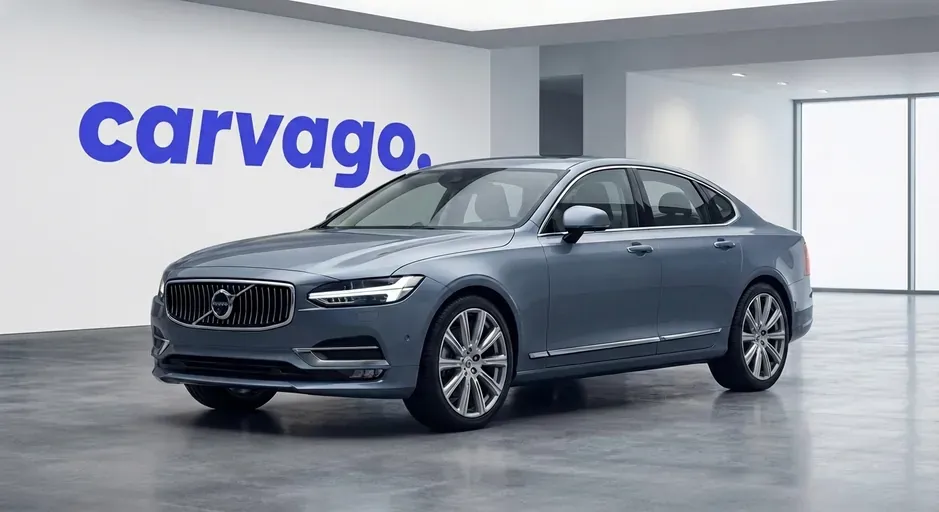
Volvo S90

Volvo S90

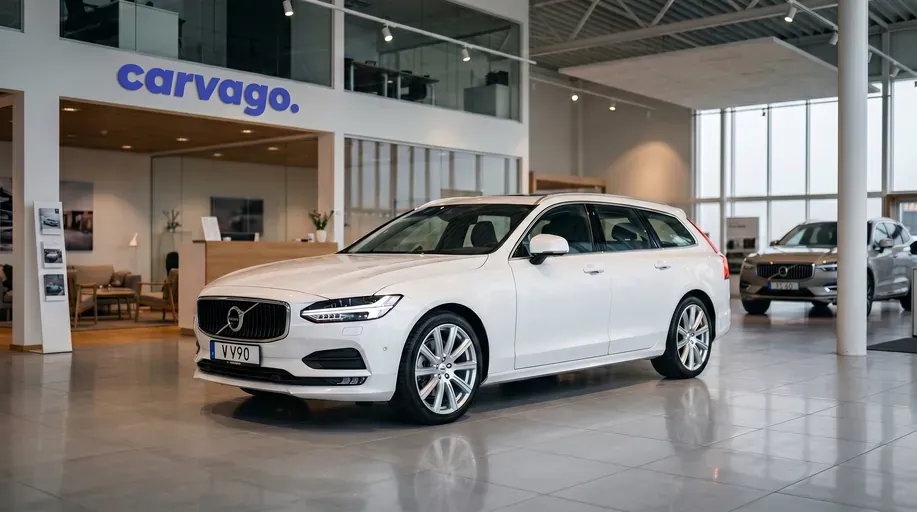
Volvo V90

Volvo V90

Introduction

The Volvo S90 is an elegant and technologically advanced luxury sedan that, in the market for roughly four-year-old used cars, impresses primarily with its premium craftsmanship, innovative safety features, and excellent driving characteristics on the SPA platform. Its sibling model, the Volvo V90 (very often sought after on the market also in the more robust and raised V90 Cross Country variant), represents the epitome of the modern Swedish estate, combining an identical level of luxury with significantly greater everyday practicality and a generous luggage compartment. In the following comparison, we will focus in detail on the key differences between these two closely related vehicles to help you determine whether the representative style of the sedan or the versatility and space of the family estate better suits your lifestyle.

Comparison of External Dimensions

When comparing the exterior dimensions of these two second-generation Swedish siblings (an ideal choice on the market for approximately four-year-old used cars), we encounter a very interesting paradox. Although it might seem at first glance that the estate version would logically be a larger and more robust vehicle, the S90 sedan is actually slightly longer. In the facelifted versions, the S90 measures 4969 mm in length, which is 24 mm more than its more practical sibling, the V90 (4945 mm). This difference in length gives the sedan a slightly more elongated and elegant side profile. In terms of everyday usability, however, it doesn't play a major role, and both cars will require an above-average sized parking space.

Both models are built on the identical SPA modular platform, which logically means that their width (1879 mm) and generous wheelbase (2941 mm) are exactly the same. In the data, we also come across a special extended variant, the S90 L (with a length of 5083 mm and a wheelbase of 3061 mm), but this appears very rarely on our used car market. The identical standard wheelbase is great news for the occupants – whether you choose the elegant sedan or the practical estate, passenger legroom will be equally generous in both cars. The choice of body style will therefore not limit your longitudinal cabin space in any way.

The fundamental difference in exterior dimensions is thus found primarily in the body height and the overall shape of the rear. Thanks to a different roofline and the standard presence of roof rails, the V90 model is approximately 32 mm taller (up to 1475 mm compared to 1443 mm for the S90). This slight increase in height at the rear of the car not only makes getting into the back seats easier but also defines a much better utility value. While in the sedan you are limited by a metal trunk lid, in the V90 estate you can load luggage or transport a dog essentially without restrictions thanks to the flatter roof.

ParameterVolvo S90 SedanVolvo V90 Estate
Width (mm)18791879
Length (mm)4963 - 49694936 - 4945
Height (mm)1440 - 14431472 - 1475
Wheelbase (mm)29412941

Trunk Volume

When choosing a premium executive car, practicality is often the deciding factor. Although the Volvo S90 and V90 share the same chassis platform and luxurious interior, their body styles offer completely different luggage space utility. The S90 Sedan will appeal more to managers or couples for whom moving bulky items regularly is not a primary goal. Conversely, the V90 Estate is designed with maximum family utility in mind. It easily accommodates a stroller, sports equipment, and provides space for several extra suitcases, a capacity that is perfectly sufficient for weekend shopping or longer holidays.

Looking closely at models popular on the used car market (cars around four years old, i.e., after the 2020 facelift with integrated mild-hybrid and plug-in hybrid technology), we can clearly see the following differences:

  • Volvo S90 (Sedan): Standard mild-hybrid versions (B4, B5) offer a solid base volume of 453 liters. Due to the three-box body design with a separate trunk and a smaller opening, the manufacturer does not specify the maximum volume to the roof.
  • Volvo V90 (Estate): The more practical estate version provides 507 liters as standard. The true potential of the family car is revealed after folding the rear seats, giving you a massive cargo space of up to 1,473 liters.
  • Impact of batteries in PHEV versions: For plug-in hybrid powertrains (Recharge T6 and T8) from these model years, a slight reduction in liters must be expected in both models due to the placement of high-voltage batteries. The S90 sedan's trunk shrinks to 431 liters, while the V90 estate's drops to 488 liters (and a maximum of 1,454 liters when folded).

The practical superiority of the V90 lies not only in raw numbers but primarily in flexibility and shape. The estate features a huge tailgate, a completely flat loading floor, and the absence of a high loading sill. All this significantly facilitates handling heavy luggage or safely loading a dog. In the sedan, you are naturally limited by a narrower vertical space, which is the price for its exceptionally elegant and aerodynamic silhouette.

Luggage Capacity Comparison

ParameterVolvo S90 SedanVolvo V90 Estate
Base volume (liters)431 - 453488 - 507
Max. volume with seats folded (liters)Not specified1454 - 1473

(Note for buyers: The range shown reflects 2nd generation cars from 2020–2024. Older purely internal combustion models from 2016–2019 had slightly more space due to the absence of batteries under the floor – 500 liters for the S90 and 560 liters for the V90.)

Family Ideal vs. Executive Elegance ⚖️

While the elegant S90 sedan offers a deep enough trunk for regular travel or business trips, the V90 estate is the clear choice for families and active drivers thanks to its excellent accessibility and expandable loading area.

Discover the true condition of the car thanks to an independent inspection

Order CarAudit™

Trailer Weights

The ability to tow a trailer is a crucial parameter for many buyers of premium executive cars. Whether you need to transport heavier loads or are planning an active holiday, the second-generation Volvo S90 and V90 models offer nearly identical and, for their segment, excellent towing capacity values.

Both models can tow 750 kg in the case of an unbraked trailer. This value is perfectly sufficient for weekend shopping for larger items or a longer holiday if a standard smaller trailer is enough for you. However, more significant differences arise with braked trailers, where the maximum permitted weight depends primarily on the choice of engine. Standard entry-level diesel and petrol engines (e.g., D3, T4, T5) offer a towing capacity of 1,800 kg for both cars. For more powerful versions (such as B5, B6, D5, or T6), this increases to a generous maximum of 2,200 kg.

Also worth mentioning are the increasingly popular T8 Recharge plug-in hybrid variants, which now make up a significant portion of the nearly-new used car market. Due to the higher kerb weight caused by the batteries, these models have a slightly reduced capacity of 2,100 kg. A certain distinction in the model range is the popular V90 B4 mild-hybrid version, which has a towing capacity of 2,000 kg (up to 2,200 kg for diesel B4 versions).

In practice, these parameters mean that even with a braked trailer attached, you maintain absolute comfort in both models, while there is still room in the car for several extra suitcases. Whether you choose the elegant sedan or the spacious estate, both cars can easily handle towing a large boat or a heavy family caravan.

When deciding between these two Nordic cars, trailer weight will not play a major role – both models are excellently equipped for towing and share identical limits. The final choice will therefore be influenced more by which body type and boot size better suits your lifestyle.
Model and motorizationBraked weight of trailer (kg)Unbraked weight of trailer (kg)
Volvo S90 (lower-powered engines D3, T4, T5)1800750
Volvo S90 (hybrid version T8)2100750
Volvo S90 (powerful engines B5, B6, D5, T6)2200750
Volvo V90 (lower-powered engines D3, T4, T5)1800750
Volvo V90 (B4 / B4 Diesel version)2000 - 2200750
Volvo V90 (hybrid version T8)2100750
Volvo V90 (powerful engines B5, B6, D5, T6)2200750

Overview of Most Common Motorizations

Engine Comparison

Although the Volvo S90 and its more practical sibling, the V90 estate (both 2nd generation models), share the exact same SPA platform and powertrain philosophy, the used car market for vehicles around four years old (model years 2020 to 2022) shows slight differences in focus. Years ago, the Swedish automaker took a radical step, and under the hood of both models, you will find exclusively two-liter turbocharged four-cylinder engines. For cars manufactured after 2020, this also means a massive introduction of mild-hybrid technologies (marked with the letter B) with a 48V system and powerful plug-in hybrids (marked Recharge). These innovations brought smoother start-stop system operation and lower fuel consumption, while older and traditional internal combustion engines (petrol T and diesel D) gradually disappeared from the lineup. In general, the V90 estate provided a wider entry-level range of engines suitable for family budgets, while the S90 aimed more at motorway representation with the most powerful variants.

Volvo S90

For the S90 sedan, the used car market focuses primarily on more powerful and luxurious engines. Until 2020, a classic range of two-liter diesel engines (D3, D4, and D5) and petrol engines (T4, T5, and T6) was available. If you are looking for a car around four years old, you will most often come across the excellent 2.0 B5 Diesel mild-hybrid turbodiesel with 173 kW and a massive 480 Nm of torque. It has established itself as the absolute ideal for drivers covering thousands of motorway kilometers. The petrol mild-hybrid branch is represented here for a more spirited drive by the 2.0 B6 version, boasting a great 220 kW, aided by both a turbocharger and a supercharger. The technological and performance champion is the 2.0 T8 Twin Engine (later Recharge) plug-in hybrid – this system combines a supercharged and turbocharged two-liter engine with an electric motor. Older versions offered 288 kW, while newer models from 2022 offer a brutal 335 kW, turning the heavy sedan into a real rocket. All versions from recent years are paired with an excellent eight-speed automatic and very often the AWD all-wheel-drive system.

Engine TypeFuelPower (kW)Torque (Nm)Transmission
2.0 D3 / D4 (until 2020)Diesel110 / 140320 / 4006MT / 8AT
2.0 D5 (until 2020)Diesel1734808AT
2.0 B5 DieselDiesel (Mild-hybrid)1734808AT
2.0 T4 / T5 / T6 (until 2020)Petrol140 / 184 / 235300 / 350 / 4008AT
2.0 B6Petrol (Mild-hybrid)2204208AT
2.0 T8 Twin Engine / RechargePlug-in hybrid288 - 335640 - 7098AT

Volvo V90

Since the V90 model targets primarily family and practical use, the Swedish automaker offered a wider basic range of engines for it, even in the modern mild-hybrid era. As a result, on the four-year-old used car market, you will more often encounter the more affordable 2.0 B4 version. This was available both in the economical 2.0 B4 Diesel version with 145 kW (197 hp) and a generous 420 Nm of torque, and in the pure petrol 2.0 B4 version. The middle of the range is filled by B5 versions in both petrol and diesel, the more powerful B6 petrol, and in older model years, you will also find classic internal combustion variants. Another interesting difference compared to the sedan is the availability of a "weaker" plug-in hybrid. While the S90 market was dominated only by the top-of-the-line T8 model, for the V90 estate, customers could also choose the more affordable 2.0 T6 Recharge plug-in hybrid with a solid combined output of 257 kW, which brings the advantage of smooth daily commuting on pure electric power. The eight-speed Geartronic automatic transmission remains the clear standard here for all newer versions.

Engine TypeFuelPower (kW)Torque (Nm)Transmission
2.0 D3 / D4 / D5 (until 2020)Diesel110 / 140 / 173320 / 400 / 4806MT / 8AT
2.0 B4 / B5 DieselDiesel (Mild-hybrid)145 / 173420 / 4808AT
2.0 T4 / T5 / T6 (until 2020)Petrol140 / 184 / 235300 / 350 / 4008AT
2.0 B4 / B5 / B6Petrol (Mild-hybrid)145 / 184 / 220300 / 350 / 4208AT
2.0 T6 RechargePlug-in hybrid2575908AT
2.0 T8 Twin Engine / RechargePlug-in hybrid288 - 335640 - 7098AT

Family vs. Representation 👨‍💼

If you are looking for economical and comfortable family travel, the wider range of mild-hybrid diesel four-cylinder engines in the V90 will please you, while the S90 more often focuses on higher performance and electrified luxury with uncompromising dynamics in the used car market.

Choosing the right engine is crucial for long-term satisfaction with Volvo cars, and our recommendation is based on real-world service experience, long-term reliability, and actual fuel consumption. Both the luxury S90 sedan and the practical V90 estate rely exclusively on 2.0-litre four-cylinder engines from the Drive-E family. In the market for roughly four-year-old used cars (models around 2022), you will predominantly encounter modernized mild-hybrid powertrains designated "B", which fully replaced the older pure diesel (D) and petrol (T) versions after 2020. Although the top-tier plug-in hybrids impress with their paper performance, in terms of operating costs, robustness, and ideal alignment with the character of these heavy Nordic cruisers, it makes the most sense to opt for the diesel mild-hybrids.

For the Volvo S90, we recommend: B5 Diesel AWD (173 kW)

This top-tier diesel engine, which appeared in the range in 2020 as the technological successor to the discontinued D5 engine, represents the absolutely ideal choice for this executive sedan. An output of 173 kW (235 hp) and a massive 480 Nm of torque ensure confident and effortless dynamics for the two-tonne vehicle. Compared to the complex T8 plug-in hybrid (which has fantastic acceleration but whose efficiency drops sharply outside the city and once the battery is depleted), the B5 Diesel offers completely predictable and lower long-term service costs.

  • Technical advantages: The twin-turbocharged unit is paired with a 48V mild-hybrid system. Using a small electric motor (starter-generator), it perfectly smooths out turbo lag at low revs and makes the operation of the start-stop system almost imperceptible. Real-world highway fuel consumption easily stays around 6 to 6.5 litres per 100 km.
  • Risks and what to watch out for: The older D5 version suffered from cracking and slipping of the hose in the unique PowerPulse system (a compressor that forces compressed air into the turbo to eliminate "turbo lag"). In the newer B5 version, Volvo improved the design of this part and equipped it with more durable hoses; nevertheless, during a test drive of a used car, check if the car goes into limp mode during sharp acceleration or if air is hissing from under the bonnet. The DPF filter and EGR system also require regular warming up – if the car has only been driven in the city, there is a risk of them becoming clogged prematurely.
  • Who it is ideal for: For highway cruisers, managers, and drivers who travel long distances across the country and require maximum comfort, smoothness, and a safe power reserve for quick overtaking.

For the Volvo V90, we recommend: B4 Diesel AWD (145 kW)

For the large V90 family estate, which is often fully loaded with luggage and strollers or used for towing trailers, the B4 Diesel engine is the most rational and simultaneously highly comfortable choice. It is the direct successor to the popular D4 engine (discontinued in 2020). The version available on the used car market from 2020 to 2024 offers 145 kW (197 hp) and, unlike the more powerful B5 specification, makes do with a slightly simpler turbocharging setup, making it a potentially more reliable workhorse in the long run.

  • Technical advantages: This engine offers a fantastic balance between cruising pace and operating economy. The presence of the mild-hybrid system significantly helps the heavy estate when pulling away from intersections. The 420 Nm of torque is available very low down, and the Aisin eight-speed automatic shifts logically and imperceptibly. The real-world fuel consumption of a fully loaded estate remains very low; calm drivers can easily get below the 6-litre mark outside the city.
  • Risks and what to watch out for: Although it is a mechanically very robust engine with a long service life, prevention is the key to success here. The automatic transmission requires regular maintenance – although the manufacturer uses the term "lifetime fill" for some models, every Volvo specialist will strongly recommend changing the transmission oil every 60,000 km. If you are buying a four-year-old used car with a mileage of around 100,000 to 120,000 km, check immediately if the oil has already been changed.
  • Who it is ideal for: For active families, cottage owners, and people who regularly head to the mountains with a full boot. In combination with all-wheel drive (AWD), the V90 B4 gives the driver immense peace of mind in all weather conditions and makes the vehicle a perfect, safe, and economical long-distance cruiser with a premium touch.

Real Fuel Consumption

Official fuel consumption figures according to standards often paint an overly optimistic picture that can only be achieved in real-world traffic with a very light foot. For roughly four-year-old luxury used cars, where a weight approaching two tons also plays a major role, it is therefore not worth relying solely on laboratory values. To get the most accurate idea possible, we used user data from independent crowdsourcing platforms such as Spritmonitor, where thousands of drivers record their actual refueling and real-world route profiles over the long term.

Model and EngineAverage Consumption (l/100 km)
Volvo S90 B4 Diesel (145 kW)5.8
Volvo S90 B5 Diesel (173 kW)6.5
Volvo S90 T8 Recharge (288 kW)4.8
Volvo S90 B4 Petrol (145 kW)8.2
Volvo V90 B4 Diesel (145 kW)6.0
Volvo V90 B5 Diesel (173 kW)6.8
Volvo V90 T8 Recharge (288 kW)5.2
Volvo V90 B4 Petrol (145 kW)8.4

The collected data clearly shows that in the real world, a diesel engine with mild-hybrid technology remains the most rational choice for a heavy two-ton vehicle. While diesel units claim a very respectable 5.8 to 6.8 liters per 100 km in practice, petrol mild-hybrids (such as the B4) fully demonstrate that a smaller turbocharged engine has to work harder against the car's massive weight. This is reflected in real-world consumption, which reliably exceeds eight liters. The body style naturally plays a role, albeit a very small one – the sleeker S90 sedan benefits from slightly better aerodynamics and is, on average, more efficient than the practical V90 estate at highway speeds by an imperceptible 0.2 to 0.3 liters. The results for the top-of-the-line T8 Recharge plug-in hybrids are noteworthy, where the low catalog averages apply exclusively to conscientious owners who faithfully and regularly charge the battery. If the battery runs out on longer trips, consumption quickly skyrockets.

For a typical user choosing a roughly four-year-old used car, a fairly clear recommendation follows from these trends. If you are looking for a highway cruiser for regular business trips and a tighter budget forces you to look at efficiency, the B4 or B5 Diesel variants will be the best choice by far. They provide fantastic smoothness and keep operating costs within reasonable limits. Conversely, city drivers and those moving in suburban areas who have reliable access to a home or office wallbox will fully exploit the huge potential of the T8 plug-in hybrid. On the other hand, buying the basic petrol versions only makes sense for drivers with lower annual mileage.

Overall, it can be stated that fuel consumption itself is unlikely to be the main deciding factor in a direct comparison between the S90 and V90 models. Since both vehicles share an identical engine lineup and platform, the difference in aerodynamics and slightly different weight is truly negligible in terms of fuel costs. Your final choice will thus depend much more on whether you absolutely need the huge luggage space of the stylish Swedish estate or prefer the somewhat more prestigious and executive-refined silhouette of the sedan.

Price Range and Used Car Offerings

Price range of used cars (models around 4 years old)

When searching the used car market for models manufactured around 2021 and 2022, you will encounter one fundamental price trend: the body style plays a key role in residual value in Europe, and especially in the Central European region. The immense popularity of estate cars means that the Volvo V90 holds its value significantly better than its otherwise technically identical sibling, the elegant S90 sedan.

Volvo S90In many cases, the luxury sedan represents an insider tip for a very advantageous second-hand purchase. Given the generally lower demand for traditional sedans in this class, its price drops faster. Well-maintained cars around four years old with mileage not exceeding 100,000 km can be purchased for under €27,000. Models with rich equipment and powerful plug-in hybrid powertrains (such as the T8 Recharge) usually range between €37,000 and €41,000.

Volvo V90 and Cross Country versionThe more practical and family-oriented V90 estate is much more sought after on the used car market, and the selection is wider. Standard versions with mild-hybrid engines (B4 or B5) from 2021 to 2022 start at prices roughly 10 to 15% higher than a comparable S90. A chapter of its own is the extremely popular cladded V90 Cross Country version with a raised chassis, which holds its value in an exemplary manner. Prices for well-maintained Cross Country crossovers typically do not fall below €33,000, and for fully equipped younger units with a verified history, they easily exceed €45,000.

Key factors affecting the price of used cars for both models:

  • Body style and version: The V90 estate, and especially its Cross Country variant, will always cost thousands of euros more than an S90 with the same year of manufacture and mileage.
  • Powertrain and engine: The most expensive remain the plug-in hybrids (Recharge T6 and T8), which combine uncompromising performance with an ecological touch. However, you can still find the popular diesel mild-hybrids.
  • Trim level: Inscription (focused on luxury) or R-Design (sporty look) variants make up a large part of the market and significantly increase the residual value compared to the basic Momentum trims.
  • Certification: Cars sold under official programs with an extended warranty (e.g., Volvo Selekt) carry a price premium but offer much greater peace of mind.
Model (Year of manufacture approx. 2021-2022)Indicative starting priceAverage price of a solid unitHighest specification (PHEV / Cross Country)
Volvo S90€27,000€32,000€43,000
Volvo V90€31,000€39,000€49,000

Sedan for the budget-conscious, estate for the family 👨‍👩‍👧‍👦

While the Volvo V90 holds its value very firmly thanks to the undiminished popularity of the estate body style and the adventurous Cross Country version, the S90 sedan drops in price faster and thus represents a more financially advantageous path to Nordic luxury on the used car market.

Safety and Euro NCAP Rating

Both models, the Volvo S90 and Volvo V90, received the maximum five-star rating in Euro NCAP crash tests; however, it is crucial to view these results in the context of when they were tested. Euro NCAP methodology and protocols are constantly evolving and becoming more stringent over the years. Percentage results from earlier years cannot be directly compared with current standards, which now require, for example, more advanced frontal crash simulations, more sophisticated cyclist detection, or testing of assistants for safe passage through intersections. Furthermore, the certification of older vehicles formally expires after a certain period, although this in no way diminishes the top-tier construction of both these cars and their real-world safety in everyday traffic.

The Volvo S90 underwent Euro NCAP testing in 2017. According to the strict standards of the time, it achieved absolutely phenomenal results, primarily thanks to the standard City Safety system, which earned full points for autonomous emergency braking. The car excelled with a 95% rating for adult occupant protection and 93% in the safety assist category. Although these tests did not include the latest complex scenarios required today, the very strong and rigid body structure combined with a rich array of sensors means that this sedan is still an exceptionally safe vehicle.

The Volvo V90, as the more practical estate version derived from the S90 model, underwent the same certification process also in 2017. The Euro NCAP organization officially verified that both body styles share an identical level of passive and active safety, and therefore the sedan's results apply directly to the V90 model as well. The car thus features the same proactive pedestrian and obstacle recognition system and the same rigid construction with a high proportion of hot-formed steel, providing first-class protection for both adult and child passengers.

ParameterVolvo S90Volvo V90
Year of testing20172017
Adult occupant protection95%95%
Child occupant protection80%80%
Vulnerable road user protection76%76%
Safety assist93%93%

In an overall safety comparison, both cars offer an identical safety package that is highly above standard even by today's used car market standards. Given that both models are built on the same SPA platform and utilize the exact same technologies, the decision between them does not depend on the level of protection, but purely on personal preference and required luggage space. From today's perspective, both variants represent a great choice for those interested in a safe and robust used car.

Identical level of top-tier safety 🛡️

Both the Volvo S90 and V90 share the exact same Euro NCAP test ratings. Whether you choose the spacious estate or the executive sedan, you will get one of the best-protected vehicles on the used car market.

Comparison of Interesting Equipment Features

Both models offer much more than just basic equipment, with each having its own distinct approach to added value. In addition to standard equipment, each model offers several unique features that can be decisive for the customer and significantly enhance daily use.

Volvo S90: Executive Elegance and Nordic Luxury

  • Interior and Premium Materials: The cabin stands out with its minimalist Scandinavian design, dominated in higher trims (Inscription/Ultimate) by a backlit automatic gear selector knob made of genuine crystal from the Swedish glass brand Orrefors. Also unique is the option of exclusive upholstery made from an innovative wool blend (Tailored Wool Blend), which represents a luxurious, sustainable, and highly breathable alternative to traditional leather.
  • Infotainment and Innovation: The heart of the dashboard is a modern system built on the Google Android Automotive platform. It offers direct integration of Google Maps, Google Assistant, and the Google Play store. Thanks to OTA (Over-The-Air) update support, the car can improve and update itself remotely without the need for a service visit.
  • Audio and Acoustics: A top-of-the-line Bowers & Wilkins audio system is available. It features the iconic tweeter on the dashboard and a specific "Gothenburg Concert Hall" mode, which, thanks to sophisticated algorithms, faithfully simulates the acoustics of the famous Swedish hall right inside the quiet sedan.
  • Electronics and Assistance Systems: The Pilot Assist system provides advanced semi-autonomous driving, which smoothly keeps the car in the center of the lane during highway travel at speeds from 0 up to 130 km/h and gently regulates the distance from other vehicles. This ensures maximum comfort and relaxation for the driver on long business trips.

Volvo V90: Family Versatility and Adventurous Spirit

  • Smart Luggage Space: This model fully utilizes the advantages of the estate body style and the Nordic sense of detail. The boot offers a hidden fold-out grocery bag holder integrated directly into the floor, which securely prevents items from moving. Volvo also excels in this model by offering unique original accessories, such as integrated child booster seats in the rear seats or robust steel grilles and dividers for the safe transport of dogs.
  • Cross Country Version: A key differentiator and icon of the V90 series is the availability of the Cross Country variant. This brings protective plastic body cladding, a significantly increased ground clearance (by approximately 60 mm), standard all-wheel drive (AWD), and a special off-road driving mode for confident driving to a mountain cabin or into light terrain.
  • Chassis and Stabilization: The practicality of the estate is complemented by optional rear-axle air suspension with active dampers (Four-C). This system automatically maintains a constant ride height even when the boot is fully loaded with family luggage or the car is towing a heavy trailer, ensuring a smooth and safe ride under all circumstances.
  • Climate and Telematics: An outstanding feature for daily use is the Advanced Air Cleaner technology. This advanced air purification system can filter out up to 95% of fine dust particles (PM 2.5) using ionization, which will be appreciated not only by allergy sufferers. The air inside the cabin is thus much cleaner than the outside environment, and the air quality status can be conveniently monitored via the central display or remotely through the Volvo Cars mobile app.

Key Advantages and Disadvantages

Volvo S90

Pros

Elegant and representative appearance of a classic sedan body

Slightly better aerodynamics and associated slightly lower fuel consumption

Quieter interior thanks to the fixed separation of the luggage compartment

Usually a more favorable purchase price on the four-year-old used car market due to lower demand for sedans

Cons

Smaller basic luggage compartment volume (500 liters)

Narrow loading opening significantly complicates the transport of larger items

Sloping roofline slightly limits headroom for taller rear passengers

Lower residual value and potentially slower subsequent resale compared to [S90](https://carvago.com/en/cars/volvo/s90)

The Volvo S90 is an ideal choice for managers or individuals looking for a maximally comfortable, quiet, and representative car without the need to transport bulky loads. Due to the lower popularity of sedans in Europe, it often represents an excellent price-to-value ratio on the used car market.

Volvo V90

Pros

Top-tier practicality with a luggage compartment volume of 560 liters (up to 1526 liters with seats folded)

Excellent access to the trunk via the wide tailgate makes loading easier

More generous headroom in the rear seats thanks to the longer roofline

Iconic Swedish estate design, which is highly sought after among used car buyers

More stable residual value of the car over the coming years

Cons

Noticeably higher purchase price on the used car market compared to the S90

Slightly higher weight and worse aerodynamics may slightly increase fuel consumption

Slightly more noise penetrating into the cabin from the rear axle and trunk area

The Volvo V90 perfectly fulfills the role of a luxury family cruiser, combining first-class safety and comfort with immense everyday usability. It is primarily intended for families and active drivers who are happy to pay extra for unrivaled practicality and the legendary status of a Nordic estate.

Common Problems and Owner Complaints

Based on long-term user experience, service reports, recalls, and data from our own CarAudit inspections, we have compiled an overview of the most common problems you should watch out for when buying a used car of these models.

Although the Volvo S90 is a premium sedan with a high level of craftsmanship and safety, specific defects can appear in roughly four-year-old used cars, especially in the area of software and more complex diesel engines.

  • Electronics and infotainment: In older versions with the Sensus system as well as in newer models (from model year 2021) with the Android Automotive operating system, users often encounter screen freezing, Bluetooth connection drops with the phone, or a non-functional parking camera. Most of these issues are resolved by a software update at an authorized service center.
  • Engines and drivetrain (diesel units): In the popular D5 diesel engine, a very well-known problem is a cracking PowerPulse system hose (technology using compressed air to reduce turbocharger lag). The defect manifests as an audible hiss and a gradual loss of power. For all diesel engines in general, there is a risk of rapid soot buildup in EGR valves if the car is used mainly for short trips.
  • Chassis: In the case of the optional air suspension on the rear axle, air leaks from the bellows or failure of the compressor itself can occur as mileage increases. The problem manifests as the rear of the car "sitting down" after parking, and any repair tends to be financially demanding.
  • Brakes: Due to the higher curb weight of the heavy sedan, brake discs and pads wear out faster than average. A careful physical inspection of the used car should always reveal the condition of the braking system.

Volvo S90: A solid foundation with electronic quirks

The S90 sedan is a mechanically very robust car, whose greatest weakness in four-year-old used cars are occasional infotainment software errors and the risk of more expensive repairs to the air suspension or the PowerPulse system in the D5 version.

As a technical twin, the Volvo V90 estate shares the vast majority of power units, platform, and onboard systems with the sedan, but adds several specifics directly related to the different body shape and its typical use.

  • Shared drivetrain defects: Just like with the S90, cracked PowerPulse hoses on D5 engines appear here as well. In plug-in hybrid versions (Recharge / T8) from roughly 2021 and 2022, failures of the onboard charger (OBC) or battery cooling can occur in rare cases, which manifests as a warning message on the instrument cluster.
  • Body and panoramic roof: A large number of V90 cars are equipped with a panoramic sunroof. Here, the drainage channels very often become clogged with dirt. The result can be water leaking into the interior, which in extreme cases damages the electrical wiring under the carpet.
  • Tailgate: The estate has an exceptionally large and heavy rear hatch. Owners of used cars sometimes complain about failing electric trunk struts, which start to make squeaking noises or lose strength, and also about the unreliably functioning sensor for hands-free foot opening.
  • Suspension and rear axle: The V90 is a family estate that is in practice much more heavily loaded with a full trunk than the sedan. If the car has the optional air suspension, the compressor and bellows are stressed more intensely. A thorough independent inspection of the car's technical condition is an absolute necessity for this optional equipment to avoid hidden investments for the buyer. The standard composite leaf spring, on the other hand, is practically maintenance-free.

Volvo V90: Watch out for air suspension and roof leaks

The spacious estate offers great travel comfort, but when choosing on the secondary market, in addition to the infotainment, keep an eye on the condition of the electric tailgate struts, the cleanliness of the panoramic roof drains, and any leaks in the air bellows.

Tips for Buying a Used Car

When buying a used car, a thorough inspection is key, and for premium models from Sweden, this is doubly true. Here are some specific points to focus on for these two models, while the necessary peace of mind before the purchase itself will always be provided by a detailed independent technical car inspection.

When choosing a Volvo S90:

  • PowerPulse system on diesel engines: In popular D5 versions roughly 4 years old, a problem often appears with a cracking or loose hose in the PowerPulse system, which is designed to eliminate turbo lag using compressed air. During the test drive, focus on whether the car has a smooth and immediate pull from low RPMs. A loss of pressure manifests as an obvious and dangerous "turbo lag".
  • Condition of the Electric Rear Axle Drive (ERAD) on T8 Recharge versions: If you are buying a plug-in hybrid S90, listen carefully for noises from the rear axle when driving purely on electricity (in Pure mode). A whining sound or metallic clicking during sharp acceleration or deceleration can indicate a worn ERAD unit, which usually leads to a very expensive replacement.
  • Speed and stability of the Sensus infotainment: For used cars with the previously used Sensus system, check how quickly the center display boots up after starting. Outdated or faulty software can cause very slow reactions and freezing of the climate control or navigation. Make sure the owner had the software regularly updated to the latest version.
  • Smoothness of the Aisin automatic transmission: The eight-speed automatic transmission is generally very durable, but requires an oil change every 60,000 km for trouble-free operation. When testing on the spot, focus on shifting from "P" to "D" and "R". Significant jerking or unnatural delays indicate neglected service.

When choosing a Volvo V90:

  • Condition of the rear air suspension: Since the V90 is a spacious estate, it most likely carried heavy loads regularly in the past. A precise physical inspection of the car will reveal any leaks in the air bellows on the rear axle. During the test, listen for whether the compressor runs too often, and check if the parked car sinks to the ground after a while.
  • Functionality of the electric tailgate struts: The heavy and massive tailgate puts a strain on the electric struts. Open and close the boot several times as a test. Any squeaking, grinding, or inability to fully close the door signals that the motors in the struts are failing and will soon require replacement.
  • All-Wheel Drive (Haldex) maintenance: V90 AWD versions (and especially Cross Country models) rely on a fifth or sixth-generation inter-axle coupling. Find a safe place with an unpaved surface (grass/gravel) and try a sharp start. If the front wheels spin and the rear ones don't engage at all, the Haldex pump screen is clogged with old oil and the system has stopped working.
  • Panoramic roof leaks: Many used V90 models are equipped with a huge sunroof. Don't forget to check the floor carpets for the driver and passenger. Moisture, water traces, or a musty smell indicate clogged drain channels, which can lead to fatal damage to the expensive electrical wiring under the floor.
  • Interior wear in the luggage compartment: Estate versions on the used market often come from corporate fleets, where they also served as "movers". Check the luggage compartment cover mechanism, which often pops out of the side rails in overused cars, and carefully inspect the plastics in the boot to reveal the extent of previous wear.

FAQ: Most Frequently Asked Questions

The Volvo V90 as an estate clearly wins with a boot capacity of 560 litres, which can be expanded to 1526 litres with the seats folded down. The S90 sedan offers a capacity of 461 litres with a less accessible loading opening and less versatility. For frequent transport of bulky items or holiday luggage, the V90 is significantly more practical.

Since both models share the same SPA platform and chassis components, their driving characteristics are very similar and primarily focused on maximum comfort. Thanks to better aerodynamics and slightly lower weight, the S90 sedan is a bit quieter and feels more agile at motorway speeds. In normal daily driving, however, you will practically not notice any difference in dynamics or handling.

For family purposes, the V90 estate is a much more suitable choice. It provides not only incomparably better access to the boot for loading a pram, but thanks to the body shape, it also provides slightly more headroom for rear passengers. Additionally, for the V90 model, the raised Cross Country variant is often available on the used car market, which is great for family trips off paved roads.

The engine range for both models in roughly four-year-old used cars is identical, with the range consisting exclusively of two-litre four-cylinder engines. For both body versions, you can choose from petrol and diesel mild-hybrids (marked B) or very powerful plug-in hybrids (Recharge/T8). Due to slightly higher weight and different aerodynamics, the V90 shows about 0.2 to 0.4 litres higher combined fuel consumption.

Both vehicles use the same technology, the same engines and electronics architecture, so their reliability is at exactly the same level. In used cars around four years old, the mechanics usually hold up without problems; most often, only occasional software errors of the more modern Android-based infotainment are addressed. When choosing a used plug-in hybrid for both models, however, it is advisable to have the actual battery capacity checked at an authorised service centre.

Conclusion: Which Model to Choose?

Our Verdict

Deciding between the Volvo S90 and V90 on the market for roughly four-year-old used cars is essentially just a choice of the ideal body style, as both cars share an absolutely identical top-tier level of safety, a modern range of engines, and a luxurious Scandinavian interior. The elegant S90 sedan attracts with a more appealing second-hand purchase price, slightly better aerodynamics, and a quieter cabin, making it an ideal motorway cruiser for managers or couples who do not require regular transport of bulky cargo. The more practical V90 estate, and especially its sought-after adventurous Cross Country version, on the other hand, holds its residual value significantly better and, thanks to its excellently accessible luggage compartment and unrivaled versatility, represents the perfect choice for active families. Whether you prefer the representative sleekness of the sedan or the everyday functionality of the spacious Swedish estate, in both cases, you get an exceptionally comfortable and safe premium car.

Find your ideal car

Sources: ADAC, idnes.cz, e15.cz, automix.cz, hybrid.cz, autickari.cz

This article was prepared using artificial intelligence tools. The section guarantor is Petr Dušek.

Related articles

Car battle

Bentley Continental GT vs. Bentley Flying Spur: Complete comparison 2026

Detailed comparison of Bentley Continental GT vs Bentley Flying Spur. Discover the differences in performance, comfort, and equipment and choose the right luxury car for you.

Apr 13, 2026

Car battle

BMW řady 7 vs. Lexus LS: Complete comparison 2026

Comparison of used BMW 7 Series vs Lexus LS luxury sedans. Discover key differences in comfort, equipment, and reliability. Read our clear verdict before you buy!

Apr 14, 2026

Car battle

BMW řady 5 vs. Volvo V90: Complete comparison 2026

Comparison of the BMW 5 Series (G30/G31) and Volvo V90. Which premium used car is better? We compared comfort, space, and reliability. Read our final verdict!

Apr 27, 2026

We accept online card payments as well as wire transfers.

visa payment provider logovisa-electron payment provider logomastercard payment provider logomaestro payment provider logodiners-club payment provider logodiscover payment provider logo