Car battle
Audi A4 vs. Volvo V60: Complete comparison 2026
Detailed comparison of Audi A4 vs. Volvo V60. Find out which premium car has better driving characteristics, equipment, and reliability. Read our clear verdict.
May 8, 2026
Articles
Car battle
Detailed comparison of Volvo S60 vs. Volvo V60: Sedan or estate? We reveal the differences in spaciousness, equipment, and driving characteristics. Find out which car to choose.
May 16, 2026
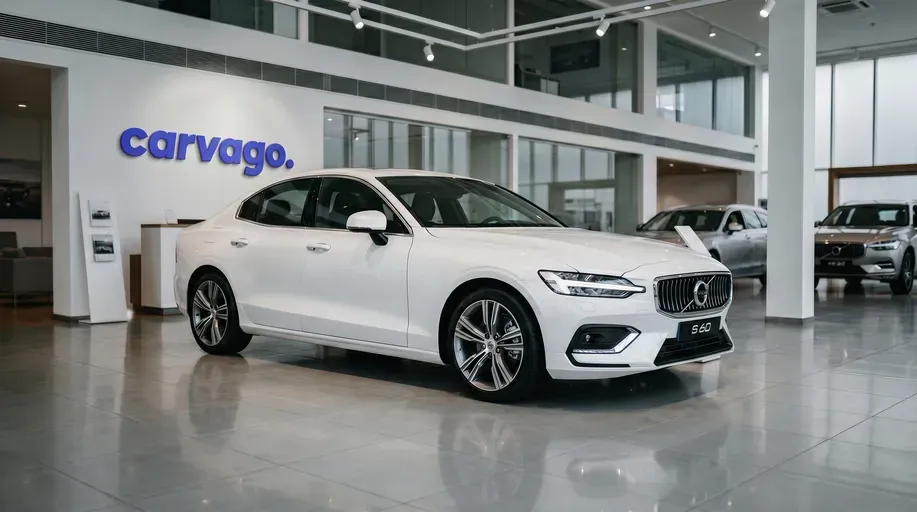
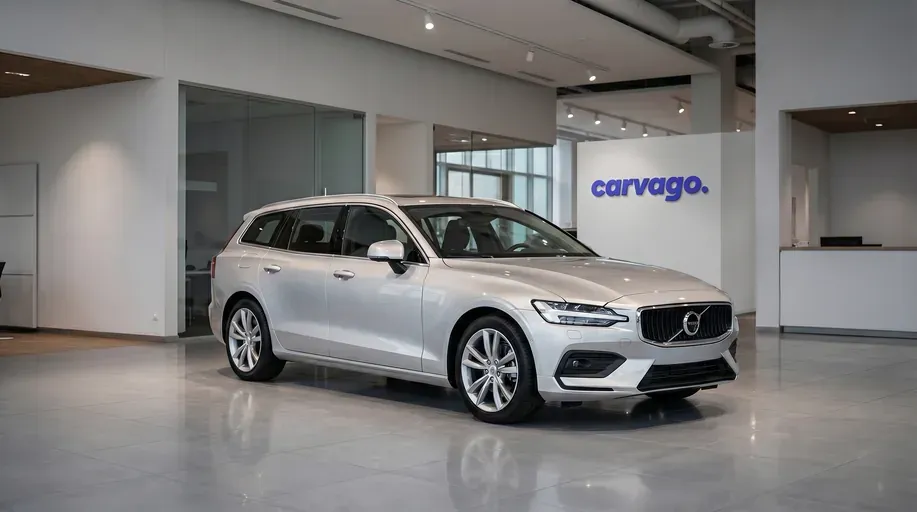
The Volvo S60, which you can also find on the used car market in specific versions such as the extended S60L or the slightly raised S60 Cross Country, represents an elegant and dynamically tuned premium sedan from the Swedish brand. Its more practical sibling is the Volvo V60, also available in the popular plastic-clad V60 Cross Country variant, which offers more generous interior space and a more versatile estate body style on an identical technical basis. The following comparison will detail the main differences between these models and help you decide whether to prefer the representative silhouette of the sedan or rather choose the family-oriented estate.
When comparing the exterior dimensions of roughly four-year-old Volvo S60 and Volvo V60 models (third generation), we find an almost perfect match. Both cars are built on the identical SPA (Scalable Product Architecture) modular platform, which means they measure exactly 4,778 mm in length and share a generous wheelbase of 2,872 mm. Thanks to these identical values, both models offer very similar longitudinal spaciousness and smooth ride comfort, making them great companions for long journeys regardless of which body style you choose.
The width is also identical for both cars at 1,850 mm, while the overall height differs by a completely negligible 1 millimeter (1,431 mm for the S60 versus 1,432 mm for the V60). In practice, this means that when maneuvering in narrow city streets, driving through tight underground garages, or parking at a shopping center, both models handle and behave exactly the same. If you are concerned that the greater interior practicality of an estate would automatically mean having to get used to a larger and less maneuverable car, in the case of the S60 and V60 siblings, you can safely put those worries aside.
Although both cars occupy the exact same footprint on the road, the extended roofline of the V60 fundamentally changes the overall usability of the enclosed volume. While the S60 sedan benefits from these solid foundations primarily with a beautiful, elegant, and sporty three-box body with a smoothly sloping rear, the V60 estate adds a significant bonus in the form of better headroom for passengers in the second row. From the perspective of daily use, the conclusion is clear – the choice between the two cars requires no compromises in maneuverability or exterior dimensions, but depends purely on your aesthetic preferences and requirements for interior space variability.
| Parameter | Volvo S60 Sedan | Volvo V60 Estate |
|---|---|---|
| Length (mm) | 4778 | 4778 |
| Width (mm) | 1850 | 1850 |
| Height (mm) | 1431 | 1432 |
| Wheelbase (mm) | 2872 | 2872 |
When it comes to choosing between the Volvo S60 and Volvo V60 models, the key decision factor for most buyers is undoubtedly the size and usability of the luggage compartment. While the elegant S60 sedan appeals primarily to executives or couples, the practical V60 estate is the clear choice for families with children or active individuals needing to transport bulkier cargo. The difference between the two body styles is fully revealed in everyday practicality, whether it's storing the weekend shopping or packing multiple suitcases for a longer family holiday.
Looking at the third generation of these models, which currently dominates the used car market at around four years old, the S60 sedan offers a solid 427 liters of space as standard. This is a capacity that easily accommodates several travel bags and standard luggage. In contrast, the V60 estate scores not only with significantly better and wider access through the large tailgate but especially with a more generous volume of 519 liters for standard mild-hybrid versions (from the 2021 model year). Furthermore, with the rear seats folded down, the V60 transforms into an exceptionally flexible helper with a maximum capacity of up to 1,431 liters. This provides you with enough space to transport bicycles, ski equipment, or even smaller furniture.
When choosing a specific used car, however, it is also important to monitor the type of powertrain. Popular plug-in hybrid versions (often designated as T6 or T8 Recharge) lose a small part of the luggage space due to the placement of the traction battery. In the hybrid S60 sedan, the base volume drops to 390 liters, while the plug-in hybrid V60 estate from roughly 2021 to 2022 has a volume of 481 liters (maximum 1,393 liters after folding). In practice, for the sedan, this means a slight compromise and more careful luggage packing "like in Tetris," while with the estate, you still have a confident reserve for bulky items such as a stroller or a larger dog crate.
| Parameter | Volvo S60 Sedan | Volvo V60 Estate |
|---|---|---|
| Base volume (liters) | 390 - 427 | 481 - 519 |
| Max. volume with seats folded (liters) | Not specified | 1393 - 1431 |
While the Volvo S60 is fully sufficient for representative trips and regular daily commuting for two, the Volvo V60 is, thanks to its substantially larger and more easily accessible trunk, clearly the safer choice for any family use.
Towing capacity is a key parameter for anyone planning to tow a caravan, horsebox, or heavier utility trailer with their car. When comparing the third generations of both cars (S60 produced since 2019 and V60 since 2018), which today represent an ideal choice on the used car market at around four years of age, both the S60 sedan and the more practical V60 estate prove to be very capable tow cars with almost identical parameters. The standard braked towing capacity for petrol and mild-hybrid versions (e.g., B4, B5, T4, and T5) is an identical 1800 kg for both body styles. This value offers a comfortable margin and space for a few extra suitcases, which is perfectly sufficient for larger weekend shopping trips as well as longer holidays with a family caravan.
A maximum towing capacity of 2000 kg is then offered by the more powerful engines of both cars. In the case of both the S60 and V60, these are primarily the powerful petrol and plug-in hybrid units (T6 and T8 Twin Engine); for the V60 estate, this maximum capacity is also offered by the popular diesel engines (e.g., D4, B4 Diesel, or B6). The only exception with reduced capacity is the entry-level D3 diesel engine in the V60 model, where the permitted braked towing weight ranges between 1600 and 1800 kg. The unbraked towing capacity remains at the legislative and structural maximum of 750 kg for all variants without exception.
In conclusion, both models will serve you excellently in terms of towing power. However, thanks to a wider range of powerful diesel engines, the Volvo V60 represents a slightly more versatile choice for drivers who plan to tow truly heavy loads regularly and over long distances.
| Model and engine | Braked towing capacity (kg) | Unbraked towing capacity (kg) |
|---|---|---|
| Volvo S60 B4 / B5 / T4 / T5 (3rd generation) | 1800 | 750 |
| Volvo S60 T6 / T8 incl. Twin Engine (3rd generation) | 2000 | 750 |
| Volvo V60 D3 (3rd generation) | 1600 - 1800 | 750 |
| Volvo V60 B3 / B4 / B5 / T4 / T5 (3rd generation) | 1800 | 750 |
| Volvo V60 B4 Diesel / B6 / D4 / T6 / T8 incl. Twin Engine (3rd gen.) | 2000 | 750 |
Looking at the engines of roughly four-year-old cars on the used market, we encounter one of the most fundamental differences between these two models. While the Volvo V60 estate initially retained traditional diesel engines and later replaced them with advanced mild-hybrid diesels, the Volvo S60 sedan went down in history as the brand's first model to completely eliminate diesel units from its range in its 3rd generation. It focused exclusively on petrol versions and advanced plug-in hybrids. If you as a driver are looking for an economical diesel for high motorway mileage, the sedan is out of the question for you. In terms of architecture, both models rely exclusively on their own turbocharged two-litre four-cylinder engines from the Drive-E family. Most used cars today are paired with the reliable eight-speed Geartronic automatic transmission, and you can choose between front-wheel drive (FWD) or all-wheel drive (AWD).
The S60 sedan's range reflects the Swedish brand's strong emphasis on ecology and refinement. The role of the standard engine in the 4-year-old used car market is filled by petrol mild-hybrids (MHEV) designated B4 (145 kW) and the more powerful B5 (184 kW). In the 3rd generation, these units gradually replaced the earlier pure petrol T4 and T5 engines. Thanks to the integrated starter-generator, they benefit from reduced fuel consumption and particularly smooth starts. If you are looking for maximum dynamics, the top model is the T8 Recharge plug-in hybrid (often in Polestar Engineered sports tuning). This adds a powerful electric motor driving the rear axle to the petrol engine, offering a combined output exceeding 300 kW and allowing dozens of kilometres of pure electric driving.
| Engine | Fuel | Power (kW) | Torque (Nm) | Transmission |
|---|---|---|---|---|
| B4 | Petrol (MHEV) | 145 | 300 | 8AT |
| B5 | Petrol (MHEV) | 184 | 350 | 8AT |
| T4* | Petrol | 140 | 300 | 8AT |
| T5* | Petrol | 184 | 350 | 8AT |
| T8 Twin Engine / Recharge | Plug-in Hybrid | 288 - 335 | 400+ | 8AT |
*Note: Pure petrol T4 and T5 versions were offered until 2020, after which they were fully replaced in the range by more modern mild-hybrid variants designated B.
The V60 estate offers a significantly more diverse range on the used market, capable of satisfying a wider spectrum of customers. A major draw are the classic diesel engines D3 (110 kW) and the more powerful D4 (140 kW), which remained in production until roughly 2020. Furthermore, the weaker D3 version represented one of the few ways to still get a six-speed manual transmission in a Volvo. Later, the carmaker replaced the classic diesels with the electrified B4 Diesel (145 kW) engine, which brought quieter operation and slightly better fuel consumption. For petrol fans, the V60 shares the same mild-hybrids as the sedan (including the entry-level B3 and the powerful B6). From the perspective of locally emission-free versions, the estate adds a more rational plug-in hybrid alternative, the T6 Recharge with a respectable total output of 250 kW, alongside the extremely fast T8 Recharge.
| Engine | Fuel | Power (kW) | Torque (Nm) | Transmission |
|---|---|---|---|---|
| D3* | Diesel | 110 | 320 | 6MT / 8AT |
| D4* | Diesel | 140 | 400 | 8AT |
| B4 Diesel | Diesel (MHEV) | 145 | 420 | 8AT |
| B3 | Petrol (MHEV) | 120 | 265 | 8AT |
| B4 | Petrol (MHEV) | 145 | 300 | 8AT |
| B5 | Petrol (MHEV) | 184 | 350 | 8AT |
| B6 | Petrol (MHEV) | 220 | 420 | 8AT |
| T6 Twin Engine / Recharge | Plug-in Hybrid | 250 | 350+ | 8AT |
| T8 Twin Engine / Recharge | Plug-in Hybrid | 288 - 335 | 400+ | 8AT |
*Note: Non-electrified D3 and D4 diesels date from 2018–2020 and are rarely encountered on the used market from 2021 onwards.
Recommendation for buyers:
If you cover high tens of thousands of kilometres a year and spend a lot of time on the motorway, the V60 estate in D4 or B4 Diesel versions will be the ideal choice for you. They will provide you with a long range and low operating costs. Conversely, drivers commuting shorter distances and moving in urban areas will be perfectly served by both body styles with the B4 petrol mild-hybrid. For technology enthusiasts and dynamically oriented individuals who have the possibility to charge the car overnight or at work, there are the high-performance Recharge models, which can cover regular journeys on pure electricity alone.
If you insist on an economical diesel engine for long distances, the Volvo V60 is the clear winner, as the nearly new S60 sedan was not offered with a diesel at all.
Choosing the right engine is absolutely crucial for long-term satisfaction with the car. Looking at roughly four-year-old used cars from the current third generation of both models, we find exclusively two-liter four-cylinder engines paired with an automatic transmission under the hood, but with one very significant historical difference. While the S60 sedan became the first Volvo model to completely abandon diesel engines and switch purely to petrol and plug-in hybrid units, the more practical V60 estate logically kept diesel in its lineup (in the form of mild hybrids) until the beginning of 2024. The following recommendations are based on power delivery smoothness, real-world fuel consumption, and mechanical durability proven by the used car market.
For the elegant sedan, the petrol mild-hybrid labeled B4 is the ideal choice. In the lineup, it represents the perfect middle ground and a golden compromise between the purchase price of a used car, solid dynamics, and acceptable operating costs. Thanks to the assistance of a small 10kW integrated starter-generator (ISG), this four-cylinder offers very smooth and quick starts from a standstill, smooths out the torque curve, and makes city driving exceptionally fluid. Real-world fuel consumption in combined driving hovers around a pleasant 6.5 to 7.5 liters per 100 km. From a mechanical standpoint, it is a well-tuned engine that, compared to the top-tier T8 versions, avoids potential high service costs associated with a complex plug-in hybrid system and a large traction battery.
For a spacious family estate, where long highway journeys with a fully loaded trunk are naturally expected, a diesel engine still makes the most sense. Given that Volvo ended diesel production for the V60 in early 2024, a roughly four-year-old V60 B4 Diesel represents one of the last and most desirable options to acquire an excellent Swedish highway cruiser. With a massive torque of 420 Nm, the engine easily handles even a fully loaded car, while the electric assistance of the mild-hybrid system effectively masks previous turbocharger lag at low RPMs. The long-distance fuel consumption is absolutely unrivaled, typically oscillating between 5.5 and 6.0 liters per 100 km, which guarantees a huge range on a single tank.
In modern cars, especially those equipped with mild-hybrid or plug-in hybrid technology, official consumption figures provided by manufacturers often differ significantly from reality. While cars can conjure up unrealistically low numbers in laboratory conditions, everyday operation reveals their true appetite. To get the most accurate picture of consumption in real conditions, we have drawn on long-term user data from the popular community portal Spritmonitor.de. For comparison, we focused on current third-generation models with an average age of around four years, which are currently among the most sought-after on the used car market.
Data source: Spritmonitor.de
| Model and engine | Average consumption (l/100 km) |
|---|---|
| Volvo V60 D3 (110 kW) | 5.6 |
| Volvo V60 D4 (140 kW) | 6.0 |
| Volvo S60 B4 (145 kW) | 7.0 |
| Volvo V60 B4 (145 kW) | 7.2 |
| Volvo S60 B5 (184 kW) | 7.8 |
| Volvo S60 T8 Recharge (288 kW) | 4.5 |
| Volvo V60 T6 Recharge (251 kW) | 4.8 |
Looking at the real data, one fundamental difference in the design approach of the two models is apparent. While the S60 sedan completely abandoned diesel engines in its third generation and relies exclusively on petrol mild-hybrids and plug-in hybrids, the more practical V60 estate retained the very popular D3 and D4 diesel units in its first years of production. It is the diesels in the V60 that prove to be the absolute most economical choice, with real consumption below the six-litre mark. Two-litre petrol engines with mild-hybrid technology in both body styles require roughly 7 to 8 litres, with the heavier and less aerodynamic estate showing only a slightly higher appetite. The powerful plug-in hybrids (T6 and T8) are a chapter of their own. Although the official specs promise consumption in the range of one to two litres, in the real world – where owners do not always faithfully charge the battery to 100% – the long-term average ranges between 4.5 and 5 litres per 100 km.
For the average used car buyer, these figures provide a fairly clear key to selection. If you spend most of your time on motorways and cover high annual mileages, the diesel V60 will clearly be the most rational choice for you in terms of running costs. For drivers with predominantly urban and suburban traffic, who also have the option of regular charging at home or at work, the plug-in hybrid variants make great sense, allowing everyday shorter distances to be covered purely on electricity. Petrol mild-hybrids then represent a universal middle ground for buyers with lower annual mileage, for whom a diesel engine would not pay off in terms of long-term maintenance.
In the end, fuel consumption plays a much larger role in the decision between the S60 and V60 than it might seem at first glance. This is not about aerodynamic differences between the sedan and the estate, but about the availability of the engines themselves. If your main requirement is a tireless and economical highway cruiser, the S60 sedan is automatically out of the running, and the diesel Volvo V60 becomes the clear winner.
If you are choosing a roughly 4-year-old used car (2021–2022 models), the market situation clearly reflects European preferences and previous corporate buying behavior. While the V60 family and executive estate is a common part of most used car dealerships' offerings, the S60 sedan represents a more exclusive and less frequent choice on our market. Here is a detailed look at how these current generation models stand in terms of price.
The third-generation Volvo S60 is in the minority on the used car market. Because this sedan is manufactured exclusively in the USA and the automaker completely eliminated diesel engines from the start, the selection is narrower. The market is primarily dominated by petrol mild-hybrids (B3, B4) or high-performance plug-in hybrids (Recharge).
In contrast, the second-generation Volvo V60 is an absolute market bestseller, which was purchased in large numbers by companies as fleet vehicles. There is a huge number of units on the market, giving buyers a great opportunity to negotiate and choose a specification tailored exactly to their needs.
In Central Europe, there is an unwritten rule that estates hold their residual value much better than sedans. The high practicality of the V60 model ensures constant interest among families right after the cars leave corporate fleets. The S60 sedan, on the other hand, loses value slightly faster in the first few years. For a smart buyer of a 4-year-old used car, however, this drop represents a great opportunity to get a premium car with a very interesting price-to-equipment ratio.
| Model (2021–2022 models) | Average starting price | Typical price (medium mileage) | Price of top version (Recharge / CC) |
|---|---|---|---|
| Volvo S60 | €27,000 | €31,000 | €39,000 |
| Volvo V60 | €23,000 | €30,000 | €43,000 |
While you can get the more practical Volvo V60 slightly cheaper thanks to the large surplus of motorway fleet cars with diesel engines, the elegant petrol Volvo S60 will often offer you more exclusivity and much lower mileage for similar money.
Both Nordic models proudly earned the maximum five-star rating in Euro NCAP tests. However, when choosing a used car, it is necessary to consider the context and the specific year the testing took place. Euro NCAP protocols are constantly evolving and becoming stricter. Percentage results and stars awarded in earlier years cannot be directly compared with the latest standards, as today's methodology places much greater emphasis on proactive accident prevention systems.
The Volvo S60 underwent Euro NCAP certification in 2018. That year, much stricter protocols came into force, focusing for the first time in more detail on advanced technologies such as automatic braking for cyclists and emergency lane keeping. Since the S60 is structurally based on the exact same SPA (Scalable Product Architecture) platform as its sibling, the assessors verified and applied the crash test results identically to the estate version. The sedan thus demonstrated structural excellence and an uncompromising ability to protect its occupants under all circumstances.
Just like the sedan, the Volvo V60 family estate was subjected to demanding tests in the same year. The car faced then-completely new scenarios, including crisis situations at intersections and the detection of vulnerable road users. The estate excelled particularly in adult occupant protection, where it scored a fantastic 96%. Although the 2018 certification for both models officially expired in early 2025 (which is a formal and completely common Euro NCAP practice after six to seven years), the car retains immense credit in the context of roughly four-year-old used vehicles. Furthermore, its City Safety assistance system can detect not only pedestrians but also large animals, a feature you won't find in most competitors from that time.
| Parameter | Volvo S60 | Volvo V60 |
|---|---|---|
| Year of testing | 2018 | 2018 |
| Adult occupant protection | 96% | 96% |
| Child occupant protection | 84% | 84% |
| Vulnerable road users protection | 74% | 74% |
| Safety assist systems | 76% | 76% |
When comparing these two models, you will find complete safety parity. Both the Volvo S60 and Volvo V60 offer an identical, highly modern, and comprehensive safety package that, even years later, meets exceptionally high demands for active and passive protection. Whether you prefer the representative look of the sedan or need the practical luggage space of a family estate, with both you get a vehicle that ranks at the absolute top of its class in terms of safety and modern assistants.
Both body styles provide an identical level of first-class safety, so whether you choose the S60 or V60, your family will be protected with uncompromising quality.
In addition to standard equipment, each model offers several unique features that can be decisive for the customer and help clearly define their distinct character. Although both cars share the same SPA platform and most top-tier safety assistants, their paths diverge in their approach to details and everyday use.
Sportier and more elegant silhouette of a classic sedan with excellent aerodynamics
Excellent torsional body rigidity contributing to slightly better driving characteristics
Top-tier level of active and passive safety and assistance systems
Well-crafted and acoustically very quiet interior with premium materials
Powerful and efficient plug-in hybrid powertrains (Recharge) with a long electric range
Smaller and less accessible luggage compartment (limited loading opening typical for a sedan)
Complete absence of economical diesel engines in this generation
Slightly less headroom for rear-seat passengers due to the sloping roofline
The Volvo S60 is a great choice for managers or individuals looking for a stylish, safe, and representative car with excellent driving characteristics, but who don't need a giant trunk. Due to the absence of diesel engines, it makes sense primarily for buyers who prefer refined gasoline units or modern plug-in hybrid technology.
Top-tier practicality with a voluminous and excellently shaped luggage compartment (529 liters)
More headroom for second-row passengers thanks to the flatter roofline
Availability of proven diesel engines on the used car market (D3 and D4 versions in older model years)
Also available as a raised and more rugged Cross Country version for light off-roading
Traditionally excellent popularity and more stable residual value on the European market
Higher purchase price on the used car market due to huge demand for family estates
Slightly higher curb weight, which marginally increases average fuel consumption
Slightly higher noise level coming from the rear axle compared to the sedan
The Volvo V60 represents an ideal choice for families and active drivers who need uncompromising space without sacrificing safety or driving comfort. It excels in its great versatility and scores particularly well on the used car market by offering desirable economical diesel engines suitable for long distances, unlike the sedan.
Based on our own CarAudit inspections, breakdown statistics, long-term user reviews, and service reports, we have compiled an overview of the most common problems that used car buyers should watch out for.
The third generation of the Volvo S60 sedan (built on the SPA platform) is generally a very safe and reliable car, but due to its complex architecture, specific electronic and mechanical quirks appear.
The S60 sedan is a mechanically robust car whose most common pains are software faults in the onboard system and the need to strictly follow the automatic transmission service intervals.
The more practical Volvo V60 estate shares the vast majority of its technology with the S60 sedan and thus suffers from similar ailments, to which are added estate-specific body issues and higher rear axle loads.
For the V60 estate, pay attention primarily to the condition of the rear axle and brakes due to more frequent overloading; otherwise, it is considered a very reliable companion with occasional software quirks.
When buying a used car, a thorough inspection is key. Here are some specific points to focus on for these two models, which is why every purchase should be preceded by an independent technical inspection of the car, which will reveal any hidden defects.
The Volvo V60 as an estate offers a significantly more practical and voluminous boot with a basic capacity of 529 litres. The Volvo S60 sedan has a luggage compartment with a volume of 442 litres and has more limited access due to a smaller loading opening. For frequent transport of larger items, the estate is clearly the better choice.
The Volvo V60 is much more suitable for families because the estate body makes it easier to load strollers and provides more headroom for rear passengers. While the sedan offers an equally spacious interior in terms of legroom, its sloping roof limits the overall versatility of the boot. In terms of everyday family practicality and travelling with children, the estate clearly wins.
Both cars are built on the same SPA platform and share identical components, so their driving characteristics are very similar. The Volvo S60 feels slightly sportier and more agile in fast corners thanks to its stiffer sedan body. Conversely, the V60 is tuned more for maximum stability and smoothness, which the occupants will appreciate especially during long motorway journeys.
The range of powertrains and overall reliability is identical for both vehicles, as they use the same two-litre four-cylinder engines. For used cars around four years old, the market is based on mild-hybrid versions and powerful plug-in hybrids, which have so far proven to be very durable. When choosing, the most important thing is to look for a clearly documented service history and regular oil changes in the automatic transmission.
Surprisingly not; both cars have exactly the same wheelbase and measure approximately 4.76 metres in length, so they take up exactly the same parking space to the centimetre. Furthermore, thanks to its vertical rear and large windows, the Volvo V60 can offer a slightly better rear view when reversing manually. However, both vehicles are equipped as standard with high-quality parking sensors and often cameras, which make manoeuvring in the city significantly easier.
The decision between the Volvo S60 and Volvo V60 models does not depend on external dimensions, safety, or premium craftsmanship, as both cars share an identical and exceptionally high standard in these respects. The elegant S60 sedan represents an ideal choice for managers or couples looking for a representative design, a more exclusive character, and who prefer refined petrol or plug-in hybrid powertrains. In contrast, the practical V60 estate is the clear favorite for families and active drivers thanks to its much more accessible luggage compartment, greater versatility, and the still-available range of economical diesel engines on the used car market, suitable for long motorway journeys. While the more popular estate holds its residual value better and facilitates potential future resale, the stylish sedan can currently offer a very attractive price-to-equipment ratio combined with typically lower mileage.
Sources: ADAC, forbes.cz, auto.cz, motorvize.cz, automagazin.cz, autoemotion.cz
This article was prepared using artificial intelligence tools. The section guarantor is Petr Dušek.
Detailed comparison of Audi A4 vs. Volvo V60. Find out which premium car has better driving characteristics, equipment, and reliability. Read our clear verdict.
May 8, 2026
Ford Mondeo vs. Toyota Camry: Detailed comparison, tests, data, and verdict. Find out which sedan is the best choice for you on the used car market.
Apr 13, 2026
Detailed comparison of the Jaguar XE vs Volvo S60. Learn all about the features, reliability, and driving dynamics of these used cars, and read our verdict before you buy.
May 4, 2026