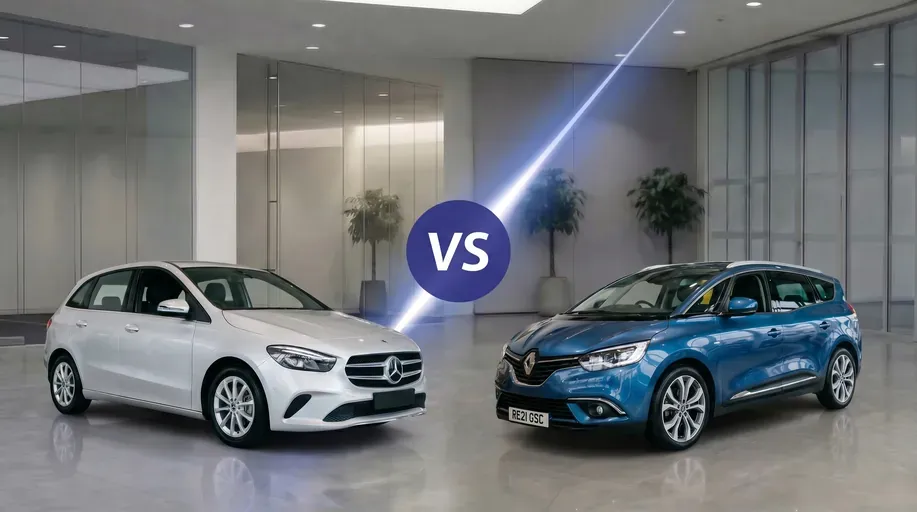
Mercedes-Benz B-Class vs. Renault Grand Scénic: Complete comparison 2026
Detailed comparison of the Mercedes-Benz B-Class and Renault Grand Scénic MPVs. Find out which used family car offers better space, equipment, and value for money.
Apr 19, 2026
Articles
Car battle
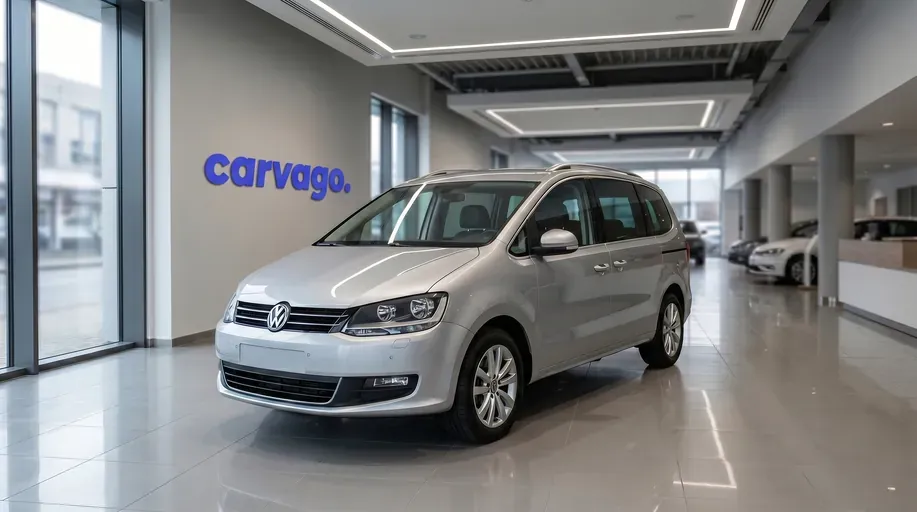
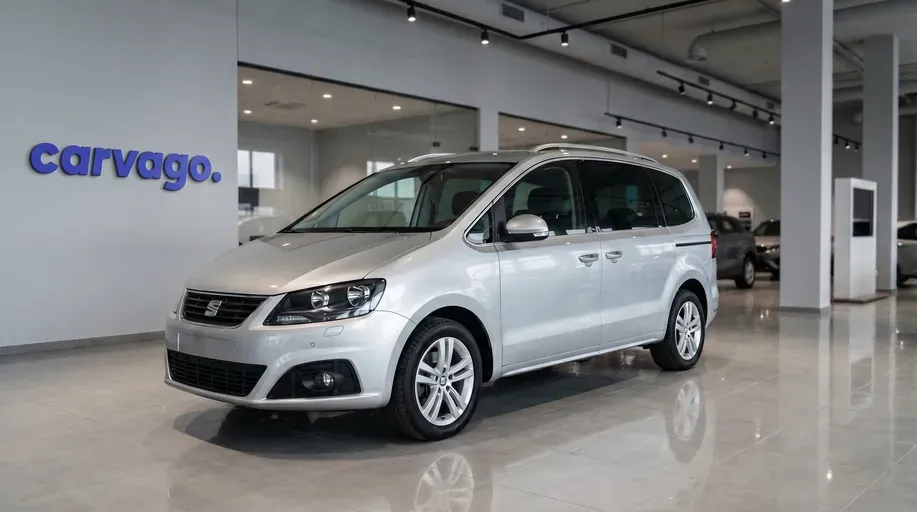
Volkswagen Sharan vs. Seat Alhambra: The Big Comparison. Which family MPV should you choose? Discover the key differences in practicality and equipment, and read our clear verdict.
April 26, 2026


Volkswagen Sharan is an exceptionally spacious family MPV that has built a reputation as a practical and premium-built vehicle for the most demanding transport tasks. Its Spanish group twin, the SEAT Alhambra, offers identical technology and generous interior space, but in the eyes of many buyers, it often scores with a slightly more dynamic look and a more favorable purchase price. Let's take a detailed look at which of these two exceptionally popular family haulers makes more sense on today's used car market and what small details ultimately decide the winner.
When looking at the exterior dimensions of the Volkswagen Sharan and Seat Alhambra models, you will find that they are almost identical twins. Both cars, which are most commonly found on the used car market in generations produced until 2022 (Sharan II and Alhambra 7N), share the group platform and the vast majority of the bodywork. In practice, this means that if you are looking for a family car approximately four years old, you get the exact same footprint and proportions to the millimeter from both brands.
With a length of 4,854 mm and an above-standard wheelbase approaching the 2,920 mm mark, both models offer absolutely regal interior space. This size is ideal for comfortable travel for larger families or for transporting a large amount of luggage. A certain price for this immense spaciousness is the width of 1,904 mm, which can sometimes slightly complicate maneuvering in narrow city streets or cramped underground garages. However, a significant relief when parking is provided by the extremely practical rear sliding doors in both competitors, thanks to which you don't need as much space for children to get in.
Since you won't find practically a single difference between these two cars in the dimension tables, physical size is not a deciding factor when choosing. Your final verdict will therefore depend more on your affinity for the given brand, preference for exterior design details, or simply on which specific piece with the best equipment and history you happen to find on the current used car market.
| Parameter | Volkswagen Sharan MPV | Seat Alhambra MPV |
|---|---|---|
| Length (mm) | 4854 | 4854 |
| Width (mm) | 1904 | 1904 |
| Height (mm) | 1720 | 1720 |
| Wheelbase (mm) | 2919-2920 | 2920 |
Family usability and maximum practicality are absolutely key when choosing a large-capacity vehicle, and the trunk volume is often the main deciding factor. If you are choosing between popular approximately four-year-old used cars of the Volkswagen Sharan (generation II) and Seat Alhambra (generation 7N, both produced until 2022) models, it is important to state one essential fact. Since they are technological twins coming off the same production line in Palmela, Portugal, their interior layout and dimensions are identical. Whether you choose the rather conservative Volkswagen or the more dynamically styled Seat, in both cases you get one of the most generous luggage compartments in the MPV class.
Precise figures for 5 and 7 seats
In the standard five-seat configuration, both cars offer a huge basic volume of 955 liters (when using the space up to the roof, or 711 liters up to the level of the roller blind). If you fold down the second row of seats, the family MPV turns into a practical van with a maximum volume of up to 2430 liters and a completely flat floor. However, optional seven-seat versions are also very popular on the used car market. When all seven seats are occupied, the space logically shrinks to a still solid 300 liters. After folding the second and third rows into the floor, you get a top-tier 2297 liters. It is worth noting that, unlike many modern competitors, you won't find any plug-in hybrid versions here, where a large battery would unfortunately reduce the usable trunk capacity. Both TSI gasoline and TDI diesel engines thus offer identical space to the liter.
Practical use in everyday life
In practice, these impressive values mean that with both models, the stress of packing is completely eliminated. The basic volume is more than sufficient for weekend shopping and longer vacations for a large family. You can comfortably place even an unfolded large stroller in the trunk and still have room for several extra suitcases. Furthermore, the completely vertical body walls and the wide opening of the tailgate make loading bulky furniture, sports equipment, or bicycles an extremely simple matter.
| Parameter | Volkswagen Sharan MPV | Seat Alhambra MPV |
|---|---|---|
| Base volume (liters) | 955 | 955 |
| Max volume with seats folded down (liters) | 2430 | 2430 |
In terms of spaciousness, you can't go wrong with either car – both models offer an identical and, on the used car market, completely unrivaled volume that will satisfy even the most demanding large family.
When choosing a family MPV on the four-year-old used car market, towing capacity is often one of the key parameters. The Volkswagen Sharan (Generation II) and Seat Alhambra (Generation 7N), both produced around 2018–2022, are technological twins. Thanks to their shared platform, they offer identical values in the trailer weight category, which are very high for their class. For families with an active lifestyle, this means excellent flexibility when planning summer holidays or weekend moves of larger loads.
Base engines and standard weights
If you opt for the reliable 1.4 TSI (110 kW) petrol engines in either car, expect a standard braked trailer weight of exactly 1800 kg. In practice, this is a fully sufficient value for common needs, such as towing medium-sized caravans, trailers for several motorcycles, or transporting materials to a cottage.
Maximum towing capacity for heavy loads
The real workhorses are hidden in the more powerful diesel and petrol engines. The 2.0 TDI versions (with 110 kW and 130 kW) can tow 2200 to 2400 kg in both models, with the highest values typically achieved by all-wheel-drive variants (4Motion for VW, 4Drive for Seat). More powerful petrol versions, such as the Volkswagen Sharan 2.0 TSI (162 kW), offer a towing capacity of 2200 kg. These maximum values represent the absolute top of the family MPV segment. They provide enough muscle for transporting heavy boats, large twin-axle trailers full of building materials, or the most spacious family caravans.
Specific and hybrid versions
Since neither the Sharan nor the Alhambra offered plug-in hybrid powertrains in this generation, they avoid a common problem of newer competing models – reduced towing capacity due to a heavy battery. Both cars rely on proven internal combustion engines. Technologies such as SCR (AdBlue injection) in diesel engines or Start&Stop systems do not limit the power of either vehicle in any way.
Final summary
Since both the Sharan and Alhambra come from the same production line and share identical technology, it is impossible to determine a clear winner based on trailer weight. Both cars function as ultimate family workhorses. When choosing a used car, you can focus entirely on the main things: the condition of the specific vehicle, the presence of an original folding tow bar, the equipment level, and your personal brand preference.
| Model and engine | Braked trailer weight (kg) | Unbraked trailer weight (kg) |
|---|---|---|
| Volkswagen Sharan 1.4 TSI (110 kW) | 1800 | 750 |
| Volkswagen Sharan 2.0 TSI (162 kW) | 2200 | 750 |
| Volkswagen Sharan 2.0 TDI (110–130 kW) | 2200–2400 | 750 |
| Seat Alhambra 1.4 TSI (110 kW) | 1800 | 750 |
| Seat Alhambra 2.0 TDI (110–130 kW) | 2200–2400 | 750 |
The Volkswagen Sharan and Seat Alhambra are mechanically identical twins produced on the same line in Palmela, Portugal, meaning they share an absolutely identical range of power units. For those interested in a roughly four-year-old used car, this represents a great advantage, as both large family MPVs offer time-tested Volkswagen Group technology. All engines available in these years are exclusively turbocharged (labeled TSI for petrol and TDI for diesel), and you won't find any mild-hybrid or plug-in hybrid systems here, which guarantees simpler and long-term proven maintenance. The range has always emphasized smooth operation, high reliability, and very favorable fuel consumption even with a fully loaded vehicle. The four-year-old used car market is dominated by 2.0 TDI diesel units and the smaller but surprisingly flexible 1.4 TSI petrol engine. If you were interested in the most powerful two-liter petrol engine (2.0 TSI), you would have to look for much older cars – its production for both models ended around 2018 due to stricter emission standards.
The engine range for the Volkswagen Sharan Generation II (including used cars after the latest technological updates) is designed primarily for calm and efficient family travel. If you are looking for a petrol version, you will encounter the 1.4 TSI OPF BMT four-cylinder with 110 kW, which is a refined, quiet, and sufficient choice for daily city driving or suburban traffic. However, the gold standard and highway king is the advanced 2.0 TDI SCR BMT diesel four-cylinder. This can be found on the market in several power levels, of which the 110 kW (150 hp) compromise is by far the most sought-after. It represents a great balance between sufficient power and fuel consumption, which drops to around 6 liters per 100 km on long trips. Diesel units can be combined with 4MOTION all-wheel drive and the comfortable DSG dual-clutch transmission.
| Engine type | Fuel | Power (kW) | Torque (Nm) | Transmission |
|---|---|---|---|---|
| 1.4 TSI OPF BMT | Petrol | 110 | 250 | 6MT / 6DSG |
| 2.0 TSI BMT* | Petrol | 162 | 350 | 6DSG |
| 2.0 TDI SCR BMT | Diesel | 85 / 110 / 130 / 135 | 280 - 380 | 6MT / 6DSG / 7DSG |
\Note: Production of the 2.0 TSI engine ended in 2018, so you will no longer find it in the range of four-year-old used cars.*
For the last generation Seat Alhambra (7N), exactly the same applies in terms of engine range and characteristics as for the Volkswagen. The petrol representation is provided by the modern 1.4 TSI with 110 kW, which does not lack the necessary dynamics and works well on shorter daily routes. The clear choice for high-mileage drivers is the indestructible 2.0 TDI engine. Interestingly, while Volkswagen uses the 4MOTION designation for its all-wheel-drive system, the identical AWD system in the Seat is called 4Drive. Most four-year-old used cars on the market have 110 kW, or 135 kW (184 hp) in the top specification. Especially the more powerful diesel versions handle the heavy and occupied vehicle with ease and later boasted a more modern seven-speed DSG transmission, which further reduced RPMs at highway speeds.
| Engine type | Fuel | Power (kW) | Torque (Nm) | Transmission |
|---|---|---|---|---|
| 1.4 TSI | Petrol | 110 | 250 | 6MT / 6DSG |
| 2.0 TSI* | Petrol | 162 | 350 | 6DSG |
| 2.0 TDI | Diesel | 85 / 110 / 130 / 135 | 280 - 380 | 6MT / 6DSG / 7DSG |
\Note: As with its sister model, production of the most powerful 2.0 TSI ended around 2018.*
Both models offer identical and thoroughly time-tested engines, with the 110 kW 2.0 TDI diesel representing the absolute ideal for highway travel, while the refined 1.4 TSI makes sense for more frequent city driving.
Volkswagen Sharan and SEAT Alhambra are technological twins produced on the same assembly line in Portugal, and therefore share an identical range of power units from the VW Group's parts bin. Choosing the right engine is absolutely crucial for long-term satisfaction and acceptable service costs for these large and heavy MPVs. In the market for four-year-old used cars (around the 2022 model year), the selection is limited to proven four-cylinder engines; however, it is interesting to observe the differences in availability – while Volkswagen kept diesel engines in the range until mid-2022, SEAT ended sales of the popular diesels for the Alhambra as early as the summer of 2020 and offered mostly only petrol versions until the end of production in 2022. Your choice should therefore depend primarily on the age of the selected vehicle and your daily driving profile.
For a typical family cruiser that regularly eats up highway kilometers or heads off on vacation fully loaded, the two-liter diesel (EA288 generation) with an output of 110 kW (150 hp) is absolutely the best choice. This engine was able to work highly efficiently with the heavy bodywork and only disappeared from the Sharan's range just before the end of its production in June 2022. Its main advantage is the excellent torque of 340 Nm, which provides confidence when overtaking, and real-world fuel consumption, which reliably stays between 6 and 7 liters per 100 km for the front-wheel-drive version.
It is a mechanically very durable and reliable unit if given proper care. It is an ideal choice for highway travelers, but it is not very suitable for city traffic.
What to watch out for:
While the two-liter diesel makes sense on the highway, a large number of families use an MPV as a "school bus" for commuting around town and the suburbs. For this purpose, the 1.4 TSI petrol engine with 110 kW (150 hp) is a much smarter choice. Furthermore, as production data shows, SEAT ended production of diesel versions of the Alhambra as early as July 2020, so if you are looking for the youngest, roughly four-year-old used cars from the end of production (up to January 2022), the 1.4 TSI is your only and, it must be said, excellent option.
This engine (code EA211) no longer suffers from the problematic timing chains of older model years – it is driven by a reliable belt. It is exceptionally quiet, warms up very quickly in winter, and for city drivers, it eliminates the expensive risks associated with DPF clogging and AdBlue system failures. The price for this peace of mind is higher real-world fuel consumption, which will range around 8 to 9 liters per 100 km.
What to watch out for:
As is often the case in the automotive world, the official fuel consumption figures provided by manufacturers often differ from what drivers experience in everyday operation. Especially with large and heavy family MPVs like the Volkswagen Sharan and Seat Alhambra, aerodynamic drag, total vehicle load, and driving style play a major role. To get the most accurate picture of the real-world consumption of currently sought-after four-year-old used cars (mainly model years 2020–2022), we looked at data from the popular independent portal Spritmonitor.de, where thousands of regular users record their refueling over the long term.
| Model and Engine | Average Consumption (l/100 km) |
|---|---|
| Volkswagen Sharan 2.0 TDI SCR 110 kW | 6.6 |
| Seat Alhambra 2.0 TDI 110 kW | 6.6 |
| Volkswagen Sharan 1.4 TSI OPF 110 kW | 8.1 |
| Seat Alhambra 1.4 TSI 110 kW | 8.0 |
The collected data clearly shows that both Group twins achieve practically identical results, which is logical given the identical technology under the hood. The 2.0 TDI (110 kW) diesel engines prove to be excellent and efficient workhorses – an average of 6.6 l/100 km is a respectable performance for such a huge seven-seater car with a massive frontal area. In contrast, the 1.4 TSI petrol four-cylinders demand roughly 1.5 liters more fuel in the real world. It may come as a surprise to some that a smaller petrol turbo engine cannot save much fuel in such a heavy vehicle; as soon as you load the car with family and luggage or take it on the highway, consumption rises quickly and easily exceeds the eight-liter mark.
For the typical user of a used family car, this means only one thing: the choice of engine should primarily depend on the prevailing type of trips. If you are a driver who spends weekends on long routes with the family and goes to the seaside for summer holidays or to the Alps in winter, the two-liter diesel will save you considerable money on fuel and, moreover, provide much better flexibility thanks to higher torque. Conversely, for those parents who use the car more as a "school bus" for short hops around town and the immediate surroundings, the 1.4 TSI petrol version makes a lot of sense. While it consumes more overall, it will save you from potential expensive worries in the future regarding the clogging of the diesel particulate filter (DPF), which inevitably occurs in modern diesels during short trips and when the optimal operating temperature is not reached.
Fuel consumption, therefore, plays no role at all when deciding directly between the Volkswagen Sharan and the Seat Alhambra. Both cars are so technologically closely related that with the same engine from the years around 2020 to 2022, they will have exactly the same appetite. Your final choice should thus be based more on the overall technical condition of a specific unit on the used car market, the equipment level, or simply which brand and front grille design you find more appealing.
Both models, the Volkswagen Sharan and SEAT Alhambra, last rolled off the production line at the Palmela plant in Portugal between 2020 and 2022. In the market for roughly four-year-old used cars, we are currently talking about the final years of the second generation after the facelift. Given that classic large MPVs have practically disappeared from manufacturers' lineups and been replaced by SUVs, these spacious siblings hold their value exceptionally well.
The price range for a used Volkswagen Sharan from 2020–2022 most often ranges from €23,000 to €31,000. Models with the VW logo had a higher purchase price even when new, and this trend logically carries over into the world of used cars. The Sharan benefits from a traditionally stronger brand image, making it a slightly more desirable (and expensive) commodity on the secondary market. The highest prices are reliably held by versions with 4Motion all-wheel drive, DSG automatic transmission, and in the top-tier Highline trim level.
Although the SEAT Alhambra is a technologically identical twin to the Sharan and the cars rolled off the same production line, the Spanish logo on the hood offers a more favorable price tag. For used cars from the final years of production, you will typically pay €1,000 to €2,000 less than for a comparable Volkswagen. Prices for an Alhambra with a production year of 2020–2022 start at roughly €21,000, and for very well-maintained units (for example, in the attractive FR-Line trim with a 2.0 TDI engine and 4Drive), they only approach the €29,000 mark.
| Model | Starting Price (higher mileage) | Average Price | Top Condition (low mileage, 4x4, 7 seats) |
|---|---|---|---|
| Volkswagen Sharan | €23,000 | €26,000 | €31,000 and more |
| SEAT Alhambra | €21,000 | €24,000 | €29,000 and more |
Although both cars are technically and practically identical, a used SEAT Alhambra offers a slightly better price-to-value ratio, while the Volkswagen Sharan relies on a more prestigious logo and a slightly better future residual value.
Both models originally received the maximum five-star rating in Euro NCAP tests when they were launched in 2010; however, it is crucial to view this result in the context of the time and year of testing. Euro NCAP methodology and testing protocols have evolved continuously and tightened radically over the years, meaning that percentage scores from different decades cannot be directly compared. With the arrival of stricter requirements for frontal crash simulations and more advanced detection of pedestrians or cyclists, the safety level of these older platforms had to be reassessed. The Volkswagen Sharan was therefore last subjected to crash tests at the end of 2019 under much stricter testing protocols. In this updated test, the car earned a very solid four stars. The loss of the fifth star does not reflect fatal weaknesses in the body stiffness itself, but rather the fact that the car's older architecture can no longer fully keep pace with the very latest standards in active assistance systems and the protection of vulnerable road users.
Given that the SEAT Alhambra is a structural twin of the Volkswagen Sharan, Euro NCAP has demonstrably verified that their structure and internal safety equipment are practically identical. For this reason, the 2019 tests were applied without reservation to this Spanish model as well, which shares the exact same point rating as the Sharan. Decent protection for child passengers (78%) confirms that, thanks to the standard installation of ISOFIX mounts and a well-thought-out cabin, the Alhambra remains a safe choice for large families. The 62% result in the safety assist systems category clearly shows the level of modern technology: although the cars feature a standard autonomous emergency braking (AEB) system with pedestrian and cyclist detection, they lack the most modern complex features, such as intersection assist. Although the official validity of these specific Euro NCAP certifications usually expires after a few years, from the perspective of today's market for approximately four-year-old used cars, these protocols represent a very objective and reassuring comparative benchmark.
In conclusion, when comparing these two models, you will not get a more modern or comprehensive safety package in one than in the other – both cars are absolutely identical in terms of passive and active safety. The four stars from 2019 clearly demonstrate that although the Sharan and Alhambra come from an older school of development and do not meet the latest draconian standards with flying colors, they still provide excellent structural protection and represent an honest, robust, and safe choice for family use on the used car market.
| Parameter | Volkswagen Sharan | SEAT Alhambra |
|---|---|---|
| Year of testing | 2019 | 2019 |
| Adult occupant protection | 89 % | 89 % |
| Child occupant protection | 78 % | 78 % |
| Vulnerable road user protection | 59 % | 59 % |
| Safety assist systems | 62 % | 62 % |
Both the Volkswagen Sharan and SEAT Alhambra offer a completely identical, very robust level of passive safety, which, despite the older design, easily holds its own as a reliable family transporter.
In addition to standard equipment, each model offers several unique features and clever solutions that go far beyond the basic foundation and can be decisive for customers when making their final choice of a family car.
Volkswagen traditionally focuses on slightly higher-quality interior materials and a wide range of optional equipment, pushing the vehicle closer to the premium segment.
The Spanish sibling benefits from the same technical foundation but adds a more attractive pricing policy with richer standard equipment and specific dynamic packages.
Huge and versatile interior space with the possibility of a full-fledged seven-seat layout
Exceptionally practical sliding side doors, ideal for parking in tight spaces and handling child seats
Higher residual value and better resale potential on the used car market thanks to the brand's strong reputation
Excellent cabin soundproofing and a highly comfortable chassis designed for long highway journeys
Proven and economical 2.0 TDI diesel engines, which are reliable in newer model years
Higher purchase price of used cars compared to the sister Alhambra
Very conservative exterior design, which can look bland next to modern SUVs
In the final years of production, an increasingly outdated multimedia system and dashboard architecture
The vehicle's high weight results in faster wear of brake components and tires
The Volkswagen Sharan is a more premium-oriented king of family MPVs, targeting customers who demand maximum travel comfort, cabin quietness, and uncompromising spaciousness. Thanks to the VW logo, it holds its value excellently on the used car market, making it a safe long-term investment for large families, even if you pay a bit more for it at purchase.
Completely identical technology, spaciousness, and safety as the Sharan, but at a significantly more friendly price
More attractive and dynamic appearance of the front grille and headlights, which visually rejuvenates the car
Often overall richer standard equipment in lower and mid-range trim levels
Confident driving characteristics complemented by a slightly stiffer and sportier setup in FR-Line versions
Faster depreciation and slightly lower resale potential when passing to the next owner
Production of the car ended earlier (in 2020), so younger model years are harder to find on the used car market
In some interior details, one can encounter slightly cheaper plastics compared to the Volkswagen
Towards the end of the production cycle, the range of available engines was significantly reduced
The Seat Alhambra represents a more rational and financially advantageous choice, as it offers exactly the same family practicality as its German twin, just wrapped in a sportier Spanish coat. It is the perfect car for pragmatically minded buyers who want to maximize the price-to-value ratio and don't mind a slightly older production year or a somewhat faster loss of value.
Based on long-term user experience, service reports, and data provided by our independent car technical condition inspection, we have compiled an overview of the most common problems that used car buyers should watch out for.
For the Volkswagen Sharan from the last years of its production cycle, despite overall reliability, specific defects associated with its weight and more complex equipment appear.
Despite its robust construction, the Volkswagen Sharan requires careful maintenance, with the greatest financial risks for used car buyers being failures of the electric sliding doors and emission systems in diesel engines.
Given that the Seat Alhambra came off the same Portuguese production line and shares the vast majority of its technology with the Volkswagen Sharan, this model suffers from practically identical mechanical and electronic ailments. Therefore, a thorough physical inspection of the used car is absolutely crucial here as well before the purchase.
The Seat Alhambra offers identical technology to the Sharan and therefore logically shares its main weak points. When buying, focus primarily on the documented maintenance history of the DSG transmission and the condition of the AdBlue system.
When buying a used car, a thorough inspection is key. Since both models are technical twins from the same production line, they share most strengths and potential weaknesses, yet there are specific points to focus on during the test drive and inspection. A thorough physical inspection of a used car can save you a significant amount of money on these large and technically complex family cruisers.
Technically, these are completely identical vehicles built on the same platform and manufactured in the same factory in Portugal. They differ primarily in the exterior design of the front grille, the shape of the headlights, the logos used, and minor graphical differences in the infotainment system. Driving characteristics, spaciousness, and the range of engines are completely identical for both cars.
The SEAT Alhambra tends to be more affordable on the used car market and very often offers more equipment for the same money. The Volkswagen Sharan, on the other hand, holds its residual value slightly better, which can pay off when you eventually resell it. The difference in purchase price is due more to brand perception in the market than to actual build quality.
Due to the identical body construction, both MPVs offer exactly the same luggage compartment volume to the litre. In the five-seat configuration, you have a massive 711 litres available, which can be increased to 2297 litres after folding the seats completely. If you use the seven-seat configuration, you still have a very decent 300 litres for luggage behind the third row of seats.
Both cars are at the absolute top in terms of family practicality, as the second row consists of three separate and sliding seats. Each of these three seats is equipped with its own ISOFIX anchoring system. Thanks to the above-average interior width of the cabin, you can fit three child car seats side by side without any problems.
Since these are heavier and larger vehicles, the ideal choice for both models is the proven group 2.0 TDI diesel, which offers enough power even for a fully loaded car with favorable fuel consumption. For families who primarily drive short distances in the city, the 1.4 TSI petrol four-cylinder makes sense, but you have to expect a slightly higher appetite. Because both cars share identical technology, the reliability and the range of engines and DSG transmissions are completely identical.
Volkswagen Sharan and SEAT Alhambra are technically identical twins that offer families on the used car market unrivaled interior space, exceptionally practical sliding doors, and reliable Group engines. Your final choice thus depends primarily on personal taste and budget, as you won't go wrong with either car in terms of everyday usability, safety, and driving characteristics. While the Volkswagen will appeal to more conservative buyers looking for a more premium image with better future residual value, the SEAT Alhambra is the ideal choice for pragmatically minded drivers who appreciate a more dynamic look and a significantly better price-to-equipment ratio.
Sources: ADAC, denik.cz, mdcr.cz, autojournal.cz, techfocus.cz, automakers.cz
This article was prepared using artificial intelligence tools. The section guarantor is Petr Dušek.

Detailed comparison of the Mercedes-Benz B-Class and Renault Grand Scénic MPVs. Find out which used family car offers better space, equipment, and value for money.
Apr 19, 2026

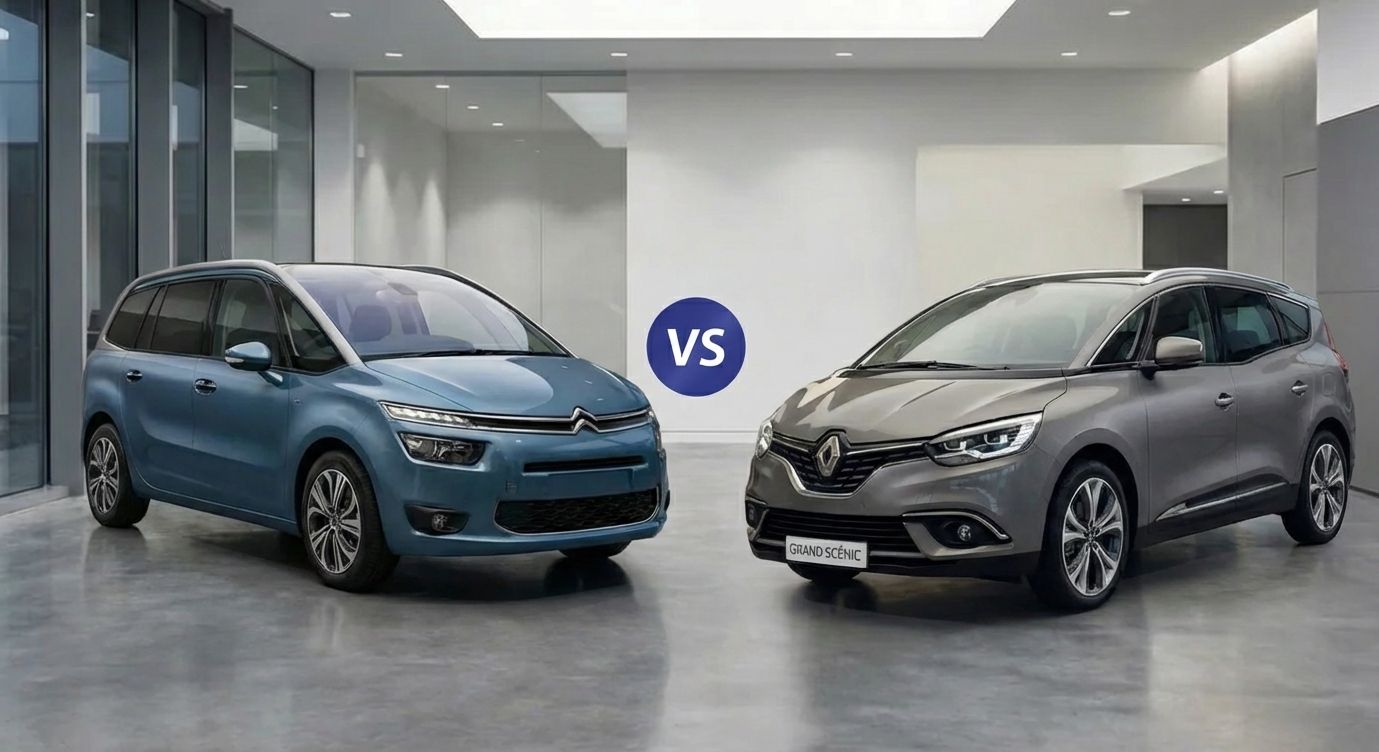
Comparison: Citroën Grand C4 SpaceTourer (Picasso) vs Renault Grand Scénic. A detailed comparison of space, equipment, and prices. Which 7-seater MPV is better for you?
Apr 13, 2026

Detailed comparison: Renault Grand Scénic vs. Volkswagen (VW) Touran. Real-world experience with used cars, equipment, and a verdict for an easier choice of a family MPV.
Apr 25, 2026