Mercedes-Benz GLB vs. Volkswagen T-Roc: Complete comparison 2026
Mercedes-Benz GLB vs Volkswagen T-Roc: A detailed comparison of engines, features, and interior space. Read our verdict and find out which SUV is the better choice.
Apr 30, 2026
Articles
Car battle
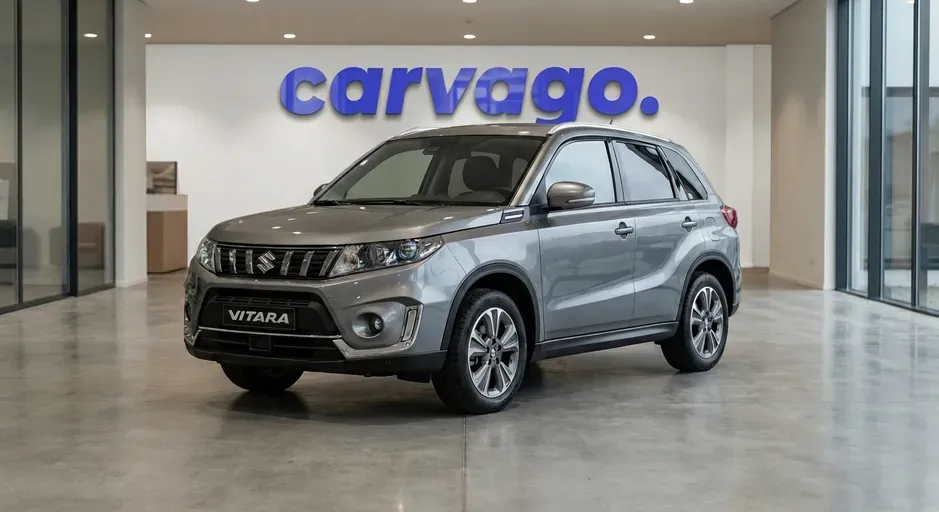
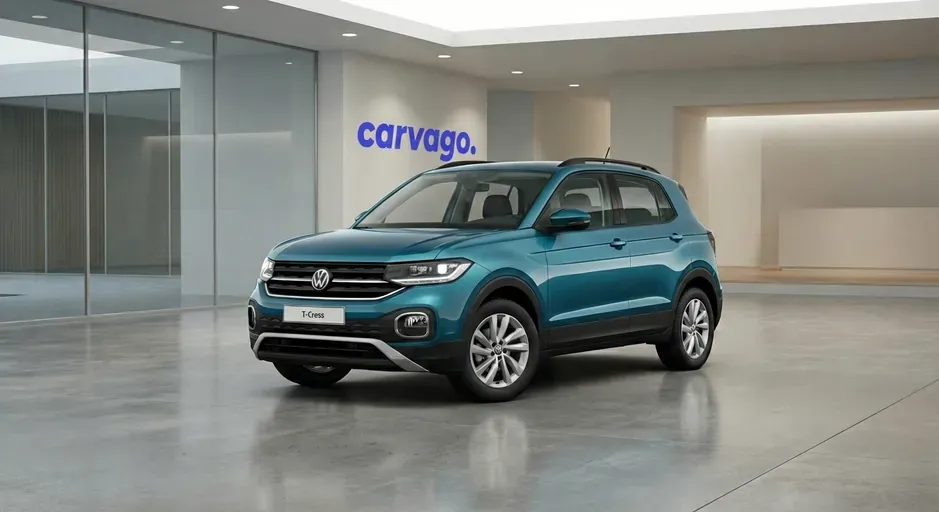
Suzuki Vitara vs Volkswagen T-Cross: Which city SUV to choose? Read our detailed comparison, real-world experiences, equipment overview, and our final verdict.
April 25, 2026


Suzuki Vitara, also known as the Suzuki Escudo in some global markets, has long held a reputation among drivers as a reliable and versatile crossover that confidently handles even poor driving conditions thanks to its optional all-wheel drive. In contrast, the Volkswagen T-Cross, which is also sold in other parts of the world under the alternative names Volkswagen Tacqua or Taigun, represents a confident choice focused on maximum urban practicality, top-notch ergonomics, and modern technological equipment. Let's take a detailed look at which of these popular B-SUV segment representatives fares better in a direct comparison and thus becomes the more rational choice on the current market for nearly new used cars.
Looking at the exterior dimensions of these two popular crossovers on the market for roughly four-year-old used cars (model years around 2021–2022), we find that the second-generation Suzuki Vitara makes a slightly more robust impression. With a length oscillating between 4170 and 4175 mm, it is just under 7 centimeters longer than the first-generation Volkswagen T-Cross, which measures 4108 mm in length. The Japanese model is also slightly taller, with a height of up to 1600 mm compared to 1584 mm for its German competitor. This noticeable difference in overall length and height gives the Vitara a more classic and slightly more mature off-road stance, which will particularly appeal to drivers who expect their crossover to have the look of a traditional, honestly shaped SUV.
However, an interesting twist occurs when examining the wheelbase, which is a key parameter for overall cabin spaciousness. Although the Volkswagen T-Cross is a shorter car on the outside, its designers managed to stretch the wheelbase to a respectable 2551 mm, reliably surpassing the Vitara with its 2500 mm. In terms of width, both models are very similar – the T-Cross, at 1782 mm, exceeds the Vitara by only 7 millimeters. From a practical standpoint, a shorter body with a longer wheelbase means that Volkswagen was able to utilize the interior space more cleverly, pushing the wheels further into the corners of the body and thus securing a noticeable advantage in longitudinal knee room for rear-seat passengers.
The overall combination of these dimensions thus clearly defines the strengths and ideal real-life use of both models. With its longer overhangs and overall taller build, the Suzuki Vitara will appeal to those looking for more traditional body proportions and a potentially more regular luggage compartment. The Volkswagen T-Cross, on the other hand, scores as a superbly packaged city car – it is overall more compact and more agile when parallel parking in narrow streets, but thanks to the extended wheelbase, it offers better conditions for the crew, making it a smarter choice for those who will more frequently carry adult passengers in the back.
| Parameter | Suzuki Vitara SUV | Volkswagen T-Cross SUV |
|---|---|---|
| Width (mm) | 1775 | 1782 |
| Length (mm) | 4170 - 4175 | 4108 |
| Height (mm) | 1595 - 1600 | 1584 |
| Wheelbase (mm) | 2500 | 2551 |
Trunk capacity plays a key role in compact city crossovers, whether for everyday family use, carrying a stroller, or packing for a long vacation. Although the Suzuki Vitara and the Volkswagen T-Cross belong to the same automotive category, their approach to interior space differs significantly. Volkswagen relies on clever variability for its smallest SUV, while Suzuki sticks to a proven and simple layout, where used car buyers must also pay close attention to the specific type of powertrain chosen.
The Volkswagen T-Cross is a practical champion in this class. Thanks to the standard sliding rear bench, which can be moved longitudinally by 14 centimeters, it can offer a variable base trunk volume from 385 to 455 liters. It is entirely up to you whether you prioritize more knee room for rear passengers or need space for a few extra suitcases. After folding down the rear backrests, this space in the T-Cross increases to a generous 1281 liters, which easily serves for transporting bulkier items. In contrast, the Suzuki Vitara offers a fixed base volume of 375 liters in its standard version, and with the seats fully folded, you get a trunk capacity of 1120 liters.
With the Vitara, however, it is extremely important to pay attention to the choice of engine. While the now very common mild-hybrid versions fully retain the standard 375 liters, if you come across a full hybrid variant (Strong Hybrid), you must be prepared for a compromise. The traction battery located directly under the trunk floor reduces its total volume to a more modest 289 liters. While this is certainly sufficient for a typical weekend grocery run, this loss of space can be quite noticeable on a longer trip. As a result, the Volkswagen T-Cross provides overall greater freedom and flexibility, making it a better choice for those who don't want to deal with a lack of storage space.
| Parameter | Suzuki Vitara SUV | Volkswagen T-Cross SUV |
|---|---|---|
| Base volume (liters) | 375 | 385 - 455 |
| Max volume with seats folded down (liters) | 1120 | 1281 |
If trunk volume is a priority for you, the Volkswagen T-Cross wins thanks to its sliding rear bench and overall capacity, while with the Suzuki Vitara, you have to be very careful about the smaller trunk in the full hybrid versions.
The ability to tow a trailer is a key parameter for many compact SUV buyers, significantly influencing the overall practicality and flexibility of the vehicle. Whether it's for the occasional transport of garden waste or long trips with a family caravan, the homologated limits are often the deciding factor. Looking at roughly four-year-old used Suzuki Vitara and Volkswagen T-Cross models (around the 2022 model year), we find that although they are similar in size, they differ quite noticeably in towing capacity.
For the second-generation Suzuki Vitara, the maximum braked trailer weight varies depending on the hybrid technology used. The more economical 1.5 Dualjet Hybrid (75 kW) version has a reduced capacity and can tow 1,200 kg. However, the much more common and sought-after 1.4 Boosterjet Hybrid (95 kW) can handle a very solid 1,500 kg. The unbraked trailer weight for the Vitara is standardly 600 kg.
The first-generation Volkswagen T-Cross, on the other hand, is primarily aimed as an urban crossover, and its capacities are thus much more modest. For the base three-cylinder 1.0 TSI (70 kW), the manufacturer allows a braked trailer only up to 1,000 kg. The more powerful 1.0 TSI (81 kW) variant pushes this limit to 1,100 kg, and the maximum limit of 1,200 kg can only be reached with the more powerful four-cylinder 1.5 TSI (110 kW). The unbraked trailer weight for T-Cross models is exactly 630 kg.
These differences have clear practical implications for the daily use of both vehicles:
In conclusion, the T-Cross is more than sufficient for occasional help and typical family trips. However, the Suzuki Vitara represents a logical and clearly better choice for drivers who need regular and much more robust towing performance.
| Model and motorization | Braked weight of trailer (kg) | Unbraked weight of trailer (kg) |
|---|---|---|
| Suzuki Vitara 1.5 Dualjet Hybrid (75 kW) | 1200 | 600 |
| Suzuki Vitara 1.4 Boosterjet Hybrid (95 kW) | 1500 | 600 |
| VW T-Cross 1.0 TSI OPF (70 kW) | 1000 | 630 |
| VW T-Cross 1.0 TSI OPF (81 kW) | 1100 | 630 |
| VW T-Cross 1.5 TSI ACT OPF (110 kW) | 1200 | 630 |
When choosing a roughly four-year-old used car, the Suzuki Vitara and Volkswagen T-Cross offer completely different philosophies under the hood, reflecting the different focus of both cars. Volkswagen relies exclusively on front-wheel drive for the T-Cross and depends on the highly efficient turbocharged petrol engines of the TSI family, which excel in agility and flexibility in city traffic. In contrast, the Suzuki Vitara profiles itself as a much more versatile companion. In the current market for nearly-new used cars, it scores with intensive electrification using mild-hybrid and full-hybrid systems and remains one of the few small SUVs that still offers the option of advanced AllGrip all-wheel drive. While drivers focused on dynamic and comfortable driving on paved roads will appreciate the modern DSG transmissions and Volkswagen Group engines, those heading to cottages or facing poor weather conditions will clearly welcome the versatile traction of the hybrid Vitara.
The second generation of the Suzuki Vitara has undergone a fairly radical transformation of its engine lineup over the years. If you are choosing a car with a production year of 2020 or newer (a typical four-year-old used car), you will mostly encounter electrified units under the hood. The 1.4 Boosterjet Hybrid (95 kW) mild-hybrid four-cylinder became the market standard, replacing the previous pure petrol variant (103 kW) phased out in 2020 for emission reasons. In 2022, Suzuki subsequently enriched the range with the 1.5 Dualjet Hybrid (85 kW) full-hybrid system, supplied with an AGS automated transmission. A major competitive advantage is that you can have these electrified powertrains in both front-wheel-drive versions and as the advanced AllGrip 4x4. Furthermore, the market for the oldest models of this generation from earlier years offers the 1.0 Boosterjet turbocharged three-cylinder (discontinued in 2019), the reliable 1.6 VVT naturally aspirated unit (discontinued in 2018), or even the 1.6 DDiS diesel engine, which the manufacturer withdrew from production during 2018.
| Engine type | Fuel | Power (kW) | Torque (Nm) | Transmission |
|---|---|---|---|---|
| 1.0 Boosterjet | Petrol | 82 | 170 | 5MT / 6AT |
| 1.6 VVT | Petrol | 88 | 156 | 5MT / 6AT |
| 1.4 Boosterjet | Petrol | 103 | 220 | 6MT / 6AT |
| 1.4 Boosterjet Hybrid | Petrol (MHEV) | 95 | 235 | 6MT / 6AT |
| 1.5 Dualjet Hybrid | Petrol (HEV) | 85 | 138 | 6AGS |
| 1.6 DDiS | Diesel | 88 | 320 | 6MT / 6TCSS |
While the Vitara emphasizes innovative hybridization, the first-generation Volkswagen T-Cross is a pure pragmatist using proven technology with power strictly transmitted to the front wheels. The average used car choice for four-year-old vehicles will most often be equipped with the 1.0 TSI three-cylinder engine. Its basic 70 kW version is perfect for undemanding city commuting and is paired with a five-speed manual. If you need to drive at highway speeds, the more powerful 81 kW (later 85 kW) three-cylinder will serve you much better, providing a sixth gear or a fast seven-speed DSG dual-clutch transmission. For occasional highway travelers or more spirited drivers, the 1.5 TSI ACT (110 kW) four-cylinder, supplied with a DSG automatic, sits at the absolute top. This technologically advanced engine features intelligent Active Cylinder Technology (ACT) that shuts down two cylinders during low load, significantly reducing overall fuel consumption. In its very early days, the T-Cross also offered an economical 1.6 TDI SCR (70 kW) turbodiesel, but its sales ended in the autumn of 2020, and you will no longer encounter it in listings for four-year-old used cars.
| Engine type | Fuel | Power (kW) | Torque (Nm) | Transmission |
|---|---|---|---|---|
| 1.0 TSI | Petrol | 70 | 175 | 5MT |
| 1.0 TSI | Petrol | 81 / 85 | 200 | 6MT / 7DSG |
| 1.5 TSI ACT | Petrol | 110 | 250 | 7DSG |
| 1.6 TDI SCR | Diesel | 70 | 250 | 5MT / 7DSG |
While the Volkswagen T-Cross offers perfectly tuned turbocharged petrol engines ideal for agile urban commuting, the Suzuki Vitara appeals to a specific clientele with the option of advanced all-wheel drive and a modern hybrid powertrain.
Choosing the right engine is absolutely crucial for long-term satisfaction, and our recommendations are based on real-world experience, actual fuel consumption, and mechanical reliability. Both manufacturers took different approaches to powering their city crossovers. While Volkswagen opted for a gradually refined family of small turbocharged engines combined exclusively with front-wheel drive for the first generation of the T-Cross, the Suzuki Vitara (in its second generation) benefits from an extremely low curb weight and offers a proper AllGrip all-wheel drive system. For the market of roughly four-year-old used cars, clear favorites are emerging for both models, representing the ideal balance between reliability and everyday usability.
This four-cylinder mild-hybrid engine (designated K14D), which gradually replaced the older pure petrol version in the lineup from 2020 (and remains in the models unchanged to this day), is clearly the best choice for a roughly four-year-old Vitara. Thanks to the 48V starter-generator, it provides excellent assistance at low RPMs, beautifully smooths out the torque curve, and eliminates "turbo lag." The result is a very smooth pull and real-world fuel consumption that can be kept around 6 liters per 100 km without much trouble, even with 4x4. Unlike the alternative 1.5 Dualjet Hybrid unit, which is paired with the controversially rated AGS automated manual transmission, the 1.4 Boosterjet offers a precise and more driver-friendly manual (or a classic torque converter automatic). This engine is ideal for universal use – from city commuting to weekend trips to the mountains.
What to watch out for and how to detect it:
Although the engine is mechanically exceptionally reliable and does not suffer from carbon buildup as significantly as the competition, it requires regular servicing.
For the 1st generation Volkswagen T-Cross, the turbocharged one-liter three-cylinder from the EA211 family, specifically in its more powerful 81 kW version (offered mainly between 2020 and 2023), stands out as the ideal compromise for the used car market. Although a more powerful 1.5 TSI four-cylinder is also available, the three-cylinder is perfectly sufficient for such a compact and relatively light vehicle, feels very lively, and is more affordable. The engine is time-tested, and earlier concerns about three-cylinder engines are completely unfounded here – the timing system uses an exceptionally durable belt, and the mechanical reliability of the block is exemplary. Combined with a precise six-speed manual transmission, it is a great all-rounder that averages 5.5 to 6 liters of petrol and is perfect for both daily suburban commuting and occasional highway trips.
What to watch out for and how to detect it:
The 1.0 TSI engine suffers from very few systemic faults; however, its lifespan depends on careful handling when cold and quality servicing of the gearbox if you choose an automatic.
Official fuel consumption figures often differ from real-world values, especially for vehicles with taller and less aerodynamic bodies, such as compact crossovers. While official methodologies promise very optimistic numbers on paper for these vehicles, actual operation and real-world loads reveal a slightly different reality. For the most accurate comparison of approximately four-year-old used cars, we analyzed real-world data from drivers on the popular independent portal Spritmonitor.de, which excellently complements and corrects the official factory values. Both the Suzuki Vitara and the Volkswagen T-Cross primarily appear on the used car market from 2020–2022 with petrol engines, as diesel units have almost completely disappeared in this class.
| Model and Engine | Average Consumption (l/100 km) |
|---|---|
| Suzuki Vitara 1.6 DDiS | 4.8 |
| Volkswagen T-Cross 1.6 TDI | 5.2 |
| Volkswagen T-Cross 1.0 TSI | 6.1 |
| Suzuki Vitara 1.4 Boosterjet Hybrid | 6.2 |
| Suzuki Vitara 1.0 Boosterjet | 6.4 |
| Volkswagen T-Cross 1.5 TSI | 6.5 |
Looking at the data, which is logically sorted from fuel-efficient (but now older) diesel engines to more dynamic petrol versions, several interesting and key trends for potential buyers stand out. It clearly shows that downsizing (reducing displacement and the number of cylinders) is not always an automatic guarantee of the lowest fuel consumption.
For the typical user who uses smaller crossovers primarily for shorter city and suburban trips for shopping or commuting, petrol engines make exclusive sense. On such routes, diesels struggle with clogged DPF filters, and potential repairs can easily wipe out any fuel savings. It is precisely in and around the city where the Volkswagen T-Cross with the popular 1.0 TSI engine excels, as does the Suzuki Vitara with its mild-hybrid 1.4 Boosterjet.
However, if you are among the drivers who travel across the country to cottages on weekends or spend more time on the highway, you will greatly appreciate the more powerful 1.5 TSI unit in the Volkswagen. While it consumes about half a liter more petrol (around 6.5 l/100 km), thanks to its four cylinders and decent power, it won't be as strained at higher speeds and will ensure significantly more comfortable acceleration from highway junctions without a dramatic increase in consumption.
When making the final decision to buy a four-year-old used car, fuel consumption will likely not be the main deciding factor. The real-world difference between the most sought-after petrol versions of the T-Cross and the Vitara is only one to two tenths of a liter per 100 kilometers. In the annual fuel bill, you will practically not feel this difference in your wallet. The final choice should therefore be guided more by your personal preference and which driving character suits you better – whether it's the unexpectedly confident mild-hybrid four-cylinder in the Japanese Vitara or the precise and slightly more playful one-liter three-cylinder with Volkswagen pedigree.
When looking at the used car market for vehicles around four years old (production years 2021–2022), you will encounter an interesting market phenomenon. Although Volkswagen is traditionally perceived as a brand with a slightly higher purchase price for new cars, used Suzuki Vitaras often sell for slightly higher average prices than the T-Cross. The main reason is the difference in standard equipment, available power units, and chassis technology.
You can most often find a used Vitara from this period in car dealerships in the price range of €15,000 to €19,000.
Since 2020, Suzuki has fully standardized the more powerful 1.4 BoosterJet engine for this model, which is complemented by fuel-efficient mild-hybrid technology. The fact that a large portion of cars on the market feature the valued AllGrip all-wheel drive also significantly contributes to the higher residual value of used cars. In the small city SUV segment, four-wheel drive is a complete rarity, making the Vitara a sought-after commodity with very slow depreciation.
Prices for a roughly four-year-old Volkswagen T-Cross on the market most often range between €14,000 and €17,000.
The slightly more attractive entry price into the world of used T-Crosses is primarily due to the engine range. The listings are overwhelmingly dominated by the basic 1.0 TSI three-cylinder engines (often in 70 kW or 81 kW versions), which are exclusively paired with front-wheel drive. However, if you were looking for a better-equipped unit with the more powerful 1.5 TSI four-cylinder petrol engine and DSG automatic transmission (for example, in the visually attractive R-Line trim), the average price can easily exceed the €18,000 mark.
| Parameter | Suzuki Vitara | Volkswagen T-Cross |
|---|---|---|
| Approximate price range | €15,000 – €19,000 | €14,000 – €17,000 |
| Most common used engine | 1.4 BoosterJet Mild-Hybrid | 1.0 TSI (three-cylinder) |
| 4x4 availability | Yes (AllGrip) | No (front-wheel drive only) |
| Value drop (depreciation) | Very slow (especially 4x4 versions) | Average for the class |
What you should know about the used car market:
Although the Volkswagen T-Cross attracts with a lower entry price thanks to more affordable three-cylinder engines, the Suzuki Vitara holds its value significantly better thanks to the standard more powerful mild-hybrid and the desirable all-wheel drive.
Both models achieved prestigious five-star ratings in crash tests by the independent Euro NCAP organization in their time, yet when choosing a used car, it is absolutely crucial to understand the context and the year of testing. Euro NCAP protocols are constantly evolving and becoming much stricter. Modern testing methodology responds to new types of accidents, includes complex collisions at intersections, and places huge emphasis on sophisticated active prevention of collisions with cyclists and pedestrians. Percentage scores from different years cannot be directly compared under any circumstances, as an earlier high rating would often mean only average by today's standards.
Suzuki Vitara
The Suzuki Vitara underwent testing in 2015, where it excelled and earned a full five stars. At the time, the car offered a very good level of occupant protection with a result of 89% for adults and 85% for children. Active assistance systems, such as the radar braking of the time, were sufficient for a 75% score. From the perspective of today's used car market, however, it is important to know that the validity of this certificate officially expired in January 2022, as the original technology no longer meets modern and much stricter safety standards. Without a radical modernization of electronic assistants, the Vitara would not defend its five-star score in today's testing.
Volkswagen T-Cross
The Volkswagen T-Cross originally earned five stars in 2019, achieving excellent results exceeding 80% across all categories. However, in the interest of providing the most up-to-date data, we are basing this on the strict re-evaluation the model underwent at Euro NCAP in October 2025. Although the car retains solid basic structural safety, its overall rating fell to three stars under the extremely strict new standards. The main reason was the performance of the older generation of autonomous braking in demanding modern scenarios (for example, reactions to fast-moving cyclists), for which it received only 57% in the safety assist section. This is a great example of how relentlessly testing requirements increase even for cars previously rated as premium.
| Parameter | Suzuki Vitara | Volkswagen T-Cross |
|---|---|---|
| Year of testing | 2015 | 2025 |
| Adult occupant protection | 89 % | 74 % |
| Child protection | 85 % | 81 % |
| Vulnerable road users protection | 76 % | 60 % |
| Safety assist systems | 75 % | 57 % |
Note on the table: While the Suzuki Vitara results come from the older 2015 methodology, for the Volkswagen T-Cross we provide the latest available data from the strict 2025 re-evaluation (its original 2019 test earned the car 5 stars).
In conclusion, it is clear that although the Suzuki Vitara has higher percentages on paper from an older test, the Volkswagen T-Cross is a more modern and overall safer car for the occupants in the real world. Its 2019 platform was designed with much more modern standards in mind and offers more robust passive protection as well as assistance systems that would hardly pass today's standards in the significantly older construction of the Vitara.
Despite the drop to three stars on paper in the strictest 2025 re-evaluation, the Volkswagen T-Cross offers noticeably more advanced protection and better assistance systems than the structurally older Suzuki Vitara, thanks to its newer platform.
In addition to standard equipment, each of the models offers several unique features that can be decisive for the customer, with both bringing their own specific approach to added value.
Affordable and capable all-wheel drive (AllGrip), which is a complete rarity in the small SUV segment
Reliable and fuel-efficient petrol engines (especially the highly praised 1.4 BoosterJet four-cylinder)
Higher ground clearance and an overall more robust chassis design suitable even off paved roads
Low kerb weight, which benefits decent dynamics and good fuel consumption
Very attractive price-to-reliability-and-equipment ratio on the used car market
Outdated infotainment graphics and slower response of the on-board system
Cheaper-looking hard plastics in the interior and overall weaker cabin soundproofing at highway speeds
Average luggage compartment volume (375 litres) with poorer rear seat variability
Narrowed engine range for newer model years (transition exclusively to mild-hybrid and full-hybrid)
The Suzuki Vitara will primarily appeal to pragmatically-minded drivers looking for a robust and mechanically durable SUV with affordable all-wheel drive. It is an ideal choice for cottage owners, residents of foothill areas, or those who don't mind an older interior design in exchange for long-term reliability and confidence on snow or mud.
Excellent interior variability thanks to the standard sliding rear bench (by up to 14 cm)
Luggage compartment volume up to 455 litres (with the rear seats moved fully forward)
Modern connectivity, snappy infotainment, and availability of a clear digital instrument cluster
Very refined and mature driving performance with excellent soundproofing of the chassis and wind noise
A wide range of advanced safety and assistance systems even in the basic trim levels
Complete absence of all-wheel drive (available exclusively with front-wheel drive)
Higher purchase price on the used market compared to most direct competitors
Extensive use of hard plastics on the dashboard and door panels, which does not match the car's higher price tag
Stiffer suspension tuning (especially on larger wheels) can reduce comfort on broken city roads
The Volkswagen T-Cross is a perfect choice for young families and drivers who expect maximum everyday practicality, modern technology, and excellent ergonomics from a city crossover. It is better suited for urban and suburban traffic, where owners will fully appreciate its compact dimensions, space variability, and mature road behaviour, while being willing to forgo the missing AWD.
Based on our own breakdown statistics, long-term service reports, and expert findings, we have compiled an overview of the most common problems of both cars. Since many shortcomings may only appear in operation, an independent technical inspection of the car is absolutely crucial for a safe used car purchase.
Suzuki Vitara (current generation after facelift) is generally considered a very reliable car, where serious mechanical problems occur only rarely; however, owners often point out specific ailments mainly concerning the materials used and workmanship.
Vitara scores with exceptionally reliable powertrain technology and low-maintenance service, but you must be prepared for thinner paint, the chassis's susceptibility to surface corrosion, and a cheaper-feeling interior.
Volkswagen T-Cross (since 2019) benefits from shared group technology of the MQB A0 platform, offers solid workmanship, but struggles with a number of typical faults of modern electronics and transmissions.
T-Cross offers precise corrosion protection and an overall robust impression, but buyers should be wary of the condition of the dry clutches in DSG transmissions and be prepared for occasional software quirks of the infotainment.
When buying a used car, a thorough inspection is key, and although both models are among the more reliable representatives of the small SUV segment, there are specific points worth focusing on for roughly four-year-old examples. To ensure you're not buying a pig in a poke, a Comprehensive car audit is always recommended before the actual purchase.
The Volkswagen T-Cross is more practical in terms of the trunk because it is one of the few in this class to offer a sliding rear bench. Thanks to it, the trunk can be expanded from the basic 385 liters up to an excellent 455 liters. The Suzuki Vitara has a fixed luggage compartment with a volume of 375 liters (362 liters for mild-hybrid versions), which is a rather average value.
If you plan trips to the mountains or light terrain, the clear winner is the Suzuki Vitara. In many used cars offered, it features the proven and reliable AllGrip all-wheel drive. The Volkswagen T-Cross, on the other hand, relies on a platform intended primarily for the city and is supplied exclusively with front-wheel drive.
For four-year-old used cars, Suzuki relies mainly on the mechanically very durable 1.4 BoosterJet four-cylinder, which is usually supplemented by economical mild-hybrid technology. Volkswagen offers proven and dynamic TSI engines, with the economical 1.0 TSI three-cylinder being the most common in used car dealerships. In terms of long-term mechanical durability and simplicity, the Vitara has a slight edge in the eyes of many mechanics.
The Volkswagen T-Cross gives an overall more modern impression inside and offers a significantly more sophisticated infotainment system with seamless connectivity. The Vitara's interior is more functional, using more hard plastics and more outdated display graphics, but on the other hand, it is characterized by high resistance to wear. For tech-savvy drivers, the VW will be a better choice, while more conservative users will appreciate the classic physical buttons in the Suzuki.
The T-Cross provides more confident and comfortable damping of bumps on broken roads and at the same time offers better cabin soundproofing at highway speeds. The Vitara has slightly stiffer suspension and higher aerodynamic noise, but on the contrary, it excels in perceived lightness and excellent agility on winding country roads. The choice depends on whether you prefer a quiet and comfortable ride (VW) or a slightly more mechanical and predictable handling (Suzuki).
Choosing between four-year-old used Suzuki Vitara and Volkswagen T-Cross depends primarily on your lifestyle, as each of these crossovers excels in completely different disciplines. The Volkswagen T-Cross represents an ideal choice for young families and highway or city drivers who appreciate its modern digital technologies, excellent sound insulation, and unrivaled interior variability with a practical sliding rear bench. In contrast, the Suzuki Vitara will appeal more to conservative and pragmatically-minded motorists, offering them a mechanically highly reliable mild-hybrid powertrain, higher towing capacity, and the advanced AllGrip all-wheel-drive option, which is rare in the small SUV segment, in exchange for an older interior design. While the German model scores as a sophisticated, smart, and spacious companion for everyday life, the Japanese car remains a tougher workhorse that will take you safely and confidently to a mountain cabin in any weather conditions.
Sources: ADAC, idnes.cz, aktualne.cz, autotechnik.cz, fdrive.cz, motorsport.cz
This article was prepared using artificial intelligence tools. The section guarantor is Petr Dušek.

Mercedes-Benz GLB vs Volkswagen T-Roc: A detailed comparison of engines, features, and interior space. Read our verdict and find out which SUV is the better choice.
Apr 30, 2026

Are you looking for the ideal used SUV? A detailed comparison of the Ford Kuga vs. SEAT Ateca reveals differences in space, equipment, and fuel consumption. Read our final verdict!
Apr 8, 2026

Opel Mokka vs Peugeot 2008. A detailed comparison of engines, design, and practicality. Find out which stylish SUV is the best choice for you.
Apr 14, 2026