Articles

Car battle

Seat Tarraco vs. Toyota Highlander: Complete comparison 2026

Detailed comparison of Seat Tarraco vs Toyota Highlander. Find out which 7-seater SUV offers better space, equipment, and driving characteristics. Make the right choice!

April 18, 2026

VS
Seat Tarraco

Seat Tarraco

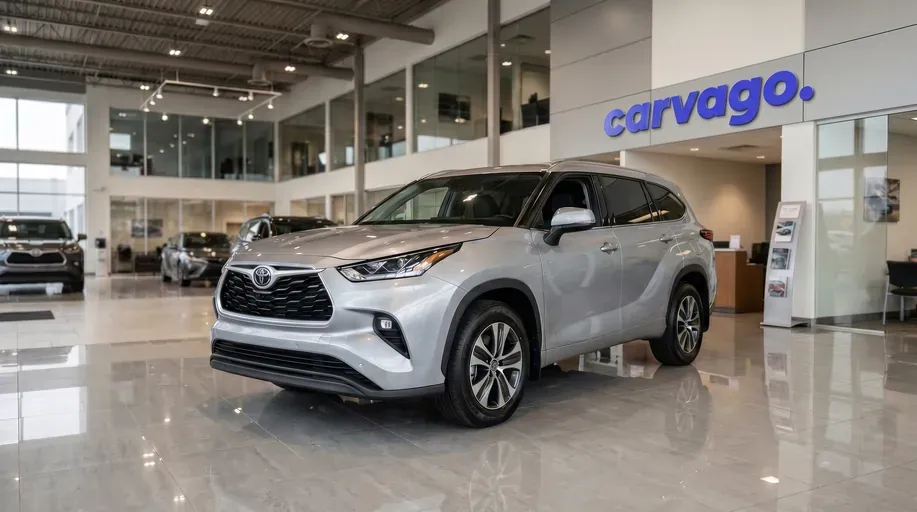
Toyota Highlander

Toyota Highlander

Introduction

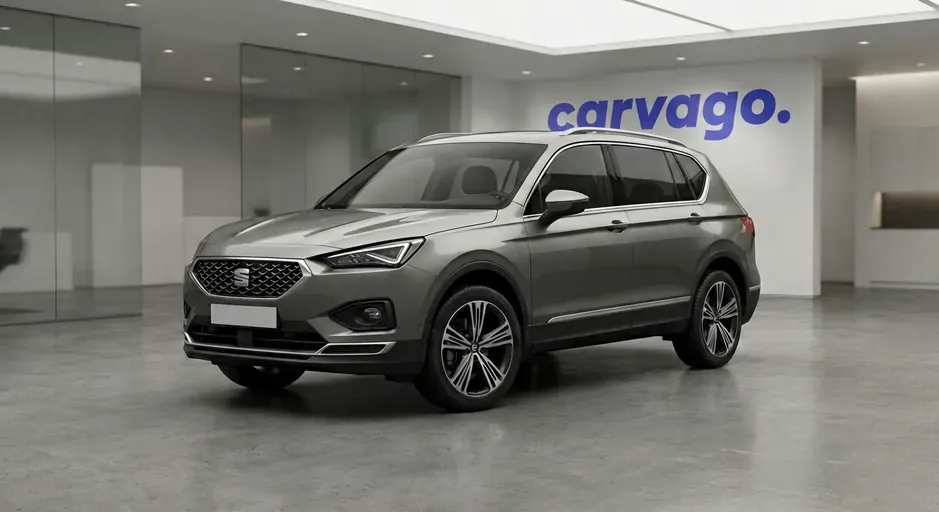
Seat Tarraco represents the Spanish automaker's largest SUV, combining elegant European design with generous space and proven technology for family travel. Standing against it is the Toyota Highlander, also known as the Toyota Kluger in some global markets (such as Japan and Australia), which offers robust construction, a long tradition of reliability, and advanced hybrid technologies. The following comparison will detail the key differences between the two vehicles and help you determine which of these models better suits your specific needs.

Comparison of External Dimensions

When you place the Seat Tarraco and the Toyota Highlander side by side, you immediately notice that although both models can offer up to seven seats in the interior, each of them plays in a slightly different league. The Seat Tarraco represents the pinnacle of the Spanish automaker's European lineup and ranks at the upper end of mid-size SUVs. Conversely, the Toyota Highlander originally came to us from the American market, which has fundamentally influenced its proportions. The Highlander is noticeably more massive and fully fits the definition of a classic large SUV. This visual difference suggests at first glance that each of the cars approaches family travel a bit differently.

The numbers only confirm this impression. With its 4,966 mm, the Toyota Highlander is a staggering 231 mm longer than the Seat Tarraco (4,735 mm). In addition, it adds 91 mm in width (1,930 mm vs. 1,839 mm) and is 97 mm taller. In practice, this means that the Toyota offers much more generous interior space, especially in terms of width and for passengers in the third row of seats. The Seat, on the other hand, emerges from this comparison as the clear winner in terms of maneuverability. Parking in narrow underground garages, at shopping centers, or weaving through older European streets is significantly easier and less stressful with the narrower and shorter Tarraco.

An important parameter is also the wheelbase, which directly affects passenger legroom and vehicle stability. Here, the Toyota with its 2,850 mm surpasses the Seat (2,790 mm) by exactly 60 mm. The overall decision thus depends primarily on your daily routes and priorities. If you are looking for a full-fledged family cruiser for long trips with maximum emphasis on space and comfort for all passengers, the more robust Highlander will be the more logical choice. However, if you often drive in the city and are looking for a more versatile family car with good agility and only an occasionally used third row of seats, the more compact Seat Tarraco will serve you significantly better.

ParameterSeat Tarraco SUVToyota Highlander SUV
Length (mm)47354966
Width (mm)18391930
Height (mm)16581755
Wheelbase (mm)27902850

Trunk Volume

When choosing a family SUV, the size and versatility of the trunk space is often one of the most important parameters. Whether you're planning a weekend shopping trip, transporting sports equipment, or going on a long holiday with the whole family, having enough space in the trunk means less stress when packing. Both the Seat Tarraco and the Toyota Highlander are cars built for active families and both offer massive interior space, however, each approaches it in a slightly different way. The difference lies primarily in the default configuration and how effectively both cars can work with three rows of seats.

Seat Tarraco, as a representative of the European school of large SUVs, dominates in its standard five-seater version, where it offers a top-tier volume of 760 liters. This is an absolutely sufficient value even for the most demanding holiday, providing space for several extra suitcases and a stroller to boot. If you opt for the seven-seater variant, the base volume behind the second row of seats drops slightly to a still generous 700 liters. After folding down all the rear backrests, the Tarraco becomes a hauler with a maximum capacity of up to 1,920 liters for the five-seater and 1,775 liters for the seven-seater version. It is important to mention the plug-in hybrid variant (e-HYBRID), where the battery installation limits the standard trunk capacity to a more modest 610 liters.

The Toyota Highlander is supplied to the European market exclusively as a seven-seater, and its American genes are evident in its massive and wide interior. Behind the second row of seats, you will find a very practical 658 liters of space. Although this value is slightly smaller on paper than that of the Tarraco, the Highlander scores with the overall width of the trunk and perfect usability. When fully occupied by seven passengers, you still have 241 liters left behind the third row, which is enough for weekend shopping, school backpacks, or smaller bags. Conversely, when you fold all the rear seats flat, you get a huge loading area with a maximum volume of 1,909 liters, which will swallow even very bulky cargo without batting an eye.

ParameterSeat Tarraco SUVToyota Highlander SUV
Base volume (liters)760658
Max. volume with seats folded (liters)19201909

Overall, both models represent the absolute top in terms of family utility. The Seat Tarraco will please those who more often travel with five people and will fully utilize the gigantic base trunk without any compromises, while the Toyota Highlander makes sense for larger families who appreciate the better space offering when regularly occupied by seven people and the huge flat loading area after fully folding the rear rows.

Versatility decides 🧳

While the Seat Tarraco scores with a giant trunk in the five-seater configuration, the Toyota Highlander ensures that even when fully occupied by seven people, you won't be left completely without luggage space.

Discover the true condition of the car thanks to an independent inspection

Order CarAudit™

Trailer Weights

The ability to tow heavy trailers is often a decisive factor for those interested in a spacious family SUV, whether it's about total towing capacity or everyday practicality. Looking at cars available on the used car market roughly four years old (generations produced from 2019 to 2024), we find very interesting differences between the SEAT Tarraco and Toyota Highlander models, which largely stem from different approaches to powertrains. The SEAT Tarraco offers a wide range of variants, so while the base 1.5 TSI petrol engine and the economical 1.4 e-HYBRID plug-in hybrid version can handle a braked trailer weighing 1,800 kg, the more powerful units go much further. If you opt for the 2.0 TDI or 2.0 TSI engines, the maximum capacity increases to an impressive 2,250 to 2,300 kg. Conversely, the Toyota Highlander from the same period relies exclusively on the 2.5 Hybrid powertrain in our market, where the braked trailer capacity is fixed at 2,000 kg. A minor difference can also be found in standard unbraked trailers, where the Highlander can handle 700 kg, while the Tarraco has the traditional 750 kg limit. In practice, this means that both cars offer excellent parameters sufficient for weekend shopping of oversized materials as well as longer holidays in a medium-sized caravan. However, the more powerful Tarraco engines provide a noticeably larger margin and room for a few extra suitcases if you need to tow truly heavy loads, such as horse trailers or large boats. While the Toyota does not reach the absolute weight maximum of its Spanish rival, for a full-hybrid SUV, it offers a highly above-standard and stable two-ton limit.

Model and motorizationBraked weight of trailer (kg)Unbraked weight of trailer (kg)
SEAT Tarraco 1.4 e-HYBRID (110 kW)1800750
SEAT Tarraco 1.5 TSI ACT (110 kW)1800750
SEAT Tarraco 2.0 TDI (110-147 kW)2000-2300750
SEAT Tarraco 2.0 TSI (140-180 kW)2250-2300750
Toyota Highlander 2.5 Hybrid (140 kW)2000700

Overview of Most Common Motorizations

The range of powertrains for the Seat Tarraco and Toyota Highlander showcases two distinct engineering approaches, which plays a key role when choosing a used car for a specific type of use. While the Spanish Tarraco relies on an exceptionally diverse palette of traditional Group engines including petrol (TSI), diesel (TDI), and plug-in hybrid (e-HYBRID) variants, the Japanese Highlander relies almost exclusively on an advanced full hybrid powertrain (HEV) in the European market. The Seat is thus an ideal choice for drivers looking for a specific solution, such as an economical diesel for long motorway journeys (a popular choice for fleet customers) or a powerful turbo petrol for more dynamic driving. Toyota, on the other hand, will appeal to those interested in maximum reliability and excellent fuel consumption in urban and suburban traffic, where its sophisticated hybrid system excels despite the vehicle's significant dimensions and two-ton weight. Both vehicles in the generations current for the four-year-old used car market offer automatic transmissions as standard and plenty of power for comfortable family travel.

Seat Tarraco

The Seat Tarraco KN generation (available from 2019–2024) offers a diverse range of engines. The base of the range is the 1.5 TSI four-cylinder petrol engine with cylinder deactivation technology (ACT) producing 110 kW, which can be purchased with either a manual or a seven-speed dual-clutch DSG transmission. For diesel lovers, who make up the majority in this segment of the used car market, the proven 2.0 TDI engine is available in versions with 110 kW or in a more powerful variant with 4Drive intelligent all-wheel drive. This stronger diesel version originally offered 140 kW, but at the turn of 2020 and 2021, it was replaced by a cleaner and more powerful 147 kW variant. Powerful 2.0 TSI petrol engines (140 kW and a top-of-the-line 180 kW) are also available. An ecological alternative, introduced for 2021, is the 1.4 e-HYBRID plug-in hybrid version with a combined system output of 180 kW, which allows for emission-free city driving and is paired with a six-speed DSG.

Engine typeFuel typePower (kW)Torque (Nm)Transmission
1.5 TSI ACTPetrol1102506MT / 7DSG
2.0 TSIPetrol140 / 180320 / 3707DSG (4Drive)
2.0 TDIDiesel1103406MT / 7DSG
2.0 TDIDiesel140 / 1474007DSG (4Drive)
1.4 e-HYBRIDPlug-in Hybrid180 (system)400 (system)6DSG

Toyota Highlander

The fourth-generation Toyota Highlander (XU70, on the European market since 2021) strictly adheres to the brand's hybrid philosophy and is available here with a single, yet exceptionally sophisticated engine. It is a self-charging full hybrid system combining a 2.5-liter naturally aspirated four-cylinder petrol engine with two electric motors. The total system output is an excellent 182 kW (248 hp). Efficient power transfer is handled by an electronic continuously variable transmission (e-CVT). The Highlander is standardly equipped with AWD-i intelligent all-wheel drive, where the rear axle is driven exclusively by a separate electric motor (with 40 kW of power). This elegant technical solution completely eliminates the need for a traditional driveshaft, saving weight and optimizing interior space, while simultaneously guaranteeing excellent traction and a surprisingly low average consumption of around 6.6–7.1 l/100 km according to WLTP.

Engine typeFuel typePower (kW)Torque (Nm)Transmission
2.5 HybridHybrid (Petrol/Electric)182 (system)239 + el. motorse-CVT (AWD-i)

Diversity vs. Hybrid Efficiency ⚡

The Seat Tarraco pleases with a wide selection of engines, including sought-after economical diesels for frequent motorway trips, while the Toyota Highlander attracts with an exceptionally reliable hybrid system that is unbeatable in terms of operating costs in suburban traffic.

When choosing a large family SUV approximately four years old, selecting the right engine is key to your long-term satisfaction, as it directly affects operating costs, driving comfort, and mechanical reliability. Our comparison brings together completely different technological approaches. The Seat Tarraco relies on a diverse range of traditional Volkswagen Group units (some of which are gradually disappearing, such as the powerful 2.0 TSI petrol engine, which was completely removed from the range for some trim levels in 2023), whereas the Toyota Highlander (XU70 generation) takes the path of maximum efficiency and appears on the four-year-old used car market exclusively with a sophisticated hybrid powertrain. Interestingly, while the Tarraco 4Drive relies on a traditional mechanical all-wheel-drive system with a driveshaft, the Japanese full-hybrid powers the rear axle only using an independent electric motor, which significantly saves weight and mechanical losses. Our recommendations for the ideal engine for both models come from current and fully available generations and are based on real-world experience, feedback from owners, and mechanics in practice.

For the Seat Tarraco, we recommend: 2.0 TDI (110 kW / 150 hp)

From the wide range of used cars of the KN generation (2019–2024), this proven two-litre diesel is by far the most rational and balanced choice, perfectly combining sufficient power for a nearly two-tonne SUV with extraordinary everyday practicality and surprisingly low operating costs. The technical advantages of the engine from the proven EA288 evo family lie primarily in its fantastic fuel efficiency, where it can be driven on motorways and country roads with a real consumption of under 6 litres per 100 km, as well as in its robust torque available from very low revs. From the perspective of mechanical risks, however, it is necessary to keep in mind that this unit does not handle constant stop-and-go city traffic well, which leads to excessive clogging of the diesel particulate filter (DPF) due to incomplete regenerations and unnecessary stress on the AdBlue injection system. When inspecting the car, therefore, always insist that your mechanic checks the DPF fill level via diagnostics, as its premature replacement is extremely expensive. During the test drive, test whether the engine's pull is smooth and the car does not jerk when accelerating from low revs – hesitation reliably reveals a clogged EGR valve. If you change the oil honestly every 15,000 km, the car will serve you reliably for years. The diesel Tarraco is the ideal partner for drivers who regularly undertake longer family trips, travel on motorways, or commute longer distances outside the city daily.

For the Toyota Highlander, we recommend: 2.5 Hybrid (182 kW / 248 hp)

The Japanese automaker did not even want to offer another engine for the European version of the seven-seater Highlander model (current XU70 generation sold since 2021), which is, however, the best thing that could have happened to those interested in a used car. It is an unrivaled choice in the entire segment of large family cars, especially thanks to Toyota's legendary "bulletproof" reliability and perfectly smooth performance. From a technical standpoint, the system effectively combines a naturally aspirated 2.5-litre four-cylinder engine operating in the fuel-efficient Atkinson cycle, a planetary e-CVT transmission, and two electric motors, thanks to which this two-tonne living room on wheels can drive with a combined real consumption of around an incredible 7 l/100 km. A huge advantage is that the car lacks traditional problematic "consumable" parts such as a classic turbo, conventional clutch, alternator, or starter. Risks for a four-year-old used car are truly minimal and narrow down primarily to the condition of the traction battery itself and its thermal management. When buying, pay close attention to the system's ventilation and physically check the battery cooling vents (usually located under the outer seats of the rear row) – if they become clogged with dust, pet hair, or perhaps a poorly placed child car seat, the battery cannot cool under heavy load, overheats, and degrades significantly faster. Always request reports of annual "Hybrid Health Check" tests from the seller as proof of proper maintenance. This type of large hybrid is perfectly tailored for calmer and more deliberate drivers who demand unquestionable reliability from a car, silent smoothness in city traffic, and maximum peace of mind on weekend trips across the country.
Real Fuel Consumption

Official fuel consumption figures for large family SUVs often diverge from real-world results in everyday operation. This discrepancy is usually most noticeable in heavier vehicles and plug-in hybrid systems, whose official measurements rely on specific laboratory cycles. To get an objective picture of the running costs of popular used cars approximately four years old, we compared manufacturer data with real-world averages from drivers on the community tracking portal Spritmonitor.de. The table below summarizes the average stated consumption for both models, reflecting the most popular engines from the production years 2019–2024 for Seat and 2021–2024 for Toyota.

Model and engineAverage consumption (l/100 km)
Seat Tarraco 1.5 TSI ACT7.1
Seat Tarraco 2.0 TSI8.5
Seat Tarraco 2.0 TDI6.4
Seat Tarraco 1.4 e-HYBRID1.7
Toyota Highlander 2.5 Hybrid6.9

When comparing these figures with reality, we encounter very clear trends. The petrol versions of the Seat Tarraco show that while the smaller turbo engine (1.5 TSI) moves the heavy SUV adequately, according to driver experience, it consumes as much as 7.5 litres in reality, while the more powerful 2.0 TSI commonly asks for 9 to 10 litres. In total contrast is the 1.4 e-HYBRID version, whose breathtaking official average of 1.7 l/100 km naturally only applies assuming diligent daily charging. As soon as you don't recharge the battery, the empty accumulator becomes a burden and real consumption immediately climbs above 6.5 litres. In contrast, the massive Toyota Highlander relies on a traditional full hybrid system (HEV) without the need for external charging. Although it is a significantly more robust seven-seater car, its real-world consumption stays incredibly close to the official figures in practice, and the average on community portals usually oscillates between 7.3 and 7.7 l/100 km. The steadfast choice for highway travellers remains the 2.0 TDI diesel unit from Seat, which realistically runs at an excellent 6.5 l/100 km regardless of whether the car is fully loaded.

What does this mean for the average user and the family budget? If you move in a suburban environment daily, on shorter trips around town, and have the option to charge at home and at work, the plug-in hybrid Seat Tarraco will be the unbeatable winner in terms of operating costs. If, on the other hand, you are a classic long-distance highway cruiser, bet on the proven diesel Tarraco 2.0 TDI, which will guarantee you an above-average range. The Toyota Highlander then excels as the ultimate compromise. Its brilliantly tuned hybrid scores in city traffic jams, where it often runs purely on electricity, while handling family holidays with exemplary average consumption without you ever having to worry about finding a free socket.

It can therefore be stated that consumption should play a key role in the final decision between these two candidates. The Seat Tarraco will please those buyers who can carefully analyze their typical driving profile and choose an engine precisely tailored to it (from diesel to plug-in hybrid). The Toyota Highlander, on the other hand, scores as a sophisticated and hassle-free all-rounder – it offers a single but extremely efficient powertrain with which you can drive with pleasant fuel economy regardless of where you are headed.

Price Range and Used Car Offerings

If you are looking for a used family SUV and are targeting models roughly 4 years old (i.e., model years around 2021 and 2022), you will encounter a completely different price reality for both cars. While the Seat Tarraco is a typical representative of the mid-size class with a more favorable purchase price, the Toyota Highlander aims a segment higher and holds its value on the used car market like few other cars.

Price Range and Depreciation

Seat Tarraco is very affordable on the used car market thanks to its wide range of engines (1.5 TSI, 2.0 TDI, and plug-in hybrids) and diverse trim levels (Style, Xcellence, and the sporty FR). Solidly equipped four-year-old models with around 100,000 km on the odometer can be purchased starting from amounts around €23,000. If you are looking for better-maintained examples with the more powerful 2.0 TDI diesel and 4Drive all-wheel drive, prices usually range between €29,000 and €35,000. Depreciation for the Seat is average, making it a great choice for an excellent price-performance ratio.

Toyota Highlander enters the game with a single, but technologically very advanced engine option – the 2.5 Hybrid AWD-i full hybrid system. Combined with its massive dimensions, exceptionally rich standard equipment, and Toyota's legendary reliability, the Highlander holds its value extremely well. The cheapest used cars from 2021 and 2022 with higher mileage start above the €34,000 mark, but the average price for a roughly four-year-old car in good condition safely ranges between €41,000 and €49,000.

Model (2021–2022 years)Starting price on the used marketAverage price of a well-maintained carMost common engines
Seat Tarracoapprox. €23,000€30,0002.0 TDI (110/147 kW), 1.5 TSI
Toyota Highlanderapprox. €34,000€45,0002.5 Hybrid AWD-i (182 kW)

What plays a role when choosing a used car?

When deciding between these two models, it is necessary to consider not only the purchase price but also the subsequent operating costs and the future resale value of the car:

  • Service and spare parts: The Seat Tarraco shares its platform and most of its technology with Volkswagen Group vehicles (especially the VW Tiguan Allspace or Škoda Kodiaq). As a result, the availability of spare parts and the density of the service network in Europe are completely problem-free and financially accessible.
  • Operating costs: The Toyota Highlander absolutely dominates in urban and suburban traffic, where its sophisticated hybrid system brings consumption down to excellent figures despite its two-ton weight. In terms of long-term reliability, Toyota's naturally aspirated hybrid is almost indestructible, which to some extent compensates for the higher initial investment and more expensive authorized service.
  • Residual value: Even after another three or four years of operation, the Toyota will lose value more slowly than the Seat. A significant portion of the invested funds will thus be returned to you when you sell it.

Reason vs. Long-term Investment 💰

While the Seat Tarraco offers an excellent price-to-utility ratio for everyday family travel, the Toyota Highlander requires a significantly higher initial investment, which it generously balances with bulletproof reliability, low fuel consumption, and slower depreciation.

Safety and Euro NCAP Rating

When choosing a family SUV, safety is an absolute priority for most buyers. It is important to know that even though many cars achieve a five-star Euro NCAP rating, the result itself must always be viewed in the context of the year of testing. The Euro NCAP methodology is constantly evolving and becoming stricter. Older cars did not have to face such demanding requirements as today's – whether it's advanced frontal crash simulations, cyclist detection, or evaluating collision scenarios at complex intersections. Therefore, percentage scores from different years and different methodologies cannot be directly compared.

Seat Tarraco underwent Euro NCAP testing in 2019 and, according to the methodology at the time, achieved a confident five stars. The car truly shone in the area of adult occupant protection, where it earned a fantastic 97%, which was among the best results in its class. It also performed well in child protection (84%) and safety assist systems (79%). A reliable autonomous emergency braking (AEB) system and other assistance features became part of the standard equipment, which still represent a strong safety foundation today. From the perspective of official certification, it is worth mentioning that Euro NCAP results inherently expire after approximately 6 to 7 years as testing standards shift significantly. Although the original certificate's validity is nearing its end for a four-year-old used car, the Tarraco remains a structurally exceptionally safe vehicle.

Toyota Highlander, on the other hand, presents a different situation. This model was never officially tested by Euro NCAP for the European market, so there is no exact European crash test data for it. However, the absence of this specific rating certainly does not mean the car is less safe. On the contrary, in the US market, the Highlander repeatedly scores in the extremely strict and respected IIHS (Insurance Institute for Highway Safety) tests, where it regularly collects the highest possible ratings. The car relies on its massive build and the exceptionally sophisticated Toyota Safety Sense assistance package, offering a comprehensive shield against potential danger.

Due to the complete absence of European data for the Toyota Highlander model, we have included only the detailed point rating for the Seat Tarraco in the following overview.

ParameterSeat Tarraco
Year of testing2019
Adult occupant protection97 %
Child occupant protection84 %
Vulnerable road users protection79 %
Safety assist systems79 %

In terms of current standards, both SUVs represent a top-tier protection package, although safety is documented differently for each. The Seat Tarraco provides black-and-white results from demanding European tests and an excellent level of passive safety. The Toyota Highlander, on the other hand, compensates for the missing European certificate with an indisputable global reputation as an indestructible family cruiser, massive dimensions, and highly functional assistance system technology. Both models therefore offer a highly reliable choice for your family.

🛡️ European Certainty vs. Global Robustness

The Seat Tarraco will please buyers with fantastic and documented Euro NCAP test results, while the Toyota Highlander, even without this European certification, offers absolute safety thanks to its massive construction and advanced factory-fitted active assistants.

Comparison of Interesting Equipment Features

In addition to standard equipment, each of the models offers several unique features that have their own approach to added value and can be decisive for the customer in the final selection.

Seat Tarraco: Sporting Spirit and Versatility

  • Chassis and sporty variants: A distinctive feature of the Spanish model is the FR (Formula Racing) trim level, which gives the family SUV a more aggressive look, sport-shaped seats, and specific design accessories. A key technological benefit is the optional DCC (Dynamic Chassis Control) adaptive chassis, which allows the driver to continuously change the car's character from purely comfortable to stiffer and sporty.
  • Powertrains and innovations: While the foundation consists of reliable conventional TSI and TDI engines, a technological highlight is the e-Hybrid version. This plug-in hybrid enables commuting on pure electric power, which is ideal for daily emission-free city driving, while maintaining a long range for family trips.
  • Infotainment and connectivity: The multimedia system with a screen size of up to 9.2 inches supports wireless smartphone mirroring via the Full Link function. Furthermore, SEAT Connect technology ensures remote access to the vehicle through a mobile app, allowing the user to remotely check the locking status or activate the auxiliary heating.
  • Smart solutions and space: Practicality in everyday life is underlined by the longitudinally sliding second row of seats. An interesting detail, common for VW family cars, is the ability to completely fold down the front passenger seat backrest – thanks to this, you can easily load even very long items into the car, such as disassembled furniture or carpets.

Toyota Highlander: Family Comfort and Hybrid Efficiency

  • Powertrain and hybrid technology: The Highlander approaches motorization differently and, on the European market, relies exclusively on the time-tested full hybrid system (HEV) with a 2.5-liter engine. Together with the standard intelligent all-wheel drive AWD-i, the system offers excellent reliability without the need for external charging and surprisingly low fuel consumption for such a massive SUV.
  • Technology and assistance systems: A feature that significantly facilitates driving with a fully loaded vehicle is the digital interior rear-view mirror. This transmits an image from the rear camera, ensuring the driver has a clear view to the rear even when the luggage compartment is loaded to the roof or all seats in the car are occupied.
  • Family focus and smart design: The Highlander comes standard in a seven-seat configuration with an emphasis on the American sense of generous space. It excels with smart storage areas, including an elegantly integrated shelf in the dashboard complete with a pass-through for a phone charging cable.
  • Comfort and electronics of higher trims: In premium versions, Toyota offers first-class acoustic comfort supported by a top-of-the-line JBL audio system with 11 speakers. Everything is complemented by the Toyota Safety Sense package of advanced assistants, whose adaptive cruise control and pre-collision system work very smoothly with the hybrid powertrain to ensure a maximally smooth and safe ride.

Key Advantages and Disadvantages

Seat Tarraco

Pros

Wide range of powertrains (economical TDI engines, dynamic TSI, and plug-in hybrid)

Sportier and more confident driving characteristics, especially in the FR trim level

Significantly lower purchase price on the used car market

More compact exterior dimensions for easier parking and maneuvering in the city

Excellent dashboard ergonomics with the retention of important physical buttons

Cons

The third row of seats is very cramped and suitable mostly for children

Stiffer suspension tuning can reduce comfort on broken roads

Noticeably smaller luggage space when all seven seats are occupied

Faster depreciation of residual value compared to the Japanese competitor

Seat Tarraco is a great choice for drivers who need a practical family SUV but don't want to give up agile driving characteristics and dynamic design. Thanks to a wide range of traditional and electrified powertrains and a more favorable used car price, it represents a very rational and flexible alternative.

Toyota Highlander

Pros

Excellent efficiency of the full hybrid powertrain with surprisingly low fuel consumption in the city

Above-standard interior space with a significantly more usable third row of seats

Top-tier travel comfort and superior acoustic insulation of the cabin

The brand's legendary mechanical reliability and very high residual value

Intelligent AWD-i all-wheel drive is included as standard equipment

Cons

Significantly higher purchase price even on the used car market

The behavior of the e-CVT transmission causes a noisier, monotonous engine sound during rapid acceleration

The graphics and overall response of the multimedia system feel outdated compared to European competitors

Due to the generous body dimensions, moving in narrow urban spaces is more challenging

Toyota Highlander will appeal to more demanding customers looking for maximum travel comfort, huge interior space, and worry-free operation thanks to proven hybrid technology. It is an ideal family cruiser for long distances, where you might pay more upfront, but it rewards you with unwavering reliability and minimal price depreciation.

Common Problems and Owner Complaints

Based on long-term owner experience, service statistics, and reports from comprehensive vehicle inspections, we have compiled an overview of the most common problems that buyers of both used SUVs should watch out for.

Seat Tarraco shares a proven platform and technology with other large Volkswagen Group models, resulting in excellent parts availability but also sharing some specific group-wide ailments.

  • Electronics and infotainment: A common ailment is freezing, lagging, or slow responses of the multimedia system. Owners also frequently report Apple CarPlay/Android Auto connection drops. False warnings from driver assistance system sensors (e.g., Front Assist) are also common, especially in winter months due to dirt.
  • 1.5 TSI engine: In four-year-old and slightly older used cars, owners complain about occasional engine jerking when cold (so-called "kangarooing") during slow starts. This problem is usually satisfactorily resolved by an authorized service center by updating the control unit software.
  • 2.0 TDI engine: Diesel engines are mechanically reliable, but if the previous owner drove them mainly on short city trips, problems with EGR valve clogging and premature diesel particulate filter (DPF) clogging appear.
  • DSG transmission: Seven-speed dual-clutch transmissions may jerk slightly in stop-and-go traffic and when starting off. If the car has over 60,000 km, it is necessary to verify whether the transmission oil has been changed, which is crucial for preventing fatal mechatronics failures.
  • Chassis and interior: In heavier diesel specifications, faster wear of the front axle silent blocks occurs. In the interior, noises from harder plastics around the dashboard may be heard during significant temperature changes.

Seat Tarraco: Familiar Group technology requires care

The Tarraco suffers mainly from infotainment software ailments and typical quirks of TSI and TDI engines, which can, however, be successfully prevented by timely servicing and an appropriate driving style.

The current generation Toyota Highlander is considered a benchmark for mechanical durability and holds top positions in reliability rankings, but even it is not immune to some specific weaknesses.

  • 12V battery: One of the most frequently reported problems with the Highlander is the rapid discharge of the conventional 12V car battery when the car sits idle for a long time. If the 12V battery "dies," even the main hybrid system cannot be started.
  • Infotainment and connectivity: Even in roughly four-year-old models, the multimedia system lags behind the competition with its poorer graphics and slower responses. Occasional Bluetooth connectivity drops or audio playback issues occur.
  • Paint quality and exterior: Eco-friendly body paints are more susceptible to mechanical damage. During inspection, you will often encounter numerous stone chips on the front grille and hood.
  • Acoustic comfort: Owners quite often complain about a higher level of aerodynamic noise penetrating the cabin at highway speeds, especially from the A-pillar area and large side mirrors.
  • Interior: The interior build quality is generally robust, but there are occasional reports of creaking panoramic sunroof blinds or play in the sliding rear seat rails. However, the 2.5L hybrid powertrain is mechanically bulletproof and shows no chronic defects.

Toyota Highlander: A mechanical workhorse with minor compromises

The powertrain and mechanics of the Highlander are absolutely reliable; potential future owners may be troubled more by 12V battery issues, more susceptible paint, or a slower onboard system.

Tips for Buying a Used Car

When buying a used car, a thorough inspection is key, and although a professional independent technical inspection of the car is always recommended, both models have their specifics that are worth focusing on in detail when choosing. Here are some specific points to watch out for with these two family SUVs.

When choosing a Seat Tarraco:

  • Infotainment and software functionality: Models from the 2020 model year onwards use the MIB3 system, which occasionally suffers from freezing, slow responses, or spontaneous restarts. During the test drive, try pairing your phone and check the smoothness of the user interface. Find out if the system was updated at an authorized service center during the warranty period, which resolves most software bugs.
  • DSG automatic transmission behavior: Seven-speed dual-clutch transmissions require regular maintenance. During the test drive, focus on pulling away, driving in stop-and-go traffic, and shifting into reverse. The operation must be smooth – thumps, delays, or significant jerking can indicate excessively worn clutches or a neglected oil change.
  • Cold engine behavior: If you are choosing a car with the base 1.5 TSI petrol engine, ask the seller for a completely cold start. Earlier model years occasionally experienced so-called "kangarooing" (jerking and loss of power in the first minutes of driving), which had to be resolved by reflashing the engine control unit software.
  • Battery condition in the e-Hybrid version: If you are buying the plug-in hybrid version (available from late 2020), always have the "State of Health" (SOH) of the traction battery checked via diagnostics. During the test drive, try the pure electric mode (E-mode) to verify that the car can pull away without starting the internal combustion engine and that the real range estimate on the display shows sensible values.
  • Leaking through the panoramic roof: In cars equipped with a sunroof, carefully feel the headliner upholstery, the sunblind, and the carpets on the floor for signs of moisture or water stains. Clogged drain channels are often overlooked and can lead to damage to the electrical system.

When choosing a Toyota Highlander:

  • Smoothness of the hybrid system and e-CVT transmission: The transition between electric drive and the internal combustion engine (2.5 Hybrid) must be completely imperceptible and must not be accompanied by any jerking. The e-CVT transmission is typically noisier under full acceleration, but during normal driving, it must not emit any unusual whistling, humming, or metallic sounds.
  • Cleanliness of the traction battery cooling filter: The ventilation system for the high-voltage hybrid battery draws air from the interior through a grille near the rear seats. If the previous owner transported pets or neglected cleaning, the filter becomes clogged with dust and hair. This leads to the battery overheating and a significant reduction in its lifespan.
  • Condition of the 12V battery: The Highlander, like many newer Toyota hybrids, can suffer from faster discharge of the conventional 12V starter battery, especially if the car has been sitting at a dealership for a long time or has been driven on very short trips. During the inspection, watch for any error messages or delays when the onboard systems wake up.
  • Wear of seat mechanisms and interior: Since the Highlander primarily serves as a transporter for large families, thoroughly test the smooth operation of the folding mechanism for both the second and third rows of seats. Careless handling by children often leaves irreversible scratches on the plastics in the rear of the cabin or broken plastic latches for the luggage compartment cover.
  • Chassis condition of a heavy vehicle: The Highlander has a curb weight with passengers easily exceeding two tons, which places enormous demands on the chassis. During the test drive, specifically drive over bumps or speed bumps with the audio system turned off. Dull thuds from the front axle often signal play in the control arm ball joints or worn shock absorber mounts.

FAQ: Most Frequently Asked Questions

The Toyota is a larger vehicle overall and offers more space for third-row passengers and a slightly airier cabin. While the Seat provides a solid 700 litres of luggage space with the third row folded, the Japanese SUV offers up to 865 litres measured to the roof. For frequent transport of seven people or bulky cargo, the Highlander is therefore a slightly more practical choice.

In Europe, the Highlander is sold exclusively as a self-charging hybrid (HEV), which achieves excellent fuel consumption in the city and on country roads at around 6.5 to 7 l/100 km. In contrast, the Tarraco offers a wider range of engines, including economical TDI diesels and a plug-in hybrid (e-Hybrid) that can run purely on electricity. For motorway travel, the diesel Seat may be more suitable, while the hybrid Toyota excels in combined and city driving.

Toyota has long topped reliability rankings, mainly thanks to its proven naturally aspirated engine and hybrid system without a traditional gearbox and clutch. Seat uses proven Volkswagen Group technology, which is robust but may require slightly more expensive maintenance in the future, for example with the DSG dual-clutch transmissions. In terms of long-term service costs and worry-free operation, the Japanese model is a safer bet.

Both large SUVs are primarily tuned for family travel on paved roads. The Toyota comes standard with AWD-i intelligent all-wheel drive with a second electric motor on the rear axle, which reacts quickly and smoothly to loss of traction. In contrast, the Seat offers traditional mechanical 4Drive with a Haldex clutch on selected versions, which can provide a slightly more secure grip in mud or deep snow.

The Japanese representative is designed in an American style and places maximum emphasis on smoothness, top-tier acoustic insulation, and soft suspension. The Spanish model, on the other hand, relies on a slightly stiffer chassis that minimizes body roll and ensures more agile handling in corners. If you are looking for a relaxing and quiet ride, choose the Toyota, but if you prefer a sportier steering response, the Seat will please you more.

Conclusion: Which Model to Choose?

Our Verdict

The choice between used Seat Tarraco and Toyota Highlander models ultimately depends primarily on your budget and preferred driving profile. The more compact and agile Seat with a more favorable price tag is ideal for drivers looking for a rational price-to-utility ratio, who prefer sportier driving characteristics, or who need an economical diesel for long highway trips. In contrast, the massive Toyota Highlander represents the ultimate family cruiser for more demanding buyers who don't mind a higher initial investment, as it is fully balanced by huge space for seven passengers, unrivaled reliability, and a highly efficient hybrid system. While the Spanish SUV scores with its everyday European versatility and easier maneuvering in the city, the Japanese giant will win you over with maximum travel comfort and worry-free value retention for many years to come.

Find your ideal car

Sources: ADAC, idnes.cz, lidovky.cz, autosalon.tv, autorevue.cz, dopravacek.cz

This article was prepared using artificial intelligence tools. The section guarantor is Petr Dušek.

Related articles

Car battle

Škoda Kodiaq vs. Volkswagen Tayron: Complete comparison 2026

Hesitating between the Škoda Kodiaq and the Volkswagen Tayron? Our detailed comparison of engines, design, and prices will help you choose the right spacious SUV for your family.

Apr 8, 2026

Car battle

Ford Edge vs. Nissan X-Trail: Complete comparison 2026

Detailed comparison of Ford Edge vs. Nissan X-Trail (Rogue). Discover the differences in spaciousness, equipment, and reliability. Read our verdict and make the right choice!

Apr 15, 2026

Car battle

Renault Espace vs. Škoda Kodiaq: Complete comparison 2026

Detailed comparison of Renault Espace vs. Škoda Kodiaq. Find out how these family cars perform in real-world driving, space, and reliability. Read our verdict!

Apr 16, 2026

We accept online card payments as well as wire transfers.

visa payment provider logovisa-electron payment provider logomastercard payment provider logomaestro payment provider logodiners-club payment provider logodiscover payment provider logo