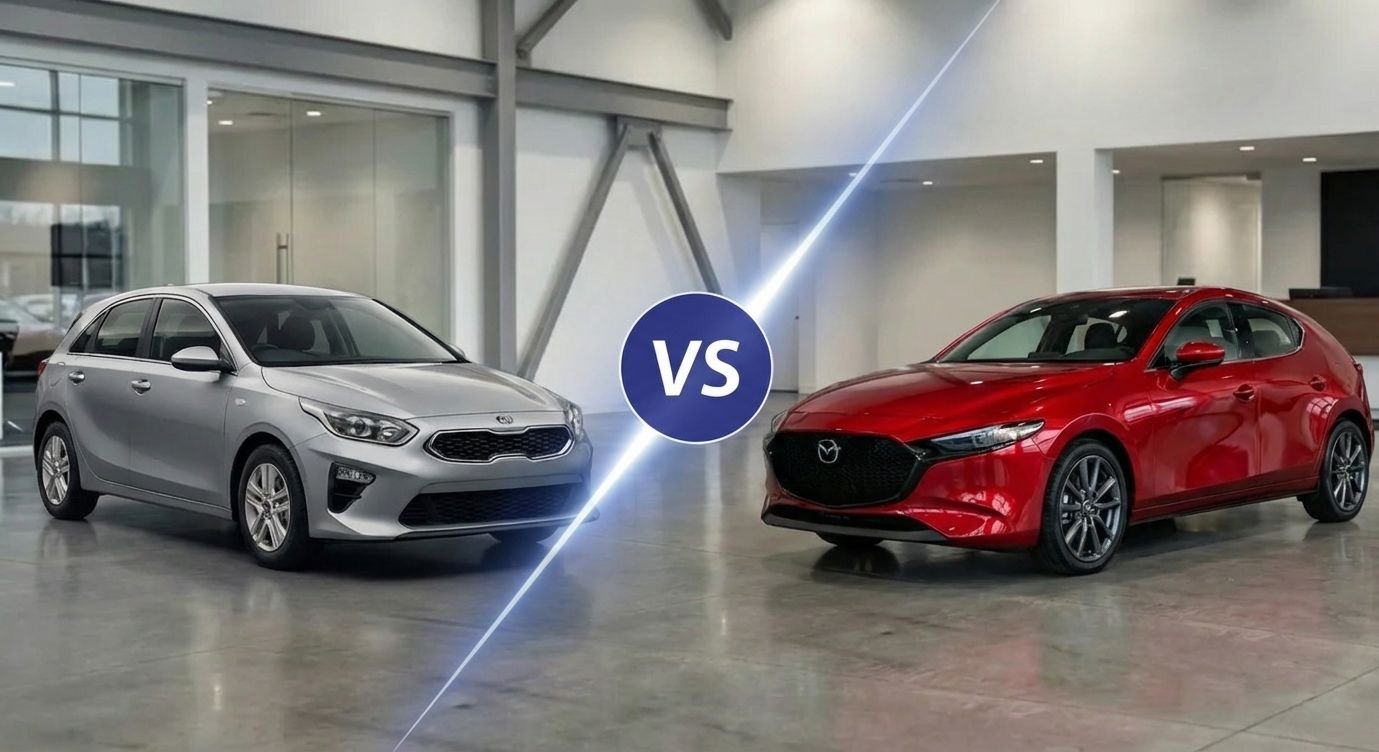
Car battle
Kia Ceed vs. Mazda 3: Complete comparison 2026
Detailed comparison: Kia Ceed vs. Mazda 3. We compared the engines, equipment, and driving characteristics. Read our verdict and find out which hatchback to choose.
Apr 8, 2026
Articles
Car battle
Detailed comparison of used Seat Leon vs. Škoda Octavia. Read real-world experiences, comparisons of equipment, spaciousness, and the verdict for your ideal car choice.
May 9, 2026
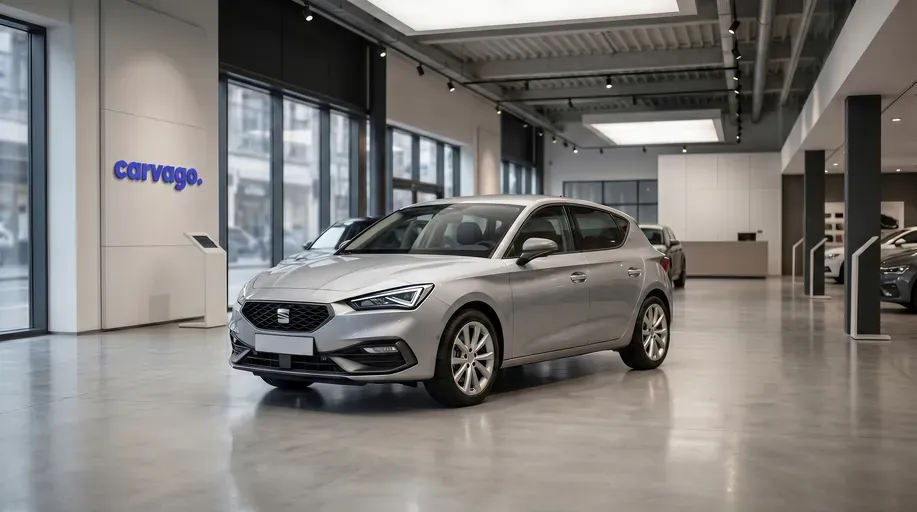
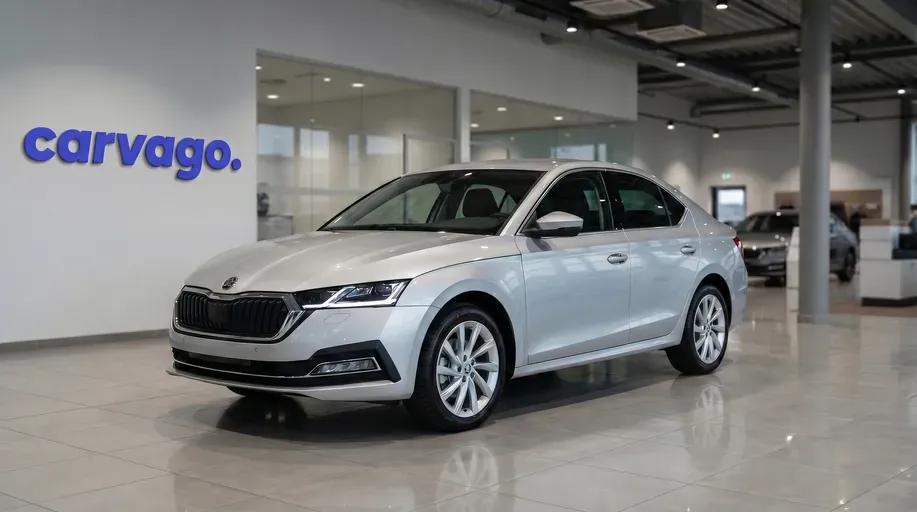
SEAT Leon, also available on the market in its high-performance versions under the independent brand Cupra Leon, is a spirited car built on the modern MQB Evo platform, which primarily attracts with its bold Spanish design and agile driving characteristics. Its direct rival is the technically related Škoda Octavia, known historically in selected markets under alternative names such as Škoda Laura or Octavia Tour, which, on the same group foundation, uncompromisingly maximizes interior space, clever practicality, and family comfort. The following comparison will detail the key differences between these sought-after cars on the used car market and help you find out which one will better suit your daily needs.
Looking at the exterior dimensions, the different philosophies of the two group siblings built on the same MQB Evo platform are fully revealed, which is best demonstrated on roughly four-year-old used cars (Seat Leon and Škoda Octavia of the current fourth generation). While the Spanish representative maintains traditional compact class proportions with a length of 4,368 mm for the hatchback variant, the Mladá Boleslav model in its standard liftback version measures 4,689 mm. This means that the Octavia is a significant 321 mm longer in its basic version. With the more practical estate body styles, this massive difference narrows, yet the Škoda Octavia Estate (Combi) at 4,689 mm still exceeds the Seat Leon Estate (Sportstourer) measuring 4,642 mm by 47 mm. Furthermore, the Octavia also has a slight edge in width, where its 1,829 mm surpasses the Leon (1,799 mm) by exactly 30 mm. For everyday use, these values mean one thing: the Seat Leon weaves through city streets much more easily and finding a parking space for it is noticeably simpler, while the Octavia's more generous footprint makes it a more robust vehicle with excellent directional stability on the highway.
A key parameter for interior space is, of course, the wheelbase. Since both cars share the same technological foundation, their values in this regard are almost indistinguishable. For most common engine variants, the wheelbase reaches an identical value of around 2,686 mm, with minor deviations in the order of millimetres (from 2,647 mm to 2,686 mm) depending on the specific chassis version, for example, in plug-in hybrids, RS models, or the off-road-oriented Scout version. From this hard data, it is clear that the massive increase in overall length for the Škoda does not translate into extra knee room for rear passengers, but is concentrated almost exclusively in the extended rear overhang. This plays a crucial role in the final choice – if passenger comfort is key for you and you primarily use the car for transporting people, the more compact Leon offers a practically identical cabin in a much more agile format, but if you regularly move bulky cargo, the Octavia's longer rear will be invaluable.
Important differences can also be found in the overall height of the vehicles, which affects both aerodynamics and the overall driving position. The Seat Leon sits lower to the ground in both body variants, with an overall height ranging from 1,437 to 1,460 mm. The Škoda Octavia, on the other hand, is designed as a slightly taller and more comfortable cruiser, with its roof peaking between 1,454 and 1,508 mm (where the upper limit is represented by the plastic-clad Scout variant with raised suspension). From a user perspective, this difference also shapes the impressions of the car; the Octavia's slightly taller build will please drivers looking for easier entry and more generous headroom, while the lower silhouette and associated lower centre of gravity of the Seat Leon invite more confident and dynamic driving on winding backroads.
| Parameter | Seat Leon Hatchback | Škoda Octavia Liftback | Seat Leon Estate | Škoda Octavia Estate |
|---|---|---|---|---|
| Width (mm) | 1799 | 1829 | 1799 | 1829 |
| Length (mm) | 4368 | 4689 - 4709 | 4642 | 4689 - 4709 |
| Height (mm) | 1442 - 1460 | 1455 - 1486 | 1437 - 1456 | 1454 - 1508 |
| Wheelbase (mm) | 2682 - 2686 | 2669 - 2686 | 2682 - 2686 | 2647 - 2686 |
When it comes to comparing practicality and trunk space, the Škoda Octavia has traditionally been considered the absolute king of its class, while the Seat Leon stays within the established average of the compact class. For families and drivers who often transport larger amounts of cargo, this difference is crucial and can play a major role when buying a used car. Modern generations of the Octavia benefit from their overall larger body, which offers generous space for several extra suitcases without compromising passenger space. The Leon, on the other hand, bets on more compact dimensions, making parking and maneuvering in the city easier, but logically this means a certain compromise in absolute trunk volume.
In terms of numbers, the difference between cars around four years old on the used market (the current Seat Leon KL generation and the 4th generation Škoda Octavia) is quite vast, especially when comparing the basic short versions. While the Seat Leon, as a classic hatchback, offers a standard 380 liters, the Škoda Octavia, thanks to its more practical liftback body style, holds an impressive 600 liters. If we look at the very popular family versions, the differences narrow significantly, yet the Octavia still has the upper hand. Its estate version offers 640 liters compared to an excellent 620 liters for the Leon (here referred to as the Sportstourer). With the rear seats fully folded, the Octavia Estate can offer up to 1,700 liters of loading space, while the Leon reaches 1,600 liters. Both cars in the estate version thus provide space without compromise, which is more than enough for weekend shopping or a longer family vacation.
It is important to note that for both models, the trunk volume can drop quite significantly if you opt for more eco-friendly alternative powertrains. Plug-in hybrid versions or variants running on compressed natural gas (CNG) must sacrifice part of their usable space to accommodate batteries or additional pressure tanks. For example, the plug-in hybrid Seat Leon e-HYBRID in the hatchback version offers only 270 liters, while the hybrid Škoda Octavia iV as a liftback shrinks to 450 liters. In the popular and more practical estate versions, the base trunk capacity drops to 470 liters for the Leon e-HYBRID and 490 liters for the Octavia iV. This aspect must be carefully kept in mind when choosing if you prefer partially electrified powertrains but also require the occasional transport of larger items.
| Parameter | Seat Leon Hatchback | Škoda Octavia Liftback | Seat Leon Estate | Škoda Octavia Estate |
|---|---|---|---|---|
| Base volume (liters) | 380 | 600 | 620 | 640 |
| Max volume with seats folded down (liters) | 1301 | 1555 | 1600 | 1700 |
The Škoda Octavia is an unrivaled choice for those looking for uncompromising transport capacity, while the Seat Leon in the estate version offers a highly competitive volume that will easily satisfy even more space-demanding families.
When it comes to towing trailers, whether it's a smaller caravan for a summer holiday or a loaded trailer with building materials for the cottage, the technical kinship of both cars is fully evident. Both the Seat Leon (KL generation) and the Škoda Octavia (4th generation) offer very similar and, for their class, generous values in their modern versions as roughly four-year-old used cars, which are fully sufficient for most common and more demanding needs.
Basic engines with the one-liter three-cylinder 1.0 TSI (or eTSI/e-TEC) allow both models to tow a braked trailer weighing 1,100 to 1,300 kg. This value is perfectly sufficient for weekend shopping for larger items, hauling garden waste, or a smaller caravan. However, if you need to tow heavier loads, the more powerful 2.0 TDI diesel versions of both the Leon and Octavia can handle a trailer weighing up to 2,000 kg (usually in combination with all-wheel drive). This already provides room for a large twin-axle caravan or trouble-free boat transport. Plug-in hybrid variants, which tend to have slightly reduced capacity due to heavier batteries (1.4 e-HYBRID for the Leon and 1.4 TSI iV for the Octavia), represent a reasonable compromise and offer a maximum braked towing capacity of exactly 1,500 kg.
For the buyer, this leads to a clear conclusion – both cars use the same sophisticated MQB platform and have nothing to envy each other regarding towing capabilities. Capacities are practically identical, whether you choose the Spanish or the Czech model. Therefore, the key is simply to choose a more powerful engine if you plan to regularly tow heavy loads.
| Model and engine | Braked trailer weight (kg) | Unbraked trailer weight (kg) |
|---|---|---|
| Škoda Octavia 1.0 TSI / e-TEC | 1300 | 600 - 750 |
| Škoda Octavia 1.5 TSI / e-TEC | 1300 - 1500 | 600 - 750 |
| Škoda Octavia 1.4 TSI iV (Plug-in Hybrid) | 1500 | 750 |
| Škoda Octavia 2.0 TDI | 1500 - 2000 | 700 - 750 |
| Seat Leon 1.0 TSI / eTSI | 1100 - 1300 | 600 - 750 |
| Seat Leon 1.5 TSI / eTSI | 1300 - 1500 | 600 - 750 |
| Seat Leon 1.4 e-HYBRID (Plug-in Hybrid) | 1500 | 750 |
| Seat Leon 2.0 TDI | 1500 - 2000 | 700 - 750 |
Both cars, the SEAT Leon (KL generation) and the Škoda Octavia (4th generation), share the group's MQB Evo platform, which means that under the hood you will find a very similar and modern range of engines. We are focusing here on cars approximately 4 years old (i.e., model years around 2020–2022), where the range of powertrains on the used car market is the most diverse. Both cars offer the right solution for every driver – from economical three-cylinder one-litre engines for undemanding users, through mild-hybrids (labelled as eTSI at Seat and e-TEC at Škoda) and popular 2.0 TDI diesels for long-distance motorway cruisers, to sophisticated plug-in hybrids that combine electric driving with a petrol engine. An interesting feature from this era are also the compressed natural gas (CNG) versions, which offered exceptionally low running costs but gradually disappeared from the range around 2022/2023. A fundamental difference between the models lies in the top-of-the-line engines: while Škoda kept the powerful RS versions directly under the Octavia name, SEAT spun off its most powerful models into its separate sports brand, Cupra.
The current KL generation Leon (2020 and newer) offers a dynamically tuned ride that matches its aggressive design, while providing a balanced range of engines. The base is the 1.0 TSI three-cylinder, which in the version with the dual-clutch DSG automatic transmission relies on mild-hybrid technology (1.0 eTSI) for smoother starts and fuel savings. The sweet spot and a very common choice is the 1.5 TSI (or eTSI) four-cylinder, available in versions with 96 kW (130 hp) and 110 kW (150 hp). The peak of the purely petrol range (before the transition to the Cupra brand) is the 2.0 TSI with 140 kW. Those with the possibility of home charging can choose the 1.4 e-HYBRID plug-in hybrid version, which offers a system output of 150 kW. On the used market, you will also come across the economical 1.5 TGI variant burning compressed natural gas (CNG), although it is no longer available as new after 2023. Diesel drivers will be pleased by the efficient 2.0 TDI engine, available with 85 kW and 110 kW.
| Engine type | Fuel | Power (kW) | Torque (Nm) | Transmission |
|---|---|---|---|---|
| 1.0 TSI / eTSI | Petrol / Mild-hybrid | 81 | 200 | 6-speed manual / 7-speed DSG |
| 1.5 TSI / eTSI | Petrol / Mild-hybrid | 96 / 110 | 200 / 250 | 6-speed manual / 7-speed DSG |
| 2.0 TSI | Petrol | 140 | 320 | 7-speed DSG |
| 1.4 e-HYBRID | Plug-in hybrid (PHEV) | 150 | 350 | 6-speed DSG |
| 1.5 TGI | CNG / Petrol | 96 | 200 | 7-speed DSG |
| 2.0 TDI | Diesel | 85 / 110 | 300 / 360 | 6-speed manual / 7-speed DSG |
The fourth-generation Škoda Octavia (since 2020) is a family and corporate benchmark, and its engine range is wider at the top end of the spectrum, thanks to the presence of the RS sports models. The basic petrol versions, 1.0 TSI and 1.5 TSI, feature the same technology as the Seat, and if paired with a DSG automatic transmission, they receive mild-hybrid assistance (1.0 TSI e-TEC and 1.5 TSI e-TEC). If you are looking for a more dynamic family ride, there is the standard 2.0 TSI (140 kW), and if you want real power, there is the petrol RS version with 180 kW (245 hp). Ecological alternatives include the previously offered 1.5 TGI G-TEC natural gas version and the powerful 1.4 TSI iV plug-in hybrid, which, in addition to the standard version (150 kW), is also available in the RS iV sports version with 180 kW. For drivers with high motorway mileage, efficient 2.0 TDI SCR diesel units are available in 85 kW and 110 kW versions. The proverbial king of the diesel range is the Octavia RS TDI model, boasting 147 kW (200 hp). With the more powerful two-litre engines, you can also more frequently choose 4x4 all-wheel drive at Škoda, which is great for those heading to the countryside or mountain areas.
| Engine type | Fuel | Power (kW) | Torque (Nm) | Transmission |
|---|---|---|---|---|
| 1.0 TSI / e-TEC | Petrol / Mild-hybrid | 81 | 200 | 6-speed manual / 7-speed DSG |
| 1.5 TSI / e-TEC | Petrol / Mild-hybrid | 110 | 250 | 6-speed manual / 7-speed DSG |
| 2.0 TSI | Petrol | 140 | 320 | 7-speed DSG |
| 2.0 TSI RS | Petrol | 180 | 370 | 7-speed DSG |
| 1.4 TSI iV | Plug-in hybrid (PHEV) | 150 / 180 (RS) | 350 / 400 (RS) | 6-speed DSG |
| 1.5 TGI G-TEC | CNG / Petrol | 96 | 200 | 7-speed DSG |
| 2.0 TDI SCR | Diesel | 85 / 110 / 147 (RS) | 300 / 360 / 400 (RS) | 6-speed manual / 7-speed DSG |
While the Octavia appeals with wider options for top-of-the-line RS engines and more frequent 4x4 all-wheel drive, the SEAT Leon counters with a perfectly sufficient range of agile standard engines in a sharper and sportier package.
Choosing the right engine is critical for long-term satisfaction with a car, which is why our recommendations are based on dynamics, real-world fuel consumption, owner feedback, and the mechanical reliability of roughly four-year-old used cars. Although the SEAT Leon (KL generation) and the 4th generation Škoda Octavia share the same MQB Evo group platform and range of powertrains, their distinct characters require a different approach. Interestingly, while the Leon relies on a stiffer, more agile chassis that works perfectly with lightweight petrol engines in corners, the Octavia was designed with an emphasis on maximum family comfort and swallowing highway miles. This is fundamentally reflected in which "heart" under the hood makes the most sense for each of these models on the used car market.
This engine (code EA211 Evo) represents the ideal compromise between dynamics and operating costs and is the best choice in the Leon range. With it, the SEAT benefits from a lighter front end, which enhances its sportier handling and willingness to turn. Furthermore, the eTSI version adds 48V mild-hybrid technology (always paired with a dual-clutch DSG automatic transmission), which ensures incredibly smooth start-stop operation and the ability to coast seamlessly with the engine off.
The 4th generation Škoda Octavia is the epitome of a family hauler and highway cruiser. For this purpose, the two-litre diesel from the EA288 Evo family is the absolute top and most sensible choice. It handles a full boot excellently and provides a subjectively confident pull that petrol engines sometimes lack when the car is fully loaded and driving uphill.
Manufacturers' official fuel consumption figures are often more optimistic than the reality of daily driving. To get an objective picture, it is therefore essential to rely on long-term user data. We have used statistics from the popular independent portal Spritmonitor.de, focusing on current models of both cars that most frequently appear on the used car market as roughly four-year-old vehicles (i.e., the 4th generation Škoda Octavia and the SEAT Leon KL generation). Since both cars are built on the same MQB Evo platform and share the vast majority of their powertrains, any differences are primarily due to aerodynamics, different weights, and different vehicle software tuning.
| Model and Engine | Average Consumption (l/100 km) |
|---|---|
| Škoda Octavia 1.0 TSI / e-TEC | 5.2 |
| SEAT Leon 1.0 TSI / eTSI | 5.5 |
| Škoda Octavia 1.5 TSI / e-TEC | 5.5 |
| SEAT Leon 1.5 TSI / eTSI | 5.7 |
| Škoda Octavia 2.0 TDI SCR | 4.5 |
| SEAT Leon 2.0 TDI | 4.5 |
| Škoda Octavia 2.0 TSI (RS) | 6.9 |
| SEAT Leon 2.0 TSI | 6.7 |
For drivers who primarily move within the city and on suburban routes, engines labelled e-TEC and eTSI make a lot of sense. These are mild-hybrid systems that can effectively shut off the engine and "coast" during steady driving, significantly saving fuel in heavy traffic. Conversely, if you spend dozens of hours a month on the motorway, the two-litre diesel remains the clear and most economical choice. For budget-conscious buyers with universal needs, the 1.5 TSI engine is the ideal middle ground. In practice, it won't consume much more than the one-litre three-cylinder, but it offers much higher comfort and a vital power reserve for overtaking.
On the whole, fuel consumption is unlikely to be the main deciding factor that tips the scales in favour of either the Škoda or the SEAT. Given the shared technology, real-world deviations are within a maximum of two to three tenths of a litre per hundred kilometres, a difference that will not fundamentally impact a household budget. Your choice between these roughly four-year-old used cars should therefore depend primarily on design preferences, requirements for chassis dynamics, and, last but not least, the required luggage capacity.
If you are interested in roughly four-year-old cars (production year around 2022), you will be choosing from the fourth generation for both models. They share the modern MQB Evo platform, making them direct technological relatives. While they cost relatively similar amounts as new cars, the gap widens slightly on the used car market, primarily due to the specifics of the Czech market.
The Octavia is the absolute ruler of Czech used car dealerships. Roughly four-year-old examples make up a huge portion of the total market supply.
The Leon is a bit more exotic on the Czech market, but from a used car perspective, it represents a "secret tip" for those looking for advanced technology at a more favorable price.
| Criterion | Seat Leon IV (KL) | Škoda Octavia IV (NX) |
|---|---|---|
| Base price (used) | from ~ €12,000 | from ~ €12,000 |
| Average price (100k km) | €14,000 – €19,000 | €16,000 – €21,000 |
| Market availability | Average / Lower | Extremely high |
| Depreciation | Faster | Very slow |
Is the Seat Leon a better buy? From a purely financial standpoint, a used Leon offers a more attractive price-to-age ratio than the Octavia. However, the Seat's competitive disadvantage is a significantly more modest selection – conversely, the huge stock of used Škoda cars will make it much easier for you to find your dream color, desired optional equipment, or preferred engine.
On the four-year-old used car market, the Seat Leon offers identical technology to the Škoda Octavia, but thanks to slightly faster depreciation, you can often purchase it at a more favorable price or with significantly richer equipment.
Both models, the Seat Leon and the Škoda Octavia, boast a maximum five-star rating in independent Euro NCAP safety tests. However, when comparing these results, it is necessary to take into account the context and the specific year of testing. Euro NCAP protocols are constantly evolving, becoming stricter and placing increasing emphasis on active safety and accident prevention. For this reason, percentage scores from different years cannot always be directly compared. Newer tests require more advanced assistance systems and include more complex simulations, such as cyclist detection or handling emergency situations at intersections.
The fourth-generation Seat Leon underwent Euro NCAP crash tests in 2020. The car was tested according to the then newly introduced and stricter standards, which for the first time significantly took into account side-impact protection and the effectiveness of the center airbag. This is part of the standard equipment in the Leon and effectively prevents injuries resulting from the heads of the driver and front passenger colliding. The results demonstrated a high level of passive safety with very strong protection for adults (92%) and children (88%). The Leon also performed very well in the assessment of assistance systems (80%), relying on reliable autonomous emergency braking with accurate detection of both pedestrians and cyclists.
The fourth-generation Škoda Octavia was originally tested in 2019; however, in 2022, it underwent a new and stricter Euro NCAP assessment. This re-test was prompted by innovations in standard equipment, which now included, among other things, a center airbag and a driver's knee airbag in all markets. Even under the more demanding 2022 protocols, the Octavia easily defended its five-star rating. Although the percentage scores for adults (89%) and children (84%) slightly decreased on paper compared to 2019, this is a direct result of much stricter testing criteria. In the area of safety assistants, the car achieved an excellent 81%, aided by a modernized automatic braking system that effectively responds to the risk of collisions at intersections.
| Parameter | Seat Leon | Škoda Octavia |
|---|---|---|
| Year of testing | 2020 | 2022 |
| Adult occupant protection | 92% | 89% |
| Child occupant protection | 88% | 84% |
| Vulnerable road user protection | 71% | 68% |
| Safety assist systems | 80% | 81% |
In terms of overall safety, both cars represent the absolute top of their class and are a perfect choice for buyers of a roughly four-year-old used car. The Seat Leon scores with its strong occupant protection results from the 2020 tests and offered modern features like a center airbag from the start. However, thanks to its modernization and the 2022 re-test, the Škoda Octavia has a slightly more recent certification. Its slightly better result in the assistance systems category, tested under more demanding rules, means that in terms of active safety, the Octavia offers a fractionally more modern and comprehensive technology package.
Both cars are exceptionally safe, but the Škoda Octavia, with its 2022 certification, offers a slightly more modern range of assistance systems tested against stricter criteria.
In addition to standard equipment, each of the models offers several unique features that can be decisive for the customer and clearly show the different approach of both carmakers to added value.
Sportier and more emotional exterior design
More agile driving characteristics with more confident cornering
Generally lower purchase price for a used car compared to the Octavia
Generous standard equipment in most used cars offered
Luggage capacity lags slightly behind the Octavia (380 l for the hatchback, 620 l for the Sportstourer estate)
Interior ergonomics suffer from the lack of physical buttons for air conditioning and radio
Less headroom in the rear seats of the hatchback version due to the sloping roofline
The fourth-generation Seat Leon will primarily appeal to drivers looking for a more dynamic look and more fun driving characteristics without major compromises. Despite the slightly smaller transport capacity, it offers a great price-to-value ratio, making it an attractive choice for younger families or couples.
Unrivalled boot capacity in its class (600 litres for the liftback, 640 litres for the Combi)
Extraordinary legroom for rear-seat passengers
Very comfortably tuned chassis ideal for long motorway journeys
Practical "Simply Clever" solutions significantly increasing everyday utility value
Excellent value retention and easy resale on the used car market
Noticeably higher purchase price for a used car due to enormous domestic demand
Known software glitches and slower infotainment response in the early years of the 4th generation (2020–2021)
Strictly conservative driving performance that doesn't provide much driving excitement
The Škoda Octavia represents the benchmark for family practicality and serves perfectly as a comfortable cruiser for long journeys. It is absolutely ideal for buyers who prefer comfort, maximum utility value, and the assurance of slower depreciation for future resale.
Based on long-term user experience, reports from authorized service centers, recall campaigns, and results from independent technical inspections, we have compiled an overview of the most common problems that buyers of these used cars should watch out for.
The fourth-generation Seat Leon shares its platform and technology with its Volkswagen Group siblings, which on one hand guarantees excellent driving characteristics, but on the other hand brings some common "teething troubles," primarily concerning the onboard electronics.
Although the Leon is mechanically a very robust and reliable car, software issues in the early years of the fourth generation can be frustrating. A careful check of the vehicle's history regarding already performed software updates is absolutely crucial before purchase.
The fourth-generation Škoda Octavia is renowned for its practicality and fuel-efficient engines, but due to its more complex electronic architecture (the so-called MQB Evo platform), it faces very similar problems on the used car market as its Spanish relative.
The fourth-generation Octavia is an exceptionally practical and mechanically very well-engineered car. However, before buying a used one, it is necessary to carefully check the functionality of all onboard electronics, especially the assistants on the steering wheel and the responsiveness of the multimedia system.
When buying a used car, a thorough inspection is key. Here are some specific points to focus on for these two models, whether you are checking the car yourself during a test drive or planning to use a service such as a comprehensive car audit by an experienced mechanic.
The Škoda Octavia offers a larger luggage compartment in all body styles. The Octavia liftback has a volume of 600 liters compared to 380 liters for the Leon hatchback, while for the estate versions, the difference is slightly narrower (Octavia Combi 640 liters vs. Leon Sportstourer 620 liters). For families requiring the maximum possible transport capacity, the Octavia is a significantly better choice.
The Seat Leon is traditionally tuned more for sportiness and offers a stiffer chassis with more responsive steering, which you will appreciate on winding backroads. The Škoda Octavia, on the other hand, is primarily focused on maximum comfort and a smooth ride even on poor surfaces. If you prefer a more dynamic and engaging driving experience, the Leon will be more fun.
Both cars are built on the same MQB Evo platform and share an identical range of group engines, including the popular 1.5 TSI and 2.0 TDI units. In terms of mechanical reliability, the cars are completely identical and share similar maintenance costs. Pay increased attention only to the infotainment software, which in used cars from 2020 and 2021 occasionally suffered from slower responses or outages.
The Škoda Octavia scores with a more airy interior and a greater number of traditional "Simply Clever" solutions, such as storage pockets for mobile phones or an umbrella in the door. The Seat Leon bets on a more emotional, minimalist design strongly oriented towards the driver with a sportier seating position behind the wheel. However, with both approximately four-year-old used cars, you will have to get used to touch controls for most functions, including setting the air conditioning temperature on a slider bar.
On the Czech market, the Škoda Octavia has long and steadily held its value much better, primarily due to huge demand from domestic buyers and companies. The Seat Leon, on the other hand, can often offer a more favorable purchase price and richer equipment within the same budget as a used car. However, when eventually selling the car in the future, you will most likely find a new owner for the Octavia significantly faster.
Although the SEAT Leon and Škoda Octavia share the same advanced technology and range of reliable engines, in the market for roughly four-year-old used cars, these vehicles appeal to completely different types of drivers. The Czech bestseller represents an uncompromising family hauler and a comfortable highway cruiser, which, for a slightly higher purchase price, offers unrivaled luggage space, maximum travel comfort, and excellent future value retention. In contrast, its Spanish relative scores with a more attractive price tag, often richer equipment, and more agile driving characteristics, making it a great choice for those looking for a more emotive and compact car with more confident handling on backroads. The final decision thus depends primarily on your daily priorities; if you are looking for maximum practicality, a giant trunk, and certainty in resale, go for the Octavia, while for a sportier driving experience and a better price-to-age ratio, the Leon will be a better partner.
Sources: ADAC, lidovky.cz, garaz.cz, fdrive.cz, autoservis.cz, portalridice.cz
This article was prepared using artificial intelligence tools. The section guarantor is Petr Dušek.
Detailed comparison: Kia Ceed vs. Mazda 3. We compared the engines, equipment, and driving characteristics. Read our verdict and find out which hatchback to choose.
Apr 8, 2026
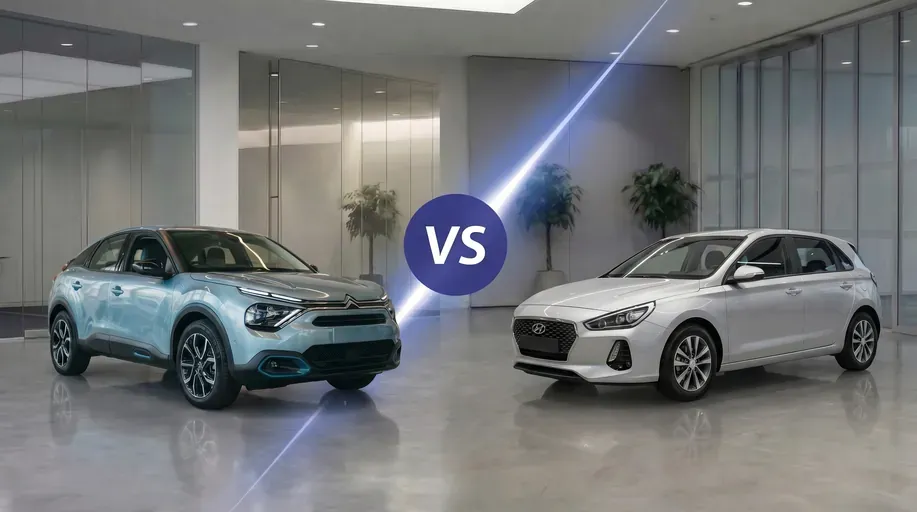
Detailed comparison of Citroën C4 vs. Hyundai i30. Find out which car offers better real-world fuel consumption, equipment, and value for money. Read our final verdict!
May 6, 2026
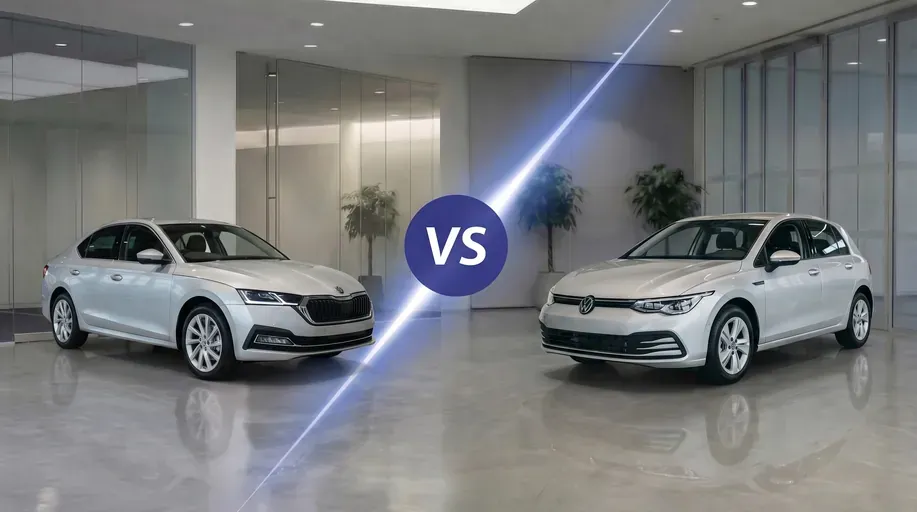
Detailed comparison of Škoda Octavia vs. VW Golf (Volkswagen Golf). Discover real-world experiences, differences in space, and our verdict on which car is more worth it.
Apr 15, 2026