Articles

Car battle

Seat Ibiza vs. Volkswagen Polo: Complete comparison 2026

Detailed comparison of Seat Ibiza vs. Volkswagen Polo. Read our used car review! We evaluate reliability, equipment, and driving characteristics. Which hatchback will win?

May 7, 2026

VS
Seat Ibiza

Seat Ibiza

Volkswagen Polo

Volkswagen Polo

Introduction

Seat Ibiza is a spirited representative of the small car category, which skillfully masks its corporate roots with attractive Spanish design and a more dynamic driving experience. Volkswagen Polo, on the other hand, has long represented the benchmark of this class, relying primarily on renowned German precision, a more conservative timeless look, and top-notch craftsmanship. Although both of these siblings share the same technical platform under the surface, in the following comparison, we will find out in detail which of them will be the better choice for your specific needs on the used car market.

Comparison of External Dimensions

Looking at the exterior dimensions, it is immediately apparent that both the Seat Ibiza and the Volkswagen Polo share the same group MQB-A0 platform. This architectural kinship means that both models are very similar in their proportions and represent an ideal compromise for maneuvering in narrow city streets without compromising their overall stability on the highway. If we focus on popular cars approximately four years old (the KJ generation for Seat and VI for Volkswagen), we find minor but user-interesting differences.

While the facelifted Volkswagen Polo, with a length of 4074 mm, slightly outgrows its Spanish cousin by 15 mm, the Seat Ibiza, on the other hand, dominates in terms of width. It is a noticeable 29 mm wider (1780 mm compared to 1751 mm for the Polo). This physical difference not only gives the Ibiza a more aggressive, sportier, and more "planted" stance on the road, but logically it also has a positive effect on the interior space – passengers have slightly more shoulder and elbow room. The Polo, by contrast, compensates for this slight width handicap with a marginally taller body structure.

A key indicator of longitudinal interior spaciousness is the wheelbase. Here, the Seat Ibiza has a slight edge with a value of 2564 mm, which is 12 mm more than its German competitor. In practice, this means slightly better knee room for rear-seat passengers. When deciding, it depends on personal preference: if your priority is a dynamic look, a wider track, and more generous rear legroom, the Ibiza comes out slightly ahead in this battle. The Polo, on the other hand, will appeal to drivers looking for more conservative proportions who appreciate a more compact width for easier parking in tight underground garages or at shopping centers.

ParameterSeat Ibiza HatchbackVolkswagen Polo Hatchback
Width (mm)17801751
Length (mm)40594053–4074
Height (mm)1444–14471431–1451
Wheelbase (mm)25642548–2552

Trunk Volume

Trunk space is often one of the key factors when choosing a used car, even in the small city car category. Although the Seat Ibiza and Volkswagen Polo share the same MQB A0 chassis platform, their approach to utilizing interior space differs slightly. For family use, daily practicality, or weekend trips, it is not just the absolute volume that matters, but also the shape of the trunk and the options for expanding it. For used cars approximately four years old (the current generation of both models), we no longer find practical estate variants like the Ibiza ST or Polo Variant in the lineup, but even the hatchbacks themselves offer surprisingly generous capacities today. These are often perfectly sufficient for weekend shopping or a longer holiday for two.

Looking at the basic capacity, the Spanish representative leads slightly. The current generation Seat Ibiza offers a standard trunk volume of 355 liters, making it one of the leaders in its class. The Volkswagen Polo is not much worse – with its 351 liters, it lags only slightly behind, and in daily practice, you will hardly notice this minor difference. However, a more significant gap is observed after folding down the rear seats. Here, the Ibiza can offer a maximum volume of up to 1,165 liters, creating a generous space for several extra suitcases, or even for transporting smaller furniture or sports equipment. The Polo provides a maximum of 1,125 liters after the seats are fully folded.

However, it is extremely important to mention that not all versions of both models possess such a large space. If you opt for alternative variants burning compressed natural gas (CNG), which carry the TGI designation for both brands, you must expect a significant reduction in capacity due to the gas cylinders located under the floor. The Seat Ibiza 1.0 TGI thus offers only 262 liters in the base and 1,072 liters when folded. The Volkswagen Polo 1.0 TGI has to settle for an even more modest 251 liters, or 1,025 liters respectively. With the Polo, you will also encounter a slightly smaller trunk in the popular GTI sports version, which, due to a different layout and a more robust exhaust system, offers a standard 305 liters.

ParameterSeat Ibiza HatchbackVolkswagen Polo HatchbackSeat Ibiza Hatchback (TGI)Volkswagen Polo Hatchback (TGI)
Base volume (liters)355351262251
Max. volume with seats folded (liters)1,1651,1251,0721,025

Both cars show that even in today's B-segment, one can find trunks comparable to compact class cars from ten years ago. The Seat Ibiza represents a slightly better choice for those who want to squeeze every available extra liter of volume out of the chassis platform. The Volkswagen Polo then confidently counters with a only negligibly smaller trunk, but with a perfectly usable, more premium-upholstered, and regular shape that facilitates daily loading.
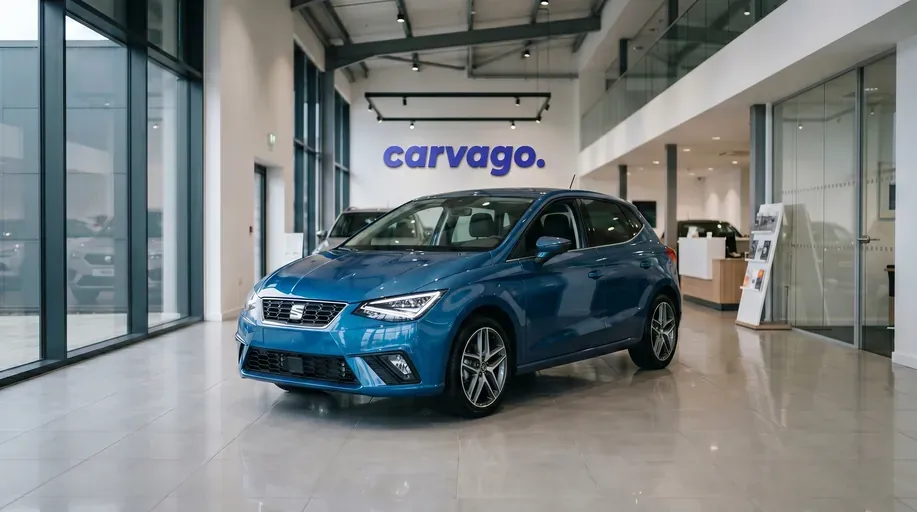
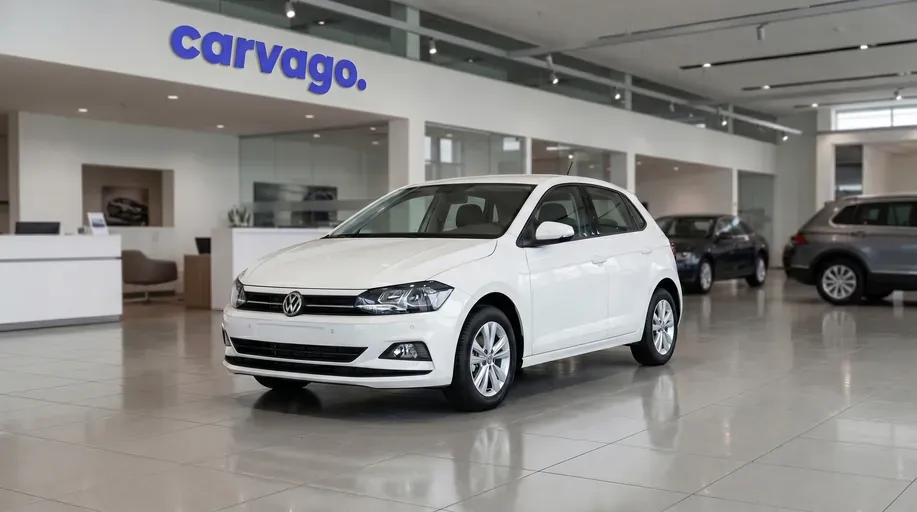
Kings of Urban Practicality 👑

Both the Seat Ibiza and Volkswagen Polo offer top-tier trunk volumes exceeding 350 liters in their modern generations, with the Ibiza coming out of this duel with a slight lead. Both models can thus easily serve as full-fledged cars for smaller families, but be careful with the economical natural gas (TGI) versions, where the trunk volume drops significantly.

Discover the true condition of the car thanks to an independent inspection

Order CarAudit™

Trailer Weights

Although both the Seat Ibiza and Volkswagen Polo are typical representatives of city hatchbacks, both models, relying on the shared MQB-A0 group platform, can reliably fulfill the role of a towing vehicle. For many people interested in a roughly four-year-old used car, the load capacity on the tow bar is a very important factor, whether for attaching a bike rack, hauling garden waste, or weekend family activities. Given the shared technology, the towing capacity limits for both cars are practically identical, but significant differences appear across individual engine options.

In the case of a braked trailer, the permitted weight for both current generations (Ibiza KJ and Polo VI) starts at 800 kg in conjunction with the basic naturally aspirated 1.0 MPI engines. However, the standard values for the popular and most widespread turbocharged 1.0 TSI units reach a much more practical 1000 to 1100 kg. The maximum for both cars is an identical 1200 kg, which you can achieve exclusively with the top versions with the 1.5 TSI engine or the sporty Volkswagen Polo GTI model. A specific exception is the eco-friendly variants powered by compressed natural gas (1.0 TGI). For these models, due to the installation of pressure tanks and specific homologation, the installation of a tow bar is usually not possible at all.

From a practical standpoint, these differences on paper are very important in real life. While the basic capacity of 800 kg safely handles a small unbraked trailer or creates welcome space for a few extra suitcases thanks to a tow bar cargo box, the more powerful versions are much more versatile. Their towing capacity from 1000 to 1200 kg is already safely sufficient for a weekend trip to the hardware store or a longer family holiday with a lighter caravan.

From the perspective of total towing power, no clear winner emerges from this comparison. It depends entirely on the specific unit you pick out at the used car dealership. Both models, however, offer highly solid parameters for small B-segment cars and serve excellently in the role of an occasional "tower."

Model and engineBraked trailer (kg)Unbraked trailer (kg)
Seat Ibiza 1.0 MPI800540 - 560
Seat Ibiza 1.0 TSI1000 - 1100560 - 580
Seat Ibiza 1.5 TSI1200600 - 620
Volkswagen Polo 1.0 MPI800540 - 560
Volkswagen Polo 1.0 TSI1000 - 1100560 - 580
Volkswagen Polo GTI (2.0 TSI)1200670

Overview of Most Common Motorizations

Since both the Seat Ibiza and Volkswagen Polo share the group's MQB A0 platform, their range of power units for roughly four-year-old used cars on the market is very similar, but with one major difference at the very top of the range. While the base engines for everyday city commuting are handled by petrol one-litre three-cylinder engines, which excel in low fuel consumption and solid reliability, the real differences are found in the sporty variants. The Seat Ibiza ends with the dynamic 1.5 TSI four-cylinder, as the carmaker left the true "hot hatch" segment to the Cupra brand. In contrast, the Volkswagen Polo offers the hot GTI version with a 2.0 TSI engine, which will satisfy even the most demanding performance-oriented drivers. Both cars rely on direct-injection petrol engines without significant support from hybrid systems; an alternative in the form of compressed natural gas (CNG) is also available. The popular 1.6 TDI diesel engines disappeared from the range for both models at the turn of 2020 and 2021, so you will no longer encounter them in four-year-old and younger used cars. In terms of choice, the economical one-litre engine makes sense for budget-conscious drivers, while drivers who frequently travel on motorways will appreciate the power reserve of the 1.5 TSI four-cylinder.

Seat Ibiza

The basis of the range for the Seat Ibiza (KJ generation) is the naturally aspirated 1.0 MPI three-cylinder with 59 kW, which is an ideal choice for undemanding drivers with low annual mileage moving mainly around the city. However, most of the used car market consists of modern turbocharged 1.0 TSI units in 70 kW and 81 kW versions (85 kW in older models), which represent the absolute ideal combining pleasant dynamics with fuel economy. The top engine for the Ibiza is the refined 1.5 TSI four-cylinder with 110 kW, equipped with Active Cylinder Technology (ACT) for fuel saving, which is paired exclusively with the seven-speed dual-clutch automatic DSG transmission. Those interested in the cheapest possible operation at filling stations could choose the 1.0 TGI version burning CNG; on the other hand, diesel lovers must look exclusively in older model years, as the 1.6 TDI engine was definitively phased out of sale in this generation.

Engine typeFuelPower (kW)Torque (Nm)Transmission
1.0 MPIPetrol59935MT
1.0 TSIPetrol70 / 81175 / 2005MT / 6MT / 7DSG
1.5 TSIPetrol1102507DSG
1.0 TGIPetrol / CNG661606MT
1.6 TDI*Diesel702505MT / 7DSG

*Note: The 1.6 TDI engine was phased out around 2020 and is no longer found in used cars approximately 4 years old.

Volkswagen Polo

The Volkswagen Polo (generation VI) copies the rational foundations of its Spanish sibling in detail. The entry point to the world of the Polo is the weaker 1.0 MPI engine, and the main sales driver is the flexible 1.0 TSI three-cylinder. This comes with a manual or comfortable dual-clutch automatic DSG transmission and offers fully sufficient performance for motorway trips. Above it sits the powerful 1.5 TSI four-cylinder (110 kW). However, the iconic GTI version has a completely exclusive position in the Polo range, hiding an exceptionally powerful turbocharged 2.0 TSI four-cylinder under the hood. In newer models from roughly the facelift onwards, it provides 152 kW (207 hp) and a massive 320 Nm of torque, making the city car a genuine piece of sports equipment capable of challenging even larger cars. Environmentally conscious drivers also had the option to choose the 1.0 TGI gas variant for the Polo, while the economical 1.6 TDI diesels share the same fate as in the Ibiza and are no longer installed in the car after 2020.

Engine typeFuelPower (kW)Torque (Nm)Transmission
1.0 MPIPetrol59935MT
1.0 TSIPetrol70 / 81175 / 2005MT / 6MT / 7DSG
1.5 TSIPetrol1102507DSG
2.0 TSI (GTI)Petrol147 / 1523206DSG / 7DSG
1.0 TGIPetrol / CNG661606MT
1.6 TDI*Diesel702505MT / 7DSG

*Note: The 1.6 TDI engine was phased out around 2020 and is no longer found in used cars approximately 4 years old.

Hot GTI vs. Spanish temperament 🌶️

For most buyers, both models will offer the ideal compromise between dynamics and fuel consumption with the popular 1.0 TSI turbocharged engine. However, if you long for genuine sports performance, the Volkswagen Polo clearly wins thanks to the exclusive GTI version with a two-litre engine, as the Ibiza does not offer a true "hot hatch" in this generation.

Choosing the right engine is absolutely crucial for your long-term satisfaction with the car, and our recommendations are based on real-world experience, reliability, actual fuel consumption, and owner feedback. Both the Seat Ibiza (KJ generation) and the Volkswagen Polo (VI generation) sit on the identical MQB-A0 chassis platform, which means they also share the same range of engines. An interesting fact for the four-year-old used car market is that around 2020, the VW Group completely phased out the 1.6 TDI diesel engines for both of these models. As a result, the market today is dominated by three-cylinder petrol engines, which over the years have fully replaced the older naturally aspirated four-cylinders and surprised everyone with their refinement and long lifespan.

For the Seat Ibiza, we recommend: 1.0 TSI (81 kW / 110 hp)

  • Why it's the best choice: The Seat Ibiza inherently has a slightly sportier chassis setup than the Polo. The more powerful variant of the 1.0-liter three-cylinder with 81 kW (labeled as 85 kW until 2020) perfectly complements this dynamic character. Unlike the less powerful versions, this engine is standardly paired with a six-speed manual gearbox, making it a much more versatile car that holds its own even on the highway.
  • Technical advantages: The engine offers a very decent torque of 200 Nm, available from low RPMs. Thanks to the sixth gear, it runs at lower RPMs on the highway, which reduces cabin noise. Real-world fuel consumption can be kept around 5.5 l/100 km without much effort.
  • Known risks and how to prevent them: Since this is a direct-injection engine, the biggest risk is the gradual buildup of carbon on the intake valves, especially if the car is driven exclusively on short city trips with a cold engine. How to spot it: During a test drive of a used car, focus on the cold start. If the engine vibrates significantly at idle or the RPMs fluctuate, carbonization may already be at an advanced stage. Prevention includes occasional longer highway drives and using premium fuel with cleaning additives.
  • Who it's ideal for: For drivers who frequently travel out of town, do highway commutes, or enjoy a brisker and more dynamic driving style, while still requiring low operating costs.

For the Volkswagen Polo, we recommend: 1.0 TSI (70 kW / 95 hp)

  • Why it's the best choice: The Volkswagen Polo is designed with a greater emphasis on comfort, smoothness, and everyday effortless practicality. The "golden middle way" here is the lower-powered version of the 1.0 TSI engine with 70 kW. It offers much better dynamics than the basic, sluggish naturally aspirated 1.0 MPI engine, but at the same time, it is structurally simpler and less stressed than its more powerful siblings. As mentioned, you will no longer find the once-popular 1.6 TDI diesels in these model years, but this economical petrol engine is a full-fledged replacement.
  • Technical advantages: It is characterized by very quiet operation, excellent sound insulation (you'll hardly notice it's a three-cylinder in the Polo), and exceptional efficiency. The five-speed manual gearbox has longer gear ratios, which contributes to a real-world fuel consumption of just over 5 liters per 100 km.
  • Known risks and how to prevent them: Longer gear ratios mean you have to downshift earlier when overtaking. Mechanically, the engine is very reliable; however, on units approaching 100,000 to 120,000 km, water pump leaks occasionally appear. How to spot it: Open the hood and shine a flashlight into the area of the timing belt cover. If you see pinkish crystals or dried traces of coolant, the water pump will soon be due for replacement.
  • Who it's ideal for: For the typical city and suburban user, calmer drivers, and those looking for maximum reliability, driving comfort, and the lowest possible bills for insurance and fuel.

Real Fuel Consumption

Official fuel consumption figures provided by manufacturers often differ significantly from the reality of daily driving, which is influenced by driving style, route profile, season, and the current vehicle load. For an objective comparison, it is always better to rely on long-term user data, ideally from independent crowdsourced platforms like the popular German portal Spritmonitor.de. Since it makes the most sense to look for roughly four-year-old cars on the used car market, this comparison focuses exclusively on fifth-generation Seat Ibiza (KJ) and sixth-generation Volkswagen Polo (VI) models that rolled off the production lines around 2022.

Model and engineAverage consumption (l/100 km)
Seat Ibiza 1.0 MPI5.3
Volkswagen Polo 1.0 MPI5.5
Seat Ibiza 1.0 TSI5.2
Volkswagen Polo 1.0 TSI OPF5.2
Seat Ibiza 1.5 TSI5.7
Volkswagen Polo 1.5 TSI OPF6.1
Seat Ibiza 1.6 TDI4.6
Volkswagen Polo 1.6 TDI SCR4.9

Looking at the real-world figures, the shared corporate DNA of both models is perfectly obvious. Differences between identical engines are more or less cosmetic and stem more from slight variations in aerodynamics, the weight of specific equipment, or a different sample of drivers (the Polo is often chosen by more conservative drivers, while the Ibiza attracts a sportier crowd).

Key trends and real-world surprises:

  • Naturally aspirated engines won't save you money: It might come as a surprise to some that the basic naturally aspirated 1.0-liter engines (1.0 MPI) do not actually run cheaper in practice than their turbocharged counterparts. On the contrary, due to the lack of torque, drivers have to rev them higher, which pushes consumption up, especially outside the city.
  • Small turbo engines excel: The 1.0 TSI units are an absolutely ideal compromise. For both cars, the average stays around an excellent 5.2 liters per hundred kilometers, while the dynamics are incomparably better.
  • Four-cylinders for a reasonable premium: The larger 1.5-liter engine (1.5 TSI) naturally demands a bit more fuel; in the Polo, consumption even tipped over 6 liters. However, given the high power output, this is still an excellent value.
  • The decline of diesels: While 1.6 TDI diesel engines (which appear only sporadically in older model years of these generations) can push consumption below five liters, the difference compared to a small petrol engine is so minimal that the potential for higher maintenance costs isn't worth the risk.

For the average user, the recommendation is clear. If you are a typical city or suburban driver, the 1.0 TSI petrol engine will be your wallet's best friend. It provides enough flexibility for safe overtaking but won't demand excessive fuel in the city. Dedicated highway mile-munchers might appreciate the smoother operation of the more powerful 1.5 TSI, where the investment in fuel pays off in significantly higher comfort on long journeys. For used cars in this category, we generally recommend avoiding diesel versions – the financial savings on fuel are negligible.

Does it make sense to choose based on fuel consumption?

The short answer is: no. Fuel consumption in this particular corporate duel is definitely not a factor that should tip the scales one way or the other. The operating costs of both vehicles with the same engines are perfectly comparable. Whether you choose the Spanish temperament of the Seat Ibiza or the German austerity and maturity of the Volkswagen Polo, your wallet will essentially not notice the difference at the gas station. Instead, make your decision based on your preferred design, interior space, and, above all, the current technical condition of the chosen used car.

Price Range and Used Car Offerings

SEAT Ibiza and Volkswagen Polo are among the most sought-after cars on the used car market. Given that both models share the same group platform (MQB A0) and engine range, comparing their prices on the secondary market is particularly interesting. Focusing on roughly four-year-old cars (manufactured around 2021 to 2022, i.e., fifth-generation Ibiza and sixth-generation Polo models), a different pricing policy and rate of depreciation for both brands emerge.

SEAT Ibiza (5th Generation)

The SEAT Ibiza has long been considered a more affordable and visually sportier choice. On the used car market for 2021–2022 models, an Ibiza with a mileage of around 60,000 to 100,000 kilometers can be purchased quite advantageously, making it a rational choice for budget-conscious drivers.

  • Price range: Usually ranges between €9,000 and €14,000.
  • Price-to-performance ratio: The Ibiza benefits from a lower initial purchase price, which is logically reflected in used car dealerships. Around the €10,000 mark, you can already find very well-equipped examples on the secondary market with the reliable 1.0 TSI engine, or even economical versions powered by compressed natural gas (TGI).
  • Depreciation: Depreciation is slightly faster than with the Volkswagen. While this fact won't please the first owner, for a second-hand buyer, the Ibiza represents an excellent purchase.

Volkswagen Polo (6th Generation)

Within the group, the Volkswagen Polo has long been positioned as a slightly more premium hatchback with a more conservative design and a perceived higher-quality interior finish. This solid reputation helps it hold its value much better.

  • Price range: For a four-year-old used Polo, you will pay roughly €11,000 to €18,000 on the market, depending on equipment, engine, and mileage.
  • Added value: A more stable residual value means that the car will not lose as much value in a potential resale. Furthermore, even the basic trim levels of the Polo tend to be more generous with advanced safety assistants and better multimedia.
  • Value retention: The Polo holds its price exceptionally well within the entire B-segment. Buying this used car will thus require an initial investment several thousand euros higher compared to the SEAT.

Overview of Indicative Prices (2021–2022 Models)

To give you a clearer picture of what to expect in used car dealerships for four-year-old cars, take a look at the following price comparison:

Model (approx. 4 years old)Starting price of used car (base and higher mileage)Average price (better-equipped units with 1.0 TSI)Price ceiling (low mileage, DSG automatic, FR/R-Line versions)
SEAT Ibiza€9,000€12,000€14,000
Volkswagen Polo€11,000€14,000€18,000

Reason vs. Prestige 💸

While the Volkswagen Polo holds its value much better and offers a more conservative certainty at a higher price from the buyer's perspective, the SEAT Ibiza represents an unbeatable price-to-utility ratio on the used car market with a completely identical technical foundation.

Safety and Euro NCAP Rating

Both cars, the Seat Ibiza and the Volkswagen Polo, boast a maximum five-star rating in independent Euro NCAP crash tests. However, when assessing the safety of used cars, it is crucial to look at the year the testing took place. This is because Euro NCAP's methodology and test protocols have become increasingly stringent over the years, meaning that percentage scores from different years cannot be simply and directly compared. In this regard, we have ideal conditions for comparison for both cars – both the Seat and the Volkswagen underwent testing at the turn of 2021 and 2022, so their results reflect equally high and highly current standards.

The 2022 certification process included updated tests, such as a frontal collision with a moving deformable barrier simulating a two-vehicle crash, stricter side-impact tests, and demanding scenarios for evaluating autonomous emergency braking (AEB) with respect to cyclists and pedestrians at intersections. To achieve five stars, the Volkswagen Polo utilized, for example, the installation of a center airbag, which protects against head-to-head contact between front passengers, and improved assistance systems. The Seat Ibiza underwent modifications in the form of structural body reinforcement in the front and side areas, and also optimized camera and radar software for more accurate detection of vulnerable road users.

The table below provides the exact percentage ratings in key categories. The data shows that both cars offer an above-average level of passive and active safety for their category. The Volkswagen Polo excels particularly in adult occupant protection, where it achieved an excellent result of 94%. In contrast, the Seat Ibiza lags behind in adult protection, but offers slightly better protection for children. Identical ratings for safety assistants show that both models feature a comprehensive modern protection package as part of their equipment.

ParameterSeat IbizaVolkswagen Polo
Year of testing20222022
Adult occupant protection83%94%
Child occupant protection82%80%
Vulnerable road user protection66%70%
Safety assist systems70%70%

In conclusion, both vehicles provide an exceptionally safe ride that fully complies with modern European standards. While the Seat Ibiza provides great protection and comprehensive equipment, the Volkswagen Polo offers a slight edge thanks to its center airbag and top-tier adult occupant protection values. For approximately four-year-old used cars from this generation, you can fully rely on the fact that their safety certification is highly up-to-date for both vehicles.

Top-notch safety 🛡️

Both the Volkswagen Polo and Seat Ibiza boast a current five-star Euro NCAP rating from 2022. Both cars offer an excellent level of safety with modern assistants, but the Polo slightly wins in adult occupant protection thanks to its center airbag.

Comparison of Interesting Equipment Features

In addition to the standard equipment, each of the models offers several unique elements and technological solutions that go beyond the basic foundation and demonstrate each brand's distinctive approach to added value.

SEAT Ibiza: Spanish Temperament and Sporty Details

SEAT has long focused on emotion and driving pleasure, which in roughly four-year-old used cars (after the fifth-generation facelift) is primarily reflected in the interior design and the focus on younger drivers.

  • FR Sports Package: The Formula Racing (FR) trim level is not just about badges. It brings a stiffer suspension setup that noticeably improves handling in corners, specific sports bumpers, distinctive red stitching in the interior, and anatomically shaped seats.
  • Infotainment and Connectivity: The centerpiece of the dashboard is a freestanding infotainment display with a diagonal of up to 9.2 inches. The Full Link system offers wireless smartphone mirroring (Apple CarPlay and Android Auto), and the system also features voice control that can be activated with the informal greeting "Hola Hola".
  • Smart Interior Details: The Ibiza retains traditional hardware buttons and rotary dials for the air conditioning, which significantly simplifies daily operation. Furthermore, from higher trim levels upwards, the cabin is livened up by backlit ventilation grilles that change color according to the chosen trim.
  • BeatsAudio Sound System: For music lovers, SEAT offers an optional premium audio system with 300 W of power, a six-channel amplifier, and a subwoofer built into the luggage compartment.
  • Driving Modes: Thanks to the SEAT Drive Profile system, the driver can change the car's characteristics (throttle response and steering weight) by selecting from Eco, Normal, Sport, and Individual modes.

Volkswagen Polo: Premium Technology and Mature Equipment

The sixth-generation Polo has built a reputation as a "scaled-down Golf." It focuses on maximum refinement, advanced electronics, and safety assistants that are more common in cars from higher segments.

  • Advanced Lighting Technology: One of the Polo's biggest draws is the optional IQ.LIGHT LED Matrix headlights. These can actively mask out surrounding traffic, allowing you to drive with high beams on constantly without dazzling other drivers. This package also includes an elegant illuminated LED strip connecting the headlights across the radiator grille.
  • IQ.DRIVE Assistance Systems: The Polo excels in the area of safety. The Travel Assist function combines adaptive cruise control with active lane guidance, enabling partially automated driving and significantly reducing driver fatigue during long highway journeys or in traffic jams.
  • Digitalization and Controls: Unlike the Ibiza, the Polo in higher trims switches to a touch panel for the Climatronic dual-zone automatic air conditioning. Furthermore, traditional analog gauges have completely given way to the modern Digital Cockpit, which has been standard from the base trim in more recent model years.
  • Emphasis on Acoustic Comfort: Overall cabin soundproofing and the absorption of shocks from the chassis are at a slightly higher level in the Volkswagen than in its Spanish sibling. The ride feels smoother and more mature.
  • Sporty and Premium Lines: While the Style trim focuses on maximum comfort and luxury materials in the interior, the R-Line variant gives the car a sharper, dynamic look, but without an unnecessarily stiff suspension setup.

Key Advantages and Disadvantages

Seat Ibiza

Pros

More attractive and dynamic exterior design that appeals to younger drivers

More fun and agile driving characteristics thanks to a stiffer suspension setup

Significantly more favorable purchase price on the used car market compared to its group sibling

Identically spacious interior and luggage compartment (355 liters) thanks to the same MQB A0 platform

Reliable and economical TSI petrol engines with reasonable service costs

Cons

Higher proportion of hard plastics in the cabin (partially improved only in facelifted models from 2021 onwards)

Slightly worse soundproofing of the chassis and aerodynamic wind noise at highway speeds

Stiffer suspension can reduce comfort on broken city roads, especially with larger wheels

Faster depreciation of residual value upon resale compared to Volkswagen

Seat Ibiza is an ideal choice for buyers looking for a stylish and more driver-focused small car at a more affordable price. It represents an excellent rational compromise, sharing proven group technology with the Polo but serving it in a more emotional and sporty package.

Volkswagen Polo

Pros

More premium interior finish with extensive use of soft-touch materials

Excellent soundproofing and high driving comfort that approaches cars from a higher segment

Very mature and stable performance during long highway travel

Availability of more advanced technologies and assistants (e.g., advanced IQ.Light Matrix LED headlights on newer models)

Excellent value retention and easy resale on the used car market

Cons

Significantly higher purchase price compared to the technically related Ibiza

Very conservative exterior design, which can appear almost too inconspicuous

More detached steering and a less engaging driving experience for enthusiastic drivers

In older used cars before the facelift, the basic equipment of lower trim levels tends to be quite sparse

Volkswagen Polo targets customers who demand maximum comfort, quality workmanship, and the feel of a large car in a compact format. Despite the higher price of a used car, it makes economic sense thanks to slower depreciation and renowned overall refinement.

Common Problems and Owner Complaints

Based on long-term user ratings, service reports, recalls, and experiences from our own inspections, we have compiled an overview of the most common problems that potential buyers of roughly four-year-old used cars of these models should watch out for. For a safe purchase and detection of any hidden defects, we always recommend an independent used car inspection through our detailed 270-point CarAudit service.

For the fifth generation of the Seat Ibiza, which represents approximately four-year-old used cars on today's market, the most common problems mainly concern software shortcomings and slightly more economical interior workmanship.

  • Electronics and infotainment: A very common phenomenon is the freezing of the central display touchscreen and sudden connection drops via Apple CarPlay or Android Auto. In most cases, uploading the latest software update at an authorized service center helps.
  • Engines (especially 1.0 TSI): Known mechanical weaknesses of the group's one-liter three-cylinder engines include coolant leaks around the water pump and thermostat housing. Rarely, problems with turbocharger pressure regulation also appear.
  • Transmission: With the seven-speed DSG dual-clutch automatic transmission (the so-called DQ200 dry clutches), faster wear can occur during predominantly urban stop-and-go driving. The fault usually starts to manifest as audible clicking or jerking and twitching when starting off.
  • Interior and chassis: Seat owners quite often complain about the creaking of harder plastics in the dashboard and door panels. The Ibiza's stiffer chassis tuning also means that stabilizer links can wear out sooner on poor-quality roads.

Seat Ibiza: Software quirks and harder plastics

Although the Seat Ibiza is a mechanically very robust car, in daily operation you may be troubled by a freezing onboard system and occasional creaking of cheaper interior materials. However, if you choose a piece with a reliable manual and a verifiable service history, you will get a very durable car.

The sixth-generation Volkswagen Polo uses the exact same chassis platform and engines as the Ibiza, so its mechanical risks are similar, but the car differs in better equipment and sound insulation.

  • Engines (especially 1.0 TSI): The shared power unit suffers from the same ailments as in the Seat – so watch the coolant level, as water pumps often leak here too. For models with a gasoline particulate filter (OPF), emission system error messages caused by sensitive sensors may appear during frequent short trips.
  • Electronics and assistance systems: VW's infotainment usually works a bit more smoothly than Seat's, yet even it is not immune to occasional system restarts. The Front Assist system requires increased attention, as it often reports an error just due to a dirty or frozen radar in the front grille.
  • Transmission: The popular DSG automatic (DQ200) faces the same risks here as in the Ibiza. Without regular maintenance and with frequent standing in traffic jams, both the mechatronics and clutch plates wear out. Before buying, a thorough physical inspection of the car, including a test drive, should be carried out for the transmission.
  • Body and interior: Volkswagen Polo offers higher-quality soft-touch plastics and better sound insulation, however, in models equipped with the optional panoramic roof, unpleasant problems with water leaking into the interior or creaking of the roof mechanism may appear over time.

Volkswagen Polo: Higher quality workmanship, but identical technology

The Volkswagen Polo better masks the shortcomings of cheaper materials and offers a significantly quieter cabin, but mechanically it faces the same risks with 1.0 TSI engines and DSG transmissions as its Spanish sibling. A careful service history and a preventive pre-purchase inspection are absolutely key to the car's long life.

Tips for Buying a Used Car

When buying a used car, a thorough inspection is key. Here are some specific points to focus on for these two models within the generations that are currently most in demand on the used car market. Before making a final decision, a detailed comprehensive car inspection is always worth it.

When choosing a Seat Ibiza:

  • Infotainment smoothness and version: Especially on post-facelift models (from 2021 onwards), test the touchscreen response and the stability of the Apple CarPlay or Android Auto connection. Older software versions can suffer from freezing or spontaneous restarts. Ensure the system responds briskly and has the latest update installed.
  • DSG gearbox behavior (DQ200): During the test drive with an automatic transmission, focus on very slow starts and shifting between first and second gear. If you feel inappropriate jerking, vibrations when crawling in traffic, or hear metallic clicking, it may indicate worn dry clutches, which foreshadows an expensive repair.
  • Cold starts of 1.0 TSI engines: Insist that the engine be completely cold before your arrival. Increased attention is necessary if you hear significant metallic rattling from the engine compartment after starting. This could be a problem with the boost pressure regulation (turbo wastegate actuator rod) or neglected service, requiring professional intervention.
  • Interior build quality on uneven surfaces: Take the car on a rough road or over cobblestones. The Ibiza's interior relies on slightly harder materials than the Polo, which often leads to creaking door panels and dashboards in used cars with higher mileage. By listening, you can discover how gently the previous owner used the car.

When choosing a Volkswagen Polo:

  • Condition and calibration of the Front Assist radar: Visually check the front VW logo in the radiator grille, behind which the radar sensor for assistance systems is hidden. Even seemingly minor parking damage or poor wheel alignment after a light accident can cause it to malfunction. Try activating the adaptive cruise control while driving; if the system reports an error, an unexpectedly expensive recalibration awaits you.
  • Digital Cockpit functionality: Most used Polo models from roughly 2021 onwards feature a digital instrument cluster as standard equipment. Check that the display does not flicker while driving and that it switches between different display modes smoothly and without freezing.
  • Coolant level and water pump: On the popular 1.0 TSI engines, carefully check the coolant reservoir. These engines occasionally suffer from leaks around the thermostat and water pump. Dried white-pink traces on the engine blocks are a clear warning sign. In such a case, a physical inspection of the used car on a lift can accurately determine the extent of necessary repairs.
  • Manual gearbox shifting smoothness: If you are considering a version with a manual transmission, test the smoothness of engaging first gear and reverse when the vehicle is at a complete stop. The gear shift gate in a Volkswagen should be very precise and light. Sticking or resistance when shifting can indicate an excessively worn clutch or faulty synchronizers.

FAQ: Most Frequently Asked Questions

Which of these compact cars has a larger boot and more passenger space?

Since both models share the same MQB A0 platform, their interior spaciousness is almost identical and fully sufficient for four adults. The Seat Ibiza offers a luggage capacity of 355 litres, while the Volkswagen Polo lags only slightly behind with 351 litres. In terms of everyday practicality and carrying regular cargo, you won't notice a significant difference between these hatchbacks.

Are there noticeable differences in driving characteristics between the two cars?

Yes, although they share exactly the same group technology, their overall chassis tuning differs quite a bit. The Spanish representative has a slightly stiffer chassis and focuses on a sportier, more agile ride on country roads. The German competitor, on the other hand, relies on slightly softer suspension and provides the occupants with a calmer and overall more comfortable ride.

Which model offers a higher-quality interior and better soundproofing?

Traditionally, Volkswagen is rated slightly better in this area, using more soft-touch plastics in its cabin and giving an overall more premium impression. However, after its facelift in 2021, Seat significantly closed the previous gap and offers a very attractive and ergonomic dashboard layout. In terms of acoustic comfort and insulation against external noise at highway speeds, the German car still has a slight advantage.

Which variant is more advantageous in terms of regular running costs?

Both cars use identical powertrains, most often the very reliable 1.0 TSI petrol engines, so fuel consumption and spare parts prices are completely comparable. The main difference lies in the purchase price on the used car market, where the Spanish model can usually be found for a slightly more friendly amount. On the other hand, the German representative holds its residual value more stably for potential resale.

Are there any common faults to watch out for with these used cars?

In general, both brands are highly reliable cars with proven technology and a minimum of serious design flaws. In models around four years old, minor software glitches in the multimedia system can occasionally occur, which is usually resolved by installing a newer update. When buying a used car from a large city, it is also recommended to pay increased attention to clutch wear in manual transmissions.

Conclusion: Which Model to Choose?

Our Verdict

Although both the Seat Ibiza and the Volkswagen Polo share the same group platform, an identical range of fuel-efficient engines, and a practically identical luggage compartment volume, each targets a slightly different buyer. The Spanish Ibiza is the ideal choice for drivers looking for a more emotional design, more agile sporty handling, and an overall more favorable purchase price on the used car market. In contrast, the Volkswagen Polo easily justifies its higher price tag with a more mature and comfortable ride, a more premium interior finish with top-tier sound insulation, and a significantly more stable residual value for potential resale. Whether you choose the more spirited Seat or the more conservative and representative Volkswagen, in both cases you get a reliable, highly safe, and exceptionally practical car that will certainly not disappoint in daily traffic.

Find your ideal car

Sources: ADAC, idnes.cz, lidovky.cz, chytreauto.cz, autoservis.cz, podnikatel.cz

This article was prepared using artificial intelligence tools. The section guarantor is Petr Dušek.

Related articles

Car battle

Renault Clio vs. Volkswagen Polo: Complete comparison 2026

Renault Clio vs. Volkswagen (VW) Polo: Which hatchback to choose? A detailed comparison of equipment, driving characteristics, and a real verdict for your right choice.

Apr 17, 2026

Car battle

Hyundai i10 vs. Toyota Aygo X: Complete comparison 2026

Hyundai i10 vs. Toyota Aygo X: A detailed comparison, real-world insights, and a verdict to help you choose the right small city car.

Apr 2, 2026

Car battle

Renault Clio vs. Toyota Yaris: Complete comparison 2026

Detailed comparison: Renault Clio vs. Toyota Yaris. Which city hatchback should you choose? We evaluated fuel consumption, features, and reliability. Discover our verdict!

May 2, 2026

We accept online card payments as well as wire transfers.

visa payment provider logovisa-electron payment provider logomastercard payment provider logomaestro payment provider logodiners-club payment provider logodiscover payment provider logo