Jaguar E-Pace vs. Mercedes-Benz GLB: Complete comparison 2026
Detailed comparison of Jaguar E-Pace vs Mercedes-Benz GLB. Discover the differences in equipment, driving characteristics, and read our verdict for choosing the best SUV.
Apr 29, 2026
Articles
Car battle
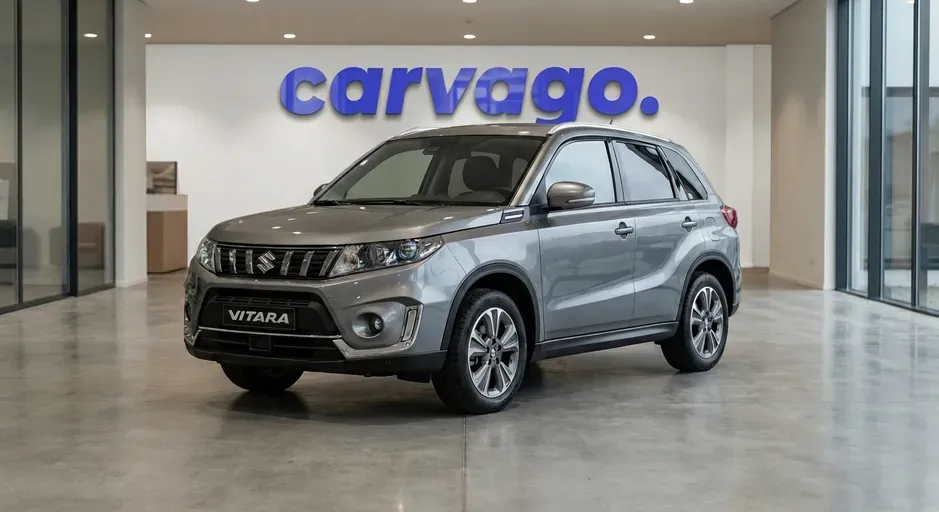
Detailed comparison: Seat Arona vs. Suzuki Vitara. Discover the differences in engines, equipment, and reliability. Our verdict will help you choose the ideal used SUV.
May 5, 2026


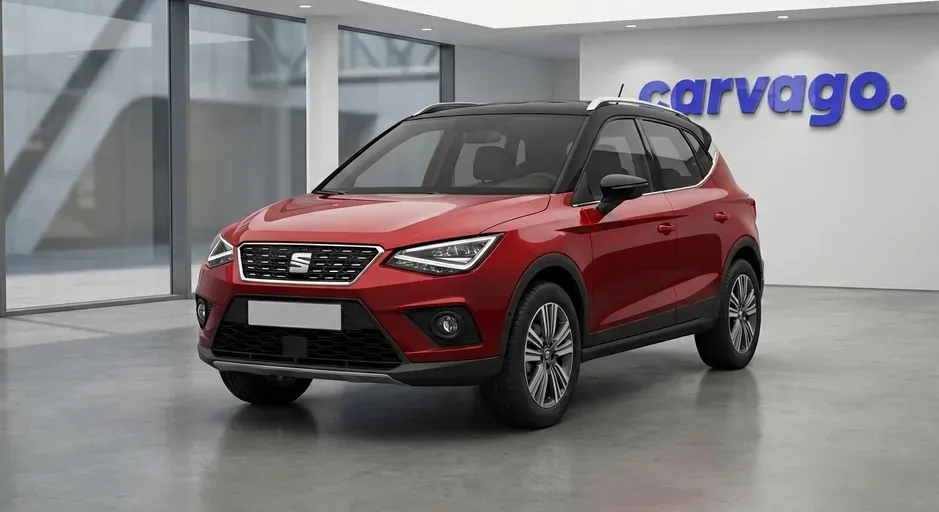
Seat Arona is a stylish city crossover that brings Spanish flair combined with reliable Volkswagen Group technology to the popular small SUV segment. In contrast, the Suzuki Vitara, also known as the Suzuki Escudo in some global markets, represents a slightly more robust alternative with a rich history and the welcome option of all-wheel drive. In today's comparison, we'll take a detailed look at how these two practical and popular cars fare in a head-to-head battle to help make your decision easier when choosing your next vehicle.
Looking at the external dimensions, we find that although both models target customers in the highly competitive city crossover segment (B-SUV), their overall proportions and approach to space utilization differ slightly. If we focus on models roughly four years old, i.e., used cars from 2021 and 2022 (the facelifted Seat Arona KJ generation and the 4th generation Suzuki Vitara), the differences in design and engineering philosophy begin to make clear sense in terms of everyday use.
At first glance, it might seem that the footprint of both cars is almost identical. The Suzuki Vitara is slightly longer with a length of 4170 to 4175 mm than the Seat Arona (4153 mm for models from 2021 onwards). This difference of about two centimeters is negligible and you won't feel it at all when parking in narrow city streets. The Seat Arona, on the other hand, is a cosmetic 5 mm wider (1780 mm versus 1775 mm for the Vitara). However, the difference in the height of the two bodies is much more noticeable. The Suzuki Vitara measures up to 1600 mm in height, while the Arona stays closer to the ground with values between 1537 and 1552 mm. This height difference (almost 5 to 6 centimeters) gives the Japanese model the more robust look of a traditional SUV, which in practice also means a slightly higher, more upright seating position behind the wheel.
A key parameter where the Spanish representative from the VW Group scores significantly, on the other hand, is the wheelbase. Although the Seat Arona is a slightly shorter car, its wheelbase reaches 2566 mm, which is a full 66 mm more than in the case of the Suzuki Vitara (2500 mm). The Arona is thus able to push its wheels closer to the very corners of the body. In the real world, this difference brings two main advantages: better longitudinal stability at highway speeds and, above all, more generous knee room for rear-seat passengers. In the final selection, it mainly depends on whether you prefer a higher seating position and an airier feel overhead (Vitara), or more stable touring behavior and more legroom in the second row (Arona).
| Parameter | Seat Arona SUV | Suzuki Vitara SUV |
|---|---|---|
| Width (mm) | 1780 | 1775 |
| Length (mm) | 4138 - 4153 | 4170 - 4175 |
| Height (mm) | 1537 - 1552 | 1595 - 1600 |
| Wheelbase (mm) | 2566 | 2500 |
When choosing a compact city SUV, the size of the luggage compartment often plays a key role. Whether you're planning weekend family trips or just need enough space for a stroller and a big grocery shop, even small differences in liters can mean room for several extra suitcases in practice. Both cars, which are among the most popular choices on the used car market at around four years old, approach this practical discipline slightly differently.
If we compare the classic versions with internal combustion engines from recent years, the winner in terms of liters is the Spanish representative. Seat Arona provides a solid basic trunk volume of 400 liters in most of its gasoline (TSI) and diesel (TDI) engine versions. In contrast, the fourth generation of the Suzuki Vitara, which is most commonly seen on the used car market with the 1.4 Boosterjet mild-hybrid engine, offers slightly less space at the base – 375 liters. While this difference doesn't look huge on paper, the Arona's better proportions make it slightly easier to pack luggage even for a longer vacation.
The differences deepen even further when you need to transport bulkier cargo and decide to fold down the rear backrests. In this configuration, the Seat Arona can hold up to 1,280 liters of cargo, while the Japanese Suzuki Vitara stops at 1,120 liters.
However, for both models, used car buyers should be cautious when choosing specific alternative powertrains. If you come across a Seat Arona in the compressed natural gas (1.0 TGI) version, expect the tanks to take up part of the floor, shrinking the trunk to just 282 liters. You'll pay a very similar price for ecology with the Suzuki Vitara in the full hybrid version (1.5 Dualjet Hybrid), where only 289 liters remain for your bags.
| Parameter | Seat Arona SUV | Suzuki Vitara SUV |
|---|---|---|
| Basic volume (liters) | 400 | 375 |
| Maximum volume with seats folded (liters) | 1280 | 1120 |
Although both compact SUVs offer a trunk fully sufficient for normal daily use and weekend shopping, the Seat Arona provides slightly more generous space than the Suzuki Vitara, both at the base and with the seats folded.
When choosing a compact city SUV, towing capacity isn't always the first parameter on the list, but for many buyers, it is essential. Whether you plan to place a rack with heavy e-bikes on the tow bar, haul a full trailer of garden waste over the weekend, or head out on holiday with a small caravan, the trailer weight largely determines the car's real-world practicality. Looking at roughly four-year-old used cars, there are vast differences in this discipline between the Seat Arona and Suzuki Vitara models.
As a representative of classic city crossovers, the Seat Arona does not impress much with its towing capabilities. The base 1.0 TSI three-cylinder (70 kW) can handle a braked trailer weighing only 1,000 kg, while its more powerful versions (81 kW and 85 kW) can tow 1,100 kg. The absolute maximum for the Spanish model is the top-of-the-line 1.5 TSI engine with 110 kW, which allows for a braked trailer weighing 1,200 kg. Furthermore, for all versions with conventional engines, the unbraked trailer weight typically oscillates around the 590 to 610 kg mark. These parameters provide great scope for a few extra suitcases or a weekend trip to the DIY store, but you won't be towing a heavy caravan with them. Additionally, for models powered by compressed natural gas (1.0 TGI), approved towing values are completely missing, which is why fitting a full tow bar is practically forbidden for them.
In contrast, the fourth-generation Suzuki Vitara benefits from its more off-road genes and offers significantly more robust capacities. If you opt for the best-selling mild-hybrid variant, the 1.4 Boosterjet Hybrid (95 kW), you get a very respectable towing capacity of 1,500 kg for a braked trailer. This difference of up to 500 kg compared to the Arona means in practice that the Vitara can easily handle towing a full-sized caravan for a longer family holiday or hauling heavier construction materials. However, a specific situation arises with the full-hybrid 1.5 Dualjet Hybrid (75 kW) engine, where the maximum towing capacity drops to 1,200 kg due to the characteristics of the powertrain with a smaller internal combustion engine. The unbraked trailer weight for newer Vitara models reaches a typical 600 kg.
So, if you frequently use a tow bar, the conclusion of this comparison is quite clear. The Suzuki Vitara is a much more practical choice for towing loads, and thanks to the maximum capacity of 1,500 kg in the 1.4 Boosterjet Hybrid version, it won't let you down even with more demanding tasks. The Seat Arona, on the other hand, is a typical car for lighter transport – it can handle a standard small trailer or a rear bike rack with ease, but it is simply underpowered for towing heavy weights.
| Model and engine | Braked trailer (kg) | Unbraked trailer (kg) |
|---|---|---|
| Seat Arona 1.0 TSI (70 kW) | 1000 | 590 - 600 |
| Seat Arona 1.0 TSI (81 - 85 kW) | 1100 | 600 - 610 |
| Seat Arona 1.5 TSI (110 kW) | 1200 | 610 |
| Suzuki Vitara 1.5 Dualjet Hybrid (75 kW) | 1200 | 600 |
| Suzuki Vitara 1.4 Boosterjet Hybrid (95 kW) | 1500 | 600 |
When comparing the engine options of the Seat Arona and Suzuki Vitara, we encounter two distinct approaches, which is a key factor for those interested in a used car roughly four years old. Seat relies on Volkswagen Group classics in the form of small-displacement turbocharged TSI engines and fast DSG dual-clutch transmissions, while all-wheel drive is nowhere to be found. In contrast, Suzuki takes the path of electrification and versatility, offering the sophisticated ALLGRIP all-wheel drive even in such a compact SUV, and since 2020, primarily mild-hybrid or full-hybrid technologies. While the base Arona relies on the 1.0 TSI three-cylinder, the Vitara scores exclusively with four-cylinders in the form of the turbocharged 1.4 Boosterjet Hybrid or the naturally aspirated 1.5 Dualjet Hybrid. The pinnacle of the Spanish model is the dynamic 1.5 TSI four-cylinder (110 kW); the Japanese competitor, on the other hand, benefits from excellent traction on both axles, which you will appreciate in poor weather conditions or off-road. The decision therefore depends on whether you prefer brisker highway dynamics in a front-wheel drive (Arona) or mechanical reliability with off-road capabilities (Vitara).
Under the hood of the Seat Arona, petrol units play the primary role. The car initially offered a 1.6 TDI diesel unit, but this was phased out around 2020, so you are unlikely to encounter it in roughly four-year-old used cars. The core of the portfolio is the extremely popular 1.0 TSI three-cylinder (in 70 or 81 kW versions). This engine can be combined with a five-speed or six-speed manual transmission, or a seven-speed DSG automatic. Drivers looking for a more powerful and sportier ride should seek out the top-tier 1.5 TSI four-cylinder, which, with 110 kW, gives the small SUV very decent flexibility and comes standard with an automatic transmission. An ecological, though relatively rare alternative on the used market for the 2019 to 2023 model years, remains the 1.0 TGI version adapted for compressed natural gas (CNG).
| Engine Type | Fuel | Power (kW) | Torque (Nm) | Transmission |
|---|---|---|---|---|
| 1.0 TSI | Petrol | 70 / 81 | 175 / 200 | 5MT / 6MT / 7DSG |
| 1.5 TSI | Petrol | 110 | 250 | 7DSG |
| 1.0 TGI | CNG / Petrol | 66 | 160 | 6MT |
| 1.6 TDI | Diesel | 70 / 85 | 250 | 5MT / 6MT / 7DSG |
The range of powertrains for the fourth-generation Suzuki Vitara (post-facelift, models from 2020 onwards) is, by contrast, much simpler and focused on modern hybrid systems. Classic pure petrol engines (1.0 and 1.4 Boosterjet without electrification) mostly ended with the year 2020 and were replaced by more efficient alternatives. The main pillar of the current used market is the 1.4 Boosterjet Hybrid, which combines a turbocharged four-cylinder with a 48V mild-hybrid system. It provides 95 kW of power, 235 Nm of torque, and excels in solid reliability and linear pull. It is available with a six-speed manual or automatic and can also be had with the highly sought-after all-wheel drive. For calmer city drivers with an emphasis on absolute fuel consumption, Suzuki expanded the range in 2022 with the 1.5 Dualjet Hybrid full-hybrid version. This features a system output of 85 kW, relies on an AGS automated manual transmission, and also allows for the choice of all-wheel drive.
| Engine Type | Fuel | Power (kW) | Torque (Nm) | Transmission |
|---|---|---|---|---|
| 1.4 Boosterjet Hybrid | Petrol (Mild-hybrid) | 95 | 235 | 6MT / 6AT |
| 1.5 Dualjet Hybrid | Petrol (Full-hybrid) | 85 | 138 (+60 el.) | 6AGS |
| 1.4 Boosterjet | Petrol | 103 | 220 | 6MT / 6AT |
| 1.0 Boosterjet | Petrol | 82 | 170 | 5MT / 6AT |
While the Seat Arona wins you over with sharper highway dynamics and the smooth shifting of DSG automatics in TSI engines, the Suzuki Vitara scores with its excellent all-wheel drive and reliable mild-hybrid four-cylinders, which dominate both on country roads and in light terrain.
Choosing the right engine is crucial for long-term satisfaction with a car. Our recommendations are based on real-world experience, long-term fuel consumption in normal traffic, owner feedback, and proven mechanical reliability. While the Seat Arona on the used car market relies exclusively on VW Group turbocharged three- and four-cylinder engines (often combined with the lightning-fast DSG dual-clutch transmission), the Suzuki Vitara is famous for its durable four-cylinder engines with honest and functional hybrid technology. An interesting fact is that, unlike the Arona, the Vitara offers the option of advanced AllGrip all-wheel drive, which is an absolute rarity in the small city SUV segment. Both manufacturers have phased out diesel engines in recent years, so when looking for an ideal used car around four years old, you will be focusing exclusively on petrol units.
This turbocharged one-liter three-cylinder (from the EA211 evo engine family) represents an absolutely ideal choice for this light crossover, offering the best balance of price, performance, and running costs. Compared to the weaker variant (70 kW / 95 hp), it offers not only better dynamics for safe overtaking but, more importantly, it was standardly paired with a six-speed manual transmission (or a seven-speed DSG), which significantly reduces RPMs and noise during highway travel. The engine is characterized by flexibility from low revs and a real-world combined fuel consumption that can easily be kept between 5.5 to 6 liters per 100 km.
From a mechanical standpoint, this three-cylinder is highly reliable, though it hides two pitfalls. The first is the risk of engine oil dilution with petrol during constant short cold trips. The second is the gasoline particulate filter (OPF) with which these cars are equipped, which can report errors due to insufficient regeneration during exclusively city driving. Why watch out for this? Degraded oil damages the engine's sliding parts, and a clogged filter can cause the car to go into limp mode. Prevention is easy, however: we recommend shortening the oil change interval to a maximum of 15,000 km and taking the car for a smooth highway run at least twice a month. For those interested in economical travel, it is good to know that the highly sought-after 1.6 TDI diesel engine was completely withdrawn from the Arona range in 2020, so you will no longer encounter it in the four-year-old used car category. This one-liter petrol engine is, however, a worthy and reliable successor, suitable for everyday suburban users and occasional highway travelers alike.
If you are looking for a used Vitara from 2020 or newer, the clear favorite is the mild-hybrid four-cylinder 1.4 Boosterjet (internal designation K14D). Suzuki literally hit the bullseye with this engine – it offers very smooth operation, great dynamics, and exemplary Japanese reliability. Thanks to the integration of a 48V starter-generator (mild-hybrid system), the engine has unexpectedly strong pull from the lowest revs, while real-world consumption commonly falls below the 6.5-liter mark, even in versions with the excellent AllGrip all-wheel drive. From both a user and driver perspective, this is a much more sensible choice than the newer full hybrid (1.5 Dualjet Hybrid), which is unnecessarily expensive on the used market and whose AGS automated manual transmission shifts rather hesitantly.
This engine is mechanically almost bulletproof, uses a durable timing chain, and does not suffer from oil consumption. However, as is common with direct-injection units, the main weakness is the risk of gradual carbon buildup on the intake valves. Especially in cars that have only been driven in the city at low revs, carbon deposits can lead to a loss of power and irregular running. How to identify and avoid the problem? During a test drive, focus on whether the engine idles steadily and pulls smoothly without jerking. This is an easily solvable ailment – simply fill the car with high-quality premium petrol (or add cleaning additives) and don't be afraid to occasionally rev the engine higher once it's warmed up. Furthermore, the market situation somewhat forces this choice, as the older, exceptionally reliable naturally aspirated versions (1.6 VVT), diesel units (1.6 DDiS), and the original non-hybrid 1.4 Boosterjet version ended their market run between 2018 and 2020. The 1.4 Boosterjet Hybrid version is great for active drivers, cottage owners, or people living in hilly areas who require a practical car with a four-cylinder engine and 4x4 drive that they can rely on.
Official fuel consumption figures provided by manufacturers often differ from the reality drivers face in everyday traffic. While laboratory tests often promise exceptionally low numbers, the true appetite of cars is best revealed by data from owners themselves. The following comparison is based on the real-world experiences of thousands of drivers who regularly record and share their figures on community platforms such as Spritmonitor.de. We have focused primarily on engines from 2020 to 2022, which are currently the most represented on the market for roughly four-year-old used cars. For full context of the used car market, we also include values for older diesel versions.
| Model and engine | Average consumption (l/100 km) |
|---|---|
| Seat Arona 1.0 TSI | 5.6 |
| Seat Arona 1.5 TSI | 5.7 |
| Seat Arona 1.6 TDI | 5.0 |
| Suzuki Vitara 1.4 Boosterjet Hybrid | 5.6 |
| Suzuki Vitara 1.5 Dualjet Hybrid | 5.5 |
| Suzuki Vitara 1.6 DDiS | 4.4 |
A look at real-world data brings interesting findings. For both models in the segment of roughly four-year-old used cars, petrol engines dominate. The consumption of the most popular units – the one-litre three-cylinder TSI in the Seat and the 1.4 Boosterjet four-cylinder with mild-hybrid technology in the Suzuki – is remarkably balanced around the 5.6 l/100 km mark.
It may come as a surprise to many that the more powerful 1.5 TSI four-cylinder under the Arona's hood does not demand dramatically more fuel than the smaller one-litre engine. Thanks to modern cylinder deactivation technology (ACT), the difference in practice is often only in the range of one-tenth of a litre. The Suzuki Vitara, on the other hand, benefits greatly from the widespread deployment of mild-hybrid and later full-hybrid (1.5 Dualjet) technology. This can effectively compensate for both the taller, boxier body design and the potential presence of the popular AllGrip all-wheel drive. Diesel engines traditionally show the lowest absolute figures (4.4 to 5.0 litres); however, you will no longer find them in roughly four-year-old cars, as both manufacturers moved away from them at the end of the last decade.
For the typical buyer, this means in practice that the choice of powertrain should be based primarily on the driving profile, not just on the spec sheet consumption.
Overall, it can be stated that real-world fuel consumption is unlikely to be the main deciding factor between these two vehicles. Both manufacturers have managed to tune their compact crossovers for high efficiency. While Seat relies on the technical refinement and efficiency of classic turbocharged internal combustion engines, Suzuki very successfully deploys hybrid technologies to achieve virtually identical results. The choice of the ideal used car will thus depend much more on preferences regarding appearance, driver ergonomics, or the specific requirement for 4x4 drive, which the Seat Arona does not offer at all.
When looking for roughly four-year-old cars (model years 2021–2022), you will encounter interesting differences in the used car market. Both cars are in high demand, but their pricing is influenced by completely different factors. For the Suzuki, it is primarily the appeal of all-wheel drive, while for the Seat, it is the attractive sportier trim levels and the wide availability of smaller engines.
The Japanese SUV holds its price surprisingly well on the used car market. This is due to its reputation as a robust and reliable vehicle, but also the availability of all-wheel drive (AllGrip), which is certainly not a given in the small crossover category.
The Arona is a purebred city crossover. It does not offer all-wheel drive at all, which is positively reflected in a slightly lower starting price for used cars. The vehicle targets those interested in style, excellent connectivity, and agile driving on paved roads.
| Model | Estimated price (basic trim, higher mileage) | Estimated price (top trim, lower mileage) | Key elements increasing market price |
|---|---|---|---|
| Suzuki Vitara | €14,000 | €18,000 | 4x4 drive (AllGrip), mild-hybrid, Elegance trim |
| Seat Arona | €11,000 | €18,000 | FR trim, more powerful 1.5 TSI engine, DSG transmission |
If you are looking for the most affordable city car with a modern look, the Seat Arona offers a cheaper entry point, while the Suzuki Vitara maintains significantly higher starting prices on the used car market thanks to its all-wheel drive and overall mechanical durability.
Both of these models, the Seat Arona and the Suzuki Vitara, boast a full five-star rating in independent Euro NCAP safety tests. However, when comparing them, it is absolutely crucial to take into account the year these tests were conducted. The Euro NCAP methodology is constantly evolving and regularly becoming more stringent. Tests from recent years include, for example, more demanding simulations of a frontal impact into a moving obstacle, stricter assessment of side-impact protection, and advanced detection of cyclists or pedestrians. For this reason, percentage results from different years cannot be directly compared – a lower percentage score in a modern test may actually represent much higher safety than a higher percentage in a test several years older.
Seat Arona
The Seat Arona underwent the latest round of Euro NCAP testing in 2022 (as part of the model's update) and managed to defend its full five stars even under these new, much stricter criteria. Modern testing protocols verified the modified structure of the vehicle and new assistance systems. In the adult occupant protection category, the Arona scored 83%, while child protection was also rated at 83%. Vulnerable road user protection reached 65%, and safety assistance systems scored 70%. These values reliably reflect the car's ability to stand up even in the most demanding current conditions.
Suzuki Vitara
The fourth-generation Suzuki Vitara was tested by Euro NCAP in 2015, at the time of its market launch, when it earned the maximum five stars according to the methodology of that time. It achieved excellent results then: 89% for adult protection, 85% for child protection, 76% for pedestrian protection, and 75% in the safety assist category. However, it is important to realize that these tests were conducted according to older, less demanding standards. The validity of this five-star certificate for the Vitara model officially expired in January 2022, which is standard procedure for the organization regarding older ratings. Although the Vitara has a very solid foundation, its original score no longer fully corresponds to today's strict benchmarks and requirements for active safety.
Final Evaluation
In terms of overall safety, the Seat Arona represents a significantly more modern choice on today's roads. Although the Suzuki Vitara proved to be an extremely safe car in its time and shows higher percentage gains on paper, the Arona was tested using current and substantially stricter methodology. Its safety equipment and body construction thus correspond significantly better to today's standards of occupant protection.
| Parameter | Seat Arona | Suzuki Vitara |
|---|---|---|
| Year of testing | 2022 | 2015 |
| Adult occupant protection | 83 % | 89 % |
| Child protection | 83 % | 85 % |
| Vulnerable road user protection | 65 % | 76 % |
| Safety assistance systems | 70 % | 75 % |
Although both cars received five stars in their time, the Seat Arona, thanks to successful tests from 2022, proves that it meets much stricter and more modern safety standards than the older rating of the Suzuki Vitara.
In addition to standard equipment, each model offers several unique features and a specific approach to added value, which can be decisive for the customer during the final selection. While the Spanish model targets lovers of modern technology and a sportier style, its Japanese competitor relies on honest engineering and capabilities off paved roads.
The Arona benefits from the modern Volkswagen Group platform and, following its facelift in 2021, brought a significant technological leap to the interior. It focuses primarily on online functions and agile city driving.
The Vitara is an absolute classic of the segment and is a highly sought-after commodity on the used car market. Its approach is more conservative, yet it offers practical solutions and hardware equipment that you will no longer find in most of today's urban crossovers.
Excellent driving characteristics with confident tracking and precise steering
Efficient yet dynamic TSI engines (especially the popular 1.0 TSI)
Very good interior space and decent trunk volume (400 liters) considering the compact dimensions
Modern and smooth infotainment with good connectivity, especially after the facelift
Wide service network and easy availability of spare parts thanks to shared VW Group technology
Complete absence of all-wheel drive (available only as front-wheel drive)
Stiffer suspension tuning, which reduces ride comfort on broken roads
Cheaper-looking hard plastics in the interior of older models before the facelift
The Seat Arona is an ideal choice for drivers who spend most of their time in the city or on paved country roads and appreciate a more agile, sportier driving feel. Thanks to modern technology and an ergonomic interior, it represents a highly maneuverable and stylish crossover for smaller families or couples looking for a reliable everyday car.
Availability of advanced all-wheel drive (AllGrip), which is a great rarity in the small crossover segment
Renowned Japanese reliability and overall durable, robust construction
Very efficient mild-hybrid and full-hybrid powertrains that save fuel
Higher ground clearance, which facilitates driving through light terrain and dirt roads
Rich standard equipment including assistance systems even in basic versions
Significantly outdated multimedia system with slower response and older graphics
Poorer cabin soundproofing, which results in increased noise at highway speeds
Smaller luggage compartment (375 liters), which shrinks to a below-average 289 liters in the full-hybrid version
Less compliant and slightly bouncy chassis when driving unladen
The Suzuki Vitara will primarily appeal to practically-minded motorists and residents of mountainous areas who will fully utilize its reliable 4x4 drive. It is an honest and durable vehicle that, while slightly lagging in the area of the latest on-board technologies, more than makes up for it with its robustness, low fuel consumption, and confidence even off paved roads.
Based on failure statistics, long-term user feedback, and real data from our comprehensive car audit, we have compiled an overview of the most common problems that used car buyers should watch out for.
The Spanish crossover Seat Arona is built on reliable Group technology, however, it shares several typical ailments with other models of the Volkswagen family.
Seat Arona benefits from proven and affordable technology, but when buying a used car, pay close attention to the DSG gearbox maintenance history and the smoothness of the infotainment system.
The Japanese Suzuki Vitara is famous for its extraordinary mechanical durability and overall robustness, yet as a used car it has its specific weak points.
Mechanically, the Vitara is one of the most reliable cars in its class, but the price for worry-free engine operation is thinner paint prone to damage and surface corrosion of the chassis.
When buying a used car, a thorough inspection is key. Here are some specific points to focus on for these two models. Since we are talking about used cars that are several years old, a careful comprehensive car inspection is always worth it, as it can reveal hidden defects before you even pay for the car.
Seat Arona offers a basic luggage capacity of 400 liters, which is an above-average value in the small SUV class. Suzuki Vitara has a slightly smaller trunk due to the installation of mild-hybrid technology, specifically 375 liters. In the version with a strong hybrid (Strong Hybrid), the usable volume of the Vitara further drops to 289 liters.
If you require all-wheel drive, the only choice between these two is the Suzuki Vitara with its proven AllGrip system. Despite its off-road appearance, the Seat Arona is available exclusively with front-wheel drive. The Japanese model is thus much more capable in demanding winter conditions or light terrain.
Both cars are characterized by low operating costs, but for frequent city driving, Suzuki has a slight advantage thanks to its standard mild-hybrid system. This helps reduce consumption during frequent stops and ensures very smooth starts. In contrast, the Seat Arona relies on turbocharged TSI engines, which are very efficient, especially on country roads and highways.
The Seat Arona, especially after the 2021 facelift, offers a significantly more modern driver's workspace with higher-quality soft-touch materials and more advanced infotainment. The Vitara's interior feels somewhat more utilitarian and older due to the use of harder plastics. However, the Vitara compensates for this with a higher seating position and excellent all-round visibility, which will be appreciated not only by older drivers.
Suzuki has a long-standing excellent reputation for overall durability, and its four-cylinder BoosterJet engines with a timing chain are considered exceptionally reliable. The TSI engines in the Seat also have a very good lifespan if they receive regular servicing, but the system is technically slightly more complex. Therefore, from the perspective of long-term service costs, the Japanese car comes out as a somewhat safer choice.
The choice between the Seat Arona and Suzuki Vitara models on the market for roughly four-year-old used cars depends primarily on your lifestyle and real everyday needs. While the Spanish Arona is an ideal partner for the city and highways, where it scores with modern technologies, a more voluminous luggage compartment, and agile front-wheel-drive handling, the Japanese Vitara represents a significantly more robust and purposeful workhorse. Thanks to the available AllGrip all-wheel drive, a highly reliable mild-hybrid engine, and significantly better towing capabilities, the Suzuki will especially appeal to cottage owners, residents of mountainous areas, and practically-minded drivers. On the other hand, we recommend the Seat Arona with a clear conscience to everyone looking for a stylish, technologically advanced crossover proven by current safety tests for comfortable travel primarily on paved roads.
Sources: ADAC, idnes.cz, lidovky.cz, dopravniinfo.cz, hybrid.cz, fastcars.cz
This article was prepared using artificial intelligence tools. The section guarantor is Petr Dušek.

Detailed comparison of Jaguar E-Pace vs Mercedes-Benz GLB. Discover the differences in equipment, driving characteristics, and read our verdict for choosing the best SUV.
Apr 29, 2026

Hyundai Tucson vs Peugeot 3008: A detailed comparison of design, engines, and features. Find out which SUV is the better choice for you in our big test.
Apr 13, 2026

Ford Puma vs Hyundai Kona: A detailed comparison of popular city SUVs. Compare driving characteristics, fuel consumption, and space, and read our final verdict.
Apr 30, 2026