Car battle
Opel Astra vs. Škoda Octavia: Complete comparison 2026
Detailed comparison of Opel Astra vs. Škoda Octavia. We evaluated real-world driving characteristics, equipment, and space. Read our verdict and make the right choice!
Apr 25, 2026
Articles
Car battle
Detailed comparison of Renault Mégane vs Volkswagen (VW) Golf. Evaluation of equipment, engines, and reliability. Find out which used hatchback is the better choice.
May 14, 2026
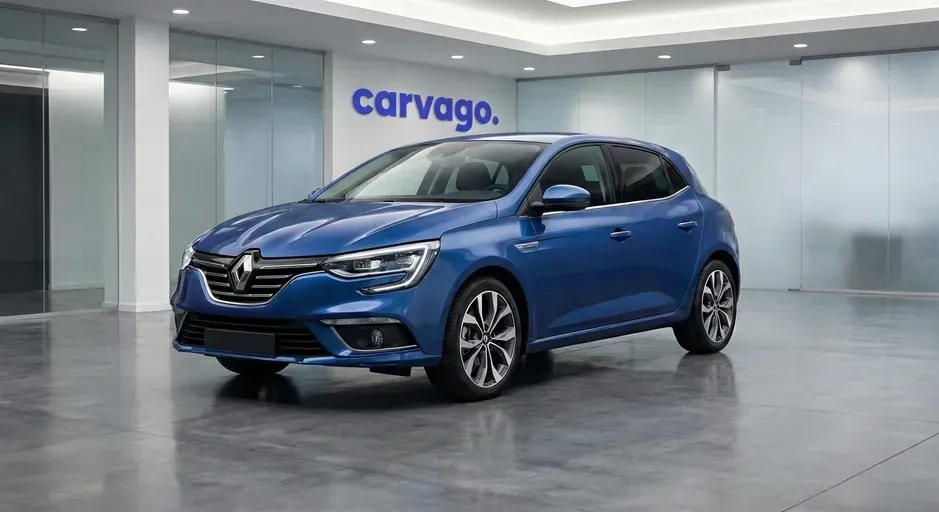
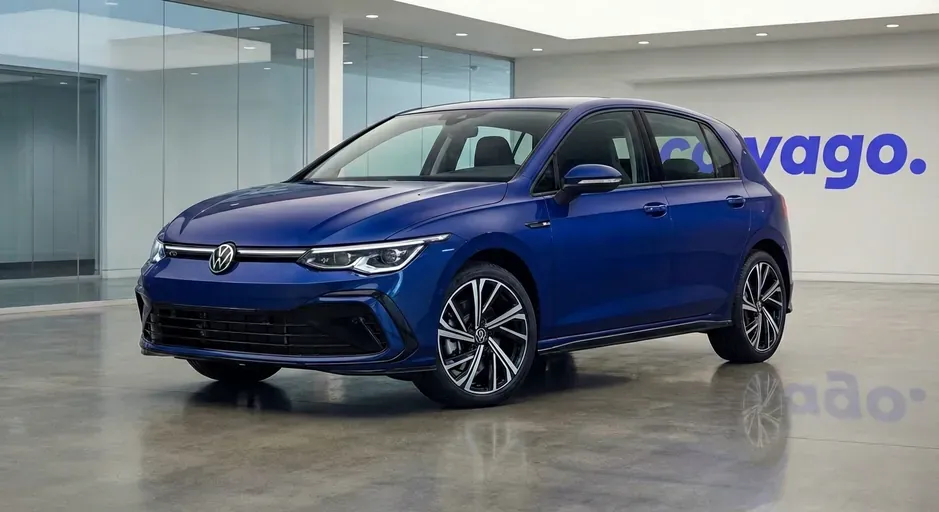
Renault Mégane, which you can also find on the market under the designation Renault Mégane Grandtour for the practical estate or Renault Mégane Grandcoupé in the case of the elegant sedan, brings unmistakable French charm and a strong emphasis on everyday comfort to the compact segment. Its traditional challenger is the Volkswagen Golf, which is known in the estate body style as the Volkswagen Golf Variant and was also famous in the past on the North American market under the name Rabbit, while for several generations it has been considered the unwritten European benchmark for quality, ergonomics, and technological maturity. The following comparison will reveal in detail which of these two exceptionally popular compact cars represents a more sensible and attractive choice on the current used car market.
When you place the fourth-generation Renault Mégane and the eighth-generation Volkswagen Golf side by side, you quickly notice the different approaches to design and proportions within the compact class. While the French representative bets on a more dynamic and low-slung stance, the German benchmark sticks to traditional shapes that strive to maximize the use of interior space. In the nearly-new used car market, where we focus on models roughly four years old, this comparison is very relevant, as differences in millimeters in these popular cars translate directly into everyday usability.
In the case of popular five-door hatchbacks, the Renault Mégane has the upper hand in terms of overall size. With a length of 4359 mm, it is a significant 75 mm longer than the standard Volkswagen Golf (4284 mm). Furthermore, the Mégane is wider and offers a full 50 mm longer wheelbase (2669 mm compared to 2619 mm for the Golf), giving it an advantage not only in stability at highway speeds but theoretically also in longitudinal legroom for rear passengers. Conversely, the Golf scores with a body height roughly 50 mm greater, which makes getting in easier and offers the occupants a slightly airier feel overhead. Additionally, the more compact footprint makes the Golf a more agile car for weaving through narrow city streets and simplifies parking.
For family estates – Renault Mégane Grandtour and Volkswagen Golf Variant – the tables turn slightly and the overall differences blur. Both models in their current generations confidently exceed 4.6 meters in length, with the Golf Variant being slightly longer than its French rival, starting at 4631 mm. The German estate is again noticeably taller, which families with children will appreciate when loading child seats daily or transporting bulkier items. Even in the estate version, Renault maintains a greater width and, with some engines, offers a wheelbase extended up to 2712 mm. The choice between these two models thus often depends on whether you prefer the visually more muscular and sporty proportions of the Frenchman or rather the boxier and practically packaged space of the German car.
| Parameter | Renault Mégane Hatchback | Volkswagen Golf Hatchback | Renault Mégane Grandtour | Volkswagen Golf Variant |
|---|---|---|---|---|
| Length (mm) | 4359 - 4364 | 4282 - 4296 | 4626 | 4631 - 4651 |
| Width (mm) | 1814 - 1875 | 1789 | 1814 | 1789 - 1795 |
| Height (mm) | 1428 - 1438 | 1454 - 1491 | 1449 | 1462 - 1510 |
| Wheelbase (mm) | 2669 - 2670 | 2619 - 2630 | 2669 - 2712 | 2669 - 2679 |
Trunk capacity plays a key role for many used car buyers, whether they are looking for a compact car for daily commuting or a practical car for the family. A comparison of the fourth-generation Renault Mégane and the eighth-generation Volkswagen Golf – cars that currently appear on the used car market with an average age of about four years – shows quite different approaches to the use of interior space. While both models fulfill the role of universal lower-middle-class vehicles perfectly, their transport capacities differ significantly in practice depending on the chosen body style and powertrain type.
In the category of classic five-door hatchbacks, the Renault Mégane offers a larger basic volume on paper for its newer gasoline engines. With its 473 liters (or 394 liters for diesel versions), it significantly outperforms the Volkswagen Golf, which has a rather average 381 liters. This difference in practice means space for a few extra suitcases, which you will appreciate, for example, when packing for a weekend trip or storing a baby stroller. However, after completely folding down the rear seats, the situation for hatchbacks partially levels out: the Golf, with a maximum volume of 1237 liters, is not far behind the 1367 liters of its French competitor. Both manufacturers also offer plug-in hybrid powertrains, where, however, it is necessary to account for significantly reduced capacity due to the placement of the batteries. For Renault (E-Tech), the volume drops to 308 liters, and for Volkswagen (eHybrid/GTE), it even falls to 273 liters.
If you are looking for a car that is a full-fledged hauler and whose trunk is uncompromisingly sufficient for a longer vacation for four, the estate versions will be the clear choice. Here, the tide clearly turns in favor of Volkswagen. The Golf Variant (eighth generation) scores with a top-tier 611 liters in the basic configuration, which represents one of the best values on the market in its class. The Renault Mégane Grandtour with its 563 liters (for gasoline models) is certainly not small, but it lacks a few precious tens of liters compared to its German rival. When using the space up to the roof and folding down the backrests, the Golf swallows an impressive 1624 liters of cargo, while the Mégane Grandtour ends at 1543 liters. Furthermore, the Golf traditionally has a very cleverly designed and regular trunk shape, which maximizes the usability of every available centimeter.
| Parameter | Renault Mégane Hatchback | Volkswagen Golf Hatchback | Renault Mégane Grandtour | Volkswagen Golf Variant |
|---|---|---|---|---|
| Basic volume (liters) | 473 | 381 | 563 | 611 |
| Max. volume with seats folded (liters) | 1367 | 1237 | 1543 | 1624 |
While as a compact hatchback the Renault Mégane will pleasantly surprise you with a larger trunk, for maximum hauling capacity and long family trips, the Volkswagen Golf in the estate version represents a more practical and spacious choice.
When it comes to towing a trailer, the capabilities of the Renault Mégane and Volkswagen Golf models differ quite significantly, which is a crucial factor for family caravan owners or avid cottage owners. Focusing on the market for approximately four-year-old used cars, we most often encounter the fourth-generation Mégane (IV) and the eighth-generation Golf (VIII). Standard combustion versions of the Renault Mégane, equipped with TCe petrol engines or Blue dCi diesels, most often offer a braked trailer weight in the range of 1650 to 1700 kg. If you are looking for even more power, stronger diesels (such as the dCi 130 engine) can handle a towing capacity of up to an impressive 1850 kg. In contrast, common versions of the Volkswagen Golf VIII (e.g., 1.0 eTSI or 1.5 eTSI) tow slightly less, typically 1100 to 1500 kg. Traditionally popular 2.0 TDI diesel engines in the Golf then handle weights in the range of 1500 to 1600 kg.
Significant differences, however, occur when looking at electrified and alternative powertrains. If you choose the plug-in hybrid version of the Mégane E-Tech, you must expect a rapid drop in capacity to 750 kg. The latest, purely electric fifth-generation Mégane offers even less, managing only 500 to 900 kg. The Volkswagen Golf fares significantly better in the hybrid sphere – its eHybrid variant can handle trailers weighing up to 1700 kg. The absolute maximum in the comparison of both cars is, however, the rugged Volkswagen Golf Alltrack version, which, thanks to all-wheel drive and powerful engines, easily tows up to 2000 kg.
In practice, these values mean that while a standard combustion Golf will easily serve for towing lighter loads and trailers sufficient for weekend shopping or transporting garden materials, a standard Mégane can very reliably provide space for several extra suitcases and handle towing a medium-sized family caravan. The top-of-the-line Golf Alltrack will then easily satisfy even demanding drivers towing heavy boats or horse trailers. Overall, the conclusion is clear: although the classic Mégane IV offers higher towing potential in its basic combustion versions than the standard Golf, the Volkswagen representative compensates for this deficit with a significantly wider range of specific versions. Models like the Alltrack or the plug-in hybrid eHybrid ultimately make the Golf a much more flexible workhorse for specific and demanding tasks.
| Model and engine | Braked trailer weight (kg) | Unbraked trailer weight (kg) |
|---|---|---|
| Renault Mégane 1.3 TCe 140 (Gen IV) | 1650 | - |
| Renault Mégane Grandtour 1.5 Blue dCi 115 (Gen IV) | 1700 | - |
| Renault Mégane ENERGY dCi 130 (Gen IV) | 1850 | - |
| Renault Mégane Grandtour E-Tech Plug-in 160 (Gen IV) | 750 | - |
| Renault Mégane E-Tech Electric EV60 (Gen V) | 900 | - |
| Volkswagen Golf 1.0 eTSI (Gen VIII) | 1300 | - |
| Volkswagen Golf 1.5 eTSI (Gen VIII) | 1500 | - |
| Volkswagen Golf 2.0 TDI SCR (Gen VIII) | 1500 - 1600 | - |
| Volkswagen Golf 1.5 eHybrid (Gen VIII) | 1700 | - |
| Volkswagen Golf Alltrack 2.0 TDI SCR (Gen VIII) | 2000 | - |
While the eighth-generation Volkswagen Golf bets on a stunning variety of powertrains and gradual evolution, the Renault Mégane offers a unique mix of two different worlds on the used car market from around 2022. The Golf covers almost every imaginable type of drive – from economical three-cylinder petrol engines to advanced mild-hybrids and plug-in hybrids, to legendary diesel engines with a revolutionary exhaust gas cleaning system. In contrast, the Mégane was undergoing a radical transformation during this period. The standard fourth generation relied on reliable petrol four-cylinders (developed in cooperation with Mercedes-Benz) and an economical diesel, while the fifth generation (E-Tech Electric) took the path of pure electromobility on a completely new platform. For a used car buyer, this means a clear choice: the Golf offers a finely tuned internal combustion engine solution tailored exactly to your needs, while the Mégane scores with an excellent price-performance ratio for internal combustion versions or attracts with an avant-garde fully electric experience.
Around 2022, the Renault Mégane offered a fascinating transition period. The outgoing fourth generation retained its proven range of internal combustion engines, where the excellent 1.3 TCe four-cylinder (in 115, 140, and 160 hp versions) played the main role, standing out for its quiet operation and favorable fuel consumption. Long-distance lovers will appreciate the low-maintenance and reliable 1.5 Blue dCi diesel, while for city driving, Renault prepared the more complex but efficient E-Tech 160 plug-in hybrid with a unique clutchless multi-mode gearbox. Alongside these cars, however, the revolutionary fifth generation – the Mégane E-Tech Electric – is also starting to appear on the used car market. This model hides only electric motors under the hood (96 or 160 kW output) and brings a completely new concept of a compact front-wheel-drive car with batteries stored in the floor.
| Engine | Fuel type | Power (kW) | Torque (Nm) | Transmission |
|---|---|---|---|---|
| 1.3 TCe 115 / 140 | Petrol | 85 / 103 | 220 / 240 | 6-speed manual / 7-speed EDC |
| 1.3 TCe 160 | Petrol | 117 | 270 | 7-speed EDC |
| 1.5 Blue dCi 115 | Diesel | 85 | 260 | 6-speed manual / 7-speed EDC |
| 1.6 E-Tech Plug-in 160 | Plug-in Hybrid | 118 | 340 (comb.) | Multi-mode auto |
| EV40 130hp (Gen V) | Electricity | 96 | 250 | 1-speed reduction |
| EV60 220hp (Gen V) | Electricity | 160 | 300 | 1-speed reduction |
The eighth-generation Volkswagen Golf is synonymous with an unrivaled breadth of choice that satisfies literally everyone. The foundation consists of agile 1.0-liter three-cylinders and the extremely popular 1.5 TSI four-cylinders. A major innovation of the eighth generation is the addition of a 48V system to all petrol engines paired with a DSG automatic transmission – these versions bear the eTSI designation and function as mild-hybrids, reducing consumption by coasting with the engine off. The 2.0 TDI diesel units underwent a major generational overhaul and use the "Twin Dosing" system (double AdBlue injection), making them some of the cleanest diesels in the world. For corporate clients or fans of highway travel, this is an unmatched ideal. The range is then confidently rounded off by plug-in hybrids (eHybrid and the sporty GTE) and the iconic fast GTI and R variants with all-wheel drive.
| Engine | Fuel type | Power (kW) | Torque (Nm) | Transmission |
|---|---|---|---|---|
| 1.0 TSI / eTSI* | Petrol / Mild-Hybrid | 81 | 200 | 6-speed manual / 7-speed DSG |
| 1.5 TSI / eTSI* | Petrol / Mild-Hybrid | 96 / 110 | 200 / 250 | 6-speed manual / 7-speed DSG |
| 2.0 TDI | Diesel | 85 / 110 | 300 / 360 | 6-speed manual / 7-speed DSG |
| 1.4 eHybrid / GTE | Plug-in Hybrid | 150 / 180 | 350 / 400 | 6-speed DSG |
| 2.0 TDI GTD | Diesel | 147 | 400 | 7-speed DSG |
| 2.0 TSI GTI / R | Petrol | 180 / 235 | 370 / 420 | 7-speed DSG |
If you are looking for the absolute technological peak in internal combustion engines or a purebred highway diesel, the eighth-generation Golf has no competition. However, the Renault Mégane counters with affordable and very reliable old-school petrol four-cylinders, or a bold leap into pure electromobility.
Choosing the right engine is crucial for long-term satisfaction with the car. Our recommendations are based on real-world experience, overall performance, actual fuel consumption, and mechanical reliability gathered from long-term owners and independent mechanics.
Both models offer very sophisticated turbocharged petrol four-cylinders in their modern generations, representing an ideal compromise between dynamics and operating costs. Interestingly, while Renault bet on the 1.3 TCe engine for its fourth-generation Mégane, which was developed in cooperation with the Daimler group (Mercedes-Benz) and relies on raw mechanical durability, Volkswagen successfully developed its intelligent cylinder deactivation technology for the eighth Golf and added advanced mild-hybrid technology in the eTSI version. Both manufacturers thus successfully aimed to achieve the lowest possible consumption without the need to choose a diesel engine, which is key for the used car market.
| Brand and model | Recommended engine | Power | Available years |
|---|---|---|---|
| Renault Mégane (IV) | 1.3 TCe 140 GPF | 103 kW (140 hp) | 2018 – 2024 |
| Volkswagen Golf (VIII) | 1.5 TSI / eTSI | 110 kW (150 hp) | 2020 – present |
Note: As can be seen from the table, production of the exceptionally successful 1.3 TCe 140 GPF engine for the fourth-generation Renault Mégane was recently discontinued (availability ended in 2024). Although you can no longer get it brand new, it is widely represented on the used car market and is an excellent and very reliable choice for buyers looking for a roughly four-year-old car.
This petrol four-cylinder is undoubtedly the best you can wish for under the hood of the fourth-generation Mégane. In terms of reliability, it represents a huge leap forward compared to older TCe series engines; the timing is handled by a maintenance-free and durable chain, and overall mechanical longevity is rated very highly.
In the eighth generation of the Golf (from model year 2020), this advanced engine represents the absolute peak in the ratio of refinement, performance, and overall operating costs.
When choosing a roughly four-year-old used car, it is important to keep in mind that official fuel consumption figures provided by manufacturers almost always differ from everyday reality on the road. Although stricter laboratory measurements under newer cycles have brought slightly more accurate estimates, they still cannot fully simulate the impact of heavy city traffic, the load of a family holiday, or a driver's individual driving style.
For the most objective comparison of fuel costs, we used real-world data from the well-known independent community portal Spritmonitor.de, where hundreds of thousands of European motorists regularly enter their actual refueling records. We focused on the fourth-generation Renault Mégane and the eighth-generation Volkswagen Golf, which are currently among the most sought-after models on the four-year-old used car market (production years around 2020 to 2022).
| Model and Engine | Average Consumption (l/100 km) | Source |
|---|---|---|
| Renault Mégane 1.5 Blue dCi 115 | 4.8 | Spritmonitor.de |
| Volkswagen Golf 2.0 TDI SCR | 5.2 | Spritmonitor.de |
| Volkswagen Golf 1.0 TSI / eTSI | 5.8 | Spritmonitor.de |
| Volkswagen Golf 1.5 TSI / eTSI | 6.1 | Spritmonitor.de |
| Renault Mégane 1.3 TCe 140 GPF | 6.4 | Spritmonitor.de |
From a trend perspective, a detailed look at real-world data sends a clear message as to why diesel engines remain so consistently popular in the compact class. The diesel versions of both cars confidently fulfill the role of exceptionally efficient highway cruisers, capable of maintaining consumption around the five-liter mark without much difficulty. The slight difference in favor of the Renault is primarily due to the smaller engine displacement and a different engine design, but even the larger 2.0 TDI in the Golf excels in operational efficiency. A truly fundamental and somewhat surprising finding concerns the entry-level petrol engines. It turns out that the small turbocharged three-cylinder 1.0 TSI in the Volkswagen Golf does not offer as significant fuel savings as the official figures might suggest. With a real-world average consumption of 5.8 l/100 km, it comes quite close to the more powerful and significantly more refined four-cylinder 1.5 TSI (6.1 l/100 km). The excellent 1.3 TCe four-cylinder under the hood of the Mégane then requires, on average, about another three-tenths of a liter more fuel.
For typical users, these data lead to fairly straightforward purchasing recommendations. If you are buying a car primarily for long highway trips and regularly drive tens of thousands of kilometers a year, the 1.5 Blue dCi and 2.0 TDI diesel units are guaranteed to keep your operating costs to an absolute minimum. If the car is more of a tool for daily city or suburban commuting, a petrol engine makes much more sense; furthermore, with a four-year-old used car, you don't risk expensive repairs to complex emission systems caused by driving a diesel engine that hasn't reached operating temperature. Particularly with the Volkswagen, choosing the more powerful 1.5 TSI four-cylinder represents a very rational decision given the minimal difference in fuel consumption.
Although the Renault Mégane wins by a few tenths of a liter in diesel efficiency and the Golf offers a more efficient and wider range of petrol engines, fuel consumption should not ultimately be the main and only argument. Both compared cars represent the advanced pinnacle of their class in terms of engines, and in neither case will regular visits to the gas station ruin you. Personal preferences, the overall condition of the specific used car, and the desired equipment level will likely play a larger role in the decision-making process.
When looking at the market for roughly four-year-old used cars (approximately 2021 and 2022 models), the eighth-generation Volkswagen Golf and the facelifted fourth-generation Renault Mégane go head-to-head. The price difference between the two models on the used car market is very noticeable and reflects a different approach to depreciation, giving buyers a choice between a lower purchase price and strong value retention.
The French representative is traditionally much more affordable on the used market and depreciates faster, making it an excellent second-hand buy.
The eighth-generation Volkswagen Golf holds its market value significantly better. While this means a higher initial investment, it also provides peace of mind thanks to a smaller financial loss when it comes time to resell.
| Model | Basic used cars (higher mileage, fleet) | The golden middle ground (good equipment, average mileage) | Top-spec versions (R-Line, Techno, low mileage) |
|---|---|---|---|
| Renault Mégane IV | from €12,000 | €14,000 – €16,000 | €16,000 – €18,000 |
| Volkswagen Golf VIII | from €16,000 | €17,000 – €20,000 | €21,000 – €25,000 |
Buying a used Renault Mégane will appeal to rational buyers looking for the most "bang for their buck" who plan to keep the car for a longer period. In contrast, the Volkswagen Golf requires a significantly higher budget, but rewards the owner with better residual value, a wider range of engines, and a reputation as a market benchmark that is always very easy to sell on the secondary market.
The Renault Mégane clearly dominates the used market with its favorable price-to-equipment ratio, while the more expensive Volkswagen Golf scores with very slow depreciation and overall market desirability.
When evaluating safety, it is important to mention that both the Renault Mégane and the Volkswagen Golf received the maximum five-star rating in independent Euro NCAP crash tests. However, it is absolutely crucial to view these results in the context of the time. Methodology and testing protocols are constantly evolving and becoming stricter every year, which in practice means that percentage scores from different years cannot be objectively and directly compared. Newer tests place much greater emphasis on active safety, such as advanced frontal impact simulations, more sophisticated detection of cyclists when turning, or system behavior at complex intersections.
The eighth generation of the Volkswagen Golf underwent the latest round of tests in 2022. Although the car had already received five stars upon its launch in 2019, the manufacturer had it retested according to the significantly stricter protocols introduced since 2020. The results thus fully reflect current requirements. Contributing to the excellent values is, among other things, the standard-fit center airbag, which prevents the heads of front passengers from colliding during a side impact. A particularly high rating (82%) in the assistance systems category shows that the car features state-of-the-art sensors for autonomous emergency braking and active protection of all road users.
The fourth generation of the Renault Mégane (in the internal combustion engine version that dominates the four-year-old used car market) underwent crash tests in 2015. In its time, it was among the safest cars in its class, as clearly evidenced by very solid figures for adult (88%) and child (87%) protection. From today's perspective, however, it is necessary to take into account that the protocols at that time were considerably more lenient toward assistance systems and pedestrian protection. Furthermore, the Euro NCAP certification for this generation of the model officially expired in January 2022 due to the age of the test. (Note: The electric successor, Mégane E-Tech, was also rated five stars in 2022; however, in the segment of traditional used cars with conventional engines, it is a different category of vehicle.)
In conclusion, while both cars offer reliable passive safety and a solid body structure, the Volkswagen Golf is the winner in terms of modern standards. Thanks to the recent test update from 2022, it provides a much more comprehensive package of active technologies that more effectively prevent accidents and meet the strictest current requirements.
| Parameter | Renault Mégane | Volkswagen Golf |
|---|---|---|
| Year of testing | 2015 | 2022 |
| Adult occupant protection | 88 % | 88 % |
| Child occupant protection | 87 % | 87 % |
| Vulnerable road user protection | 71 % | 74 % |
| Safety assistance systems | 71 % | 82 % |
Although both models perform excellently in the actual impact, the Volkswagen Golf, thanks to its 2022 test, provides much more advanced protection in the area of modern assistance systems.
In addition to standard equipment, each model offers several unique features and technological solutions that exceed basic expectations and can be decisive for the customer. Each automaker approaches this added value from a completely different angle.
Very comfortable chassis tuning that filters out bumps excellently
Attractive and emotive design that ages visually more slowly
Significantly more favorable purchase price on the used car market
Retention of practical physical controls for air conditioning and basic functions
Economical and time-tested 1.5 Blue dCi diesel engine
Noticeably less legroom and headroom in the rear seats
Faster depreciation compared to German competitors
Average luggage compartment volume for the hatchback variant
Occasional slower responses from the Easy Link onboard system
Renault Mégane is a great choice for drivers looking for a stylish and, above all, comfortable car with an excellent price-to-value ratio. Thanks to its smoother ride and very affordable price on the used car market, it will especially appeal to calmer drivers or smaller families who don't mind a slight compromise in rear-seat spaciousness.
First-class cabin spaciousness and a great driving position
Extremely high residual value and easy resale
Wide range of very economical and refined engines, including mild-hybrids (eTSI)
Mature and confident driving performance with excellent sound insulation
Top-tier level of assistance systems and availability of high-end IQ.Light headlights
Often criticized exclusively touch-based infotainment controls and the lack of backlighting for the volume slider
Significantly higher purchase price for used cars of comparable age and equipment
Infotainment software can be unstable in early model years of the eighth generation
For some, an overly conservative exterior design
Volkswagen Golf will appeal to more demanding buyers who require maximum versatility, refined seating ergonomics, and advanced technology. Although owners must get used to the touch controls in the interior, the car rewards them with excellent driving characteristics, low fuel consumption, and the assurance that the car will hold its value well.
Based on data from long-term user experience, service reports, and statistics from our own CarAudit service, we have compiled a detailed overview of the most common faults you should watch out for when buying a used car of these models.
The fourth-generation Renault Mégane has seen a significant improvement in reliability compared to its predecessors, yet it still has specific shortcomings that require attention when choosing a used car.
Mechanically, the fourth-generation Mégane is a very reliable car, especially with the improved 1.3 TCe engine or the economical 1.5 dCi diesel. Potential buyers are more likely to be troubled by infotainment system glitches and occasional chassis squeaks.
The eighth generation of the Volkswagen Golf brought massive digitalization of the interior to the segment, which unfortunately has been strongly reflected in the most common service problems of this model. To uncover hidden defects in specific units, we recommend using our comprehensive car inspection before purchase.
While the mechanical foundation, engines, and body rigidity share the traditional robustness of the VW Group, the eighth generation pays the price for the teething troubles of its software and touch controls. Choosing a used car with documented full system updates and ideally a replaced steering wheel is absolutely crucial for this model.
When buying a used car, a thorough inspection is key. Although both models are very popular among drivers and generally reliable, each has its specific weak points to watch out for. An independent technical inspection of the car can save you a lot of worry and unexpected expenses before the actual purchase.
The eighth-generation VW Golf in hatchback form offers a boot capacity of 381 liters, while the Renault Mégane provides a very similar 384 liters. A more significant difference occurs with the more practical estate versions, where Volkswagen has the upper hand with a volume of 611 liters compared to 521 liters in the Renault Mégane Grandtour. The differences in the short versions are therefore negligible, but for families with high space requirements, the Volkswagen Golf Variant is the more practical choice.
Both cars show solid mechanical reliability, but the Volkswagen Golf was initially plagued by annoying infotainment software bugs, which the manufacturer gradually addressed with updates. On the other hand, the Renault Mégane after the 2020 facelift is at the end of its life cycle, so it is a thoroughly refined and mechanically proven car without teething problems. Before buying a used Golf, always primarily ensure that it has the latest software installed by an authorized service center.
The Volkswagen Golf has moved to almost fully digital controls with minimal physical buttons and touch surfaces, which may require a longer adjustment period, especially when adjusting the air conditioning while driving. While the Renault Mégane features a large vertical touchscreen, it cleverly retained traditional circular physical controls for temperature adjustment. In terms of the overall quality of materials used and the precision of the cabin's fit and finish, the German representative makes a slightly more premium and modern impression.
The Renault Mégane is traditionally tuned for comfort, offering a more supple chassis and excellent filtration of common city bumps, which will please drivers looking for a smooth cruise. The Volkswagen Golf provides a more universal compromise between high comfort and confidence in fast corners, especially if equipped with the optional DCC adaptive dampers. For relaxed travel, the Renault is a great choice, while the Golf will appeal to drivers who occasionally enjoy a more dynamic drive with precise handling.
The Volkswagen Golf benefits from a very wide range of powertrains, including efficient mild-hybrid petrol engines (eTSI), motorway staples in the form of TDI diesel engines, and advanced plug-in hybrids. The Renault Mégane scores with its efficient E-Tech plug-in hybrid and proven TCe petrol engines, but its range of diesel units has significantly narrowed over time. In everyday real-world driving, the petrol versions of the Golf are often slightly more economical than the equivalent engines of its French competitor, thanks to the use of mild-hybrid technology.
Both models represent the top of the compact class in the nearly-new used car market, yet each appeals to a different group of drivers. Renault Mégane is an ideal choice for rational buyers who appreciate a very comfortable chassis, the preservation of traditional physical controls, and above all, an excellent price-to-equipment ratio. In contrast, the Volkswagen Golf, despite a higher initial investment and the well-known quirks of its touchscreen infotainment, scores points with the fantastic spaciousness of the Variant version, highly efficient engines, and significantly better residual value stability. So, if you are looking for a more affordable and exceptionally comfortable car with mechanical reliability, go for the French representative, while for technological versatility, refined driving characteristics, and uncompromising family travel, the German benchmark remains king.
Sources: ADAC, denik.cz, garaz.cz, hybrid.cz, automagazin.cz, autickar.cz
This article was prepared using artificial intelligence tools. The section guarantor is Petr Dušek.
Detailed comparison of Opel Astra vs. Škoda Octavia. We evaluated real-world driving characteristics, equipment, and space. Read our verdict and make the right choice!
Apr 25, 2026
Detailed comparison of used Renault Mégane vs Seat Leon. Find out which hatchback offers better driving characteristics, reliability, and equipment. Read our verdict!
May 10, 2026
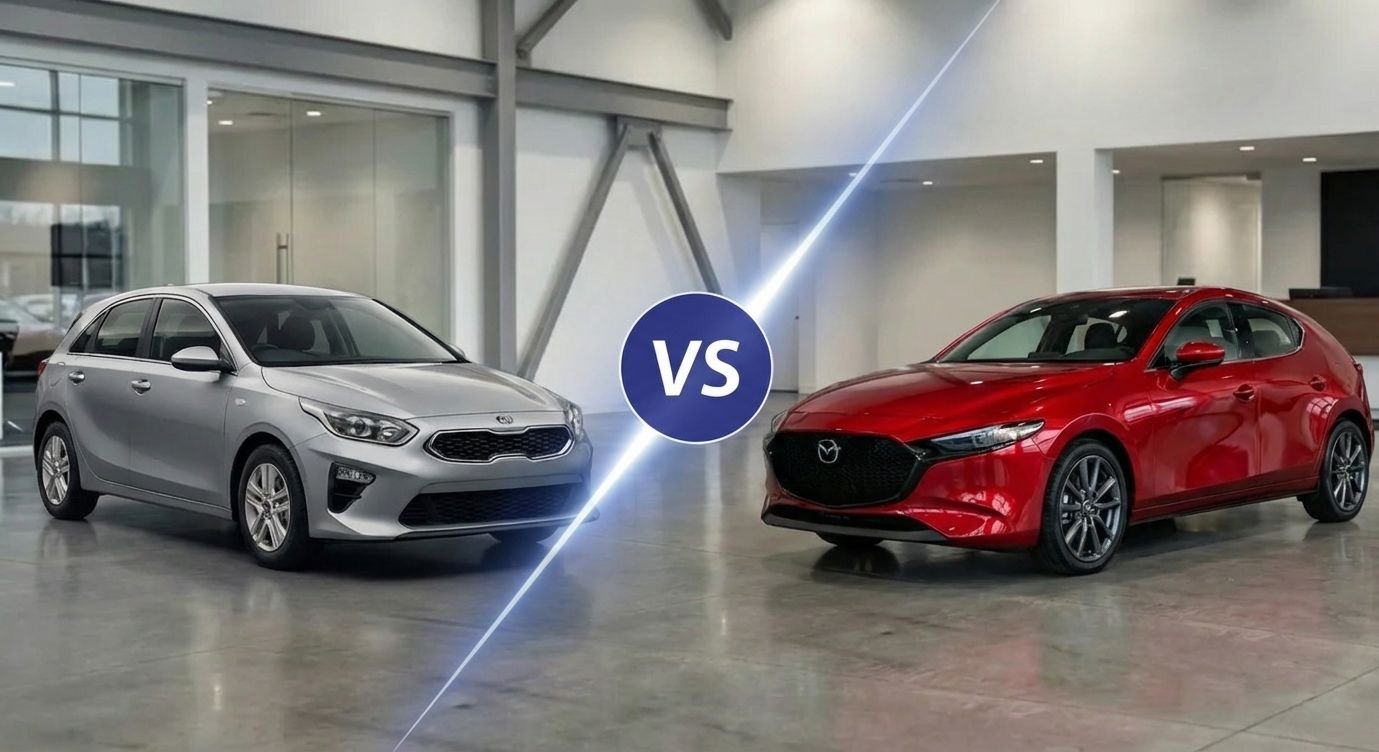
Detailed comparison: Kia Ceed vs. Mazda 3. We compared the engines, equipment, and driving characteristics. Read our verdict and find out which hatchback to choose.
Apr 8, 2026