Car battle
Alfa Romeo Stelvio vs. BMW X3: Complete comparison 2026
Alfa Romeo Stelvio vs. BMW X3: Which premium SUV to choose? Detailed comparison of used cars, real-world experience, equipment comparison, and the final verdict.
May 13, 2026
Articles
Car battle
Used car comparison: Renault Espace vs Seat Tarraco. Find out which family car offers better space, reliability, and equipment. Read our detailed verdict!
May 14, 2026
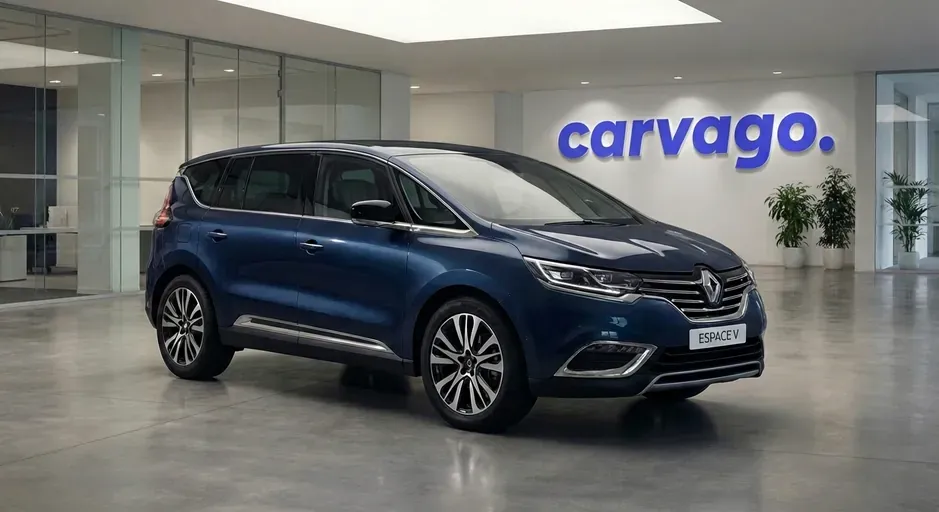
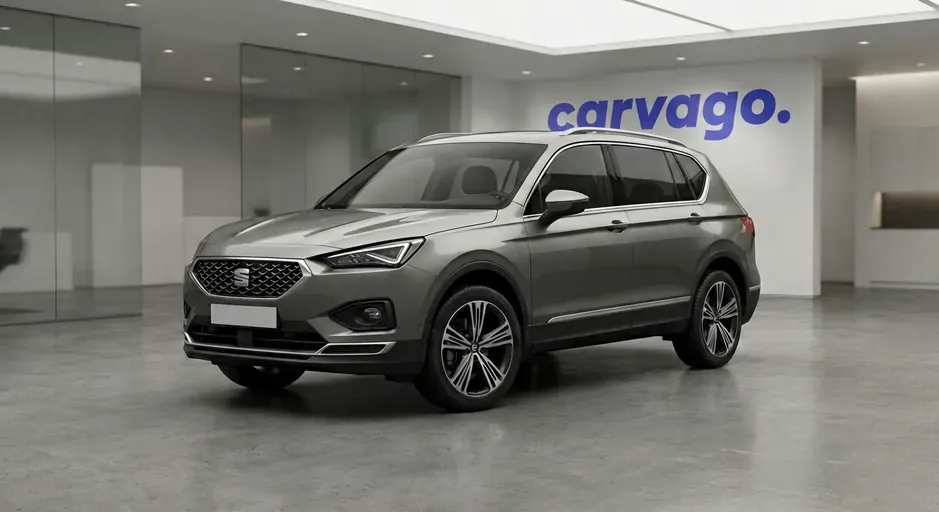
Renault Espace, a long-time pioneer of the MPV category, which in its newer generations has elegantly transformed into a spacious crossover, represents the traditional French perspective on maximum driving comfort and innovative design. In contrast, the Spanish Seat Tarraco enters the family segment as a modern and robust seven-seater SUV, which relies on proven group technology and promises a slightly more dynamic driving experience. Let's now take a detailed look at which of these two different approaches to a large family car makes more sense on the young used car market and represents a better choice for your needs.
When looking at the exterior dimensions of both family cruisers, a different approach is evident at first glance. If we focus on typical cars for the four-year-old used car market, where the 5th generation Renault Espace and Seat Tarraco models face off, the French representative clearly shows its roots in the multi-purpose vehicle (MPV) category, while the Spanish competitor honors the established proportions of a large SUV. Renault Espace is, with a maximum length of 4,858 mm, a significant 123 mm longer than the Seat Tarraco. This difference gives the car a more majestic appearance and forms the basis for exceptionally generous spatial proportions in the cabin.
This length benefit is fully reflected in the wheelbase, which is a key parameter for comfort on board. The Espace offers an impressive 2,884 mm, surpassing the Tarraco's 2,790 mm by 94 mm. In practice, this means that the Renault can offer significantly more generous legroom for passengers in the second and potentially the third row of seats. As a result, the Espace represents a more suitable and comfortable choice for families with older children who often undertake long highway journeys.
On the other hand, the more modest and slightly more compact dimensions of the Seat Tarraco bring an indisputable advantage during daily maneuvering in crowded cities. Parking the narrower Seat (width 1,839 mm) in narrow underground garages or tight parking lots at shopping centers will be significantly easier and less stressful than with the Renault, whose body expands to a width of up to 1,914 mm.
In terms of overall height, both cars are very similar – the Espace measures a maximum of 1,681 mm, while the Tarraco is only slightly lower at 1,658 mm. The overall decision on the ideal car in the context of dimensions thus breaks down primarily to your way of use: you will appreciate the Seat Tarraco as a more agile and easier-to-park car for frequent city traffic, while the Renault Espace, as a spatial giant, will appeal to those who prioritize maximum internal volume and travel comfort over easier parking.
| Parameter | Renault Espace Van | Seat Tarraco SUV |
|---|---|---|
| Width (mm) | 1888 - 1914 | 1839 |
| Length (mm) | 4857 - 4858 | 4735 |
| Height (mm) | 1675 - 1681 | 1658 |
| Wheelbase (mm) | 2884 | 2790 |
The luggage compartment is often a decisive factor for family-oriented buyers, and it is here that the different concepts of the two manufacturers are fully revealed. If we focus on the used car market for vehicles around four years old (approximately the 2020 to 2022 model years), we are comparing the Seat Tarraco as a classic representative of the popular large SUV category with the fifth generation of the Renault Espace. The latter cleverly combines the features of a modern crossover with the DNA of a traditional MPV. This difference in body construction fundamentally affects not only the absolute volume itself but, above all, the overall practicality, modularity, and usability of the car in everyday life.
In the standard upright rear seat configuration, Seat has a slight edge. The Seat Tarraco boasts an excellent base volume of 760 liters, significantly surpassing the Renault Espace with its 680 to 693 liters (depending on the specific model year and equipment). The space in the Spanish SUV is perfectly shaped, has good height under the load cover, and is easily sufficient for weekend shopping or a longer family vacation without the need for any compromises. However, those interested in the plug-in hybrid powertrain should take note; the Seat Tarraco e-HYBRID version takes its toll due to battery placement, and its standard trunk capacity is reduced to a still very usable but smaller 610 liters.
However, the tables turn completely when you need to transport bulkier cargo and decide to fold down the second row of seats. Here, the Renault Espace fully benefits from its platform and much higher interior cabin structure. It offers a massive maximum volume of 1,994 to 2,101 liters, which in practice means valuable space for several extra suitcases, storing bulky sports equipment, or the possibility of trouble-free transport of smaller furniture. The Seat Tarraco is limited in this discipline by its more conventional and tapered rear end, which provides a maximum of 1,775 liters. So, if you are looking for maximum transport capacity and regularly fold the seats, the Espace will impress you; conversely, for constantly carrying luggage with the second row fully occupied, the Tarraco will serve you better.
| Parameter | Renault Espace MPV | Seat Tarraco SUV |
|---|---|---|
| Base volume (liters) | 680 - 693 | 760 (610 for e-HYBRID) |
| Maximum volume with seats folded (liters) | 1994 - 2101 | 1775 |
While the Seat Tarraco pleases with a larger trunk in a classic five-seat configuration, when the seats are folded and there's a need to move larger items, the MPV genes of the Renault Espace fully emerge, clearly winning in terms of maximum usability.
When it comes to towing a trailer, both the Renault Espace and Seat Tarraco are exceptionally capable companions, although each approaches this discipline slightly differently. For used car buyers looking for a vehicle approximately four years old, the maximum braked trailer weight is often a key decision-making parameter. This value determines whether the car can handle only the occasional transport of materials to a cottage or whether it will become a full-fledged workhorse for large family holidays with a caravan.
The fifth-generation Renault Espace is very straightforward and consistent in this regard. Most of its conventional diesel and petrol engines (for example, the BLUE dCi, ENERGY dCi, or TCe 225 versions) can tow a braked trailer weighing exactly 2000 kg. This is a value that is easily sufficient for a large motorhome or medium-heavy load. Only those interested in the generation-younger E-Tech Full Hybrid powertrain need to be careful, as its towing capacity was reduced to 1500–1600 kg due to its specific design and batteries.
In contrast, the Seat Tarraco offers a much wider range of values, depending on the chosen engine and drivetrain. While the base 1.5 TSI petrol engine and the 1.4 e-HYBRID plug-in hybrid variant can tow a standard 1800 kg, the more powerful two-litre 2.0 TDI and 2.0 TSI units offer towing capacities ranging from 2000 to an impressive 2300 kg. In practice, that extra 300 kg in maximum weight represents a significant advantage, allowing the Tarraco to safely tow even heavy boats or large twin-axle horse trailers. For routine weekend shopping or transporting building materials, both vehicles can tow an unbraked trailer with a legally mandated maximum weight of 750 kg.
In conclusion, while the Renault Espace offers a perfectly adequate and clear standard of two tonnes for most common recreational needs, for the most demanding tasks and heavy-duty towing, one of the more powerful specifications of the Seat Tarraco is objectively the better choice.
| Model and engine | Max. braked trailer weight (kg) | Max. unbraked trailer weight (kg) |
|---|---|---|
| Renault Espace BLUE dCi / ENERGY dCi (118–147 kW) | 2000 | 750 |
| Renault Espace TCe / ENERGY TCe (147–165 kW) | 2000 | 750 |
| Renault Espace E-Tech Full Hybrid 200 (96 kW) | 1500–1600 | 750 |
| SEAT Tarraco 1.4 e-HYBRID (110 kW) | 1800 | 750 |
| SEAT Tarraco 1.5 TSI ACT (110 kW) | 1800 | 750 |
| SEAT Tarraco 2.0 TDI (110–147 kW) | 2000–2300 | 750 |
| SEAT Tarraco 2.0 TSI (140–180 kW) | 2250–2300 | 750 |
When choosing a four to five-year-old family SUV or crossover, the right powertrain plays a key role, both in terms of fuel consumption and operating costs, as well as the overall dynamics of a fully loaded vehicle. The approach of the two manufacturers differs fundamentally in this regard. While the French Renault Espace relies exclusively on front-wheel drive and comfortable EDC dual-clutch automatic transmissions for its flagship fifth generation, the Spanish Seat Tarraco gives drivers much more freedom of choice. With the Tarraco, you can choose between front-wheel and all-wheel drive (4Drive), and for fans of traditional driving, manual transmissions are also available for the base engines. Furthermore, Seat impresses with a wide performance spectrum from an economical base to sporty versions, while the Espace focuses more on exceptionally powerful and characterful engines with high torque. Whether you are an economically minded driver, a lover of dynamic driving, or a long-distance highway cruiser, both manufacturers can cater to different preferences.
The fifth generation of the Renault Espace (especially post-facelift models, available as used cars from 2020 to 2023) offers a clear but very confident range of powertrains. Customers looking for the ideal balance between power and fuel economy can rely on the exceptionally refined 2.0 Blue dCi diesel four-cylinder engines, available in power versions of 160 (118 kW), 190 (140 kW), and 200 (147 kW). These engines are characterized by massive torque reaching up to 400 Nm, which significantly facilitates safe overtaking and full vehicle loads on long journeys. Petrol fans, on the other hand, will be pleased by the dynamic turbocharged 1.8 TCe (165 kW) unit, whose technical roots go back to the purely sporty Alpine A110 model. All these mentioned variants of the fifth generation rely on precise EDC dual-clutch automatics and exclusively front-wheel drive. If you come across the newer sixth generation on the used car market (on sale since 2023), expect an absence of diesel engines; the main role here has been taken over by the advanced E-Tech Full Hybrid 200 petrol hybrid system.
| Engine Type | Fuel | Power (kW) | Torque (Nm) | Transmission |
|---|---|---|---|---|
| 1.8 TCe 225 | Petrol | 165 | 300 | 7EDC |
| 2.0 Blue dCi 160 | Diesel | 118 | 360 | 6EDC |
| 2.0 Blue dCi 190 | Diesel | 140 | 400 | 6EDC |
| 2.0 Blue dCi 200 | Diesel | 147 | 400 | 6EDC |
| E-Tech Full Hybrid 200* | Hybrid | 146 | 410 (combined) | Multi-mode |
* Powertrain available for the 6th generation from 2023
The Seat Tarraco of the KN generation (available between 2019 and 2024) provides much broader options in the field of powertrains, allowing it to appeal to very different types of drivers. The base petrol engine consists of the sophisticated 1.5 TSI ACT (110 kW) four-cylinder, which can intelligently deactivate cylinders to reduce consumption and can be purchased with both a manual and a DSG dual-clutch automatic. For lovers of more spirited driving, the top-of-the-line 2.0 TSI petrol units with 140 kW and 180 kW are available, which are always paired with a seven-speed automatic and 4Drive all-wheel drive. If you are looking for a robust car for huge amounts of highway miles, the proven Group 2.0 TDI diesel in 110 kW and the more powerful 147 kW variants will certainly not disappoint. Especially the top diesel with sure-footed 4Drive can handle towing a fully loaded family car or a caravan with absolute ease. An ecological alternative for the city is the very capable 1.4 e-HYBRID (180 kW) plug-in hybrid, which perfectly combines the possibility of emission-free travel with the security of petrol range for longer trips.
| Engine Type | Fuel | Power (kW) | Torque (Nm) | Transmission |
|---|---|---|---|---|
| 1.5 TSI ACT | Petrol | 110 | 250 | 6MT / 7DSG |
| 2.0 TSI 4Drive | Petrol | 140 / 180 | 320 / 370 | 7DSG |
| 1.4 e-HYBRID | Plug-in Hybrid | 180 | 400 | 6DSG |
| 2.0 TDI | Diesel | 110 | 340 / 360 | 6MT / 7DSG |
| 2.0 TDI 4Drive | Diesel | 147 | 400 | 7DSG |
While the Renault Espace dazzles with powerful and refined diesels for effortless highway travel, the Seat Tarraco wins with its versatile range, satisfying fans of all-wheel drive and modern plug-in hybrid technologies alike.
Choosing the right engine is absolutely crucial for long-term satisfaction with these large family cars. Our recommendations are based on power reserves, actual fuel consumption, mechanical reliability, and real-world feedback from long-term owners. When comparing popular four-year-old used cars on the market (manufactured around 2020–2022), an interesting fact emerges: while the Renault Espace significantly improved its engine lineup after initial downsizing issues in the fifth generation—even increasing diesel engines to proper two-liters—the Seat Tarraco consistently and successfully relies on one of the most mature group diesel platforms on the market, whose modern evolution now includes a sophisticated twin-dosing urea injection system for perfect exhaust gas purity. Both models, with a carefully selected diesel, represent an ideal choice for demanding travel.
For the fifth-generation Renault Espace (in the model years most commonly offered on today's used car market), the innovated 2.0 Blue dCi diesel is clearly the best choice.
Since the Spanish brand's largest representative shares its technical foundation with the Škoda Kodiaq, the proven 2.0 TDI diesel classic from the EA288 Evo generation also reigns under the hood of a used Tarraco.
Official fuel consumption figures provided by manufacturers often differ significantly in real-world driving, which is doubly true for large, heavier, and aerodynamically less efficient family cruisers. To get a truly objective picture of the fuel consumption these approximately four-year-old models require in everyday life, we relied on real data from the independent community portal Spritmonitor.de. There, thousands of regular drivers carefully record their long-term refueling, providing a much more accurate and credible view than laboratory measurements. In our comparison, we focused on the most common engine options that make the most sense from a user perspective on the used car market from 2020 to 2022, and we sorted the data by fuel type and then by real-world appetite.
| Model and engine | Average consumption (l/100 km) |
|---|---|
| Diesel engines | |
| Seat Tarraco 2.0 TDI 110 kW | 6.5 |
| Renault Espace 2.0 Blue dCi 118 kW | 6.8 |
| Renault Espace 2.0 Blue dCi 140 kW | 7.4 |
| Seat Tarraco 2.0 TDI 147 kW | 7.5 |
| Petrol engines | |
| Seat Tarraco 1.5 TSI 110 kW | 7.6 |
| Renault Espace 1.8 TCe 165 kW | 8.8 |
| Seat Tarraco 2.0 TSI 140 kW | 8.8 |
Looking closely at the data, several key trends are immediately apparent. The most obvious fact is that modern diesel engines still clearly reign supreme in the segment of giant family vehicles. The most economical choice of the compared pair is the diesel Seat Tarraco with the base 2.0 TDI engine, which in practice reliably averages 6.5 liters. However, the powerful 2.0 Blue dCi units under the hood of the Renault Espace follow closely, proving that even a large French MPV can cruise across Europe with very reasonable average consumption. A surprise, though perhaps expected by experts, are the results of the smaller petrol versions. This fully demonstrates the usual limit of small turbocharged engines used in heavy cars – the base 1.5 TSI petrol engine in the Tarraco saves no fuel in practice compared to diesel. Under the load of a family SUV, it struggles with higher effort, and its real-world consumption easily exceeds even the more powerful diesels. The top-tier petrol units in both rivals then realistically oscillate just below the nine-liter mark, which is simply the inevitable price for superior dynamics and quiet operation.
What do these values mean for typical used family car buyers? If you are among the highway travelers or families who frequently head out on weekend trips with a fully loaded trunk, the proven two-liter diesel will be an absolutely unbeatable choice. Especially with four-year-old cars from 2020 to 2022, where the initial depreciation has already been paid by the first owner, diesel units will quickly reward you with great range on a single tank and attractive costs per kilometer driven. Petrol variants, particularly the more affordable 1.5 TSI engine in the Seat, will best serve families whose domain is more about city commuting, school runs, or shorter suburban traffic jams, where diesel particulate filters would suffer in the long run.
In conclusion, it is clear from this operational data that if you choose an adequate diesel engine, fuel consumption itself should not be the main and decisive factor between these two candidates. Both manufacturers managed to tune the powertrains from this period very efficiently, and the differences between them are negligible for the family budget. In the final selection, a much larger role will be played by whether you prefer the conventional boxy SUV style of the Seat Tarraco or whether you succumb to the airier and more relaxed French concept of a luxury MPV offered by the Renault Espace.
When choosing a used family car, roughly four-year-old vehicles make the most economic sense. In terms of model cycles, this typically pits the facelifted 5th generation Renault Espace against the Seat Tarraco, which is an exceptionally popular item on the nearly-new used car market.
The fifth generation of the Espace model balances on the edge between a spacious MPV and a luxury crossover. The supply on the used car market is somewhat smaller, but on the other hand, the vast majority of cars were sold with premium equipment (very often in the top-tier Initiale Paris version). However, the Espace faces a steeper depreciation compared to its competitors, which is a huge advantage for buyers on the secondary market.
The largest SUV from the Spanish automaker, a technical sibling to the Škoda Kodiaq, benefits from its reputation as a practical and well-thought-out family car. It offers the option of a seven-seat layout and the highly sought-after all-wheel drive (4Drive), which is missing from its French rival. As a result, it holds its value much more confidently on the used car market.
| Model (approx. 4 years old) | Starting Price | Average Price | Top Condition and Equipment |
|---|---|---|---|
| Renault Espace (5th gen) | from €18,000 | €23,000 | up to €27,000 |
| Seat Tarraco | from €22,000 | €29,000 | over €35,000 |
In terms of absolute purchase costs, a used Renault Espace offers an exceptionally attractive equipment-to-price ratio, especially if you are aiming for maximum comfort. The Seat Tarraco, on the other hand, is a more conservative and expensive investment, but this is compensated for by slower depreciation for your eventual resale, as well as the trouble-free availability of 4x4 versions.
While the Renault Espace impresses with a faster price drop and opulent equipment for reasonable money, the Seat Tarraco, as a traditional and practical SUV, holds its value significantly more confidently.
Both models boast a maximum five-star rating in tests by the independent organization Euro NCAP; however, it is crucial to view their results in the context of the time. The methodology and safety protocols are constantly evolving and becoming stricter. While older models focused primarily on passive safety during the impact itself, newer methodologies place significantly more weight on active safety assistants, the ability to anticipate critical situations, or protect vulnerable road users such as pedestrians and cyclists. Percentage scores from different years cannot be directly and fairly compared.
When choosing a roughly four-year-old Renault Espace, we are talking about its fifth generation on the used car market. Its latest (and only for this generation) tests took place in 2015 at its market launch, where the car safely defended a full 5-star rating. Adult occupant protection received a very good 82% at the time, and the Espace even excelled in child occupant protection with a result of 89%. Vulnerable road user protection reached 70% and safety assistants 80%. Although tested under the then-milder rules, the fifth-generation Espace offers robust protection for the family, supported by basic active assistants. For completeness, it should be added that the completely new, sixth generation of the Espace name (related to the Austral model) underwent the latest tests in 2022 with even better figures (e.g., 88% for adults and 87% for assistance systems), but these results are not relevant for the older used car market.
The Seat Tarraco underwent Euro NCAP crash tests as a hot new release in 2019 and also confidently took home a full 5-star rating. However, the testing was conducted according to significantly stricter protocols than for the fifth-generation Espace. Despite this, the Tarraco absolutely shone in adult protection, where it achieved a staggering 97%, representing one of the absolute best results of that year. The car also performed very solidly in child protection (84%), vulnerable road user protection (79%), and in the safety systems category (79%). From these figures, it is clear that the mechanical resistance of the Tarraco's body is at a top level, and the car also benefits from a more modern generation of sensors and autonomous emergency braking functions. Although the validity of this five-star certificate is slowly expiring according to Euro NCAP time limits, it does not reduce the real-world safety of the car in any way.
Overall, both representatives are very safe family cruisers, but regarding four-year-old cars on the used market, the Seat Tarraco comes out slightly better in the comparison. Thanks to being developed and tested four years later than the fifth-generation Espace, it features a generation-newer structure and more advanced integration of active safety features. Furthermore, its 97% score for adult protection remains hard to beat to this day.
| Parameter | Renault Espace | Seat Tarraco |
|---|---|---|
| Year of testing | 2015 | 2019 |
| Adult occupant protection | 82 % | 97 % |
| Child occupant protection | 89 % | 84 % |
| Vulnerable road user protection | 70 % | 79 % |
| Safety assist systems | 80 % | 79 % |
Whether you opt for the spacious Espace or the sturdier Tarraco with its top results from 2019, in both cases you are getting a proven safety record awarded five stars.
In addition to standard equipment, each of the models offers several unique features that can be decisive for the customer. Both vehicles approach added value quite differently and bring interesting technological and practical solutions to everyday use that will appeal to different types of drivers.
With the fifth-generation Espace, Renault has successfully combined the world of multi-purpose vehicles (MPVs) with the popular crossover style. It focuses primarily on maximum driving comfort, original design, and innovative interior controls.
The Tarraco clearly bears the signature of the Spanish automaker. Despite its generous dimensions and family focus, it strives to offer the driver a more engaging and sportier driving experience, top-tier digitalization, and modern assistance systems.
Excellent travel comfort and a smooth ride, especially with the adaptive suspension
Great maneuverability in the city thanks to the 4Control all-wheel steering system
Premium feel and luxury materials in the interior (especially in the top-tier Initiale Paris trim)
Unique aerodynamic design that elegantly combines MPV and SUV features
Rich standard equipment on most models available on the used car market
Cramped space in the third-row seats, which is suitable mostly for smaller children
More complex controls and occasionally slower response of the onboard multimedia system
Limited headroom in the second row caused by the sloping roofline
Faster depreciation and a historically poorer reputation for the reliability of complex electronics
The fifth-generation Renault Espace is made for those looking for maximum comfort, distinctive French charm, and a luxuriously crafted cabin. It is an ideal companion for long highway journeys, which, thanks to the 4Control system, can surprise with extraordinary agility even in tight city streets.
Excellent driving characteristics and stable handling despite the larger body dimensions
Huge interior space and a large trunk (up to 760 liters in the five-seater version)
Proven and reliable Group technology, including a range of economical TDI and TSI engines
Intuitive driver's cockpit ergonomics with a user-friendly infotainment system
Wide availability of models with reliable all-wheel drive (4Drive)
Stiffer suspension tuning, which reduces overall comfort on rough roads
More conservative and somewhat austere dashboard design compared to bolder competitors
Higher purchase price on the used car market, especially for more powerful engines with good equipment
In the seven-seat configuration, very little luggage space remains
The Seat Tarraco is an exceptionally pragmatic yet driver-engaging choice for families who appreciate top-tier spaciousness and robust Group technology. Thanks to its sportier-tuned suspension, it will also please more active drivers, although this sometimes means a slight compromise in ride smoothness on poorer surfaces.
Based on our own statistics from the CarAudit service, long-term user tests, service reports, and recall notices, we have compiled an overview of the most common problems that buyers of roughly four-year-old used cars should watch out for.
The fifth-generation Renault Espace is an innovative crossover that, in its later production years after the facelift (from 2020), eliminated many of its initial teething troubles, yet still requires careful selection and vigilance, especially regarding the onboard electronics.
While the fifth-generation Espace improved significantly in terms of mechanics and engines in later production years, buyers must still expect occasional whims of the onboard electronics and a more sensitive chassis.
The Seat Tarraco shares the robust and field-proven MQB-A2 group platform, which guarantees it a very solid mechanical foundation, but it has not escaped the typical ailments shared across modern Volkswagen vehicles.
The Tarraco scores with long life and robust technology, but when buying, watch for timely replacement of the timing belt and water pump on diesel versions and be prepared for occasional infotainment glitches.
When buying a used car, a thorough inspection is key. Here are some specific points to focus on for these two models. However, before making a final decision, a professional independent technical inspection of the car should always take place, for which the comprehensive CarAudit service is best suited.
The Seat Tarraco offers a slightly larger and more practically shaped trunk with a volume of up to 760 liters in a five-seat configuration. The Renault Espace, on the other hand, scores with the overall airiness of the cabin and better variability of three separate seats in the second row. However, when all rear backrests are folded down, both cars offer comparable utility space approaching two thousand liters.
No, the third row of seats in both models is designed more as emergency seating or is intended primarily for children on shorter trips. The Spanish representative offers slightly better legroom in the very back, but access to the third row is quite demanding. The French car, on the other hand, provides less headroom in the rear seats due to the elegantly sloping roofline.
The Renault Espace excels with extraordinary smooth ride comfort and, thanks to the optional 4Control rear-wheel steering system, it is great to maneuver in the city despite its length. The competitor from the Volkswagen Group, on the other hand, bets on a stiffer chassis, which brings more confident driving characteristics and less body roll in corners. However, for highway travel and maximum suppression of bumps, the French car is more pleasant.
The Tarraco offers a wide range of petrol and diesel engines, where you can quite often come across the popular 4Drive all-wheel drive. In contrast, the Espace relies exclusively on front-wheel drive, whether in combination with powerful dCi turbodiesels or TCe petrol engines. The real fuel consumption of the two-liter diesel versions for both cars stays at very favorable values around 6 to 7 liters per 100 kilometers.
The Tarraco benefits from mass-proven and robust Group technology, where only minor infotainment software glitches occasionally appear. Although the fifth-generation Espace struggled with electronic quirks in the first years of production, models after the 2020 facelift are already considered reliable on the used car market. For both family cruisers, regular maintenance and timely oil changes in the automatic dual-clutch transmissions are key to trouble-free operation.
Choosing between these two family cars on the four-year-old used car market ultimately depends on your daily priorities, as both models take a completely different approach to family transport. The fifth-generation Renault Espace is an ideal choice for drivers looking for maximum highway comfort, a luxuriously crafted and versatile interior full of light, and who don't mind the absence of all-wheel drive. On the other hand, the Seat Tarraco will appeal more to pragmatic and active families, offering a robust classic SUV build, a more confident sporty chassis, and proven Group technology, including the sought-after 4x4 drive. While the French crossover attracts with an exceptionally attractive price-to-premium-equipment ratio due to faster depreciation, the Spanish representative, as a more versatile and sturdy workhorse, holds its value much more confidently.
Sources: ADAC, idnes.cz, forbes.cz, autohome.cz, autorevue.cz, autoskola-testy.cz
This article was prepared using artificial intelligence tools. The section guarantor is Petr Dušek.
Alfa Romeo Stelvio vs. BMW X3: Which premium SUV to choose? Detailed comparison of used cars, real-world experience, equipment comparison, and the final verdict.
May 13, 2026
Peugeot 5008 vs. Volkswagen Tiguan Allspace comparison. Find out which 7-seater SUV offers better space, equipment, and our final verdict for the right choice.
May 13, 2026
Ford Edge vs. Škoda Kodiaq comparison. A detailed look at the equipment, space, and driving characteristics of used SUVs. Read our verdict and choose the right one.
May 12, 2026