Car battle
Porsche Cayenne vs. Volvo XC90: Complete comparison 2026
Detailed comparison of Porsche Cayenne vs Volvo XC90. Find out which of these premium SUVs offers better performance, comfort, and operating costs as a used car.
Apr 22, 2026
Articles
Car battle
Comparison of premium SUVs: Porsche Cayenne vs. Volkswagen Touareg. A detailed look at performance, reliability, features, and real-world experience. Choose the right one for you!
April 27, 2026
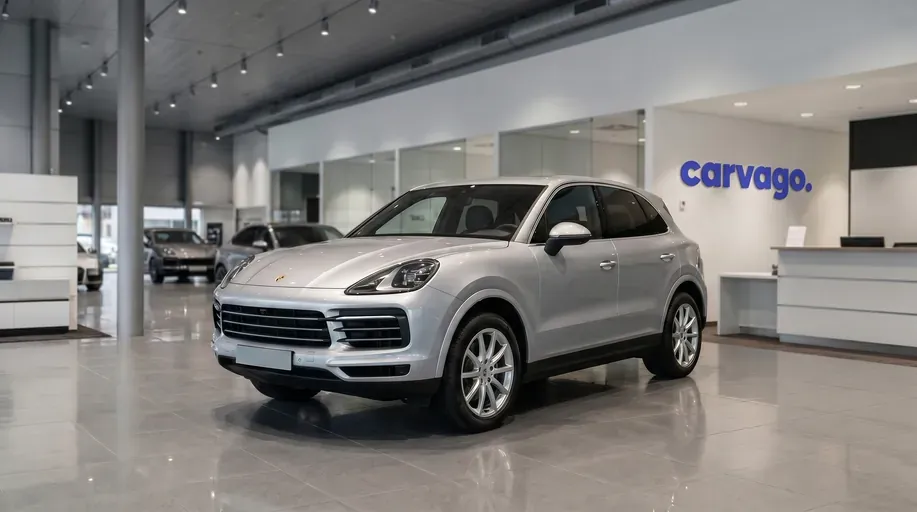
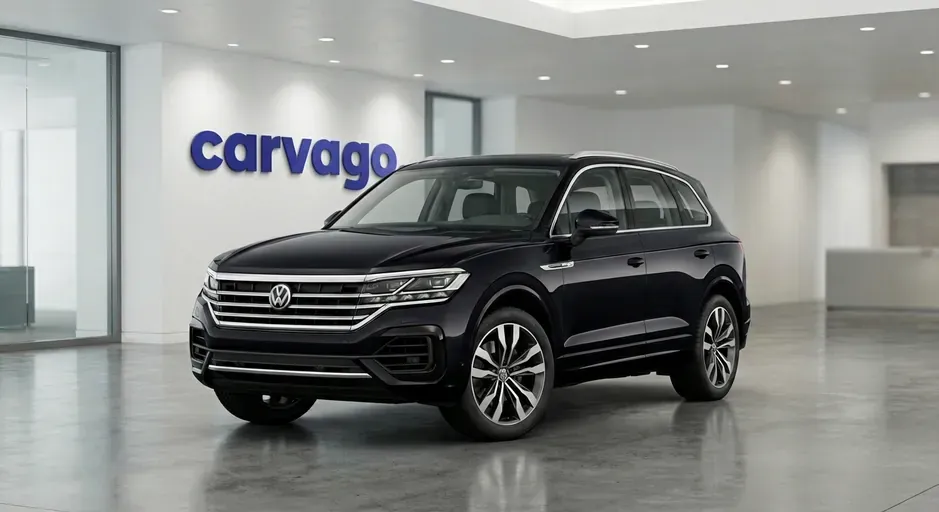
The Porsche Cayenne is an uncompromising premium SUV that masterfully combines the pure sporting DNA of the Stuttgart brand with everyday practicality and luxury. Standing against it is the Volkswagen Touareg, its group sibling sharing the same platform, which instead focuses primarily on top-tier travel comfort, technological sophistication, and understated elegance without unnecessary ostentation. Let's take a detailed look at how these two models, distinct in character yet technically closely related, fare in a direct comparison and which of them represents a better choice on the used car market.
Both vehicles share the prestigious group MLB Evo platform, which is naturally reflected in their very similar overall proportions. Although they share a common technical basis, the design philosophy of both automakers dictates clear differences in their exterior approach. If we focus on roughly four-year-old used cars from the popular years 2020–2023 (the third generation of the Touareg and the 9YA generation of the Cayenne), we find that while Porsche bets on a more dynamic and aerodynamic silhouette, Volkswagen offers a more traditional, robust, and highly functional look typical of classic large SUVs.
A detailed look at the numbers reveals that the standard Porsche Cayenne is exactly 40 mm longer at 4918 mm than the Volkswagen Touareg (4878 mm). The width is essentially identical for both premium vehicles – 1983 mm for the Porsche and 1984 mm for the Volkswagen. However, a fundamental difference occurs in the overall body height. The Volkswagen Touareg stands 1717 mm tall, which is 21 mm more than the standard Cayenne, and even a full 41 mm more compared to the lower and more elongated Porsche Cayenne Coupé version. A surprising fact might be the wheelbase, which for the Touareg (2904 mm) is 9 millimeters longer than its Stuttgart sports sibling (2895 mm).
What do these numbers mean for everyday life with the car? The impressive width approaching two meters (even more with side mirrors) means that maneuvering in narrow underground garages and parking at supermarkets will require a significant amount of attention and a high-quality camera system for both cars. The slightly greater height and longer wheelbase play into the hands of the Volkswagen Touareg, which thanks to these parameters offers a subjectively somewhat more robust appearance and better utilization of interior space vertically. In contrast, the lower and more elongated build of the Porsche Cayenne (and especially the Coupé version) helps lower the overall center of gravity. This directly supports excellent sporty driving characteristics, eliminates unnecessary body roll, and gives the car a much more aggressive and crouched stance on the road.
| Parameter | Porsche Cayenne SUV | Porsche Cayenne Coupé SUV | Volkswagen Touareg SUV |
|---|---|---|---|
| Length (mm) | 4918 | 4931 | 4878 |
| Width (mm) | 1983 | 1983 | 1984 |
| Height (mm) | 1696 | 1676 | 1717 |
| Wheelbase (mm) | 2895 | 2895 | 2904 |
When choosing a premium family car on the used car market, typically for models around 4 years old (Porsche Cayenne 9YA and Volkswagen Touareg III generations), luggage compartment volume often plays a decisive role. Although both cars share a common group platform, their focus is reflected in their overall practicality. The Touareg is designed as the ultimate family cruiser, while the Cayenne places much greater emphasis on driving dynamics and sporty rear styling. For buyers, this raises a fundamental question: is maximum transport capacity or a sportier silhouette more important to you?
The standard Volkswagen Touareg offers a generous base trunk volume of 810 liters. This is more than enough space for weekend shopping or a longer holiday, where you can easily load a stroller and still have room for several extra suitcases. With the rear seats folded down, this space grows to a massive 1,800 liters. In contrast, the Porsche Cayenne with the standard SUV body style lags only slightly behind – offering a solid 772 liters as standard and 1,708 liters with the seats fully folded. However, a more significant compromise comes with the more attractively designed Porsche Cayenne Coupé. The sloping roofline takes its toll here, reducing the base volume to 592 liters, or 1,540 liters with the backrests folded down.
An important factor for used car buyers is also the increasingly popular plug-in hybrid versions, where the values differ. The placement of the traction battery under the trunk floor takes away valuable liters of total capacity in both models. The Volkswagen Touareg eHybrid (as well as the top-of-the-line R version) offers a reduced volume of 655 liters as standard and 1,675 liters when folded. For the Porsche Cayenne E-Hybrid, the standard volume drops to 645 liters (1,610 liters when folded). In practice, this means that a classic diesel or gasoline Touareg will swallow equipment for a family of four without any restrictions, while with the hybrid variants and the Coupé version, you will have to plan your luggage packing with significantly more care.
| Parameter | Porsche Cayenne SUV | Volkswagen Touareg SUV |
|---|---|---|
| Base volume (liters) | 772 | 810 |
| Max volume with seats folded down (liters) | 1708 | 1800 |
If uncompromising space for family and luggage is your priority, the Volkswagen Touareg is the clear choice thanks to its volume, while the Porsche Cayenne will appeal to drivers who would rather sacrifice a few liters of capacity in exchange for a more attractive design and the brand's more premium heritage.
When choosing a large premium SUV, towing capacity is an absolutely key parameter for many buyers. Both models represent the absolute top of the market, whether you need to take a family caravan on holiday, a boat to the lake, or a massive horse trailer. For both cars roughly four years old, they offer a robust technical foundation with excellent values that fully satisfy even the most demanding requirements.
Looking at the generations most commonly found on the used car market today (9YA generation for Porsche and III generation for VW), identical and maximum possible figures dominate the tables. Volkswagen Touareg offers a braked trailer weight of 3,500 kg uncompromisingly across its entire range. It doesn't matter whether you go for the popular 3.0 V6 TDI diesel six-cylinder, the powerful 4.0 V8 TDI eight-cylinder, or modern plug-in hybrid powertrains like the eHybrid or the top-of-the-line Touareg R.
Porsche Cayenne shares the same group architecture, and therefore, for the vast majority of traditional powertrains – from the base six-cylinder through the S, GTS variants to the Turbo – you can rely on a maximum braked weight of 3,500 kg.
However, an interesting difference occurs with the most powerful electrified versions of Porsche. If you opt for the extremely powerful plug-in hybrid Porsche Cayenne Turbo S E-Hybrid (or the newer Turbo E-Hybrid), the maximum braked trailer weight is reduced to 3,000 kg. This structural limitation, which applies to both the classic body and the Coupe variant, is primarily due to the installation of a heavy battery and the specific sporty chassis tuning of these flagships.
The standard 3.5 tonnes for both cars is a capacity that reliably handles the transport of heavy equipment or large yachts. The reduction to 3 tonnes for the Cayenne hybrid models will in practice limit only a tiny fraction of drivers. As for standard unbraked trailers, both models handle the legislative maximum of 750 kg without hesitation. This value is easily sufficient for a weekend purchase of building materials, bulky garden items, as well as a longer holiday with a smaller camping trailer. Thanks to moving the heavy load behind the vehicle, you will also safely have space for several extra suitcases in the cabin of both cars without any compromises in passenger comfort.
If you are looking for a car without a single weakness in towing power across all engines, the Touareg is an absolute safe bet – it pulls the maximum regardless of the badge on the tailgate. The Porsche Cayenne follows closely with conventional power units, but with the most powerful hybrids, it requires a slight concession from maximum towing ambitions.
| Model and motorization | Braked weight of trailer (kg) | Unbraked weight of trailer (kg) |
|---|---|---|
| Volkswagen Touareg 3.0 V6 TDI SCR (III) | 3500 | 750 |
| Volkswagen Touareg R / eHybrid (III) | 3500 | 750 |
| Porsche Cayenne S / GTS / Turbo (9YA) | 3500 | 750 |
| Porsche Cayenne Turbo S E-Hybrid (9YA) | 3000 | 750 |
When comparing the engine options of the Porsche Cayenne and Volkswagen Touareg on the used car market, their different focuses quickly become apparent, even though both vehicles share the same technical foundation within the VW Group. While the Volkswagen Touareg relies primarily on economical and refined diesel six-cylinders, which are ideal for long highway journeys and reliable towing of heavy trailers, the Porsche Cayenne is clearly oriented towards sporty performance and emotion. For this reason, the German premium automaker offers exclusively powerful petrol and advanced plug-in hybrid units for Cayenne models. For more budget-conscious drivers traversing all of Europe, the Touareg (ideally in the 3.0 TDI version) with its long range and reasonable fuel consumption makes more sense. Conversely, the Cayenne will satisfy enthusiasts looking for maximum driving dynamics and sharper engine response, while being willing to tolerate the higher operating costs associated with petrol units. Both vehicles in the current generations from 2020 to 2023 consistently rely on intelligent all-wheel drive and an excellent eight-speed automatic transmission that handles the transfer of extreme amounts of torque.
The current generation Porsche Cayenne (9YA), which is most represented on the nearly-new used car market, boasts an exceptionally strong range of petrol engines. The entry point into the world of Porsche is the turbocharged 3.0 V6 with 250 kW, however, more dynamically minded buyers often reach for the S version, which hides a refined 2.9 V6 Twin-Turbo engine with 324 kW. However, the true character of the brand is fully manifested in the top-tier eight-cylinders. The GTS, Turbo, and track-tuned Turbo GT variants with a massive 4.0-liter V8 engine simply defy the laws of physics with their breathtaking parameters (output up to 471 kW and torque of 850 Nm). Furthermore, if you are looking for greener city commutes, the Cayenne offers a pair of sophisticated plug-in hybrids that combine the power of the internal combustion engine with a 100kW electric motor. The absolute king is then the Turbo S E-Hybrid version, crushing the asphalt with an output of 500 kW.
| Engine type | Fuel | Power (kW) | Torque (Nm) | Transmission |
|---|---|---|---|---|
| 3.0 V6 | Petrol | 250 | 450 | 8-speed auto |
| 2.9 V6 Twin-Turbo (S) | Petrol | 324 | 550 | 8-speed auto |
| 4.0 V8 Twin-Turbo (GTS) | Petrol | 338 | 620 | 8-speed auto |
| 4.0 V8 Twin-Turbo (Turbo) | Petrol | 404 | 770 | 8-speed auto |
| 4.0 V8 Twin-Turbo (Turbo GT) | Petrol | 471 | 850 | 8-speed auto |
| 3.0 V6 E-Hybrid | Plug-in hybrid (Petrol) | 340 | 700 | 8-speed auto |
| 4.0 V8 Turbo S E-Hybrid | Plug-in hybrid (Petrol) | 500 | 900 | 8-speed auto |
The third-generation Volkswagen Touareg plays the role of an immensely comfortable mile-muncher, perfectly matched by its logically structured engine lineup. The main word here belongs to the proven 3.0 V6 TDI diesel engines, which completely dominate the used car market. In the listings, you can choose between the base version with 170 kW or the far more popular and agile variant tuned to 210 kW. A completely unique phenomenon in this generation was the phenomenal 4.0 V8 TDI diesel eight-cylinder with a massive torque of 900 Nm. Due to relentless emission standards, however, this prestigious engine was produced for only a very short time (sales ended as early as autumn 2020) and today it is among the highly sought-after rarities. The petrol alternative without electrification is the 3.0 V6 TFSI engine, and VW captured the modern trend of low-emission vehicles with a pair of plug-in hybrids. These cover the spectrum from the refined eHybrid version to the sportier-looking top model Touareg R, featuring a system output of 340 kW.
| Engine type | Fuel | Power (kW) | Torque (Nm) | Transmission |
|---|---|---|---|---|
| 3.0 V6 TDI | Diesel | 170 / 210 | 500 / 600 | 8-speed auto |
| 4.0 V8 TDI | Diesel | 310 | 900 | 8-speed auto |
| 3.0 V6 TFSI | Petrol | 250 | 450 | 8-speed auto |
| 3.0 V6 eHybrid | Plug-in hybrid (Petrol) | 280 | 600 | 8-speed auto |
| 3.0 V6 eHybrid (R) | Plug-in hybrid (Petrol) | 340 | 700 | 8-speed auto |
While the Touareg dazzles with a range of over a thousand kilometers with the economical TDI six-cylinder and attracts with trouble-free towing of heavy trailers, the Cayenne appeals with uncompromising petrol engines built for the absolute driving experience.
Choosing the right powertrain for these premium SUVs is absolutely crucial for long-term satisfaction, as it fundamentally affects not only dynamics and fuel consumption but, above all, future maintenance costs. While the Volkswagen Touareg has historically relied on the massive torque of diesel engines (the most interesting extremes in the past being the giant V10 TDI units), the current generation of the Porsche Cayenne has completely moved away from diesel engines, focusing instead on powerful petrol and advanced plug-in hybrid units. When choosing a roughly four-year-old used car, both approaches offer the best for their typical owners, but it is necessary to correctly consider how you will use the vehicle.
For the 9YA generation models (most commonly available as three- to five-year-old used cars), the base turbocharged three-liter V6 with 250 kW (340 hp) represents by far the most rational choice in terms of long-term reliability and daily usability. This engine stands out for its smooth power delivery and excellent pairing with the eight-speed Tiptronic S transmission. From a technical standpoint, it is a very robust mechanical foundation that avoids potential future risks associated with the aging and degradation of expensive traction batteries found in used E-Hybrid versions. Real-world fuel consumption for this petrol V6 ranges between 10 and 11 liters, which is an acceptable value for a nearly two-ton sporty SUV. When buying, pay close attention only to the service history – insist on verifying that the previous owner shortened the oil change intervals to a maximum of 15,000 km, and check if the necessary oil change in the automatic transmission and transfer case was performed at around 100,000 km. This engine is ideal for drivers looking for a dynamic and prestigious car who don't mind mixed driving, including shorter city trips where a diesel engine would suffer.
The third generation of the Volkswagen Touareg (on the market since 2018) is a perfect and exceptionally comfortable highway cruiser. Here, the proven 3.0 V6 TDI diesel engine clearly reigns supreme, ideally in the more powerful 210 kW (286 hp) specification. Thanks to its massive 600 Nm of torque, it provides the heavy vehicle with absolutely confident flexibility, plus excellent real-world fuel consumption, which drops to between 7.5 and 8.5 liters per 100 km during smooth driving. It is the ultimate choice for drivers who cover thousands of highway kilometers a month or need to regularly tow heavy trailers. The main weakness of used cars with this engine is the complex emissions system. Driving in city traffic jams leads to rapid clogging of the diesel particulate filter (DPF) and failures in the urea injection system (AdBlue/SCR). During a test drive, pay close attention to whether the car reports any emissions system errors, and have a professional check the DPF soot level using diagnostics. If you know you will be driving the vehicle mainly on short city trips, it's better to avoid this diesel – however, on the highway and long routes, it is unrivaled.
Fuel consumption in large premium SUVs is often a sensitive topic, as official figures can differ significantly from reality. Looking at vehicles for the used car market around four years old (the 9YA generation of the Porsche Cayenne and the third-generation Touareg for model years 2020–2023), we find that laboratory test cycles cannot always accurately simulate the physics of vehicles weighing over two tons. To get a better idea of the actual appetite of these cars, it is essential to rely on a combination of homologation databases and real-world owner experiences. In particular, data from users on the crowdsourcing platform Spritmonitor.de provides an excellent overview of the real-world operating costs you can expect on the road.
| Model and Engine | Average Consumption (l/100 km) |
|---|---|
| VW Touareg 3.0 V6 eHybrid (PHEV) | 2.5 |
| Porsche Cayenne E-Hybrid (PHEV) | 3.2 |
| VW Touareg 3.0 V6 TDI SCR (Diesel) | 8.1 |
| VW Touareg 3.0 V6 TFSI OPF (Petrol) | 10.8 |
| Porsche Cayenne 3.0 V6 (Petrol) | 11.4 |
| Porsche Cayenne S 2.9 V6 (Petrol) | 12.0 |
| Porsche Cayenne GTS 4.0 V8 (Petrol) | 13.2 |
| Porsche Cayenne Turbo 4.0 V8 (Petrol) | 13.5 |
Interpreting these trends is quite straightforward – it's hard to cheat the laws of physics. Although car manufacturers are under pressure to reduce emissions, real-world consumption corresponds to both the purpose and weight of the vehicle. By far the most economical classic remains the 3.0 TDI V6 diesel in the Volkswagen Touareg, with consumption staying reasonably just above the 8-liter mark. Petrol engines, on the other hand, show a significantly higher appetite. While you'll be close to 11 liters with the petrol Touareg V6 TFSI, the figures are even higher for the sport-tuned Porsche – even the base petrol versions commonly range between 11.5 and 12 liters, and the fantastic V8s in the GTS and Turbo models reliably reach 13.5 liters. A huge paradox often revealed by real-world user data is the low figures for plug-in hybrids. While these promise values below 3.5 liters per 100 km in the ideal world of official charts, these numbers only apply with consistent daily charging from a home socket. If you look at drivers on Spritmonitor who mainly drive long distances or don't recharge, their actual consumption immediately climbs to the level of classic petrol V6s, often well over 9 liters.
For the average user and used car buyer, the recommendations are perfectly clear. If you are a long-distance highway traveler with high annual mileage, or if you require a large SUV for frequent towing of heavy trailers, the Touareg with the TDI engine is the uncrowned and unbeatable king of operating economy. Petrol engines from both brands – especially those in the sharply tuned Cayenne – make sense for buyers looking for refinement, top-tier dynamics, and an acoustic experience, who are prepared to pay extra at the gas station with a smile for the joy of driving. We recommend purchasing the eHybrid or E-Hybrid plug-in hybrid only for specific conditions: you must have a permanent charging point available at home or at the office, and your average trips should consist primarily of urban or suburban commutes.
In the end, fuel consumption itself becomes a strong decision-making criterion. While the Volkswagen Touareg, with its legendary diesel efficiency, scores as a highly practical all-rounder for any conceivable challenge, the Porsche Cayenne primarily targets enthusiasts for whom an uncompromising sporty nature outweighs the significantly higher fuel bills.
Although the Porsche Cayenne and Volkswagen Touareg (both in their third generation) share the same group MLB Evo platform, a look at current used car listings reveals completely different worlds. For the purposes of this comparison, we are focusing on models approximately 4 years old (2021–2022 model years), which represent a popular choice on the used car market – they offer modern technology and equipment but have already undergone their steepest depreciation.
The difference in purchase costs remains vast even on the secondary market. While the Touareg serves as a more rational and much more affordable luxury SUV, the Cayenne maintains a very high value thanks to prestige, more exclusive materials, and a wider range of sporty and hybrid powertrains.
| Model (2021–2022 years) | Typical price from (€) | Typical price up to (€) | Most common engines in listings |
|---|---|---|---|
| Volkswagen Touareg | 35 000 | 53 000 | 3.0 V6 TDI (170 kW / 210 kW) |
| Porsche Cayenne | 57 000 | 90 000+ | 3.0 V6 (250 kW), E-Hybrid |
What you get for your money:
While you can get a slightly used Touareg for a very reasonable price with a bulletproof diesel, the Cayenne requires a budget at least €21,000 higher, which it justifies with its prestigious badge and sportier driving characteristics.
Both of these premium models traditionally received the maximum five-star rating in independent Euro NCAP crash tests, which is the expected standard for luxury SUVs of this size. When comparing them on the used car market, however, it is crucial to put these results into context and consider the specific year of certification. Euro NCAP methodology evolves and tightens over the years, requiring increasingly advanced active safety systems, more sophisticated frontal crash simulations, and more accurate detection of cyclists at intersections. Percentage results from different years cannot be directly compared – what was enough for a top rating in the past might only represent average today.
The third-generation Porsche Cayenne underwent crash tests in 2017. It achieved an excellent level of passive safety at the time, as evidenced by a great 95% for adult occupant protection. At first glance, a lower score of 62% in the safety assist systems category might be surprising for such an expensive vehicle. The reason was not that the Cayenne was less safe on the road, but the fact that advanced features (such as active lane keeping) were mostly offered as optional equipment by Porsche at the time, and the stricter methodology therefore did not include them in the standard overall assessment. Given the age of this test, the validity of the original certificate administratively expired at the beginning of 2024, which is a standard procedure in car testing and a completely common phenomenon for roughly four-year-old used cars.
The Volkswagen Touareg underwent Euro NCAP tests a year later, in 2018. According to the standards of the time, it showed an excellent performance with 89% for adult protection and a very good 86% for child occupant protection. Conversely, the Touareg scored significantly in the safety assistants category, where it earned a confident 81% thanks to generous standard equipment (including advanced emergency braking with accurate detection of pedestrians and cyclists). As with its sister Porsche, the official validity of this specific safety rating for the Volkswagen also administratively ended at the beginning of 2025; however, for those interested in a quality used car, even these historical data provide a reliable guarantee of safety.
Although both SUVs provide top-tier passive safety, an extremely rigid body, and a complete set of airbags thanks to their technically related platform, from the perspective of the standards and basic equipment of the time, the Volkswagen Touareg offers a more comprehensive entry-level package of active assistants. For a used Porsche Cayenne from the start of production, it is therefore necessary to examine the specific optional equipment of the given unit more closely and in more detail to ensure that you are getting the same level of electronic safety aids that the Touareg provided right in the base.
| Parameter | Porsche Cayenne | Volkswagen Touareg |
|---|---|---|
| Year of testing | 2017 | 2018 |
| Adult occupant protection | 95 % | 89 % |
| Child occupant protection | 80 % | 86 % |
| Vulnerable road users protection | 73 % | 72 % |
| Safety assist systems | 62 % | 81 % |
While both luxury SUVs offer absolutely top-tier passive protection for the family and driver, the Volkswagen Touareg has a slight edge in used cars thanks to much richer standard equipment of active safety assistants. For the Porsche Cayenne, original owners had to pay extra for many smart features, so carefully check the equipment of the specific unit.
In addition to standard equipment, each of the models offers several unique features that can be decisive for the customer, and both cars convey added value in a completely distinctive way. While one SUV relies on uncompromising sporting DNA, the other profiles itself as the ultimate long-distance technological cruiser.
The third generation of the Cayenne model perfectly combines the utility of a family car with the dynamics typical of the Porsche brand. The car's creators placed maximum emphasis on driver involvement.
The third generation of the Touareg shares a common group platform (MLB Evo) with the Cayenne, but its character is different. It is Volkswagen's technological flagship with an enormous focus on relaxation and digitalization.
Top-tier driving characteristics with agility approaching sports cars
Higher brand prestige and overall more stable residual value on the used car market
Luxurious interior craftsmanship with premium materials and excellent ergonomics
Wide range of powerful engines, including the very popular E-Hybrid versions
Significantly higher purchase price for roughly four-year-old used models
Noticeably more expensive authorized service and higher spare parts prices
Stiffer suspension tuning may not suit drivers looking for maximum ride smoothness
Slightly smaller base luggage compartment volume compared to the Touareg
Porsche Cayenne is an absolutely ideal choice for drivers who need a practical SUV but refuse to give up excellent driving characteristics and dynamics. While it requires a fatter wallet for both purchase and subsequent servicing on the used car market, in return it offers an uncompromising driving experience and top-tier craftsmanship.
Excellent price-to-value ratio (same MLB Evo technical platform as the Porsche for a fraction of the price)
Extremely comfortable ride, especially in models equipped with optional air suspension
Huge and very practical luggage compartment with a base volume of 810 liters
Top-tier technological equipment including the giant Innovision Cockpit system
Very refined and reliable 3.0 TDI diesel V6 with reasonable fuel consumption
Less prestigious brand image compared to its premium siblings
Heavier driving feel focused exclusively on comfort without major sporting ambitions
Occasional presence of cheaper hard plastics in the lower part of the interior
Concentrating the control of most functions exclusively through the touchscreen can be distracting
The Volkswagen Touareg represents an exceptionally rational choice for those looking for maximum comfort, huge interior space, and modern technology for long journeys. It is an understated but luxurious workhorse that you can get on the roughly four-year-old used car market for a much more favorable price than its Stuttgart sibling.
Based on our own breakdown statistics, service reports, and detailed inspections via the CarAudit service, we have compiled an overview of the most common problems that buyers of roughly four-year-old used cars should watch out for. Any comprehensive pre-purchase inspection is an absolute necessity for such technologically complex and expensive SUVs.
The third generation of the Porsche Cayenne is generally considered a very reliable luxury SUV; however, given its high technological complexity, specific faults do occur that can make servicing expensive.
The Cayenne is a robust driver's SUV that mostly avoids fatal mechanical failures. However, buyers should focus on the overall condition of expensive braking systems, cooling system leaks, and the full functionality of all onboard electronics.
The CR generation Volkswagen Touareg shares a common group platform with the Cayenne, offering excellent driving comfort while facing similar typical problems, which are further compounded by the maintenance of the dominant diesel engines.
The third-generation Touareg is a mechanically honest car, where the greatest risk lies with diesel V6 versions used for short trips with clogged emission systems. In addition to engine prevention, it's wise to expect occasional quirks from the otherwise very impressive infotainment.
When buying a used car, a thorough inspection is crucial, as potential hidden defects in premium and technically complex SUVs can mean astronomical service bills. A careful physical car inspection should reveal not only obvious mechanical wear but also hidden electronic or software flaws. Here are several specific points to focus on for the current generations of these two models.
Yes, both models are built on the shared group platform MLB Evo. However, the Porsche Cayenne has completely specific chassis and steering tuning, which allows it to offer much sportier and sharper driving characteristics. In contrast, the Volkswagen Touareg is tuned with maximum emphasis on smoothness and comfortable long-distance travel.
The Volkswagen Touareg is the more practical choice, as its trunk holds a respectable 810 liters in the standard configuration. The Porsche Cayenne offers a slightly more modest 772 liters, and in plug-in hybrid versions, this space is further reduced due to battery storage. For families needing maximum luggage space, the VW is therefore more suitable.
The Volkswagen Touareg is significantly cheaper to maintain, which is noticeably reflected in the prices of spare parts, service rates, and insurance. Porsche, as a luxury sports brand, requires premium care that becomes substantially more expensive over the years. Additionally, the popular TDI diesel engines in the Touareg guarantee overall lower fuel expenses compared to the more powerful units in the Cayenne.
Both SUVs offer first-class workmanship, but the Porsche Cayenne stands out with the use of more luxurious materials, better body support in the seats, and more sport-oriented ergonomics. The Volkswagen Touareg, on the other hand, bets on the futuristic Innovision Cockpit, which consists of giant displays dominating the entire dashboard and reduces physical buttons to a minimum. While VW leaves most of the control to touchscreens, Porsche maintains a more traditional driver-oriented layout of elements.
For sport-oriented drivers, the Porsche Cayenne is the absolute clear winner, as it can perfectly mask its weight and feels incredibly agile in corners. Although the Touareg also resists heavy body roll thanks to its technology, its overall tuning makes it more of a stable and calming highway cruiser. The experience behind the wheel of the Porsche is practically unrivaled in the large SUV segment thanks to excellent feedback and the ferocity of the engines.
Although the Porsche Cayenne and Volkswagen Touareg share the same group platform, they appeal to a completely different spectrum of customers in the market for roughly four-year-old used cars. While the Touareg, with its economical diesel V6, giant luggage compartment, and lower service costs, represents an exceptionally rational choice for comfortable family travel or frequent trailer towing, the Cayenne, with its powerful petrol engines and agile chassis, primarily targets pure driving enthusiasm. If you are looking for maximum utility and technological comfort at a reasonable price in a premium SUV, the Volkswagen will be your ideal companion; however, if you refuse to compromise on uncompromising sports dynamics and long for absolute prestige, it is worth paying extra for the Stuttgart model.
Sources: ADAC, forbes.cz, mdcr.cz, motorvize.cz, autosalon.tv, motorsportrevue.cz
This article was prepared using artificial intelligence tools. The section guarantor is Petr Dušek.
Detailed comparison of Porsche Cayenne vs Volvo XC90. Find out which of these premium SUVs offers better performance, comfort, and operating costs as a used car.
Apr 22, 2026
Volvo XC90 vs. Volkswagen Touareg: Which premium SUV is better? A detailed comparison, tests, and a clear verdict will help you choose.
Apr 14, 2026
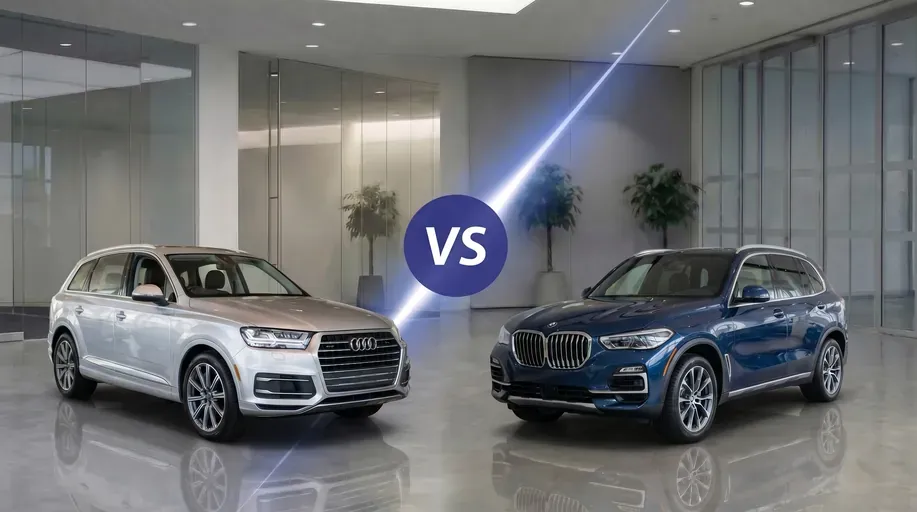
Detailed comparison of Audi Q7 vs BMW X5. We compare engines, spaciousness, and used car prices. Read our verdict and find out which luxury SUV is the better choice.
Apr 21, 2026