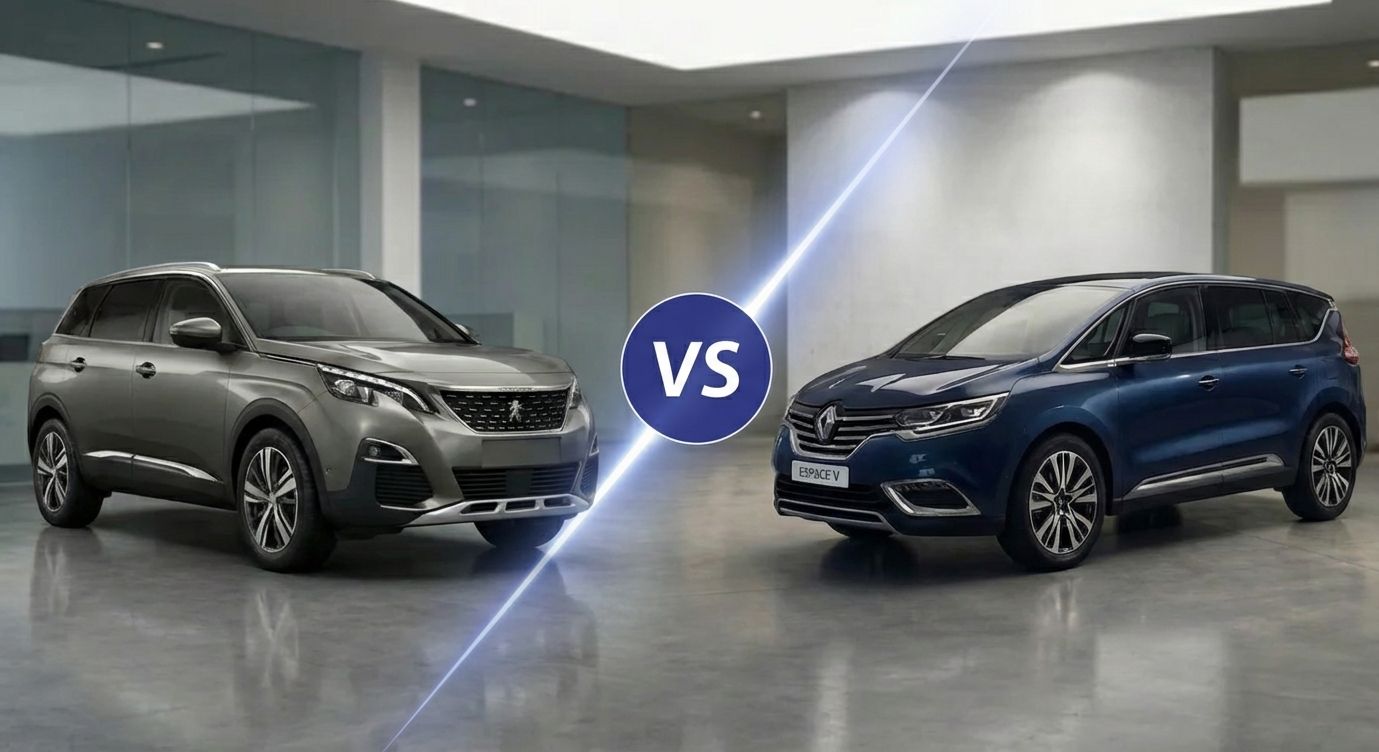
Car battle
Peugeot 5008 vs. Renault Espace: Complete comparison 2026
Detailed comparison of Peugeot 5008 vs Renault Espace. We reveal real-world experiences, equipment details, and a clear verdict. Find out which 7-seater car to choose.
Apr 13, 2026
Articles
Car battle
Are you looking for a spacious family SUV? A detailed comparison of the Peugeot 5008 vs. Seat Tarraco reveals the differences in driving characteristics, equipment, and used car reliability.
May 9, 2026
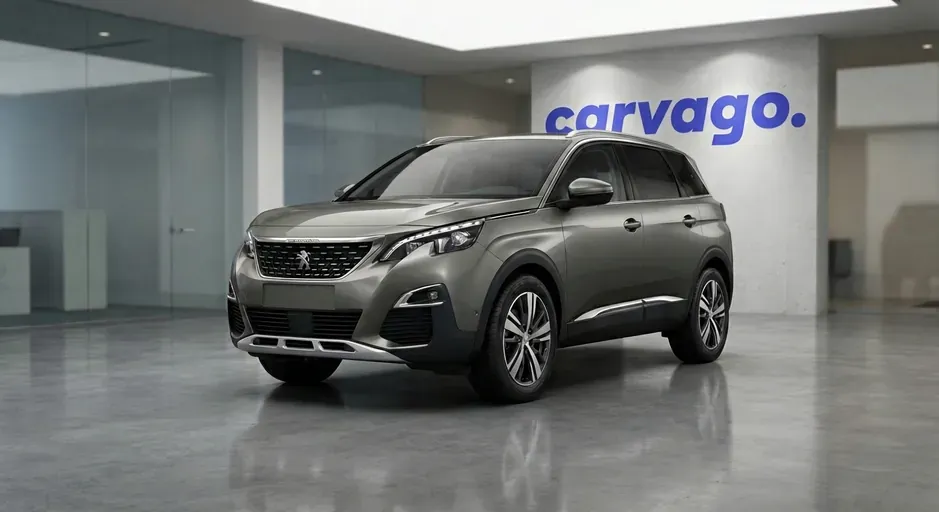
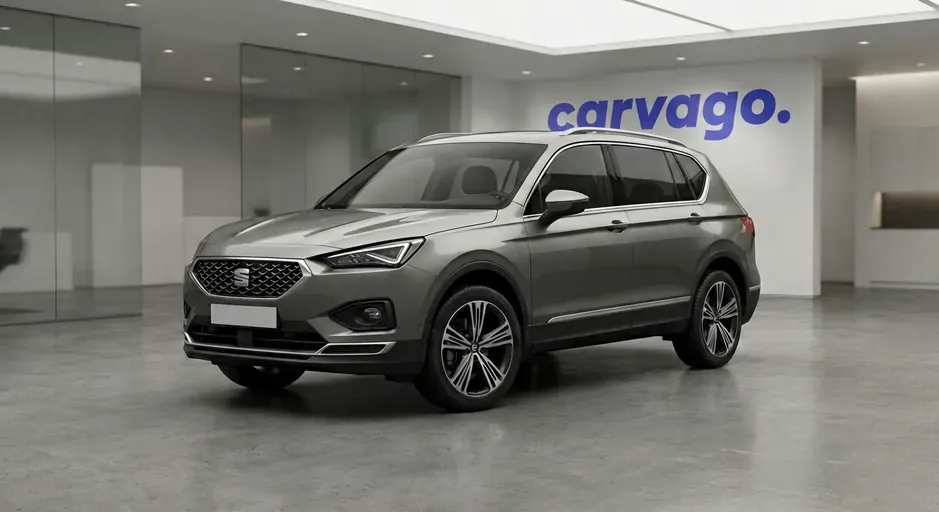
The Peugeot 5008 is a distinctive French SUV that attracts families on the used car market with its bold design, innovative i-Cockpit dashboard layout, and generous space with the option of up to seven seats. Its confident challenger is the Seat Tarraco, the largest model from the Spanish automaker utilizing proven Volkswagen Group technology, which scores with slightly sportier driving characteristics, robust construction, and a similar dose of family practicality. Let's take a detailed look at the strengths and weaknesses of both these popular vehicles to find out which of them represents a smarter choice for your daily journeys.
Looking at the exterior dimensions, both popular family models, which appear most frequently on the nearly-new used car market in their proven generations (the second generation for Peugeot and the KN generation for Seat), differ slightly in their approach to body construction. The Seat Tarraco is a significantly longer car, measuring 4735 mm in length, which is 94 mm more than the Peugeot 5008 (4641 mm). As for width, both cars are almost identical – the Peugeot, at 1844 mm, beats the Seat by a completely negligible 5 mm. The longer body of the Spanish representative may thus mean a slight disadvantage when parallel parking in narrow city streets, but on the other hand, it visually gives a more majestic and mature impression.
However, we find more surprising values when examining the height and especially the wheelbase. The Seat Tarraco, with a height of 1658 mm, is 12 mm taller than the Peugeot. The real engineering trump card of the French car, however, is the distance between the wheels. Although the Peugeot 5008 is significantly shorter in overall length, its axles are 2840 mm apart, while the Tarraco has a wheelbase 50 mm shorter (2790 mm). Thanks to this technical solution with minimal overhangs, the French representative maximizes longitudinal interior space for the crew despite its overall more compact exterior footprint.
In terms of overall proportions, both cars focus on a different visual experience and practical application. The Peugeot, with its wheels pushed to the very corners of the body, resembles an inflated family MPV with off-road accessories, while the Seat bets on the traditional robust architecture typical of Group SUVs. If you are looking for a spacious car that is easier to maneuver in tight parking garages, the shorter Peugeot will be a more rational choice in terms of dimensions, while the Tarraco will appeal to drivers who don't mind a longer rear in exchange for the look of a classic robust SUV.
| Parameter | Peugeot 5008 SUV | Seat Tarraco SUV |
|---|---|---|
| Length (mm) | 4641 | 4735 |
| Width (mm) | 1844 | 1839 |
| Height (mm) | 1646 | 1658 |
| Wheelbase (mm) | 2840 | 2790 |
For families and active drivers, trunk capacity is often a decisive factor when choosing a mid-size SUV. Both the Peugeot 5008 and the Seat Tarraco aim for maximum practicality and offer some of the largest trunks in their class. However, differences in their concept and interior layout can play a crucial role in how well they serve your daily needs, whether it's carrying a stroller, sports equipment, or luggage for a family vacation. Both cars on the used car market, at around four years old (the second-generation Peugeot and the KN generation of the Seat), represent exceptionally spacious choices in terms of utility value.
Looking at the raw numbers for the standard internal combustion versions, both models excel, but the French representative has a slight edge. The second-generation Peugeot 5008 offers an impressive 780 liters in its basic configuration, while the Seat Tarraco counters with a very solid 760 liters. In practice, this twenty-liter difference means exactly that useful space for a few extra bags, but in their basic setup, both cars can easily swallow luggage for the whole family and are more than sufficient for weekend shopping or longer holidays. When the rear seats are folded down, the gap widens a bit more – the Peugeot reaches an impressive maximum capacity of 1,940 liters, surpassing the Seat with its 1,775 liters. For moving larger items or bulky equipment, the Peugeot thus provides a noticeable advantage.
However, crucial attention must be paid to the choice of powertrain if you are considering buying a plug-in hybrid. In the Seat Tarraco 1.4 e-HYBRID version, the battery takes up valuable space under the trunk floor, which means its basic capacity is reduced to 610 liters. Although this is still a decent figure, it is a significant compromise compared to the standard internal combustion versions. From a user perspective, both SUVs offer excellent usability, but thanks to its interior layout, the Peugeot can offer slightly more absolute space for your cargo overall.
| Parameter | Peugeot 5008 SUV | Seat Tarraco SUV | Seat Tarraco e-HYBRID SUV |
|---|---|---|---|
| Basic capacity (liters) | 780 | 760 | 610 |
| Max. capacity with seats folded (liters) | 1940 | 1775 | Not specified |
Although both SUVs provide above-standard luggage space, the Peugeot 5008 offers a slightly more generous basic and maximum capacity, while with the Seat Tarraco, one must account for a significant loss of liters in the plug-in hybrid version. However, both cars on the used market will easily satisfy even the most demanding transport needs.
The ability to tow a trailer is a key parameter for many large SUV buyers. Whether it's hitching up a caravan for summer camping, transporting a boat, or simply needing to haul construction materials, the Seat Tarraco and Peugeot 5008 differ significantly in this discipline.
When looking at models from the used car market around four years old (Seat Tarraco generation KN and Peugeot 5008 2nd generation), the Spanish SUV proves to be an incomparably stronger workhorse. Even the base 1.5 TSI petrol engine or even the 1.4 e-HYBRID plug-in hybrid version of the Tarraco can easily handle a braked trailer weighing 1,800 kg. If you choose the more powerful 2.0 TDI diesel or 2.0 TSI petrol engines, the maximum permitted towing weight for the Seat increases to an impressive 2,000 to 2,300 kg.
The Peugeot 5008, on the other hand, is designed differently and offers much more modest limits. Its most common engine options, such as the 1.2 PureTech and 1.5 BlueHDi, can handle a braked trailer weighing only 1,100 to 1,300 kg. The only more powerful alternative for towing in the French car is the top-of-the-line 2.0 BlueHDi engine, which, with a limit of 1,750 to 1,800 kg, only matches the weakest Seat engine options. The more modern 1.2 Hybrid variant is significantly restricted, with its towing capacity reduced to just 1,050 kg. A standard unbraked trailer remains at the legislative and technical maximum of 750 kg for both vehicles (or 745 kg for the lightest Peugeot specifications).
In contrast, the Seat Tarraco provides space for a few extra suitcases and a huge reserve of power and weight limit, allowing you to safely tow even full-sized heavy caravans for longer holidays or horse trailers. In practice, these differences mean that the Peugeot 5008 is perfectly sufficient for weekend shopping of bulky items and towing a small trailer or a light folding caravan.
In conclusion, if you don't plan to tow anything heavier than a small utility trailer with leaves behind the car, both vehicles will do a good job. However, if regular towing of heavier loads is your priority, the Seat Tarraco is the absolutely clear and much safer choice in terms of limits.
| Model and engine | Braked trailer weight (kg) | Unbraked trailer weight (kg) |
|---|---|---|
| Peugeot 5008 1.2 PureTech (96 kW) | 1100 | 745 - 750 |
| Peugeot 5008 1.5 BlueHDi (96 kW) | 1200 - 1300 | 750 |
| Peugeot 5008 2.0 BlueHDi (130 kW) | 1750 - 1800 | 750 |
| Peugeot 5008 1.2 Hybrid (100 kW) | 1050 | 750 |
| Seat Tarraco 1.5 TSI (110 kW) | 1800 | 750 |
| Seat Tarraco 2.0 TDI (110 - 147 kW) | 2000 - 2300 | 750 |
| Seat Tarraco 2.0 TSI (140 - 180 kW) | 2250 - 2300 | 750 |
| Seat Tarraco 1.4 e-HYBRID (110 kW) | 1800 | 750 |
When comparing the engine options of the Peugeot 5008 and the Seat Tarraco, we encounter the differing philosophies of the two manufacturers, which fundamentally influence the overall driving experience and the vehicle's versatility. While Peugeot focused its second generation on efficient, smaller-displacement power units designed exclusively for front-wheel drive, Seat fully benefits from the robust technical foundation of the Volkswagen Group. For the Tarraco, this means not only the availability of more powerful two-litre engines (TSI and TDI) but, above all, the option of the 4Drive intelligent all-wheel drive system. For buyers in the used car market, this difference is crucial: the Peugeot will appeal more to calmer drivers looking for a comfortable and economical car for daily use with lower fuel costs, while the Seat represents a much more competent choice for towing heavy trailers, driving in snow, or for those who require higher performance potential for motorway travel.
The range of engines for the second-generation Peugeot 5008 (relevant for roughly four-year-old used cars) is limited exclusively to front-wheel drive. The petrol base is the 1.2 PureTech three-cylinder engine with 96 kW, which represents more of a performance compromise for a fully loaded seven-seater SUV. The petrol peak was previously the very smooth 1.6 PureTech four-cylinder (133 kW), but this completely disappeared from the range in mid-2022. A similar fate unfortunately befell the exceptionally reliable and popular 2.0 BlueHDi diesel (133 kW and a solid 400 Nm of torque), whose production for this model was also discontinued at the same time. For newer models from 2022 to 2024, diesel enthusiasts must rely on the smaller 1.5 BlueHDi four-cylinder (96 kW). For fans of electrification, the French brand introduced the 1.2 Hybrid mild-hybrid unit with 100 kW in 2023, paired with the new e-DSC6 dual-clutch transmission. Traditional automatic versions of other engines use the comfortable EAT8 eight-speed torque converter transmission.
| Engine type | Fuel | Power (kW) | Torque (Nm) | Transmission |
|---|---|---|---|---|
| 1.2 PureTech 130 | Petrol | 96 | 230 | 6MT / 8AT |
| 1.6 PureTech 180 | Petrol | 133 | 250 | 8AT |
| 1.2 Hybrid 136 | Petrol (MHEV) | 100 | 230 | 6AT (e-DSC6) |
| 1.5 BlueHDi 130 | Diesel | 96 | 300 | 6MT / 8AT |
| 2.0 BlueHDi 180 | Diesel | 133 | 400 | 8AT |
In contrast, the Seat Tarraco offers a significantly broader and more powerful range of engines in its KN generation, which is perfectly suited for greater mechanical loads. The entry-level petrol engine is the 1.5 TSI ACT four-cylinder (110 kW) equipped with cylinder deactivation technology to reduce fuel consumption. More demanding drivers who want sports car dynamics can opt for the powerful 2.0 TSI unit, which offered 140 kW and, in the FR version, even a top-tier 180 kW. However, the used car market for this large SUV is absolutely dominated by the renowned 2.0 TDI diesel engine. It is available in a 110 kW variant or a more powerful 147 kW version (or 140 kW in older units until the end of 2020), which boasts a substantial 400 Nm of torque. A huge advantage of the Tarraco is the standard availability of 4Drive all-wheel drive on all more powerful versions, combined with the lightning-fast seven-speed DSG dual-clutch transmission. Those interested in modern zero-emission technology could choose the 1.4 e-HYBRID plug-in hybrid from around 2021, with a system output of 180 kW, which allows for pure electric city driving when charged.
| Engine type | Fuel | Power (kW) | Torque (Nm) | Transmission |
|---|---|---|---|---|
| 1.5 TSI ACT | Petrol | 110 | 250 | 6MT / 7DSG |
| 2.0 TSI | Petrol | 140 / 180 | 320 / 370 | 7DSG (4Drive) |
| 1.4 e-HYBRID | Petrol (PHEV) | 180 | 400 | 6DSG |
| 2.0 TDI (110 kW) | Diesel | 110 | 340 / 360 | 6MT / 7DSG |
| 2.0 TDI (147 kW) | Diesel | 147 | 400 | 7DSG (4Drive) |
Final recommendation for buyers: The French Peugeot 5008 with its economical 1.5 BlueHDi engine will please undemanding drivers looking for a budget-friendly, spacious car for standard maintained roads. However, if you are looking for a car with ambitions for an active lifestyle in the mountains, frequently drive with a fully loaded boot, or plan to tow a caravan, the Seat Tarraco equipped with the powerful 2.0 TDI engine and 4x4 drive is the clear winner and represents a much more versatile and confident choice.
While Peugeot limited its range in recent years to smaller engines exclusively with front-wheel drive, the Seat Tarraco offers powerful two-litre units and all-wheel drive, making it the ultimate workhorse for active families.
Choosing the right engine is crucial for long-term satisfaction, dynamics, and reliability in large family SUVs. Our recommendation is based on performance, real-world fuel consumption, owner feedback, and mechanical durability. While the Peugeot 5008 relies exclusively on front-wheel drive and a lighter construction to help reduce fuel consumption, the SEAT Tarraco also offers the robust 4Drive all-wheel drive system. An interesting point regarding generations produced around 2022 is the different approach the brands took toward diesel engines – while SEAT kept the large-displacement 2.0-liter diesels until the end of production, Peugeot phased out its excellent 2.0 BlueHDi in mid-2022, replacing it entirely with smaller or electrified units.
Official fuel consumption figures provided by manufacturers are often very optimistic and can differ significantly from the reality of everyday driving. To give you an idea of the actual fuel costs for approximately four-year-old cars from the used car market, we looked at data directly from drivers. The independent community portal Spritmonitor.de, which has long been collecting real-world data from vehicle owners, served as an ideal source.
| Model and Engine | Average Consumption (l/100 km) |
|---|---|
| Peugeot 5008 1.2 PureTech 96 kW | 7.5 |
| Seat Tarraco 1.5 TSI 110 kW | 7.8 |
| Peugeot 5008 1.5 BlueHDi 96 kW | 6.2 |
| Seat Tarraco 2.0 TDI 110 kW | 6.8 |
| Seat Tarraco 2.0 TDI 147 kW | 7.5 |
Looking at the real-world data, a clear trend is evident – in the case of such large and heavy family SUVs, diesel still clearly pays off. The most economical choice from the entire selection is the Peugeot 5008 with the 1.5 BlueHDi engine, which can move the large car with a consumption just above the six-liter mark. However, a surprise awaits many with the petrol engines. Miracles in fuel savings are often expected from small turbocharged units, but the 1.2 PureTech three-cylinder in the Peugeot has to work quite hard with the seven-seater SUV, pushing real consumption safely above the seven-liter mark. The situation is similar for the base 1.5 TSI petrol four-cylinder in the Seat Tarraco, where the average rises to nearly eight liters.
What does this mean for the average user? If you are a driver who spends most of your time eating up miles on motorways or commuting long distances daily, diesel engines (both BlueHDi and TDI) will ensure significantly lower operating costs. For families who use the car primarily for shorter trips around town and occasional weekend outings, the petrol variant will be a more sensible choice, despite the slightly higher fuel bill. This way, you avoid potential problems with diesel particulate filters, which are harmed by constant city stop-and-go driving.
Fuel consumption is one of the key decision-making factors in this duel. Especially if you are choosing between the diesel Peugeot 5008, which excels on long journeys with its extraordinary efficiency, and the overall more powerful but slightly "thirstier" versions of the Spanish Seat Tarraco.
Looking at the used car market for vehicles around four years old (2021 and 2022 models), we find that both family cruisers are in a similar starting price range. However, as equipment levels and engine power increase, the price gap widens significantly, due to the different technical offerings.
The Peugeot 5008 from the post-facelift period (introduced in 2020) is highly sought after on the used car market, mainly thanks to its avant-garde design and cleverly designed interior space.
The SEAT Tarraco, as a representative of the Volkswagen Group's large SUV family, holds its residual value a bit more tenaciously. The main reason is the wide availability of all-wheel drive (which Peugeot does not offer in this generation of the 5008) and a range of powerful two-liter engines.
| Model | Starting price | Average price | Maximum price |
|---|---|---|---|
| Peugeot 5008 | from ~ €20,000 | ~ €23,000 | up to ~ €29,000 |
| SEAT Tarraco | from ~ €20,000 | ~ €27,000 | up to ~ €35,000 |
If you are looking for a more affordable spacious SUV for daily family transport and can make do with front-wheel drive, the Peugeot 5008 offers a slightly better price-to-age ratio. However, those interested in all-wheel drive and powerful two-liter engines must go for the SEAT, which, however, is noticeably reflected in the purchase price of a used car in higher trim levels.
Both large SUVs start as four-year-old used cars at around €20,000, but the SEAT, thanks to the availability of 4x4 drive and more powerful engines, maintains a significantly higher residual value in its top versions.
Both models boast a maximum five-star rating in their respective Euro NCAP tests, but it is essential to view these results in the context of the testing year. The Euro NCAP methodology is constantly evolving and becoming significantly stricter. New, more demanding scenarios are gradually added to the evaluation – for example, frontal collisions with partial overlap against a mobile barrier, advanced cyclist detection, or emergency situations at intersections. For this reason, percentage ratings from different years cannot be directly compared. Five stars from an older test simply do not guarantee the same level of safety and technological equipment as five stars obtained under newer and stricter rules.
For the Peugeot 5008, which is commonly available on the market as approximately four-year-old used cars (i.e., the second generation of the vehicle), the 2016 rating applies. At that time, the car achieved five stars according to older, more lenient safety standards. It excelled in adult protection (86%) and child protection (85%), but due to the methodology at the time, it achieved weaker results in pedestrian protection (67%) and safety assistance systems (58%). These values fully reflect the technological level of that era. Although the model later underwent a facelift that improved some assistance systems, the original certification has now expired for this vehicle. (For completeness: Although the brand-new generation of the 5008 model underwent the latest tests at the beginning of 2025, earning 4 stars according to extremely strict standards, the baseline architecture tested in 2016 is crucial for buyers of a four-year-old used car.)
Seat Tarraco underwent Euro NCAP tests in 2019. It thus had to deal directly with substantially more demanding criteria taking into account modern active safety and detailed detection of vulnerable road users. The car took home a full five stars and demonstrated top-tier parameters. Adult occupant protection impressed with an extraordinary score of 97%, while child protection was a solid 84%. The increased emphasis on active elements was reflected in above-average scores for both vulnerable road user protection (79%) and safety assistance systems (79%). Modern equipment such as the Front Assist system, advanced Pre-Crash Assist function, and proactive protection in the event of a rollover (Rollover Assist) significantly contributed to these results.
In conclusion, although both vehicles represent an objectively safe choice for families, the Seat Tarraco offers an overall more modern and comprehensive safety standard corresponding to current needs. Its results come from a time of demonstrably stricter methodology and show a clear superiority in the integration of assistance systems as well as unrivaled adult protection. In a direct comparison, it thus surpasses the older concept of the Peugeot, which was developed and tested in detail three years earlier.
| Parameter | Peugeot 5008 | Seat Tarraco |
|---|---|---|
| Year of testing | 2016 | 2019 |
| Adult occupant protection | 86 % | 97 % |
| Child protection | 85 % | 84 % |
| Vulnerable road user protection | 67 % | 79 % |
| Safety assistance systems | 58 % | 79 % |
Although both family SUVs protect the crew excellently, the Seat Tarraco benefits from stricter tests from 2019 and thus offers a demonstrably more advanced level of active and passive safety compared to the older Peugeot architecture.
In addition to standard equipment, each model offers several unique features that can be decisive for the customer and show the different approach of both carmakers to the concept of a family SUV. While the French representative bets on bold design and maximum interior variability, the Spanish competitor benefits from shared group technology and sportier driving characteristics.
The French SUV focuses primarily on visual impression, unconventional ergonomics, and clever interior layout, which in many ways resembles practical MPVs.
The largest model from SEAT relies on the proven MQB platform and brings sharper lines and driver-focused technologies to the large family SUV segment.
Three individual sliding seats in the second row (ideal for fitting three child car seats)
Unique and modern interior design with high-quality dashboard craftsmanship
Exceptionally comfortable suspension tuning that absorbs road bumps
Low fuel consumption for diesel engines, especially the 1.5 BlueHDi variant
Third-row seats can be very easily folded into the floor or completely removed from the vehicle
Complete absence of all-wheel drive (only the electronic Grip Control system is available)
Specific driving position (i-Cockpit) with a small steering wheel may not ergonomically suit everyone
Slower response and less intuitive control of the multimedia system
Very limited space for adult passengers in the third row of seats
The Peugeot 5008 is an excellent choice for larger families looking for maximum interior versatility in a used car with three full-sized rear seats and requiring high travel comfort. It wins over owners primarily with its unmistakable design and low operating costs, provided they do not miss all-wheel drive for daily use.
Confident and sportier handling with minimal body roll in corners
Availability of intelligent all-wheel drive (4Drive) and more powerful engines (2.0 TDI, 2.0 TSI)
Generous legroom and headroom in the second row of seats
More logical and user-friendly infotainment with better climate control ergonomics
High towing capacity for more powerful versions (up to 2500 kg)
Stiffer suspension tuning, which filters bumps less effectively on broken roads and with large wheels
More conservative and somewhat austere interior design compared to its French competitor
Higher fuel consumption for petrol engines with 4x4 drive
Third row of seats (optional equipment) takes up trunk space and is more suitable only for smaller children
The Seat Tarraco will appeal to more active drivers who demand agile driving performance, strong pull from proven engines, and the security of 4x4 drive for trips to the mountains from a large family SUV. It is a rational and ergonomically excellently designed car, though one must expect slightly stiffer ride comfort on poorer roads.
Based on long-term user experience, service reports, and our own data provided by the Comprehensive Car Audit before every sale, we have compiled an overview of the most common problems. For used cars approximately four years old, you should watch out for the following specific faults in both models.
The second-generation Peugeot 5008 after the 2020 facelift offers a spacious and futuristic interior, but buyers should focus closely on the maintenance history and some known technical ailments.
While the Peugeot 5008 impresses with its visual design and interior space, it requires careful selection in terms of reliability. For both the 1.2 PureTech petrol engine and the 1.5 BlueHDi diesel, a documented service history and preventative maintenance of the timing components are absolutely crucial.
The Seat Tarraco benefits from robust and proven group technology, but as a large family SUV with modern onboard equipment, it also has its weak points that need to be focused on during a used car inspection.
The Tarraco is considered a mechanically durable workhorse that primarily requires consistent and timely maintenance of the engine and DSG transmission. Your most frequent worries will likely be caused by unrefined infotainment software and faster-wearing brakes proportional to the car's total weight.
When buying a used car, a thorough inspection is key. Here are some specific points to focus on for these two models to avoid unpleasant surprises and potentially expensive repairs.
Both cars offer a huge boot in the five-seat configuration, with the Peugeot 5008 leading with an above-average volume of 780 litres. The Seat Tarraco lags only slightly behind, providing a very solid 760 litres of luggage space. In the seven-seat configuration, both models have roughly 230 to 250 litres of usable space left behind the third row of seats.
The Seat is the clear choice for poor driving conditions because, unlike its French competitor, it offers optional 4Drive all-wheel drive. In this model, Peugeot relies exclusively on front-wheel drive, which can only be assisted by the Grip Control electronic traction control system. The Spanish model thus provides much greater confidence on slippery surfaces or when towing a heavy trailer.
The French SUV bets on the futuristic i-Cockpit with a small steering wheel and instruments positioned above it, which takes some getting used to and may not physically suit every driver. The competitor from Spain offers a more traditional and ergonomic layout with a classic steering wheel and clear controls originating from the Volkswagen Group. The build quality is at a very high level in both cars, but the Tarraco's interior feels more conservative and intuitive overall.
A key advantage of the Peugeot is the second row, consisting of three separate, full-sized, and independently sliding seats, which makes it easier to fit three child car seats side by side. The Seat has a classic asymmetrically split bench in the second row, which significantly limits space for the middle passenger. The optional third rows of seats in both cars are more cramped and are primarily suitable for children or shorter distances.
The Tarraco benefits from proven Volkswagen technology, with the most reliable and popular choice on the used car market being the economical 2.0 TDI diesel engines. For the Peugeot, models with BlueHDi diesel four-cylinder engines appear to be the ideal used car choice, as they are durable and economical, while for the 1.2 PureTech petrol engines, it is necessary to strictly monitor the condition of the timing belt. Overall service costs and spare parts availability are very comparable for both family cars.
Choosing between the Peugeot 5008 and the Seat Tarraco depends primarily on your daily priorities and lifestyle. If you are looking for maximum interior variability in a family car with three separate rear seats and you appreciate a fresh design with high driving comfort, the French representative will be the ideal and more fuel-efficient choice for you. On the other hand, the Seat Tarraco represents a more rational and overall more versatile alternative for more active drivers. Thanks to its advanced all-wheel drive, powerful two-liter engines, and high towing capacity, this Spanish SUV is a confident partner for trips to the mountains and towing caravans, while also scoring points with the crew for its clearer ergonomics and demonstrably more advanced safety assistants.
Sources: ADAC, svetmotoru.cz, garaz.cz, autoexpress.cz, autorevue.cz, autorskola.cz
This article was prepared using artificial intelligence tools. The section guarantor is Petr Dušek.
Detailed comparison of Peugeot 5008 vs Renault Espace. We reveal real-world experiences, equipment details, and a clear verdict. Find out which 7-seater car to choose.
Apr 13, 2026
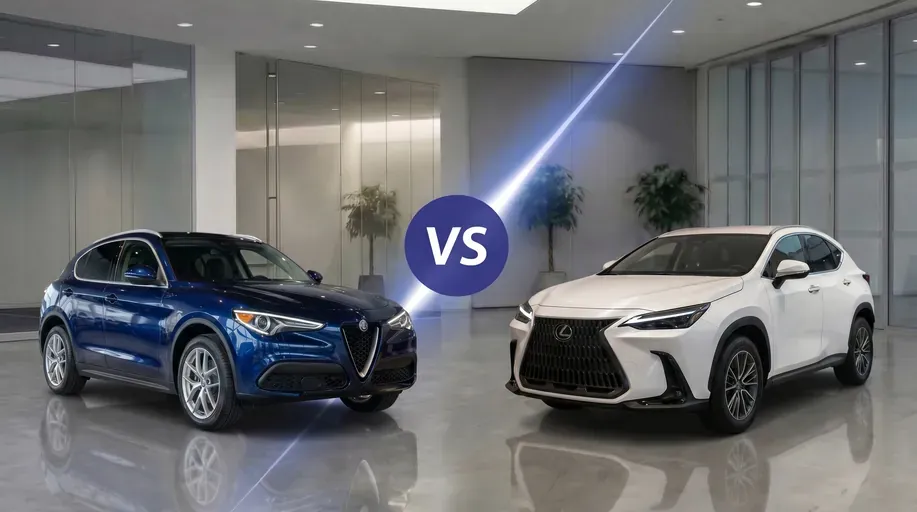
Alfa Romeo Stelvio vs. Lexus NX Comparison: Which used premium SUV to choose? We bring you a detailed look at reliability, equipment and a clear final verdict.
Apr 17, 2026
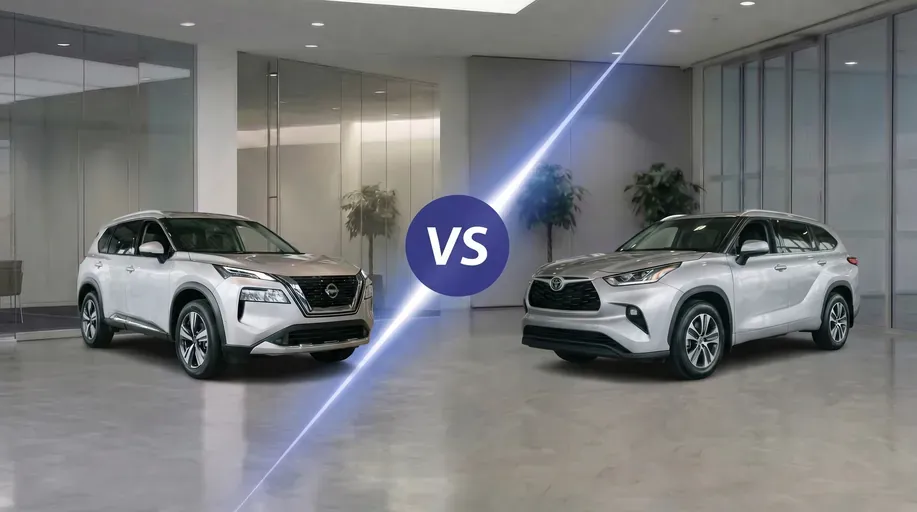
Detailed comparison of the Nissan X-Trail and Toyota Highlander. Find out which family SUV offers better space, equipment, and fuel consumption. Read our final verdict!
Apr 18, 2026