Car battle
Peugeot 208 vs. Toyota Yaris: Complete comparison 2026
Detailed comparison: Peugeot 208 vs. Toyota Yaris. Looking for a reliable used city car? We reveal real-world fuel consumption, equipment, and deliver a clear verdict.
May 4, 2026
Articles
Car battle
Detailed comparison: Peugeot 208 vs. Suzuki Swift. Which used hatchback has better fuel economy, reliability, and equipment? We will help you choose in our verdict.
May 10, 2026
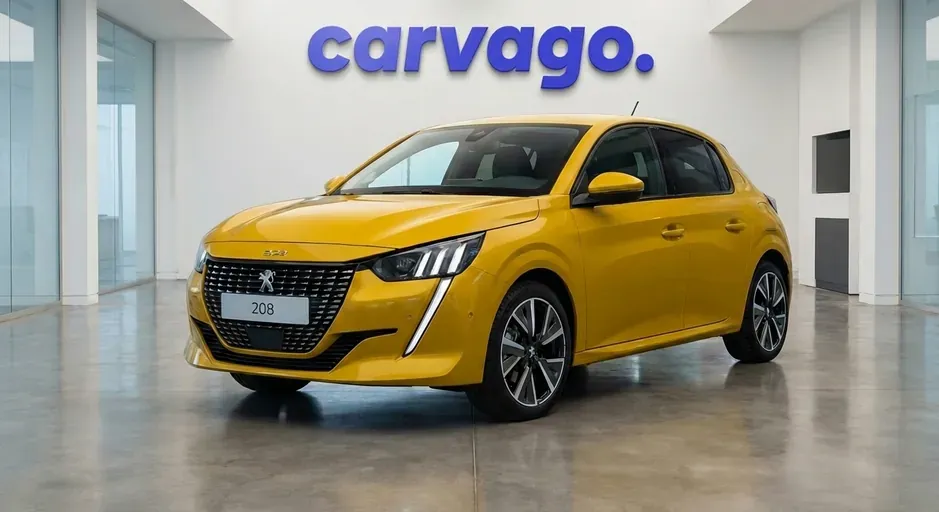
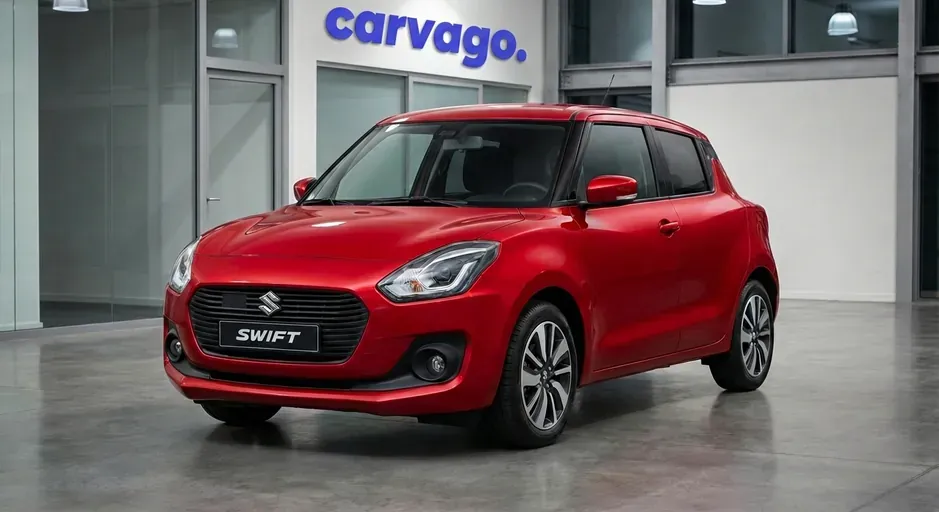
Peugeot 208 attracts with its distinctive French design and innovative interior with the i-Cockpit layout, making it one of the most stylish compact hatchbacks on the market. Standing against it is the Suzuki Swift, which has built a solid reputation as an exceptionally lightweight, reliable, and fun-to-drive car with very agile handling characteristics. Let's take a look together at how these two popular urban companions fare in a direct comparison and which of them represents the smarter choice for your daily journeys.
When comparing the exterior dimensions of both cars, it is clear at first glance that the Peugeot 208 is among the larger representatives of the small car segment, while the Suzuki Swift stubbornly maintains its ultra-compact proportions. The second-generation Peugeot 208 measures 4055 mm in length, which is a significant 215 mm more than the sixth-generation Suzuki Swift, whose base length stays at 3840 mm (or 3890 mm for the Sport version). In practice, this difference in length means that the French model provides a more majestic impression and slightly more generous longitudinal interior space, while its Japanese competitor will absolutely excel at quick maneuvering in narrow city streets and parallel parking in tight spaces.
In terms of width and height, both models offer a different approach to overall design and body aerodynamics. At 1745 mm, the Peugeot 208 is slightly wider than the Swift (1735 mm), but its roof is set significantly lower, specifically at 1430 mm (up to 1400 mm for sports derivatives). The Suzuki Swift, on the other hand, grows more in height, reaching between 1480 and 1505 mm. The wider and lower build gives the Peugeot 208 a sportier and more aggressive silhouette and contributes to a lower center of gravity. Conversely, the Swift's taller silhouette makes getting into the car slightly easier and helps maximize headroom for passengers despite the overall shorter footprint.
A key parameter for passenger comfort and directional stability is the wheelbase. For the Peugeot 208, this value is 2540 mm, while the Suzuki Swift makes do with a shorter wheelbase of 2450 mm. The difference of exactly 90 mm is noticeable when driving – thanks to its longer wheelbase and overall length, the Peugeot offers calmer, more stable, and smoother behavior at highway speeds. The Suzuki Swift benefits from its shortened wheelbase primarily in the city and on winding backroads, where it exhibits extraordinary maneuverability, agility, and a sense of playfulness behind the wheel.
| Parameter | Peugeot 208 Hatchback | Suzuki Swift Hatchback |
|---|---|---|
| Width (mm) | 1745 | 1735 |
| Length (mm) | 4055 | 3840 - 3890 |
| Height (mm) | 1400 - 1430 | 1480 - 1505 |
| Wheelbase (mm) | 2540 | 2450 |
When choosing a compact city car, the trunk volume often plays a surprisingly crucial role. Even though these cars naturally don't break records in absolute transport capacity, every extra liter means greater everyday usability – whether it's for hassle-free storage of a family's weekend shopping, a stroller, or the need to pack for a longer vacation. Differences between individual models in this crowded class can be quite noticeable and for used car buyers often decide how practical the car will be even on trips outside narrow city streets.
The second-generation Peugeot 208 (an ideal choice on the market for approximately four-year-old used cars) offers a trunk volume of 309 liters in the standard hatchback body configuration. This is a very solid value in the given segment, which easily provides space for a few extra suitcases. After folding the rear seats, this capacity expands to a very practical 1004 to 1163 liters, depending on the specific version and floor layout. It is important to mention that in modern hybrid and conventional variants, the space is generous, but some older fully electric versions and diesel models may offer a slightly reduced base due to different component packaging, where the basic volume drops to values around 265 to 299 liters.
Conversely, the sixth-generation Suzuki Swift is overall slightly more compact than its French competitor, which is directly reflected in the rear of the car. Its basic trunk volume is 265 liters, which is perfectly sufficient for regular errands and sports bags, but for family travel, it may already require some compromise. After folding the seats, you get a maximum usable space of 947 liters. A huge advantage of the Suzuki, however, is the excellent integration of mild-hybrid systems – these do not limit the already modest trunk volume in any way, and all variants of this generation thus maintain a consistent transport capacity. From an overall perspective, however, the Peugeot 208 feels like a significantly more versatile choice.
| Parameter | Peugeot 208 Hatchback | Suzuki Swift Hatchback |
|---|---|---|
| Basic volume (liters) | 309 | 265 |
| Maximum volume with seats folded (liters) | 1004 - 1163 | 947 |
If everyday practicality and luggage space are key priorities for you, the Peugeot 208 is the clear choice thanks to its larger and more variable trunk, while the Suzuki Swift will serve perfectly for individuals or couples with more modest cargo-carrying requirements.
Although small hatchbacks don't usually serve as workhorses, the ability to attach a trailer plays an important role in the overall practicality of the car for many buyers. Looking at used cars roughly four years old (the second-generation Peugeot 208 produced since 2019 and the sixth-generation Suzuki Swift from 2017–2024), we find that both models approach trailer weight somewhat differently.
While for most common engines (e.g., 1.2 PureTech petrol engines with 74 kW and 96 kW or 1.5 BlueHDi diesel), the Peugeot 208 offers a generous maximum braked trailer weight of 1200 kg for its class, its Japanese competitor is somewhat more conservative. The Suzuki Swift maintains a flat and consistent limit of 1000 kg for its standard petrol units (1.0 Boosterjet and 1.2 Dualjet).
There is also a significant difference in unbraked trailers. Thanks to its overall higher curb weight, the Peugeot can tow an unbraked trailer weighing up to 580 kg, while the lighter Swift is homologated for only 400 kg.
In many modern cars, hybrid variants often have reduced towing capacity. However, it is pleasing to note that the mild-hybrid versions of both cars (Swift SHVS and Peugeot 1.2 Hybrid) retain the full capacities of their purely internal combustion siblings. Nevertheless, significant limitations await those interested in the entry-level or, conversely, top-tier versions. If you choose the weakest naturally aspirated three-cylinder 1.2 PureTech (55 kW) for the Peugeot, the maximum braked capacity drops to just 500 kg. In the case of the sporty Suzuki Swift Sport (1.4 Boosterjet) or the fully electric Peugeot variants (e-208), a towing hitch cannot be used for a trailer at all.
In everyday life, these values mean a substantial difference in the car's utility. The generous 1200 kg of the more powerful Peugeot 208 is a capacity sufficient for a weekend purchase of heavier building materials on a large trailer or a longer holiday with a lighter caravan. The 1000 kg value for the Swift, and especially the 500 kg for the base Peugeot, represents instead space for a few extra suitcases, hauling garden waste, or transporting common leisure equipment.
If you know you will use a trailer often and to its full potential, the more powerful versions of the Peugeot 208 offer a 200 kg larger braked and 180 kg larger unbraked reserve than the competitor. The Suzuki Swift, on the other hand, is an excellent safe bet with a transparent 1000 kg for the vast majority of units you will encounter in used car dealerships.
| Model and engine | Braked trailer weight (kg) | Unbraked trailer weight (kg) |
|---|---|---|
| Peugeot 208 1.2 PureTech / Hybrid (74 - 96 kW) | 1200 | 580 |
| Peugeot 208 1.5 BlueHDi (75 kW) | 1200 | 580 |
| Peugeot 208 1.2 PureTech (55 kW) | 500 | 500 |
| Peugeot 208 136 / 156 (e-208) | 0 | 0 |
| Suzuki Swift 1.0 / 1.2 Dualjet (61 - 82 kW) | 1000 | 400 |
| Suzuki Swift Sport 1.4 Boosterjet (95 - 103 kW) | 0 | 0 |
Both cars approach their engine lineups from completely different angles, which plays a key role in choosing the right used car with regard to fuel consumption, overall dynamics, and reliability. While the French Peugeot, in its second generation, bets on modern turbocharged three-cylinders, smooth-shifting eight-speed automatics, and even offers an economical diesel or a fully electric variant, the Japanese Suzuki, with the sixth-generation Swift, follows the path of mechanical simplicity. Its range is dominated by honest naturally aspirated four-cylinders supported by mild-hybrid technology and a rarity in the small car segment – optional all-wheel drive. If you have a strictly defined budget and are looking for a car with minimal operating costs for the city, Suzuki's naturally aspirated engines will be a bullseye. However, if you spend a lot of time on the motorway or require a larger power reserve and technological sophistication from your car, Peugeot's turbocharged petrol or diesel engines will serve you much better.
The engine range of the second-generation Peugeot 208 (since 2019) is very diverse and targets a wide spectrum of drivers. The foundation consists of 1.2 PureTech petrol three-cylinders, starting with a modest output of 55 kW (75 hp) for purely city driving. The "sweet spot" of the used car market is the turbocharged variant with 74 kW (100 hp), which offers an excellent compromise between dynamics and fuel consumption, both with a manual and in combination with the reliable EAT8 eight-speed automatic. The top of the petrol range is a more powerful derivative with 96 kW (130 hp). For high-mileage drivers, the 1.5 BlueHDi diesel four-cylinder is a huge draw; however, it should be noted that according to available data, its production for this model was definitively ended in the autumn of 2023. Therefore, you will no longer find it in newer units on the used car market. The range is rounded off by the fully electric e-208 version, which, with a 50 kWh battery and 100 kW (136 hp) output, fulfills the role of an elegant, locally emission-free vehicle. Additionally, at the end of 2023, the brand began replacing pure internal combustion engines with new 48V mild-hybrids (1.2 Hybrid 100 and 136).
| Engine type | Fuel | Power (kW / hp) | Torque (Nm) | Transmission |
|---|---|---|---|---|
| 1.2 PureTech 75 | Petrol | 55 / 75 | 118 | 5MT |
| 1.2 PureTech 100 | Petrol | 74 / 100 | 205 | 6MT / 8AT |
| 1.2 PureTech 130 | Petrol | 96 / 130 | 230 | 8AT |
| 1.5 BlueHDi 100 | Diesel | 74 / 100 | 250 | 6MT |
| e-208 136 | Electricity | 100 / 136 | 260 | 1AT |
The sixth-generation Suzuki Swift (available 2017–2024) is the exact opposite – it aims for lightweight construction and the minimisation of complex components, promising exemplary long-term reliability. For cars that are on average 4 years old, the 1.2 Dualjet petrol four-cylinder is the absolutely dominant engine. This reliable unit underwent a comprehensive update in 2020 to a mild-hybrid system with a slightly adjusted output of 61 kW (83 hp), which helps cover delays when pulling away and significantly reduces fuel consumption in the city. The biggest advantage of this engine is the fact that it can be combined with the sophisticated ALLGRIP all-wheel drive, which is a complete unique feature in the city hatchback class. Those who wanted more dynamics for overtaking could opt for the turbocharged 1.0 Boosterjet three-cylinder until the summer of 2020; however, this engine was permanently withdrawn from sale in July 2020 due to emission standards. For driving enthusiasts, the excellent Swift Sport hothatch stands at the top, hiding an agile 95 kW (129 hp) 1.4 Boosterjet Hybrid turbocharged four-cylinder under the bonnet, paired exclusively with a precise six-speed manual.
| Engine type | Fuel | Power (kW / hp) | Torque (Nm) | Transmission |
|---|---|---|---|---|
| 1.2 Dualjet | Petrol | 66 / 90 | 120 | 5MT / CVT |
| 1.2 Dualjet Hybrid | Petrol (MHEV) | 61 / 83 | 107 | 5MT / CVT |
| 1.0 Boosterjet | Petrol | 82 / 111 | 170 | 5MT / 6AT |
| 1.4 Boosterjet Hybrid (Sport) | Petrol (MHEV) | 95 / 129 | 235 | 6MT |
The Peugeot 208 will win the hearts of motorway travelers with its more powerful turbo engines and great diesel, while the Suzuki Swift triumphs with thrifty drivers thanks to its honest and immortal naturally aspirated engines complemented by unique all-wheel drive.
Choosing the right engine is crucial for long-term satisfaction with a used car, and our recommendations are based on real-world experience, fuel consumption in traffic, and mechanical reliability. While the Peugeot 208 relies mainly on turbocharged three-cylinder engines that offer strong pull and agile dynamics, the Suzuki Swift, in the market for roughly four-year-old used cars, distinguishes itself with its economical naturally aspirated engines supported by mild-hybrid technology. Both approaches have their undeniable advantages but represent different worlds in terms of driving performance and maintenance requirements.
This turbocharged three-cylinder represents the ideal middle ground in the second-generation Peugeot 208 (on sale since 2019) lineup, offering a perfect compromise between purchase price, dynamics, and running costs. For a relatively light car, the engine provides a generous 205 Nm of torque from low revs, ensuring great flexibility in city traffic and confidence when overtaking on country roads or motorways. Real-world fuel consumption easily stays around 5.5 l/100 km.
The main specific feature and potential risk of this engine is the wet timing belt (running in oil). If the correct oil specification is not followed or if service intervals are exceeded (especially if the car frequently makes short city trips with a cold engine), the belt tends to degrade. Loose particles can then clog the oil pump pickup screen. Fortunately, this problem can be prevented. When buying a used car, visually check through the oil filler cap to see if the belt is fraying (or have a mechanic check it with a special gauge), and after purchase, shorten the oil change interval to a maximum of 15,000 km or one year.
This engine is an excellent choice for drivers who demand a more spirited drive and are looking for a versatile car for combined use with regular trips outside the city.
In the case of the sixth-generation Suzuki Swift (on the market from 2017 to 2024), the naturally aspirated 1.2 Dualjet four-cylinder is an entirely rational choice. In the most sought-after four-year-old used cars, it is standardly paired with a reliable mild-hybrid system (SHVS). In terms of mechanical durability and running costs, it is one of the best engines on the market. Thanks to the absence of a turbocharger and complex emission systems, many potential risks are eliminated. Furthermore, dual injection effectively prevents carbon buildup, making the engine highly resistant to the challenges of frequent short cold starts.
The result is an amazingly efficient powertrain with real-world consumption between 4.5 and 5 litres per 100 km. The mild-hybrid starter-generator also smooths out responses at low revs and assists the car during city pull-offs. A weakness for some might be the lower flexibility at higher speeds – overtaking maneuvers simply require timely downshifting and revving the engine, which is common practice for a classic "naturally aspirated" engine. When inspecting the car, check the condition of the chassis and structural parts, as Japanese-made cars can be more prone to surface corrosion if, for example, they have been driven long-term in salty mountain regions.
This engine is absolutely ideal for daily city commuting, for calmer drivers, and simply for anyone who prefers above-standard reliability with minimal maintenance worries in a used car.
When choosing a roughly four-year-old used car, one of the most discussed topics is real-world fuel consumption. As is often the case, official manufacturer figures based on laboratory test cycles tend to be overly optimistic and are rarely achieved in daily traffic. To get a much more reliable picture of actual operating costs, we used real data directly from owners on the popular community portal Spritmonitor.de. These extensive user databases naturally take into account the influence of traffic flow, vehicle load, and different personal driving styles. We focused on the engine options most commonly found on the market for roughly four-year-old used cars, namely the second-generation Peugeot 208 and the sixth-generation Suzuki Swift.
| Model and engine | Average consumption (l/100 km) |
|---|---|
| Peugeot 208 1.5 BlueHDi 74 kW | 4.1 |
| Peugeot 208 1.2 PureTech 55 kW | 5.3 |
| Peugeot 208 1.2 PureTech 74 kW | 5.2 |
| Peugeot 208 1.2 PureTech 96 kW | 5.4 |
| Suzuki Swift 1.2 Dualjet Hybrid 61 kW | 4.9 |
| Suzuki Swift Sport 1.4 Boosterjet Hybrid 95 kW | 5.6 |
Looking closely at the data reveals several interesting trends. Traditionally, the most fuel-efficient choice across both models is the 1.5 BlueHDi diesel four-cylinder under the Peugeot's hood, which excels particularly on longer routes with an average of 4.1 liters. Among the petrol engines, however, many might be surprised by the fact that the weakest naturally aspirated version of the Peugeot (1.2 PureTech 55 kW) actually consumes a tenth of a liter more in reality than its turbocharged 74 kW variant. This is because drivers have to rev small non-turbo three-cylinders much more during acceleration and highway climbs, which completely negates the desired theoretical fuel savings. In contrast, the Suzuki Swift demonstrates the huge advantage of its featherweight build and sophisticated mild-hybrid technology – the reliable 1.2 Dualjet Hybrid petrol four-cylinder consistently stays below the magic five-liter mark and offers a great balance of low maintenance and operating economy. Even the significantly more dynamic Swift Sport version, with its 1.4 Boosterjet Hybrid turbocharged engine and sporty ambitions, maintains a very respectable consumption of 5.6 l/100 km.
For the average user, these values lead to fairly clear recommendations. If you spend most of your time in heavy city traffic or on shorter suburban routes, the Suzuki Swift with the 1.2-liter mild-hybrid represents an ideal, economical, and technically reliable choice for your budget. It will significantly ease the burden on your wallet and fully utilize energy recuperation at low speeds. However, customers who regularly cover dozens of kilometers on highways or commute between cities should definitely consider the diesel Peugeot 208. Traveling with the 1.5 BlueHDi engine will bring not only significant fuel savings on long trips but also much more mature acoustic comfort.
In conclusion, although neither car is a "gas guzzler," fuel consumption itself could and should play an important role in the final decision on a used car. The decisive factor is not the absolute value itself, but rather the environment in which you will move most often. While Peugeot attracts with the possibility of an extremely economical diesel for mileage eaters, Suzuki scores with the overall Japanese efficiency of its petrol mild-hybrids in the daily city routine.
When looking for a used car approximately four years old (2021–2022 models), both models fall into price ranges that accurately reflect their popularity and market reputation. This comparison focuses on the second-generation Peugeot 208 and the sixth-generation Suzuki Swift after its facelift.
Used Peugeot 208s from 2021 to 2022 hold their value very well, primarily due to their highly attractive design and modern interior.
The Suzuki Swift from the same period is considered a highly rational and reliable choice, which is reflected in its very stable residual value.
| Feature | Peugeot 208 (2nd gen) | Suzuki Swift (6th gen) |
|---|---|---|
| Base used price | from approx. €10,700 | from approx. €10,300 |
| Average market price | approx. €11,900 | approx. €11,500 |
| Most common engine | 1.2 PureTech (petrol) | 1.2 Dualjet MHEV (mild-hybrid) |
| Biggest price drivers | GT trim, EAT8 automatic, e-208 model | Swift Sport, 4x4 drive (AllGrip) |
From a used car market perspective, both cars are excellent choices but target slightly different audiences. While the French representative commands a premium for its more premium look and sophisticated onboard technology, the Suzuki Swift justifies its stable price through its renowned mechanical durability and standard fuel-efficient technology.
Although both models start at very similar prices on the used market, the Peugeot 208 offers a wider price range thanks to its more stylish trims and electric version, while the Suzuki Swift attracts buyers with its stable value and efficient mild-hybrid powertrain.
Many used car buyers assume that such popular models automatically offer five-star Euro NCAP ratings (as was often the case with their earlier generations). When choosing a roughly four-year-old used car, however, it is crucial to know the context and, above all, the year of testing. Euro NCAP protocols are constantly evolving and becoming stricter over time, meaning that percentage scores from different years cannot be directly compared. While earlier years focused primarily on structural integrity in frontal or side impacts, newer standards uncompromisingly require modern active systems, such as simulations of cyclist and pedestrian detection or automatic braking at challenging intersections.
The Peugeot 208 underwent Euro NCAP tests in 2019. In its standard equipment, it earned a very solid four stars, missing the full score by a hair. At the time, the commissioners highlighted top-tier protection for adults (91%) and children (86%), although the car lost key points due to weaker whiplash protection for rear-seat passengers in a rear-end collision. Even though it did not reach the absolute five-star peak, its 2019 result reflects the application of very strict rules. As a result, the car features a highly modern active safety architecture.
The Suzuki Swift, on the other hand, was examined back in 2017. In its basic specification, the car received only a three-star rating (it achieved four stars only with the optional "Radar Brake Support" safety package). Adult and child protection were adequate for the time, but the car was let down by poor basic assistance equipment, for which it received only 25%. Furthermore, the validity of this 2017 certificate definitively expired in January 2024 according to Euro NCAP rules. In today's context, this clearly shows that a standard Swift would no longer meet the strictest current accident prevention requirements.
An overall comparison of both models shows that the Peugeot offers a significantly more sophisticated safety standard. Although the Suzuki Swift recorded slightly better percentages for the passive protection of vulnerable road users, the massive gap in the safety assist rating clearly favors the French car. From the perspective of today's active safety standards, it is a much safer and more comprehensive choice for a buyer of a four-year-old used car.
| Parameter | Peugeot 208 | Suzuki Swift |
|---|---|---|
| Year of testing | 2019 | 2017 |
| Adult occupant protection | 91 % | 83 % |
| Child occupant protection | 86 % | 75 % |
| Vulnerable road user protection | 56 % | 69 % |
| Safety assist systems | 71 % | 25 % |
Thanks to its significantly newer 2019 design, the Peugeot 208 offers much more advanced basic assistance systems, while the Suzuki suffers from its older testing date and a minimum of active safety features in its standard equipment.
Both models offer much more than just basic equipment, with each approaching added value and technological innovation in its own, very distinctive way.
With the current generation, Peugeot has bet on a strong visual impression, a more luxurious interior concept, and a wide range of powertrains. It primarily targets drivers who seek modern technology and want to stand out in traffic.
The Japanese manufacturer takes a more traditional, yet extremely practical and efficient path with the Swift. A car roughly four years old embodies a return to the roots of driving fun, primarily thanks to its extremely low weight and sophisticated engineering.
Attractive and distinctive exterior design that stands out in the small car segment
Premium-feeling interior materials and innovative i-Cockpit dashboard layout
Very good cabin soundproofing and overall comfortable chassis tuning
Availability of a wide range of powertrains, including a successful fully electric version (e-208)
Rich offering of modern active safety features and assistance systems
Cramped legroom and headroom in the rear seats
The specific position behind the small steering wheel (i-Cockpit) can obscure the instrument cluster and does not suit all body types
Lack of physical buttons for air conditioning, which is impractically controlled via the touchscreen
Higher purchase price on the used car market compared to most competitors
The Peugeot 208 is an ideal choice for drivers looking primarily for style, comfort, and a more premium interior in a city car. With its striking design and modern technologies, it targets those who appreciate silence and material quality on board, while being willing to accept compromises in rear-seat spaciousness and a slightly higher price tag.
Exceptionally low curb weight ensuring great agility and driving pleasure
Excellent engine reliability and very low real-world operating costs
Standard mild-hybrid technology helping to achieve great fuel economy in the city
Optional all-wheel drive (AllGrip), which is unique in this class
Great value for money when buying a used car
Smaller luggage compartment volume (only 265 liters) limiting practicality on longer trips
Extensive use of cheaper hard plastics in the interior
Outdated graphics and slower response of the multimedia system
Poorer cabin soundproofing and aerodynamic noise at highway speeds
The Suzuki Swift represents the perfect choice for rationally-minded drivers who demand maximum reliability, low fuel consumption, and agility in city traffic from their vehicle. Thanks to its lightness, it offers surprisingly fun driving characteristics, and as one of the few small cars, it can handle more demanding terrain or snowy roads thanks to its 4x4 drive, albeit at the expense of luxury and modern interior trends.
Based on long-term user experience, service reports, and data from our own CarAudit inspections, we have compiled an overview of the most common problems that buyers of roughly four-year-old used cars should watch out for.
The second generation of the Peugeot 208 brings a very attractive design and modern technology, but in terms of maintenance, some engines require above-standard care.
For petrol versions, a verifiable maintenance history and checking the condition of the timing belt are key; otherwise, it is a car that mostly suffers only from solvable software quirks.
The Suzuki Swift is considered one of the most reliable cars in its class on the used car market, yet it has characteristic weak points associated with an overall emphasis on weight reduction and production costs.
The Japanese hatchback excels in the mechanical reliability of the engines themselves, but a future owner should accept the more delicate paint and cheaper interior finish.
When buying a used car, a thorough inspection is key. Here are some specific points to focus on for these two models, while for peace of mind, a comprehensive car audit is always appropriate before the final signing of the contract.
Peugeot 208 offers a slightly larger trunk with a volume of 311 liters. Suzuki Swift has a 265-liter trunk due to its overall more compact dimensions. However, both models are fully sufficient for regular shopping and daily city driving.
The Suzuki Swift excels thanks to its low weight and reliable mild-hybrid technology, so in practice, it often drives with consumption below 5 liters per 100 km. The Peugeot 208 with 1.2 PureTech gasoline engines is also economical, but on average, it consumes slightly more fuel. However, the French model also offers a purely electric e-208 version as a quiet and eco-friendly alternative.
The Japanese representative is slightly more agile in cramped urban environments thanks to its shorter body, small turning radius, and excellent steering response. On the other hand, the Peugeot scores with better cabin soundproofing and overall more comfortable damping of bumps and cobblestones. Additionally, the Swift is one of the few cars in this class to offer AllGrip all-wheel drive, which significantly facilitates driving in snowy or hilly areas.
Suzuki is considered an exceptionally reliable car thanks to simpler naturally aspirated engines without complex turbochargers and with a durable timing chain. For a used Peugeot, it is necessary to carefully check the condition of the oil-bathed timing belt in older PureTech engines and strictly follow shortened oil change intervals. From the perspective of long-term and worry-free maintenance with minimal unexpected expenses, the Swift is therefore the safer choice.
The French hatchback feels more premium inside thanks to elegant soft-touch plastics and the futuristic i-Cockpit dashboard layout with digital dials. The Swift's interior sticks more to traditional simple functionality and uses more hard plastics, which on the other hand makes it easier to clean regularly. If you prefer modern technology, eye-catching design, and top-notch material processing, the Peugeot 208 is the clear winner.
The final decision between these two exceptionally popular hatchbacks depends primarily on your daily needs and preferred driving style. If you are looking for a stylish, safe, and overall more practical car with a more premium interior, a larger boot, and mature driving characteristics for motorway travel, the Peugeot 208 will clearly impress you with its modern technologies and more powerful engines. Conversely, the Suzuki Swift is the perfect choice for rational-minded drivers who mostly navigate narrow city streets and demand uncompromising mechanical reliability, extremely low fuel consumption, and maximum agility, which can also be supported by an all-wheel drive system that is absolutely unique in this class. Both models represent a very sensible and sought-after investment on the market for roughly four-year-old used cars, so all that remains is to consider whether you prefer French avant-garde with a touch of luxury, or indomitable Japanese efficiency and featherweight lightness.
Sources: ADAC, lidovky.cz, idnes.cz, elektromobil.cz, techfocus.cz, autoskola-testy.cz
This article was prepared using artificial intelligence tools. The section guarantor is Petr Dušek.
Detailed comparison: Peugeot 208 vs. Toyota Yaris. Looking for a reliable used city car? We reveal real-world fuel consumption, equipment, and deliver a clear verdict.
May 4, 2026
Škoda Fabia vs. Toyota Yaris. A detailed comparison of engines, features, and prices. Find out which of these popular small cars is the right one for you.
Apr 13, 2026
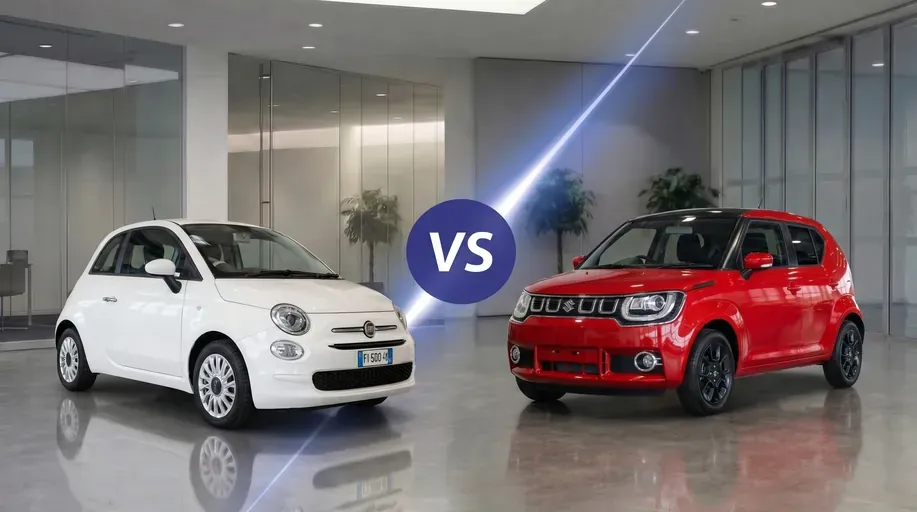
Detailed comparison: Fiat 500 vs Suzuki Ignis. We compared the Italian icon with the Japanese mini SUV. Discover the differences, fuel consumption, and verdict before buying a used car.
Apr 23, 2026