Articles

Car battle

Opel Zafira Life vs. Renault Trafic SpaceClass: Complete comparison 2026

Detailed comparison of the Opel Zafira Life vs Renault Trafic SpaceClass. We compared the interior space, comfort, and driving characteristics of these used cars. Which van should you choose?

May 17, 2026

VS
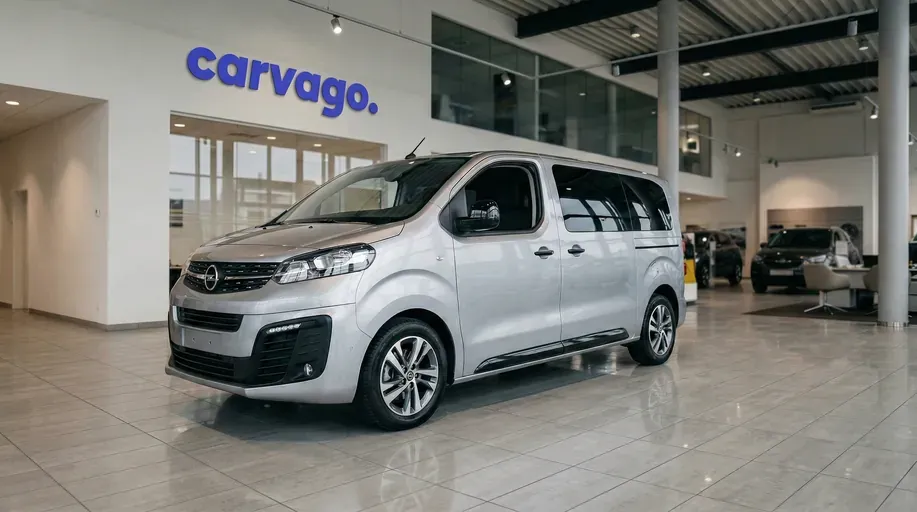
Opel Zafira Life

Opel Zafira Life

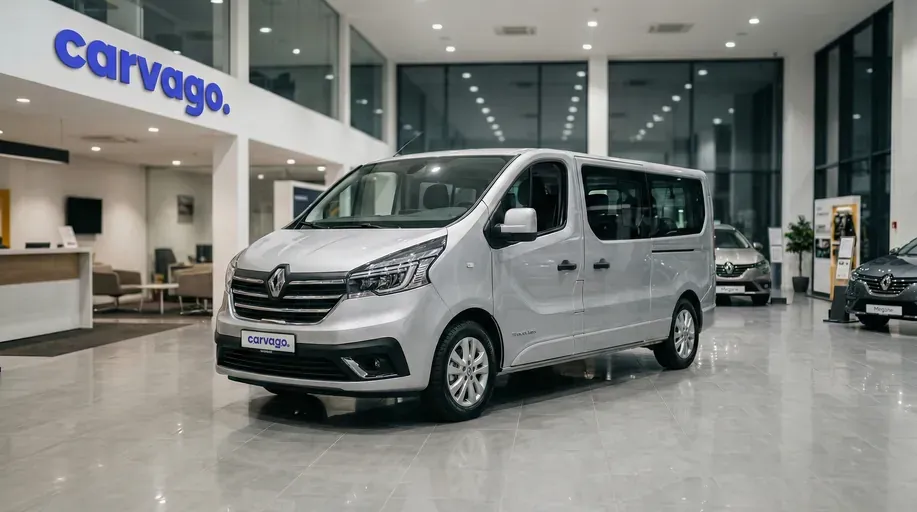
Renault Trafic SpaceClass

Renault Trafic SpaceClass

Introduction

Opel Zafira Life, also known as the Vauxhall Zafira Life in selected markets, is a highly versatile and technologically advanced passenger van that offers generous interior space for large families and business purposes. Its challenger today is the Renault Trafic SpaceClass, a premium top-of-the-line passenger version of the popular French model (known on the market in various generations also under sister names such as Nissan NV300, Nissan Primastar, or Fiat Talento), which focuses on exceptionally comfortable and luxurious passenger transport. Let's take a detailed look at how these two European large-capacity competitors fare in a direct comparison and which of them, as a slightly used car, represents a better choice for your daily needs.

Comparison of External Dimensions

When choosing a large-capacity family or business vehicle, external dimensions play a key role. Looking at models around four years old (circa 2022), the approach of both manufacturers to overall body size differs significantly. While the Renault Trafic SpaceClass represents a more robust take on the classic passenger van, the Opel Zafira Life bets on much greater flexibility and offers a wider range of sizes. In terms of daily use, this means that with the German representative, you can better choose proportions tailored exactly to your family needs, while the French competitor aims directly for maximum transport capacity.

The differences are most apparent when looking at the overall length. The third-generation Renault Trafic SpaceClass is available in two variants – the basic L1 measures 5080 mm and the extended L2 an impressive 5480 mm. The Opel Zafira Life, on the other hand, comes in three lengths, of which the shortest version measures a very compact 4606 mm and the longest reaches 5306 mm. This means that the shortest Zafira Life is a massive 474 mm shorter than the basic Trafic. For customers in the used car market, this represents a huge advantage: if you primarily need a car for the city, the shorter Opel will be incomparably easier to park. Renault, conversely, counters with a longer wheelbase (up to 3498 mm compared to 3275 mm for the Opel), which guarantees superior directional stability at highway speeds and significantly more longitudinal space for passengers.

A critical parameter that often decides the usability of such large vehicles is the overall height. The Opel Zafira Life was specifically engineered so that its height (around 1890 to 1940 mm depending on the version and load) safely fits under the magic 1.9-meter limit. From the perspective of daily ergonomics, this is invaluable, as you can drive the Opel into the vast majority of underground garages without worry. The Renault Trafic SpaceClass, by contrast, is noticeably taller at 1971 to 1974 mm and slightly wider overall (1956 mm compared to 1920 mm for the Opel). In some older underground garages with lower ceilings, this can already be a problem and forces the driver to be more cautious, which, on the other hand, is compensated in practice by a much airier and more spacious feel inside the cabin.

These physical proportions thus very clearly dictate who each car on the used market is actually intended for. The Opel Zafira Life, with its more compact dimensions and lower build, is much more accommodating to city life and can reliably replace a classic family MPV. The Renault Trafic SpaceClass, on the other hand, is clearly a robust highway cruiser, whose more generous external dimensions and massive van silhouette you will fully appreciate especially during the luxury transport of adult passengers on long international routes.
ParameterOpel Zafira Life VanRenault Trafic SpaceClass Van
Length (mm)4606 - 53065080 - 5480
Width (mm)19201956
Height (mm)1890 - 19401971 - 1974
Wheelbase (mm)2925 - 32753098 - 3498

Trunk Volume

Luggage capacity plays an absolutely crucial role in large passenger vans, as flexibility and the ability to transport a large family along with their gear are the main reasons for buying them. Whether you're planning routine daily tasks or trips across half the continent, the differences in liters can significantly impact daily usability. In the category of approximately four-year-old used cars, the Opel Zafira Life and Renault Trafic SpaceClass models frequently appear on the market. While both vehicles share a focus on transporting up to nine passengers, they approach the cargo space solution with slightly different philosophies.

The Opel Zafira Life relies on excellent variability thanks to three different body lengths. In the medium variant (M), the base volume behind the third row of seats is around 640 liters, while the longest version (L) offers a generous 1060 liters. If you fold down or completely remove the rear seats, this model transforms into an exceptionally practical vehicle with a maximum volume of 3600 to 4900 liters. This capacity is more than sufficient for weekend shopping as well as longer holidays with plenty of sports equipment. A huge advantage is also the fact that in the fully electric Zafira-e Life variant, there is absolutely no reduction in this generous interior space, thanks to the cleverly placed batteries in the floor.

The competing Renault Trafic SpaceClass (typically in the facelifted third generation) represents an even more robust approach to the van and offers fantastic values right from the start. Even in the shorter version (L1), it has a standard volume of 1000 liters. If you choose the extended L2 variant, you get a full 1800 liters, which in practice means generous space for several extra suitcases without having to compromise the comfort of the passengers in the rear rows. When all rear seats are removed, the maximum transport capacity reaches a monumental 6000 liters, literally turning the vehicle into a moving van.

ParameterOpel Zafira Life VanRenault Trafic SpaceClass Van
Base volume (liters)640 - 10601000 - 1800
Max volume with seats folded down (liters)3600 - 49006000

These figures clearly show that while the Opel Zafira Life scores with its variability of dimensions and offers values that are perfectly sufficient for the vast majority of families, the Renault Trafic SpaceClass is the clear ruler of absolute space. If your priority when choosing a used car is moving huge loads or carrying the maximum number of suitcases when fully occupied, Renault offers a volume reserve that is hard to beat in this class.

Who wins the trunk battle? 🧳

The Renault Trafic SpaceClass offers uncompromising space for the most demanding transport tasks, while the Opel Zafira Life counters with great variability and fully usable volume even in its electric version.

Discover the true condition of the car thanks to an independent inspection

Order CarAudit™

Trailer Weights

Towing capacity is an absolutely key parameter for owners of large passenger vans, as these vehicles often serve not only to transport large families but also function as primary towing vehicles for heavy caravans or boats. The roughly four-year-old Renault Trafic SpaceClass (technically falling under the third generation from 2021–2024) provides excellent towing capacity with its modern diesel engines. Its standard braked trailer weight starts at 1,630 kg and reaches an impressive 2,500 kg for the more versatile Blue dCi 150 version. The competing Opel Zafira Life (for which exact table values are currently missing in our database) offers similarly convincing figures in its diesel engines, handling a braked trailer weighing 1,800 to 2,300 kg. However, a fundamental difference occurs with the eco-friendly variants. If you choose the fully electric Opel Zafira-e Life, its towing capacity drops radically to just 1,000 kg. An attached light trailer thus represents more of a space for a few extra suitcases, which is sufficient for weekend shopping or a longer holiday, but not for transporting truly heavy loads. All mentioned models handle an unbraked trailer up to the classic legislative limit of 750 kg. Overall, it can be said that if regular towing of a heavy trailer is a priority for you, the diesel variants of both cars will do a fantastic job and represent a perfectly balanced choice. When buying an Opel, however, you must very carefully monitor the chosen type of drive.

Model and motorizationBraked weight of trailer (kg)Unbraked weight of trailer (kg)
Renault Trafic Combi Blue dCi 110 (81 kW)2000750
Renault Trafic Combi Blue dCi 150 (110 kW)1630 - 2500750
Renault Trafic Combi Blue dCi 170 (125 kW)1630 - 1680750

Overview of Most Common Motorizations

Both models, within the market for roughly four-year-old used cars, focus primarily on reliable and powerful two-liter diesel engines, which is absolutely crucial for transporting larger families or VIP clients. While the Renault Trafic SpaceClass relies exclusively on robust Blue dCi diesel four-cylinder engines with the option of a fast EDC dual-clutch transmission, the Opel Zafira Life offers a slightly wider range of powertrains. In addition to the classic 1.5 and 2.0-liter diesel engines with a smooth-shifting eight-speed torque converter automatic, it also brings a fully electric variant Zafira-e Life. In terms of highway dynamics, both cars offer similar peak performance – Renault provides 125 kW (170 hp) and 380 Nm, while Opel counters with 130 kW (177 hp) and 400 Nm. The choice will therefore depend primarily on what type of driver you are. If you are a driver focused on long distances and require agility when overtaking, Renault's dual-clutch automatic will be the more dynamic choice for you. However, if you are looking for maximum smoothness when crawling in city traffic or are considering a completely eco-friendly and quiet hotel transfer, the Opel comes out as the winner.

Opel Zafira Life

With the transition to a full-fledged van generation, the Opel Zafira Life underwent a radical change under the hood. Historical data clearly shows that engines from the older era of the family MPV (phased out around 2019) – whether they were 1.4 Turbo gasoline units, 1.6 CNG ecoFlex natural gas engines, or older 1.6 CDTI and 1.6 DI Turbo diesel units – are no longer available for the current model range at all. In the case of four-year-old used cars, you will encounter exclusively reliable engines of the new concept. The fleet base is the economical 1.5 Diesel engine; however, for a fully occupied heavy vehicle, the more powerful 2.0 Diesel makes significantly more sense. In its top version, it boasts an above-standard output of 130 kW and 400 Nm of torque, benefiting from a perfectly tuned eight-speed torque converter transmission, which excels in exemplary smoothness when starting off. A significant specific feature is also the offer of a fully electric version, the Zafira-e Life (100 kW), which is an ideal solution for emission-free transfers over shorter distances.

Engine typeFuelPower (kW)Torque (Nm)Transmission
1.5 DieselDiesel75 / 88270 / 3006MT
2.0 DieselDiesel90 / 110 / 130340 / 370 / 4006MT / 8AT
Zafira-e LifeElectricity1002601AT

Renault Trafic SpaceClass

Renault Trafic SpaceClass primarily profiles itself as a tough long-distance highway cruiser, and its range of power units respects this purpose 100%. In the market for roughly four-year-old vehicles, you will no longer come across older twin-turbo engines like the ENERGY dCi 125, ENERGY dCi 145, or the earlier ENERGY dCi 170, whose era ended in 2021. For modern model years, the Trafic SpaceClass has completely switched to the innovated Blue dCi family of two-liter units. Although the basic range opens with the Blue dCi 110 version, the more powerful Blue dCi 150 and the top-of-the-line Blue dCi 170 with a very generous 380 Nm of torque are much better suited for the premium luxury SpaceClass version. A major competitive advantage for Renault is the pairing of these powerful engines with a six-speed EDC dual-clutch transmission. This guarantees much more responsive and immediate shifting than a traditional torque converter system, giving the vehicle surprising agility and significantly reducing the time needed for safe highway overtaking.

Engine typeFuelPower (kW)Torque (Nm)Transmission
2.0 Blue dCi 110Diesel813006MT
2.0 Blue dCi 150Diesel1103506MT / 6EDC
2.0 Blue dCi 170Diesel1253806EDC

Diesel rules, electricity attracts 🔌

While the Renault Trafic SpaceClass, with its agile Blue dCi two-liter engines and dual-clutch transmission, is a clear highway express, the Opel Zafira Life appeals with its smooth torque converter automatic and an interesting electric alternative suitable for the city.

Choosing the right engine is absolutely crucial for long-term satisfaction with the car, which is why our recommendations are based on performance parameters, real-world fuel consumption, mechanical reliability, and feedback from owners themselves.

When comparing both cars and analyzing production history through AVAILABLE_YEARS data, we find that the market for roughly four-year-old used cars offers completely different power units than older generations. Both Opel and Renault have phased out their older engines and fully transitioned to modern large turbodiesels. If you are looking for a used car around four years old, you will no longer find these previously very popular engines in them:

Brand and modelPreviously available engineEnd of production (AVAILABLE_YEARS)
Opel Zafira (generation C)1.4 Turbo / 1.6 CDTI / 2.0 CDTI2019
Renault Trafic Combi (generation III)1.6 dCi (incl. ENERGY dCi 125 and 145)2018 - 2019

While previous models like the Zafira Tourer relied on petrol, CNG, and small-displacement diesel units, the modern Opel Zafira Life bets exclusively on group diesel engines 1.5 and 2.0 Diesel. After years of struggling with turbocharged 1.6-liter engines, the Renault Trafic SpaceClass unified its range and, since 2019, has deployed an exceptionally reliable two-liter diesel. Here is a detailed look at what you should look for on the used car market.

For the Opel Zafira Life, we recommend: 2.0 Diesel, 110 kW (150 hp) or 130 kW (177 hp)

This two-liter diesel (originally from the French PSA group) is by far the best choice across the range for the massive and heavy Zafira Life model. Compared to the smaller 1.5 Diesel unit, it offers significantly better dynamics and massive torque (up to 400 Nm), thanks to which it is not necessary to rev the engine unnecessarily, and the ride is much smoother even when fully loaded.

  • Technical strengths: Structurally, it is an exceptionally quiet and refined engine. Its torque and pairing with the modern and smooth-shifting eight-speed automatic transmission make it an ideal choice for any load. Real-world fuel consumption in normal traffic also stays around a great 7.5 to 8 liters per 100 km.
  • Known risks and weaknesses: The main and most well-known risk is a fault in the AdBlue dosing system, which these power units in four-year-old used cars can occasionally suffer from. Unfortunately, the pump is integrated directly into the tank, so in case of damage, the entire expensive module is replaced. Why it matters and how to recognize the problem: The system is critical for the legal operation and functioning of the vehicle. If it fails, the system starts a countdown of kilometers until the start is permanently blocked. Therefore, during inspection, always check whether the emission system warning (UREA light, or Check Engine) remains lit on the dashboard after starting.
  • Who it is ideal for: We recommend this unit for families traveling long distances or companies operating passenger transport. Due to the more complex emission system, it is not very suitable for constant stop-and-go in city traffic jams.

For the Renault Trafic SpaceClass, we recommend: 2.0 Blue dCi, 110 kW (150 hp) or 125 kW (170 hp)

With the transition to 2.0 Blue dCi engines, Renault offered a great compromise between commercial durability and passenger comfort for the top-of-the-line Trafic SpaceClass model. This robust engine easily outshines the older twin-turbocharged 1.6 dCi units and represents the perfect middle ground in terms of dynamics and operating costs. For a roughly four-year-old used car, the 150-hp version is an ideal and reliable solution, or the 170-hp version if you are looking for the best possible performance.

  • Technical strengths: A major advantage is the high mechanical durability of the engine derived from heavy commercial vehicles. The cast-iron block and massive construction handle high mileages without issues. The torque curve kicks in very early and pairs perfectly with the six-speed EDC dual-clutch transmission. Operating consumption can easily be kept around the 8.5-liter mark, even with a heavy, boxy car.
  • Known risks and weaknesses: In the past, dCi engines were very susceptible to excessive wear of the crankshaft bearings due to oil degradation, and a typical problem with urban use is rapid clogging of the DPF filter. Why it matters and how to recognize the problem: If the previous owner followed the excessively long oil change intervals recommended by the manufacturer, there is a risk of irreversible damage to the turbo and bearings. Ask for a documented history in which the oil was changed ideally every 15,000 km. During the test drive, also closely monitor the behavior of the EDC automatic; starts should always be smooth and completely without jerking, which could indicate a future expensive clutch replacement.
  • Who it is ideal for: The large two-liter Trafic is an untiring companion for cross-continental travelers, active families, or shuttle service providers. Like the Opel, however, it prefers highways and country roads over exclusively city traffic.

Real Fuel Consumption

When buying large family vans and passenger versions of commercial vehicles, official fuel consumption figures should be taken with a grain of salt. Although manufacturers often promise figures starting with a six in laboratory tests, physics and air resistance simply cannot be cheated. A high kerb weight approaching two tonnes and a huge frontal area take their toll in everyday driving. To get an objective picture, we have used real-world data from drivers on the independent community portal Spritmonitor.de. We focused on generations that have reached about four years of age on today's used car market, meaning model years around 2021 and 2022.

Model and engineAverage consumption (l/100 km)
Opel Zafira Life 1.5 Diesel (88 kW)6.5
Opel Zafira Life 2.0 Diesel (110 kW)7.5
Opel Zafira Life 2.0 Diesel (130 kW)8.0
Renault Trafic SpaceClass 2.0 Blue dCi 110 (81 kW)7.6
Renault Trafic SpaceClass 2.0 Blue dCi 150 (110 kW)8.0
Renault Trafic SpaceClass 2.0 Blue dCi 170 (125 kW)8.4

Several clear trends emerge when interpreting these figures. Petrol engines make practically no sense in this heavyweight category, which is why diesel overwhelmingly dominates the market. The efficiency comparison is very interesting. While the small 1.5 Diesel engine in the Opel can bring real-world consumption down to a very pleasant 6.5 litres at a calm pace, its smaller displacement and power mean that with a full load or on the motorway, the unit quickly breaks a sweat and consumption skyrockets. Two-litre units are thus the gold standard. Due to its purely van-based concept, the Renault Trafic has slightly worse aerodynamics and a taller build than the Zafira Life, which sits on the EMP2 modular passenger platform. For Renault, this results in an appetite roughly half a litre higher for comparably powerful two-litre engines.

Clear recommendations for the average user follow from this data. If you are looking for a vehicle primarily for suburban trips or school runs and mostly don't drive with a fully loaded car, the base engine in the Opel Zafira Life (1.5 Diesel) will save you a decent amount of money in the long run. However, if you often cross the country on motorways with a full boot or tow a trailer, definitely go for the more powerful two-litre engines (around 110 kW). Consumption will climb towards the 8-litre mark, but the engine won't suffer and will offer the necessary power reserve for safe overtaking.

In conclusion, fuel consumption should not be the main and only argument when deciding between these two vehicles. Thanks to its more modern passenger car chassis base, the Opel Zafira Life is a tiny bit more economical. While the Renault Trafic SpaceClass will take a bit more diesel at the filling station, it often compensates for this minor handicap with a more generous and better-utilised interior space, which benefits precisely from its original commercial vehicle genes.

Price Range and Used Car Offerings

Comparison of Prices on the Used Car Market

When looking for a family or business van on the used car market, most buyers currently focus on vehicles approximately 4 years old (i.e., model years 2021 and 2022). Both vehicles at this age have already experienced their biggest drop in value but still offer modern technology, high reliability, and often the remainder of an extended factory warranty.

Opel Zafira Life (2021–2022 models)

The Zafira Life is quite flexible on the used car market because it was sold in several diametrically different trim levels and body lengths. The wide range on the market means there is something for almost every budget.

  • Starting price: Common versions with a manual transmission and a basic diesel engine with higher mileage start at approximately €24,000.
  • The golden middle ground: Well-equipped models with an automatic transmission and the more powerful 2.0 CDTi engine average around €28,000. In this range, you will find cars with reasonable mileage and great family equipment.
  • Premium versions: Top-of-the-line Elegance variants, extended L3 versions, or models with a leather VIP interior, head-up display, and panoramic roof climb towards the €35,000 mark.

Renault Trafic SpaceClass (2021–2022 models)

The Renault Trafic in the SpaceClass variant represents the top luxury specification of the standard Trafic model, which is logically reflected in the prices – you will practically not find a "poorly" equipped or fleet-austere unit on the market.

  • Starting price: Entry-level SpaceClass models with higher mileage (often used for hotel and airport transfers) start slightly above the €25,000 mark.
  • The golden middle ground: For around €30,000, you get a very nice piece with a reliable 2.0 dCi engine (typically with 150 or 170 hp), a smooth EDC automatic transmission, and rich equipment including LED headlights.
  • Premium versions: Models fitted with the Escapade package (including a fold-out bed) or Signature (swiveling leather seats and a conference table) in flawless condition approach the €35,000 and more mark.

Overview of Used Car Prices (approx. 4 years old)

ModelStarting price (higher mileage)Average market priceTop-of-the-line and luxury versions
Opel Zafira Life€24,000€28,000€35,000
Renault Trafic SpaceClass€25,000€30,000€35,000

While the Opel Zafira Life attracts with a wider selection and a slightly more affordable starting price due to the existence of simpler trim levels, the Renault Trafic SpaceClass represents an exclusive "package." Its average price is slightly higher precisely because it features above-standard luxury even in the base version. The value of both vehicles on the secondary market declines at a very similar and predictable rate.

Luxury at a fair price 🚐

While the Opel Zafira Life pleases with a wider selection and a lower starting price, the Renault Trafic SpaceClass holds its value thanks to its standard luxury equipment, which is reflected in a noticeably higher average price for used units.

Safety and Euro NCAP Rating

Context of the Five-Star Rating

When looking for a family car on the used car market, you will often come across information that both models being compared have a prestigious five-star safety rating from the independent organization Euro NCAP. However, it is extremely important to put this fact into the correct context and take into account the different year and category of testing. Methodology and testing protocols evolve radically over time and become much stricter. For this reason, earlier percentage scores cannot be directly compared with current ones – what was enough for five stars in the past would fall far short of today's new requirements, which emphasize demanding frontal impact simulations, advanced handling of dangerous scenarios at intersections, or more sensitive detection of cyclists and pedestrians.

Euro NCAP Test Results for Passenger Versions

The Opel Zafira Life shares its technical platform and construction with related models from the Stellantis group (Peugeot Traveller and Citroën SpaceTourer), which underwent classic passenger car crash tests in 2015. At that time, the car received the full five stars and excelled in occupant protection. From today's perspective, however, this test does not correspond to the latest protocols, and the validity of this certification for the purpose of evaluating the latest preventive assistance systems has already expired. However, the physical protection of the structure itself remains at an excellent level.

The Renault Trafic SpaceClass, in its standard passenger variant, was also laboratory crash-tested in 2015, but it received a significantly weaker three-star rating due to limited adult protection and missing assistants. The modernized Trafic boasts its five-star status only based on the latest, narrowly focused active safety tests for commercial vehicles (Euro NCAP Commercial Van Safety). In these, it currently scores points mainly thanks to its very modern, reliable, and standard-fit autonomous emergency braking (AEB) with obstacle detection. However, the car has not undergone a full structural crash test of the passenger version according to the new standards since 2015.

Comparison of Safety Scores

ParameterOpel Zafira LifeRenault Trafic SpaceClass
Year of testing20152015
Adult occupant protection87%52%
Child occupant protection91%91%
Vulnerable road user protection64%53%
Safety assist systems78%57%

Final Safety Evaluation

Taking an overall look at safety for roughly four-year-old models on the used car market, the different approach of the two manufacturers to occupant protection is clearly evident. If physical protection of passengers in an unavoidable impact is an absolute priority for you as a buyer, the Opel Zafira Life offers a much more comprehensive and reliable foundation thanks to its vastly better results in adult protection. While the Renault Trafic SpaceClass has managed to integrate a substantially more modern set of active assistants in its newer iterations, which help it better avoid crisis situations, it falls short in terms of structural protection for the family.

🛡️ Physical Protection vs. Modern Prevention

While newer iterations of the Renault Trafic score primarily through the deployment of modern active safety assistants, the Opel Zafira Life offers uncompromisingly better structural protection for adult passengers in an impact, making it a safer choice for peaceful family travel.

Comparison of Interesting Equipment Features

In addition to standard equipment, each of the models offers several unique features that can be decisive for the customer and bring their own distinctive approach to added value.

Opel Zafira Life: Versatility and Modern Technology

  • Three body lengths: The Zafira Life stands out with a choice of three different body lengths (S, M, L). In particular, the compact "S" version, measuring 4.6 metres, is a rarity in the world of large passenger vans and represents an ideal compromise for easy city parking without losing passenger capacity.
  • VIP Lounge comfort: In the top trim levels, you can transform the interior into a mobile meeting room. Leather "captain's" chairs, face-to-face seating arrangements, a sliding folding table, and even seats with a massage function for front passengers are available.
  • Hands-free opening: A great helper for everyday family life or loading luggage are the electric sliding side doors with an integrated sensor. They can be opened simply by "waving" your foot under the rear bumper (hands-free).
  • Advanced assistance systems and visibility: The model often features a head-up display that projects the most important information (speed, navigation) directly into the driver's field of vision. The pleasant atmosphere on board is further enhanced by a two-part panoramic sunroof with separate blinds.
  • IntelliGrip traction: Instead of traditional all-wheel drive, Opel has deployed the sophisticated IntelliGrip electronic traction control system. Using a rotary selector, the wheel grip can be adapted to the surface (sand, mud, snow), which improves off-road capability.

Renault Trafic SpaceClass: Modular Space and Elegance

  • Signature and Escapade experience packages: Renault approaches space specifically through equipment packages. While Signature focuses on business clientele (leather swivel chairs and a pull-out central table), the Escapade package offers a special rear bench that can be converted into a bed up to 1.9 metres long when folded. This makes the vehicle a great companion for camping and travellers.
  • Rail system: The floor in the rear of the vehicle is lined with aluminium rails. This feature allows all rear seats to be slid smoothly, rotated, or completely removed according to current needs for transporting people or large loads.
  • Easy Link multimedia and connectivity: Following its modernization, the SpaceClass offers an intuitive 8-inch touchscreen for the Easy Link system in the centre of the dashboard. It stands out for its good readability, seamless support for Apple CarPlay and Android Auto, and is complemented in the cabin by the option of wireless smartphone charging.
  • Comfortable onboard facilities: The attention to detail for passengers is evident from the LED reading lights integrated into the ceiling, six USB ports strategically placed in all rows, and the availability of a 220V socket. Three-zone automatic climate control gives rear passengers their own control panel.
  • Easy Life smart storage spaces: The driver and passenger workspace benefits from Renault's focus on practical solutions. Extremely practical is the massive pull-out storage box in front of the passenger in the form of a drawer (instead of the classic hinged door) and the huge storage volume of compartments scattered across the entire dashboard.

Key Advantages and Disadvantages

Opel Zafira Life

Pros

Driving characteristics and handling close to conventional passenger cars

Height under 1.9 metres allows trouble-free entry into most underground garages

Available in three body lengths (S, M, L) for various space requirements

Modern safety and assistance systems even in the base trim

Smooth and comfortable shifting eight-speed automatic transmission (EAT8)

Cons

Less absolute headroom and overall airiness compared to purebred vans

Multimedia system with slower response and graphically older interface

Harder plastics in the rear of the interior, which are more prone to scratching

The Opel Zafira Life is an ideal choice for larger families transitioning from conventional passenger cars who are looking for similar driving comfort with significantly greater transport capacity. Thanks to its lower body construction and the option of more compact lengths, this model is exceptionally practical even for everyday urban maneuvering.

Renault Trafic SpaceClass

Pros

Huge interior space and an abundance of room even in the third row of seats

Great interior modularity, including the option of swivel seats and a folding table

Robust and reliable 2.0 dCi diesel engines with solid pull

Higher driving position ensuring excellent visibility and a sense of safety

Cons

Driving dynamics and sound insulation are more reminiscent of a commercial vehicle than a passenger car

The EDC dual-clutch automatic transmission can jerk during slow crawling

The taller body construction can cause problems in older underground car parks

Poorer range of advanced driver assistance systems

The Renault Trafic SpaceClass will primarily appeal to demanding travelers and active families who require maximum airiness and unrivaled transport volume. Its strengths are its sturdy construction and highly variable lounge in the rear, making it excel particularly on very long motorway journeys.

Common Problems and Owner Complaints

Based on long-term owner experience, service reports, and findings from the Comprehensive Car Audit service, we have compiled an overview of the most common problems that used car buyers should watch out for.

In the Opel Zafira Life, most known problems revolve around diesel engines and onboard electronics, as the vehicle shares its technology with other Stellantis group vans.

  • AdBlue and DPF system: In 1.5 and 2.0 diesel engines, the urea (AdBlue) pump or injector fails very frequently, which often results in the financially demanding necessity of replacing the entire tank. The diesel particulate filter (DPF) clogs very quickly during frequent short trips and city driving.
  • Timing chain on the 1.5 D engine: In this smaller power unit from the initial years of production, there is a known problem with a weaker 7mm timing chain connecting the camshafts. It is recommended to verify whether the car has already undergone a service upgrade to a reinforced 8mm chain; otherwise, there is a risk of serious engine damage if it breaks.
  • Electronic sliding side doors: Owners quite often complain about the doors jamming or malfunctions of the anti-pinch safety sensor. Sometimes the problem is solved by thorough cleaning and lubrication of the rails, but other times calibration or motor replacement is necessary.
  • Infotainment and onboard systems: The display system occasionally has a slower response, and screen freezing or connection drops with mobile phones via Apple CarPlay and Android Auto are not uncommon. A frequent solution from authorized service centers is a software reflash and update.

Opel Zafira Life: Watch out for emission systems

The Zafira Life offers high driving comfort and an excellent classic automatic, but its main weakness is the delicate exhaust gas treatment systems in diesel engines. When buying a used car, always demand proof of maintenance history and a thorough diagnostic.

The Renault Trafic SpaceClass is considered a mechanically more reliable vehicle thanks to its robust two-liter engine; however, it also has its weak points, primarily in the area of the chassis and the automatic transmission.

  • EDC dual-clutch transmission: The EDC automatic transmission can jerk unpleasantly when crawling in traffic jams, and there is a risk of overall clutch wear in vehicles with higher mileage. Unlike classic torque-converter automatics, it is necessary to strictly adhere to transmission oil change intervals; otherwise, very expensive faults are likely.
  • Rapid chassis wear: Due to the above-average weight of the richly equipped luxury SpaceClass version, steering joints, stabilizer links, and front arm bushings wear out relatively quickly. During driving, wear manifests as audible knocking or creaking when driving over bumps.
  • Engine sensor faults: The 2.0 dCi engine itself is a durable "workhorse," but it is occasionally let down by failures of exhaust gas pressure sensors or a clogged EGR valve. These minor faults can immediately switch the control unit into limp mode with restricted power.
  • Interior build quality: Although the SpaceClass is the highest and most luxurious trim of the Trafic model, the harder plastics originating from its purely commercial vehicle roots can emit creaking sounds due to natural body flex.

Renault Trafic SpaceClass: A mechanically resilient workhorse

The Trafic SpaceClass benefits from an exceptionally reliable diesel engine, but in used cars, the condition of the dual-clutch transmission and front axle wear require attention. Therefore, a detailed physical inspection of the car by our mechanic on a lift before the purchase itself is the ideal prevention against expensive repairs.

Tips for Buying a Used Car

When buying a used car, a thorough inspection is key. Although both of these popular family and passenger vans are considered sturdy helpers, each has its specifics and sensitive spots worth watching out for during a test drive. Here are several specific points to focus on for these models. For maximum peace of mind before the final decision, we always recommend an independent used car inspection.

When choosing an Opel Zafira Life:

  • AdBlue and emission system (BlueHDi): Stellantis Group diesel engines (supplied in 1.5 and 2.0-liter displacements) sometimes suffer from pump or sensor failure in the AdBlue tank. During the test drive, watch the dashboard closely – any warning light with a countdown to start-lock means an expensive replacement of the entire module is necessary.
  • Side electric sliding doors: On better-equipped versions, thoroughly check the smooth operation of the electric doors on both sides. Dirt easily gets into the lower guide rails, and the closing mechanism then meets resistance. If the doors get stuck, return back, or squeak during operation, it could be a worn electric motor or the need for a complete cleaning and lubrication of the mechanism.
  • Eight-speed automatic transmission behavior: The classic torque converter automatic, originally from Aisin, is usually very reliable. During the test drive, however, focus on shifting when cold. Any jerking, rough shocks, or delays when shifting between first and second gear can indicate neglected transmission oil changes.
  • Infotainment response and stability: The touchscreen and multimedia system can freeze in older software versions. Try clicking through the menus quickly, changing climate settings, and pairing a phone via Bluetooth or mirroring. The system must not crash or show extremely long delays.

When choosing a Renault Trafic SpaceClass:

  • EDC dual-clutch transmission performance: Versions with automatic transmission use the EDC dual-clutch system, which is more sensitive to handling. Thoroughly test starts from a standstill and slow crawling, for example, up a slight hill. Jerking, noticeable vibrations, or transmission hesitation when downshifting can mean worn clutches or the need for an expensive service overhaul.
  • Front axle suspension wear: Due to the higher curb weight of the SpaceClass model, the front suspension takes a beating. During the drive, intentionally take the car on a rougher road or speed bumps. Dull thuds or metallic knocking clearly indicate worn joints, worn-out arm bushings, or stabilizer links, which any honest technical car inspection should reveal.
  • Functionality of the interior rail system: SpaceClass is sought after for its variable VIP interior with sliding seats. Don't limit yourself to just examining the driver's seat. Physically test sliding, rotating, and folding the rear seats and the folding table. Small objects (coins, pebbles) often fall into the rails, and the locking mechanism then becomes stuck or completely non-functional.
  • Diesel Particulate Filter (DPF) condition: The powerful 2.0 Blue dCi diesel engines are mechanically very robust, but they suffer from the typical ailment of vans that spend most of their time on short city transfers. Check if the engine reports an emission system error and if it has an irregular idle when cold. A clogged DPF filter from unfinished regenerations is a costly problem, which is why a deep diagnostic and a complete physical inspection of the car by a verified expert is always useful.

FAQ: Most Frequently Asked Questions

Renault Trafic SpaceClass is overall wider and taller, which gives it a more airy cabin and a slightly larger basic luggage capacity. However, the Opel Zafira Life is sold in three different body lengths, allowing you to choose the size that exactly fits your needs. For maximum spatial capacity and comfort when fully occupied by eight passengers, Renault is the slight favorite.

The Opel is built on the EMP2 platform, which is also used for passenger cars, making it drive more like a large family MPV and easier to maneuver. In contrast, its Renault competitor retains more of a van-like character with a higher seating position and a slightly larger turning circle. A major advantage of the Zafira Life is its height of under 1.9 meters, which safely allows entry into the vast majority of underground garages and shopping centers.

In both models, reliable and economical 2.0-liter diesel engines absolutely dominate, which are the ideal choice for such heavy vehicles. Renault relies on the proven Blue dCi engines, while the Zafira Life uses the popular CDTi diesel units with plenty of torque. A key difference is that with the Opel, you can quite often find a fully electric variant on the used car market, labeled as the Zafira-e Life.

Both vehicles feature a rail system that allows for smooth sliding, rearward rotation, or complete removal of the rear seats. The Trafic SpaceClass often scores with its luxurious finish in top-tier versions, which offer premium leather seats and a solid folding table. The Zafira Life offers very similar modularity, but its seats are slightly lighter, which significantly eases handling during manual interior reconfiguration.

In real-world driving, the fuel consumption of the diesel engines in both vans ranges within an acceptable 7 to 8.5 liters per 100 km, depending on the current vehicle load. The Opel Zafira Life is slightly lighter and has better aerodynamics, which gives it a slight advantage in fuel consumption, especially at highway speeds. Routine service maintenance is very comparable in price; however, in the long run, Renault benefits from an overall more robust chassis designed for commercial purposes.

Conclusion: Which Model to Choose?

Our Verdict

Choosing between these two popular multi-purpose vehicles on the used car market depends primarily on your daily needs and preferred style of use. Thanks to its lower build, excellent maneuverability, and car-like driving characteristics, the Opel Zafira Life represents an ideal choice for families looking for a flexible and highly safe replacement for a classic MPV, suitable for frequent city driving and hassle-free parking in underground garages. In contrast, the Renault Trafic SpaceClass is a robust highway cruiser whose unrivaled interior volume, durable mechanics with a two-liter diesel engine, and premium interior finish will delight demanding travelers or luxury passenger transport operators. While the German representative scores with maximum daily agility and variability of dimensions, the French competitor remains the clear king in absolute transport capacity and uncompromising comfort on long journeys.

Find your ideal car

Sources: ADAC, aktualne.cz, mdcr.cz, autoexpress.cz, automagazin.cz, roadblog.cz

This article was prepared using artificial intelligence tools. The section guarantor is Petr Dušek.

Related articles

Car battle

Citroën SpaceTourer vs. Mercedes-Benz Vito Tourer: Complete comparison 2026

Detailed comparison of Citroën SpaceTourer vs Mercedes-Benz Vito Tourer. Real-world experience with used models, equipment comparison, and the verdict on which van is the better value.

Apr 15, 2026

Car battle

Mercedes-Benz Vito Tourer vs. Volkswagen Caravelle: Complete comparison 2026

Mercedes-Benz Vito Tourer vs Volkswagen Caravelle comparison. Discover the differences in space, equipment, and reliability and read our clear final verdict!

Apr 19, 2026

Car battle

Mercedes-Benz Vito Tourer vs. Opel Zafira Life: Complete comparison 2026

Mercedes-Benz Vito Tourer vs Opel Zafira Life: Which passenger van to choose? We compared space, equipment, and engines. Read our detailed verdict!

May 5, 2026

We accept online card payments as well as wire transfers.

visa payment provider logovisa-electron payment provider logomastercard payment provider logomaestro payment provider logodiners-club payment provider logodiscover payment provider logo