Car battle
Ford Puma vs. Opel Mokka: Complete comparison 2026
Ford Puma vs Opel Mokka: City SUV comparison. Read a detailed evaluation of engines, space, and driving characteristics and choose your ideal used car.
Apr 14, 2026
Articles
Car battle
Detailed comparison of Opel Mokka vs. Seat Arona. Find out which city SUV offers better driving characteristics, equipment, and reliability. Read our verdict!
May 4, 2026
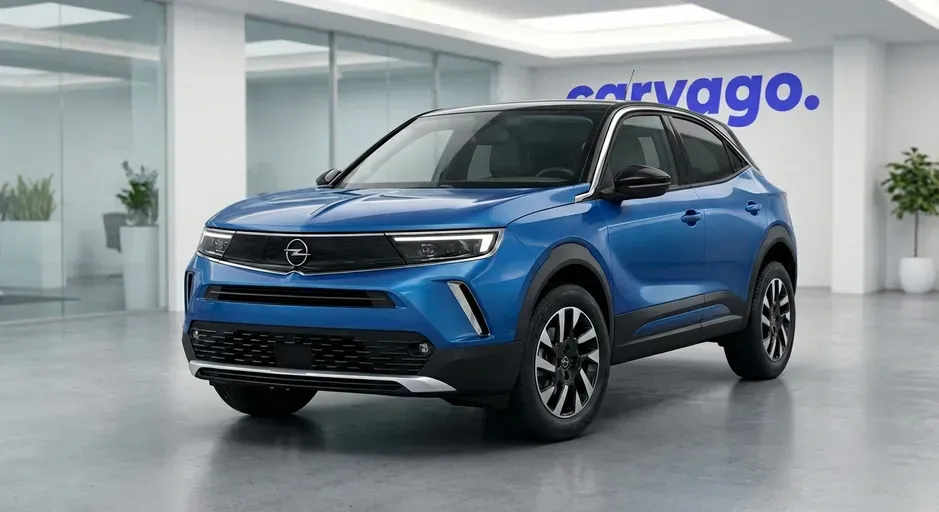
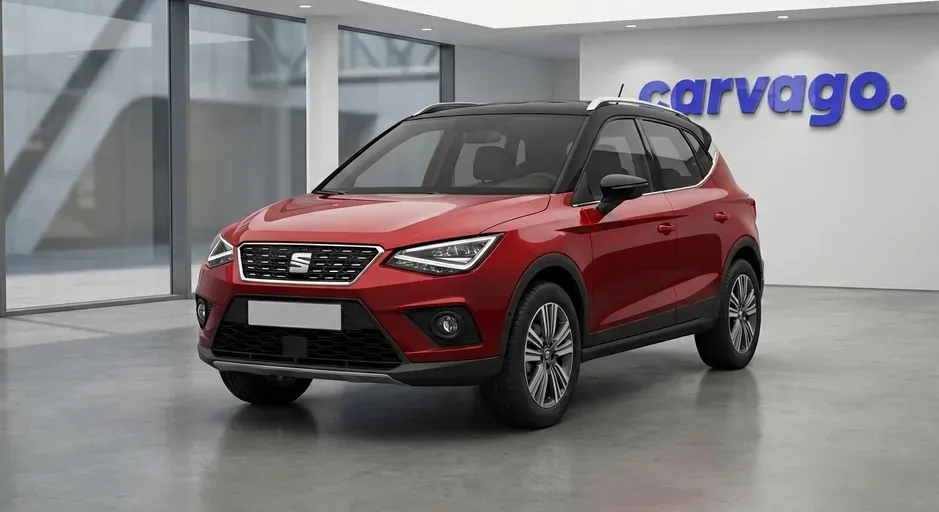
Opel Mokka, also known as the Vauxhall Mokka on the British market, impresses with its bold design and modern technologies, making it a very distinctive representative in the city crossover category. Standing against it is the Seat Arona, a popular Spanish compact SUV that relies primarily on proven group technology, agile driving characteristics, and high everyday practicality. Let's take a detailed look at which of these two models offers better overall value and becomes the ideal choice for your specific needs.
When choosing a compact city crossover from the used car market, targeting cars around four years old (second-generation Opel Mokka B and Seat Arona generation KJ), exterior dimensions play a key role. When you place both models side by side, you'll find that their footprint is very similar. The length of the Seat Arona ranges from 4138 to 4153 mm depending on the production year and trim level, while the Opel Mokka measures a steady 4150 to 4151 mm in length. Thanks to these balanced and highly compact dimensions, you will weave through busy city traffic with absolute ease in both cars, and even daily parking in cramped shopping center spaces will not pose a problem for either competitor.
Although the overall length is practically identical, more noticeable differences can be found in the body proportions, which define the car's character on the road. The Opel Mokka is slightly wider (1785–1787 mm compared to 1780 mm for the Seat) and at the same time significantly lower (height 1515–1534 mm compared to 1537–1552 mm for the Arona). Visually, the Mokka thus gives a more planted, sportier, and overall more dynamic impression. In practice, the lower and wider build of the German representative contributes to more confident handling and a more engaging design stance, while the slightly taller body of the Spanish Seat will please drivers looking for a more traditional SUV approach, which offers slightly easier entry and a bit more airy feel overhead.
An important technical indicator is also the wheelbase, which primarily suggests how much legroom the car will offer to passengers in the rear seats. The Seat Arona has a wheelbase of 2566 mm, to which the Opel Mokka responds with a value of 2561 mm – the difference is thus a completely imperceptible 5 millimeters in favor of the Seat. From the perspective of wheel distance, both cars provide almost exactly the same structural foundation. For potential buyers, this ultimately means that whichever of these two crossovers they choose, the platform and its proportions will provide them with highly comparable ride comfort and practicality for everyday driving.
| Parameter | Opel Mokka SUV | Seat Arona SUV |
|---|---|---|
| Width (mm) | 1785 - 1787 | 1780 |
| Length (mm) | 4150 - 4151 | 4138 - 4153 |
| Height (mm) | 1515 - 1534 | 1537 - 1552 |
| Wheelbase (mm) | 2561 | 2566 |
When choosing a used city crossover, overall practicality and family utility play a key role for many buyers. If we compare approximately four-year-old models of these popular cars, we find that Seat Arona and Opel Mokka take different approaches to interior space. While the Spanish model places great emphasis on maximizing transport capacity and utility value, the Opel Mokka bets primarily on a very attractive and dynamic exterior design, which necessitated slight compromises in terms of trunk volume.
In terms of exact figures, the Seat Arona (KJ generation) comes out on top in this duel, offering a very solid base volume of 400 liters for its standard internal combustion versions. After folding the rear seats, the space increases to an impressive 1280 liters. The Opel Mokka (B generation) counters with a base trunk volume of 350 liters for standard internal combustion variants, which can be expanded to a maximum of 1105 liters by folding the backrests. However, buyers should also consider versions with alternative powertrains, where the transport capacity is noticeably reduced. If you opt for the fully electric Opel Mokka Electric variant, the base volume is reduced to 310 liters (or 1060 liters when folded) due to the installation of the traction battery. An even more significant reduction in space can be found in the eco-friendly Seat Arona TGI version powered by natural gas, which, due to the gas tanks, has a base capacity of only 282 liters and a maximum value of 1162 liters.
In practice, this volume difference means that the Seat Arona offers space for several extra suitcases and much better meets the needs of young families. For example, a folded stroller fits in significantly more easily. Nevertheless, the Opel Mokka's trunk is still practical enough and safely sufficient for weekend shopping or a longer holiday for two people, if you learn to pack a bit more efficiently. For those looking for maximum daily flexibility, the Arona will be a significantly more useful companion, while the Mokka will appeal more to drivers who care more about distinctive style than every liter of free space.
| Parameter | Opel Mokka SUV | Seat Arona SUV |
|---|---|---|
| Base volume (liters) | 310 - 350 | 282 - 400 |
| Max. volume after folding seats (liters) | 1060 - 1105 | 1162 - 1280 |
While the Opel Mokka can captivate with its stylish design, the Seat Arona, with its generous trunk volume of up to 400 liters, is the clear choice for customers requiring uncompromising family utility.
Trailer weight often plays a key role for buyers who require maximum practicality from their vehicle, whether for transporting building materials, garden waste, or traveling on longer holidays. If we focus on roughly four-year-old used cars on today's market (production years around 2022), the current KJ generation Seat Arona offers significantly broader towing options than the corresponding Opel Mokka.
The Spanish Seat Arona allows for towing a braked trailer with a standard weight of 1000 kg for the base 1.0 TSI (70 kW) three-cylinder engine. The maximum trailer weight then reaches up to 1200 kg for the top-of-the-line 1.5 TSI (110 kW) engine and older 1.6 TDI diesel units. This higher value is fully sufficient for weekend shopping of bulkier items, attaching a heavier e-bike rack, or towing a smaller recreational caravan for a family holiday. Unbraked trailers can be towed behind the Arona up to a standard weight of 590 to 650 kg. However, it is necessary to point out different versions; for example, the eco-friendly 1.0 TGI (66 kW) variant burning compressed natural gas (CNG) is not homologated for a tow bar at all, and its capacity is zero.
Conversely, for the Opel Mokka of the current B generation – specifically the modern purely electric versions (Mokka Electric) from the mentioned production years, which dominate the available data – official towing values are completely missing. For technical reasons and to protect the battery, these fully electric variants are not homologated for towing conventional trailers, which significantly limits their overall practicality for cottagers or builders. If you absolutely needed to tow a heavier load with a Mokka, you would have to look for the older A generation (produced until 2016) with internal combustion engines, which did offer a braked capacity of 1200 kg but no longer meets the parameters of a modern nearly-new car around four years old.
In terms of choosing between these two models, the interpretation of this dimension is absolutely clear: if the ability to tow a trailer or attach a heavier rack is essential for your leisure or work activities, the Seat Arona is an incomparably more versatile and safer choice. The modern electrified Mokka, on the other hand, completely drops out of this comparison due to the absence of towing capacity.
| Model and engine | Braked trailer weight (kg) | Unbraked trailer weight (kg) |
|---|---|---|
| SEAT Arona 1.0 TSI (70 kW) | 1000 | 590 |
| SEAT Arona 1.0 TSI (81 kW / 85 kW) | 1100 | 590 - 600 |
| SEAT Arona 1.5 TSI (110 kW) | 1200 | 650 |
| SEAT Arona 1.6 TDI (70 kW / 85 kW) | 1100 - 1200 | 650 |
When choosing an engine for approximately four-year-old used cars, the approach of both brands differs fundamentally, which has a direct impact on fuel consumption, overall dynamics, and operating costs. The Opel Mokka generation B (produced since 2021) offers a diverse range of powertrains under the Stellantis umbrella – from classic petrol three-cylinders and a diesel engine to pure electric variants and brand-new mild-hybrids. In contrast, the Seat Arona relies exclusively on proven and efficient internal combustion engines from the Volkswagen workshop. Seat bets on reliable petrol units (1.0 TSI and 1.5 TSI) and even surprises with a factory version running on compressed natural gas (1.0 TGI), but completely lacks any advanced electrification. While standard petrol three-cylinders are sufficient for basic city commutes in both models, drivers seeking more spirited dynamics will enthusiastically reach for the 110 kW petrol four-cylinder in the Seat. On the other hand, environmentally-minded buyers or those interested in quiet, emission-free operation will find their clear favorites in the electric versions of the Opel Mokka.
The engine range of the second-generation Opel Mokka is built on modern technology and considerable flexibility to satisfy various groups of drivers. Petrol engines are represented by the widely used 1.2 Turbo turbocharged three-cylinder. It is available in a basic version with 74 kW (100 hp) and a manual transmission, or in a significantly more dynamic and desirable version with 96 kW (130 hp), where you can choose between a classic 6-speed manual and a smooth-shifting 8-speed automatic. For long-distance highway drivers, an exceptionally efficient 1.5 Diesel four-cylinder with 81 kW (110 hp) was offered. However, as real market data shows, its production was phased out during 2023, so it appears only rarely on the market for newer used cars from recent years. An important part of the portfolio is the zero-emission Mokka Electric models with a 100 kW (136 hp) electric motor, which were recently joined by a more powerful Long Range version (115 kW / 156 hp) with increased battery capacity for a longer range. An efficient mild-hybrid system is also available in the latest models. A minor weakness of the Mokka is the absence of a larger, more sport-oriented petrol engine; its main strength, conversely, lies in the diversity of available technologies.
| Engine type | Fuel | Power (kW / hp) | Torque (Nm) | Transmission |
|---|---|---|---|---|
| 1.2 Turbo | Petrol | 74 / 100 | 205 | 6MT |
| 1.2 Turbo | Petrol | 96 / 130 | 230 | 6MT / 8AT |
| 1.2 DI Turbo Hybrid 48V | Petrol / MHEV | 100 / 136 | 230 | 6DSG (eDCT) |
| 1.5 Diesel | Diesel | 81 / 110 | 250 | 6MT |
| Mokka Electric | Electric | 100 / 136 | 260 | 1AT |
| Mokka Electric Long Range | Electric | 115 / 156 | 260 | 1AT |
The Seat Arona generation KJ benefits from the shared MQB-A0 group platform, which for the user means the installation of very robust and time-tested technology. Refined petrol engines absolutely dominate the listings, reliably led by the 1.0 TSI three-cylinder. In four-year-old used cars, you can get it in the basic specification with 70 kW (95 hp) paired with a 5-speed manual, or in a significantly more versatile, more powerful version providing 81 to 85 kW (110–115 hp). This version is very often paired with the lightning-fast 7-speed DSG dual-clutch transmission. The absolute pinnacle for sport-oriented drivers is the 1.5 TSI Evo petrol four-cylinder with 110 kW (150 hp), which, thanks to an advanced cylinder deactivation system, offers not only excellent flexibility but also very attractive fuel consumption. For low-cost operation, an economical 1.0 TGI (66 kW / 90 hp) variant burning compressed natural gas (CNG) was also created, but its production was also limited in 2023. A significant factor when choosing is the fact that the popular 1.6 TDI diesel units only stayed in the Arona price list until 2020 and are not found on the market at all for cars around 4 years old. For many customers, the biggest technological shortcoming of the Arona is the complete absence of any hybrid or electric model, making it a representative of the classic "good old" internal combustion school.
| Engine type | Fuel | Power (kW / hp) | Torque (Nm) | Transmission |
|---|---|---|---|---|
| 1.0 TSI | Petrol | 70 / 95 | 175 | 5MT |
| 1.0 TSI | Petrol | 81 - 85 / 110 - 115 | 200 | 6MT / 7DSG |
| 1.5 TSI Evo | Petrol | 110 / 150 | 250 | 7DSG |
| 1.0 TGI | CNG / Petrol | 66 / 90 | 160 | 6MT |
| 1.6 TDI | Diesel | 70 - 85 / 95 - 115 | 250 | 5MT / 6MT / 7DSG |
While the Opel Mokka scores on the market with an exceptionally diverse selection including full electric drive for the modern city, the Seat Arona represents a clear choice for drivers who require proven petrol technology, including the punchy 1.5 TSI four-cylinder.
Both of these representatives of the small city crossover segment have undergone a major transformation in recent years, which has significantly impacted their range of powertrains. While the second-generation Opel Mokka (designated as B, from 2021 onwards) switched to the Stellantis platform and completely replaced the older, heavier units from Generation A (such as the old 1.4 Turbo or 1.6 CDTI engines) with modern three-cylinders and a fully electric version, the Seat Arona continues to benefit from the refined MQB-A0 platform technology from the Volkswagen Group. It is worth noting that the Arona quietly bid farewell to the 1.6 TDI diesel engines (production ended during 2020), so the market for roughly four-year-old used cars is dominantly ruled by petrol units in both cases. Choosing the right engine in this category is crucial not only for fuel consumption but, above all, for reducing future service risks.
If you are looking for a roughly four-year-old Mokka (Generation B, produced since 2021), the clearly best choice for real-world daily use is the turbocharged 1.2 Turbo three-cylinder with 96 kW (130 hp). Although the manufacturer has recently focused heavily on promoting the battery-powered Mokka Electric variant (which is fully reflected in the official records of available engines for the current generation), this more powerful petrol version is the best compromise on the classic used car market.
In the case of the Seat Arona, specifically for models after the major facelift in 2021 (Generation KJ), the turbocharged one-liter three-cylinder 1.0 TSI with 81 kW (110 hp) takes center stage. The previously mentioned 1.6 diesel has long since disappeared from the four-year-old car market, and we strongly recommend avoiding the seemingly attractive 1.0 TGI (CNG) variant – the installation of gas tanks takes up part of the luggage compartment, slashing the excellent 400 liters to a below-average 282 liters. The one-liter TSI is thus an absolutely flawless candidate.
Official fuel consumption figures provided by manufacturers according to the WLTP cycle often look very tempting, but in real-world driving, the values can differ significantly. Especially with the small turbocharged engines found in most current city crossovers, it heavily depends on driving style, route profile, and the overall load of the vehicle. For the most accurate comparison of roughly four-year-old used cars (both models are modern generations available after 2021), we have used long-term data from thousands of drivers from the independent community portal Spritmonitor.de. This site provides an objective picture of how much fuel the Opel Mokka and Seat Arona actually consume on the road.
| Model and engine | Average consumption (l/100 km) |
|---|---|
| Opel Mokka 1.5 Diesel 81 kW | 4.9 |
| Seat Arona 1.0 TSI 70/81 kW | 6.1 |
| Opel Mokka 1.2 Turbo 74/96 kW | 6.3 |
| Seat Arona 1.5 TSI 110 kW | 6.4 |
A look at the real-world data reveals several interesting trends. Although diesel engines in the small SUV category are often predicted to face an early end, the 1.5 Diesel four-cylinder under the hood of the Opel Mokka maintains a clear lead in absolute fuel efficiency in practice. In contrast, for the popular one-litre three-cylinder engines, it turns out that so-called downsizing does not save much fuel in the real world. Examples include the 1.0 TSI in the Seat Arona and the 1.2 Turbo in the Mokka – both petrol units typically consume over six litres. A very positive and, for many, surprising finding is the behaviour of the more powerful 1.5 TSI four-cylinder in the Arona. In combined driving, it consumes only about three-tenths of a litre more fuel than the base three-cylinder, while offering a massive difference in refinement and superior dynamics.
These values lead to clear recommendations for used car buyers. If you are a driver who spends most of your time on the motorway or commutes long distances daily for work, the diesel Mokka can save you a significant amount of money in the long run. For typical urban and suburban trips, or perhaps as a second family car, the one-litre petrol engines from both brands are the optimal choice, where consumption of around six litres will not break the family budget. For more dynamically oriented drivers, the 1.5 TSI petrol in the Seat is the clear choice, where the power reserve does not come at the cost of high fuel bills.
Overall, it can be said that consumption should not be the main deciding factor in this duel when discussing petrol engines. Real-world road data shows that fuel consumption for the turbocharged petrol engines is practically identical for both models, and differences of a few tenths of a litre are not worth significant attention. However, Opel has a clear advantage in efficiency on very long routes thanks to its diesel engine, which the Seat Arona no longer offered after 2020.
If you are looking for a used city crossover, models around four years old (2021 and 2022 model years) represent an ideal compromise between modern equipment and an affordable price on the current market. For both models, we are talking about current and highly desirable versions during this period – in the case of the Opel Mokka, it is the attractive second generation with the "Opel Vizor" grille, while for the Seat Arona, it is the popular version after the significant facelift from 2021.
| Model (2021–2022 years) | Starting price (good condition) | Common range (medium mileage) | Price for premium equipment |
|---|---|---|---|
| Opel Mokka | From approx. €14,000 | €15,000 – €18,000 | Up to €19,000 (e.g., GS Line) |
| Seat Arona | From approx. €14,000 | €14,000 – €17,000 | Up to €18,000 (e.g., FR / DSG) |
The second generation of the Opel Mokka (produced since the turn of 2020 and 2021) holds its value very well on the used car market. This is primarily due to its bold design and modern interior, which has not lost its appeal even after several years.
The Seat Arona benefits from its technical kinship with the VW Group, which means high buyer confidence, easy serviceability, and stable demand. The facelifted version, which arrived on the market in 2021 with a significantly improved interior and soft-touch plastics, is highly sought after on the used car market and has noticeably raised the quality of the vehicle.
Key factors affecting the price of used cars for both models:
Both cars represent an affordable entry ticket into the world of city SUVs on the used market, with the Seat Arona offering a slightly wider and more budget-friendly selection for cost-conscious families, while with the Opel Mokka, you pay a slight premium for its unique design and fresh image.
When choosing a used family crossover, safety is always one of the most important criteria. Although we often encounter a five-star Euro NCAP rating in this category – a milestone achieved by the model lines of both examined cars in the past – it is absolutely crucial to understand the context and the year of testing. The testing methodology is constantly evolving and becoming much stricter. New simulations of frontal impact into a moving barrier, more precise cyclist detection systems, and the behavior of safety assistants in complex intersections have been gradually incorporated into the standards. Therefore, the percentage scores or the final number of stars from different years are not directly comparable, regardless of which specific test protocol the car underwent.
The second generation of the Opel Mokka underwent Euro NCAP safety tests in 2021 according to already very demanding standards. While the older generation once took home five stars, the new Mokka received an overall rating of four stars. The reason for losing the top rating was mainly the absence of a center airbag and deficiencies in cyclist detection within the autonomous emergency braking (AEB) system. Adult occupant protection was rated at a solid 73% and child protection at 75%. In terms of cabin strength and passive safety, the car is stable and reliable; however, in terms of the most modern active safety features (64%) and overall protection of vulnerable road users (58%), it falls behind the best in its class.
The Seat Arona has been on the market for significantly longer, but the manufacturer did not let the original 2017 certification become obsolete. In 2022, following its modernization, the car underwent repeated testing according to a substantially stricter methodology and successfully defended its full five stars. As part of the facelift, the Arona received, among other things, structural improvements to the front end and modernized restraint systems. Protection for both adult and child passengers thus reached an excellent 83%. Safety assistance systems also saw improvement with an overall result of 70%, while pedestrian and cyclist protection stands at 65%. This makes the Arona a very modernly equipped car that keeps pace with current safety requirements.
| Parameter | Opel Mokka | Seat Arona |
|---|---|---|
| Year of testing | 2021 | 2022 |
| Adult occupant protection | 73% | 83% |
| Child occupant protection | 75% | 83% |
| Vulnerable road user protection | 58% | 65% |
| Safety assistance systems | 64% | 70% |
In a direct comparison of both cars, the Seat Arona emerges as the more comprehensive choice in terms of safety. By successfully passing modern and much stricter tests in 2022, the car proved that its safety equipment and reinforced construction meet current five-star standards. The Opel Mokka is a structurally safe car, but its four-star result clearly points to compromises in the range of advanced active assistants that can prevent an accident in critical situations today.
Although the Opel Mokka is slightly newer in terms of its platform, the Seat Arona, thanks to its successful 2022 re-test, offers a more comprehensive level of safety, awarded with a full five stars.
Both vehicles prove that even in the city crossover segment, one can find much more than just basic equipment, with each model taking its own clearly recognizable approach to overall added value. In addition to standard equipment, each model offers several unique features and technological solutions that can be absolutely decisive for the customer in daily use.
The Opel Mokka focuses primarily on a radical design change and the implementation of technologies that were until recently reserved for premium vehicles of higher classes.
The Seat Arona, on the other hand, excels in excellent ergonomics, interior space variability, and specific accessories focused on emotion and practicality.
Attractive and bold design with the characteristic Opel Vizor grille
Available not only with internal combustion engines but also as a fully electric version (Mokka-e)
Modern and innovative interior with the Pure Panel dual digital display
Good cabin soundproofing and overall comfortable chassis tuning
High-quality front seats (often with AGR certification) offering excellent support
Below-average luggage compartment volume (only 350 litres)
Cramped space for rear passengers, especially in the legroom and headroom areas
Significantly worse rear-diagonal visibility due to very wide C-pillars
Higher purchase price for used cars compared to some competitors in the class
The Opel Mokka will primarily appeal to drivers looking for bold style, modern technology, and a fresh look in a city crossover. It is an ideal choice for individuals or childless couples who don't mind the less practical rear seats but will appreciate the option of a purely electric variant.
Excellent driving characteristics with a slight sporty touch and confident handling
Generous luggage compartment with a volume of 400 litres, among the best in its class
Overall airy cabin and plenty of legroom and headroom in the rear seats
Great interior ergonomics with easy controls and a clear infotainment system
Reliable and economical TSI petrol engines with very good performance
Complete absence of electrified or hybrid powertrains
More conservative body design, which may look a bit dated next to newer competitors
Greater use of harder and cheaper-feeling plastics in the interior
Average chassis soundproofing and aerodynamic noise at higher motorway speeds
The Seat Arona is a highly rational and practical choice for buyers who demand maximum interior space and excellent driving characteristics in a compact package. It serves perfectly as a versatile car for small families looking for an excellent balance of price, utility, and everyday reliability on the used car market.
Based on long-term owner experience, service center breakdown statistics, and the results of our Independent Car Condition Audit service, we have compiled an overview of the most common problems that buyers of roughly four-year-old Opel Mokka and Seat Arona models should watch out for.
The second generation of the Opel Mokka benefits from modern Stellantis Group technology. Although it is generally very solidly built, when buying a used car, it pays to carefully monitor several specific areas related to maintenance.
The second-generation Mokka attracts with its very appealing design and agile ride, but it requires a careful owner. Strict adherence to service intervals is particularly crucial for the 1.2 Turbo petrol engines.
Thanks to the advanced MQB A0 group platform, the Seat Arona has long been considered one of the most robust small SUVs. However, even it has not escaped a few typical weak points that are worth checking before purchase and during a test drive.
The Arona has long been among the above-average reliable cars with robust technology. With the 1.0 TSI engine and manual transmission, it represents a bulletproof bet; caution and a longer test drive are advisable mainly for cars with an automatic transmission.
When buying a used car, a thorough inspection is key. Here are some specific points to focus on for these two models, although in both cases it is worth arranging a used car inspection by an experienced mechanic before the purchase itself.
Seat Arona offers a larger and more practical luggage space with a basic volume of 400 litres. The Opel Mokka lags behind in this regard with a volume of 350 litres for combustion versions and only 310 litres for the electric variant. For frequent transport of larger loads or family shopping, the Spanish model is thus a more suitable choice.
The Opel Mokka is more versatile because in the used car market you will find petrol and diesel engines, but also the fully electric Mokka-e version. The Seat Arona relies primarily on proven TSI petrol engines and alternative natural gas (TGI) propulsion, while you won't find diesel or pure electricity under its hood.
Thanks to its more conventional and boxier body, the Seat Arona provides more headroom and legroom in the rear seats. The Opel Mokka pays the price for its attractive sporty design with a sloping roofline and smaller windows, which makes the cabin noticeably more cramped in the rear.
Both cars are considered solid used vehicles, however, the Seat Arona with 1.0 TSI engines is generally regarded as a very robust and reliable long-term choice. For the 1.2 Turbo petrol engines in the Mokka, it is critically important to adhere to timely oil changes and check the condition of the timing belt, which is immersed in oil.
The Seat Arona shares group technology with the Ibiza model and excels with agile driving characteristics, precise steering, and a willingness to turn even on winding country roads. The Opel Mokka is tuned more for a comfortable and neutral ride, with its main strengths being a stable chassis and excellent damping of bumps in the city.
The duel between these two popular urban crossovers clearly shows that while both models excel in agility, each targets a completely different group of buyers. Opel Mokka is an ideal choice for those looking for bold design and innovative digital technologies in a used car, and who are attracted by the potential option of a purely electric powertrain, albeit at the cost of slightly less interior space. Conversely, the Seat Arona represents a perfectly rational alternative, which, thanks to its voluminous trunk, proven and economical internal combustion engines, and overall better spaciousness, serves excellently as a versatile family car. If emotions and fresh style win out in your selection, go for the Mokka; however, if you require maximum daily utility and carefree practicality, the Spanish Arona will become your clear favorite.
Sources: ADAC, novinky.cz, idnes.cz, emobility.cz, auto-mania.cz, autospektrum.cz
This article was prepared using artificial intelligence tools. The section guarantor is Petr Dušek.
Ford Puma vs Opel Mokka: City SUV comparison. Read a detailed evaluation of engines, space, and driving characteristics and choose your ideal used car.
Apr 14, 2026
Detailed comparison of the BMW X1 and Mercedes-Benz GLB. Real-world experience, specifications, equipment comparison, and a clear verdict to help you choose your SUV.
Apr 26, 2026
Ford Kuga vs. Škoda Karoq: Which SUV is better? A detailed comparison, tests, and a clear verdict will help you choose the right car for you.
Apr 13, 2026