Car battle
BMW řady 3 vs. Volvo V60: Complete comparison 2026
Detailed comparison of the BMW 3 Series vs Volvo V60. Discover real-world experiences with used cars, compare driving comfort and reliability, and read our clear verdict.
Apr 28, 2026
Articles
Car battle
Detailed comparison of Opel Insignia vs. Volkswagen Passat. Discover the differences in fuel consumption, equipment, and reliability of used cars. Our verdict will help you choose the right car.
May 10, 2026
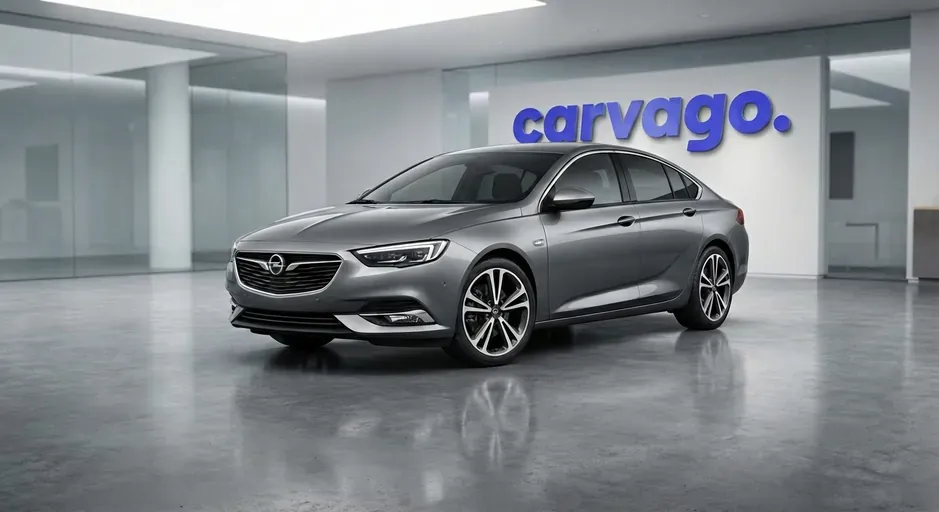
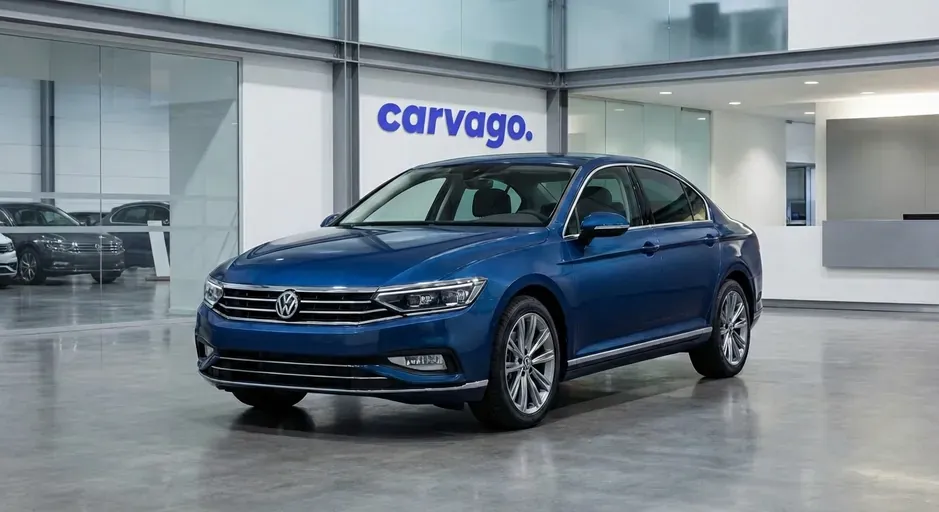
Opel Insignia, sold worldwide also under the names Vauxhall Insignia, Buick Regal or Holden Commodore, is an elegant representative of the mid-size class, which scores primarily with its dynamic design and excellent driving characteristics. Its challenger is the legendary Volkswagen Passat, known on selected Asian markets also as the Volkswagen Magotan, which has long been considered the conservative benchmark of its category thanks to top-notch practicality and precise craftsmanship. Let's take a detailed look in this comprehensive comparison at which of these two proven executive and family cars represents a smarter choice for your needs on the used car market.
When choosing a used mid-size car around four years old, you will most often encounter the second-generation Opel Insignia (referred to as B) and the popular B8 generation Volkswagen Passat. At first glance, it might seem that both models are perfectly matched, but a detailed look at the exterior dimensions reveals very different approaches from the manufacturers. The Opel Insignia is significantly larger, giving it a noticeably more representative and sporty stance, while the Passat relies on a more sober and slightly more compact pan-European format.
In terms of numbers, the Opel Insignia estate (Sports Tourer) is an impressive 4986 to 4998 mm long, meaning it is up to 225 mm longer than the comparable Volkswagen Passat estate (Variant, 4767–4773 mm). This trend also applies to the more aerodynamic hatchback (commercially called Grand Sport by Opel) and sedan (Passat) bodies, where the Insignia exceeds the Volkswagen in length by approximately 130 mm. In practice, this elongated silhouette gives the Insignia not only visual dominance on the road but also a smoother ride thanks to a longer wheelbase (2829 mm for the Opel vs. 2786–2791 mm for the VW). The long-wheelbase design is an excellent advantage for highway travel. However, it brings one major disadvantage: in narrow city streets or cramped underground garages, you will feel every extra millimeter with the five-meter Insignia. The shorter Passat is thus a disproportionately more agile choice for drivers who regularly fight for parking spaces in cities.
As for the remaining proportions, Opel maintains its dynamic approach. With a width of 1863 mm, it is 31 mm wider than the Passat (1832 mm), which further enhances its wide and muscular character. Conversely, Volkswagen has a slight edge in vehicle height, which in the real world helps with the sense of airiness in the interior and slightly easier entry. The Insignia's design focus emphasizes lower, sportier lines. The decision regarding dimensions therefore largely narrows down to your daily routine: if you prefer a majestic "highway cruiser" with a wide stance at the cost of more difficult maneuverability, you will find the Opel appealing. If you are more interested in masterfully packaged space where the exterior doesn't pose a challenge during frequent parking, the more compact Passat will be a more pleasant partner for you.
| Parameter | Opel Insignia Hatchback | Volkswagen Passat Sedan | Opel Insignia Estate | Volkswagen Passat Estate |
|---|---|---|---|---|
| Width (mm) | 1863 | 1832 | 1863 | 1832 |
| Length (mm) | 4897–4910 | 4767–4775 | 4986–4998 | 4767–4773 |
| Height (mm) | 1445–1455 | 1456–1483 | 1490–1500 | 1477–1521 |
| Wheelbase (mm) | 2829 | 2786–2791 | 2829 | 2786–2791 |
Trunk capacity is one of the most important factors when choosing a family or executive car. Whether you're planning routine errands, transporting sports equipment, or traveling with the family, every extra liter counts. In this regard, the Opel Insignia and Volkswagen Passat represent two different philosophies – while one leans more towards elegant and sporty lines, the other is the unwritten benchmark for maximum practicality and hauling capabilities.
Looking at cars approximately four years old, which corresponds to the Opel Insignia B (2017–2022) and Volkswagen Passat B8 (2014–2023) generations, the representative from Wolfsburg emerges as the clear winner of the space battle. The popular Volkswagen Passat estate body style offers a massive base volume of 650 liters, which increases to 1780 liters with the rear seats folded down. In contrast, the Opel Insignia estate (Sports Tourer) counters with a base volume of 560 liters and a maximum space of 1665 liters. A difference of nearly 100 liters in the standard configuration practically means room for several extra suitcases. A similar situation exists for the shorter body versions. The Opel Insignia hatchback (referred to as Grand Sport) holds 490 liters (1450 liters when folded), while the classic Volkswagen Passat sedan offers a confident 586 liters.
When buying a used car, however, it is important to be very careful with hybrid powertrains, which always take away precious liters due to the battery installation under the floor. A typical example is the plug-in hybrid Volkswagen Passat GTE (estate), whose base trunk shrinks from a respectable 650 liters to a below-average 483 liters (maximum volume is 1613 liters). This is a reduction that can significantly limit the car's family utility. For this generation, the Opel Insignia relies on traditional internal combustion engines, so it does not suffer from similar space compromises across the range. In conclusion, while the space in the Opel is fully sufficient for weekend shopping and longer holidays, the Volkswagen Passat will please drivers who demand uncompromising transport capacity.
| Parameter | Opel Insignia Hatchback | Volkswagen Passat Sedan | Opel Insignia Estate | Volkswagen Passat Estate |
|---|---|---|---|---|
| Base volume (liters) | 490 | 586 | 560 | 650 |
| Max. volume with seats folded (liters) | 1450 | Not specified | 1665 | 1780 |
If maximum trunk size and overall transport capacity are your absolute priority, the Volkswagen Passat offers unrivaled space. While the Opel Insignia lags slightly behind in volume, it is more than enough for the vast majority of families and adds a much more dynamic body design.
The ability to tow a trailer is a key parameter for many buyers of mid-size executive cars. Whether you need to transport bulky building materials, rely on the car as a workhorse for a family caravan, or just occasionally attach a trailer for a weekend purchase of larger items, the trailer weight fundamentally defines the car's practical utility. Looking at roughly four-year-old used cars from the Opel Insignia B and Volkswagen Passat B8 generations, we encounter interesting differences that can play a decisive role in the selection process.
The Volkswagen Passat (B8 generation) has long been considered one of the most capable towers in its class. For its standard and entry-level engines, such as the 1.5 TSI petrol or 1.6 TDI diesel, expect a maximum braked trailer weight in the range of 1500 to 1600 kg. However, if you choose the powerful versions of the two-litre engines (2.0 TDI or 2.0 TSI), the Passat can handle an impressive 2200 kg. A specific exception here is the plug-in hybrid variant, the Passat GTE. Due to the installation of heavy batteries and specific weight distribution, its towing capacity is reduced to 1600 kg.
The Opel Insignia (B generation), on the other hand, offers slightly more modest values for its entry-level engines. For example, with the 1.6 Diesel or 1.5 DI Turbo engine, the braked trailer weight is limited to 1300 to 1405 kg. This capacity is still perfectly sufficient for a standard trailer or light load, but it may no longer be enough for towing larger caravans. Only after moving up to the powerful 2.0 Diesel versions or the top petrol engines (including the sport-tuned GSi version) does the Insignia fully catch up with the Passat's capabilities, with its towing capacity rising to a maximum limit of 2200 kg.
In practice, these differences mean that while the Passat is ready for most common challenges and the transport of medium-heavy loads even in its base versions, with the Insignia you must choose the engine more carefully if you need to tow heavier loads. If you are aiming for a relaxed journey with a heavy caravan and a longer holiday, both cars with a strong two-litre diesel will provide you with absolute confidence. In conclusion, the Volkswagen Passat is a more universal choice across the entire spectrum of engines in terms of towing capacity, but a suitably configured Insignia can be a perfectly equal partner.
| Model and engine | Braked trailer (kg) | Unbraked trailer (kg) |
|---|---|---|
| Volkswagen Passat B8 1.5 TSI OPF (110 kW) | 1600 | 750 |
| Volkswagen Passat B8 2.0 TDI SCR (140 kW) | 2000 - 2200 | 750 |
| Volkswagen Passat B8 GTE (115 kW) | 1600 | 750 |
| Opel Insignia B 1.5 DI Turbo (121 kW) | 1405 | 750 |
| Opel Insignia B 1.6 Diesel (100 kW) | 1300 - 1405 | 750 |
| Opel Insignia B 2.0 Diesel (125 kW) | 1700 - 2200 | 750 |
Both vehicles offer an interesting, albeit differently conceived, range of powertrains. The choice of engine plays a key role in terms of fuel consumption, reliability, and overall driving feel, which is crucial for used cars approximately four years old. While the facelifted Volkswagen Passat B8 builds on a proven and broad foundation of advanced TSI petrol engines, reliable TDI units, and complements them with the electrified GTE plug-in hybrid version, the Opel Insignia B (after the 2020 facelift) takes a different path. The Insignia relies exclusively on conventional internal combustion engines meeting strict emission standards and uses smooth torque converter automatics for power transmission. Thus, the Passat appeals to drivers looking for modern technology or the possibility of driving purely on electricity, while the Insignia scores with more conservative drivers and long-distance motorway cruisers thanks to its robust two-litre units.
Under the bonnet of the Opel Insignia B generation, a simplified range of exclusively turbocharged engines settled after the modernization (offered roughly from 2020 to 2023). The basis of the diesel range became the technically interesting three-cylinder 1.5 Diesel engine with 90 kW, which was aimed at maximum fuel economy, but for a large and heavy car, it represents more of a compromise solution for calmer drivers. A much better and more recommended choice is the more powerful four-cylinder 2.0 Diesel with 128 kW, which has a generous torque of 380 Nm and smoother refinement.
For petrol variants, dynamics are handled by the 2.0 DI Turbo engine with 147 kW. The pinnacle of the entire range is the sport-tuned GSi model, whose two-litre produces an impressive 169 kW and is standardly paired with a sophisticated all-wheel-drive system. A significant technical advantage of the Insignia is the reliance on classic eight-speed and nine-speed torque converter automatic transmissions, which handle starts and crawling more smoothly than the dual-clutch systems of competitors.
Engines well-known from earlier model years, such as the economical 1.6 CDTI or the extremely powerful 2.0 BiTurbo Diesel, no longer appear in cars around four years old because, according to available data, their production was discontinued after the facelift at the beginning of 2020.
| Engine type | Fuel | Power (kW) | Torque (Nm) | Transmission |
|---|---|---|---|---|
| 2.0 DI Turbo | Petrol | 147 | 350 | 9AT |
| 2.0 DI Turbo GSi | Petrol | 169 | 350 | 9AT |
| 1.5 Diesel | Diesel | 90 | 300 | 6MT / 8AT |
| 2.0 Diesel | Diesel | 128 | 380 | 6MT / 8AT |
The Volkswagen Passat B8 offers an extremely diverse and technically advanced range of engines on the four-year-old used car market, specifically for the version after the extensive facelift. The petrol base is the popular four-cylinder 1.5 TSI Evo with 110 kW, which features the Active Cylinder Management (ACT) system to increase efficiency and reduce consumption at low loads. More demanding drivers can choose the 2.0 TSI unit (in 140 kW and 206 kW versions for cars with 4MOTION all-wheel drive).
However, the typical corporate or family cruiser is dominated by diesel units. By far the most sought-after is the 2.0 TDI SCR engine, whether in the basic 110 kW version or the newer, more powerful 147 kW variant (replacing the previous 140 kW specification). A huge competitive advantage of the Passat model is the existence of the 1.4 TSI GTE version – a plug-in hybrid powertrain with a combined output of 160 kW, which offers roughly 55 km of pure electric range and is ideally suited for suburban commuting with regular charging.
As with the Opel, it should be noted that older units like the basic 1.6 TDI or the twin-turbocharged 2.0 BiTDI with a staggering 176 kW will not be found on the market for young four-year-old used cars, as their production was definitively halted at the turn of 2020 and 2021. Almost all Passat engine options are paired with the lightning-fast seven-speed dual-clutch DSG transmission.
| Engine type | Fuel | Power (kW) | Torque (Nm) | Transmission |
|---|---|---|---|---|
| 1.5 TSI OPF | Petrol | 110 | 250 | 6MT / 7DSG |
| 2.0 TSI OPF | Petrol | 140 / 206 | 320 / 400 | 7DSG |
| 2.0 TDI SCR | Diesel | 110 / 147 | 340 / 400 | 6MT / 7DSG |
| 1.4 TSI GTE | Plug-in Hybrid | 160 (comb.) | 400 (comb.) | 6DSG |
While the Passat impresses with a wide choice ranging from cylinder deactivation in petrol engines to the very advanced GTE plug-in hybrid, the Insignia wins the hearts of motorway cruisers with its robust two-litre diesel and exceptionally smooth torque converter automatic.
Choosing the right engine is key to long-term satisfaction, which is why the following recommendations are based on real-world performance experience, actual fuel consumption, owner feedback, and mechanical reliability. While the Volkswagen Passat benefits from the advantages of the MQB modular platform and its engine range revolves primarily around highly efficient TDI diesel units (EA288 family) and TSI petrol engines with cylinder deactivation, the Opel Insignia (Generation B) opted for a heavier and more robust construction. Interestingly, the Passat offered a wide range of diesel power outputs from the economical 1.6 TDI to the extreme 240 hp bi-turbo (which was later phased out due to emissions), while the Insignia, after its 2020 facelift, gradually focused on a simplified range led by proven two-litre diesels, which suit the character of this large motorway cruiser perfectly.
For the large and heavier Insignia, this two-litre diesel unit is the most natural choice on the used car market. Whether you go for the pre-facelift version (125 kW) or the newer variant available until the end of production in 2022 (128 kW), you get an engine that represents a perfect compromise between everyday usability, sufficient power, and overall reliability.
In the B8 generation, the massively popular 110 kW two-litre turbodiesel (EA288 family) is considered the absolute benchmark, keeping the car's residual value high even for four- or five-year-old used vehicles. This engine perfectly combines efficiency, solid dynamics, and exemplary mechanical durability for its class.
When choosing a roughly four-year-old used car (production years around 2020–2022), fuel consumption is one of the most important parameters for family and executive cars. As is often the case, official laboratory values provided by manufacturers often differ from what drivers experience in daily traffic. For the most accurate picture of the real-world appetite of both competitors, we have therefore turned to user data from the independent portal Spritmonitor.de, which has long aggregated real consumption from hundreds of owners themselves.
| Model and engine | Average consumption (l/100 km) |
|---|---|
| Volkswagen Passat 1.5 TSI 110 kW | 6.5 |
| Volkswagen Passat 2.0 TSI 140 kW | 7.8 |
| Opel Insignia 2.0 DI Turbo 147 kW | 7.5 |
| Opel Insignia 1.5 Diesel 90 kW | 5.1 |
| Volkswagen Passat 2.0 TDI 110 kW | 5.5 |
| Opel Insignia 2.0 Diesel 128 kW | 5.8 |
The collected data clearly shows that in the category of heavier mid-size cars, diesel units still make the most sense from an economic point of view. Diesel two-liters (2.0 TDI in the Passat and 2.0 Diesel in the Insignia) offer a fantastic ratio of brisk dynamics and real-world consumption well below the six-liter mark. An interesting finding is the behavior of the base 1.5 Diesel engine in the Opel. Although it is very economical on paper and during defensive driving, it soon lacks power reserves on the highway or when heavily loaded. In real highway traffic, it does not save as much fuel compared to the more confident two-liter as one might expect from a small-displacement engine. For gasoline variants, we observe the expected trend – the Passat with its popular 1.5 TSI unit can drive with a surprisingly reasonable appetite. However, if you opt for the more powerful gasoline two-liters in both models, you have to accept a significant jump in consumption.
For a typical user who often clocks up highway kilometers and uses the car for regular business or longer family trips, diesel two-liters represent a total safe bet. They provide enough power for safe overtaking while keeping fuel bills in check. However, if your driving profile consists more of shorter commutes in suburban traffic, the gasoline Passat 1.5 TSI will do a great job – thanks to significantly faster warm-up, it offers higher reliability on short routes with perfectly acceptable consumption. For calmer and budget-oriented drivers on country roads, the smaller diesel from Opel may also make sense, but it is necessary to accept a compromise in the provided dynamics.
In the end, fuel consumption itself probably will not and should not be the main deciding factor between these two rivals. Whether you choose a Volkswagen Passat or an Opel Insignia, with an appropriately chosen diesel engine, you get an exceptionally economical used car whose fuel costs will not surprise you. The final choice should therefore be guided more by personal preferences, the offered interior space, or which driving character suits you better.
When looking at the market for roughly four-year-old used cars (primarily 2021–2022 models), we encounter two completely different market realities. Although both cars targeted the same customer group looking for a comfortable mid-size vehicle when they were new, their positions in used car dealerships differ fundamentally. While the Volkswagen Passat (B8 generation facelift) is considered one of the most widespread used executive and family cars ever, the Opel Insignia (B generation facelift) represents an often overlooked alternative. However, it is precisely this lack of interest that makes it one of the best value-for-money purchases on the market.
The market for used Passats is enormous. The vast majority of vehicles offered come from corporate fleets after the end of an operating lease. The Passat holds its value very well in the long term, thanks to its unquestionable reputation.
The Opel Insignia does not reach even a fraction of Volkswagen's sales figures, but it makes huge sense as a used car. In a direct comparison with a similarly aged Passat, you will find that the Insignia is noticeably cheaper – often by more than €4,000, while maintaining comparable or even better specifications.
| Model (2021–2022 models) | Starting price (approx.) | Price of a well-equipped car | Maximum price (top versions) |
|---|---|---|---|
| Volkswagen Passat (B8) | €14,000 | €21,000 | €33,000 and more |
| Opel Insignia (B) | €13,000 | €17,000 | €27,000 |
While the Volkswagen Passat confidently maintains higher prices due to its extraordinary popularity and easy resale, a used Opel Insignia represents an exceptionally advantageous purchase, where you get much more equipment and comfort on the used car market for a significantly smaller budget.
Both the Opel Insignia and the Volkswagen Passat earned the maximum five-star rating in their Euro NCAP safety tests. However, it is essential to consider the context and the specific year of testing. Euro NCAP methodology and test protocols evolve over time and are constantly becoming stricter. While older tests focused primarily on the passive crash itself, newer evaluations take into account advanced frontal crash simulations, cyclist detection, or complex emergency scenarios at intersections. For this reason, percentage scores from different years cannot be directly and objectively compared.
Opel Insignia and stricter standards
The second generation of the Opel Insignia (referred to as Insignia B) underwent Euro NCAP tests in 2017. Its rating was thus subject to more modern criteria, which already required the reliable functioning of active safety features and evasive maneuvers. It excelled particularly in the area of adult occupant protection. An active hood, which lifts instantly in a collision to mitigate the consequences of a pedestrian's head impact, contributed significantly to the high rating for vulnerable road user protection. The car was also successfully tested for its reactions to pedestrians through the automatic emergency braking system.
Volkswagen Passat and the influence of older methodology
In the case of the Volkswagen Passat B8 generation, which is most common on the market for roughly four-year-old used cars, the Euro NCAP barrier test took place as early as 2014. Although the car took home a full five stars at the time, it was tested according to much more lenient and now outdated standards. Although the Passat underwent an extensive modernization in 2019, which brought advanced assistance systems from the Travel Assist family into its equipment, its original crash structure homologation dates back to an earlier time. From the perspective of today's strict rules, the validity of this five-star certificate from 2014 has formally expired.
What this means for a used car buyer
When choosing on the used car market, it is crucial to know what these historical results mean in practice. Both cars are very safe and will reliably protect the family and the driver. However, the 2017 Opel Insignia was designed to withstand more demanding tests with a much greater emphasis on active accident prevention. While the Passat benefits from an exceptionally robust and proven platform, its basic safety development took place several years earlier. Overall, the Opel Insignia offers a slightly more modern and comprehensive safety foundation backed by stricter certification.
| Parameter | Opel Insignia | Volkswagen Passat |
|---|---|---|
| Year of testing | 2017 | 2014 |
| Adult occupant protection | 93 % | 85 % |
| Child occupant protection | 85 % | 87 % |
| Vulnerable road user protection | 78 % | 66 % |
| Safety assist systems | 69 % | 76 % |
The Opel Insignia benefits from a newer design and a stricter 2017 Euro NCAP rating, making it a slightly more advanced choice for used car buyers in terms of verifiable safety standards.
In addition to standard equipment, each of these models offers several unique features that exceed basic expectations and bring a specific approach to added value.
Excellent price-to-value ratio on the used car market
Top-tier ergonomic front seats with AGR certification (ideal for long trips)
Elegant and dynamic look that doesn't age as quickly as more conservative competitors
Very comfortable suspension tuning, even on lower-quality roads
Reliable and economical diesel engines suitable for long highway hauls
Smaller luggage compartment volume compared to the Passat
Faster depreciation of residual value upon subsequent resale
Outdated graphics and slower response of the onboard infotainment system
Opel Insignia represents an excellent choice for drivers who spend a lot of time on the road and especially appreciate the first-class comfort of ergonomic seats and a smooth ride. On the used car market, it also scores with very favorable prices, making it a more affordable and stylish alternative to classic executive fleet vehicles.
Unrivaled interior spaciousness and a huge, easily accessible trunk (especially in the Variant version)
Premium interior build quality and use of high-quality materials
Advanced multimedia system with fast responses and modern connectivity
Excellent retention of residual value and huge interest on the secondary market
Wide range of proven and highly efficient 2.0 TDI engines with fast DSG transmissions
Significantly higher purchase price on the used car market
Very conservative exterior design that easily blends into the crowd on the road
Higher risk of theft and resulting more expensive comprehensive insurance
Volkswagen Passat is a long-standing benchmark of the mid-size class, perfectly suited for demanding families and corporate users looking for reliability and maximum transport capacity. Although it requires a higher initial investment, the funds invested will return to the owner thanks to trouble-free resale and minimal loss of value.
Based on data from our CarAudit inspections, long-term user experiences, service reports, and breakdown statistics, we have compiled an overview of the most common issues that buyers of roughly four-year-old used cars should watch out for.
The second-generation Opel Insignia after its facelift is generally a mechanically reliable car, but it requires attention in certain areas, particularly regarding complex electronics and more sensitive diesel engines under specific usage patterns.
The Insignia pleases with above-standard mechanical durability and reliable automatics, but if the advanced electronics or optional Matrix LED headlights fail, be prepared for a higher repair budget.
The Volkswagen Passat (B8 generation after the facelift) is a proven fleet workhorse and a devourer of motorway miles, yet it suffers from several characteristic ailments, most notably the quirks of its onboard software.
The facelifted Passat B8 features excellent, fuel-efficient engines and top-tier motorway comfort, but overall enjoyment and reliability are unnecessarily marred by unrefined infotainment and assistance system error messages.
When buying a used car, a thorough independent technical inspection of the car's condition is key. Here are some specific points you should focus on for these two models from approximately four years of age.
Volkswagen Passat offers a slightly larger luggage space, especially in the estate version (Variant), which has a volume of 650 liters compared to 560 liters for the Opel Insignia estate (Sports Tourer). For the liftback and sedan body styles, the difference is similar; the Passat has 586 liters, while the Insignia has 490 liters. Additionally, the Passat has a more regular trunk shape, which significantly facilitates loading bulky items.
Both cars excel as highway cruisers, but each has its specific strength. The Opel Insignia often scores points with drivers thanks to its excellent optional AGR orthopedic seats, which are among the absolute top in the mid-size class. The Volkswagen Passat, on the other hand, offers slightly better cabin soundproofing and a smoother ride with the optional DCC adaptive chassis.
Both models are among reliable used cars; however, the Passat has a clear advantage in the wider availability of aftermarket spare parts and a huge network of independent service centers. For a used Passat, it is especially important to watch for a documented history of timely oil changes in the DSG automatic transmissions. The Insignia is mechanically very robust, but it can eventually be troubled by more expensive post-warranty service for the advanced IntelliLux LED headlights.
The Volkswagen Passat has long been the benchmark of its class when it comes to overall legroom and headroom for rear-seat passengers. Although the Opel Insignia is a longer car overall, its elegant sloping roofline slightly limits headroom for passengers in the back. For frequent transport of tall adults in the second row of seats, the Passat is overall the more practical choice.
The Opel Insignia provides a sportier driving feel thanks to a lower driving position, a well-tuned chassis, and more communicative steering. The Passat, conversely, focuses more on neutral and very safe behavior with a primary emphasis on maximum stability under all circumstances. If you enjoy driving and prefer more engagement, the Insignia will please you more on winding roads.
While the Volkswagen Passat remains the unsurpassed king of practicality with a huge trunk and advanced on-board technologies, the Opel Insignia represents an unjustly overlooked alternative on the used car market, scoring points with a more dynamic design and a much better price-to-value ratio. The more conservative Passat, with its legendary TDI engines and excellent resale value retention, is the ideal choice for pragmatic families and corporate fleets looking for a maximally spacious all-rounder for every day. On the other hand, the more majestic Insignia will primarily appeal to drivers spending long hours on highways, offering them unsurpassed premium comfort from AGR orthopedic seats, an excellent chassis, and reliable two-liter engines paired with a smooth-shifting torque converter automatic, all for a more affordable purchase price.
Sources: ADAC, idnes.cz, e15.cz, auto-mania.cz, autoweb.cz, autickari.cz
This article was prepared using artificial intelligence tools. The section guarantor is Petr Dušek.
Detailed comparison of the BMW 3 Series vs Volvo V60. Discover real-world experiences with used cars, compare driving comfort and reliability, and read our clear verdict.
Apr 28, 2026
Detailed comparison of used Peugeot 508 vs. Renault Talisman. Which French car has better engines, equipment, and reliability? Find out in our verdict.
May 9, 2026
Detailed comparison of Alfa Romeo Giulia vs Jaguar XE. Discover real-world experiences, differences in driving characteristics, and the verdict on which sedan to choose.
Apr 23, 2026