Car battle
BMW X1 vs. Mercedes-Benz GLB: Complete comparison 2026
Detailed comparison of the BMW X1 and Mercedes-Benz GLB. Real-world experience, specifications, equipment comparison, and a clear verdict to help you choose your SUV.
Apr 26, 2026
Articles
Car battle
Detailed comparison of Nissan Juke vs. Renault Captur. Find out which used city crossover has better fuel consumption, space, and equipment. Read our verdict!
May 14, 2026
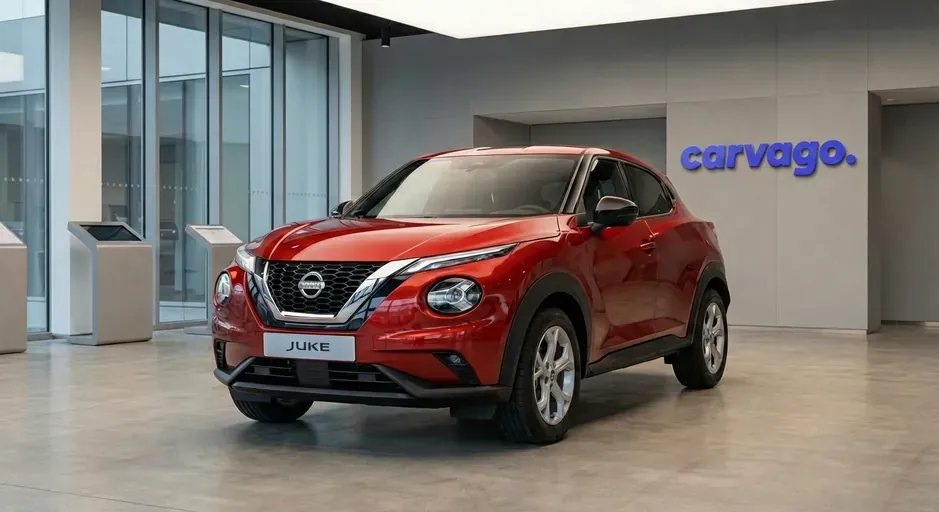
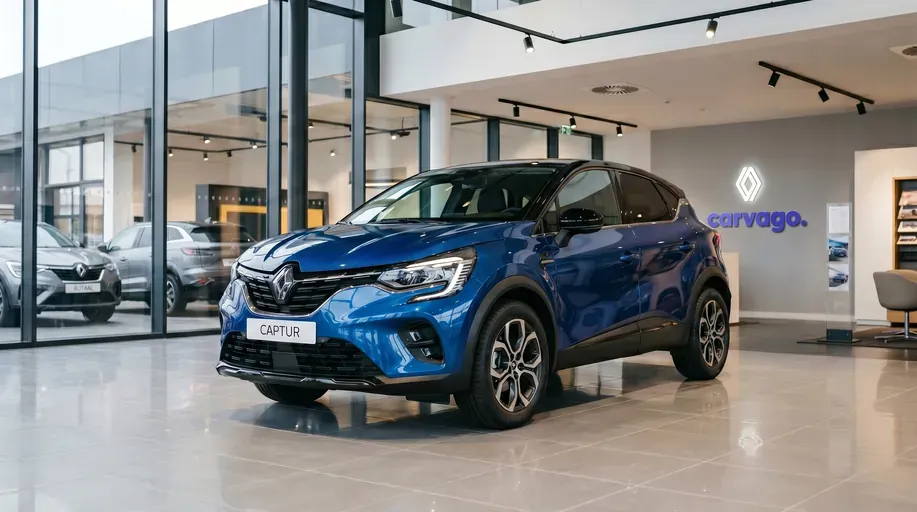
The second-generation Nissan Juke, which, unlike its predecessor (known in some markets in the past as the luxury Infiniti ESQ), operates under a single name, remains an unmissable representative of urban crossovers with an unmistakable sporty design. Standing against it is the more practically oriented Renault Captur, which in its current generation can also be found on European roads under the alternative designation as the rebadged Mitsubishi ASX, scoring points primarily with its French elegance and cleverly designed interior. The following comparison will reveal step-by-step which of these two technically related, roughly four-year-old rivals represents a better choice on the used car market for your daily commutes.
When choosing a compact city crossover on the used car market, typically for cars around four years old (i.e., current generations entering the market in 2019 and 2020), you will encounter an almost identical technical basis for both models. The second-generation Nissan Juke (F16) and the second-generation Renault Captur both stand on the same shared CMF-B chassis platform. This is naturally reflected in their external dimensions, which compete directly and are extremely close. From a practical standpoint, this means that whichever of these models you choose, you will always get a very agile car that fits into standard parking spaces in crowded urban housing estates without much trouble.
A detailed comparison of the total body length shows that the Renault Captur with its 4227 mm (or 4239 mm for the latest representatives of this generation) is 17 to 29 mm longer than the Nissan Juke, which is 4210 mm long. The wheelbase, as a key parameter for interior space, is practically identical for both vehicles – the Captur offers 2639 mm and the Juke 2636 mm. This minimal three-millimeter difference between the axles is completely unnoticeable to passengers; however, the slightly longer rear overhang and different body shaping of the Renault provide better potential for playing with the luggage space. For regular family use, the Captur can extract a bit more from these proportions, while the Juke relies more on a shorter and sportier-looking appearance.
Regarding width and height, the Nissan Juke's dimensions clearly signal a more muscular and slightly more aggressive stance. With a width of exactly 1800 mm and a height reaching 1595 mm, it is a negligible 3 mm wider, but nearly two centimeters taller than the Captur (which measures 1797 mm in width and 1576 mm in height). The Nissan's slight height advantage not only helps emphasize its robust, more off-road-oriented design, but in practice, it can provide a sense of a bit more headroom for passengers. On the other hand, the Renault's slightly lower and sleeker silhouette benefits highway aerodynamics and complements its overall more civil and elegant concept.
| Parameter | Nissan Juke SUV | Renault Captur SUV |
|---|---|---|
| Length (mm) | 4210 | 4227 - 4239 |
| Width (mm) | 1800 | 1797 |
| Height (mm) | 1593 - 1595 | 1575 - 1576 |
| Wheelbase (mm) | 2636 | 2639 |
When choosing a compact city crossover, practicality and trunk size play a crucial role. Whether you are looking for a car with room for a few extra suitcases or need a car sufficient for weekend shopping and longer vacations, every extra liter counts in daily use. Both the Nissan Juke and Renault Captur are among the very practical choices in their class on the used car market (especially current generations around four years old), with both models approaching interior space with slight differences.
Interestingly, with standard gasoline engines, both models offer exactly the same basic trunk volume – precisely 422 liters. This space easily covers the daily needs of most users and reliably accommodates even a baby stroller. The difference only appears after fully folding down the rear seat backrests, when the different shape of the rear bodywork becomes apparent. Here, the Nissan Juke has a slight edge, providing a maximum transport capacity of 1,305 liters, while the Renault Captur offers 1,275 liters. Both figures, however, guarantee easy transport of even bulkier items.
However, the situation changes significantly if you opt for electrified variants, where the battery system takes up a significant portion of the trunk. The Nissan Juke in the Hybrid version offers a reduced basic trunk volume of 354 liters (with a maximum of 1,237 liters). The Renault Captur in the E-Tech Full Hybrid version drops to 326 liters, and in the case of the Plug-in Hybrid version, the luggage space shrinks to a relatively modest 265 liters (with a maximum of 1,118 liters). While standard versions please with maximum practicality, with hybrids, one must expect minor compromises when packing.
| Parameter | Nissan Juke SUV | Renault Captur SUV |
|---|---|---|
| Basic volume (liters) | 422 | 422 |
| Max. volume with seats folded (liters) | 1,305 | 1,275 |
Although the standard internal combustion versions of both cars offer an identical 422 liters, the Nissan Juke carries slightly more cargo after folding the seats, while for both models, the significant reduction in trunk space for electrified versions must be considered.
Both models, the Nissan Juke and the Renault Captur, target urban and suburban traffic, yet they can be useful helpers even when it comes to towing a trailer. For those interested in these compact crossovers, trailer weight plays an important role, especially in terms of practicality. Whether you need to attach a light trailer with garden waste, a bike rack, or take a smaller caravan with you that offers space for a few extra suitcases, both cars in conventional engine versions are well-equipped and their limits are sufficient for weekend shopping or a longer holiday. In standard petrol versions, the Nissan Juke (in its F16 generation) is slightly better off, handling a braked trailer weighing up to 1250 kg. The Renault Captur (second generation) lags very closely behind with a maximum braked trailer weight of exactly 1200 kg. However, those interested in advanced electrified versions, which are increasingly popular on the market for approximately four-year-old used cars, must be very careful. If you choose the Juke 1.6 Hybrid or Captur in E-Tech versions (Full Hybrid or Plug-in Hybrid), the maximum capacity for a braked trailer for both rivals drops rapidly to just 750 kg. In terms of unbraked trailers, the conventional variants of both cars range roughly between 631 and 675 kg, which reliably covers common hobby activities. Ultimately, for more frequent towing of heavier loads, it clearly makes more sense to go for purely petrol engines, where the Juke has a very slight edge.
| Model and engine | Braked trailer weight (kg) | Unbraked trailer weight (kg) |
|---|---|---|
| Nissan Juke 1.0 DIG-T 114 (84 kW) | 1250 | 631-648 |
| Nissan Juke 1.6 Hybrid (69 kW) | 750 | 631 |
| Renault Captur TCe 90 / 100 LPG (67-74 kW) | 1200 | 660-675 |
| Renault Captur Mild Hybrid 140 (103 kW) | 1200 | 660 |
| Renault Captur E-Tech Hybrid 145 / Plug-in 160 (68-69 kW) | 750 | 750 |
Looking under the hood of both cars, we encounter an interesting paradox. Although the Nissan Juke and Renault Captur share the same technical foundation within their joint alliance, their approach to engine lineups in the current generations differs fundamentally. For buyers of approximately four-year-old used cars, this means a clear choice between total simplicity and extraordinary variability. While the Nissan Juke relies on a strictly narrow range consisting of a one-liter three-cylinder and a single full-hybrid powertrain, the Renault Captur plays the role of a chameleon. In its lineup, you can find almost everything – from an extremely economical factory LPG version to peppier mild-hybrid four-cylinders, an advanced plug-in hybrid, or even a diesel (though its sales were discontinued as early as 2020). For budget-conscious drivers with high annual mileage, Renault's factory LPG is a huge draw, while for city driving, both cars offer practically identical, economical, and reliable full-hybrid technology.
The engine range of the Nissan Juke (F16 generation, from 2019) follows the motto that less is sometimes more. The standard and by far the most common choice on the used car market is the turbocharged 1.0 DIG-T three-cylinder petrol engine. Initially, it was delivered with 86 kW (117 hp), but at the end of 2020, it was slightly detuned to 84 kW (114 hp) due to stricter emission standards, and the older version disappeared from the market. This lively engine with 200 Nm of torque can be had with either a six-speed manual or a seven-speed dual-clutch automatic (DCT). If your priority is maximum fuel savings and quiet operation in heavy city traffic, an attractive alternative is the modern 1.6 Hybrid powertrain with a combined output of 105 kW (143 hp), which was added to the range during 2022. This innovative solution uses a special multi-mode automatic transmission and can handle a large portion of city commuting purely on electricity.
| Engine type | Fuel | Power (kW) | Torque (Nm) | Transmission |
|---|---|---|---|---|
| 1.0 DIG-T 114/117 | Petrol | 84 / 86 | 200 | 6MT / 7DCT |
| 1.6 Hybrid 143 | Petrol / HEV | 105 | 148 + 205 | 4AMT (Multi-mode) |
The second-generation Renault Captur offers a significantly richer and more diverse selection of powertrains. The entry-level choices are the one-liter TCe 90 (67 kW) three-cylinders and the factory TCe 100 LPG (74 kW) version, which is highly sought after on the used car market. This variant can run on liquefied petroleum gas, making it a star for drivers focused on the lowest possible cost per kilometer. More demanding motorists who spend much more time on highways will definitely welcome the more flexible 1.3 TCe petrol four-cylinders. These units, with outputs ranging from 96 to 116 kW and supplemented over the years with reliable mild-hybrid technology, pair perfectly with the EDC dual-clutch automatic and stand out for their refined operation. The pinnacle of the eco-friendly range is the E-Tech 145 full-hybrid system (technically identical to the Nissan Juke) and the more powerful E-Tech Plug-in Hybrid 160 (116 kW), which offers plug-in charging and allows for daily short trips to be completed entirely emission-free. A curiosity is the 1.5 Blue dCi 115 diesel engine, which you might occasionally encounter in used car listings, but since Renault permanently withdrew it from the range at the end of 2020 after just one year, it has become a very niche option.
| Engine type | Fuel | Power (kW) | Torque (Nm) | Transmission |
|---|---|---|---|---|
| TCe 90 | Petrol | 67 | 160 | 6MT |
| TCe 100 LPG | Petrol / LPG | 74 | 170 | 6MT |
| TCe 130 / 140 (incl. Mild Hybrid) | Petrol | 96 / 103 | 240 / 260 | 6MT / 7EDC |
| TCe 155 / 160 (incl. Mild Hybrid) | Petrol | 114 / 116 | 270 | 7EDC |
| E-Tech Hybrid 145 | Petrol / HEV | 105 | 148 + 205 | 4AMT (Multi-mode) |
| E-Tech Plug-in Hybrid 160 | Petrol / PHEV | 116 | 144 + 205 | 4AMT (Multi-mode) |
| Blue dCi 115 | Diesel | 85 | 260 | 6MT / 7EDC |
While the Nissan Juke appeals to drivers looking for a reliable city basic without complex decision-making, the Renault Captur clearly wins with the breadth of its range – especially if you desire extremely economical LPG, a more refined petrol four-cylinder, or a modern plug-in hybrid.
Choosing the right engine is crucial for long-term satisfaction, with our recommendations based on real-world performance, actual fuel consumption, owner feedback, and mechanical reliability. Although the Nissan Juke and Renault Captur share an alliance platform, their approach to powertrains in roughly four-year-old used cars differs significantly. Interestingly, while the second-generation Juke (F16) relied almost exclusively on a single turbocharged one-liter three-cylinder engine for a long time and only later added a complex hybrid, the second-generation Captur offers a much richer and more mature range, including refined four-cylinder engines developed in cooperation with Mercedes-Benz, economical LPG versions, and advanced plug-in hybrids.
This engine represents the absolute base and, at the same time, the most logical choice for a used Juke from 2020 to 2024. The turbocharged three-cylinder offers an excellent compromise between agility and reasonable operating costs, benefiting from a linear torque curve (200 Nm), which is more than sufficient for urban and suburban commutes. In real-world driving, fuel consumption with both manual and dual-clutch transmissions hovers around a favorable 6 liters per 100 km. In terms of reliability, it is a mechanically robust unit; however, because it uses direct fuel injection, it carries a risk of carbon buildup on the intake valves and oil dilution with gasoline during frequent short city trips. You can avoid this problem by shortening the oil change interval to a maximum of 15,000 km (or 1 year), refueling with high-quality premium fuel with cleaning additives, and regularly warming up the engine on the highway. This engine is ideal for everyday users and commuters looking for a stylish city car with a lively character who do not drive tens of thousands of highway kilometers annually.
The 1.3-liter four-cylinder is significantly more mature compared to the three-cylinder alternatives and represents an absolutely phenomenal choice in the second-generation Captur with an excellent price-to-performance ratio. The pure gasoline TCe 140 GPF engine was produced from 2020 to 2022 and is highly sought after as a used car today; it was subsequently replaced in the lineup by the technically more advanced Mild Hybrid 140 version, which was supplied until 2024 and can be found in slightly younger vehicles today. We clearly recommend both variants thanks to their incredibly quiet and refined operation, strong torque (260 Nm), and great real-world consumption between 6 and 6.5 l/100 km, which is a top-tier value for 140 horsepower. A weak point can be sensitivity to lubricant quality, especially in connection with the gasoline particulate filter (GPF) – therefore, always thoroughly check the service history of a used car. It is critically important that the previous owner changed the oil of the exact specification no later than every 15,000 km and did not rely on nonsensically long "long-life" intervals. The refined four-cylinder easily handles a fully loaded car and safe overtaking, making it the perfect choice for families, highway travelers, and drivers with a more dynamic driving style.
Official fuel consumption figures provided by manufacturers in promotional materials are often very optimistic and are hardly achievable in real-world daily driving. To get a more accurate picture, it is therefore much more reliable to look at data from the drivers themselves. We used the extensive community database Spritmonitor.de to find out what the actual fuel consumption of these cars is. We focused on roughly four-year-old models, specifically the second-generation Renault Captur and the F16 generation of the Nissan Juke, and selected the most common engines you will encounter on the used car market.
| Model and engine | Average consumption (l/100 km) |
|---|---|
| Renault Captur 1.5 Blue dCi 115 (Diesel) | 4.8 |
| Nissan Juke 1.6 Hybrid 143 (Hybrid) | 5.3 |
| Renault Captur E-Tech Hybrid 145 (Hybrid) | 5.4 |
| Renault Captur 1.0 TCe 90 (Petrol) | 6.1 |
| Nissan Juke 1.0 DIG-T 114 (Petrol) | 6.4 |
| Renault Captur 1.3 TCe 140 (Petrol) | 6.5 |
Looking at the real-world data, several interesting trends are immediately apparent. The absolute king of efficiency in this comparison is the diesel Renault Captur 1.5 Blue dCi, which confidently stays below the five-liter mark on average. Close behind, however, are the full hybrid powertrains of both brands – the Nissan Juke 1.6 Hybrid and the Renault Captur E-Tech Hybrid show very similar real-world consumption in the range of 5.3 to 5.4 l/100 km, clearly demonstrating the maturity of electrified drives. On the other hand, it may come as a surprise that the small-displacement turbocharged three-cylinder engines (1.0 DIG-T in the Nissan and 1.0 TCe in the Renault) do not bring the expected significant fuel savings in the heavier and taller bodies of urban crossovers. In practice, they hover above the six-liter mark, which paradoxically brings their thirst quite close to the more powerful and refined 1.3 TCe petrol four-cylinder in the Renault.
What do these values mean for a typical user? If you spend most of your time in heavy city traffic or on suburban routes, the full hybrid versions of both rivals make the most sense in terms of fuel costs. They can use recuperation exceptionally effectively and push consumption to an absolute minimum during stop-and-go driving. Drivers covering high mileages on motorways or outside the city, on the other hand, should not overlook the Blue dCi diesel engine in the Renault, which is the unbeatably most efficient choice for long motorway journeys. And although the basic petrol three-cylinders will serve budget-conscious drivers well, it is necessary to anticipate that their consumption will rise relatively quickly on the motorway or under full load due to the need to rev the engine more.
In the end, it cannot be said that one model overwhelmingly beats its rival in terms of fuel consumption; both offer advanced technology. The choice of a used car should therefore not be guided solely by brand affiliation, but primarily by your individual driving profile. However, if you are looking for the widest possible selection and prefer a clean diesel, the Renault Captur will be a slightly more versatile choice for you thanks to the availability of the dCi engine.
In the market for used cars roughly four years old (vehicles with a production year around 2021 and 2022), both models in their second generations represent an attractive choice in the compact city crossover category. Although the Renault Captur and Nissan Juke share the same chassis platform within the alliance of both automakers, their pricing and availability on the used car market differ slightly.
While the Renault Captur attracts buyers with a relatively wide selection of power units, the Nissan Juke bets on a simplified engine range, which is also reflected in a slightly smaller spread of average prices.
The Nissan Juke holds its value surprisingly well, primarily thanks to its attractive, sporty design, which appeals to a specific group of buyers who are happy to pay extra for style. The Renault Captur, on the other hand, benefits from higher new car sales volumes. For a used car buyer, this means a significantly wider selection in listings and the ability to negotiate the price more easily.
If you are looking for the best price-to-practicality ratio (including benefits like the sliding rear bench), the Renault Captur will come out as the more rational and often slightly better value purchase. The Nissan Juke, conversely, scores points with drivers who appreciate more composed handling and a unique exterior and interior, albeit at a slightly higher entry price on the used market.
| Model (2021–2022) | Starting price of used cars | Average price (the middle ground) | Price of top versions (automatic/hybrid) |
|---|---|---|---|
| Nissan Juke | from ~ €14,400 | ~ €16,800 | up to €19,700 |
| Renault Captur | from ~ €13,600 | ~ €15,600 | up to €21,400 |
While the Renault Captur offers a more affordable entry price and high family practicality thanks to its wider range of engines, the Nissan Juke holds its value more steadily due to its unmistakable style and less common presence on the market.
When choosing a roughly four-year-old used car, safety is one of the key factors. Both the Nissan Juke and the Renault Captur (both represented by their second generations) offer an excellent level of protection, and both models received the maximum five-star rating in crash tests by the independent organization Euro NCAP. However, it is important to view these results in the correct temporal context. Euro NCAP methodologies and testing protocols are constantly evolving and becoming stricter over time, placing increasing emphasis on active accident prevention, advanced cyclist detection, or vehicle behavior at complex intersections. Therefore, percentage ratings from different years cannot be directly compared. In this case, however, we have models that underwent certification in the same year, which gives us a unique opportunity for a direct and completely objective comparison according to identical rules.
The second generation of the Nissan Juke was tested in 2019 with excellent results, driven primarily by high structural body rigidity and the presence of then very modern active safety features. In the adult occupant protection category, the Juke achieved an outstanding score of 94%, and a very solid 85% for child protection. The Japanese crossover also performed above average in the area of protection for vulnerable road users, where it scored 81%. This was due to an innovative autonomous emergency braking system with pedestrian and cyclist detection. On-board safety assistance systems were then rated at 73%.
The second-generation Renault Captur, which shares the CMF-B alliance platform with the Juke, also underwent Euro NCAP crash tests in 2019. It stood out primarily for its excellent protection of adult occupants inside the vehicle, for which it earned a top rating of 96%, thanks to excellent impact absorption and a stable passenger compartment. In the child occupant protection category, the French car scored 83%. For vulnerable road users, it reached 75%, and the rating for safety assistance systems was 74%, which faithfully reflects the effective implementation of lane-keeping assistants and speed limit recognition.
Overall, both cars represent a very advanced choice in terms of safety and, by today's used car market standards, are equipped with comprehensive assistance packages that even brand-new cars would not be ashamed of. While the Renault Captur provides negligibly better protection for adult passengers during the impact itself, the Nissan Juke earned a slightly better score for consideration towards its surroundings, especially pedestrians and cyclists. In everyday traffic, however, the strengths of these two models are remarkably balanced.
| Parameter | Nissan Juke | Renault Captur |
|---|---|---|
| Year of testing | 2019 | 2019 |
| Adult occupant protection | 94 % | 96 % |
| Child protection | 85 % | 83 % |
| Protection of vulnerable road users | 81 % | 75 % |
| Safety assistance systems | 73 % | 74 % |
Since both models were tested in the same year, you get the assurance of modern, five-star protection without compromise. The Captur leads slightly in passive safety for adults, while the Juke has a slight edge in pedestrian collision prevention.
In addition to standard equipment, each model offers several unique features that can be decisive for the customer during the final selection. While the Japanese representative bets on bold style, modern technology, and unconventional audio, its French competitor counters with immense interior practicality and unprecedented powertrain variability.
Distinctive and original exterior design that reliably stands out in the small SUV segment
Sportier-tuned chassis ensuring agile and confident handling in corners
High-quality interior craftsmanship with the option of a premium Bose audio system (with speakers in the headrests)
Generous standard safety equipment and modern assistance systems even from the base trim levels
Limited range of engines; the used car market is dominated by one-litre three-cylinder units
Due to the sloping roofline, there is less headroom in the rear seats for taller passengers
Stiffer suspension means lower ride comfort on poor-quality roads, especially in combination with large wheels
Smaller overall volume and luggage compartment variability (422 litres) compared to its French rival
The second-generation Nissan Juke is an ideal choice for drivers looking for a stylish city crossover with an extroverted design and a stiffer, sportier feel. It best suits individuals or couples who are willing to trade some rear space and practicality for originality and driving fun.
Top-tier interior variability thanks to the standard sliding rear bench (with a 16 cm range)
Wide range of engines on the used car market, including petrol engines, factory LPG, mild-hybrids, and plug-in hybrids
Spacious luggage compartment, which offers a capacity of up to 536 litres in conventional internal combustion versions
Very comfortable suspension tuning that excellently filters out the pitfalls of broken city roads
High-quality cabin with soft-touch plastics and a more mature feel
Less engaging driving experience and more detached steering, with more noticeable body roll in faster corners
The Easy Link infotainment system can suffer from slow responses and occasional freezes in some older examples
In the plug-in hybrid version, the luggage compartment is significantly reduced due to the battery placement
Renault Captur will primarily appeal to practical-minded couples and small families for whom comfort and everyday utility are priorities. Thanks to its excellent interior variability, a boot that is huge for its class, and a smooth ride, it represents an exceptionally versatile car where comfort clearly triumphs over sporting ambitions.
Based on our own statistics, reports from comprehensive vehicle inspections, long-term user experiences, and service reports, we have compiled an overview of the most common problems that used car buyers should watch out for.
The second generation of the Nissan Juke (code-named F16) is an overall reliable car, but like most modern vehicles, it did not avoid minor "teething troubles" in its first years of production, particularly in the areas of electronics and automatic transmission tuning.
Mechanically, it is a very robust vehicle; however, when choosing a used car, focus on the smoothness of the dual-clutch transmission's shifting and verify that the onboard system has the latest software updates.
The second generation of the Renault Captur benefits from a shared platform and improved engines (especially the reliable 1.3 TCe four-cylinder). Nevertheless, specific faults appear, mainly associated with the more complex onboard system and, in the first model years, the introduction of hybrid technologies.
While conventional internal combustion engines are considered reliable "workhorses," the smoothness of the E-Tech hybrid system's operation and the stability of the infotainment deserve careful inspection in a used car.
When buying a used car, a thorough inspection is key. Here are some specific points to focus on for these two models.
The Renault Captur is significantly more practical thanks to its sliding rear bench, which allows the trunk to be expanded from 422 liters to an excellent 536 liters. The Nissan Juke has fixed rear seats and offers a standard volume of 422 liters. If you often carry bulkier cargo or a stroller, the French model is clearly the better choice.
Yes, both crossovers are built on the shared alliance CMF-B platform and share chassis parts as well as some of the powertrains, including the one-liter three-cylinder engines and hybrid systems. Nevertheless, each model has its own unmistakable interior and exterior design and a specifically tuned chassis. In terms of reliability and maintenance costs, both cars are very similar.
The Renault is more suitable for families with children because it has an overall airier cabin and more headroom and legroom in the rear seats. The Juke, on the other hand, has a sloping roofline and smaller windows, which creates a somewhat more cramped feeling in the back. The Captur also scores with practical storage spaces, such as the large sliding glove box in front of the passenger.
The Japanese car focuses on a sportier experience, with slightly stiffer suspension, more precise steering, and less body roll in corners. The Captur, by contrast, is tuned primarily for comfort and filters out city bumps or broken country roads much better. The choice therefore depends purely on whether you prefer dynamic driving or, conversely, a calm and smooth journey.
For both cars with the popular 1.0-liter turbocharged engine, the average combined fuel consumption is around 6 liters per 100 kilometers. The differences in aerodynamics and weight between the two vehicles are minimal. Both manufacturers also offer full hybrid versions that can drive in the city with significantly lower consumption, below the 5-liter mark.
Although the second-generation Nissan Juke and Renault Captur share a common technical foundation, they target completely different types of drivers on the used car market. The extroverted Nissan Juke will primarily appeal to individuals and couples looking for unmistakable style, a sportier chassis, and a more fun driving experience, even at the cost of slight compromises in interior variability. Conversely, the Renault Captur represents a more rational and versatile choice for families, as it scores points with its flexible interior featuring a practical sliding rear bench, a significantly wider range of engines, and a strong emphasis on smooth driving comfort. As a result, the Japanese crossover will please buyers who want to stand out from the crowd in city traffic both visually and behind the wheel, while its French rival safely wins in terms of everyday utility and overall comfort.
Sources: ADAC, e15.cz, lidovky.cz, dopravniinfo.cz, elektromobil.cz, autoguru.cz
This article was prepared using artificial intelligence tools. The section guarantor is Petr Dušek.
Detailed comparison of the BMW X1 and Mercedes-Benz GLB. Real-world experience, specifications, equipment comparison, and a clear verdict to help you choose your SUV.
Apr 26, 2026
Detailed comparison of Kia Sportage vs. Škoda Karoq. Discover the differences in engines, equipment, and real-world fuel consumption. Our verdict will make it easier for you to choose the ideal used SUV.
Apr 18, 2026
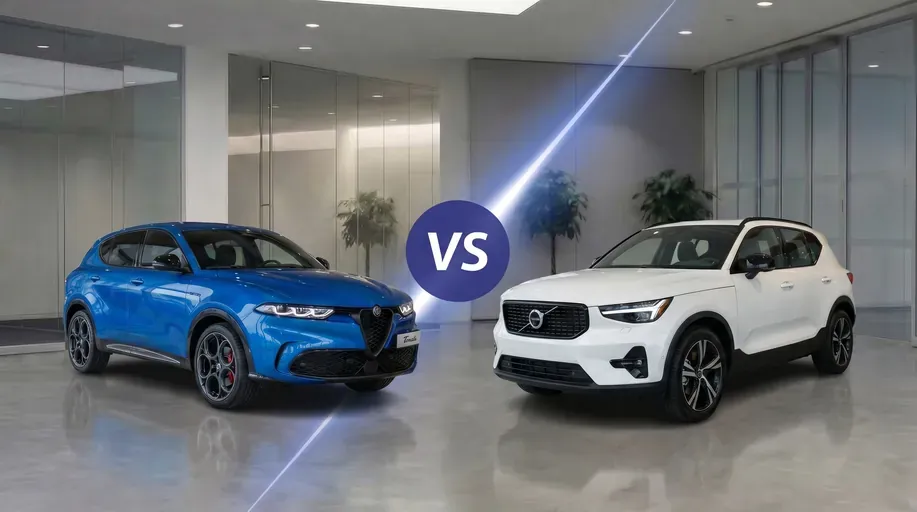
Alfa Romeo Tonale vs. Volvo XC40 comparison. Which compact SUV is the better choice? Discover the differences in equipment, driving characteristics, and read our verdict.
May 3, 2026