Car battle
Mitsubishi L200 vs. Nissan Navara: Complete comparison 2026
Comparison of the Mitsubishi L200 (Triton) and Nissan Navara (NP300). Find out which pickup has better driving characteristics and equipment. Read our final verdict!
Apr 20, 2026
Articles
Car battle
Detailed comparison: Mitsubishi L200 (Triton) vs. Volkswagen Amarok. Discover the differences in equipment, driving characteristics, and price. Which pick-up to choose?
April 29, 2026
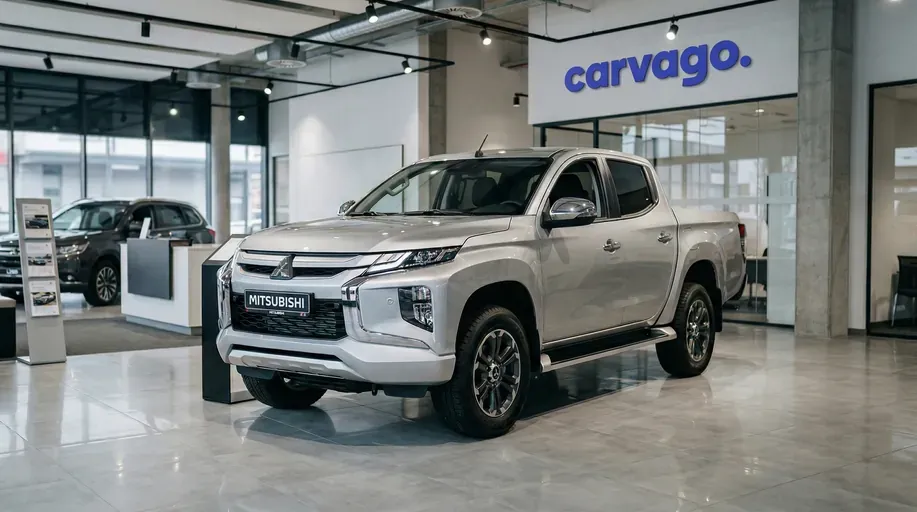
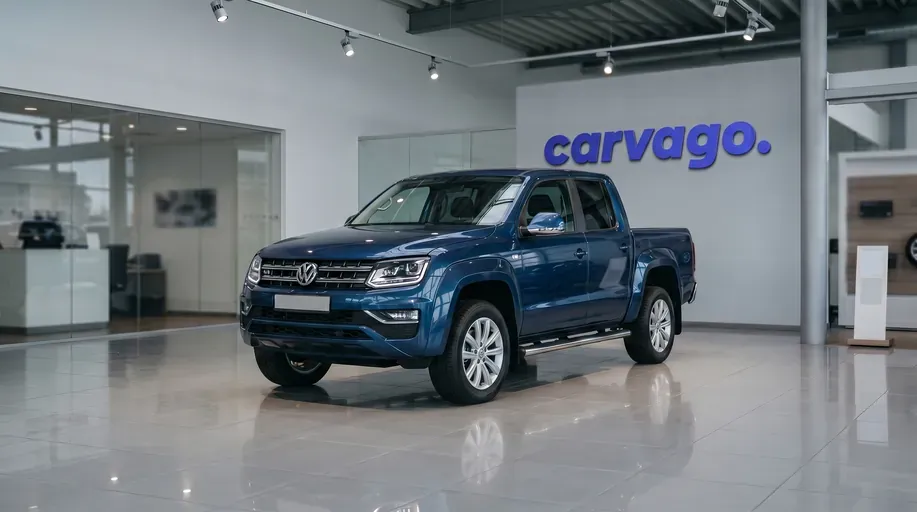
The Mitsubishi L200, which is also known as the Mitsubishi Triton, Strada, Ram 1200, or Fiat Fullback depending on the specific market or corporate cooperation, represents a time-tested and tough workhorse with a rich off-road history. Standing against it is the Volkswagen Amarok, a massive European pick-up that has built a strong position on the market thanks to a unique combination of high utility value and smooth comfort approaching that of classic SUVs. Let's take a detailed look at how these two strong competitors stand in a direct comparison and which of them will represent the ideal used choice for you, both for hard work and everyday leisure trips.
When comparing the external dimensions of these two popular pick-ups, we encounter quite fundamental differences in the philosophy of both brands. If we focus on the models that currently dominate the used car market (i.e., the 3rd generation Mitsubishi L200 produced until 2022 and the 1st, or the subsequent 2nd generation Volkswagen Amarok), it is obvious at first glance that the German representative plays the role of the more massive vehicle. The differences in overall length, where the Amarok measures from 5,254 to 5,350 mm and the L200 from 5,195 to 5,305 mm, are not entirely abysmal at first glance, but the overall proportions reveal a different focus. While Mitsubishi sticks to somewhat more compact and athletic shapes for better overall agility, Volkswagen bets on maximum size, making it the ideal choice for those primarily looking for a majestic appearance and uncompromising road presence in a pick-up.
A fundamental difference and a key factor for practical use can be felt primarily in the overall width of the vehicle. The Volkswagen Amarok, with its up to 1,954 mm (in the 1st generation), is significantly wider than the Mitsubishi L200, which reaches 1,815 mm in its widest version. This width difference of up to 139 mm means that the Amarok offers substantially more shoulder room for passengers in the cabin and a wider loading area, which more easily fits a standard Euro pallet widthwise. On the other hand, this extra width can be a significant disadvantage when parking at shopping centers or when driving through narrow forest paths. When deciding, it will be crucial whether internal comfort and the capacity of the Amarok's loading area are your priority, or if you instead appreciate the narrower build of the L200 for easier and less stressful movement in dense urban areas or in confusing terrain.
A similar story of a different approach to driving characteristics is told by the wheelbase and overall height. The Mitsubishi L200 uses a platform with a wheelbase of exactly 3,000 mm and a height of up to 1,780 mm for its 3rd generation. In contrast, the Volkswagen Amarok offers a wheelbase from 3,095 mm up to a generous 3,270 mm (in the 2nd generation) and measures up to 1,884 mm in height. The longer wheelbase of the Amarok brings a noticeably calmer and smoother ride, better filtration of bumps, and greater directional stability at higher highway speeds. However, the shorter wheelbase of the Mitsubishi, combined with a lower center of gravity, means much better maneuverability and a significantly smaller turning radius. The choice between these two vehicles in this regard depends on whether you spend more time on long highway journeys, where the more stable and taller Amarok reigns supreme, or if you need an agile workhorse for tight conditions, where you will fully utilize the more maneuverable and compact dimensions of the L200 model.
| Parameter | Mitsubishi L200 Pick-up | Volkswagen Amarok Pick-up |
|---|---|---|
| Length (mm) | 5195 - 5305 | 5254 - 5350 |
| Width (mm) | 1785 - 1815 | 1910 - 1954 |
| Height (mm) | 1775 - 1780 | 1820 - 1884 |
| Wheelbase (mm) | 3000 | 3095 - 3270 |
When comparing the luggage compartment, or rather the loading area of pick-ups such as the Mitsubishi L200 and Volkswagen Amarok, we enter a completely different category of practicality than with conventional passenger cars. For those interested in a used car on today's market – typically focusing on the widely represented third generation of the L200 (2015–2022) and the proven first generation of the Amarok (2010–2020) – the size of the cargo area is an absolutely key parameter. It's not just about the ability to accommodate Euro pallets or oversized building materials during heavy work use. Increasingly, these cars function as robust and versatile family vehicles. A well-thought-out compromise between passenger space and transport capacity is thus essential for active families who need to transport bicycles, muddy camping gear, or bulky sports equipment.
Looking closely at the specific numbers, it's clear that the Volkswagen Amarok benefits from its overall wider and more massive construction, which is directly reflected in the volume of its bed. In the most popular five-seater Double Cab variant, the Amarok offers a loading area volume up to the top edge of the side walls of a generous 1,279 liters, while its above-standard width between the wheel arches allows it to be one of the few pick-ups in its class to easily load a standard Euro pallet crosswise. The competing Mitsubishi L200 in the Double Cab version pays for its overall narrower body profile and provides a theoretical usable volume of approximately 1,061 liters. In practice, this means that the wider German pick-up provides exactly that desired space for a few extra suitcases or a larger supply of work tools. For two-seater, purely work versions with a long bed (Single Cab), this difference is even more pronounced: the Amarok boasts a massive 1,814 liters of storage space, while the L200 offers a more modest but still fully usable value of 1,581 liters.
A specific feature of the pick-up category is the strictly separated rear bed from the passenger cabin. For this reason, the classic expansion of the loading area by folding down the rear seat backrests, as we know well from conventional station wagons or SUVs, is completely absent here – the maximum "trunk" volume on the bed remains the same under all circumstances. In five-seater versions, however, users can flip up the rear bench seat cushions towards the backrests, creating a protected and lockable storage space directly inside the cabin for more valuable equipment. As for alternative powertrains, you won't encounter hybrid variants in either of these popular generations on the used car market, so the installation of any batteries does not limit the valuable liters of space. If you also equip the pick-up with a practical hardtop, the Amarok, for example, becomes a hauler that is easily sufficient for weekend shopping and longer holidays thanks to its large basic capacity, while the narrower L200 retains its huge advantage in easier parking in narrow city streets at the expense of absolute transport capacity.
| Parameter | Mitsubishi L200 Pick-up (Double Cab) | Volkswagen Amarok Pick-up (Double Cab) | Mitsubishi L200 Pick-up (Single Cab) | Volkswagen Amarok Pick-up (Single Cab) |
|---|---|---|---|---|
| Basic volume (liters) | 1061 | 1279 | 1581 | 1814 |
| Max. volume with seats folded (liters) | 1061 | 1279 | 1581 | 1814 |
Volkswagen Amarok clearly dominates in absolute transport volume and bed width, making it an unrivaled choice for heavy work and demanding hobbies, while the overall more compact Mitsubishi L200 offers a slightly smarter compromise for users who need to regularly maneuver the car in a crowded city.
Towing capacity and maximum trailer weight are often absolutely key parameters for pick-up owners, whether they plan to transport heavy work equipment or are looking for a vehicle capable of effortlessly towing a large family caravan. In the category of approximately four-year-old used cars, both vehicles offer robust capabilities, yet we find a relatively clear winner in terms of absolute towing capacity.
Looking at the specific figures for the relevant generations reveals the superiority of the German representative. The third-generation Mitsubishi L200 (in versions from 2019–2022) offers a maximum braked trailer weight of 3,100 kg for the popular Double Cab version with the 2.2 Diesel engine (110 kW), while for the Club Cab version, this value is slightly reduced to 3,000 kg. In contrast, the Volkswagen Amarok, whether from the end of the first generation with powerful 3.0 V6 TDI six-cylinders or in the incoming second generation with two-liter and three-liter diesel engines, can commonly tow a braked trailer with an impressive weight of up to 3,500 kg (depending on the specification, it starts at 3,000 kg). While in other car classes today we often encounter hybrid versions with significantly reduced towing capacity, both of these pick-ups within the age of up to four years stick to purely classic conventional diesel engines and maintain full capacity without compromise. The unbraked trailer is, of course, limited to the legislative maximum of 750 kg for both vehicles.
In practice, this difference of up to 500 kilograms in favor of the Amarok plays a major role if you regularly transport massive horse trailers, heavy boats, or large construction machinery. On the other hand, the 3,100 kg capacity of the L200 model is still excellent and perfectly sufficient for weekend shopping for larger building materials as well as longer holidays with a large motorhome caravan. Moreover, you have such a reserve that even with a fully occupied car, you can easily handle a load that a normal passenger car could not cope with, and you will still have generous space for several extra suitcases.
In conclusion, the Volkswagen Amarok represents an uncompromising choice for drivers for whom the absolute limit of 3.5 tonnes is an absolute necessity. However, the Mitsubishi L200 is a capable competitor that, while not attacking the top figures of its German rival, still offers enormous towing power. It will thus be an excellent choice for those users whose demands on the weight of the trailer itself are not so extreme, but who still want a full-fledged workhorse.
| Model and motorization | Braked weight of trailer (kg) | Unbraked weight of trailer (kg) |
|---|---|---|
| Mitsubishi L200 3rd Gen Club Cab 2.2 Diesel (110 kW) | 3000 | 750 |
| Mitsubishi L200 3rd Gen Double Cab 2.2 Diesel (110 kW) | 3100 | 750 |
| VW Amarok 1st Gen Double Cab 3.0 V6 TDI (150 - 190 kW) | 3000 - 3500 | 750 |
| VW Amarok 2nd Gen Double Cab 2.0 TDI (125 - 151 kW) | 3200 - 3500 | 750 |
| VW Amarok 2nd Gen Double Cab 3.0 V6 TDI (177 kW) | 3500 | 750 |
When choosing a roughly four-year-old work pickup, you'll encounter two completely different approaches to powertrains in these two models, which fundamentally affects their character on and off the road. While the Mitsubishi L200 relied on efficient downsizing in its final years of production, exclusively delivering reliable 2.2 DI-D four-cylinder engines, the Volkswagen Amarok built its reputation as a highway king primarily thanks to the deployment of powerful 3.0 V6 TDI six-cylinder engines. For used car buyers, a key fact is that while the third generation of the L200 was sold continuously until 2022, the Amarok has a specific market situation in the form of a production hiatus. The first generation of the Amarok ended in Europe in mid-2020, and the brand-new second generation (sharing its technical basis with the Ford Ranger) did not arrive until 2023. When buying a car approximately four years old, you will be choosing between a very young Mitsubishi L200, a highly valued late first-generation Amarok with a V6 engine, or paying slightly more for early second-generation Amarok models. The L200 will appeal to pragmatic tradespeople looking for reliability for hauling heavy loads on unpaved roads, while the Amarok targets users requiring premium performance, massive torque, and highway dynamics.
The third-generation Mitsubishi L200 (produced between 2015 and 2022) underwent one important engine lineup change during its lifespan. In older models from 2015 to 2019, you'll find the proven 2.4 DI-D diesel units, offered in a standard version (113 kW) and a significantly more powerful 2.4 DI-D+ variant (133 kW), which excelled primarily with its great pull and 430 Nm of torque. In response to stricter emission standards, however, the manufacturer introduced a completely new all-aluminum 2.2 DI-D four-cylinder (often listed as 2.2 Diesel in databases) as part of a major facelift in 2019. The older 2.4 engines completely disappeared from the range and are no longer found in cars around four years old. Although the new 2.2 engine offers a slightly more modest 110 kW of power, thanks to a steady 400 Nm of torque from very low revs, the vehicle doesn't lose its pull even with a fully loaded trailer. Furthermore, the unit brought significantly quieter operation. A classic six-speed manual transmission or a more comfortable six-speed automatic, which was a step forward compared to the five-speed gearboxes in older versions, was available. Given that European sales of the L200 ended in 2022, the 2.2 DI-D engine is the most modern powertrain you'll encounter for this pickup on the used car market.
| Engine Type | Fuel | Power (kW) | Torque (Nm) | Transmission |
|---|---|---|---|---|
| 2.2 DI-D | Diesel | 110 | 400 | 6MT / 6AT |
| 2.4 DI-D | Diesel | 113 | 380 | 6MT |
| 2.4 DI-D+ | Diesel | 133 | 430 | 6MT / 5AT |
Volkswagen Amarok engine options are strictly divided by year of manufacture, precisely because of the aforementioned generational gap. The absolute gem and huge draw of the outgoing first generation was the legendary 3.0 V6 TDI BMT SCR V6 engine. In its top version supplied until 2020, it offered a crushing 190 kW (258 hp) and a massive 580 Nm of torque. It was almost always paired with an excellent eight-speed automatic and permanent all-wheel drive. If you decide on a younger vehicle and go for the second generation (from 2023), the basic offering consists of efficient but potent 2.0 TDI SCR four-cylinders with 125 kW, or twin-turbocharged 2.0 BiTDI with a respectable 154 kW. However, the absolute top of the price list remains the iconic 3.0 V6 TDI SCR diesel V6, this time tuned to 177 kW (up to 184 kW in some editions) and a giant 600 Nm of torque. The brand-new generation switched to an extremely efficient ten-speed automatic for these more powerful versions, which reduces fuel consumption during highway travel. It should be noted that very old two-liter 2.0 TDI and 2.0 BiTDI engines from the early phase of the first generation (produced until 2016) are no longer found in used cars around four years old.
| Engine Type | Fuel | Power (kW) | Torque (Nm) | Transmission |
|---|---|---|---|---|
| 3.0 V6 TDI (1st gen) | Diesel | 120 - 190 | 450 - 580 | 6MT / 8AT |
| 2.0 TDI SCR (2nd gen) | Diesel | 125 | 405 | 6MT / 6AT |
| 2.0 BiTDI SCR (2nd gen) | Diesel | 154 | 500 | 10AT |
| 3.0 V6 TDI SCR (2nd gen) | Diesel | 177 - 184 | 600 | 10AT |
While the Mitsubishi L200 with its efficient 2.2 DI-D four-cylinder appeals with its toughness and tireless pull for heavy daily work, the commanding V6 in used Amaroks represents an unrivaled choice for drivers who value dynamics and need a massive power reserve even on the highway.
Choosing the right engine is crucial for long-term satisfaction with these vehicles, and our recommendation is based on real-world experience, balanced performance, fuel consumption, and mechanical reliability. The approach of both manufacturers to power units is diametrically different. While the Mitsubishi L200 relies on a rational and utilitarian four-cylinder designed for hard daily work, the Volkswagen Amarok became famous for its premium six-cylinder originally developed for luxury Audi vehicles, which gives it unexpected dynamics. When looking for used cars approximately four years old, it is important to know a fundamental fact from the history of both models, which stems from data on their availability: production of the first generation Amarok ended in 2020, and the new generation was not expected until 2023. Similarly, the third generation of the Mitsubishi L200 left our market in the autumn of 2022. On the market, you will most often be comparing L200 vehicles from the very end of production and Amaroks from the final years of the legendary first generation.
In the final years of production of the third generation (between 2019 and 2022), the 2.2 DI-D four-cylinder turbodiesel with an output of 110 kW (150 hp) found its home under the hood of the Mitsubishi L200. Although it lags behind the more powerful engines of competitors on paper, in real-world operation, it is a fantastic workhorse and clearly the best choice for this model. It stands out with an exceptionally linear pull from low revs and is perfectly matched with the six-speed automatic transmission, which significantly improved refinement and fuel consumption compared to previous versions. In terms of mechanical durability, it is a very reliable unit. However, you must watch out for diesel particulate filter (DPF) clogging; therefore, check if the vehicle was used mainly for short trips around town where regeneration does not have time to take place. It is also more sensitive to diesel quality, so regular fuel filter replacement is recommended for trouble-free operation. This engine is best suited for pragmatic drivers who see their pick-up primarily as a work tool, often tow trailers or tackle heavy terrain, and value durability over dazzling highway dynamics.
For models from the end of the first generation (offered until 2020), the absolute pinnacle and by far the best choice is the 3.0 V6 TDI engine with an output of 190 kW (258 hp). This engine catapults the Amarok to a completely different level; the massive 580 Nm of torque gives the vehicle crushing acceleration and highway dominance that you wouldn't expect from a work pick-up. In combination with the excellent eight-speed automatic transmission, the engine's operation is velvety smooth and perfectly masks the bulk of the entire vehicle. However, technical sophistication brings its own risks – for units with higher mileage or those where the previous owner did not follow oil change intervals, listen to the engine's operation when buying and pay close attention to any rattling of the timing chains. Replacing them is quite complex and financially demanding for a V6. Similarly, the engine is prone to DPF and EGR valve problems with constant short-distance driving. This premium unit will be best enjoyed by drivers who prefer a dynamic driving style, lovers of long highway journeys, or those who regularly tow heavy caravans and expect the comfort of a luxury SUV combined with immense power from their vehicle.
When choosing a used pick-up around four years old, real fuel consumption plays a crucial role, as manufacturers' official figures often differ significantly from everyday practice. To get the most accurate picture possible, we used data from the independent community portal Spritmonitor.de, where owners record their refueling over the long term. We focused primarily on the engines and generations that currently dominate the used car market, namely the third-generation Mitsubishi L200 (especially the 2019–2022 model years) and the landmark first and second generations of the Volkswagen Amarok. Both models are found on the European market almost exclusively with diesel engines, which is standard for work vehicles given the need for high torque; petrol variants are practically non-existent in this category.
| Model and engine | Average consumption (l/100 km) | Source |
|---|---|---|
| Mitsubishi L200 2.4 DI-D (3rd gen., 2015–2019) | 7.5 | Spritmonitor.de |
| Mitsubishi L200 2.2 Diesel (3rd gen., 2019–2022) | 7.7 | Spritmonitor.de |
| VW Amarok 2.0 BiTDI (1st gen., 2012–2016) | 8.2 | Spritmonitor.de |
| VW Amarok 2.0 TDI SCR (2nd gen., 2023–2025) | 8.9 | Spritmonitor.de |
| VW Amarok 3.0 V6 TDI (1st gen., 2016–2020) | 9.5 | Spritmonitor.de |
Looking at the table, several clear trends can be observed. The Mitsubishi L200 relies exclusively on efficient four-cylinder units. The older but very popular 2.4 DI-D engine is surprisingly slightly more economical than the newer 2.2 Diesel unit, which had to meet stricter emission standards, which paradoxically took a small toll on overall consumption. The Volkswagen Amarok, on the other hand, is noticeably thirstier across all versions. The extremely popular 3.0 V6 TDI from the end of the first generation typically requires about nine and a half liters of diesel in real-world driving, which is a significant jump compared to the Mitsubishi. It may also come as a surprise that the use of smaller two-liter turbocharged four-cylinder engines in the second-generation Amarok does not actually save much fuel, and in practice, the average for more powerful versions oscillates just below the nine-liter mark. Downsizing in such heavy and aerodynamically inefficient vehicles simply does not always work as favorably as engineers would like.
For the typical user, these figures mean a clear choice based on the preferred way of use. If you are looking for a more affordable work tool for daily commuting, or for moving around construction sites or forest roads with a partially loaded bed, the Mitsubishi L200 is clearly the more budget-friendly choice. In contrast, the Volkswagen Amarok, especially with the powerful V6 under the hood, will be appreciated primarily by drivers who cover long highway distances, often tow heavy trailers, or simply require the refinement and dynamics of a premium SUV. With the Amarok, however, it is necessary to expect that you will pay significantly more at the gas station for its confident pull and higher curb weight.
In conclusion, it can be summarized that fuel consumption plays a key role as a decision-making factor between these two vehicles. While the Mitsubishi L200 scores with excellent efficiency and stays safely below the eight-liter mark with reasonable driving, the Volkswagen Amarok pays a price for its dynamic properties and overall robustness in the form of fuel consumption, which reaches the nine-and-a-half-liter level for the most sought-after engines. For purely budget- and pragmatically-oriented buyers, the Japanese representative emerges as the winner from this operational comparison.
The used pickup truck market offers completely different price worlds for these two models. While the Mitsubishi L200 maintains a reputation as an affordable and reliable workhorse, the Volkswagen Amarok has always aimed for more premium waters, which is fundamentally reflected in its purchase price and excellent residual value.
When looking for a used car around four years old, you will also encounter the specifics of generation cycles – while Mitsubishi was fully selling its significantly modernized fifth generation at that time, Volkswagen was taking a break between the ending first generation and the completely new second generation sharing technology with the Ford Ranger.
The fifth generation after a deep facelift (often referred to as Series 6) represents a very attractive choice on the used car market if you are looking for the best price-to-utility ratio. The vast majority of four-year-old vehicles are equipped with a 2.2 DI-D diesel engine with 110 kW.
The situation at Volkswagen is divided into two extremes from the perspective of the 3–5 year old used car market. Production of the first generation for Europe ended in 2020, and the new generation did not arrive on the market until the turn of 2022 and 2023.
| Model | Estimated Price Range (incl. VAT) | Most Common Engine in the Offer |
|---|---|---|
| Mitsubishi L200 (2020–2022) | €22,000 – €33,000 | 2.2 DI-D (110 kW) |
| VW Amarok 1st gen (2019–2020) | €29,000 – €41,000 | 3.0 V6 TDI (150–190 kW) |
| VW Amarok 2nd gen (from 2023) | €45,000 – €57,000+ | 3.0 V6 TDI (177 kW) |
If your main criterion is the price/performance ratio, the Mitsubishi L200 will delight you with its affordability, while you will pay a significant premium on the used car market for the highly valued six-cylinder luxury of the Volkswagen Amarok.
At first glance, it might seem that both cars embody the absolute top of their class, and five-star ratings are often mentioned in connection with their safety. For those interested in a used car, however, it is absolutely crucial to understand the context and the year in which the cars were tested. The protocols of the independent organization Euro NCAP evolve dynamically over time and become significantly stricter. Percentage results achieved in different years cannot be directly and simply compared. While earlier test methodologies focused primarily on structural rigidity during a classic impact, the latest ones require advanced simulations, pedestrian or cyclist detection, and the vehicle's ability to brake autonomously even in demanding situations at intersections.
In the case of the Mitsubishi L200, which you commonly encounter on the four-year-old used car market in its facelifted version, the safety certification is based on Euro NCAP tests conducted in 2015. The car received four stars back then. The main reason it did not achieve a full five-star rating was not a weak body, but the absence of the then newly evaluated autonomous emergency braking (AEB) systems in the standard equipment. Even so, the construction proved very solid rigidity, and the car scored 81% for adult protection and 84% for child protection. From today's perspective, however, this is an older homologation that no longer reflects the most modern requirements for active assistance standards.
The second generation of the Volkswagen Amarok underwent independent testing in 2022 and rightfully earned a full five stars. These results reflect the strictest modern test protocols of today. The Volkswagen Amarok, which benefits from shared engineering with Ford, shone not only in the excellent durability of its massive cabin (90% child occupant protection) but also significantly dominated in the safety assistance category. Thanks to standard smart sensors and detection of vulnerable road users, it earned a top score of 84%, which is still a very above-standard score in the work pickup segment.
From the perspective of a used car buyer, these figures show a clear picture of the intergenerational development of safety across the market. Both cars feature a rigid frame and robust construction that protects the occupants physically very well. However, the Volkswagen Amarok represents a more comprehensive and significantly more modern safety package. While with the L200 you rely mainly on your own driving reflexes and proven passive safety, the Amarok acts as an active partner that can effectively prevent many impending collisions.
| Parameter | Mitsubishi L200 | Volkswagen Amarok |
|---|---|---|
| Year of testing | 2015 | 2022 |
| Adult occupant protection | 81 % | 84 % |
| Child occupant protection | 84 % | 90 % |
| Vulnerable road user protection | 76 % | 74 % |
| Safety assist systems | 64 % | 84 % |
While the Mitsubishi L200 offers reliable, time-tested passive protection, the substantially younger Amarok sets the bar significantly higher and wins hands down thanks to modern assistants.
In addition to standard equipment, each of the models offers several unique features that can be decisive for the customer, and each approaches added value and the vehicle's focus in a completely different way.
Excellent Super Select II four-wheel drive system (allows 4x4 driving even on dry asphalt)
More favorable purchase price and overall better price/utility ratio on the used car market
Smaller turning radius and better maneuverability in tight spaces and off-road
Proven reliability and robust construction built for demanding work use
Lower fuel consumption for the 2.2 DI-D engine compared to six-cylinder competitors
Narrower cabin offers less shoulder room for passengers compared to the Amarok
Graphically outdated and slower-responding multimedia system
Lower engine power and smaller towing capacity (max. 3.1 tons) than premium rivals
Significantly less comfortable chassis behavior when driving with an unladen bed
Mitsubishi L200 is an ideal choice for tradespeople, farmers, and adventurers looking for a honest off-road vehicle with an unrivaled four-wheel drive system for reasonable money. Thanks to its slightly narrower body and great agility, it won't get lost on narrow forest paths, and its purchase makes sense even from the perspective of a tighter budget.
Powerful and refined V6 TDI engines with a huge reserve of torque
Premium driving comfort on paved roads approaching classic large SUVs
Sufficiently wide bed allowing a standard Euro pallet to be loaded crosswise between the wheel arches
Top-tier towing capacity (up to 3.5 tons) and excellent stability of the combination
More spacious, better soundproofed cabin with higher quality interior materials
Significantly higher purchase price on the used car market and faster depreciation
Higher costs for fuel, routine maintenance, and potential servicing of the powerful six-cylinder
The version with permanent 4Motion drive and automatic transmission lacks a classic low-range gear
Larger overall dimensions make city parking and maneuverability in dense forests more difficult
Volkswagen Amarok will appeal to more demanding drivers who need a tough workhorse with a bed but refuse to compromise on dynamics and driving comfort. The impressive six-cylinder and more premium cabin design make it an excellent tool not only for towing heavy trailers but also for comfortably devouring highway miles.
Based on data from our own detailed inspections via the CarAudit service, long-term user experience, and service center statistics, we have compiled an overview of the most common problems you should watch out for when choosing a roughly four-year-old used car.
In the case of the Mitsubishi L200, especially in its last available generation for the European market, you will most often encounter defects stemming from heavy workloads and neglected service, which a detailed technical inspection of the car will reliably reveal.
Although the L200 is a mechanically very durable and tough pick-up, it requires honest maintenance and adherence to payload limits; otherwise, you may be unpleasantly surprised by damaged leaf springs or striking electronics.
The Volkswagen Amarok, on the border between the ending first generation with the popular V6 TDI six-cylinders and the incoming second generation, offers premium comfort, but a comprehensive vehicle check should focus on specific, often very expensive defects.
The Amarok is a refined companion for swallowing highway kilometers and towing caravans, but this versatility comes at the price of more expensive emission system repairs and the risk of a more delicate cooling system.
When buying a used car, a thorough inspection is key. Here are some specific points to focus on for these two models, especially if you are choosing a vehicle approximately four years old:
The Volkswagen Amarok offers a slight advantage in total towing capacity, as with the appropriate engine it can tow a braked trailer weighing up to 3,500 kg. The Mitsubishi L200, depending on the version and year, can tow a trailer weighing up to 3,100 kg. The payload capacity of the bed itself is comparable for both vehicles and is right around the one-ton mark.
The Mitsubishi L200 excels in challenging terrain primarily thanks to its advanced Super Select 4WD-II all-wheel-drive system, which allows for 4x4 driving even on dry asphalt and offers low-range gearing and a differential lock. While the Amarok with the 4MOTION system can also handle very tough terrain, its domain is more about stability on paved roads and during faster transits. Additionally, thanks to its narrower body, the L200 weaves better through tight forest paths.
The Volkswagen Amarok is generally known for its premium interior, which in terms of width, soundproofing, and overall comfort is closer to classic passenger SUVs. The Mitsubishi L200 has a slightly narrower cabin and a more utilitarian finish with harder plastics, making it more of a classic work tool. The excellent optional ergoComfort seats in the Amarok offer significantly better back support on long highway journeys.
In terms of fuel consumption, the clear winner is the Mitsubishi L200 with its 2.2 DI-D four-cylinder diesel engine, where real-world consumption typically ranges between 8 and 9 liters per 100 km. The Volkswagen Amarok primarily appears on the used car market with a powerful 3.0 TDI six-cylinder engine, which is indeed powerful but requires an average of 10 to 11 liters of diesel per 100 km during normal driving.
Both pickups are built very robustly, but thanks to its long tradition and slightly simpler construction, the Mitsubishi has a reputation as an indestructible and low-maintenance workhorse. The Amarok with the V6 engine is also very reliable and can withstand high mileage; however, routine maintenance and potential repairs for this large-displacement engine tend to be more financially demanding.
Choosing between these two capable pick-ups around four years of age depends primarily on whether you require everyday pragmatic toughness from the vehicle, or are rather looking for premium highway comfort. The more compact and agile Mitsubishi L200, with its unrivaled all-wheel-drive system and lower operating costs, is the ideal choice for tradespeople, farmers, and adventurers looking for an honest off-road workhorse at a reasonable price. In contrast, the massive Volkswagen Amarok, thanks to the crushing power of its six-cylinder engine, wider bed, and superior towing capacity, targets more demanding drivers who accept significantly higher purchase and service costs in exchange for confident driving characteristics and comfort approaching that of luxury passenger SUVs.
Sources: ADAC, svetmotoru.cz, aktualne.cz, autojournal.cz, emobility.cz, autickaruvblog.cz
This article was prepared using artificial intelligence tools. The section guarantor is Petr Dušek.
Comparison of the Mitsubishi L200 (Triton) and Nissan Navara (NP300). Find out which pickup has better driving characteristics and equipment. Read our final verdict!
Apr 20, 2026
Detailed comparison of used Toyota Hilux vs Volkswagen Amarok pickups. Discover the differences in reliability and equipment, and read the verdict before you buy.
Apr 22, 2026
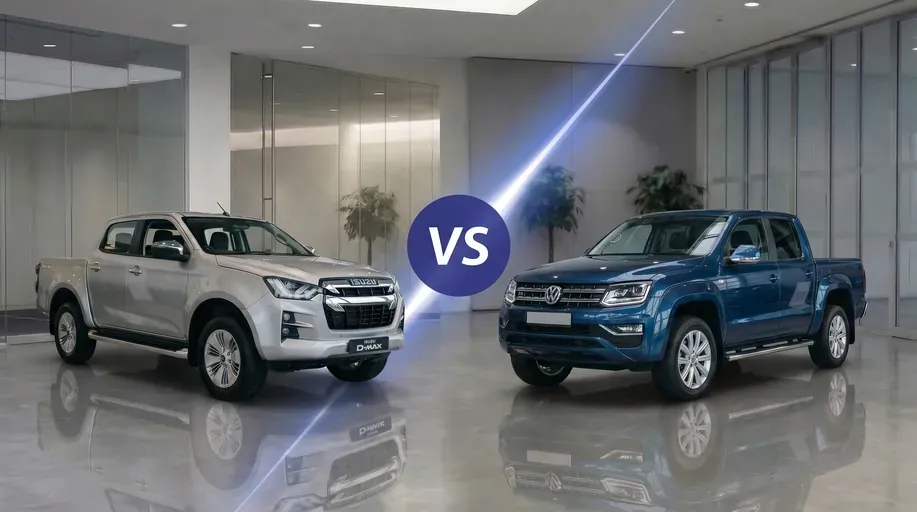
Detailed comparison of the Isuzu D-Max and Volkswagen Amarok. Find out which pickup offers better reliability and equipment. Read our verdict before buying a used car!
Apr 17, 2026