Articles

Car battle

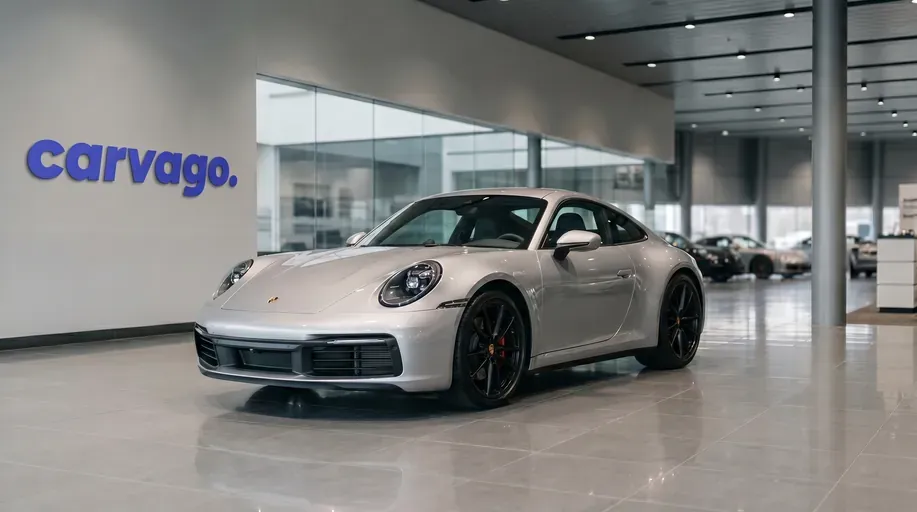
Maserati MC20 vs. Porsche 911: Complete comparison 2026

Detailed comparison of Maserati MC20 vs Porsche 911. Discover real-world experiences, performance differences, and a clear verdict to help you choose the ideal supercar.

April 24, 2026

VS
Maserati MC20

Maserati MC20

Porsche 911

Porsche 911

Introduction

The Maserati MC20, whose name is an abbreviation for "Maserati Corse 2020", represents a breathtaking Italian supercar that, with its innovative Nettuno V6 engine and lightweight carbon monocoque, heralds the brand's triumphant return to the pinnacle of driving exotics. Standing against it is the legendary Porsche 911, often known and sought after on the market under its internal generation code 992, which has carefully built its status as the benchmark for sports cars over decades thanks to its unmistakable rear-engine concept and ability to function as a top-tier daily driver. Now we will take a detailed look at how these two completely different engineering philosophies stand in a direct duel and which of these exceptional machines can better defend its position in your dream garage.

Comparison of External Dimensions

The exterior dimensions of both cars clearly reflect their completely different concepts. While the Maserati MC20 is a purebred supercar with a mid-mounted engine, the Porsche 911 (for an adequate comparison of four-year-old used cars, we choose the modern 992 generation) bets on its iconic silhouette with a rear-mounted engine. This difference in architecture determines not only the aesthetic impression but also fundamentally influences the overall proportions – the Italian car is noticeably longer, wider, and sits much closer to the asphalt.

Looking at the specific numbers, the Maserati MC20 measures 4669 mm in length and occupies a respectable 1965 mm in width. In contrast, the standard Porsche 911 is about 150 mm shorter (from 4519 mm) and more than 110 mm narrower (1852 mm), with even the top-tier and widened Turbo or GT3 versions reaching a maximum width of 1900 mm. The biggest difference, however, is evident in the wheelbase. The Italian trident offers a wheelbase of 2700 mm, which is a staggering 250 mm more than the more compact Porsche (2450 mm). The more expansive proportions of the Maserati MC20 thus give it the advantage of an uncompromising sporty stance and provide the car with immediate visual majesty.

In practice, these numbers mean a completely different user experience. Thanks to its long wheelbase, wide track, and low body construction (just 1224 mm), the Maserati offers phenomenal stability at high speeds and grips the road with extreme confidence. However, you pay the price for these proportions in daily life – maneuvering through narrow city streets and trying to fit into standard parking spaces require great caution. The Porsche 911, on the other hand, is significantly more agile and easier to see out of, thanks to its shorter build, slightly higher roof (around 1300 mm), and more compact dimensions. When choosing, the main factor is whether you prefer the effortless daily usability of the German model or long for the exotic and wide-stanced character of the Italian supercar.

ParameterMaserati MC20 CoupéPorsche 911 CoupéMaserati MC20 CabrioletPorsche 911 Cabriolet
Length (mm)46694519-457346694519-4573
Width (mm)19651852-190019651852-1900
Height (mm)12241298-130212241298-1302
Wheelbase (mm)27002450-245727002450-2457

Trunk Volume

When choosing a supercar on the used car market, luggage capacity is usually not the most important parameter, but if you plan to use the car for more than just weekend drives, it can play a surprisingly large role. While some mid-engine models give up on practicality almost entirely, both of today's rivals from roughly four-year-old generations (Maserati MC20 and the Porsche 911 generation 992) offer storage space that is actually usable. However, the approach to storage differs radically between the two cars, which has a major impact on how much and what kind of luggage you can take with you on your travels.

The Maserati MC20, as a thoroughbred mid-engine supercar, divides its storage space into two smaller sections. In the front, you'll find a modest trunk with a capacity of 50 liters, while behind the engine in the rear of the car there is another 100 liters, giving a total base volume of 150 liters. Furthermore, the MC20's cabin is strictly a two-seater, so you won't find any additional space behind the seats for bags. In contrast, the Porsche 911 benefits from its iconic rear-engine layout. Its deep front trunk alone offers 132 liters. But the real trump card for the Porsche is the rear seats, which in the Coupé version can be folded down and used as a storage area with an additional 264 liters. The total luggage capacity for the Stuttgart-based coupe thus reaches a generous 396 liters. The open-top Cabriolet version is slightly worse off due to the folding roof mechanism, but even so, its space behind the front seats offers an additional 163 liters (totaling 295 liters).

From a practical standpoint, the difference between the two cars is vast. The luggage space of the Maserati MC20 (even in the open-top Cielo version) is only sufficient for small soft bags or a very modest weekend grocery run, and the rear trunk can get uncomfortably warm from the exhaust system. The Porsche 911, on the other hand, clearly lives up to its reputation as an "everyday supercar". You can easily fit a large carry-on suitcase in its front trunk, while the area behind the front seats provides room for several additional suitcases, more shopping, or even a small golf bag. For a longer holiday for two, the Porsche is the clear winner in terms of carrying capacity.

Luggage Capacity Comparison

ParameterMaserati MC20 CoupéPorsche 911 CoupéMaserati MC20 CabrioletPorsche 911 Cabriolet
Base volume (liters)150132150132
Max. volume with seats folded (liters)150396150295

🎒 Practicality versus Purism

While the Maserati MC20 offers only the bare minimum divided into two small compartments, the Porsche 911 easily wins in everyday usability thanks to its deep front trunk and massive space behind the seats.

Discover the true condition of the car thanks to an independent inspection

Order CarAudit™

Trailer Weights

Towing capacity and the associated total towing weight are often important indicators of a car's versatility, which can facilitate decision-making for many buyers. However, for purebred sports cars such as roughly four-year-old used Maserati MC20 (1st generation, from 2021) and Porsche 911 (992 generation, from 2019), we must look at the matter from a completely different perspective.

Both the standard and maximum weight of braked and unbraked trailers for both of these rivals is exactly 0 kg. Due to aerodynamic optimization, mid- or rear-engine placement, and the pursuit of the lowest possible weight, neither car has factory homologation for the installation of a tow bar. This fact does not differ even for specific versions; while in common cars hybrid variants may have reduced capacity, here there is no exception and the value remains zero across the entire range of both brands.

The practical consequences are thus absolutely clear. If you were hoping to create additional space for a few extra suitcases by attaching a small trailer, which would be comfortably sufficient for weekend shopping or a longer holiday, you will not succeed with these cars. You will have to rely exclusively on modest interior compartments and relatively small front luggage compartments (so-called frunks). The conclusion is therefore simple – when choosing between the MC20 and the 911, towing capacity will not be a dividing factor. Both cars are designed purely for uncompromising driving experiences on roads and tracks, not for the role of practical towing workhorses.

Due to the absence of any official data on trailer weight for both models (the vehicles are not structurally designed for towing), no data for specific engine versions are listed in the table, as required by the comparison methodology.

Model and engine versionBraked trailer weight (kg)Unbraked trailer weight (kg)

Overview of Most Common Motorizations

When comparing the engine options of the Maserati MC20 and Porsche 911, two radically different approaches to powering top-tier sports cars collide, which has a fundamental impact on dynamics, efficiency, and the overall character of the car. Maserati MC20 bets everything on a single ultimate card – a custom-developed 3.0-liter V6. This aggressive twin-turbocharged unit features unique pre-chamber combustion technology derived directly from Formula 1, which will be especially appreciated by those interested in purist supercars focused on crushing performance. Conversely, the Porsche 911 offers an incredibly flexible spectrum of flat-six (boxer) engines for the four-year-old used car market. The range starts with a highly efficient yet exceptionally potent twin-turbocharged 3.0-liter for everyday use and culminates in track-focused, thrilling high-revving naturally aspirated engines or stunning bi-turbo units for the Turbo models. While Maserati exclusively offers an ultimate rear-wheel-drive setup with a dual-clutch automatic, in the Porsche lineup, drivers can choose between rear- or all-wheel drive and select either a precise automatic transmission or a classic manual gearbox for automotive enthusiasts.

Maserati MC20

The engine range for the 1st generation Maserati MC20 (in production since 2021) is extremely purist and centers on a single technological gem. The heart of the car is a 3.0-liter V6 gasoline engine labeled "Nettuno," boosted by a pair of turbochargers. It can produce a staggering 463 kW (630 hp) and a brutal 730 Nm of torque. Power is sent exclusively to the rear axle via an ultra-fast eight-speed dual-clutch transmission. This state-of-the-art unit is the standard and also the most powerful (and only) conceivable choice for both the fixed-roof (Coupé) and the open-top Cielo variant. This eliminates the need to decide over complex tables; pure gasoline power with Italian charm wins out here across the board, without any compromised or weaker versions.

Engine typeFuel typePower (kW)Torque (Nm)Transmission
3.0 V6 Nettuno Twin-TurboGasoline4637308-speed DCT

Porsche 911

From the perspective of available databases and history, the Porsche 911 pedigree represents a very rich evolution of power units. From historical records, we learn about legendary cars of the Urmodell, G-Serie, and 964 generations, which were produced and sold between 1964 and 1993 and where classic air-cooled naturally aspirated and turbocharged engines reigned supreme (e.g., 2.0, 2.7, or 3.3 Turbo variants). Naturally, these historical engines are no longer available on the near-new used car market today. For those interested in a car roughly 4 years old, we are talking exclusively about the modern generation designated 992 (produced since 2019). Its range opens with a turbocharged 3.0-liter with 283 kW (385 hp) in the base Carrera model, which can be dialed up to 331 kW to 353 kW with modifications in the Carrera S and GTS versions. For highway interceptors, there are the aggressive 3.7-liter turbocharged engines in the Turbo and Turbo S models, generating a massive 478 kW and up to 800 Nm of torque. Track purists are then fascinated by the GT3 series using a naturally aspirated 4.0-liter flat-six with 375 to 386 kW without a single trace of artificial forced induction, which can also be paired with an excellent manual transmission, just like the Carrera S or GTS variants.

Engine typeFuel typePower (kW)Torque (Nm)Transmission
3.0 Flat-6 Twin-Turbo (Carrera)Gasoline2834508-speed PDK
3.0 Flat-6 Twin-Turbo (Carrera S)Gasoline3315308-speed PDK / 7-speed MT
3.0 Flat-6 Twin-Turbo (Carrera GTS)Gasoline3535708-speed PDK / 7-speed MT
3.7 Flat-6 Twin-Turbo (Turbo)Gasoline4277508-speed PDK
3.7 Flat-6 Twin-Turbo (Turbo S)Gasoline4788008-speed PDK
4.0 Flat-6 Naturally Aspirated (GT3)Gasoline3754707-speed PDK / 6-speed MT
4.0 Flat-6 Naturally Aspirated (GT3 RS)Gasoline3864657-speed PDK

Sharp purism versus unrivaled variability 🏁

While the Maserati MC20 represents an exotic, uncompromising choice with one perfect engine for those seeking a pure supercar right off the bat, the Porsche 911 impresses with an amazing range of engines for everyone – from a reliable daily companion to a track monster with a manual.

Choosing the right power unit is absolutely essential for long-term ownership satisfaction, which is why the following recommendations are backed by real owner experiences, operational reliability, dynamics, and real-world efficiency. While Maserati bets on a radical and exotic V6 inspired by Formula 1 technology for its approximately four-year-old model (1st generation from 2021–2025), the Porsche 911 relies on a refined evolution of its iconic turbocharged flat-six. (Note on available data: Although the attached database for the Porsche 911 primarily refers to classic air-cooled models discontinued in 1993, for the context of the roughly four-year-old used car market, we are intentionally focusing on the adequate modern 992 generation, which has been in production since 2019). Both engines offer fascinating performance, but each requires a completely different approach.

For the Maserati MC20, we recommend: 3.0 V6 Nettuno Twin-Turbo (463 kW / 630 hp)

The Maserati MC20 was designed as a purebred supercar for its 1st generation, and on the used market, you will find it exclusively with a single power unit – the revolutionary Nettuno engine.

  • Why it's the best choice: Although you don't have a choice of different power levels here, the Nettuno is a masterpiece and the brand's technological pinnacle in its own right. With a staggering 630 hp and 730 Nm of torque, it makes the MC20 a full-fledged competitor to the world's most expensive supercars.
  • Technical advantages: This V6 is unique for its patented pre-chamber ignition system derived from F1 racing. The system uses two spark plugs per cylinder and a combination of direct and indirect injection. The result is extremely fast combustion, extraordinary power density, and a wild, unmistakable sound.
  • Risks and what to watch out for: Due to its high complexity and the fact that no liquid fuel with a cleaning effect passes through the pre-chamber itself, gradual carbon buildup represents the greatest risk for the future. In similar high-performance Italian engines from this group, turbocharger leaks also appeared in the early stages. During inspection, ensure the car has a crystal-clear service history and that the engine runs completely smoothly at idle (even when cold).
  • Who it's for: This engine will be appreciated by pure enthusiasts and experienced drivers who will use the car for weekend drives, dynamic driving on empty roads, or occasional track days.

For the Porsche 911, we recommend: 3.0 Bi-Turbo Flat-Six Carrera S (992 generation, 331 kW / 450 hp)

While older generations of the Porsche 911 (e.g., the 964 series from 1989–1993 mentioned in the database) relied on naturally aspirated flat-sixes, for the purchase of a modern, approximately four-year-old used car, we recommend going for the turbocharged Carrera S version from the 992 generation.

  • Why it's the best choice: The Carrera S version represents the absolute "sweet spot" of the extensive 911 lineup. Compared to the base Carrera, it brings a noticeable increase in power and larger turbochargers, but unlike the uncompromising GT3 or the ultimate Turbo, it remains fully and comfortably usable for every day.
  • Technical advantages: The three-liter aluminum "boxer" benefits from asymmetric intake valve lift technology for better mixture swirling at low revs, which practically eliminates turbo lag. The power curve is incredibly linear, and the engine works fantastically with the lightning-fast eight-speed PDK transmission. Fuel consumption is surprisingly low during calm driving, considering the car's dynamics.
  • Risks and what to watch out for: The engine shares the disadvantages of direct injection, specifically the tendency for carbon buildup on the intake valves. This manifests as a rough idle and a slight drop in performance, especially in cars used for short trips. In models manufactured between 2019 and 2024, high-pressure fuel pump (HPFP) failures are also more common – if the car cranks for a long time, loses power, or reports errors on the dashboard, it could be the pump. Demand early, shortened oil change intervals.
  • Who it's for: Ideal for customers who want an all-weather car. It is a reliable partner for the daily commute to the office, traveling across Europe, and very spirited Sunday drives on favorite backroads.

Real Fuel Consumption

While car manufacturers often promise fuel consumption figures from the realm of dreams in promotional materials, physics and the heavy right foot of sports car drivers tell a completely different story. The difference between homologated figures according to the laboratory cycle and reality is often vast, especially with modern turbocharged engines that can be theoretically efficient during calm driving but demand huge amounts of high-octane petrol under load. To get a more accurate picture of what these cars consume in real-world conditions, we drew data from the popular German crowdsourcing platform Spritmonitor.de, where hundreds of thousands of drivers from all over Europe regularly record their actual fuelings. We focused on models and generations that are most relevant to the used car market today at around four years of age – specifically the first generation of the Maserati MC20 (produced since 2021) and the very popular Porsche 911 generation with the code name 992 (produced since 2019).

news_site: Spritmonitor.de

Model and EngineAverage Consumption (l/100 km)
Porsche 911 Carrera (992) 3.0 Twin-Turbo 283 kW10.8
Porsche 911 Carrera S (992) 3.0 Twin-Turbo 331 kW11.5
Porsche 911 Turbo S (992) 3.8 Twin-Turbo 478 kW13.5
Maserati MC20 3.0 V6 Nettuno 463 kW13.8
Maserati MC20 Cielo 3.0 V6 Nettuno 463 kW14.0

Looking at real-world data, the interpretation of trends is quite clear. In this elite league, we naturally find no diesel engines; both models rely exclusively on top-tier petrol units, so different approaches to peak dynamics are being compared. A surprising finding for many will be the immense efficiency of Porsche's flat-six engines. Despite the presence of two turbochargers, the smaller engines in the Carrera and Carrera S models can operate unexpectedly efficiently at a normal cruising pace, just above the 10-liter mark. In contrast, the Maserati MC20, with its technically sophisticated three-liter V6 Nettuno engine featuring Formula 1-derived pre-chamber combustion, consumes significantly more. The MC20's theoretical paper figures (around 11.5 l/100 km) easily shoot up to 14 liters in reality, especially if the driver frequently awakens its 630 horsepower. Furthermore, the heavier version with a retractable roof, the Maserati MC20 Cielo, naturally requires a few extra tenths of a liter.

What do these numbers mean for a typical buyer of a slightly used supercar? Although buyers of four-year-old cars with a price tag in the hundreds of thousands of euros are not usually strictly focused on the budget, consumption has a fundamental impact on range and user comfort. For long journeys across Europe, the Porsche 911 is the undisputed winner; thanks to its efficiency (and an optional enlarged fuel tank), it can serve as a capable Grand Tourer. Moreover, it can be operated in city traffic jams without any problems and with a surprisingly reasonable appetite. In contrast, in the Maserati MC20, which plays the role of a purebred weekend supercar full of Italian drama, the owner will be a much more frequent guest at petrol stations.

In conclusion, fuel consumption is unlikely to be the main deciding factor for this pair, yet it beautifully illustrates the focus of both cars. While the Porsche 911 (992) once again proves the German talent for combining brutal performance with seamless daily operation, the Maserati MC20 represents an exotic gem where a slightly higher fuel bill is seen simply as an acceptable tax for absolute exclusivity and emotion.

Price Range and Used Car Offerings

Used Car Price Comparison: Maserati MC20 vs Porsche 911

The market for used luxury and sports cars offers interesting opportunities for both models. Looking at cars approximately 4 years old (generations and model years 2021–2022), we encounter completely different price curves. While the Porsche 911 (992 generation) covers a huge price range thanks to its wide variety of versions, the Maserati MC20 enters the market straight as a full-fledged supercar with a correspondingly high base price tag.

Model (model year 2021–2022)Estimated starting price of a used carCommon price of top versions / specifications
Porsche 911 (992)approx. €111,000€226,000 – €267,000+
Maserati MC20approx. €172,000€238,000 – €259,000

Note: The prices listed correspond approximately to the situation on the European used car market for roughly four-year-old vehicles.

Affordability and versions of the Porsche 911 (992 generation)

The Porsche 911 has long benefited from its model diversity, which is also significantly reflected in the used car market. Interested buyers can choose from more standard cars for everyday use to pure track specials.

  • Base versions: Four-year-old Carrera and Carrera S models can be purchased on the secondary market with a price tag well below €123,000, usually starting from around €111,000.
  • The golden middle way: The sought-after GTS versions, which cleverly combine performance and touring comfort, commonly sell for around €144,000 to €164,000 and hold their residual value very well.
  • The top league: Extremely powerful 911 Turbo S specifications or track-focused GT3s do not lose much value and commonly exceed the €226,000 mark. These cars form a direct price alternative to the MC20.

Exclusivity and price stability of the Maserati MC20

The Maserati MC20 is a representative of purebred exoticism, which does not have any "entry-level" or compromise engine options. Every unit produced shares a carbon monocoque and a technically advanced Nettuno V6 engine with 630 horsepower.

  • Entry level on the used car market: The cheapest available MC20 examples start at amounts around €172,000, immediately filtering out buyers looking for a sports car in lower and middle budgets.
  • Influence of exclusive packages: Exterior and interior carbon accessories or special premium multi-layer paints can easily push the price of a used unit up by €21,000.
  • Cielo (Spyder) version: Open-top models appear more rarely on the market and their price stays at the upper end of the spectrum, very often moving above €246,000.

What fundamentally affects the residual value of both models?

  • History and warranty: For Porsche cars, the option of the popular extended factory warranty Porsche Approved plays a crucial role in used cars. Used cars that boast this certificate are logically more desirable and slightly more expensive.
  • Mileage and usage: Most owners treat the Maserati MC20 as a so-called "garage queen" – cars that only leave the garage in good weather. Finding an MC20 with over 30,000 km is a rarity, while for the Porsche 911, which is designed as an everyday car, it is a completely common thing.
  • Desirable optional equipment: For Porsche, specific premium options like the Sport Chrono package, carbon-ceramic brakes, or an optional sports exhaust system increase the price.

💰 Exotics vs. breadth of choice

While the Porsche 911 offers a car for various budgets and daily use thanks to dozens of available versions, Maserati maintains a high entry price and represents uncompromising weekend exoticism.

Safety and Euro NCAP Rating

When evaluating the safety of common modern cars, one often starts by mentioning the five-star rating in Euro NCAP tests. For such results, it is crucial to emphasize the importance of context and the year of testing. Euro NCAP protocols are constantly evolving and becoming stricter – today's standards require advanced frontal crash simulations, cyclist detection, or solutions for crisis scenarios at intersections. Percentage scores from different years cannot be directly compared. In the case of highly exclusive sports cars, such as approximately four-year-old used Maserati MC20s and Porsche 911, the situation is different. Due to their high purchase price and low production volume, these models have never undergone official laboratory crash tests by Euro NCAP.

The Maserati MC20 (produced since 2021) therefore offers no percentage data from Euro NCAP testing facilities. Passenger safety is primarily ensured by the construction itself, led by an exceptionally stiff and lightweight carbon fiber monocoque, which forms an effective survival cell. Regarding active safety, the car is fundamentally focused on a pure driving experience, but customers had the option to purchase a modern driver assistance package. In used cars, this may (but does not have to) include autonomous emergency braking with pedestrian and cyclist detection, blind spot monitoring, rear cross-traffic alert, or traffic sign recognition.

Even the current generation of the Porsche 911 (designation 992, on the market since 2019) has not been tested according to strict Euro NCAP protocols, which is, however, a long-term historical standard for this model. The car's passive safety benefits from an excellently designed rigid body combining high-strength steel and aluminum, complemented by a full set of modern airbags for front passengers. A strong point of Porsche is clearly the availability of active safety features. In addition to the incomparably tuned Porsche Stability Management (PSM) system, the Porsche 911 offers comprehensive protection including optional adaptive cruise control, lane keep assist, or even advanced night vision assist with a thermal camera.

Comparing the level of passive and active protection of both these cars, both meet today's strictest standards. From the perspective of overall usability, however, the Porsche 911 offers a more comprehensive and modern package of active safety systems, which you will appreciate during daily use in normal traffic. In contrast, the Maserati MC20 maintains a purer approach, where trust is placed in the exceptionally strong carbon structure born for motorsport.

Euro NCAP Results Comparison
ParameterMaserati MC20Porsche 911
Year of testingNot testedNot tested
Adult occupant protection--
Child occupant protection--
Vulnerable road users protection--
Safety assist systems--

🛡️ Safety even without stars

Although neither of these supercars has undergone official Euro NCAP testing, the Porsche 911 impresses with a more sophisticated range of active assistants for daily driving, while the Maserati provides top-tier structural protection through ultra-strong carbon fiber.

Comparison of Interesting Equipment Features

Beyond standard equipment, each of the models offers more than just basic technical parameters, with both cars bringing their own and completely different approach to added value and the overall driving experience.

Maserati MC20: Formula 1 Technology and Italian Dramatics

With the MC20, Maserati has returned to pure mid-engine supercars. The car combines state-of-the-art racing technology with unmistakable Italian design and exclusivity.

  • Engine and innovative combustion: The heart of the car is the 3.0-liter V6 Nettuno engine. It utilizes unique pre-chamber ignition technology (Twin Combustion), which was derived directly from Formula 1 cars. This system ensures immediate response and high performance without the need for extreme displacement.
  • Construction and chassis: The foundation of the car is an ultra-light carbon fiber monocoque, which Maserati developed in collaboration with specialists from Dallara. It ensures extreme torsional rigidity and keeps the car's total weight at a very low level.
  • Design and smart aerodynamics: Upward-opening "butterfly doors" provide a dramatic entry and exit. The body maintains perfectly clean lines without disruptive downforce wings – all aerodynamic downforce is cleverly generated by the sophisticated shaping of the floor and the rear diffuser.
  • Infotainment and digital vision: The completely minimalist interior is oriented exclusively toward the driver. The MIA (Maserati Intelligent Assistant) multimedia system runs on the Android Automotive platform and offers seamless integration with smartphones. The absence of a rear window through the engine cover is cleverly solved by a high-resolution digital rearview mirror.

Porsche 911: Everyday Usability and Uncompromising Precision

While the 992 generation acts as a pure sports machine, its greatest strength lies in its immense versatility. Porsche has managed to integrate advanced technologies so that the car works on the track as well as on the way to the office.

  • Smart functions for every day: The optional front axle lift system (Smart Lift) is equipped with GPS memory. Once you manually lift the car for a steep garage entrance or a speed bump, the car saves the location and will lift the front automatically next time.
  • Assistance systems and electronics: A unique feature is the so-called Porsche Wet Mode. Special acoustic sensors in the front wheel arches detect splashing water. The system warns the driver of the risk of aquaplaning and, after activating this mode, instantly adjusts the response of the engine, transmission, and stability systems for maximum safety in the wet.
  • Transmission and drivetrain: The iconic rear-mounted flat-six (boxer) engine is paired as standard with the lightning-fast eight-speed dual-clutch PDK transmission, which is a benchmark on the market. For automotive purists, however, Porsche still offers a seven-speed manual transmission on selected versions, which is a huge rarity today.
  • Telematics and track driving: The advanced PCM infotainment is linked with the Porsche Track Precision app. It acts as a virtual racing engineer – via smartphone, it allows the driver to record, analyze, and compare telemetry data from track driving in detail.
  • Space and layout: Unlike the strictly two-seater MC20, the 911 offers a traditional 2+2 concept. The two emergency rear seats often serve as welcome additional storage space, complementing the surprisingly deep and practical front luggage compartment ("frunk").

Key Advantages and Disadvantages

Maserati MC20

Pros

Exotic Italian design with striking butterfly doors

Extremely powerful Nettuno V6 engine (630 hp) with unique combustion technology

Lightweight carbon monocoque ensuring top-tier body rigidity and precise handling

Surprisingly supple and comfortable suspension tuning, usable even on longer trips

Immense road exclusivity and high "wow" factor

Cons

Very limited practicality and minimal luggage space (only 148 liters in total)

Steeper depreciation on the used car market compared to German competitors

Infotainment and some interior controls feel cheaper as they are shared with Stellantis group models

Significantly limited visibility from the car, especially towards the rear

Maserati MC20 is a purebred Italian supercar that appeals to lovers of extravagance, innovative technology, and a unique driving experience. It is ideal for customers looking for extraordinary exclusivity who want to stand out significantly from the crowd of traditional premium sports cars.

Porsche 911

Pros

Phenomenal everyday usability thanks to the 2+2 layout and a decent front trunk

Unrivaled build quality and absolutely flawless interior ergonomics

Perfect driving characteristics that manage a perfect compromise between track sharpness and touring comfort

Exceptionally high residual value and long-term proven reliability

Wide availability and a huge selection of versions on the used market (from Carrera to Turbo or GT3 versions)

Cons

Evolutionary and rather conservative design fails to cause as much of a stir as low Italian supercars

Lower exclusivity factor due to the relatively high frequency of the car on the roads

Very expensive optional equipment, which keeps the prices of used, better-equipped units extremely high

The current generation Porsche 911 (992) remains the unsurpassed benchmark in the everyday sports car category, never disappointing in any situation. It will primarily appeal to more rationally minded drivers who demand bulletproof engineering quality, trouble-free operation, and total versatility.

Common Problems and Owner Complaints

Based on failure statistics, service bulletins, and findings from our detailed physical car inspection, we have compiled an overview of the most common problems you should watch out for with these approximately four-year-old supercars.

Maserati MC20

The first-generation Maserati MC20 brought revolutionary technology to the brand, but models from 2021 and 2022 did not escape the classic "teething troubles" that often arise with brand-new platforms.

  • Engine and fuel system: In the earliest examples (especially 2021), dangerous fuel leaks appeared due to a faulty fuel line sensor housing. This problem could lead to fluctuating RPMs, sudden engine stalling, or in extreme cases, a fire risk.
  • Body and construction: A relatively unusual but serious problem is the quality of the windshield bonding. In some units, there was insufficient bonding between the frame and the glass due to improper sealant application, which required an official recall. If the glass was not professionally re-bonded in a service center, there is a risk of it coming loose during a serious accident or body twisting.
  • Electronics and infotainment: Software bugs are among the most common complaints from early owners. The multimedia system has occasional lag, and software outages of the rear parking camera display via the digital rearview mirror are also known. Fortunately, most of these issues were resolved by OTA updates.
  • Bureaucratic error: Some early models also saw a curious recall due to incorrectly stated maximum vehicle load data on the door labels, which could theoretically lead to overloading sensitive sports tires for careless owners.

Maserati MC20: Technological ailments of early years

Although the innovative Nettuno V6 is an engineering masterpiece, early production models require a careful check of the recall history and a 100% check of all software updates.

Porsche 911 (992 generation)

Despite its legendary German precision and engineering refinement, the current generation of the Porsche 911 (992), which in the context of four-year-old used cars is in its pre-facelift version, has several weak points worth focusing on when choosing.

  • Engine and fluid leaks: The mechanics of the flat-six engines are generally exceptionally robust, but common problems in used cars include oil separator (AOS) leaks. In some more intensively used units, oil may also seep through the rear main seal (RMS).
  • Cooling: Another delicate part is the coolant expansion tanks, which tend to crack over time due to thermal shocks in early models. Occasionally, prematurely failing water pumps also appear.
  • Body and windows: Like the Maserati, 911 models from 2020 to 2024 faced an extensive recall due to insufficiently bonded windshields and rear windows. Due to poor surface preparation in production, there was a risk of unexpected detachment, especially after airbag deployment in an accident.
  • Brakes and electronics: In daily use, owners sometimes complain about acoustic discomfort (significant squealing) of the optional carbon-ceramic brakes (PCCB). Among electronic defects, parking camera image outages appeared in the first years of production, for which Porsche issued corrective software. Occasionally, a recall for a loose brake booster rod occurred in 2020–2021 models.

Porsche 911: Mechanical reliability with minor flaws

The 992 generation remains one of the most reliable sports cars on the market, but when buying a used one, have the car lifted on a hoist and carefully check the undercarriage for any oil and coolant leaks.

Tips for Buying a Used Car

When buying a used car, a thorough inspection is key. Here are a few specific points to focus on for these two exclusive sports models to avoid unexpected and very costly service bills.

When choosing a Maserati MC20:

  • Nettuno V6 engine and idling behavior: The innovative V6 engine with pre-chamber combustion can be particularly sensitive to fuel quality. During a cold start, listen for a smooth idle and check if the engine hesitates under sharp acceleration.
  • Condition of the carbon monocoque: The MC20 is built on a carbon fiber shell. Lifting the car on a hoist and a detailed physical car inspection from underneath is an absolute necessity to detect any cracks or damage from speed bumps. Repairing a damaged carbon chassis is astronomically expensive, and in some cases, even impossible.
  • Behavior of the 8-speed dual-clutch transmission: During the test drive, focus on low-speed crawling and parking. The Tremec transmission should operate relatively smoothly even in these situations. Any significant delays, jolts, or reluctance to move off could indicate the need for a costly software recalibration or an impending issue with the clutches themselves.
  • Wear of carbon-ceramic brakes: If the car is equipped with optional carbon-ceramic brakes, visually inspect the discs. Look for signs of chipping on the edges and listen for loud squealing noises when braking from high speeds. To accurately determine the remaining lifespan, it is ideal to have the discs weighed by a specialized mechanic.
  • Software and infotainment: The Android-based MIA (Maserati Intelligent Assistant) system can suffer from teething problems like screen freezing in early model years. During the drive, try switching quickly between navigation, media, and car settings to verify response speed and check if the latest software version is installed.

When choosing a Porsche 911 (992 generation):

  • Engine over-rev report (DME report): For every used Porsche, it is absolutely critical to request a diagnostic over-rev report. It reveals whether the previous owner (especially with a manual transmission, but also partially with PDK) revved the engine beyond the critical limit, potentially causing hidden internal damage. A proper comprehensive car inspection should always include this diagnostic step.
  • Coolant leaks and water pump condition: On 3.0 Biturbo engines, leaks can appear around the water pump or thermostat housing after a few years of operation. Check for wet spots under the car, monitor the coolant level, and notice any sweet smell after the engine warms up.
  • Noise from the front axle and adaptive dampers (PASM): During the test drive, intentionally drive over several small bumps or speed bumps with the radio off. Any knocking or creaking from the front axle could mean worn shock absorber mounts or leaking fluid from the Front Axle Lift system, if the car is so equipped.
  • Smoothness of the PDK dual-clutch transmission: The eight-speed PDK gearbox is a market benchmark and is usually bulletproof, yet it should shift lightning-fast and without any hesitation. If it jerks more than normal during sharp downshifts in Sport+ mode, or hesitates for a long time when engaging reverse, it could be an issue with the mechatronics or degraded oil.
  • Functionality of the rear spoiler and active aerodynamics: On the highway or manually using the button in the cabin, extend and retract the rear wing. Listen for any unnatural squeaking or grinding noises from the mechanism. Also, verify that no active aerodynamics error light remains on the instrument cluster after it is retracted.

FAQ: Most Frequently Asked Questions

The Maserati MC20 boasts 630 hp and accelerates to 100 km/h in 2.9 seconds, easily outperforming standard 911 Carrera models. However, the Porsche 911 in its top-tier Turbo S version offers 650 hp and acceleration in just 2.7 seconds. It therefore depends primarily on which specific engine and equipment of the German car you choose.

The Porsche 911 has long been considered the benchmark for a daily-use sports car thanks to its great visibility and the presence of emergency rear seats. In contrast, the Maserati MC20 is a pure two-seater supercar with a carbon monocoque and very limited luggage space. For regular daily commuting and longer trips, the Porsche is a significantly more comfortable and practical choice.

Maserati uses the innovative Nettuno V6 engine mounted mid-ship in front of the rear axle, ensuring optimal weight distribution for sharp track driving. In contrast, the Porsche has its iconic flat-six (boxer) engine traditionally located behind the rear axle. This unique feature gives the 911 specific handling characteristics and absolutely unrivaled traction during initial acceleration.

The German car benefits from a very wide service network and generally more affordable spare parts and regular service tasks. Conversely, maintaining the Italian supercar with its exclusive carbon parts and highly specialized engine is significantly more financially demanding. For used cars around four years old, the Porsche will therefore represent a much safer and more predictable investment in maintenance.

The Maserati MC20 is relatively rare on the used market, making it a highly exclusive and eye-catching collector's item. The 911 model is produced in substantially larger series and offers a huge number of variants on the secondary market, from base versions to track specials. If you are looking for absolute uniqueness and want to attract attention on the road, the Italian trident clearly wins in this comparison.

Conclusion: Which Model to Choose?

Our Verdict

While the Maserati MC20 represents uncompromising Italian exoticism, which, thanks to its carbon monocoque and fascinating Nettuno engine, captivates primarily drivers longing for weekend emotions and absolute uniqueness on the road, the Porsche 911 generation 992 confidently defends its position as the perfect sports car for every day. The German icon offers an incomparably higher level of practicality, friendlier operating costs, and a huge variety of versions on the used car market, making it an ideal choice for those who want to enjoy top-tier dynamics even during regular travel or commuting. The final decision thus depends exclusively on your lifestyle and priorities; rational buyers looking for a versatile and reliable machine will surely reach for the legendary Porsche, while enthusiasts seeking a rare, flamboyant, and purebred two-seater supercar will find absolute satisfaction behind the wheel of the Maserati.

Find your ideal car

Sources: ADAC, denik.cz, mdcr.cz, smartmania.cz, autoservis.cz, nabijecka.cz

This article was prepared using artificial intelligence tools. The section guarantor is Petr Dušek.

Related articles

Car battle

Cupra Leon vs. Hyundai i30 N: Complete comparison 2026

Cupra Leon vs Hyundai i30 N: Which hot hatch is better? A detailed comparison of performance, equipment, and reliability of used cars. Find out our verdict and make the right choice!

Apr 18, 2026

Car battle

Lamborghini Huracán vs. Maserati MC20: Complete comparison 2026

Detailed comparison of the Lamborghini Huracán and Maserati MC20. We compared real-world performance, driving characteristics, and reliability. Read our verdict before you buy!

Apr 20, 2026

Car battle

Mercedes-AMG A 45 vs. Volkswagen Golf R: Complete comparison 2026

Mercedes-AMG A 45 (A45 AMG) vs Volkswagen Golf R (VW Golf R). Detailed comparison of performance, driving characteristics, and real-world costs. Which hot hatch to choose?

Apr 19, 2026

We accept online card payments as well as wire transfers.

visa payment provider logovisa-electron payment provider logomastercard payment provider logomaestro payment provider logodiners-club payment provider logodiscover payment provider logo