Car battle
BMW řady 5 vs. Volvo V90: Complete comparison 2026
Comparison of the BMW 5 Series (G30/G31) and Volvo V90. Which premium used car is better? We compared comfort, space, and reliability. Read our final verdict!
Apr 27, 2026
Articles
Car battle
Lexus ES or Volvo V90? Read a detailed comparison of these premium cars. We evaluate reliability, comfort, and real-world operating costs. Find out the winner!
May 12, 2026
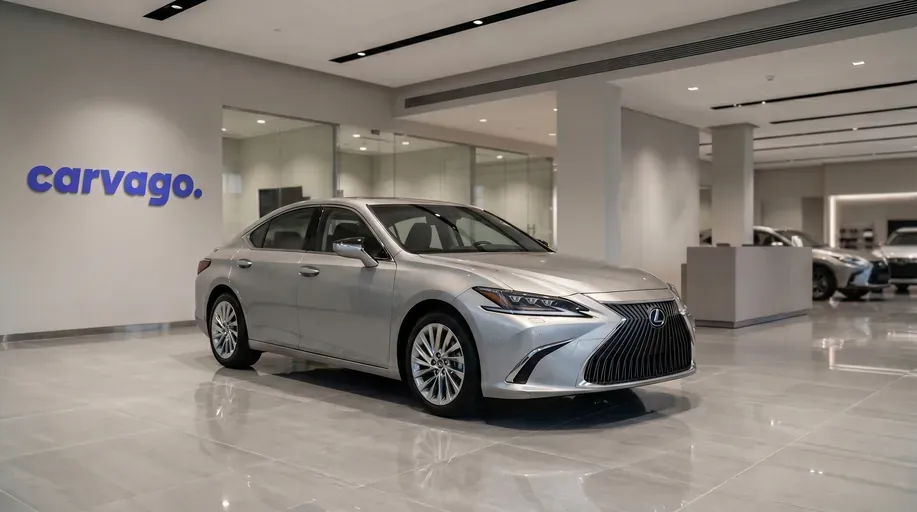
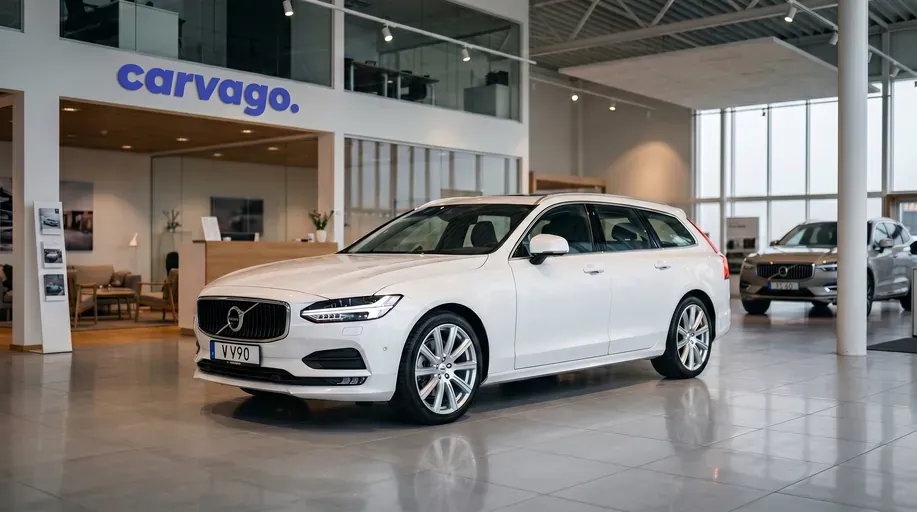
The Lexus ES, whose name is derived from the words Executive Sedan, is a refined Japanese car that stands out on the used car market primarily for its exceptionally quiet interior and fuel-efficient hybrid powertrain. Its challenger is the Swedish estate Volvo V90, available in many markets primarily in the more adventurous V90 Cross Country variant, which attracts buyers with its unrivaled safety, huge luggage compartment, and minimalist Nordic design. In the following paragraphs, we will compare both of these premium models in detail so you can easily find out whether an elegant Asian sedan is a better choice for you, or if you would rather opt for maximum practicality in the form of a spacious family estate.
Looking at the exterior dimensions, you will find that although both models belong to the prestigious executive class, they approach their overall proportions slightly differently. The Lexus ES in its current generation (XZ1) impresses with an overall length of 4975 mm, making it 30 mm longer than the second-generation Volvo V90 estate, which measures 4945 mm. This additional length underlines the elegant and elongated silhouette of the Japanese sedan, while Volvo bets on slightly shorter overall dimensions, which you will appreciate especially during parallel parking and everyday maneuvering in narrow city centers.
While Lexus leads in overall length, the Swedish representative has the upper hand in other exterior dimensions. At 1879 mm, the Volvo V90 is 14 mm wider than the Lexus (1865 mm) and, at 1472 mm, also 27 mm taller compared to the aerodynamically shaped roof of the Lexus (1445 mm). These differences directly affect the interior layout; thanks to its wider and taller body, the Volvo can offer the occupants a slightly airier interior with more generous head and shoulder room. The lower build of the Lexus, on the other hand, contributes to lower aerodynamic drag, a lower center of gravity, and an overall sportier driving position.
The key parameter for interior space, however, is the wheelbase, and in this discipline, the Volvo V90 clearly dominates. The wheelbase of the Swedish model reaches 2941 mm, which is a significant 71 mm more than the Lexus ES with a value of 2870 mm. From the perspective of family or business use, the Volvo V90 provides rear-seat passengers with more legroom thanks to this lead, making it an ideal choice for long highway journeys. Lexus, on the other hand, offers a balanced compromise between a comfortable interior and the smoother handling typical of classic three-box sedans.
| Parameter | Lexus ES Sedan | Volvo V90 Estate |
|---|---|---|
| Width (mm) | 1865 | 1879 |
| Length (mm) | 4975 | 4945 |
| Height (mm) | 1445 | 1472 |
| Wheelbase (mm) | 2870 | 2941 |
When choosing a premium car, practicality often plays a key role, especially if you are considering whether to opt for a luxury sedan or a versatile estate. While the Lexus ES primarily targets maximum passenger comfort and representative design, the Volvo V90 is designed with family use and everyday flexibility in mind. The difference in body styles logically and very significantly translates into the total volume and usability of the luggage compartment, which is often a deciding factor for many buyers of four-year-old used cars.
The current generation Lexus ES (XZ1), which you will find on the used car market from 2021 to 2022 exclusively as the ES 300h full hybrid model, has a luggage compartment with a capacity of 454 liters. This space is fully sufficient for a regular weekend shop or safely storing two larger suitcases for a business trip. However, due to the traditional sedan concept (and partly the space requirements of the hybrid powertrain), overall variability is limited. The seats cannot be fully folded down for transporting oversized items, and the loading opening itself is naturally smaller compared to a tailgate.
In contrast, the Volvo V90, as a proud representative of traditional family estates, excels in spaciousness and ease of access. For popular mild-hybrid engines (e.g., B4 or B5) from the relevant production years around 2021 and 2022, it offers a standard volume of 507 liters. After folding the rear backrests, it transforms into a small van with a flat loading area and a maximum volume of up to 1,473 liters. This space easily swallows a stroller, sports equipment, and luggage for a long family holiday. Care should be taken when choosing powerful plug-in hybrid versions (T6 and T8 Recharge). Here, the placement of the high-voltage battery slightly eats into the liters and reduces the standard capacity to 488 liters (or 1,454 liters after folding the seats).
| Parameter | Lexus ES Sedan | Volvo V90 Estate |
|---|---|---|
| Standard volume | 454 liters | 507 liters (488 liters for PHEV) |
| Maximum volume with seats folded | - (limited sedan variability) | 1,473 liters (1,454 liters for PHEV) |
In terms of transport capacity, the choice is clear. If you are looking for a full-fledged family car or enjoy an active lifestyle and often carry bulkier items, the Volvo V90 clearly outshines the Lexus with its capabilities and practical body. The Japanese sedan, on the other hand, perfectly suits couples or busy managers who only need an elegant basic space for everyday personal luggage and do not care much about variability.
As a spacious estate, the Volvo V90 undoubtedly wins for families and active drivers thanks to its excellent access and volume of up to 1,473 liters. The Lexus ES offers a sufficient 454 liters, which is more than enough for managers or couples, but it is simply not suited for moving larger family items due to its sedan body style.
When it comes to comparing trailer weight, the Lexus ES and Volvo V90 represent two completely different worlds. This parameter is crucial for many buyers, as it fundamentally determines the car's utility value for leisure and everyday practicality. The Swedish estate is renowned for its versatility, while the Japanese premium sedan focuses exclusively on quiet and comfortable passenger transport.
The second-generation Volvo V90 (especially in the four-year-old used car market) can tow a braked trailer with a standard weight of 1800 kg. This value is offered by base engines such as the D3 diesel versions or T4 and T5 petrol versions. For newer mild-hybrid variants (B4, B5), the capacity increases to 2000 kg, while the top-of-the-line plug-in hybrids (T6, T8) and powerful D5 or B6 engines can tow a maximum of 2100 to 2200 kg. This is an excellent value for Volvo's hybrid models, as many similarly electrified cars from other brands often have significantly limited towing capacity. In contrast, the Lexus ES 300h (XZ1 generation) is not homologated for towing a trailer in Europe at all – its standard and maximum towing capacity is exactly 0 kg. Although a special hitch can be purchased for the car, it is legally approved exclusively as a support for a bicycle rack.
In practice, this means that the Volvo V90 will easily provide you with reliable power and space for towing a heavy family caravan or a large boat trailer. Its capacities are thus perfectly sufficient for weekend shopping for heavy building materials as well as long holidays. On the other hand, with the Lexus, you simply cannot hitch up any utility trailer or caravan. The conclusion is therefore clear: if the ability to tow anything is a necessity for you, the Volvo V90 emerges from this duel as the clear and, in fact, only winner. The Lexus ES fully admits its role here as a purebred, exclusively representative luxury limousine.
| Model and motorization | Braked weight of trailer (kg) | Unbraked weight of trailer (kg) |
|---|---|---|
| Lexus ES 300h (XZ1 generation) | 0 | 0 |
| Volvo V90 D3, T4, T5 (2nd generation) | 1800 | 750 |
| Volvo V90 B4, B5 (2nd generation) | 2000 | 750 |
| Volvo V90 B6, D5, T6, T8 (2nd generation) | 2100 - 2200 | 750 |
The Lexus ES and Volvo V90 approach the powertrain from diametrically different angles, reflecting their overall focus. While the Japanese premium sedan relies exclusively on proven and highly efficient full-hybrid technology, the Swedish estate offers a much more diverse range extending from diesel and petrol mild-hybrids to extremely powerful plug-in hybrids. For drivers looking for uncomplicated reliability and exceptionally low fuel consumption in the city or on country roads, the relaxed Lexus powertrain makes clear sense. On the other hand, those who regularly tackle motorway routes, require all-wheel drive (AWD), or desire dazzling dynamics with the possibility of daily pure electric driving will find the answer in Volvo's diverse range.
The engine range for the Lexus ES (XZ1 generation) is exceptionally straightforward on the European market. Those interested in a roughly four-year-old used car have only a single variant available – the full hybrid powertrain designated 300h. This consists of a naturally aspirated 2.5-liter petrol four-cylinder engine operating on the Atkinson cycle and a sophisticated electric motor. The total system output reaches 160 kW (218 hp) and is continuously transmitted exclusively to the front wheels (FWD) via the famously reliable electronically controlled planetary e-CVT gearbox. Although this configuration is not intended for sporty driving, its absolute strengths are silky smooth operation, long-term durability, and excellent fuel economy, which easily stays well below the six-liter mark in combined driving.
| Engine type | Fuel type | Power (kW) | Torque (Nm) | Transmission |
|---|---|---|---|---|
| 300h (2.5 Hybrid) | Petrol / HEV | 160 | 221 | e-CVT |
The engine range for the Volvo V90 (2nd generation) is incomparably more diverse, but when looking for a car approximately four years old, a fundamental change in the offering must be taken into account. During 2020 and 2021, the carmaker phased out traditional pure diesel (D3, D4, D5) and petrol engines (T4, T5) and replaced them with electrified alternatives. The core of the newer used car range thus consists of refined two-liter four-cylinder engines with 48V mild-hybrid technology, designated by the letter "B". Customers can choose between petrol (B4, B5, B6) and diesel units (B4 Diesel, B5 Diesel) with outputs ranging from 145 kW to 220 kW. The top of the range for exceptionally demanding drivers are the T6 and T8 Recharge plug-in hybrids. These combine a combustion engine at the front with a powerful electric motor on the rear axle, giving the car not only the ability for local emission-free driving but also electronic all-wheel drive and brutal dynamics reaching up to 335 kW in the updated T8 versions. All Volvo powertrains from this era are standardly paired with a smooth-shifting eight-speed automatic transmission.
| Engine type | Fuel type | Power (kW) | Torque (Nm) | Transmission |
|---|---|---|---|---|
| B4 | Petrol / MHEV | 145 | 300 | 8AT |
| B5 | Petrol / MHEV | 184 | 350 | 8AT |
| B6 | Petrol / MHEV | 220 | 420 | 8AT |
| B4 Diesel | Diesel / MHEV | 145 | 420 | 8AT |
| B5 Diesel | Diesel / MHEV | 173 | 480 | 8AT |
| T6 Recharge | Petrol / PHEV | 250 - 257 | 659 | 8AT |
| T8 Recharge | Petrol / PHEV | 288 - 335 | 709 | 8AT |
If you are looking for maximum peace of mind and efficiency for every day, the hybrid Lexus ES has no equal; however, for motorway cruisers and towing trailers, the more diverse range of powerful diesel and plug-in hybrid engines of the Volvo V90 is a much more suitable choice.
While the Volvo V90 offers a wide range of petrol, diesel, and plug-in hybrid powertrains (from efficient four-cylinders to powerful T8 versions with over 400 hp), Lexus has bet everything on a single card for the ES model (XZ1 generation, 2019–present) in Europe – the proven 300h full hybrid system. Interestingly, despite the apparent handicap of lacking alternatives and all-wheel drive, Lexus's naturally aspirated hybrid reliably beats even Volvo's most efficient diesel engines in real-world city fuel consumption. The choice of a suitable engine for roughly four-year-old used cars thus primarily depends on whether you spend most of your time in suburban traffic jams or on highway routes. Both our recommendations therefore reflect real user experiences, mechanical reliability, and actual efficiency in operation.
Since the ES model is exclusively available with this single powertrain on our market, the choice is predetermined. However, this is not a problem at all, as the 300h system represents the absolute pinnacle in the luxury used car class in terms of reliability and operating costs.
For a roughly four-year-old, two-ton estate (in the generation produced since 2016) designed as the ultimate long-distance cruiser, the improved diesel engine with mild-hybrid technology, labeled B4 Diesel, makes the most sense among the engines offered between 2020 and 2024.
Official fuel consumption figures provided by manufacturers often paint an overly optimistic picture that is hard to achieve in everyday driving. For the most accurate comparison of these two luxury models, we have turned to real-world data from the independent community portal Spritmonitor.de, where owners meticulously record their refueling. In the context of the used car market, we focus primarily on cars approximately four years old – specifically the current generation of the Lexus designated XZ1 (from 2019) and the second-generation Volvo V90 engines introduced mostly after 2020. The following data directly reflects actual user experiences and long-term findings of our editorial team.
| Model and engine | Average consumption (l/100 km) |
|---|---|
| Lexus ES 300h (160 kW) | 5.9 |
| Volvo V90 B4 (petrol mild-hybrid, 145 kW) | 7.6 |
| Volvo V90 T8 Recharge (plug-in hybrid, 228+65 kW) | 4.8 |
| Volvo V90 B4 Diesel (diesel mild-hybrid, 145 kW) | 6.6 |
| Volvo V90 B5 Diesel (diesel mild-hybrid, 173 kW) | 7.1 |
A detailed look at the identified trends clearly shows the very different technological approaches of the two automakers. The centerpiece of Lexus's European offering is the ES 300h full hybrid system, which achieves excellent results. An average just below the six-liter mark is impressive for a nearly five-meter luxury sedan, a result the Japanese car achieves by cleverly alternating between electric drive and an efficient naturally aspirated four-cylinder engine without the need for any external charging. Since 2020, the rival Swedish V90 estate has relied primarily on electrified mild-hybrid units designated "B". Here, many buyers might find it surprising that the entry-level turbocharged petrol engines (such as the B4 variant) do not deliver the expected fuel savings in such a heavy car, with real-world consumption rarely falling below 7.5 liters per hundred kilometers. Therefore, diesel remains a much more rational choice for the Volvo – the B4 Diesel or the slightly more powerful B5 Diesel represent the optimal middle ground with real-world consumption ranging from roughly 6.5 to 7.1 l/100 km. The plug-in hybrid flagship T8 Recharge is a chapter of its own. While you can look forward to consumption below five liters (though this is still a significant difference compared to the official figures of around one liter), this is strictly conditional on daily, careful charging of the battery from the grid. With a depleted battery, the values quickly climb to the opposite end of the scale due to the high weight.
For the typical user, these figures provide clear purchase recommendations. If you drive primarily in the city or its immediate surroundings, spend a lot of time in traffic jams, and care about minimizing operating costs, the hybrid Lexus ES 300h guarantees above-standard efficiency without the need to search for charging stations. Conversely, the Volvo V90 with a diesel mild-hybrid will suit drivers who spend their lives on the road; those who regularly cover hundreds of highway kilometers at a time, where the Japanese brand's petrol hybrid loses much of its advantage associated with smooth recuperation and consumption levels out. The Swedish representative's powerful plug-in hybrid system then makes sense almost exclusively for drivers who cover up to 40 kilometers during the day and have constant access to a wallbox at home and at work.
Fuel consumption will certainly be one of the key decision-making factors in this duel. Lexus attracts buyers with a single, yet exceptionally refined and worry-free hybrid unit boasting almost stoic composure. In contrast, Volvo counters with the breadth and diversity of its range, in which – despite all modern trends – the honest diesel foundation still wins for high-mileage drivers.
Looking at the market for roughly four-year-old used cars (2021 to 2022 models), we encounter two completely different approaches to depreciation. While the Japanese sedan benefits from its global reputation for indestructible hybrid technology, the large Swedish estate suffers from the typically steeper price drop common to luxury European cars in their early years.
Lexus holds its value very confidently on the secondary market. The vast majority of available used cars in Europe bear the ES 300h designation, which means a combination of the proven 2.5-liter naturally aspirated four-cylinder engine and an electric motor.
For lovers of large and safe family estates, a four-year-old Volvo V90 represents an exceptionally tempting used car purchase. A faster initial depreciation means that for your money, you get a huge piece of premium car with very generous equipment.
| Model (2021–2022 models) | Starting price (higher mileage) | Average price (up to 100k km) | Top versions (PHEV, low mileage) |
|---|---|---|---|
| Lexus ES 300h | from ~€29,000 | €33,000 – €39,000 | €39,000 – €45,000 |
| Volvo V90 | from ~€25,000 | €31,000 – €37,000 | €39,000 – €49,000 |
Note: The prices above are indicative only and depend on current market supply, the specific technical condition of the vehicle, verifiable service history, and the chosen equipment level.
The Lexus ES is an exceptionally reliable choice that holds its residual value excellently thanks to its technology, while the Volvo V90 can impress with a more favorable initial used car price and a significantly wider selection of engine variants.
Both models, the Lexus ES and Volvo V90, achieved the maximum five-star rating in independent Euro NCAP crash tests. When choosing a roughly four-year-old used car, however, it is crucial to put these results into the correct context and consider the year of testing. Euro NCAP protocols evolve and become more stringent over time, so percentage scores from different years cannot always be compared directly. Each new year brings more demanding methodology, for example, in the area of cyclist detection or intersection crash simulations.
The Lexus ES underwent Euro NCAP tests in 2018, when a new and significantly stricter testing methodology came into force. This focused, among other things, on advanced protection for vulnerable road users, including autonomous emergency braking (AEB) that reacts to cyclists in daytime traffic and pedestrians at night. Lexus excelled in this discipline, earning an outstanding 90%. A high level of passive safety is ensured by the rigid GA-K platform and ten standard airbags. Active safety is handled by the comprehensive Lexus Safety System+ package, which provided the car with very modern and reliable protection corresponding to the latest standards at the time.
The Volvo V90's rating is based on tests of the sister sedan, the S90, conducted in 2017 (Euro NCAP verified that the estate version provides a structurally identical or better level of protection). For an automaker where safety is a historical mantra, it took home a staggering 95% for adult occupant protection and 93% for safety assistance systems that year. This was primarily due to the breakthrough City Safety system, which was one of the first in the world to receive full points in autonomous braking tests for pedestrians. Although the 2017 methodology was not yet as strict regarding certain cyclist scenarios, Volvo set the bar for both passive and active safety in its time.
| Parameter | Lexus ES | Volvo V90 |
|---|---|---|
| Year of testing | 2018 | 2017 |
| Adult occupant protection | 91% | 95% |
| Child occupant protection | 87% | 80% |
| Vulnerable road user protection | 90% | 76% |
| Safety assist | 77% | 93% |
In terms of overall safety, both cars represent an exceptionally safe choice on the used car market. The Volvo V90 excels with top-tier adult occupant protection and excellently tuned safety assistants that prevent collisions. However, due to testing under the stricter and more comprehensive 2018 standards (which include more modern cyclist detection), the Lexus ES offers a slightly more current and well-rounded safety package regarding surrounding traffic from today's perspective.
Whether you choose the Volvo with its unrivaled occupant protection or the Lexus with advanced pedestrian and cyclist detection, both cars are among the safest used vehicles in their class.
In addition to standard equipment, each model offers several unique features that can be decisive for the customer, with both cars bringing their own distinctive approach to luxury and added value.
Exceptional ride comfort and top-tier acoustic cabin insulation
Highly reliable and efficient hybrid powertrain (300h version), which excels especially in the city
Above-average residual value and legendary overall durability and reliability
Precise build quality and use of premium materials in the interior
Fixed rear seatbacks cannot be folded down, which fundamentally limits transport flexibility
Frustrating infotainment control via touchpad (applies to models before the facelift at the end of 2022)
Less engaging driving experience with the absence of all-wheel drive in European hybrid specifications
The Lexus ES is the perfect choice for executives or older couples looking for a representative car with a maximum emphasis on comfort, silence, and worry-free reliable operation. However, due to the classic sedan concept and the inability to extend the luggage space, it is absolutely unsuitable for transporting larger items.
Huge and exceptionally practical luggage compartment with excellent accessibility thanks to the estate body style
Top-tier level of active and passive safety supported by the advanced Pilot Assist system
Superbly designed, ergonomic seats ensuring comfort even on very long journeys
Choice of all-wheel drive (AWD) and powerful plug-in hybrid powertrains (Recharge)
Stiffer suspension tuning, which filters sharp bumps less effectively on larger wheels than the Lexus
Tedious control of climate and most vehicle functions exclusively via the central touchscreen
Purely four-cylinder engine lineup, which lacks the refinement of previous six-cylinders at higher revs
Average reliability with potentially higher service costs on the used car market
The Volvo V90 primarily targets families and active motorists who benefit daily from the generous luggage compartment, top-tier safety, and the security of all-wheel drive. This premium Nordic cruiser offers fantastic design and utility, but requires coming to terms with fully touch-based controls and average service costs.
Based on long-term user experience, service reports, reliability statistics, and comprehensive vehicle inspections, we present an overview of the most common faults you should focus on for both models on the used car market.
The seventh-generation Lexus ES is considered one of the most reliable cars in its class, and any potential shortcomings are usually limited to minor issues with electronics or ergonomics.
The Lexus ES mostly suffers only from the ergonomics of the older infotainment and discharged small batteries during long periods of inactivity. Mechanically and in terms of the hybrid powertrain, it is an exceptionally trouble-free car.
Technically, the Volvo V90 offers immense comfort and advanced safety, but with more complex engines and richer equipment, it requires a more careful check of the service history when buying a used car.
The Volvo V90 is a great highway cruiser, but with used cars, you must pay close attention to the condition of the rear air suspension, the maintenance history of diesel engines, and humming rear electric motors in the T8 version.
When buying a used car, a thorough inspection is key. Here are some specific points to focus on for these two models, which is why a detailed comprehensive car inspection is always worth it before making a final decision.
The Volvo V90 as a premium estate offers significantly better practicality with a boot capacity of 560 litres, which can be easily increased by folding the rear seats. The Lexus ES is a sedan with a fixed 454-litre luggage compartment and generally poorer access to transported items. For family use, travelling with dogs, and transporting larger objects, the Volvo is the clear choice.
The Lexus ES has long been considered a benchmark for reliability, primarily due to its sophisticated and time-tested naturally aspirated engine paired with a hybrid system without a complex gearbox. While the Volvo V90 is safe and well-built, its more complex plug-in hybrid and twin-turbocharged diesel engines may require more expensive servicing over time. If you are looking for maximum peace of mind and low service costs, the Japanese sedan wins.
The Lexus ES in the 300h version achieves excellent average consumption of around 5 to 5.5 l/100 km thanks to its efficient full-hybrid drive, without the need for plug-in charging. In contrast, the Volvo V90 offers plug-in hybrid versions (Recharge) that allow for pure electric driving and can have minimal fuel consumption with regular charging. However, if you do not want to charge the Volvo or choose a classic diesel version, expect consumption to be on average 1 to 2 litres higher than the Lexus.
Both cars excel in comfort on long trips, but each approaches it in a slightly different way. The Lexus ES is famous for absolute acoustic silence in the cabin, a smooth ride, and the incredibly smooth operation of the hybrid. The Volvo V90, on the other hand, offers some of the best ergonomic seats on the market and more confident driving characteristics in poor conditions thanks to the availability of all-wheel drive (AWD), which you won't find on the ES model.
The Volvo V90 offers a more intuitive multimedia system, especially in newer used cars from 2021 onwards, which are equipped with an Android Automotive-based system with integrated Google maps and services. Until roughly mid-2022, the Lexus ES used an unpopular touchpad control system, which required more concentration while driving. However, since a recent update, the screens in the Lexus have switched to classic and much more user-friendly touch controls.
Choosing between these two premium vehicles depends primarily on your lifestyle and daily transportation needs. The Volvo V90 represents the ultimate choice for families and active drivers, offering the unmatched practicality of a massive trunk, the confidence of all-wheel drive, and excellent towing capacity for any weekend adventure. Conversely, the Lexus ES is the embodiment of representative elegance and absolute acoustic tranquility, making it an ideal pre-owned vehicle for executives or couples looking for an exceptionally reliable, quiet, and fuel-efficient hybrid sedan for city and suburban commuting. Whether you opt for Nordic versatility or Japanese peace of mind, both options guarantee a top-tier level of safety and first-class comfort on every journey.
Sources: ADAC, auto.cz, mdcr.cz, emobility.cz, elektromobil.cz, autosport.cz
This article was prepared using artificial intelligence tools. The section guarantor is Petr Dušek.
Comparison of the BMW 5 Series (G30/G31) and Volvo V90. Which premium used car is better? We compared comfort, space, and reliability. Read our final verdict!
Apr 27, 2026
Used car comparison: Audi A6 vs. BMW 5 Series. Find out which premium car offers better engines, equipment, and reliability. Read our detailed verdict!
May 11, 2026
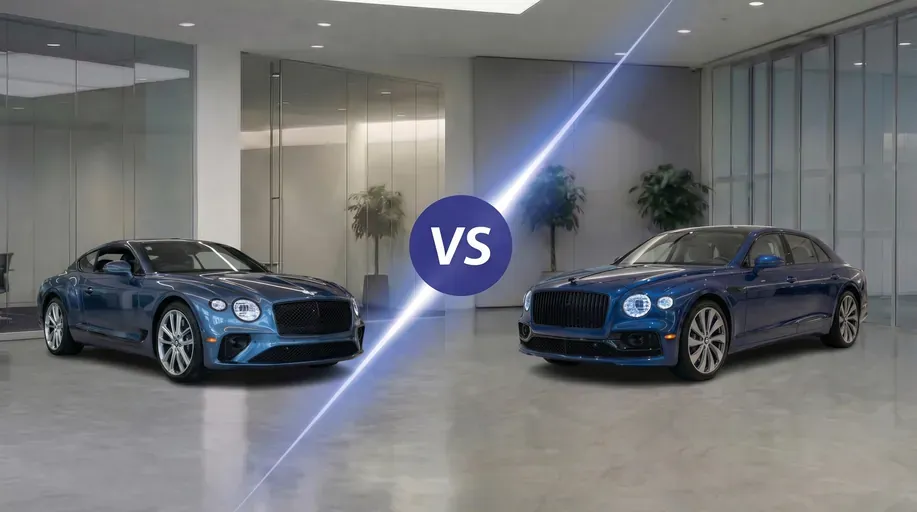
Detailed comparison of Bentley Continental GT vs Bentley Flying Spur. Discover the differences in performance, comfort, and equipment and choose the right luxury car for you.
Apr 13, 2026