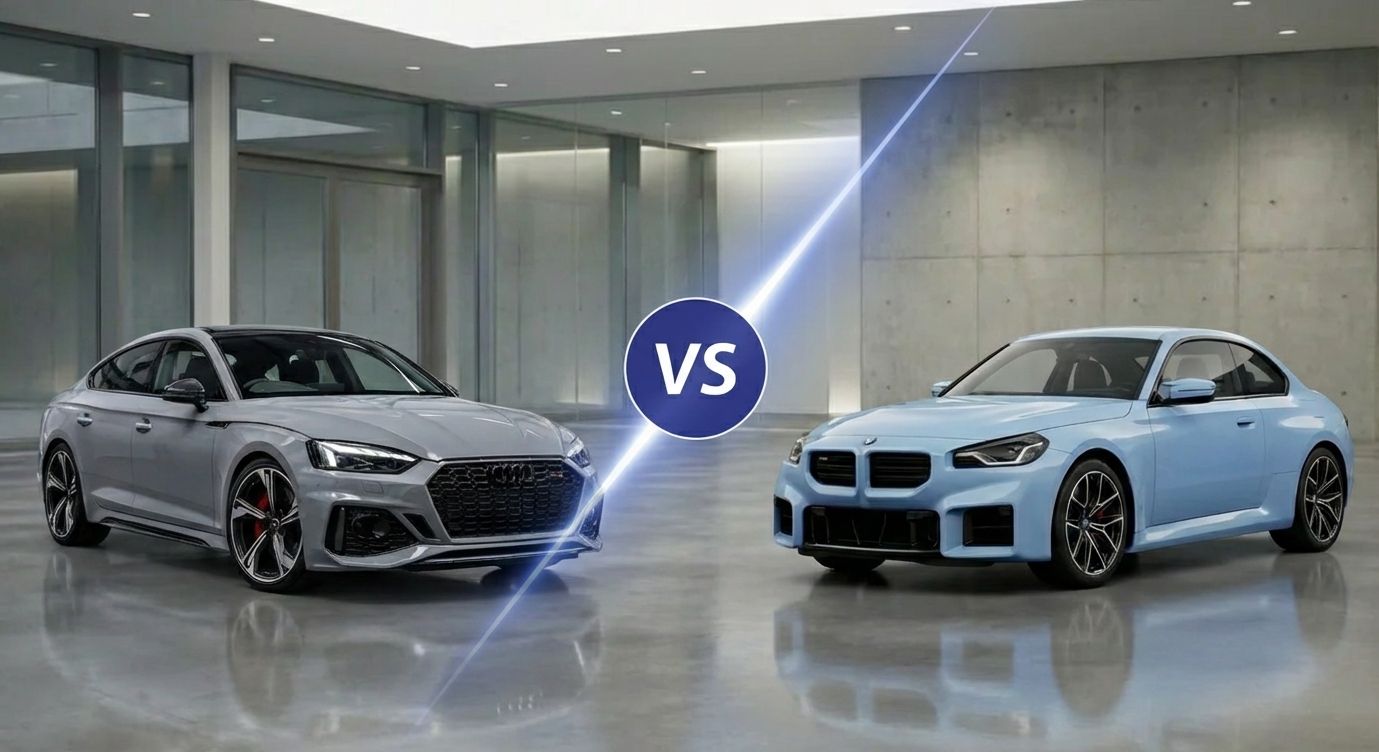
Car battle
Audi RS 5 vs. BMW M2: Complete comparison 2026
Audi RS 5 vs. BMW M2. A detailed comparison of performance, driving dynamics, and practicality. Find out which sports coupe is the right choice for you.
Apr 14, 2026
Articles
Car battle
Detailed comparison of Lamborghini Huracán vs Porsche 911 (Carrera). Discover the differences in performance, real-world experience, and the verdict for an easy supercar choice.
May 20, 2026
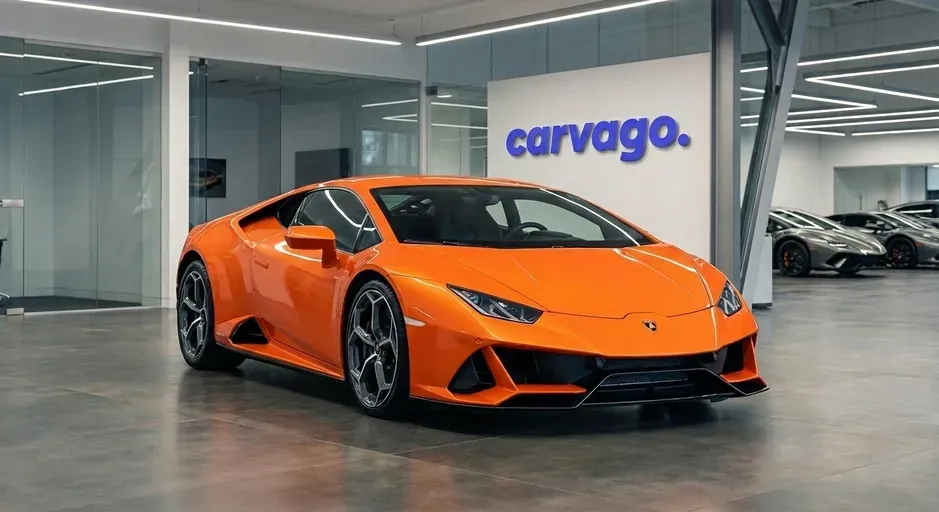
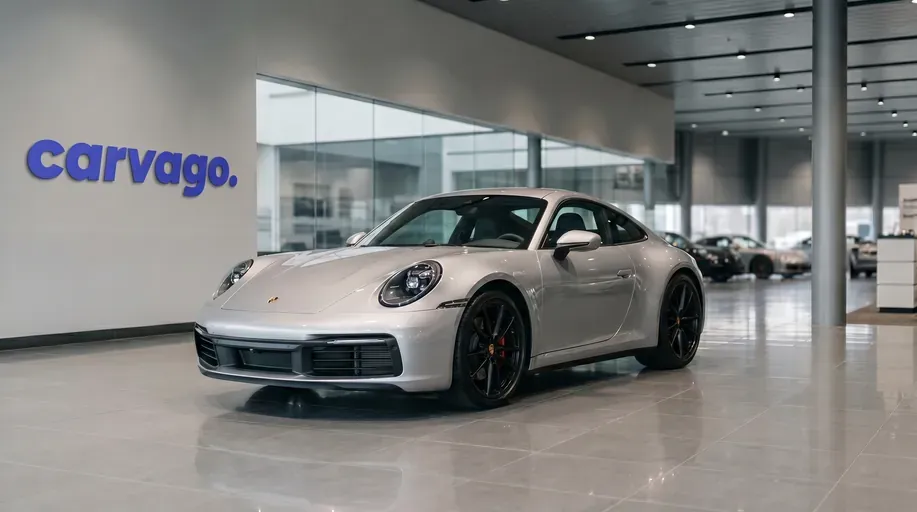
The Lamborghini Huracán, also known depending on the specific version as the LP 610-4 or the updated EVO, is an Italian supercar gem that represents the essence of untamed performance and stunning design with its naturally aspirated V10. Standing against it is the legendary Porsche 911, often referred to by its internal generation codes such as 991 or 992, which has defined the sports car segment for decades thanks to its unmistakable rear-engine silhouette and unexpected everyday usability. Let's take a detailed look at how these two different yet exceptionally capable giants fare in a direct comparison and which of them could be the right dream come true for your garage.
Looking at the exterior dimensions, both cars clearly demonstrate their different origins and specific design philosophies. If we compare cars roughly four years old on the used car market, we are looking at the first-generation Lamborghini Huracán and the 992-generation Porsche 911. With a width ranging from 1924 to 1956 mm and an extremely low profile (height starts at just 1165 mm), the Huracán is a typical Italian supercar. It appears wider and much more aggressive, which immediately commands attention and respect on the road. In contrast, the Porsche 911 is slightly narrower (1852 to 1900 mm) and significantly taller, with a height exceeding 1279 mm. For the average driver, this means that the Porsche offers much better visibility in daily traffic, is more intuitive, and is considerably easier to park or maneuver in narrow city streets. With the wide and very low Lamborghini, on the other hand, you will have to constantly watch out for curbs and road dips.
Although the overall length of both cars is almost comparable – both models range approximately between 4459 and 4573 mm – the most significant difference in exterior dimensions is found in the wheelbase. The Lamborghini Huracán has a wheelbase of 2620 mm, which is a significant 170 mm more than the Porsche 911 (2450 mm). This difference is closely related to the very heart of the cars and their drivetrain layout. The mid-engined Huracán simply needs a longer wheelbase to accommodate the massive V10 in the center of the car and to ensure exemplary stability at high speeds. Porsche, on the other hand, has for decades relied on a traditional engine placement behind the rear axle, allowing for a construction with a substantially shorter wheelbase. As a result, the Porsche 911 offers perceptibly excellent agility, compactness, and a willingness to turn into tight corners, while the Lamborghini dominates with its unwavering directional stability in fast and long sweeping sections.
These basic exterior proportions and dimensions directly dictate the spatial utility of both machines. Thanks to its overall taller build, the Porsche 911 retains a 2+2 interior layout, which, despite minimal space in the back, represents a huge advantage for storing bags, coats, or for emergency transport of children. Lamborghini, conversely, sacrifices all its volume for perfect aerodynamics and an uncompromising wedge-shaped design, and therefore remains strictly a two-seater. The choice between these two icons, in terms of exterior dimensions, thus depends heavily on your daily priorities. If you are looking for a sports car that can also serve as a usable commuting companion and won't stress you out with its extreme shapes in underground garages, the more compact-feeling Porsche 911 is the more practical and versatile choice. However, if you crave absolute visual exoticism and dimensions that serve performance 100% regardless of compromises in spaciousness, the wide and low Huracán will be the right machine.
| Parameter | Lamborghini Huracán Coupé | Porsche 911 Coupé | Lamborghini Huracán Cabriolet | Porsche 911 Cabriolet |
|---|---|---|---|---|
| Width (mm) | 1924 - 1956 | 1852 - 1900 | 1924 - 1933 | 1852 - 1900 |
| Length (mm) | 4459 - 4567 | 4519 - 4573 | 4459 - 4520 | 4519 - 4573 |
| Height (mm) | 1165 - 1248 | 1279 - 1303 | 1180 | 1279 - 1303 |
| Wheelbase (mm) | 2620 | 2450 | 2620 | 2450 |
When choosing a supercar roughly four years old, luggage capacity is usually not among the main arguments for purchase. In real life, however, when you want to use the car for daily driving or weekend trips, this parameter plays a surprisingly important role. Customers often look for a compromise between a pure adrenaline experience and the ability to pack for an extended holiday for two. The approach of both manufacturers to storage space is quite different, which significantly impacts overall daily usability.
In both models, given the rear engine placement (in the Porsche) or mid-engine placement (in the Lamborghini), the main luggage compartment is found at the front under the hood. The Porsche 911 992 generation (relevant for the 4-year-old used car market from 2019) offers a base volume of 132 liters in its front "trunk". In contrast, the first-generation Lamborghini Huracán in the updated Evo or Tecnica versions has a slightly smaller front space with a volume of 100 liters. The extreme track-focused Huracán STO deviates from this standard, having reduced its capacity to just 38 liters due to sophisticated aerodynamics and massive vents in the front.
The fundamental difference in practicality comes when looking into the cabin behind the seats. While the Lamborghini Huracán is strictly a two-seater with no option to expand the cargo area, the Porsche 911 Coupe fully benefits from its traditional 2+2 layout. By using the rear seats and folding them down, you gain additional space, increasing the maximum usable volume to 264 liters. In its basic configuration, the Porsche offers 32 liters more storage than the standard Huracán, but when utilizing maximum capacity, this difference is a staggering 164 liters. In practice, this means sufficient space for weekend shopping or a longer holiday with room for several extra suitcases or a golf bag. The open-top Porsche 911 Cabriolet is slightly worse off in the rear due to the folding roof mechanism, yet it still wins comfortably.
| Parameter | Lamborghini Huracán Coupe | Porsche 911 Coupe | Lamborghini Huracán Cabriolet | Porsche 911 Cabriolet |
|---|---|---|---|---|
| Base volume (liters) | 38 - 100 l | 132 l | 100 l | 132 l |
| Max. volume with folded seats (liters) | 38 - 100 l | 264 l | 100 l | 163 l |
Overall, in terms of luggage space, the Porsche 911 is the clear winner. Thanks to its deeper front trunk and, above all, the safety net of the rear seats, it represents a much more versatile choice for drivers who want to use their car not only for joyrides but also for longer travel. The Lamborghini, on the other hand, remains a pure weekend toy, where packing for trips becomes a discipline requiring significant compromises.
While the Lamborghini Huracán can only accommodate the bare essentials for a short trip, the Porsche 911 easily handles a longer holiday for two thanks to the additional space on the rear seats.
When comparing supercar icons such as the Lamborghini Huracán and the Porsche 911 from generations available on the market as roughly four-year-old used cars, it is important to realize that the trailer weight does not differ at all – because this option is completely absent for both cars. Although for standard passenger cars, a high towing capacity can mean space for several extra suitcases in a trailer, or it may be fully sufficient for weekend shopping and longer holidays with a caravan, the situation is completely different for purebred sports cars.
For the Lamborghini Huracán (1st generation) and relevant modern versions of the Porsche 911, there are no official values for standard or maximum weight for a braked or unbraked trailer. The exact towing capacity value for both cars is 0 kg. Due to the extreme focus on maximum aerodynamics, low weight, and track performance, there are no hybrid or specific "off-road" variants available (such as the Huracán Sterrato) that would have this capacity adjusted. Simply put, neither of these manufacturers offers homologation for a towing device. From a practical standpoint, this means that owners of these vehicles must fit all their travel needs exclusively into their very limited luggage compartments.
In conclusion, if the ability to tow any load were a key factor for you, neither of these cars will satisfy your needs. However, the absence of a towing device and zero trailer weight make perfect sense given the very character of both cars. When choosing between the Huracán and the 911 model, this parameter therefore plays no role in the decision-making process, as both cars are in exactly the same starting position in this regard.
| Model and engine | Braked trailer weight (kg) | Unbraked trailer weight (kg) |
|---|
When comparing the engine options of the Lamborghini Huracán and the Porsche 911, we are faced with a duel between two completely different engineering approaches, which is a crucial decision factor for anyone interested in a used sports car. With the Huracán, Lamborghini bets everything on one card – its iconic 5.2-liter naturally aspirated V10, renowned for raw emotions, instant throttle response, and a fantastic soundtrack in the upper reaches of the rev range. In contrast, Porsche's approach with the modern 911 generation lies in the versatility of its proven flat-six engines (so-called "boxers"), which in most specifications feature sophisticated forced induction (Twin-Turbo), providing massive pull from the lowest revs and more acceptable fuel consumption during relaxed cruising. While the Italian supercar is strictly available with a seven-speed automatic and immense power regardless of the trim, its German rival offers a choice between more efficient daily models, track specials, and the purist's choice of a manual transmission, which is completely absent in the Lamborghini.
The heart of all Lamborghini Huracán models from the relevant 1st generation is, without exception, the high-revving 5.2 V10 engine. For buyers looking at approximately four-year-old cars on the market (manufactured around 2020–2024), the Evo, STO, Tecnica, and the cladded Sterrato models take center stage, as the older LP580-2 and LP610-4 specifications ended their availability between 2018–2020 and are rarely found on the young used car market. The core of the current offering consists of the Evo RWD and Sterrato variants with an output of 449 kW, sending power to either the rear or all four wheels. The performance peak is represented by the engine tuned to 470 kW. This can be found in the Evo AWD version with 600 Nm of torque, or in the purist track-focused STO and Tecnica specifications, which combine the same power with a slightly lower torque of 565 Nm for a sharper and more predictable power curve on the rear axle. In all cases, power is handled exclusively by the lightning-fast seven-speed dual-clutch LDF transmission (abbreviated here as 7DSG).
| Engine type | Fuel type | Power (kW) | Torque (Nm) | Transmission |
|---|---|---|---|---|
| 5.2 V10 (LP 580-2 / LP 610-4) | Petrol | 426 / 449 | 540 / 560 | 7DSG |
| 5.2 V10 (Evo RWD / Sterrato) | Petrol | 449 | 560 | 7DSG |
| 5.2 V10 (STO / Tecnica) | Petrol | 470 | 565 | 7DSG |
| 5.2 V10 (Evo AWD / Performante) | Petrol | 470 | 600 | 7DSG |
With the Porsche 911, the situation is dramatically different due to its complexity. While databases show a fascinating range of classic models from 1964 to 1993 (Urmodell, G-Series, and 964 generations), whose iconic air-cooled engines like the 2.7 RS, 3.0, or the turbocharged 3.3 Turbo have long been unavailable and now serve only as investment-grade classics. However, if we analyze the market for typical four-year-old used cars, we must focus exclusively on the modern 992 generation (from 2019). Its offering is staggering and covers a wide spectrum of driving needs. The foundation is the 3.0 Flat-6 Twin-Turbo, which delivers 283 kW in the Carrera variant, while in the more powerful Carrera S it grows to 331 kW, and in the popular GTS edition it reaches up to 353 kW. The absolute king of acceleration is the massive 3.8 Twin-Turbo from the Turbo S model, boasting a breathtaking 478 kW and 800 Nm of torque. For those who crave a naturally aspirated experience in the style of Lamborghini, there is the GT3 model, whose 4.0 Flat-6 revs to a stunning 9,000 rpm. Furthermore, unlike its Italian competitor, the Porsche 911 gives fans of traditional driving a choice – alongside the eight-speed PDK automatic, it still offers a seven-speed (or six-speed) manual on selected models.
| Engine type | Fuel type | Power (kW) | Torque (Nm) | Transmission |
|---|---|---|---|---|
| 3.0 Flat-6 Twin-Turbo (Carrera) | Petrol | 283 | 450 | 8PDK |
| 3.0 Flat-6 Twin-Turbo (Carrera S) | Petrol | 331 | 530 | 7MT / 8PDK |
| 3.0 Flat-6 Twin-Turbo (Carrera GTS) | Petrol | 353 | 570 | 7MT / 8PDK |
| 4.0 Flat-6 N/A (GT3 / GT3 Touring) | Petrol | 375 | 470 | 6MT / 7PDK |
| 3.8 Flat-6 Twin-Turbo (Turbo S) | Petrol | 478 | 800 | 8PDK |
While the Lamborghini Huracán thrills with the uncompromising acoustic theater of a purebred naturally aspirated V10, the Porsche 911 wins in the field of everyday versatility, massive torque from low revs, and the still-available purist choice of a manual transmission.
Choosing the right engine is absolutely crucial for long-term satisfaction with the car, which is why the following recommendations are based on real-world performance, actual fuel consumption, owner feedback, and mechanical reliability from practice. The Lamborghini Huracán and Porsche 911 represent two completely different approaches to building top-tier sports cars. While Lamborghini relies on the raw power and unmistakable charisma of a naturally aspirated V10, the current 992 generation of the Porsche 911 (ideal for the roughly 4-year-old used car market) excels with a twin-turbocharged flat-six (boxer) that dominates in efficiency and everyday usability. A crucial fact is that the fantastic high-revving V10s for the Huracán are now definitively a thing of the past. As the availability table below highlights, production of these units was completely discontinued in 2024. When buying a used car of this age, you are not just buying a pure experience with a Lamborghini, but also a very valuable piece of vanishing automotive history.
| Parameter | Lamborghini Huracán (EVO RWD) | Porsche 911 (Carrera S - gen. 992) |
|---|---|---|
| Engine configuration | 5.2 V10 naturally aspirated | 3.0 Flat-6 Twin-Turbo |
| Available production years | 2020 – 2024 (production ended) | 2019 – present (active model) |
| Power | 449 kW (610 hp) | 331 kW (450 hp) |
| Torque | 560 Nm at 6,500 rpm | 530 Nm at 2,300 - 5,000 rpm |
| Ideal use | Purist weekend driving | Everyday use (daily driver) |
This engine represents the absolute pinnacle of the evolution of naturally aspirated V10s, and in the rear-wheel-drive version (Huracán EVO RWD), it offers the purest driving experience in the entire model range. From a mechanical and investment perspective, it is the best choice – the absence of front-wheel drive makes the car lighter, more playful, and offers a completely direct connection between the driver and the road. The greatest technical advantage of this unit is its breathtaking linear torque curve and lightning-fast throttle response, which is inimitable in turbocharged engines. Real-world fuel consumption is around 15–18 l/100 km, but the reward is exceptionally durable mechanics sharing its architecture with the Audi R8 platform. This engine is the ideal choice for enthusiastic drivers and purists who prefer a dynamic driving style on weekend backroads and are not looking for a car for city traffic jams.
Known risks and mechanical weaknesses:
In the 992 generation (most commonly cars from 2020–2022), the Carrera S version represents the absolute peak of rationality. It is hands down the best choice in the entire lineup because it perfectly balances everyday practicality, more favorable operating costs, and devastating dynamics. It provides performance approaching the much more expensive Turbo versions but with incomparably better suspension comfort. The technical strength of this three-liter boxer is the wonderfully flat torque curve – the maximum 530 Nm is available from as low as 2,300 rpm, ensuring effortless and immediate acceleration. In real-world driving, the combined consumption of around 10–11 l/100 km and the excellent reliability reputation of this block are pleasing. The Carrera S engine is tailored for drivers who want to use their Porsche every day for commuting and long highway trips but demand an uncompromising sports tool on Sunday mornings.
Known risks and mechanical weaknesses:
For supercars and high-performance vehicles, the difference between official laboratory fuel consumption figures and reality is particularly striking. While standardized tests assume a smooth and extremely defensive driving style, real owners naturally enjoy utilizing the potential of these cars. To get the most accurate picture of daily life with these vehicles, we compared manufacturer-stated values with real-world user data from the Spritmonitor.de portal. We focused strictly on the generations that are currently most sought after in the market for roughly four-year-old used cars – namely the Porsche 911 generation 992 (produced since 2019) and the updated versions of the Lamborghini Huracán, such as the Evo, STO, or Tecnica models.
Source: news_site
| Model and engine | Average consumption (l/100 km) |
|---|---|
| Porsche 911 Carrera S (992) 3.0 Bi-Turbo 331 kW | 11,2 |
| Porsche 911 Carrera (992) 3.0 Bi-Turbo 283 kW | 11,5 |
| Porsche 911 Turbo S (992) 3.8 Bi-Turbo 478 kW | 14,0 |
| Lamborghini Huracán Evo 5.2 V10 470 kW | 13,8 |
| Lamborghini Huracán STO 5.2 V10 470 kW | 13,9 |
| Lamborghini Huracán Tecnica 5.2 V10 470 kW | 14,5 |
Looking at the measured data, a fundamental design difference between the two cars is evident. Although you naturally won't find any fuel-efficient diesel engines in the supercar segment, the differences between turbocharged units and large-displacement naturally aspirated engines are vast. The twin-turbocharged six-cylinder engines in the Porsche 911 benefit from modern engineering – smaller displacement and smart turbocharger management mean the car can be surprisingly efficient during steady highway driving. A surprising finding is that the more powerful Carrera S specification often shows a slightly lower average consumption in real-world traffic than the base Carrera. The reason is that the more powerful engine with higher torque is under less strain during normal commutes.
On the other side stands the Italian 5.2-liter naturally aspirated V10, which demands its share of gasoline regardless of how carefully you work the throttle. The number of cylinders and the natural high-revving character simply mean that the long-term average consumption rarely drops below 13 liters. For sharper, track-oriented versions like the Tecnica, the average confidently attacks the 14,5 liters per 100 kilometers mark.
But what does this mean for buyers of these fantastic machines? In this price range, new and existing owners generally don't worry about the cost of a tank of fuel. The primary difference lies in overall range and practicality:
Fuel consumption itself will logically not be the main deciding factor in this exclusive duel, but it does define how both cars are used. The differing appetites perfectly reflect their characters – the iconic German Porsche offers unprecedented efficiency and daily usability, while the Lamborghini represents a raw and uncompromising spectacle with a massive naturally aspirated heart.
Looking at the market for used cars roughly four years old (models with a production year around 2022) reveals a vast difference between the exclusivity of an Italian supercar and the relative accessibility of a German icon. Both cars hold their value very well; however, on the used car market, they target customers with different budgets.
Thanks to a wide range of specifications, the price range for a roughly four-year-old Porsche 911 is extremely diverse.
The Porsche 911 is known for its stable residual values. While standard Carrera models depreciate slightly after leaving the showroom, for limited editions and GT division cars, the value of a used car may stagnate over time or even grow slightly for highly desirable pieces.
A used Huracán represents a ticket to the world of purebred exotic cars, which is fully reflected in the significant acquisition costs.
This model benefits from the prestigious status of being one of the last modern supercars with a naturally aspirated V10 engine. Significant collector interest thus keeps used prices very close to the original list prices.
| Model and specification | Market orientation (€) | Depreciation |
|---|---|---|
| Porsche 911 Carrera / S | €132,000 – €164,000 | Medium |
| Porsche 911 Turbo S / GT3 | €185,000 – €288,000 | Very low |
| Lamborghini Huracán EVO | €226,000 – €296,000 | Low |
| Lamborghini Huracán STO | €350,000 and more | Almost zero / Growth |
While a basic four-year-old Porsche 911 can be bought for the price of a well-equipped new luxury SUV, a used Lamborghini Huracán requires significantly deeper pockets and functions more as a long-term garage investment.
In standard automotive comparisons, we would start here with a general note that both cars received five-star Euro NCAP ratings, and we wouldn't forget to emphasize the importance of context and the specific year of testing. It is important to realize that the testing protocols of the independent Euro NCAP organization are constantly evolving and becoming much stricter over the years. Completely new frontal impact simulations, advanced cyclist detection, or tests for emergency braking at blind intersections are regularly introduced into the tests. For this reason, the percentage results achieved in different years are not directly comparable. However, for exclusive supercars like the Lamborghini Huracán and Porsche 911, the market reality is a bit different. Due to the extremely high acquisition costs and overall low production volumes, neither of these premium models has undergone official Euro NCAP crash tests. Thus, any laboratory data on certification according to current or past testing protocols is missing.
The absence of Euro NCAP certification obviously does not mean that this Italian supercar is unsafe, but the missing data requires a deeper explanation. The Huracán, built on a shared platform with the Audi R8, offers an uncompromisingly stiff chassis made from a combination of aluminum and carbon fiber. Passengers inside are protected by an advanced airbag system, robust crumple zones, and high-performance brakes complemented by a stabilization system calibrated for vehicle control at high speeds. However, what this model significantly lacks compared to modern mainstream cars are active safety assistants. You won't find automatic emergency braking systems or lane departure warnings with active steering in the car. Lamborghini relies primarily on the strength of its construction, the dynamic limits of the chassis, and the total concentration of the driver themselves.
Even the legendary Porsche 911 (when looking for a roughly four-year-old used car, we are talking about the current 992 generation) has never been tested by the Euro NCAP organization. Nevertheless, the Stuttgart manufacturer's approach to both active and passive safety is significantly more comprehensive, reflecting the fact that many owners use the 911 as a daily driver. The foundation is top-tier body stiffness and extensive passive protection, including the innovative Porsche Side Impact Protection System (POSIP). The PSM (Porsche Stability Management) electronic stability system is among the absolute best in the automotive industry and can react lightning-fast even in poor grip conditions. Furthermore, unlike its Italian rival, the first owners could equip the 911 with an army of modern safety assistants. In used cars on the market, you will therefore often come across adaptive cruise control, lane-keeping assist, blind-spot monitoring, or even a Night Vision Assist system with an infrared camera.
In conclusion, although we do not have certified percentage crash test data for either of these cars, the Porsche 911 offers a safer and more technologically sophisticated package. Thanks to the presence of advanced assistance systems and a modern active safety structure, it constitutes a much better-equipped car for the hazards of everyday traffic, unlike the purist and more "track-oriented" Lamborghini.
| Parameter | Lamborghini Huracán | Porsche 911 |
|---|---|---|
| Year of testing | Not tested | Not tested |
| Adult occupant protection | - | - |
| Child occupant protection | - | - |
| Vulnerable road user protection | - | - |
| Safety assist systems | - | - |
Although neither supercar has an official Euro NCAP rating, the Porsche 911 clearly wins thanks to its much more comprehensive equipment of modern active assistants, which make it a safer and more user-friendly choice in everyday traffic.
In addition to standard equipment, each model offers several unique features that can be decisive for the customer, with both cars approaching added value in their own way.
Naturally aspirated V10 engine with fantastic sound and lightning-fast throttle response
Aggressive and exotic design that immediately grabs attention
Uncompromising driving experience and a huge dose of emotion behind the wheel
Excellent traction in all-wheel-drive versions
Lightning-fast seven-speed dual-clutch LDF transmission
Very limited practicality with minimal visibility from the cabin and extremely low ground clearance
Astronomical costs for purchase, regular servicing, and insurance
Almost unusable luggage space (only 100 liters under the front hood)
High noise levels in the cabin are tiring on longer journeys
The Lamborghini Huracán is a purebred supercar for drivers seeking genuine emotion, acoustic theater, and an adrenaline-fueled experience. It is the ideal weekend car for enthusiasts of large-displacement naturally aspirated engines who don't mind being the center of attention everywhere.
Unrivaled versatility and usability for daily driving
Practical rear seats (in most versions) that serve for children or additional luggage
First-class interior build quality and advanced, user-friendly infotainment
Fantastic PDK dual-clutch transmission, considered the benchmark on the market
Wide range of versions (from the base Carrera to the devastatingly fast Turbo S)
The sound of the turbocharged six-cylinder engines is less dramatic compared to the Italian V10
Significantly more conservative design that doesn't cause as much of a stir on the street
A long and expensive list of optional equipment can skyrocket the purchase price to nonsensical heights
The Porsche 911 (992 generation) represents a phenomenal sports car that can combine crushing dynamics with unexpected everyday comfort. It is the best choice for more rational buyers who demand top-tier technology, precise driving characteristics, and reliability even for daily commuting.
Based on long-term user experience, service records, and results from detailed used car inspections, we have compiled an overview of the most common problems that buyers of both these attractive sports cars should watch out for.
The Lamborghini Huracán, sharing a substantial part of its technical foundation with the Audi R8, is considered an unexpectedly reliable supercar for daily and weekend use, yet it has its specific weak points.
Although it is an exceptionally durable supercar, flawless operation requires strict adherence to service intervals and more frequent inspection of the delicate front axle lift system.
The current generation of Porsche 911 (type 992) fully lives up to its reputation as an exceptionally robust and reliable car, but its operation is not entirely without faults and occasional teething troubles.
Mechanically, it is one of the most reliable sports cars on the market, whose owners are mostly troubled only by unfinished software stability and occasional squeaking of the luxury interior.
When buying a used car, a thorough inspection is key, and for high-performance sports cars, this applies doubly. Here are some specific points to focus on for these two models, because a comprehensive car inspection can protect you from astronomical expenses for hidden defects.
The Porsche 911 is much more suitable for daily use thanks to its excellent ergonomics, better visibility, and more compliant suspension. The Huracán is a purebred supercar with low ground clearance and a stiff setup, making it more suitable for weekend drives. Furthermore, the German car offers emergency rear seats in most versions, which significantly increases its overall practicality.
The Lamborghini Huracán clearly dominates with its naturally aspirated V10, which provides instant response and a fantastic sound at high revs. In contrast, its competitor from Stuttgart relies mainly on a turbocharged six-cylinder with a massive surge of torque even at low revs. At Porsche, you can only find a sharp naturally aspirated unit in roughly four-year-old models in the specialized GT3 version.
Maintenance costs for the Italian model are significantly higher, whether it's the regular annual service or the price of consumables. Porsche has long been considered one of the most reliable sports cars on the market and has a much denser service network. However, operating both vehicles naturally requires a solid financial budget adequate to their extreme performance.
Both cars have their primary luggage compartment located under the front hood, with the Porsche 911 offering about 132 liters of volume compared to 100 liters in the Huracán. A major advantage of the German car is the free space on the rear seats, where you can easily store several travel bags. A longer trip for two in the Italian representative will therefore require much more radical compromises when packing.
The German model is famous for its minimal loss of value, excellent liquidity, and stable interest on the used car market. The Huracán holds its price reasonably well for a supercar, but in direct comparison, its standard versions lose value slightly faster. An exception on both sides are the lightweight track and limited editions, whose price often stays at the original level or grows in the long term.
The choice between these two exceptional machines ultimately depends solely on how you plan to use your sports dream. The Porsche 911 of the 992 generation represents an absolute triumph of engineering versatility, which, thanks to its greater practicality, excellent ergonomics, and advanced technologies, serves fantastically as a crushingly fast sports tool and a surprisingly comfortable car for every day. Conversely, the Lamborghini Huracán with its stunning naturally aspirated V10 is the pure essence of exoticism, sacrificing all rational compromises in favor of raw emotions, aggressive wedge-shaped design, and a thrilling acoustic theater. While the iconic German coupe thus represents the ideal choice for more rational drivers looking for the perfect car for daily life, the Italian bull remains the ultimate weekend toy and a collector's gem for those who long for an uncompromising experience and want to be the center of attention everywhere.
Sources: ADAC, e15.cz, auto.cz, techfocus.cz, emobility.cz, autowork.cz
This article was prepared using artificial intelligence tools. The section guarantor is Petr Dušek.
Audi RS 5 vs. BMW M2. A detailed comparison of performance, driving dynamics, and practicality. Find out which sports coupe is the right choice for you.
Apr 14, 2026
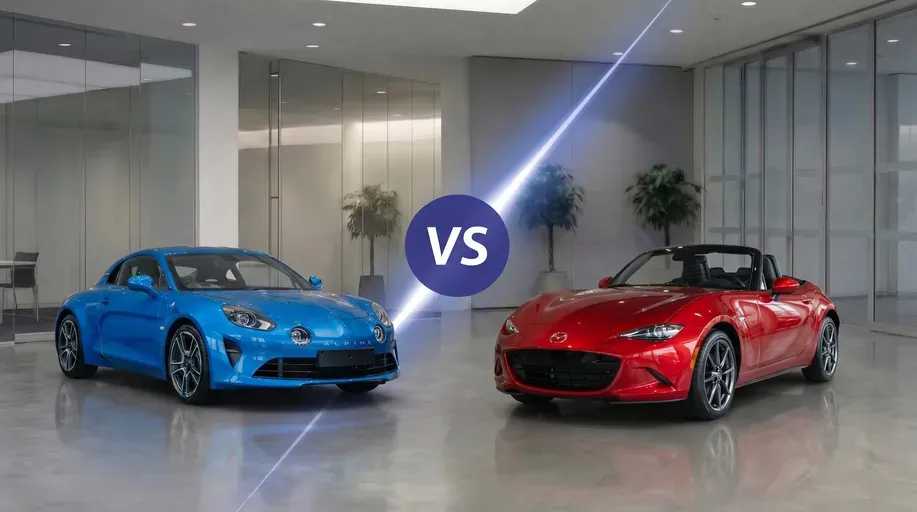
Alpine A110 vs Mazda MX-5 (Miata) comparison. Discover real-world experiences, a comparison of driving characteristics, and our detailed verdict before buying a used car.
Apr 27, 2026
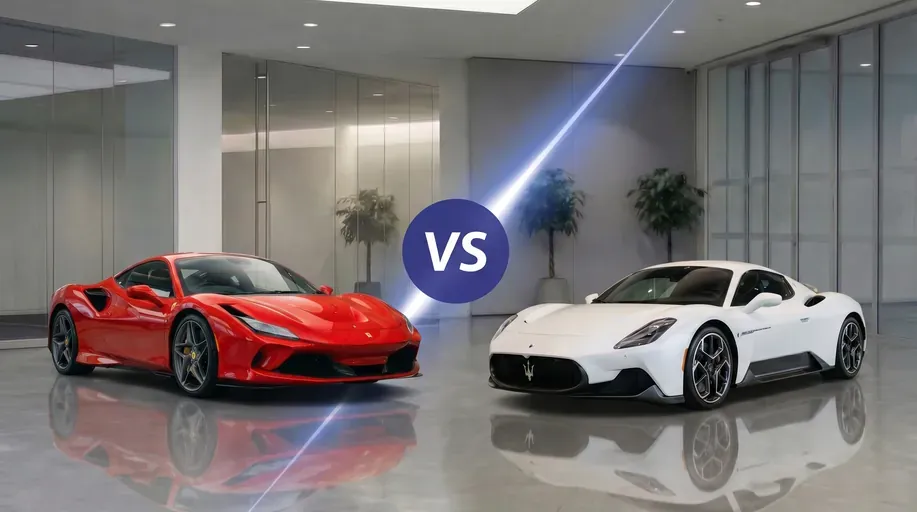
Detailed comparison of Ferrari F8 Tributo vs Maserati MC20. Performance, driving impressions, and a clear verdict that will help you choose the best Italian supercar.
Apr 24, 2026