Audi RS 5 vs. Mercedes-AMG C 63 Coupé: Complete comparison 2026
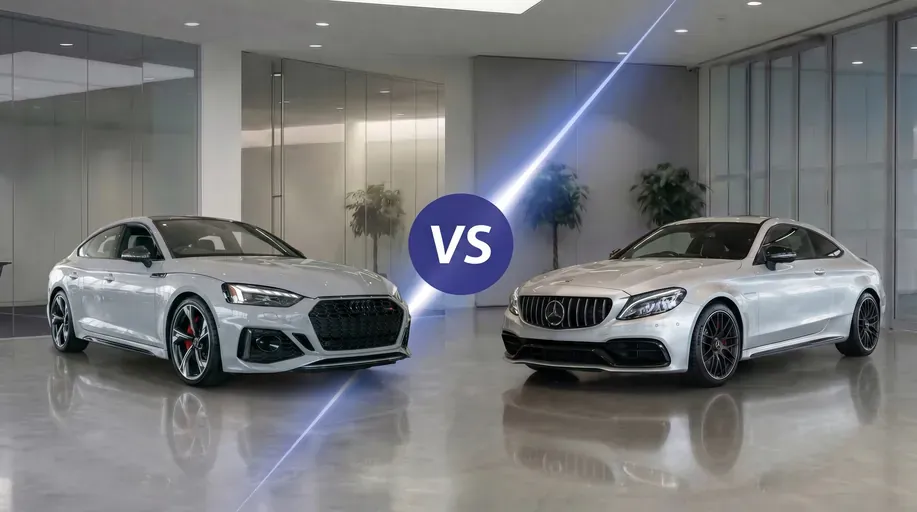
Audi RS 5 vs Mercedes-AMG C 63 Coupé comparison. We compared real-world performance, driving dynamics, and features. Find out which sports coupé is the right one for you!
May 8, 2026
Articles
Car battle
Lamborghini Huracán vs McLaren 720S: A detailed comparison of supercars. Find out everything about performance, driving characteristics, and read our final verdict.
May 14, 2026


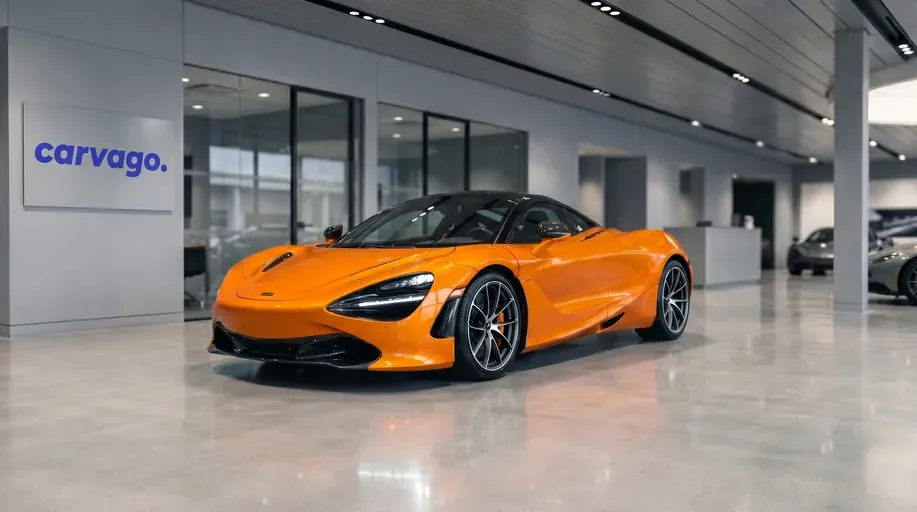
Lamborghini Huracán represents untamed Italian temperament with a screaming naturally aspirated V10, which is a symbol of pure automotive passion and stunning power. On the other side of the barricade stands the British McLaren 720S, an aerodynamic and technological marvel with a twin-turbocharged V8 that pushes the boundaries of physics with its crushing speed and surgical precision. In the following detailed comparison, we will look under the surface of both breathtaking machines and find out which of these elite supercars emerges from the ruthless battle as the absolute winner for your dream garage.
Looking at both supercars, it is clear that they share dramatic and low-slung mid-engine silhouettes, but a detailed examination of the exterior dimensions reveals several fundamental differences. The McLaren 720S with its length of 4543 mm is slightly longer than most standard versions of the Lamborghini Huracán (which start at 4459 mm, although special track editions like the Tecnica reach up to 4567 mm). However, a more significant difference lies in the wheelbase. The British McLaren offers a wheelbase of 2670 mm, which is a full 50 mm more than its Italian competitor (2620 mm). This longer wheelbase not only contributes to the McLaren's greater longitudinal stability at extreme track speeds but also allows designers to better package the interior space, benefiting the occupants especially during long-distance travel.
Regarding width, both cars operate in the territory typical of full-blooded supercars and take up a large portion of the lane. The Huracán, with its width ranging from 1924 to 1956 mm (for the raised Sterrato model), is on par with the McLaren (1930 mm) in this respect. In terms of height, however, the situation is a bit more varied. The standard Huracán Coupé crouches just 1165 mm above the asphalt, while the McLaren 720S is slightly taller at 1196 mm. The exception for Lamborghini is the off-road-oriented Huracán Sterrato with a total height of 1248 mm. The slightly taller build of the McLaren and, above all, its innovative architecture with extensive teardrop-shaped glazing bring an unexpected advantage to the British car. Thanks to dramatically better all-around visibility, the cabin feels airier and makes maneuvering in tight urban spaces easier, which will simplify life for those who want to use the car more frequently.
The comparison between the closed and open versions is also interesting. While McLaren maintained almost identical dimensions for the Spider version as for the coupé (the height decreased by a negligible 2 mm to a total of 1194 mm), the Huracán Spyder is, on the contrary, slightly taller (1180 mm) than the base coupé to safely accommodate the folding soft-top mechanism. In terms of overall handling and daily usability, the Lamborghini's slightly smaller footprint means hitting apexes on narrow roads is a bit easier, and it offers better parkability in typically narrow garages. Ultimately, the choice depends on whether you prefer the ultra-compact and strictly low-slung feel of the Italian bull or the more spatially generous and driver-friendly layout of the British fighter jet.
| Parameter | Lamborghini Huracán Coupé | McLaren 720S Coupé | Lamborghini Huracán Convertible | McLaren 720S Convertible |
|---|---|---|---|---|
| Length (mm) | 4459 - 4567 | 4543 | 4459 - 4520 | 4543 |
| Width (mm) | 1924 - 1956 | 1930 | 1924 - 1933 | 1930 |
| Height (mm) | 1165 - 1248 | 1196 | 1180 | 1194 |
| Wheelbase (mm) | 2620 | 2670 | 2620 | 2670 |
When choosing a mid-engine supercar, luggage capacity might not be the top priority, but for many owners, practicality is a key factor for everyday usability. This is where significant differences in the approach of both manufacturers become apparent, clearly defining the limits of both cars. While one car offers a relatively generous space for several extra suitcases, the other focuses on the absolute minimum. This practical side often decides whether you use the car only for a Sunday drive or head out for a long weekend without worry.
The British McLaren 720S (from the relevant first generation 2017–2023), which is highly sought after on the used car market at around four years old, is a surprisingly practical car. In the Coupé version, it offers a very respectable total luggage space of 360 liters, which is cleverly divided between 150 liters in the front trunk and 210 liters of storage space directly behind the seats. However, if you choose the open-top version (Spider, i.e., Cabriolet), the space behind the seats shrinks to just 58 liters due to the complex folding mechanism, bringing the total capacity down to 208 liters. In contrast, the Italian Lamborghini Huracán offers a standard, very modest 100 liters under the front hood. This is just enough for a weekend grocery run or one soft travel bag. Since both models are mid-engined and strictly two-seaters, folding down rear seats is not an option, and the maximum volume thus fully corresponds to the base capacity.
However, interesting differences can also be found between individual versions, which may influence the choice of a used car. The extreme track-focused Lamborghini Huracán STO deserves a special mention; due to radical aerodynamics and the different shape of the one-piece front hood, it reduced the "trunk" to a completely minimalist 38 liters – barely enough to fit an average racing helmet. For more common versions on the four-year-old used car market, such as the updated Huracán Evo, expect the standard 100 liters regardless of whether it is a fixed-roof Coupé or an open Spyder. Thanks to its well-thought-out carbon structure, the McLaren offers significantly more space for passengers and is clearly the more comfortable choice for any longer journeys.
| Parameter | Lamborghini Huracán Coupé | McLaren 720S Coupé | Lamborghini Huracán Cabriolet | McLaren 720S Cabriolet |
|---|---|---|---|---|
| Base capacity (liters) | 100 | 360 | 100 | 208 |
| Maximum capacity with seats folded (liters) | 100 | 360 | 100 | 208 |
While the Lamborghini Huracán, with just 100 liters, holds only the essentials for a short trip, the British McLaren 720S impresses with unexpected usability and luggage space that is more than sufficient for weekend travel.
When comparing supercars such as the Lamborghini Huracán and McLaren 720S, it is necessary to realize that their absolute domain is speed and driving dynamics on the track, not everyday practicality. Both manufacturers, for roughly four-year-old models on the used car market, which include the very popular Lamborghini Huracán Evo (2020–2024) and the British McLaren 720S from the same period, do not account for the possibility of installing a towing device at all. For this reason, the standard trailer weight and the maximum permitted trailer weight for both cars are officially exactly 0 kg.
No differences are found even in specific versions of these models. Although it might seem that, for example, the raised and off-road-tuned Huracán Sterrato (2023–2024) would provide a certain degree of extra utility, it too possesses no towing capacity. In the case of the British McLaren 720S, the situation is absolutely identical.
Naturally, the zero trailer weight has a fundamental impact on the versatility of both cars. If you were hoping that by attaching a small trailer you would gain additional space for a few extra suitcases, which would be sufficient for a weekend shopping trip or a longer holiday for two, you will hit the design limits of both supercars. Owners must therefore rely exclusively on the very modest "trunks" hidden under the front hood.
In conclusion, it can be summarized that for this category of vehicles, towing capacity is simply not addressed. The purpose of the Lamborghini Huracán and McLaren 720S lies entirely outside the realm of moving or towing caravans. Any comparison in this regard is a draw – if the ability to tow a trailer is important to you, a purebred supercar will unfortunately never meet your needs. Due to the complete absence of factory homologation and missing data on trailer towing for all generations of both mentioned models, no numerical values are included in the table below.
| Model and engine | Braked trailer (kg) | Unbraked trailer (kg) |
|---|
When comparing the powertrains of these two supercar icons, we encounter fundamentally different engineering philosophies that significantly influence the car's character and the final driving experience. While the Lamborghini Huracán relies on a traditional, naturally aspirated 5.2-liter V10 engine, the McLaren 720S utilizes a technically advanced, twin-turbocharged 4.0-liter V8. The difference is most noticeable in the power delivery. Turbocharging in the British representative brings a massive torque of 770 Nm and an enormous power surge even in the mid-range, while the Italian bull requires you to rev the engine high towards 8,000 rpm for maximum power – but in return, it rewards you with surgically precise throttle response and one of the most emotive soundtracks on the market. In terms of traction, Lamborghini offers a choice between playful rear-wheel drive and the unyielding certainty of all-wheel drive, whereas McLaren puristically sends a staggering 530 kW exclusively to the rear axle. If you are a purist longing for mechanical drama, you will fall in love with the naturally aspirated V10. But if you seek absolutely uncompromising acceleration and the monstrous pull of a turbo engine, the McLaren outclasses almost everything on the road.
Under the hood of more modern versions of the Lamborghini Huracán (typical representatives of used cars around 4 years old, such as the Evo generation and its derivatives from 2019 to 2024), sits exclusively the aforementioned naturally aspirated 5.2 V10 unit. Depending on the specific version, this power unit has different power tunings and different ways of transferring power to the road. The base Evo RWD model (with rear-wheel drive only) or the raised Sterrato variant have an output of 449 kW (610 hp) and a torque of 560 Nm. The standard Huracán Evo, featuring advanced all-wheel drive (AWD), then offers 470 kW (640 hp) and a full 600 Nm. For the ultimate track experience, the lightweight STO or Tecnica versions can be found on the market, where engineers kept the 470 kW output and assigned it exclusively to the rear wheels, but slightly reduced the torque to 565 Nm for sharper and more controllable reactions on the track. All engines are exclusively paired with a lightning-fast seven-speed dual-clutch transmission (LDF). According to data, these specifications ended their production cycle during 2024 and currently represent the pinnacle of the nearly-new used car market bearing the bull emblem.
| Engine type | Fuel type | Power (kW) | Torque (Nm) | Transmission |
|---|---|---|---|---|
| 5.2 V10 (Evo RWD/Sterrato) | Petrol | 449 | 560 | 7DCT |
| 5.2 V10 (STO/Tecnica) | Petrol | 470 | 565 | 7DCT |
| 5.2 V10 (Evo AWD) | Petrol | 470 | 600 | 7DCT |
In contrast to the wider model and power range of its Italian competitor, the McLaren 720S (officially produced between 2017 and 2023) approached its engine lineup much more straightforwardly – relying on a single, yet technically devastating power unit with the internal designation M840T. It is a 4.0-liter V8 equipped with a pair of twin-scroll turbochargers. This unit produces a massive 530 kW (or 720 horsepower, from which the model name itself is derived) and a staggering 770 Nm of torque, surpassing the Huracán's naturally aspirated V10 in terms of raw power. It must be emphasized that this British rocket transfers all its power through a seven-speed dual-clutch automatic transmission (SSG) exclusively to the rear wheels, which, combined with the massive onset of turbocharger boost pressure, requires great respect and experience. Production of this model ended in late 2023, making it a perfect candidate for those interested in a young and exceptionally potent used car without any hybrid compromises.
| Engine type | Fuel type | Power (kW) | Torque (Nm) | Transmission |
|---|---|---|---|---|
| 4.0 V8 Twin-Turbo | Petrol | 530 | 770 | 7DCT |
If a breathtaking soundtrack, instant engine response, and the option of all-wheel drive are key for you in a used supercar, the naturally aspirated V10 from the Huracán will undoubtedly captivate you, while the McLaren 720S with its twin-turbo V8 and rear-wheel drive will appeal to more experienced buyers looking for a surgically precise and performance-uncompromising missile.
Choosing the right engine for supercars is crucial for long-term satisfaction, not only in terms of brutal performance but also operational reliability and maintenance costs. While Lamborghini opted for a traditional naturally aspirated ten-cylinder with lightning-fast response and breathtaking sound, McLaren represents the technological peak of its time with a twin-turbocharged eight-cylinder characterized by a massive and relentless surge of power. An interesting point is the different approach of both brands to solving design limits – the ten-cylinder from Lamborghini relies on clever dual fuel injection technology, which prevents the otherwise common carbonization, while McLaren squeezes 720 hp out of its four-liter M840T through a highly sophisticated turbocharging system, which, however, requires flawless thermal management. Our recommendations are based on real-world experience, feedback from used car owners, and known mechanical durability.
The naturally aspirated 5.2-liter V10, ideally in the specification for the EVO versions with all-wheel drive (these variants were available on the market between 2019–2024), represents one of the most robust and reliable engines in the four-year-old supercar segment. Thanks to sharing the platform and design with group siblings, customers benefit from excellent availability of spare parts and service facilities. This engine stands out for its perfectly smooth and linear power delivery and instant throttle response, making it a great companion both on winding Alpine passes and during daily commuting. The combination of direct and indirect injection effectively eliminates the bogeyman of carbon buildup on the intake valves, so the engine does not lose compression or power even after years. When inspecting a roughly four-year-old used car, however, as a mechanic, focus on two key areas: the condition of the dual-clutch transmission and the originality of the software. If the original owner frequently used the "Launch Control" system, the clutch sets may be excessively worn – this can be easily detected by unpleasantly jerky starts and transmission hesitation when shifting while cold. Another risk is unauthorized chip tuning or modifications to the exhaust system without software correction, which can put excessive strain on the car's thermal management. If you avoid these modified units, the 5.2 V10 is a bet on total reliability and pure driving joy.
For the McLaren 720S, the choice of engine is clear from the start, as the car relied on the excellent M840T eight-cylinder throughout its production cycle. It is important to note that although production of this model officially ended in 2023, for the four-year-old used car market, it is still an immensely sought-after and technically highly relevant rocket. The twin-turbocharged eight-cylinder is an absolute masterpiece for drivers with a dynamic style who require the crushing pull of turbochargers and performance on the track and highway that often puts even brand-new cars to shame. With a used unit, however, you must be significantly stricter regarding the technical condition. The engine generates an extreme amount of heat, and its frequent weakness is cracks in the welds on the exhaust manifolds before the turbochargers. You can detect this problem during a personal inspection by ear (a sound resembling an exhaust leak) or a specific smell of exhaust gases in the engine compartment area immediately after a spirited test drive. Ignoring cracks leads not only to a noticeable drop in boost pressure and power but also risks damaging surrounding components with extreme heat. The second, purely user-related trap is the British supercar's sensitivity to voltage drops. The car's systems' standby drain is so high that if the owner did not use a special trickle charger during periods of standing longer than two weeks, the battery undergoes deep discharge. Unfortunately, in this McLaren, this triggers a domino effect of nonsensical error messages on the onboard network. However, if you find a demonstrably maintained unit with a clearly documented history of addressing these typical faults, you will get a brutally effective road weapon that is paradoxically very comfortable even on long journeys.
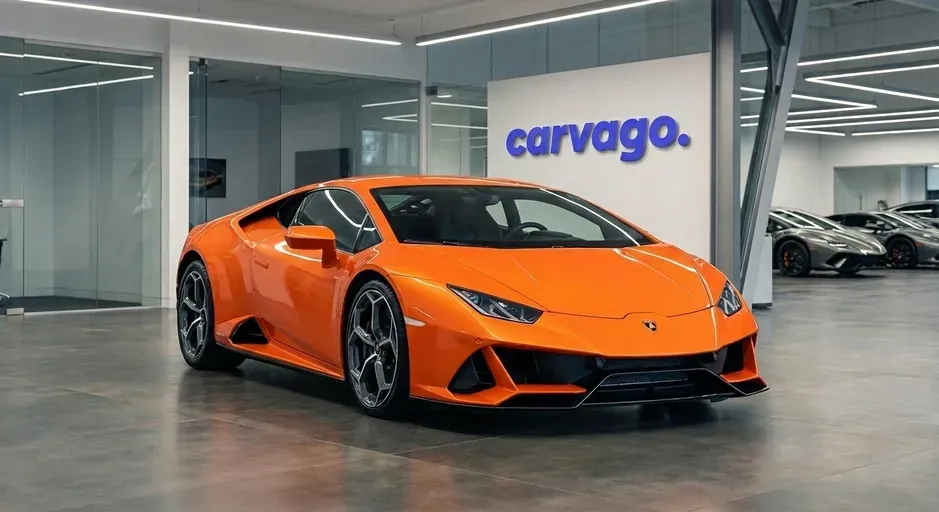
In supercars, the difference between officially stated fuel consumption and real-world operation is often particularly striking. While laboratory cycles assume very smooth driving, owners of cars with around 700 horsepower naturally like to use their full potential, which sends the figures soaring. User data from crowdsourcing platforms like Spritmonitor.de or industry databases provide a great overview of actual fuel consumption. The table below focuses on models and generations that currently appear most frequently on the market for approximately four-year-old used cars, providing the most accurate picture of the real-world appetite a future owner must expect.
| Model and engine | Average consumption (l/100 km) |
|---|---|
| Lamborghini Huracán Evo 5.2 V10 | 13,8 |
| Lamborghini Huracán STO 5.2 V10 | 13,9 |
| Lamborghini Huracán Tecnica 5.2 V10 | 14,5 |
| McLaren 720S 4.0 V8 Twin-Turbo | 15,0 |
Looking at the technical specifications, it might seem that the smaller twin-turbocharged V8 of the British McLaren would offer fuel savings compared to the massive naturally aspirated V10 of the Lamborghini. However, real-world data shows a surprising opposite. As soon as you start to fully utilize the McLaren 720S engine and fill both turbochargers with air, consumption skyrockets and reaches an average of exactly 15,0 l/100 km. Conversely, the purist 5.2-liter naturally aspirated unit in the Lamborghini Huracán models – especially in the widely represented Evo versions or the extreme STO from 2020 to 2022 – shows an average consumption just below the fourteen-liter mark. This clearly confirms the rule that smaller-displacement turbo engines do not necessarily mean more economical operation under extreme load than a classic large-displacement "naturally aspirated" engine.
For typical users and buyers of these vehicles, a difference of one or two liters of fuel plays an entirely marginal role. No one buys these cars for everyday economical commuting to work, but rather for weekend drives and track days. A more important factor for the driver is the total range. The high real-world consumption of both cars combined with the fuel tanks (72 liters for the McLaren and 83 liters for the Lamborghini) means very frequent stops at gas stations. At a faster pace on the track, it is not uncommon to empty the tank of both cars in less than 200 kilometers.
In conclusion, average fuel consumption is not, and should not be, the deciding factor when choosing between these two icons. But if we stick purely to the language of numbers, the soulful naturally aspirated V10 of the Italian bull surprisingly emerges as the slightly more economical choice, requiring a bit less fuel in the real world than the technologically advanced twin-turbo V8 from British Woking.
When searching for a supercar after roughly four years of operation (ideally 2020–2022 models), you will encounter a very different situation with these two icons. Although the purchase price of both cars was relatively similar at the time of production, the used car market clearly shows which car holds its value better and which offers a more favorable price-to-performance ratio from a used purchase perspective.
When buying premium sports cars second-hand, it's not just the purchase price itself that matters, but above all the expected costs of keeping the car in perfect condition:
| Criterion | Lamborghini Huracán | McLaren 720S |
|---|---|---|
| Infrastructure and parts | Technology shared with Audi makes repairs cheaper and easier | Exclusive technologies require care solely from specialists |
| Warranty coverage | Generally perceived as an above-average reliable car | Highly recommended to find a car with the McLaren Extended Warranty program |
| Insurance | Premium rates, but relatively stable conditions | Can be significantly more expensive due to extremely costly repairs of the carbon monocoque |
| What to watch out for | Wear on carbon-ceramic brakes and gearbox condition | Absolute necessity of a documented authorized service history and chassis inspection |
While the McLaren 720S represents an incredibly good deal on the used market for pure speed and performance hunters, the Lamborghini Huracán is a more financially stable investment thanks to its unmistakable naturally aspirated character.
While standard comparisons often begin by noting that both vehicles earned a five-star Euro NCAP rating for their specific year of testing, the world of exclusive supercars follows its own rules. Euro NCAP testing protocols are constantly evolving and becoming more stringent. The organization regularly introduces new frontal impact simulations, stricter cyclist detection, and junction crisis scenarios. Consequently, percentage results from different years cannot be directly compared, as today's requirements for active safety are diametrically different from those of the past.
In the case of the Lamborghini Huracán and McLaren 720S, we must state a fundamental fact: neither of these cars has ever been officially tested by Euro NCAP. Due to their high purchase price and low production volumes, these certifications are not performed, and therefore, tabular percentage data for them does not exist.
From a passive safety perspective, the Lamborghini Huracán relies on a rigid frame construction that combines aluminum and carbon fiber (an architecture shared with the Audi R8). The car provides a basic set of airbags and a finely tuned stability system; however, you will not find modern active safety assistants (ADAS), such as autonomous emergency braking with pedestrian detection, in its equipment. The emphasis here was primarily on an undisturbed driving experience.
The McLaren 720S approaches safety using technologies from motorsport. Its foundation is the uncompromising Monocage II carbon monocoque. This structure creates an extremely strong safety cage around the occupants, providing unrivaled passive protection in the event of an impact. Much like its Italian competitor, the British manufacturer intentionally omitted modern electronic assistants that would interfere too much with the driving experience. It relies instead on phenomenal grip, carbon-ceramic brakes, and brilliant handling designed to actively prevent crisis situations.
In conclusion, if you are looking for a comprehensive active safety package according to the latest Euro NCAP standards, these purist supercars will not offer it. However, from the perspective of raw structural strength and protection at high speeds, the McLaren 720S has a slight edge thanks to its advanced carbon monocoque, representing a more modern and robust approach to chassis construction than the Lamborghini's combined platform.
| Parameter | Lamborghini Huracán | McLaren 720S |
|---|---|---|
| Year of testing | - | - |
| Adult occupant protection | - | - |
| Child protection | - | - |
| Vulnerable road user protection | - | - |
| Safety assist systems | - | - |
Although neither supercar has undergone Euro NCAP testing and both lack modern assistants, the McLaren 720S offers top-tier structural safety inspired by Formula 1 thanks to its Monocage II carbon monocoque.
In addition to standard equipment, each of these supercars offers several unique and very specific features that perfectly embody the philosophy of both brands and can be decisive for the customer during the final selection.
The Huracán scores points primarily with undiluted emotions, raw performance, and a striking Italian design that pays attention to even the smallest visual detail.
McLaren, on the other hand, takes a purely functional approach to development. Its technologies originate from the world of Formula 1, and every element has a precisely defined engineering purpose.
Naturally aspirated V10 engine with an unmistakable sound and instant throttle response
Aggressive and exceptionally emotional design that is guaranteed to always attract attention
Solid reliability of onboard electronics and drivetrain thanks to shared technology within the VW/Audi Group
Excellent traction and stability during acceleration in all-wheel-drive versions
Very strong residual value on the used supercar market
Significantly cramped interior, which is very uncomfortable for drivers over 185 cm tall
Extremely poor visibility from the car, especially diagonally forward and to the rear
Stiffer chassis, which is less compliant on broken roads than its British competitors
Almost unusable luggage space (the front trunk barely fits one small backpack)
The Lamborghini Huracán is the perfect choice for drivers looking for genuine emotion, theatrical performance, and one of the last amazing naturally aspirated engines on the market in a supercar. Thanks to shared technology, it offers robust reliability, although it requires significant compromises in terms of space and practicality.
Absolutely crushing dynamics and acceleration thanks to the powerful twin-turbocharged V8 engine
Carbon fiber monocoque ensuring very low weight and immense structural rigidity
Phenomenal hydraulic power steering with unrivaled feedback from the front wheels
Top-tier suspension comfort for everyday driving thanks to the sophisticated Proactive Chassis Control II hydraulic suspension
Excellent cabin brightness and great visibility in all directions thanks to thin body pillars
Less characterful sound profile of the turbocharged engine compared to the naturally aspirated V10
Poorer reputation regarding build quality and electronics reliability
Higher costs for specialized servicing and more difficult availability of spare parts
More outdated and less intuitive infotainment system
The McLaren 720S will appeal to technologically-minded purists who demand absolute speed, low weight, and surgically precise driving characteristics combined with surprising comfort. It is an aerodynamically more advanced and analytical machine, though one must expect a higher risk of minor faults and more demanding servicing.
Based on data from long-term user testing, service bulletins, and practical experience brought by our own comprehensive car audit, we have compiled an overview of the most common problems that buyers of these used supercars should watch out for.
Lamborghini Huracán (especially in the improved Evo generation and related versions from 2019–2023) ranks among unexpectedly reliable cars in the supercar category, however, like any high-performance machine, it faces certain specific defects.
The Huracán is considered one of the most reliable supercars today, with mechanics that can withstand unexpectedly high mileage. Potential risks lie mainly in minor electronic glitches and wear of parts from extreme stress.
McLaren 720S (from model years approx. 2017–2023) offers unrivaled technology and dynamics, but its small-series British origin is reflected in a more frequent need for visits to specialized service centers and a tendency toward teething troubles.
While the McLaren 720S crushes most competition on the road dynamically, its reliability lags due to moody electronics and a delicate hydraulic chassis. Before buying, a perfect service history is an absolute necessity here.
When buying a used car, a thorough inspection is key, and for supercars with complex technology and astronomical spare parts prices, this is doubly true. Here are some specific points to focus on for these two models, and why a professional comprehensive car inspection is always recommended before purchase.
The McLaren 720S is significantly faster thanks to its twin-turbocharged V8 and lower weight. It handles 0 to 100 km/h in just 2.9 seconds and offers more crushing acceleration, especially at higher speeds. The Huracán is slightly slower, but its naturally aspirated V10 still provides extreme dynamics with instant throttle response.
Lamborghini clearly dominates thanks to its naturally aspirated V10 engine, which revs up to 8,500 rpm. Its sound is mechanical, loud, and offers the typical Italian roar that turbocharged engines cannot fully replicate. While the McLaren sounds menacing and technical, the overall sound experience is muffled by the presence of two turbochargers.
The British representative surprises with excellent hydraulic suspension that can iron out bumps on regular roads incredibly well. Additionally, it offers excellent visibility from the cabin thanks to thin pillars and a generously glazed roof. The Italian model, on the other hand, is overall stiffer and has a more cramped interior with worse visibility, making it a less practical car for everyday use.
The McLaren behaves like an uncompromising race car on the track with precise steering, huge aerodynamic downforce, and an extremely stiff carbon monocoque. It is lighter, which guarantees an advantage in fast corners and during intense braking. The Huracán is more playful at the limit and, thanks to all-wheel drive, can forgive more mistakes, which even less experienced drivers will appreciate.
Lamborghini benefits greatly from sharing technology with the Volkswagen Group, which brings more reliable electronics and overall more robust engineering. With the British competitor, minor software glitches and problems with electronic comfort features appear more frequently in roughly four-year-old used cars. Insurance and routine maintenance costs are astronomical for both cars, however, the McLaren tends to be generally more demanding for potential service tasks.
The battle between these two extraordinary supercars on the nearly-new used car market ultimately has no single absolute winner, as each model appeals to a completely different group of drivers. If you are looking for unrivaled speed, surgically precise handling, surprising suspension comfort, and an unexpectedly generous luggage compartment for weekend trips, the British McLaren 720S represents a technological marvel that, thanks to a steeper depreciation, also offers a phenomenal price-to-performance ratio. On the other hand, the Italian Lamborghini Huracán is the embodiment of pure automotive passion, whose robust naturally aspirated V10 delivers an unmistakable sound, instant response, and excellent residual value, albeit at the cost of a more cramped interior and poorer visibility from the cabin. The final decision thus depends purely on whether your heart longs for an emotional spectacle with the unwavering confidence of the Italian bull, or for the crushing turbocharged power and efficient daily usability of the British fighter jet.
Sources: ADAC, denik.cz, idnes.cz, chytreauto.cz, autoweb.cz, autoperiskop.cz
This article was prepared using artificial intelligence tools. The section guarantor is Petr Dušek.

Audi RS 5 vs Mercedes-AMG C 63 Coupé comparison. We compared real-world performance, driving dynamics, and features. Find out which sports coupé is the right one for you!
May 8, 2026

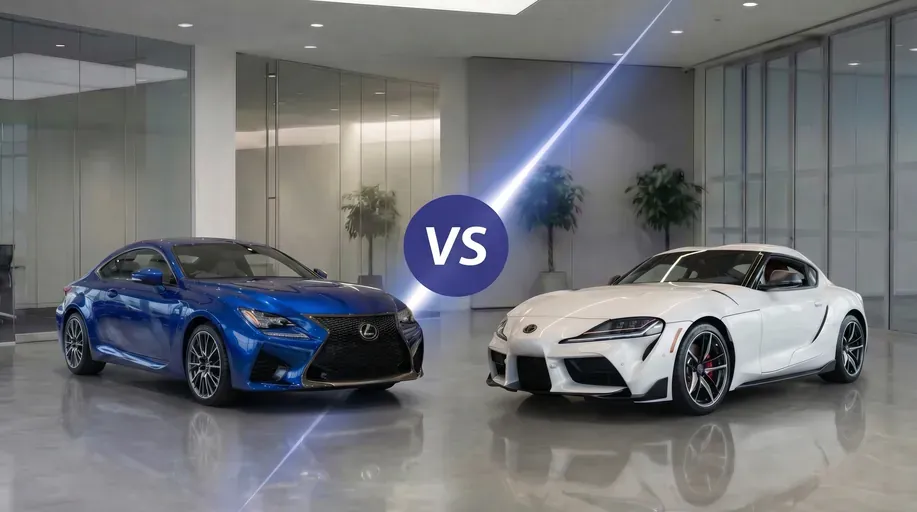
The Great Coupe Comparison: Lexus RC F vs Toyota GR Supra. A detailed look at performance, equipment, and real-world driving characteristics. Read our final verdict!
Apr 14, 2026

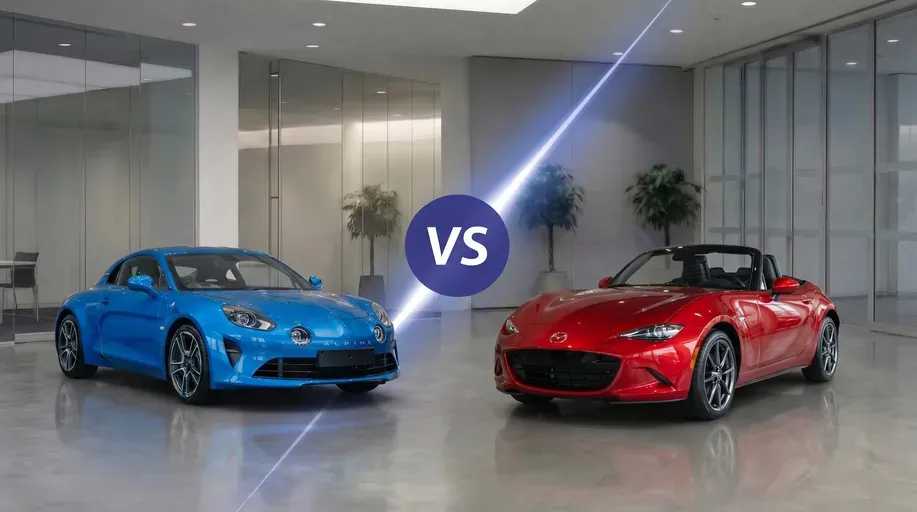
Alpine A110 vs Mazda MX-5 (Miata) comparison. Discover real-world experiences, a comparison of driving characteristics, and our detailed verdict before buying a used car.
Apr 27, 2026