Car battle
Kia Sorento vs. Volkswagen Tayron: A Complete 2025 Comparison
Kia Sorento vs. Volkswagen Tayron. Which large SUV is better? A detailed comparison of price, features, and driving performance to help you decide.
Apr 13, 2026
Articles
Car battle
Detailed comparison of Hyundai Santa Fe vs. Kia Sorento. Discover real-world experiences, differences in equipment and engines, and read our verdict. Which SUV to choose?
April 29, 2026
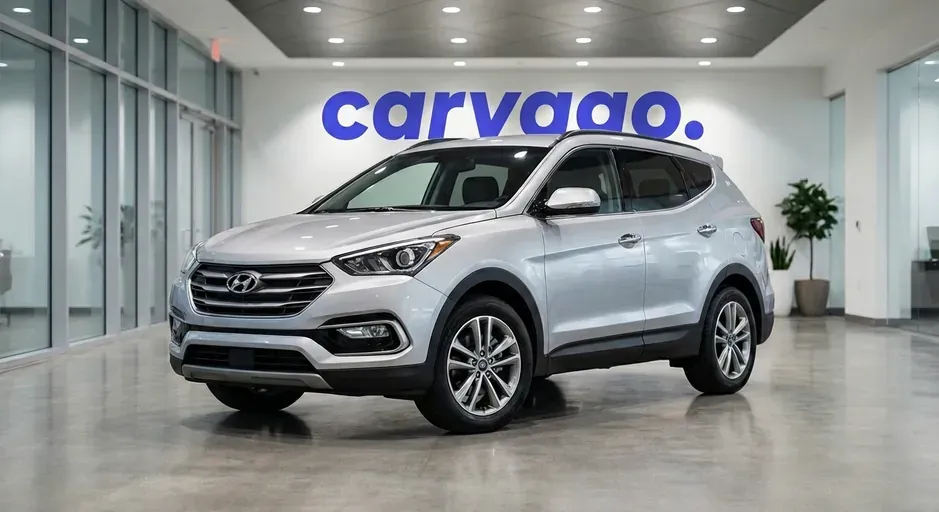
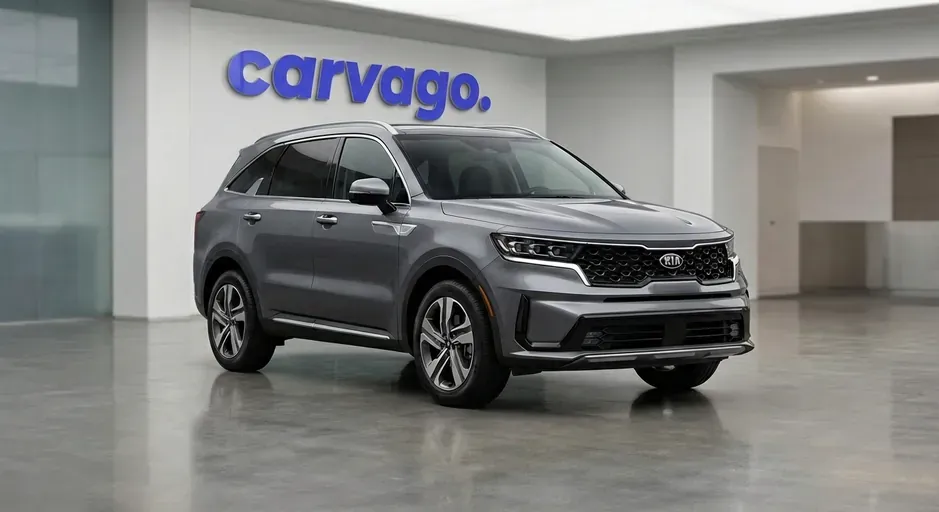
Hyundai Santa Fe is a proven family SUV that stands out on the used car market primarily for its distinctive, representative design, premium interior craftsmanship, and advanced safety systems. Its biggest rival and technological sibling is Kia Sorento, which offers a more robust, boxy look on the same chassis platform, with an extraordinary emphasis on maximum interior space and practicality. Let's find out in this detailed comparison which of these two popular South Korean vehicles represents a smarter and more advantageous choice for your daily journeys.
Both vehicles represent a popular choice among large family SUVs and, thanks to shared group technology, are very close to each other in many respects. Nevertheless, in models on the used car market, typically around four years old (Kia Sorento generation MQ4 and Hyundai Santa Fe 4th generation), we find important differences in the overall body construction. The Kia Sorento, with a typical length of 4810 mm, is 25 mm longer than its sibling Santa Fe after the facelift, which measures 4785 mm. However, the difference in wheelbase is much more significant. The Sorento offers a generous wheelbase of 2815 mm, which is exactly 50 mm more than in the case of the Santa Fe model (2765 mm). This larger distance between the axles gives the Kia a clear advantage in terms of overall interior volume and knee room for passengers in the second and third rows. For larger families or those who often carry adult passengers in the back, the Sorento's longer wheelbase will be a significant plus, while the slightly shorter Hyundai may feel a fraction more agile when parallel parking in tight spaces.
When looking at width and height, any differences between the two Korean rivals almost disappear. Both vehicles in the generations under review have the same maximum width of 1900 mm (for older years of the 4th generation Santa Fe before the facelift, it was 1890 mm). As for the overall body height, the Sorento has grown to 1695 mm, while the Santa Fe, at 1685 mm, is only a negligible centimeter lower. In real-world driving, you won't notice this ten-millimeter difference at all; both cars provide an equally majestic stance, a sense of security, and an excellent overview of what's happening around the vehicle. In practice, the identical width means that maneuvering in narrow streets or parking in typical European underground garages will require exactly the same amount of driver caution with both vehicles. External dimensions for these parameters will therefore not represent a major obstacle when choosing one model or the other.
| Parameter | Hyundai Santa Fe SUV | Kia Sorento SUV |
|---|---|---|
| Length (mm) | 4770 - 4785 | 4810 - 4815 |
| Width (mm) | 1890 - 1900 | 1900 |
| Height (mm) | 1680 - 1685 | 1695 |
| Wheelbase (mm) | 2765 | 2815 |
Luggage capacity is one of the most important parameters when choosing a large family SUV. The fourth-generation Hyundai Santa Fe and Kia Sorento (models from 2020 to 2024, which are currently highly sought after on the used car market) target exactly those customers who need maximum practicality for daily hauling, family trips, or stress-free packing for a summer holiday. Both of these technically related vehicles offer generous and easily accessible space, but they approach its overall layout slightly differently.
In the standard five-seat configuration, the Hyundai Santa Fe offers a base boot capacity of 634 liters. Once you fold down the rear backrests, you get a total load space of 1,704 liters. The Kia Sorento (MQ4 generation) responds with a slightly smaller base volume of 616 liters for the standard diesel version. However, its main advantage becomes apparent after folding down the rear seats – thanks to its more boxy body shape, it can offer a massive 2,011 liters. In practice, this means space for several extra suitcases and the ability to transport even truly bulky items. A clear difference is also noticeable in the popular seven-seat variants. When all seven seats are occupied, the Sorento offers a decent 187 liters, while the Santa Fe has to make do with a smaller 130 liters.
For both South Korean models, it is important to keep in mind that the chosen engine affects the resulting boot capacity. The placement of the traction battery in hybrid and plug-in hybrid (PHEV) versions slightly reduces the luggage compartment. For example, the plug-in hybrid Sorento has its base capacity reduced to 604 liters (1,988 liters when folded). The Hyundai Santa Fe PHEV in a seven-seat configuration offers 571 liters as standard and 1,649 liters when folded. Despite these minor limitations on paper, the boot of both electrified versions is huge and absolutely sufficient for weekend shopping or a longer holiday.
| Parameter | Hyundai Santa Fe SUV | Kia Sorento SUV |
|---|---|---|
| Base volume (liters) | 634 | 616 |
| Max volume with seats folded down (liters) | 1704 | 2011 |
For the buyer of a four-year-old used car, this means a clear conclusion: if you are looking for the absolute maximum usable space after folding the seats or know that you will often use the third row of seats, the Kia Sorento offers you a significant number of extra liters. The Hyundai Santa Fe, on the other hand, scores with a slightly larger base boot in the default five-seat configuration and stands out with its sophisticated floor partitioning.
While the Hyundai Santa Fe wins by a few liters in the basic five-seat layout, the Kia Sorento is practically unbeatable in total cargo capacity with the seats folded down, thanks to its shape.
Diesel as a safe bet, hybrids with compromises
The ability to tow heavy trailers is often one of the decisive parameters for owners of large family SUVs, whether they plan to go on a family holiday with a caravan, tow a boat, or just need to transport heavier construction material. Since the 4th generation Hyundai Santa Fe and the MQ4 generation Kia Sorento share the same platform, their towing capabilities on the used car market are very similar; however, important differences can be found in electrified powertrains.
Classic diesel versions dominate
The biggest workhorses for both models are the traditional 2.2 CRDi diesel engines. Both the four-year-old Santa Fe and Sorento in this specification can easily handle a braked trailer with a maximum weight of up to 2,500 kg.
Electrification brings a reduction in capacity
If you are considering more eco-friendly powertrains, you must account for a significant limitation in towing capacity:
From a practical standpoint, this means that the diesel versions of both cars provide absolute freedom and are ideal for a large family caravan or transporting horses. While hybrid variants with a towing capacity of around 1.6 tonnes are safely sufficient for a regular weekend purchase of materials, transporting a lighter boat, or compact trailers, they represent a compromise for demanding users. The 1,350 kg limit for the Santa Fe PHEV can already be an obstacle for many family caravans.
When choosing a used car roughly four years old, a clear rule applies: for heavy work and maximum towing power, go for diesel, where both cars serve identically well. If you have decided on a plug-in hybrid and plan to tow something occasionally, the Kia Sorento offers a 150 kg larger and often crucial reserve.
| Model and engine | Braked trailer (kg) | Unbraked trailer (kg) |
|---|---|---|
| Hyundai Santa Fe 2.2 CRDi (4th generation) | 2500 | 750 |
| Hyundai Santa Fe 1.6 T-GDI HEV (4th generation) | 1650 | 750 |
| Hyundai Santa Fe 1.6 T-GDI PHEV (4th generation) | 1350 | 750 |
| Kia Sorento 2.2 CRDi (MQ4) | 2500 | 750 |
| Kia Sorento 1.6 T-GDI HEV (MQ4) | 1650 | 750 |
| Kia Sorento 1.6 T-GDI PHEV (MQ4) | 1500 | 750 |
Since the Hyundai Santa Fe and Kia Sorento are corporate siblings built on the same shared platform, their range of engines for used cars around four years old (i.e., the 4th generation for the Santa Fe and the MQ4 generation for the Sorento) is practically identical. For buyers, this means they don't have to worry about technical compromises but can focus purely on design, brand preference, or specific equipment. Both automakers have relied on three main pillars that cover the needs of most drivers: a powerful diesel engine ideal for long distances with excellent torque for towing heavy trailers, an efficient full hybrid system (HEV), and a technologically advanced plug-in hybrid (PHEV) with the possibility of purely electric range for daily city trips. All variants offer great dynamics, with all-wheel drive usually being standard (front-wheel drive may be optional on base versions) and exclusively automatic transmissions.
The 4th generation Hyundai Santa Fe (from 2020 to 2024) offers a balanced mix of traditional and electrified powertrains under the hood. Historically, the most popular choice for highway drivers is the reliable 2.2 CRDi four-cylinder diesel, which, after a significant modernization, provides an output of 148 kW and an impressive torque of 440 Nm, paired with a fast eight-speed dual-clutch transmission (8DCT). It is important to mention that the used car market is your ideal chance to acquire this sought-after diesel, as with the gradual arrival of the brand-new 5th generation (from 2024), this engine is disappearing from catalogs and the automaker is focusing fully on hybrids. These consist of Smartstream family petrol units based on the 1.6 T-GDI engine. The self-charging hybrid (HEV) generates a reliable combined output of 169 kW, while the top-of-the-line Plug-in Hybrid (PHEV) with a larger battery delivers 195 kW and allows for smooth driving purely on electricity. Instead of a dual-clutch, the hybrid versions use a smooth six-speed torque-converter automatic.
| Engine type | Fuel type | Power (kW) | Torque (Nm) | Transmission |
|---|---|---|---|---|
| 1.6 T-GDI Hybrid | Petrol / HEV | 169 | 350 | 6AT |
| 1.6 T-GDI Plug-in-Hybrid | Petrol / PHEV | 195 | 350 | 6AT |
| 2.2 CRDi | Diesel | 148 | 440 | 8DCT |
The Kia Sorento in the platform-related MQ4 generation (on the market from 2020 to the present) shares an identical range of advanced engines with its sister Hyundai model. Proponents of traditional fuels and high mileage appreciate the robust 2.2 CRDi diesel unit with 148 kW of power and a generous 440 Nm of torque. As with its sister model, those interested in this diesel "workhorse" should take full advantage of the potential of the four-year-old used car market, as in the latest and facelifted versions from 2024/2025, manufacturers significantly prefer electrified alternatives. Those who drive mostly in suburban conditions can choose the reliable 1.6 T-GDI Hybrid petrol hybrid with 169 kW of power and excellent city fuel consumption. The absolute peak of dynamics is then brought by the 1.6 T-GDI Plug-in-Hybrid version with a top combined output of 195 kW. Both hybrid variants rely on a precise six-speed automatic transmission, with the PHEV being equipped as standard with intelligent all-wheel drive (AWD).
| Engine type | Fuel type | Power (kW) | Torque (Nm) | Transmission |
|---|---|---|---|---|
| 1.6 T-GDI Hybrid | Petrol / HEV | 169 | 350 | 6AT |
| 1.6 T-GDI Plug-in-Hybrid | Petrol / PHEV | 195 | 350 | 6AT |
| 2.2 CRDi | Diesel | 148 | 440 | 8DCT |
Choosing the right engine is absolutely crucial for long-term satisfaction with the vehicle, which is why our recommendations are based on a careful evaluation of dynamics, actual fuel consumption in real-world traffic, feedback from long-term owners, and documented mechanical reliability.
Although the Hyundai Santa Fe and Kia Sorento share the same updated chassis platform and a practically identical range of powertrains in their roughly four-year-old models (4th generation Santa Fe and Sorento MQ4), the character of the vehicle changes fundamentally with the choice of a specific unit. From a technological standpoint, the excellent modernized 2.2 CRDi diesel is worth mentioning, which received an aluminum block saving nearly 20 kg in weight, and conversely, the advanced hybrids (HEV), which untraditionally but all the more cleverly integrate the electric motor directly into the body of a classic automatic transmission instead of a traditional torque converter. As data from available production years shows, diesel power is still dominant and highly sought after in the market for roughly four-year-old used cars. However, in the latest 5th generation Hyundai Santa Fe (from 2024), the popular 2.2 CRDi diesel is already completely missing from the engine lineup. This makes this choice even more attractive and valuable on today's used car market.
This powerful four-cylinder turbodiesel represents the most logical and balanced choice for a heavy family SUV, especially due to the fact that in the current model generation, new buyers no longer have this option. The engine excels primarily with its robust torque of 440 Nm, thanks to which the vehicle handles a full load of all seven seats and towing trailers weighing up to 2500 kg with absolute ease. After the last major facelift, it was also paired with an excellent eight-speed dual-clutch transmission (8DCT) with wet clutches. This uses a dedicated electric oil pump for intensive cooling, thereby completely eliminating the risk of overheating and the typical "jerking" when maneuvering at low speeds. In real conditions, such a large car can be driven safely with a consumption between 6.5 and 7.5 l/100 km.
The main risk with this unit remains the prevention of diesel particulate filter (DPF) clogging, which occurs if the heavy diesel is constantly driven only on short trips without a chance for regeneration. A clogged filter negatively affects turbo life and causes oil dilution with diesel. During a test drive, therefore, check if the engine has a suspiciously rough idle, if its RPMs fluctuate, or if the exhaust smells unusual at idle, which indicates a clogged system. Thanks to its characteristics, the 2.2 CRDi is the perfect choice for long-distance drivers, caravan owners, and drivers who regularly spend time on long highway climbs.
If you will be moving primarily in the city and on shorter suburban routes with a vehicle of this size, the full hybrid system (HEV) makes the most sense for the sister Kia Sorento. The powertrain with a total system output of 230 hp (169 kW) combines a reliable turbocharged 1.6-liter gasoline engine, an electric motor, and a classic six-speed automatic transmission into a perfectly smooth orchestra that you don't have to charge from a socket at all. At speeds up to roughly 40 km/h or in crawling traffic jams, the Sorento can coast purely on electricity. A major technical trump card is the elimination of typical diesel risks for city traffic – no clogged DPF filter or stuck EGR valve that would suffer from frequent cold starts awaits you.
From the perspective of risks, you must be prepared for the fact that the hybrid is not designed for permanent towing of heavy trailers or large caravans (its towing capacity is lower than that of the diesel). The condition of the powertrain in a used car can be easily revealed during a test drive – carefully monitor the transition between purely electric and gasoline operation. Everything must happen absolutely silkily. Any noticeable jerk or unusual hesitation of the automatic transmission may indicate a future problem with the software or the clutch in the transmission. Hybrid Sorento is exceptionally user-friendly, quiet, and thanks to the immediate response of the electric motor, also surprisingly nimble, making it an unbeatable companion for active family moves in city traffic jams.
Official fuel consumption figures provided by manufacturers often differ significantly from reality, which is especially true for large and heavy family SUVs. To get a more accurate picture of how much the Hyundai Santa Fe and Kia Sorento actually consume on the road, we analyzed real user data from independent portals such as Spritmonitor.de. The following comparison focuses on models roughly four years old – specifically the fourth-generation Santa Fe and the corresponding Sorento generation (designated as MQ4). It is the 2020 to 2024 model years that represent the most relevant and affordable choice on the used car market today.
| Model and Engine | Average Consumption (l/100 km) |
|---|---|
| Kia Sorento 2.2 CRDi (MQ4) | 6.2 |
| Hyundai Santa Fe 2.2 CRDi (4th generation) | 6.6 |
| Kia Sorento 1.6 T-GDI Hybrid (MQ4) | 6.7 |
| Hyundai Santa Fe 1.6 T-GDI Hybrid (4th generation) | 6.9 |
| Kia Sorento 1.6 T-GDI Plug-in Hybrid (MQ4) | 4.2 |
| Hyundai Santa Fe 1.6 T-GDI Plug-in Hybrid (4th generation) | 4.5 |
Several interesting trends emerge from the data collected across the available engine options. Traditional 2.2 CRDi diesel engines still lead the way in overall user efficiency, even in today's electrified era. It may come as a surprise to find that petrol full-hybrid variants (HEV) using the small 1.6 T-GDI turbo engine do not save much fuel in practice. The high aerodynamic drag and heavy weight of both SUVs push their highway consumption dangerously close to the seven-liter mark. While manufacturer spec sheets for plug-in hybrid versions (PHEV) promise figures below two liters, real-world long-term consumption is most often above four liters. Furthermore, this figure is extremely dependent on your personal discipline regarding regular battery charging from the grid.
What does this mean for average users?
The choice of a specific engine for these four-year-old used cars should be based purely on your route profile, not on catalog promises.
Overall, it can be stated that real fuel consumption is very similar for both sister models. The Sorento shows savings of a few tenths of a liter thanks to slightly better aerodynamics and different tuning; however, in real life, you will hardly notice these minor differences. Therefore, fuel consumption will most likely not be the main argument that decides the battle between a used Sorento and Santa Fe. Much more important will be your personal driving profile and preference for a specific design or interior layout.
When choosing a roughly 4-year-old family SUV (in this case, model years 2021 and 2022), you are in an attractive window on the used car market. The Hyundai Santa Fe (4th generation after a significant facelift) and Kia Sorento (4th generation with the code name MQ4) share the same chassis platform and powertrains. Although they come from the same technological base, their price tags differ slightly on the secondary market.
For both models, as new cars, they often approached or even exceeded the €49,000 mark. After four years of operation, their value has settled at much more acceptable amounts. The Kia Sorento holds its value slightly better, which is due to the huge demand for its boxier design and a slightly more practical interior layout.
| Model (2021–2022) | Starting price (high mileage) | Average price (good condition) | Top condition (low mileage, PHEV) |
|---|---|---|---|
| Hyundai Santa Fe | from approx. €27,000 | €31,000 – €35,000 | up to €39,000 |
| Kia Sorento | from approx. €29,000 | €33,000 – €37,000 | €41,000 and more |
When browsing listings, you will come across several factors that can significantly move the price of both Korean SUVs:
From the perspective of the price-to-value ratio, the Hyundai Santa Fe comes out as a slightly more rational choice. It offers absolutely identical, reliable technology as its sister model, luxury materials in the interior, but you can often buy it on the used market for €2,000 to €4,000 less.
However, if you are looking for a tougher look and uncompromising space in all rows of seats, the initial premium for a used Sorento will likely pay off in the long run. It is expected that the Kia will hold its resale value slightly longer thanks to its timeless design.
While the Hyundai Santa Fe represents more affordable luxury on the used market with a better price-to-equipment ratio, the Kia Sorento holds its residual value significantly better thanks to its attractive robust design and preferred seven-seat layout.
Both models, the Hyundai Santa Fe and the Kia Sorento, received the maximum five-star rating in independent Euro NCAP safety tests. When choosing a roughly four-year-old used car, however, it is crucial to put these results into the correct context and consider the year the test was performed. The Euro NCAP methodology is constantly evolving, and every two years it undergoes significant tightening. Percentage results from different years cannot be directly compared, as newer tests subject vehicles to much more demanding and realistic scenarios.
The fourth-generation Hyundai Santa Fe underwent crash tests in 2018. At that time, it achieved exceptionally convincing results – particularly an excellent score of 94% for adult occupant protection. However, the tests were conducted according to older, less strict protocols. At that time, the methodology did not yet include a strict evaluation of far-side side impacts, nor such extensive test scenarios for automatic braking in front of approaching cyclists or when turning at intersections. Furthermore, Euro NCAP certification typically has a six-year validity, which means that from the perspective of today's strict standards, the 2018 rating for used cars has theoretically already expired.
In contrast, the Kia Sorento model underwent Euro NCAP tests in 2020, following a significantly stricter and more modern methodology. This newly included a tougher simulation of a frontal impact with a moving barrier (MPDB) and more detailed detection of vulnerable road users. Despite these demanding conditions, the Sorento easily maintained its five stars. The seemingly lower score for adult protection (82%) does not mean worse real-world safety; it merely reflects a diametric change and tightening of the rules. Additionally, the Kia scored points in the test for its excellent integration of a center airbag, which reliably prevents injuries caused by the heads of the driver and passenger colliding during a side impact.
| Parameter | Hyundai Santa Fe | Kia Sorento |
|---|---|---|
| Year of testing | 2018 | 2020 |
| Adult occupant protection | 94% | 82% |
| Child protection | 88% | 85% |
| Vulnerable road user protection | 67% | 63% |
| Safety assist systems | 76% | 87% |
Looking at the real benefit of these results for a used car buyer, the Kia Sorento clearly benefits from its slightly newer and more modern architecture. The most visible difference can be found in the safety assist systems category, where the Sorento, with a score of 87%, clearly outperforms the older electronics in the Santa Fe (76%). More advanced technology and more reliable steering interventions make the Sorento a car that is noticeably better equipped to avert a potential accident. The Hyundai Santa Fe undoubtedly remains a highly safe SUV; however, thanks to its focus on the newer 2020 standards, the Kia provides a slightly more comprehensive package of active and passive protection for the whole family.
Both large SUVs offer maximum five-star protection in the event of an accident, but the Kia Sorento represents a slightly more advanced solution thanks to testing under the stricter 2020 methodology and more modern active safety.
In addition to standard equipment, both models offer much more than just basic features, with each approaching added value in its own way and possessing several unique solutions that can be decisive for the customer during the final selection.
Premium-crafted interior using soft-touch and high-quality materials
Excellent driving comfort and above-average cabin soundproofing at higher speeds
Excellent ergonomics of the massive center console, retaining physical buttons for key functions
Smooth and reliable hybrid (HEV) and plug-in hybrid (PHEV) powertrains
Traditionally very rich standard safety equipment even in base versions
More polarizing front grille design with split headlights, which may not suit everyone
Less passenger space in the optional third row of seats compared to its Kia sibling
Driving characteristics are focused purely on comfort and feel more cumbersome in corners
Slightly smaller luggage compartment volume in the five-seat configuration
The Hyundai Santa Fe is an ideal choice for drivers who place absolute emphasis on travel comfort, cabin quietness, and a premium interior feel. It is a perfect highway and family cruiser with traditional ergonomics that will especially please users who prefer comfortable bump absorption over dynamic handling.
Attractive, muscular, and boxier exterior design that looks very modern
Great interior space packaging with a more practically usable third row of seats
Larger total luggage compartment volume that will satisfy even the most demanding families
Fast and graphically clear infotainment system with intuitive controls
More confident and slightly sportier chassis tuning, offering better control over the vehicle
Stiffer suspension transmits more jolts from sharp bumps into the cabin than the Santa Fe
Extensive use of glossy black plastics in the interior (so-called piano black), which are extremely prone to scratches and fingerprints
The diesel engine (CRDi) can feel slightly noisier when cold and during sharp acceleration
Generally slightly higher purchase prices on the used car market for popular top-tier trims
The Kia Sorento will primarily appeal to buyers looking for a highly practical seven-seat SUV with a robust and confident appearance. Thanks to its more confident driving characteristics and generous interior space, it represents a more versatile family workhorse for those who do not mind a slightly stiffer chassis.
Based on owner feedback, reliability statistics, and our own data from comprehensive physical inspections of used cars, we have compiled an overview of the most common problems for both models at around four years of age.
Although the Hyundai Santa Fe is generally considered a reliable family SUV, it is not immune to certain specific ailments that are worth focusing on before buying.
While the engines and chassis hold up very well, the biggest concern and potential source of expensive repairs remains the hesitant eight-speed dual-clutch transmission. Pay special attention to the smoothness of shifting and adherence to transmission oil change intervals.
The fourth-generation Kia Sorento (MQ4) shares the vast majority of its mechanical components with the Santa Fe, and therefore we find similar pain points, though supplemented by a few specific issues.
The number one problem for the popular gasoline hybrids is the enormously fast-clogging gasoline particulate filter (GPF) during city driving. When checking a used car, it pays to carefully test the dual-clutch transmission and check the condition of the 12V battery.
When buying a used car, a thorough inspection is key. Although these cars are close relatives technically, there are several specific points you should focus on when choosing used examples around four years old. We always recommend an independent technical inspection of the car before the actual purchase.
The Kia Sorento is slightly more spacious and, in a five-seat configuration, offers a luggage compartment volume of up to 705 liters according to the measurement methodology. The Hyundai Santa Fe lags only very slightly with a basic trunk volume of 634 liters. Both cars also have seven-seat versions, where the spatial differences are almost imperceptible after folding down the third row.
Yes, both vehicles share the same chassis platform and rely on an identical engine range. In the used car market, you will most often find the popular 2.2 CRDi diesel engine, a full hybrid version (HEV), and a plug-in hybrid (PHEV) paired with a 1.6 T-GDi gasoline engine. Performance parameters, driving dynamics, and real-world fuel consumption are thus almost identical for both models.
The Kia Sorento benefits from its boxier body shape, which provides passengers in the very back with slightly more headroom. The Hyundai Santa Fe is slightly more rounded at the rear of the roof, so adult passengers may feel a slight lack of space. For more frequent family use with three rows of seats, a used Sorento is a slightly more practical choice.
The Hyundai Santa Fe relies on a massive raised center console with a large number of physical buttons for quick control of most functions. The Kia Sorento, on the other hand, has a more traditional but modern-looking dashboard with an emphasis on clean lines and touch control panels. However, sound insulation, build quality, and materials used are at a comparable, almost premium level in both vehicles.
Kia standardly offers a seven-year factory warranty limited to 150,000 km, so even a roughly four-year-old used car can still be covered. Hyundai, on the other hand, provides a five-year warranty, but completely without mileage limits. Your choice should therefore be guided by whether you prefer longer time protection or drive a large number of kilometers annually.
Although both South Korean models share the same platform and a range of reliable engines, the choice between a roughly four-year-old Hyundai Santa Fe and Kia Sorento depends primarily on your daily priorities. In the used car market, the Hyundai Santa Fe represents a more affordable path to premium driving comfort and a luxuriously tuned interior, making it an ideal and quiet highway cruiser. The Kia Sorento, on the other hand, fully benefits from its boxier design, which offers larger families unrivaled interior volume, a more practical third row of seats, and a slightly more stable residual value. If you are looking for elegant comfort with an excellent price-to-equipment ratio, choose the Hyundai, while for maximum transport capacity and the versatility of an uncompromising family workhorse, the more robust Kia will be a step better choice.
Sources: ADAC, e15.cz, denik.cz, autojournal.cz, autozive.cz, businessinfo.cz
This article was prepared using artificial intelligence tools. The section guarantor is Petr Dušek.
Kia Sorento vs. Volkswagen Tayron. Which large SUV is better? A detailed comparison of price, features, and driving performance to help you decide.
Apr 13, 2026
Audi Q5 vs. BMW X3: Which premium SUV is better? Our detailed comparison and verdict will help you choose the right car for your needs.
Apr 14, 2026
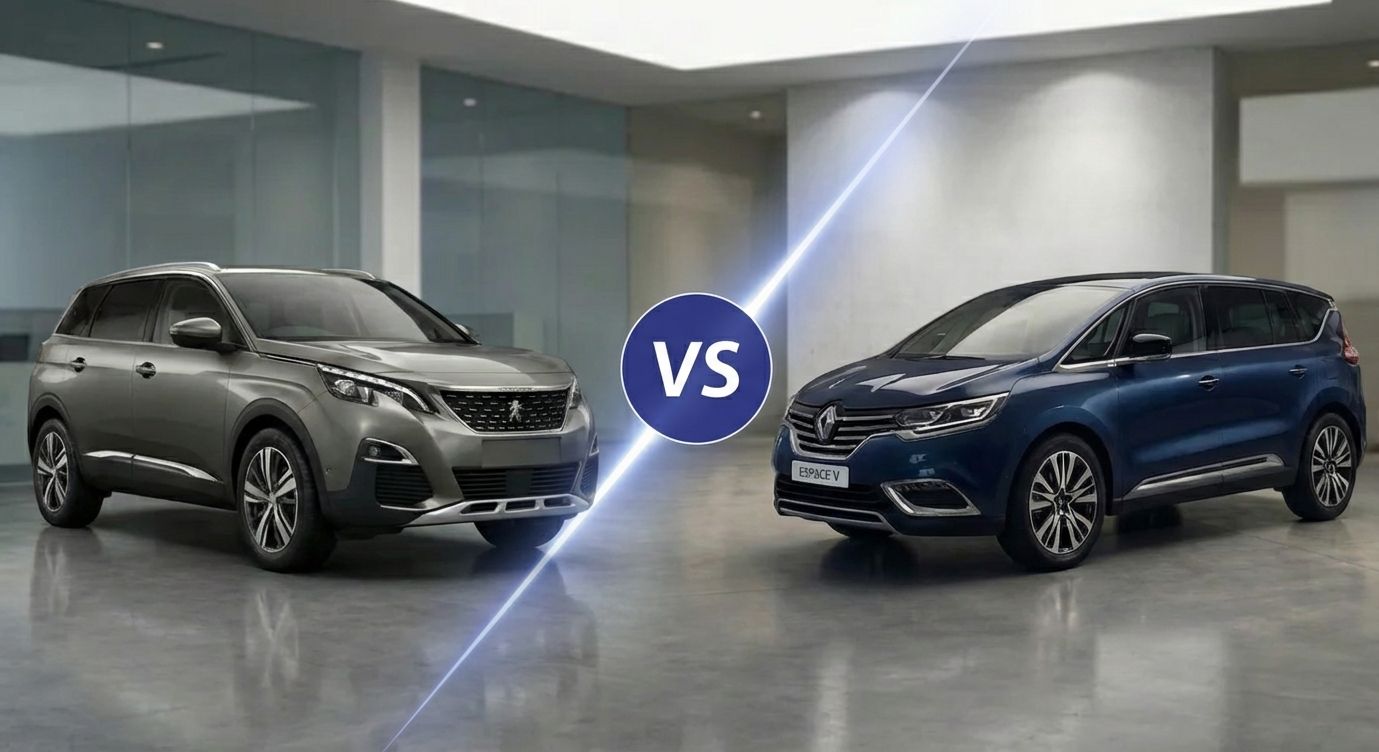
Detailed comparison of Peugeot 5008 vs Renault Espace. We reveal real-world experiences, equipment details, and a clear verdict. Find out which 7-seater car to choose.
Apr 13, 2026