Car battle
Citroën C5 Aircross vs. Škoda Karoq: Complete comparison 2026
Hesitating between the Citroën C5 Aircross and the Škoda Karoq? Our detailed comparison and verdict will help you choose the right SUV for your needs.
Apr 8, 2026
Articles
Car battle
Hyundai Kona vs. Renault Captur: Which urban SUV to choose? A detailed used car comparison, equipment evaluation, and a clear verdict to make your choice easier.
April 16, 2026
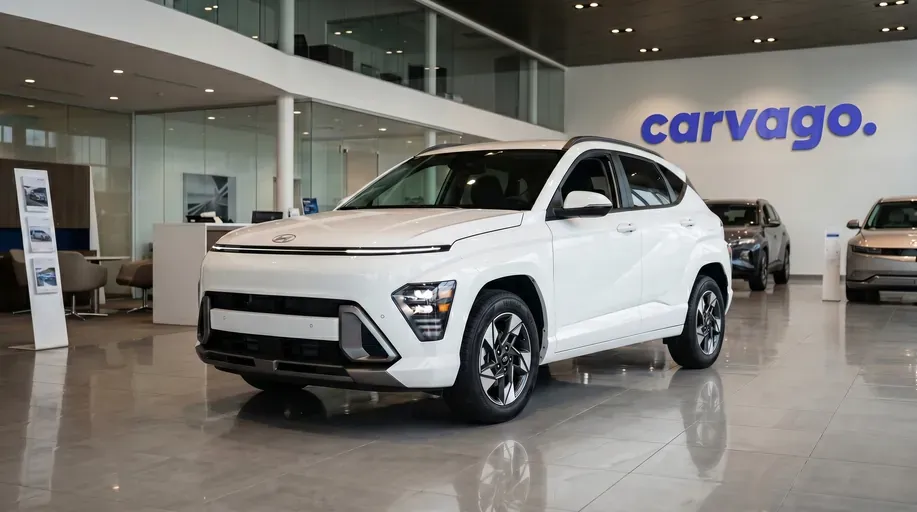
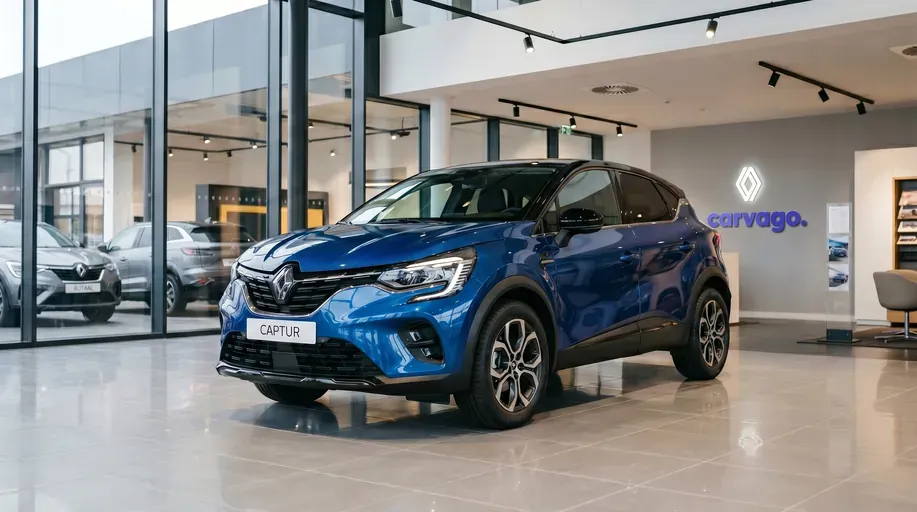
The South Korean compact SUV Hyundai Kona, which is also sold in selected global markets under the alternative names Hyundai Kauai or Encino, impresses at first glance with its bold design and a diverse range of reliable engines. Its European challenger, the Renault Captur, also known in other regions as the Renault Kaptur or Renault Samsung QM3, relies instead primarily on renowned French elegance, interior versatility, and high driving comfort. The following comparison will provide a detailed look at the strengths and weaknesses of both these popular cars and help you determine which one represents the smarter choice for a used car purchase.
When choosing a city crossover on the used car market, external dimensions play a key role, as they directly affect not only the car's maneuverability in narrow streets but also the resulting interior space. If we focus on models approximately four years old (i.e., the first-generation Hyundai Kona after its facelift and the second-generation Renault Captur), we find that although they fall into the same segment, their approach to body proportions differs slightly.
The second-generation Renault Captur, with its length of 4227 mm, is 22 millimeters longer than the standard version of the Hyundai Kona (4205 mm). Furthermore, the French model has a clear advantage in wheelbase, which measures 2639 mm compared to 2600 mm for its South Korean competitor. These nearly 40 extra millimeters in favor of the Renault represent a noticeable difference, which in practice translates into slightly more generous legroom for rear-seat passengers and contributes to a calmer and smoother ride on the highway.
In terms of width and height, on the other hand, the differences between the two cars are almost negligible. The Kona, with its 1800 mm, exceeds the Captur in width by a symbolic 3 millimeters, meaning both cars offer identical maneuverability when parking in narrow spots or underground garages. From an overall perspective of external dimensions, the Captur represents a slightly more family-oriented car with an emphasis on maximizing longitudinal space, while the Kona relies more on a more compact, sportier, and easier-to-handle format.
| Parameter | Hyundai Kona SUV | Renault Captur SUV |
|---|---|---|
| Width (mm) | 1800 | 1797 |
| Length (mm) | 4205 - 4215 | 4227 |
| Height (mm) | 1565 - 1570 | 1576 |
| Wheelbase (mm) | 2600 | 2639 |
When choosing a compact city SUV, the luggage compartment volume is often one of the deciding factors, especially if the car is to serve as a full-fledged family vehicle. The differences in practicality and overall spaciousness between the Hyundai Kona and Renault Captur models are quite fundamental and can easily influence your final decision. While one car offers above-standard variability, the other sticks to a more conservative but still very usable approach.
The second-generation Renault Captur clearly excels in this regard, primarily thanks to its practical sliding rear bench. This allows the base boot volume to be changed in an impressive range from 422 to 536 litres, depending on whether you prefer legroom for passengers or space for cargo. After folding the rear seats, you get a total space of up to 1275 litres. In contrast, the first-generation Hyundai Kona (in the facelifted version from 2021–2023) offers a standard volume of 374 litres, which can be increased to 1156 litres after folding the backrests. In terms of family usability, the Captur thus provides space for several extra suitcases, which is absolutely ideal for large weekend shopping trips and longer summer holidays. While the Kona's boot lags behind on paper, it remains perfectly sufficient for normal daily use and weekend trips for two.
It is also important to take into account that both manufacturers offer these models with popular electrified powertrains, which take up part of the luggage space due to the placement of traction batteries. In the case of the fully electric Hyundai Kona Electric, the standard boot shrinks to 332 litres. You have to make a similar compromise with the Renault Captur, where the base volume for the full-hybrid version (E-Tech) ranges between 326 and 440 litres, and for the plug-in hybrid variant, it even drops to 265 to 379 litres. If you are looking for maximum transport capacity in this otherwise compact segment, the Renault Captur with a standard internal combustion engine will be the clear winner, while the Kona remains a reliable choice for drivers with slightly lower cargo-moving requirements.
| Parameter | Hyundai Kona SUV | Renault Captur SUV |
|---|---|---|
| Base volume (l) | 374 | 422 - 536 |
| Max. volume with seats folded (l) | 1156 | 1275 |
If you are looking for a roughly four-year-old used SUV with an emphasis on maximum family practicality, the Renault Captur wins hands down over the Hyundai Kona thanks to its sliding rear bench and significantly larger luggage compartment.
While trailer weight might not be the primary parameter for most buyers of compact city SUVs, it plays a crucial role in terms of overall towing capacity and everyday practicality. Looking at approximately four-year-old used cars from around 2022, the basic versions with internal combustion engines offer very balanced values for both rivals. The second-generation Renault Captur and the first-generation Hyundai Kona (post-facelift) can both tow a braked trailer weighing 1,200 kg as standard. This capacity is perfectly sufficient for weekend shopping of bulkier materials or longer holidays with a smaller caravan. The unbraked trailer weight for conventional combustion engines is 660 kg for the Captur, while the Kona can handle exactly 600 kg.
Significant differences emerge, however, when looking at maximum values and alternative powertrain specifications. While the top-of-the-line sporty Hyundai Kona N Performance raises the maximum braked trailer weight to an impressive 1,600 kg and the classic 1.6 GDI Hybrid can tow a great 1,300 kg, the Renault Captur loses out dramatically with its electrified versions. If you opt for the advanced Captur E-Tech powertrain (whether as a full hybrid or plug-in hybrid), you have to settle for a maximum limit of 750 kg. In practice, this means space for little more than a few extra suitcases in a small, light trailer. The lowest capacity of all is found in the pure electric variant of the first-generation Hyundai Kona, whose tow bar is rated for just 300 kg and serves more as a bicycle carrier.
In conclusion, a simple recommendation for choosing a used car can be drawn from these figures. Both vehicles in their basic petrol and diesel specifications will easily meet common leisure or travel tasks. However, if you plan to tow slightly heavier trailers in the future while also considering an efficient hybrid powertrain, the Hyundai Kona is a much more versatile and safer choice thanks to significantly fewer compromises in towing capacity.
| Model and engine | Braked trailer (kg) | Unbraked trailer (kg) |
|---|---|---|
| Hyundai Kona 1.0 T-GDI (88 kW) | 1200 | 600 |
| Hyundai Kona 1.6 T-GDI (146 kW) | 1250 | 600 |
| Hyundai Kona 1.6 GDI Hybrid (77 kW) | 1300 | 600 |
| Hyundai Kona N Performance (206 kW) | 1600 | 600 |
| Hyundai Kona Electric (64 kWh) | 300 | 300 |
| Renault Captur TCe 90 (67 kW) | 1200 | 660 |
| Renault Captur Mild Hybrid 140 (103 kW) | 1200 | 660 |
| Renault Captur E-Tech Plug-in Hybrid 160 (68 kW) | 750 | 750 |
When choosing a used city crossover about four years old (mostly generations around 2021–2023), the range of engines for both the Hyundai Kona and Renault Captur is exceptionally diverse, yet each manufacturer approaches the concept differently. While the South Korean carmaker attracts with full-fledged electric vehicles, the option of all-wheel drive, and a sharp sports version, its French competitor relies primarily on its advanced hybrid technology and offers a popular factory LPG installation for thrifty drivers. Both models thus cover a very wide range of needs. Choosing the right unit fundamentally affects not only the purchase price of the used car but also the vehicle's dynamics, real consumption, and future service costs.
The engine palette for the facelifted first generation of the Hyundai Kona (2021–2023) is so extensive that it will satisfy almost every customer. The base is a turbocharged one-liter three-cylinder 1.0 T-GDI with 88 kW (120 hp), which is perfectly sufficient for city and suburban traffic and was also available with mild-hybrid (MHEV) support. For more demanding drivers and more frequent highway travel, the 1.6 T-GDI four-cylinder tuned to 146 kW (198 hp) is ideal. Among other things, it belongs to a handful of engines in its class for which customers could pay extra for all-wheel drive (AWD). Those looking for maximum fuel savings in a traditional internal combustion package have at their disposal a successful classic full-hybrid 1.6 GDI Hybrid with a combined output of 104 kW, or a mild-hybrid diesel 1.6 CRDi (100 kW). However, production of the diesel variant ended shortly after the facelift and is already quite a rarity on the four-year-old used car market. A huge trump card of the Kona model is both popular purely electric versions, with a battery capacity of 39.2 kWh (100 kW) or a larger 64 kWh (150 kW). Even among today's competitors, these are characterized by excellent efficiency and a long range. The absolute peak for enthusiasts is the ultimate sports variant Kona N Performance with 206 kW (280 hp).
| Engine type | Fuel | Power (kW) | Torque (Nm) | Transmission |
|---|---|---|---|---|
| 1.0 T-GDI | Petrol (incl. MHEV) | 88 | 172 | 6MT / 7DSG / 6iMT |
| 1.6 T-GDI | Petrol | 146 | 265 | 7DSG |
| 1.6 CRDi | Diesel (MHEV) | 100 | 280–320 | 6iMT / 7DSG |
| 1.6 GDI Hybrid | Hybrid (Petrol) | 104 | 265 | 6DCT |
| Electric (39.2 kWh) | Electricity | 100 | 395 | 1AT |
| Electric (64 kWh) | Electricity | 150 | 395 | 1AT |
| N Performance | Petrol | 206 | 392 | 8DCT |
The second-generation Renault Captur (in versions from 2021–2023) does not use all-wheel drive or purely electric drive. Instead, it focuses on achieving the lowest possible costs for the average user and streamlining everyday city driving. The range opens with the more modest turbocharged three-cylinder TCe 90 with 67 kW (91 hp). However, its TCe 100 LPG (74 kW) variant has become an absolute phenomenon on the market. It allows burning both petrol and liquefied petroleum gas without additional aftermarket modifications, making it a dream choice for drivers with a tight budget or higher mileage. More spirited driving is provided by advanced turbocharged four-cylinder Mild Hybrid 140 and 160 (with 103 and 116 kW), paired primarily with the lightning-fast EDC dual-clutch transmission. For those interested in electrification, Renault has prepared its innovative E-Tech systems with a unique multi-mode automatic transmission, which combines a non-turbocharged naturally aspirated 1.6-liter engine and a set of electric motors. Available are the classic full-hybrid E-Tech Hybrid 145 (105 kW) and the E-Tech Plug-in Hybrid 160 (116 kW) version, whose battery can be charged from a socket to safely cover emission-free city driving. Let's add that until 2020, a very economical four-cylinder diesel BLUE dCi 115 was also in the range, but Renault discontinued its installation, and therefore you will no longer commonly find it in search engines among four-year-old used cars.
| Engine type | Fuel | Power (kW) | Torque (Nm) | Transmission |
|---|---|---|---|---|
| TCe 90 | Petrol | 67 | 160 | 6MT |
| TCe 100 LPG | Petrol / LPG | 74 | 170 | 6MT |
| Mild Hybrid 140 | Petrol (MHEV) | 103 | 260 | 6MT / 7EDC |
| Mild Hybrid 160 | Petrol (MHEV) | 116 | 270 | 7EDC |
| E-Tech Hybrid 145 | Hybrid (Petrol) | 105 | 250 | Multi-mode AT |
| E-Tech Plug-in Hybrid 160 | PHEV (Petrol) | 116 | 300 | Multi-mode AT |
Both engine lines target different priorities. The Hyundai Kona will better suit those interested in a sharp and aggressive drive with engines like the 1.6 T-GDI or N Performance, enthusiasts preferring top-tier 100% electric vehicles with the assurance of a long range, and drivers occasionally traveling to mountain conditions (thanks to the availability of 4x4 drive). In contrast, the Renault Captur offers a maximally efficient and rational portfolio aimed primarily at suburban and urban transport with an emphasis on the cheapest possible kilometer of driving – whether thanks to the great factory LPG conversion or the clever solution in the form of E-Tech hybrids.
Hyundai Kona will thrill more demanding drivers with powerful petrol engines, great electric vehicles, and all-wheel drive, while the Renault Captur scores with excellent everyday efficiency led by the phenomenally economical LPG version and sophisticated hybrids.
Choosing the right engine is absolutely crucial for long-term satisfaction with the vehicle. The following recommendations for used cars around four years old were compiled based on the real-world experience of mechanics, actual fuel consumption, and documented operational reliability. Both manufacturers took slightly different paths with these small crossovers. While the Hyundai Kona scores with sophisticated hybrid technology, the Renault Captur relies primarily on proven and refined turbocharged units.
As the best and most sensible choice from the range of used first-generation Kona vehicles, we recommend the full hybrid 1.6 GDI Hybrid powertrain. In terms of availability, this powertrain in the recommended version for the first generation ceased production in the spring of 2023 with the arrival of the second generation; however, for those interested in a four-year-old used car, it represents the absolute ideal. This system cleverly combines a reliable naturally aspirated petrol four-cylinder with an electric motor and a six-speed dual-clutch transmission. It is the most balanced compromise in the entire range – unlike the more powerful, purely turbocharged 1.6 T-GDI engine, there is almost no risk of premature timing chain stretching or significant carbon buildup issues during frequent short trips.
The technical advantage of this powertrain is its fantastic fuel efficiency. Real-world consumption in normal traffic easily stays within the range of 4.5 to 5 liters per 100 km. Furthermore, the electric motor's assistance smooths out the performance of the DCT dual-clutch transmission, which can occasionally jerk unpleasantly in conventional combustion versions when crawling in city traffic jams.
For the second generation of the Renault Captur, our clear favorite is the 1.3 TCe four-cylinder, mostly supplied under the designation TCe 140 GPF and later modernized to Mild Hybrid 140. Although the older TCe 140 GPF specification (sold roughly between 2020–2022) is no longer fitted to new cars due to emission updates, it is one of the most sought-after highlights on the used car market. Mercedes-Benz participated in the development of this engine, and the result is mechanically excellent. Compared to the basic one-liter three-cylinder (1.0 TCe), the engine offers diametrically better refinement, absolutely smooth operation without vibrations, and confident pull.
The engine's strongest weapon is its admirable robustness and versatility. The power delivery curve is very linear, and the engine does not suffer from the "teething troubles" typical of the older era of small downsized units. Whether with a manual or in combination with the seven-speed EDC dual-clutch automatic, you get a fast car by the standards of its class, whose long-term consumption easily stays slightly below 6 liters of petrol per 100 km.
When choosing a used car around four years old, real-world fuel consumption is one of the key parameters. As is common in the automotive world, official laboratory values provided by manufacturers in catalogs often differ significantly from real-world figures. For this reason, when comparing the Hyundai Kona (first generation after facelift) and Renault Captur (second generation), we focused on real-world user data from community and crowdsourcing portals like Spritmonitor. This gave us a much more accurate picture of how much these popular city SUVs consume in daily operation.
| Model and engine | Average consumption (l/100 km) |
|---|---|
| Diesel engines | |
| Renault Captur 1.5 Blue dCi 115 (85 kW) | 4.8 |
| Hyundai Kona 1.6 CRDi (100 kW) | 5.4 |
| Hybrid engines (HEV and PHEV) | |
| Renault Captur E-Tech Plug-in 160 (118 kW) | 4.6 |
| Renault Captur E-Tech Hybrid 145 (105 kW) | 5.1 |
| Hyundai Kona 1.6 GDI Hybrid (104 kW) | 5.3 |
| Petrol engines | |
| Renault Captur 1.0 TCe 90 (66 kW) | 6.2 |
| Hyundai Kona 1.0 T-GDI (88 kW) | 6.5 |
| Renault Captur 1.3 TCe 140 (103 kW) | 6.8 |
| Hyundai Kona 1.6 T-GDI (145 kW) | 7.2 |
Several interesting trends emerge from the real-world figures. Small-displacement turbocharged three-cylinder engines, such as the 1.0 T-GDI in the Kona or the 1.0 TCe in the Captur, do not deliver the expected savings in heavier SUV bodies. In traffic, they mostly stay above the six-liter mark, and if they are more heavily loaded at highway speeds, their consumption rises more steeply than that of larger engines. Interestingly, the Renault with the more powerful 1.3 TCe 140 four-cylinder consumes on average only about half a liter more fuel than the basic one-liter engine, but offers disproportionately better driving dynamics. In terms of overall efficiency, full hybrid powertrains (HEV) clearly lead. Both Renault's E-Tech system and Hyundai's 1.6 GDI Hybrid powertrain can push the average close to the five-liter mark. While diesel variants maintain excellent economy below five liters, they are a rather rare and gradually disappearing choice on today's used car market for these model years.
For the typical user looking for a car for daily commuting and city driving, the aforementioned classic hybrids make by far the most sense. They excel especially in morning traffic jams and constant stop-and-go driving, where they can cover a significant part of the route purely on electricity with zero petrol consumption. If, on the other hand, you spend a lot of time on the highway or regularly drive long distances across the country, the more powerful petrol versions will offer you much better driving comfort and power reserves with acceptable fuel consumption. Caution is advised with the plug-in hybrid Captur (E-Tech 160) – it only makes clear economic sense if you have the opportunity to charge the car regularly at home or at work. With a long-term discharged battery, it simply becomes a slightly heavier petrol car.
In the end, fuel consumption is not the main and only argument that should definitively settle the decision between these two cars. Both manufacturers offer very similar operating costs in their corresponding engine versions. The choice should therefore depend more on your usual route profile – while the Hyundai Kona scores with its robust and excellently tuned classic hybrid, the Renault Captur offers a more diverse range of reliable petrol four-cylinder engines, which you will appreciate especially outside the city limits.
When choosing a roughly four-year-old used compact SUV (2021 and 2022 models), both the Hyundai Kona and Renault Captur fall within an attractive and relatively affordable price range. However, the fundamental difference lies in the overall range of powertrains, which directly dictates the price ceiling for both used models.
The Kona holds its value slightly better on the secondary market thanks to its reputation as a mechanically robust vehicle and its very diverse range of powertrains.
The second-generation Captur is very popular on the used car market, widely available, and generally offers a somewhat more favourable entry price for buyers than its Asian competitor.
| Vehicle Category / Trim | Hyundai Kona | Renault Captur |
|---|---|---|
| Base models (one-litre engines) | from €14,000 | from €12,000 |
| Higher trim and more powerful petrol | €16,000 – €19,000 | €14,000 – €17,000 |
| Hybrids (HEV) / Plug-in (PHEV) | €18,000 – €21,000 | €18,000 – €20,000 |
| Fully electric models (BEV) | €21,000 – €29,000 | Unavailable (PHEV only) |
Overall, the Renault Captur is a more affordable entry point into the world of modern city crossovers, while the Hyundai Kona makes sense for buyers looking for a wide range of advanced powertrains and who insist on full electromobility.
When comparing the safety of the Hyundai Kona and Renault Captur on the used car market, you will encounter seemingly identical news in both cases: both vehicles earned a maximum five-star rating in independent Euro NCAP tests at the time. However, it is necessary to put these results into the correct chronological context. Euro NCAP testing protocols are constantly evolving and becoming stricter every year. While older methodologies focused primarily on structural strength and protection during the impact itself, newer ones place much greater emphasis on active accident prevention, advanced cyclist detection, or vehicle reactions at complex intersections. For this reason, percentage scores from different years cannot be directly compared.
Hyundai Kona, which in its first-generation form (including the facelift) corresponds to roughly four-year-old used cars, underwent crash tests in 2017 with a five-star result. The car's construction provides very solid protection for adults (87%) and children (85%). However, the 60% result in the safety assist category reveals the older certification date – the standards of the time simply did not require such a comprehensive range of active systems as today. Furthermore, from the perspective of current Euro NCAP rules, the validity of this specific five-star rating has already formally expired. For the full picture, let's add that the latest generation of the Kona model from 2023 received four stars according to completely new and extremely strict rules.
Renault Captur of the second generation underwent Euro NCAP testing in 2019 and also took home the full five stars. Since it was tested two years later than the Kona, it had to deal with significantly more demanding testing protocols. All the more impressive is the top rating of 96% for adult occupant protection. The substantially more modern architecture is also reflected in higher scores for vulnerable road user protection (75%) and safety assistance systems (74%), where the Captur benefited from the deployment of then very innovative autonomous braking with more precise pedestrian and cyclist detection. Here, too, development moves forward – the latest version of related technology in 2024 was rated four stars in current, even stricter tests.
In terms of safety for four-year-old used cars, both SUVs represent a reliable choice; however, the Renault Captur offers an overall more comprehensive and modern protection package. Its platform was tested according to the stricter 2019 standards, which in practice means it has more advanced active assistants that can support you better and more actively in a crisis situation.
| Parameter | Hyundai Kona | Renault Captur |
|---|---|---|
| Year of testing | 2017 | 2019 |
| Adult occupant protection | 87 % | 96 % |
| Child protection | 85 % | 83 % |
| Vulnerable road user protection | 62 % | 75 % |
| Safety assistance systems | 60 % | 74 % |
Although both cars offer excellent passive safety with a five-star foundation, the Renault Captur benefits from more advanced assistance systems due to its more recent testing date and represents a slightly safer choice.
In addition to standard equipment, each model offers several unique features and clever solutions that can be decisive for customers in everyday use. Both cars approach innovation in their own way and focus on different priorities.
The South Korean representative has long focused on rich technological equipment, sophisticated connectivity, and a wide range of alternative powertrains.
Renault traditionally scores with its focus on families, interior versatility, and an elegant look with a touch of French charm.
Wide range of reliable powertrains, including a very efficient fully electric version
Intuitive infotainment with retained physical buttons for climate control
Distinctive and bold exterior design that easily stands out in traffic
Above-average reliability backed by a five-year factory warranty (for cars with a clear service history)
Confident handling with good road holding in corners
Smaller base luggage capacity (374 liters) compared to direct competitors
Limited legroom and headroom in the rear seats for taller passengers
Firmer suspension tuning that transmits more jolts on broken country roads
Presence of cheaper-feeling hard plastics in the interior of lower trim levels
Hyundai Kona is an ideal choice for individuals or couples looking for a technologically advanced and reliable crossover with a distinctive look. Its stiffer chassis and confident handling will be especially appreciated by drivers who enjoy a more spirited drive, while the wide range of electrified powertrains makes sense for economical urban and suburban operation.
Excellent practicality and versatility thanks to the standard sliding rear bench
Class-leading luggage capacity (up to 536 liters with the seats slid forward)
High-quality interior craftsmanship with a large proportion of soft-touch materials
Very comfortable suspension setup ideal for relaxed travel and smoothing out city bumps
Elegant design with wide personalization options and two-tone paintwork
Slower response and occasional software glitches of the Easy Link multimedia system
Less smooth behavior of the innovative gearbox in E-Tech hybrid versions when crawling at low speeds
More pronounced body roll in corners and detached steering without sporty ambitions
Poor rear-quarter visibility due to massive rear pillars
Renault Captur excels as a versatile and comfortable family crossover that scores primarily with its clever use of space and premium-feeling cabin. It will mainly appeal to drivers with a calmer driving style who require maximum utility, a large trunk, and comfort even on longer journeys from a used car.
Based on long-term owner experience, service statistics, and findings from our thorough physical inspection of a used car, we have compiled an overview of the most common problems of these two popular crossovers.
The first-generation Hyundai Kona (especially facelifted models from 2020 and newer) is considered a very reliable vehicle; however, even with used cars around four years old, specific technical issues can occur.
The Hyundai Kona pleases owners with above-average mechanical durability, but caution is required when choosing used cars with a dual-clutch transmission and petrol versions driven mainly in the city.
The second-generation Renault Captur represents a huge leap in build quality compared to its predecessor, yet it shares several typical ailments that appear most frequently in roughly four-year-old used cars.
The Renault Captur is a practical and well-designed crossover, which, however, experiences infotainment software "strikes" and premature play in the front axle more often than average.
When buying a used car, a thorough inspection is key. Here are several specific points to focus on for these two models after roughly four years of operation, so that you are not caught off guard by unexpected expenses in the future. An independent physical car inspection will always give you peace of mind before buying.
Renault Captur offers a significantly larger trunk, with a volume ranging from 422 to 536 liters thanks to sliding rear seats. Hyundai Kona has a smaller luggage compartment with a basic volume of 374 liters and lacks the option of a sliding rear bench. For families and transporting bulkier cargo, the French representative is a much more practical choice.
In terms of ride comfort, the Renault Captur wins, featuring a softer chassis tuning that filters city bumps very well. The Hyundai Kona has stiffer suspension, which ensures more agile behavior in spirited cornering but can feel less compliant on poorer surfaces. For quiet daily commuting, the French model is more pleasant in terms of chassis.
Both cars have a rich selection of alternative powertrains on the used car market, satisfying most buyers looking for a more economical drive. The Kona excels primarily with its fully electric version with a long range and a reliable full-hybrid powertrain. The Captur, on the other hand, relies on the E-Tech system, which is available, among other things, as a very efficient plug-in hybrid.
A major advantage of the Korean car is the standard five-year unlimited mileage warranty provided directly by Hyundai. Its French competitor usually offered shorter factory coverage, although its gasoline engines are considered very reliable in this generation. If you are buying a car roughly four years old, the Kona model may still be under the original factory warranty.
The Renault Captur provides a generally airier cabin in the rear with generous legroom and headroom. The Kona is relatively cramped in the rear seats, which will be felt especially by taller adult passengers on longer journeys. A significant advantage of the Renault is the sliding rear bench, which allows for flexible adjustment of space between passengers and luggage according to current needs.
Choosing between four-year-old used Hyundai Kona and Renault Captur depends primarily on your daily priorities and space requirements. While the South Korean Kona appeals more to individuals and couples looking for agile driving characteristics, bold design, and a wide range of modern powertrains including fully electric ones, the French representative excels in family practicality. Thanks to its unique sliding rear bench, exceptionally large trunk, and overall more comfortable chassis, the Renault Captur is an absolutely ideal choice for customers who prefer maximum versatility and comfort even on longer journeys. Both compact SUVs represent a rational and reliable purchase, with the Captur making the most sense for those focused on everyday utility, while the Kona will please more dynamically oriented drivers and tech enthusiasts.
Sources: ADAC, e15.cz, forbes.cz, autotechnik.cz, autohome.cz, classiccars.cz
This article was prepared using artificial intelligence tools. The section guarantor is Petr Dušek.
Hesitating between the Citroën C5 Aircross and the Škoda Karoq? Our detailed comparison and verdict will help you choose the right SUV for your needs.
Apr 8, 2026
Detailed comparison of Peugeot 3008 vs Toyota RAV4. Discover real-world experiences with used cars, a comparison of fuel consumption, reliability, and a verdict that will make your choice easier.
Apr 2, 2026
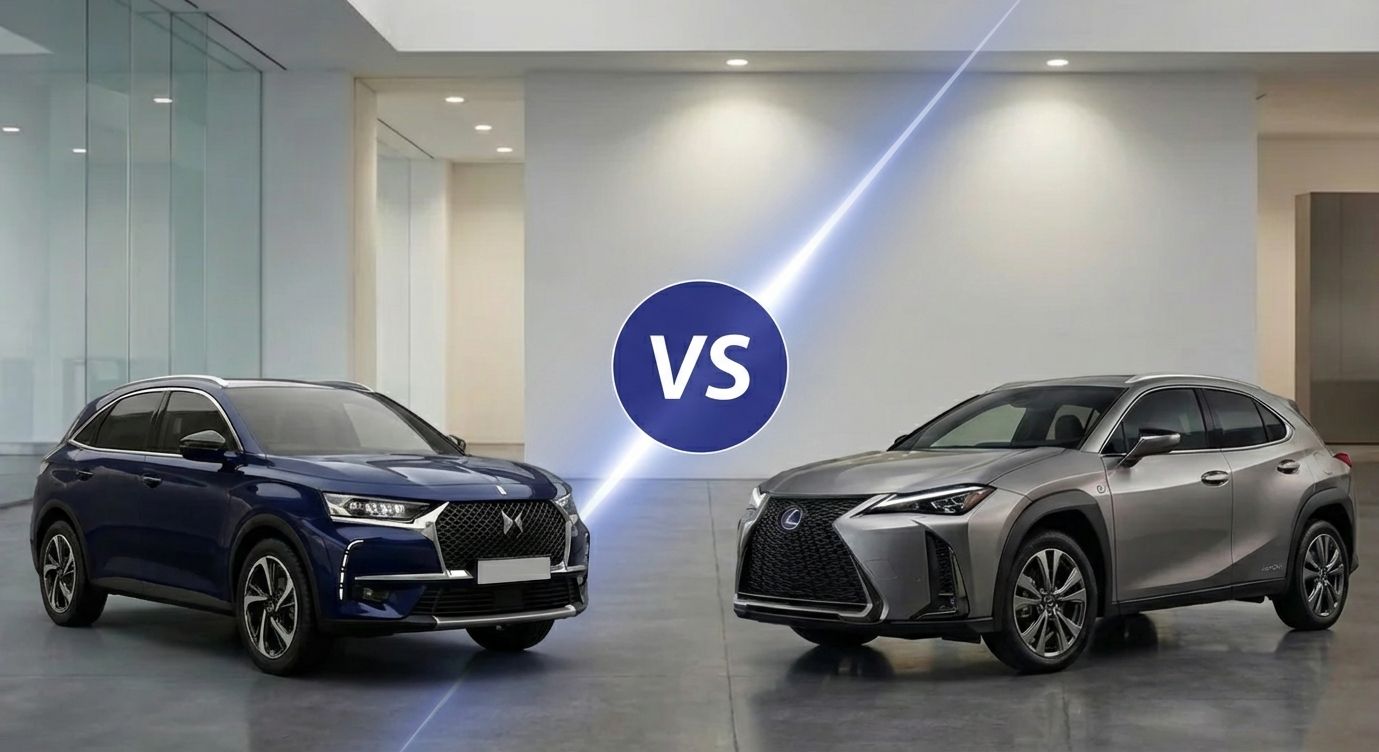
Detailed comparison of DS 7 (Crossback) vs Lexus UX. Discover the differences in comfort, equipment, and reliability. Read our verdict and choose the best SUV.
Apr 8, 2026