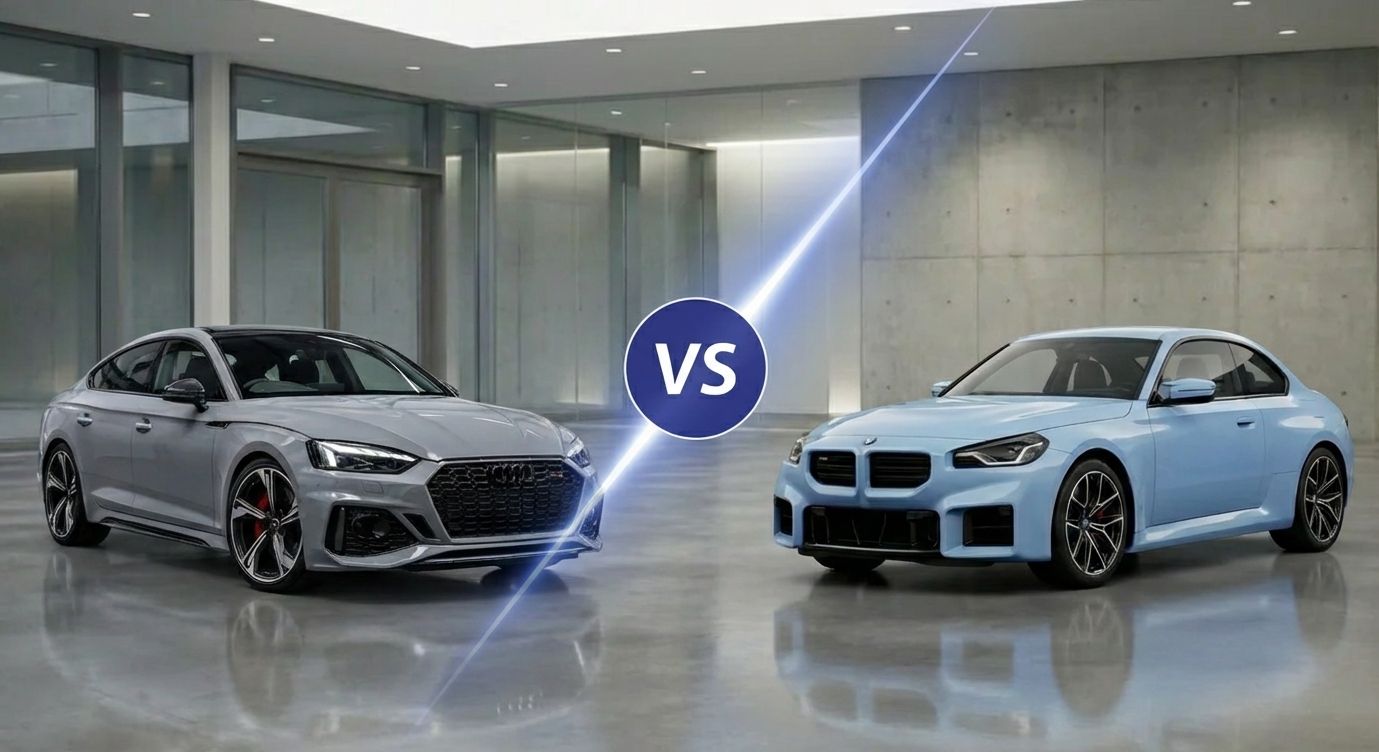
Car battle
Audi RS 5 vs. BMW M2: Complete comparison 2026
Audi RS 5 vs. BMW M2. A detailed comparison of performance, driving dynamics, and practicality. Find out which sports coupe is the right choice for you.
Apr 14, 2026
Articles
Car battle
Detailed comparison of the Hyundai i30 N vs Volkswagen Golf GTI. Find out which hot hatch offers better performance, equipment, and everyday usability. Read the verdict.
May 15, 2026
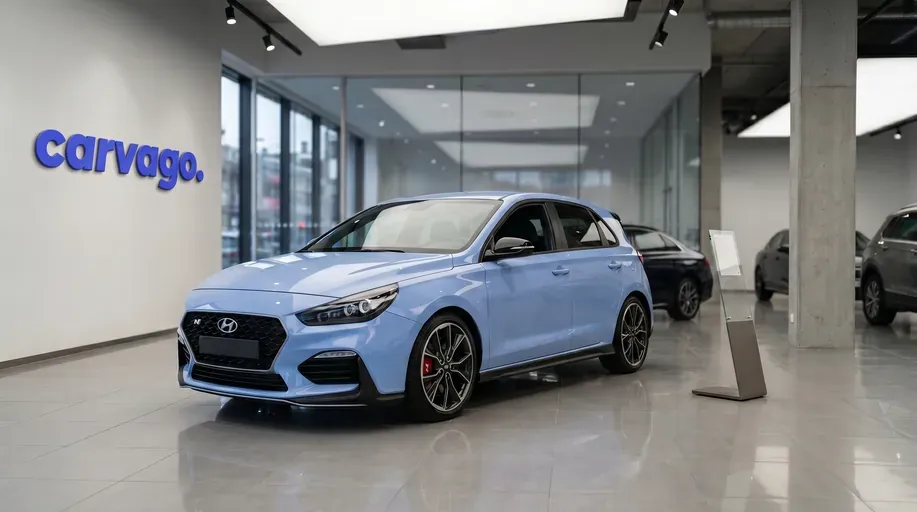
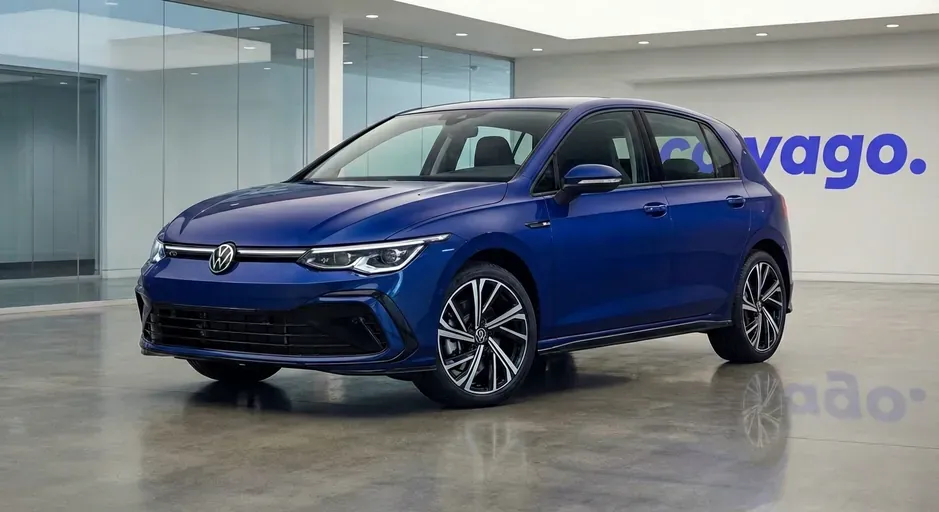
Hyundai i30 N represents a fierce and uncompromising Korean challenger that, thanks to its precisely tuned chassis and raw driving character, has quickly won over the automotive enthusiast community. On the other side of the barricade stands the legendary Volkswagen Golf GTI (known simply as the Volkswagen GTI in some markets, such as North America), a seasoned pioneer of the "hot hatch" category that has for generations relied on a perfect balance between sporting performance and everyday practicality. The following comparison will show you in detail which of these two exceptional compact sports cars represents the best choice for your needs on the used car market.
When comparing the external dimensions of both cars, which rank among the most sought-after representatives of the so-called hot hatch category on the used car market from roughly four years ago, we find that the Hyundai i30 N is slightly longer in its standard body version than the Volkswagen Golf GTI. The third-generation South Korean model measures 4340 mm in length, meaning it is 53 mm longer than its German competitor (4287 mm). Hyundai also boasts a longer wheelbase of 2650 mm, while the eighth-generation Golf offers a wheelbase of 2627 mm. This difference in wheelbase and overall length means that the i30 N can offer the crew slightly more generous longitudinal interior space and more stable behavior at high highway speeds, while the shorter Golf GTI noticeably excels in agility and makes parking in congested urban areas easier.
Looking at the height and width of both cars, the tables turn slightly in favor of Volkswagen in terms of overall interior airiness. At 1478 mm, the Golf GTI is a full 33 mm taller than the standard five-door Hyundai i30 N (1445 mm). Conversely, the width of both vehicles is almost identical – at 1795 mm, the Hyundai is wider by a completely negligible 6 mm. The taller body construction of the Golf GTI thus brings an airier feel to the cabin and slightly more headroom, while the slightly lower and visually wider i30 N naturally benefits from a lower center of gravity, which is a key factor for a sport-oriented car for more direct and aggressive driving characteristics in fast corners.
A fundamental difference when choosing the ideal sports car is the range of body versions themselves. While the eighth-generation Golf GTI is represented on the used car market exclusively as a classic five-door hatchback, Hyundai managed to satisfy a wider range of drivers and supplied the i30 N model also in a very attractive Fastback variant, which conceptually falls among liftbacks. This version extends the overall length of the car to 4455 mm and, conversely, reduces the height to just 1419 mm, creating a fresh aerodynamic silhouette hiding a slightly larger and more accessible luggage compartment. Thanks to this exclusive alternative, Hyundai gains a decisive advantage with those interested parties who require a combination of sporty driving dynamics, a more elegant sloping rear, and slightly higher utility value in an everyday car.
| Parameter | Hyundai i30 N Hatchback | Volkswagen Golf GTI Hatchback | Hyundai i30 N Liftback |
|---|---|---|---|
| Length (mm) | 4340 | 4287 | 4455 |
| Width (mm) | 1795 | 1789 | 1795 |
| Height (mm) | 1445 | 1478 | 1419 |
| Wheelbase (mm) | 2650 | 2627 | 2650 |
When choosing a hot hatchback, you don't just consider performance and driving characteristics, but often also everyday practicality. For many drivers, models like the Hyundai i30 N and Volkswagen Golf GTI represent the only car in the family, which must handle not only weekend fun on twisty backroads but also trips on holiday or a big grocery run. Trunk volume thus becomes a surprisingly important factor, with both manufacturers approaching it with a different philosophy and different body style offerings.
Looking at the classic five-door hatchbacks from the years commonly available on the used car market today (the third-generation i30 N after the facelift and the eighth-generation Golf GTI from around 2022), Hyundai offers slightly more generous space on paper. Its trunk holds 395 liters in the basic configuration, while the Golf GTI provides a slightly more modest 374 liters. In practice, this difference manifests as space for a few smaller bags or one extra medium backpack. Hyundai maintains its lead even after folding the rear seats, where the volume grows to 1301 liters compared to 1230 liters for the Volkswagen. However, with the Korean car, one must account for a specific detail – behind the rear backrests, there is a massive steel body brace for better chassis rigidity. After folding the seats, this significantly restricts the opening and complicates loading bulky or long items. In this regard, the Golf GTI has a completely clear space and is much more user-friendly.
A major trump card for Hyundai, however, is the option to go for the Fastback body style. This highly elegant and practical liftback increases the basic trunk volume to an excellent 450 liters and offers as much as 1351 liters when fully folded. This makes the i30 Fastback N an incomparably more usable choice for families, sufficient for a large weekend shop as well as a longer shared holiday. You won't find a full-fledged station wagon for these specific performance versions (at VW, the spacious Variant version is reserved for the top-of-the-line Golf R, or the diesel GTD). It's also worth mentioning that if you were considering an electrified alternative from Volkswagen in the form of the plug-in hybrid Golf GTE, you must prepare for a significant space compromise. The battery installation reduces the basic trunk volume to just 273 liters. From the perspective of overall utility for the crew, the Asian hot-hatch thus offers a noticeably more comprehensive and smarter solution.
| Parameter | Hyundai i30 N Hatchback | Volkswagen Golf GTI Hatchback | Hyundai i30 N Liftback | Volkswagen Golf GTI Liftback |
|---|---|---|---|---|
| Base volume (liters) | 395 | 374 | 450 | - |
| Max volume with seats folded down (liters) | 1301 | 1230 | 1351 | - |
While the Golf GTI pleases with much better accessible and unblocked space after folding the rear backrests, the Hyundai i30 N clearly scores by offering the significantly more voluminous and practical Fastback body style.
While the primary mission of hot hatches isn't towing heavy loads, the ability to attach a trailer significantly expands their everyday usability. For many used car buyers, this can be a very pleasant and decisive bonus. Both the Hyundai i30 N (3rd generation) and the Volkswagen Golf GTI (8th generation) surprise with an exceptionally solid towing capacity for their class.
For both of these rivals, the standard and maximum braked trailer weight is an identical 1600 kg. While for standard civilian and mild-hybrid engines (for example, the base Volkswagen Golf 1.0 eTSI or Hyundai i30 1.0 T-GDI 48V), the maximum towing capacity can drop to between 1000 and 1300 kg, the top-tier N and GTI versions maintain full values without compromise thanks to their stronger construction and powerful engines. A minor difference can only be found in the case of an unbraked trailer, where the Golf GTI can handle 710 to 730 kg depending on the specific equipment, while for the i30 N, the limit is set at exactly 700 kg.
In practice, this means that both cars can handle towing a smaller caravan, a motorcycle trailer, or an additional utility trailer without the slightest problem. They thus provide the desired space for several extra suitcases, which is a capacity perfectly sufficient for weekend shopping or a longer holiday. In terms of towing capability, there is a rare tie between these two hot hatches, and other criteria will have to decide the final vehicle choice.
| Model and motorization | Braked weight of trailer (kg) | Unbraked weight of trailer (kg) |
|---|---|---|
| Hyundai i30 N 3rd generation (184–206 kW) | 1600 | 700 |
| Volkswagen Golf GTI 8th generation (180–195 kW) | 1600 | 710–730 |
Both models rely on the proven recipe of front-wheel-drive hot hatches with turbocharged 2.0-litre four-cylinder engines, but their approach to powertrains differs slightly. From the perspective of someone interested in a car approximately four years old (manufactured around 2021 to 2022), these are exceptionally strong competitors. The Hyundai i30 N offers a rawer and more emotional experience, while the Volkswagen Golf GTI bets on a wider range of usability and more refined tuning. While the base versions of both cars offer very similar specifications (i30 N with 184 kW vs. Golf GTI with 180 kW), the gap widens slightly when looking at the top-tier variants. Hyundai offers the Performance model with 206 kW, whereas Volkswagen deploys the more powerful Golf GTI Clubsport, which delivers an impressive 221 kW. A key difference for many enthusiasts is also the approach to transmissions. Both cars can be found on the market with a six-speed manual. As for automatics, the Golf uses its lightning-fast seven-speed dual-clutch DSG transmission, while Hyundai introduced a new and very fast eight-speed N DCT transmission with wet clutches as part of its 2021 update.
Under the hood of the Hyundai i30 N, we find the turbocharged 2.0 T-GDI petrol four-cylinder engine. On the used car market for vehicles around four years old (i.e., from the post-facelift period), you will come across two main versions. The standard model provides 184 kW (250 hp) and 353 Nm of torque, paired exclusively with a six-speed manual transmission. However, the Performance version is much more popular and sought after. In pre-facelift cars, it offered 202 kW (275 hp), while in models produced from 2021 onwards, the power was increased to 206 kW (280 hp) and torque grew to 392 Nm. It was with this update that the excellent eight-speed dual-clutch N DCT transmission was added to the range, expanding the appeal of this track-focused car, although purists still often opt for the six-speed manual.
| Engine | Fuel | Power (kW) | Torque (Nm) | Transmission |
|---|---|---|---|---|
| 2.0 T-GDI | Petrol | 184 | 353 | 6MT |
| 2.0 T-GDI Performance | Petrol | 202 - 206 | 353 - 392 | 6MT / 8DCT |
The eighth-generation Volkswagen Golf GTI opted for the latest evolution of the iconic 2.0 TSI engine (from the EA888 generation). The cornerstone of the range for models from 2020 to 2024 is the version with 180 kW (245 hp) and 370 Nm of torque. This engine can be combined with either a classic six-speed manual or a fast seven-speed DSG transmission, which is quite dominant on the used car market. For drivers craving maximum dynamics and track times, Volkswagen prepared the sharper GTI Clubsport variant, which pushed power up to an impressive 221 kW (300 hp) and torque to an even 400 Nm. Unlike the standard GTI, the Clubsport version is supplied exclusively with the automatic dual-clutch DSG transmission.
| Engine | Fuel | Power (kW) | Torque (Nm) | Transmission |
|---|---|---|---|---|
| 2.0 TSI GTI | Petrol | 180 | 370 | 6MT / 7DSG |
| 2.0 TSI GTI Clubsport | Petrol | 221 | 400 | 7DSG |
While the Hyundai i30 N appeals to performance-oriented drivers with its uncompromising mechanics and emotive sound, the Golf GTI offers a more refined daily drive, which in the case of the Clubsport variant is enhanced by top-tier and uncompromising dynamics.
When choosing a hot hatch, the power unit is a key factor that determines not only dynamics but also long-term reliability and everyday usability. The Volkswagen Golf GTI relies on the legendary and meticulously refined EA888 engine, which is immensely popular on the tuning scene thanks to its significant hidden potential. Conversely, the Hyundai i30 N is powered by the more aggressively tuned Theta II unit, whose final development took place under the strict supervision of former BMW M division head Albert Biermann directly at the Nürburgring circuit. Below, we present the ideal engine options for roughly four-year-old used examples of both models in terms of performance, real-world fuel consumption, and maintenance requirements.
This engine option in the facelifted 3rd generation (available between 2021–2024) is by far the best and logically the most sought-after choice on the used car market. Compared to the base 250-hp version, it offers not only higher power and a massive 392 Nm of torque but, above all, essential chassis improvements – an electronically controlled limited-slip differential (e-LSD), larger brakes, and an active exhaust flap that provides a fantastic sound profile.
In the eighth generation (available since 2020), the base version of the 2.0 TSI (designated as EA888 evo4) represents the ideal compromise. Although Volkswagen also offers the sharper 300-hp Clubsport version, the standard 245 hp is perfectly sufficient for the vast majority of drivers. Combined with the standard seven-speed dual-clutch DSG transmission, the engine forms an exceptionally harmonious package.
Official fuel consumption figures for modern cars often appear very optimistic, but the reality of daily driving can paint a somewhat different picture. For both the Volkswagen Golf and the Hyundai i30, including its sporty N sub-brand, real-world fuel appetite depends primarily on how heavy your right foot is. To determine the actual values, we used technical databases as well as the popular community platform Spritmonitor.de, where owners share their long-term refueling records directly. We focused on the generations and engines that make the most sense in the market for roughly four-year-old used cars (i.e., the Golf 8th generation and the i30 3rd generation after the facelift).
| Model and engine | Average consumption (l/100 km) |
|---|---|
| Volkswagen Golf 2.0 TDI (85 - 110 kW) | 4.2 – 4.7 |
| Hyundai i30 1.6 CRDi 48V (100 kW) | 5.2 – 5.4 |
| Volkswagen Golf 1.0 eTSI (81 kW) | 5.1 – 5.5 |
| Hyundai i30 1.0 T-GDI (88 kW) | 5.5 – 6.2 |
| Volkswagen Golf 1.5 eTSI (110 kW) | 5.4 – 5.8 |
| Hyundai i30 1.5 T-GDI 48V (118 kW) | 5.6 – 6.5 |
| Volkswagen Golf GTI (180 kW) | 7.0 – 7.5 |
| Hyundai i30 N Performance (206 kW) | 8.0 – 8.4 |
Looking at the data interpretation, it is clear that diesel engines still securely hold the crown for swallowing highway miles. The Golf with the iconic 2.0 TDI can move just above the 4-liter mark without much difficulty, while Hyundai's 1.6 CRDi diesel requires slightly more fuel. A relatively surprising finding, though well-known to experienced motorists, is that downsizing in the form of 1.0-liter three-cylinder engines (1.0 T-GDI and 1.0 eTSI) does not save much fuel in the real world. Especially if you frequently leave the city limits, these engines start to work harder, and their consumption uncomfortably approaches that of the much more refined and powerful 1.5-liter four-cylinder units. The top-tier "hot hatch" variants are a chapter of their own. While the Golf GTI can maintain a civilized face and consume a reasonable seven and a half liters during a calm commute, the mechanically and acoustically very uncompromising 2.0-liter in the Hyundai i30 N Performance tends to be thirstier and is very reluctant to drop below 8 liters.
For the typical user looking for a versatile family or personal car, there is a clear recommendation: four-cylinder petrol units (especially the 1.5 eTSI in the Golf) represent the best compromise between very good flexibility and favorable operating costs, both for the city and for trips. Conversely, for those who spend hours a day in the car on long-distance travel, diesel engines remain an irreplaceable choice. Budget-conscious drivers must be particularly cautious with both "hot" versions, as a spirited weekend pace will reliably push the dashboard figures into double digits.
In the end, in terms of numbers, Volkswagen's powertrains come out a step more efficient, but the differences in common engines are often at the level of tenths of a liter. Fuel consumption, therefore, will likely not be the proverbial deciding factor that makes the final decision. Whether you are choosing an economical diesel for the company or picking an emotionally charged i30 N or a sophisticated Golf GTI for the weekends, the main role will ultimately be played by how well the character of the specific car suits you.
When choosing a used hot hatchback around 4 years old (mostly 2021–2022 models), both of these rivals fall into price ranges that make great sense from a price-to-performance perspective. Cars of this age have already experienced their largest initial depreciation, but the used car market perceives them differently.
For the South Korean lightning bolt in this age category, we are generally talking about post-facelift models, which brought power increased to 280 hp and introduced the popular eight-speed dual-clutch transmission (DCT) to the range.
In the case of Volkswagen, it is the eighth generation (Mk8), which brought a high level of interior digitalization and an exceptionally sophisticated adaptive chassis. The base version offers 245 hp, while the sharper Clubsport variant pushes the limit to an impressive 300 hp.
| Model (2021–2022) | Average starting price | Price for very well-maintained condition / higher version |
|---|---|---|
| Hyundai i30 N (Facelift, 280 hp) | €23,000 | €27,000 |
| VW Golf GTI Mk8 (245 hp) | €24,000 | €29,000 |
| VW Golf GTI Clubsport Mk8 (300 hp) | €31,000 | €35,000 |
Note: The prices listed are based on current used market offers, total mileage, and vehicle equipment.
Thanks to its cult status and reputation as a refined daily driver, the Volkswagen Golf GTI experiences a generally slower decline in value. Many buyers are willing to pay extra for the more premium finish and the legendary GTI badge on the secondary market. On the other hand, the Hyundai i30 N has become synonymous with fantastic driving characteristics and a rawer, genuine driving experience. Although it was usually slightly cheaper than the Golf when new, enthusiast demand for used units is very high, which keeps used prices firmly up. For the end buyer, the Hyundai currently represents a more attractive ratio of raw performance and equipment for the money spent.
While the Hyundai i30 N scores with an excellent price-to-performance ratio complemented by the remainder of a generous factory warranty, the Volkswagen Golf GTI relies on its cult reputation, which ensures a slower and more stable depreciation.
Both compared vehicles – or rather their base standard models – achieved the maximum five-star rating in independent Euro NCAP crash tests. However, it is essential to consider the context and the specific year the tests were conducted. The Euro NCAP methodology is constantly evolving, and its requirements are becoming significantly stricter. The overall assessment gradually includes more complex frontal impact simulations, stricter tests for cyclist and pedestrian detection, or emergency scenarios at intersections. Percentage results from different years cannot be directly compared, as five stars from earlier years do not mean the same as five stars under the latest and much stricter protocols.
The base model of the Hyundai i30 family underwent Euro NCAP tests in 2017. At that time, the car received a full five stars and excelled particularly with a score of 88% for adult occupant protection and 84% for child protection. However, the scores for vulnerable road user protection (64%) and safety assist systems (68%) reflect the fact that the car was assessed according to older standards. For those interested in a used car, it is also an important fact that the formal Euro NCAP certification for this model year has already expired due to the age of the test. Although the i30 N boasts a very rigid body and a high-quality structural foundation, its active safety assistants no longer fully meet the strictest current requirements.
The eighth generation of the Volkswagen Golf, on which the sporty GTI version is technically based, was originally tested in 2019. However, the manufacturer continuously improved the safety level, which included, among other things, the implementation of an innovative center airbag preventing the heads of the driver and front passenger from colliding in a side impact. Thanks to these innovations, the model underwent a retest in 2022 according to significantly stricter protocols. Even in this very demanding assessment, the Golf confidently defended its five stars. Adult occupant protection reached 88% and child protection even 87%. A huge leap compared to older standards is visible in vulnerable road user protection (74%) and safety assistants (79%), where the advanced autonomous emergency braking (AEB) system and more modern active safety architecture are fully demonstrated.
From an overall safety perspective and real Euro NCAP assessment results, the Volkswagen Golf GTI clearly has the upper hand. Despite the seemingly identical five-star gain, its excellent 2022 result takes into account substantially stricter criteria and the integration of the latest protective features. While the Hyundai i30 N remains a robust car in terms of passive safety, its tests date back to 2017 and, in terms of today's strict benchmarks for active safety assistants, it simply lags behind its newer German competition.
| Parameter | Hyundai i30 N | Volkswagen Golf GTI |
|---|---|---|
| Year of testing | 2017 | 2022 |
| Adult occupant protection | 88 % | 88 % |
| Child protection | 84 % | 87 % |
| Vulnerable road user protection | 64 % | 74 % |
| Safety assist systems | 68 % | 79 % |
Although both cars offer solid passive safety, the Volkswagen Golf GTI with its 2022 certification provides a much more advanced set of active assistants that precisely match today's modern standards.
In addition to standard equipment, each of the models offers more than just basic functions, with both hot hatches taking a completely different approach to how they add value and enhance the daily driving experience.
Uncompromising and very fun driving characteristics with excellent steering response
Aggressive exhaust sound with characteristic pops and bangs in N mode
Rich standard equipment including an electronic limited-slip differential (e-LSD)
Choice of a great manual transmission or a fast dual-clutch automatic (on newer post-facelift models)
Very stiff and communicative body ideal for sporty driving
Stiffer suspension tuning even in the most comfortable mode, which reduces daily comfort
Cheaper interior materials with a higher proportion of hard plastics
Rear strut bar in the trunk slightly limits the practicality of the luggage compartment
Significantly higher fuel consumption at a dynamic pace compared to German competitors
The Hyundai i30 N is the ideal choice for enthusiastic drivers looking for rawer emotions, top-notch handling on backroads, and a genuine sporting experience. This model scores with a fantastic price-to-performance ratio, albeit at the cost of slight compromises in daily driving comfort and premium interior feel.
Perfect compromise between sporty dynamics and daily comfort
Significantly higher quality and better-insulated interior with a more premium feel
Excellent residual value and easy resale on the used car market
Better fuel consumption during normal commuting and highway travel
More advanced assistance and safety systems
Frustrating touch controls for the infotainment and on the steering wheel in the eighth generation
Less emotional and more refined driving character compared to the more aggressive Hyundai
Higher purchase price and the need to pay extra for many important equipment features
Lack of a more aggressive soundtrack in the standard version
The Volkswagen Golf GTI remains the gold standard of the hot hatch category for those who want one universal car for everything. It offers a refined yet still very fast ride, quality materials, and great daily usability, which will be appreciated by drivers who prefer a more mature and understated sports car.
Based on data from service reports, long-term user experiences, and practical insights from independent car technical inspections conducted through the CarAudit service, we have compiled an overview of the most common problems you should watch out for with both of these used hot hatches.
The Hyundai i30 N (PD generation) is generally considered a very reliable and robust car, yet several typical weaknesses have emerged over the years that are worth checking before purchase.
Mechanically, the Hyundai i30 N is an exceptionally robust car, where the main focus when buying a used one should be on the smoothness of the manual transmission and the correct functioning of the exhaust flap.
The Volkswagen Golf GTI (8th generation) is an evolutionarily refined car in terms of engine and chassis, but owners in the first years of production were troubled mainly by extensive software and electronic ailments.
While the engine and chassis of the Golf GTI Mk8 work excellently, when choosing a used unit, pay close attention to the flawless operation of the onboard system and the touch steering wheel.
When buying a used sports car, a thorough inspection is key, as hot hatches face more demanding treatment than regular cars. Here are some specific points to focus on for these two models, where an independent technical inspection of the car is definitely worth it.
The Volkswagen Golf GTI is overall more refined for daily use and offers a more compliant chassis, especially if equipped with DCC adaptive dampers. The Hyundai i30 N is stiffer even in comfort mode, which can be less pleasant on broken city roads. The Golf also has a slightly more spacious interior and a more modern, albeit more complex to operate, infotainment system.
The Hyundai i30 N is clearly sharper and more aggressive, with excellent steering feedback and a playful chassis. The Golf GTI is very fast and efficient, but feels colder and isolates the driver more from the road action. If you are looking for raw fun behind the wheel, the Korean model is the better choice of the two.
The Hyundai i30 N in the Performance version offers a two-liter turbo engine with 206 kW (280 hp), which is more than the standard 180 kW (245 hp) of the eighth-generation Golf GTI. However, the German competitor boasts an excellent torque curve at lower revs, making it feel very brisk in normal traffic. Both cars accelerate from zero to one hundred in about 6 seconds, with the Hyundai being a fraction of a second faster.
The Hyundai i30 N is famous for its fantastic factory sound, which pops and crackles from the exhaust like a real race car in its sharpest mode. In contrast, the sound of the Golf GTI is much more muted and is partly transmitted into the cabin artificially through speakers. The Korean hot hatch wins this discipline hands down.
The Volkswagen Golf GTI offers a 374-liter trunk with a flat floor and very easy access. The Hyundai i30 N has a slightly larger base volume of 381 liters, but there is a rear stiffness brace in the trunk, which can complicate the transport of bulkier items. However, both cars will serve without problems for regular weekly shopping and weekend trips.
Choosing between these two exceptional compact sports cars depends entirely on your daily needs and driving priorities. While the Hyundai i30 N represents an uncompromising choice for true enthusiasts seeking raw emotions, a fantastic sound profile, and precise mechanical response for weekend fun on backroads or tracks, the Volkswagen Golf GTI, on the other hand, excels as a sophisticated all-rounder. The German legend remains the ideal compromise for drivers requiring a more premium interior, more economical operation, and high ride comfort for daily commuting without having to sacrifice sporty dynamics. If your main priority is immediate driving pleasure, go for the South Korean predator; however, as an understated, technologically advanced, and versatile car for every day, the Golf GTI will serve you much better.
Sources: ADAC, auto.cz, svetmotoru.cz, autoexpress.cz, fdrive.cz, f1sport.cz
This article was prepared using artificial intelligence tools. The section guarantor is Petr Dušek.
Audi RS 5 vs. BMW M2. A detailed comparison of performance, driving dynamics, and practicality. Find out which sports coupe is the right choice for you.
Apr 14, 2026
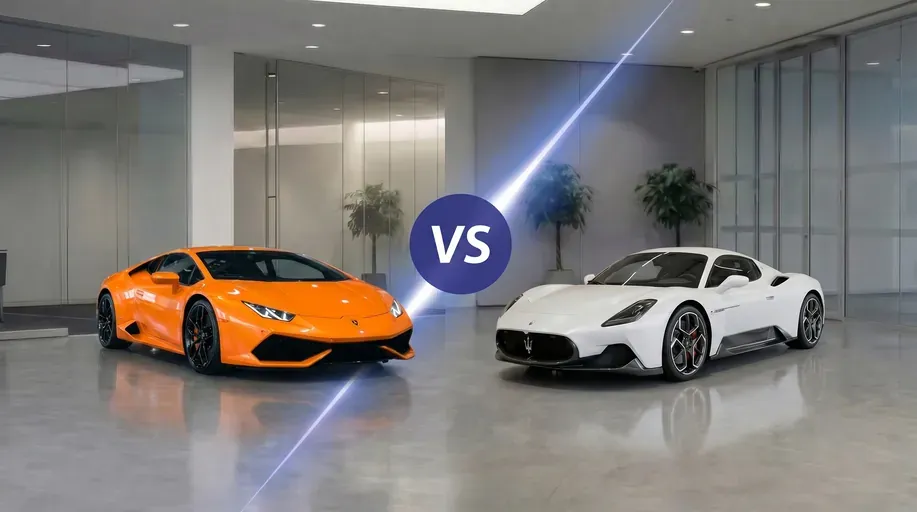
Detailed comparison of the Lamborghini Huracán and Maserati MC20. We compared real-world performance, driving characteristics, and reliability. Read our verdict before you buy!
Apr 20, 2026
The Great Coupe Comparison: Lexus RC F vs Toyota GR Supra. A detailed look at performance, equipment, and real-world driving characteristics. Read our final verdict!
Apr 14, 2026