BMW M4 vs. Jaguar F-Type: Complete comparison 2026
Detailed comparison of the BMW M4 vs. Jaguar F-Type. Discover real-world experiences, performance and equipment comparisons, and our verdict to help you choose your sports car.
Apr 24, 2026
Articles
Car battle
Hyundai i30 N vs Renault Mégane R.S. (Megane RS): Detailed comparison of performance and driving characteristics. Read our verdict on which hot hatch to choose.
May 15, 2026


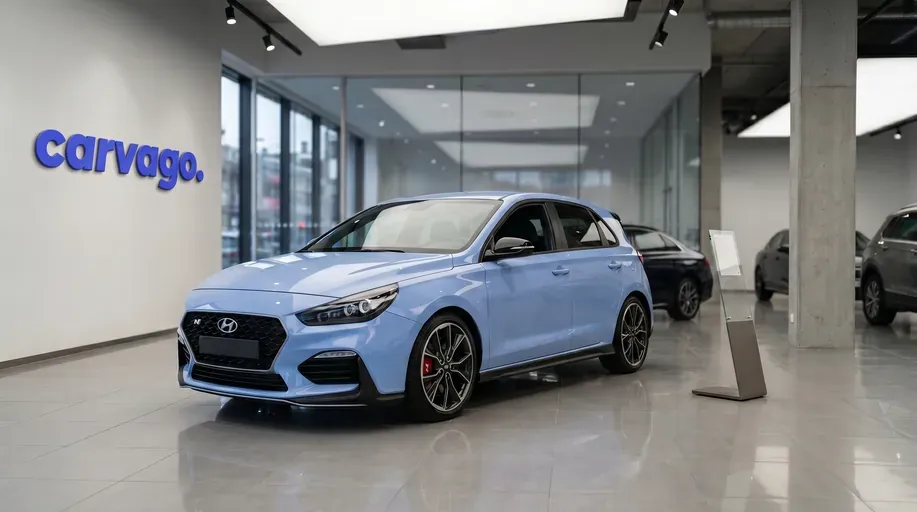
Hyundai i30 N represents a highly rated and driver-focused entry by the South Korean automaker into the hot hatch category, which has confidently disrupted the dominance of traditional European brands since its market launch. Its direct rival in this duel is the legendary Renault Mégane R.S., also officially known by its full name Renault Mégane Renault Sport, which has become a respected benchmark in its class thanks to precise chassis tuning and the brand's long-standing motorsport experience. The following comparison will provide a detailed look at the key differences in technology, driving dynamics, and everyday practicality to help you find out which of these two exceptional sports cars will be the best choice for your needs.
When looking at the external dimensions of both performance models, one fundamental difference immediately stands out: the overall width. The fourth-generation Renault Mégane R.S. features significantly flared fenders, reaching a respectable width of 1875 mm. In contrast, the third-generation Hyundai i30 N is a significant 80 mm narrower at 1795 mm. For the French model, this means a noticeably wider track, resulting in top-tier stability during high-speed cornering and a more aggressive stance on the road. In everyday life and in narrower parking spaces, however, the Mégane's above-average width can be a hindrance, while the narrower Hyundai maneuvers through tight streets and underground garages noticeably better.
Regarding the length and height of the base five-door variants, the differences are no longer as vast, but they still play a role. The Mégane R.S. measures 4364 mm in length, and its height ranges from 1428 to 1435 mm. The Hyundai i30 N hatchback is 24 mm shorter (4340 mm) and nearly a centimeter taller (1444–1445 mm). However, the South Korean automaker brings a major trump card to the used car market in the form of the Fastback body style (categorized as a liftback in the table). This variant extended the overall length to 4455 mm and lowered the silhouette to 1419 mm, giving the car not only more elegant proportions but also slightly better aerodynamics. Customers thus have a choice of two body shapes for the i30 N, which significantly expands their options when looking for a compromise between style and practicality.
The wheelbase, which directly affects interior space and longitudinal stability over bumps, leans slightly in favor of the Renault. It boasts a wheelbase of 2670 mm, while the Hyundai has to make do with 2650 mm. However, the mentioned 20 mm difference is very subtle in practice, and both cars provide comparable space for daily transport of adult passengers in the rear seats. When deciding on the purchase of a four-year-old used car, the key factor in terms of external dimensions is whether you prefer the low-slung and visually extremely wide stance of the Mégane R.S., or appreciate the more compact width of the i30 N with the bonus of the longer Fastback version.
| Parameter | Hyundai i30 N Hatchback | Renault Mégane R.S. Hatchback | Hyundai i30 N Liftback |
|---|---|---|---|
| Width (mm) | 1795 | 1875 | 1795 |
| Length (mm) | 4340 | 4364 | 4455 |
| Height (mm) | 1444–1445 | 1428–1435 | 1419 |
| Wheelbase (mm) | 2650 | 2670 | 2650 |
When choosing a hot hatch or a sportily styled car, not only pure performance but also everyday usability plays a role. Trunk capacity is a key factor for drivers who want to use their sports car as a primary vehicle for the family, daily errands, or holiday trips. While you don't count liters in the trunk on the track, the difference in spaciousness is very noticeable when packing luggage. Both the Hyundai i30 N and the Renault Mégane R.S. approach interior layout and technology slightly differently, which is fundamentally reflected in their transport capacities.
Looking at models roughly four years old (third-generation i30 N and fourth-generation Mégane R.S.), the South Korean representative offers significantly more space. The five-door Hyundai i30 N Hatchback has a standard volume of 395 liters, which is sufficient for weekend shopping or a longer holiday for two. With the rear seats folded down, the space increases to 1,301 liters. In contrast, the Renault Mégane R.S. Hatchback pays the price for the installation of the advanced 4Control rear-wheel steering system and a massive central exhaust. Its basic trunk holds only 294 liters and offers a maximum of 1,157 liters with the backrests folded down. In practice, this means a fairly significant difference of 101 liters in the basic configuration, which for the Hyundai represents space for several extra suitcases.
A major advantage of the Hyundai i30 N is the choice of the Fastback body style, which, thanks to its sloping rear (corresponding to a five-door liftback), offers even better practicality. This version provides a generous 450 liters as standard and up to 1,351 liters with the seats folded, making it an ideal compromise between attractive design and family utility. With the Renault Mégane R.S., you don't have this option – the top model is available on the used car market exclusively as a classic hatchback. Neither manufacturer offers its top sports models in a family station wagon (Wagon/Estate) variant. It is also worth noting that while in the standard engines of both brands, mild-hybrid and plug-in hybrid variants may reduce the total trunk capacity due to battery placement, the purely internal combustion sports derivatives i30 N and Mégane R.S. are fortunately not affected by this limitation.
| Parameter | Hyundai i30 N Hatchback | Renault Mégane R.S. Hatchback | Hyundai i30 N Liftback (Fastback) |
|---|---|---|---|
| Base volume (liters) | 395 | 294 | 450 |
| Max volume with seats folded down (liters) | 1301 | 1157 | 1351 |
If you plan to use a sports car for regular family purposes, the Hyundai i30 N offers much better everyday practicality than the space-limited Mégane R.S., thanks to its significantly larger trunk and the available Fastback body style.
The ability to tow a trailer is not a given for high-performance hot hatches, but for many buyers looking for a versatile used car, it represents a key parameter. Looking at third-generation vehicles from the 2021 to 2024 period, we encounter a completely different approach to utility from both manufacturers.
Hyundai i30 N, despite its uncompromising sporty setup, maintains a great level of everyday practicality. Whether you opt for the standard version with 184 kW or the more powerful Performance variant (206 kW), the car allows you to tow a braked trailer with a maximum weight of an impressive 1,600 kg. For a standard unbraked trailer, a fixed limit of 700 kg applies. It is worth noting that while some mild-hybrid versions of the standard i30 model see a significant reduction in towing capacity, the purely internal combustion flagship "N" model maintains the maximum permitted values across both the Hatchback and Fastback body styles.
On the other hand, the fourth-generation Renault Mégane R.S. (including, for example, the popular TCe 280 or TCe 300 GPF versions) focuses exclusively on absolute driving dynamics and track precision. The French automaker did not homologate a tow bar for this hot hatch at all. Consequently, you will find zero towing capacity in the technical data, and the legal installation of a tow ball is simply not possible here.
Practical implications:
In conclusion, if you require a car that offers both fun on winding roads and the ability to tow trailers, the Hyundai i30 N is the clear and much more versatile winner. The Renault Mégane R.S., by contrast, remains a purist driver's tool that offers no functional alternative in terms of towing capacity. Since the Renault Mégane R.S. does not have towing approval, the following table only lists data for the available Hyundai model.
| Model and motorization | Braked weight of trailer (kg) | Unbraked weight of trailer (kg) |
|---|---|---|
| Hyundai i30 N 2.0 T-GDI (184 - 206 kW) | 1,600 | 700 |
| Hyundai i30 Fastback N 2.0 T-GDI (206 kW) | 1,600 | 700 |
The powertrains in both of these highly watched hatchbacks represent the best of the old school and clearly show why buyers of these models care so much about a purist driving experience. Both cars rely exclusively on advanced turbocharged petrol four-cylinder engines, send their power strictly to the front wheels, and completely ignore any mild-hybrid or plug-in hybrid assistance. The main difference lies in the engine philosophy itself. The Hyundai i30 N opted for a larger and slightly heavier 2.0 T-GDI two-litre engine, which has earned a reputation as a durable workhorse with an unmistakable raw sound and a smooth, strong pull. The Renault Mégane R.S., on the other hand, uses a more compact and lighter 1.8 TCe unit (borrowed from the Alpine A110 sports coupé), which is characterised by more explosive, track-like characteristics, lightning-fast throttle response, and the advantage of less weight over the front axle, which noticeably improves the car's willingness to turn.
In terms of strengths and weaknesses, the South Korean representative scores with its superb eight-speed N DCT dual-clutch transmission and overall everyday mechanical robustness, but pays for it with slightly higher fuel consumption. Its French rival, by contrast, dazzles with more explosive power delivery and lower weight, although its 6-speed EDC automatic can sometimes feel a bit hesitant during spirited driving compared to the N DCT. For drivers looking for maximum emotion on their favourite B-roads, perfect sound, and everyday reliability, the i30 N is an absolutely ideal choice. Conversely, customers focused on uncompromising speed, track days, and playful lightness under throttle will fully appreciate the top-tier specifications of the Renault.
Under the hood, the Hyundai i30 N (3rd generation) hides a highly regarded 2.0 T-GDI turbocharged four-cylinder. The base version, labelled i30 N, offers a very respectable 184 kW (250 hp) and 353 Nm of torque. However, the Performance variant completely dominates the used car market. In the first years of production, this more powerful version had 202 kW (275 hp) and, when using the overboost function, could briefly increase torque from 353 Nm to a punchy 378 Nm. A major turning point came with the arrival of the facelift in 2021, when the Performance model was boosted to an impressive 206 kW (280 hp) with a stable torque of 392 Nm. While older models were available exclusively with a well-tuned 6-speed manual (6MT), the updated units also brought the fantastically fast 8-speed N DCT dual-clutch transmission with wet clutches. As the database records suggest, the i30 N in its modernised form was successfully produced and sold until the end of 2024. When looking for a roughly four-year-old used car, you will come across exactly this facelift transition period, giving you an excellent choice between both technical specifications and transmission types.
| Engine | Fuel | Power (kW) | Torque (Nm) | Transmission |
|---|---|---|---|---|
| 2.0 T-GDI | Petrol | 184 | 353 | 6MT |
| 2.0 T-GDI Performance (until 2021) | Petrol | 202 | 353 / 378 | 6MT |
| 2.0 T-GDI Performance (from 2021) | Petrol | 206 | 392 | 6MT / 8DCT |
The fourth generation of the Renault Mégane R.S. relies on an exceptionally high-revving 1.8 TCe turbo engine. The model range initially started with the TCe 280 variant, which produces 205 kW (280 hp) and a generous 390 Nm of torque. For the most demanding drivers, however, the Renault Sport division prepared the sharper TCe 300 version (available in Trophy, the purist Trophy-R, or the final Ultime edition), which squeezes a massive 221 kW (300 hp) from the downsized engine block. Furthermore, the torque in this more powerful specification depends directly on the transmission you choose – the classic 6-speed manual (6MT) can safely handle 400 Nm, while the lightning-fast 6-speed EDC dual-clutch automatic pushes this limit to 420 Nm. Data from available model years clearly shows a key piece of information for used car buyers: the base TCe 280 (GPF) version was gradually withdrawn from the range during 2020. Therefore, if you focus on cars approximately 4 years old on the market today, you will be choosing almost exclusively from the top-tier TCe 300 GPF engines. These formed the confident pillar of the range until 2023, when the entire era of R.S. internal combustion models came to a close for good.
| Engine | Fuel | Power (kW) | Torque (Nm) | Transmission |
|---|---|---|---|---|
| 1.8 TCe 280 | Petrol | 205 | 390 | 6MT / 6EDC |
| 1.8 TCe 300 (Trophy / Ultime) | Petrol | 221 | 400 / 420 | 6MT / 6EDC |
While the Hyundai i30 N in the Performance variant charms with its robust sound, smooth pull, and everyday versatility, the Mégane R.S. TCe 300 scores with lower weight and a more explosive French character that you'll appreciate when hunting for tenths of a second on a race track.
Choosing the right engine is absolutely crucial for long-term satisfaction with these hot hatches. Both carmakers approached the development of their performance models uncompromisingly, and in both cases, they succeeded in building great cars, albeit with different engineering approaches. While Hyundai relies on a powerful turbocharged two-liter engine that dominates with a huge amount of mechanical grip, Renault deployed a lighter and higher-revving 1.8-liter engine originally from the Alpine A110 sports coupe. Our recommendations are based on real-world experience, owner feedback, reliability, and overall usability for used cars approximately 4 years old.
The turbocharged 2.0 T-GDI four-cylinder (from the Theta II family) in the Performance version represents the absolute pinnacle of the model range following the facelift (from 2021).
The 1.8 TCe engine (code M5Pt) shows the absolute potential of the finely tuned French chassis in its top-tier Trophy version (available with this engine between 2020 and 2023).
With hot hatches, the difference between official laboratory values and real-world operation is usually most apparent. While homologation protocols promise fuel consumption between 7.4 and 8.4 l/100 km for the Hyundai i30 N and Renault Mégane R.S. models, enthusiastic drivers in the real world reliably exceed these figures. For the most accurate comparison possible, we looked into the independent community database Spritmonitor.de, where hundreds of thousands of motorists carefully record their actual refueling. We focused on roughly four-year-old used cars from relevant generations – for Hyundai, this is the popular 3rd generation (in specifications for the years 2021–2024), and for Renault, the 4th generation models (2021–2023).
| Model and engine | Average consumption (l/100 km) |
|---|---|
| Hyundai i30 N (184 kW / 250 hp) | 9.3 |
| Hyundai i30 N Performance (206 kW / 280 hp) | 9.6 |
| Renault Mégane R.S. TCe 280 (206 kW / 280 hp) | 9.7 |
| Renault Mégane R.S. TCe 300 (221 kW / 300 hp) | 10.2 |
A detailed look at the data reveals one surprising fact: theoretical downsizing in sports cars does not necessarily lead to real fuel savings. Although the Renault Mégane R.S. has a smaller engine displacement (1.8 TCe) than the Hyundai i30 N with its proper two-liter (2.0 T-GDI), in real-world operation, the Korean representative is a few tenths of a liter more efficient. Both of the most sought-after performance versions with 280 hp stay just below the ten-liter-per-hundred-kilometer mark. However, if you go for the top-of-the-line Mégane R.S. Trophy version with 300 hp, expect the average consumption to tip over 10 liters. While with the regular civilian versions of these models (such as the 1.6 CRDi or 1.5 dCi), drivers typically achieve around 5 liters of diesel, with gasoline "hot hatches," the rules are logically completely different.
What does this mean for the typical user? If you plan to use the car for daily commuting through a congested city, the trip computer will quickly show values between 12 and 13 liters. While it is possible to achieve figures around 8 l/100 km with both models during steady highway driving or a defensive pace on backroads, customers do not buy these cars for fuel economy. The fuel budget will thus be a significant item for roughly four-year-old used cars, while weekend dynamic driving on favorite winding roads can empty the fifty-liter tanks unexpectedly quickly.
In conclusion, fuel consumption should definitely not be the main factor when choosing between these two rivals. Whether a Hyundai i30 N or a Renault Mégane R.S. ends up in your garage, the gas bills will be practically identical. The winner for a specific driver will much more likely be decided by other characteristics – from the tuning and stiffness of the chassis to the preference for a manual or dual-clutch transmission, to everyday usability in normal traffic.
In the used car market for roughly four-year-old vehicles (model years 2021 and 2022), two different philosophies meet, which is reflected in their price tags and overall availability. While the Hyundai i30 N is experiencing its commercial peak following its recent facelift, the Renault Mégane R.S. (in its fourth generation) was slowly closing a major historical chapter of the Renault Sport division during these years.
The South Korean predator is very well represented in the European used car market. The facelifted version from 2021–2022 brought power increased to 280 hp for the Performance version, lighter forged wheels, and the new eight-speed dual-clutch N DCT transmission.
Thanks to its immense popularity, the supply of the i30 N is very wide, which keeps prices slightly lower and allows buyers to comfortably choose a specific color and preferred body style (Hatchback or the more elegant Fastback).
The French competitor is significantly rarer compared to the Hyundai. In these model years, we are primarily talking about modernized versions with 300 hp and the legendary 4Control rear-wheel steering system. Furthermore, the official end of the Renault Sport division (whose mantle was taken over by the Alpine brand) has turned the last units of the Mégane R.S. into something of a collector's item.
| Used car category | Hyundai i30 N (2021-2022) | Renault Mégane R.S. (2021-2022) |
|---|---|---|
| Basic market minimum | ~ €23,000 | ~ €27,000 |
| Average price (mileage approx. 50k km) | €27,000 – €29,000 | €31,000 – €35,000 |
| Top condition and premium versions | €31,000 – €33,000 | €39,000 and more |
When browsing listings, you will soon find that the final price tag for both rivals is dictated primarily by the specific hardware specification:
While the Hyundai i30 N represents a more accessible choice for everyday sporty driving thanks to its wide availability and lower market price, the Renault Mégane R.S. holds its value significantly better due to the prestige of being the end of a great era, although it requires a much higher initial investment.
Both models on which these performance versions are technically based (the standard Hyundai i30 and Renault Mégane) received the maximum five-star rating in their Euro NCAP crash tests. When choosing from the used car market for vehicles roughly four years old, however, it is necessary to view these results in a broader context and always take into account the year of the testing itself.
The Euro NCAP methodology is constantly evolving and becoming stricter. Percentage results from different years cannot be directly compared, as newer protocols place much greater emphasis on advanced active safety systems, such as more precise cyclist detection, more demanding frontal impact simulations, or emergency scenarios at intersections.
Euro NCAP certifications typically have limited validity, which means that given the testing year for both models, their official validity has already expired. While this means they do not meet today's strictest standards for new cars, it does not in any way diminish their real level of protection within the used car market.
The table below summarizes the key safety scores for the base models from which these sports hatchbacks are derived.
| Parameter | Hyundai i30 N | Renault Mégane R.S. |
|---|---|---|
| Year of testing | 2017 | 2015 |
| Adult occupant protection | 88% | 88% |
| Child occupant protection | 84% | 87% |
| Vulnerable road users protection | 64% | 71% |
| Safety assist systems | 68% | 71% |
At a quick glance at the table, it might seem that the Renault Mégane R.S. leads slightly in both vulnerable road user protection and the rating of assistance systems. However, it is essential to take into account that achieving a 68% result for assistance systems for the Hyundai in 2017 required meeting significantly tougher criteria than earning 71% for the Renault in 2015.
Hyundai i30 N benefits from being certified according to a newer methodology and already offered more advanced active safety features as standard, such as active lane keeping and a more modern AEB system. The Renault Mégane R.S., on the other hand, relies on a very robust platform using high-yield strength steel, which provides top-tier mechanical protection during an impact. Although owners of these "hot hatches" often prefer a pure driving experience over invasive electronic interventions, in an objective comparison of the overall package, the Hyundai i30 N offers a slightly more modern and comprehensive approach to active safety.
Both cars provide a very high level of structural protection proven by five-star tests from the time of their release; however, the Hyundai i30 N benefits from a newer testing year and thus offers a slightly more sophisticated system of active assistants.
In addition to standard equipment, each of the models offers several unique features and technological solutions that underscore their sporty character and can be decisive for the customer during the final selection.
The South Korean hot hatch has built a reputation as a car that can be incredibly fun yet friendly for everyday use. The brand focused on maximum driver customization here.
The French competitor draws from the rich history of the Renault Sport division and brings technologies to the compact segment that were previously reserved for much more expensive sports cars.
Great price-to-driving-fun ratio on the used car market
Fantastic exhaust sound (especially in the Performance version)
Incredibly wide range of individual driving mode settings (N Custom)
Robust engineering that easily handles regular track days
Excellent steering feedback and very playful handling
Cheaper-feeling interior with a higher proportion of hard plastics
Higher fuel consumption even during calm and normal driving
Very stiff suspension setup, which can be tiring on broken roads
Smaller boot space due to the body reinforcement bar behind the rear seats
Hyundai i30 N is the perfect choice for enthusiasts looking for a playful, raw, and affordable hot hatch with old-school character. Thanks to its robust engineering, great sound, and a huge dose of emotion, it is the ideal car for those who want to enjoy every kilometer on winding backroads.
Unique four-wheel steering system (4Control) ensuring extreme agility in corners
Top-tier chassis with hydraulic compression stops that absorb impacts excellently
Incredible traction thanks to the Torsen mechanical limited-slip differential (on the Cup chassis version)
Very attractive, wide, and muscular exterior design with a distinctive light signature
Outdated and slower multimedia system with poorer climate control ergonomics
The behavior of the 4Control system can feel unnatural at the limit and requires getting used to
The EDC automatic transmission is not as lightning-fast during sporty driving as competitors' dual-clutch gearboxes
Limited rear visibility and thick C-pillars making parking difficult
Renault Mégane R.S. will primarily appeal to more experienced and demanding drivers looking for an uncompromising and precise tool for fast driving on tracks and technical circuits. Thanks to its sophisticated chassis and rear-axle steering, it offers surgical precision that rewards true driving purists behind the wheel.
Based on feedback from long-term users, failure statistics, and our own data provided by independent technical inspection of the car, we have compiled an overview of the most common problems that buyers of these used hot hatches should watch out for.
The South Korean hot hatch (PD generation, 2017–2024) is generally considered a very reliable car, yet several specific ailments appear in used cars that are worth paying attention to.
The basic mechanics of the i30 N are very durable and long-lasting even under harsh treatment. If you keep an eye on the fuel pump history and the condition of the synchros in the manual transmission, a surprisingly reliable car awaits you.
The fourth generation of the Mégane R.S. (2018–2023) brought much more sophisticated technology, which logically reflects in a higher risk of more expensive defects in used cars.
Thanks to the advanced 4Control system and more complex electronics, the Mégane R.S. requires more careful maintenance and vigilance when purchasing. Potentially more expensive repairs and service tasks are, however, the price for its absolutely fantastic driving capabilities.
When buying a used car, a thorough inspection is key. Here are some specific points to focus on for these two models. To uncover unexpected defects and for your absolute peace of mind before signing the purchase agreement, the best step is an independent technical car inspection by professionals – this is the exact purpose of the certified CarAudit service.
Hyundai i30 N offers adaptive dampers with a wide range of settings, so in normal mode, it can be surprisingly compliant and comfortable. Renault Mégane R.S. with the standard Sport chassis is also pleasant, but the version with the stiffer Cup track chassis can be too bouncy for daily commuting. In terms of overall interior ergonomics and ease of use as a daily car, the Hyundai wins slightly.
Renault Mégane R.S., especially in the Trophy version, is extremely agile in corners and generally slightly faster thanks to the sophisticated 4CONTROL all-wheel steering system. Hyundai i30 N relies on a perfectly tuned chassis with an electronically controlled limited-slip differential, which places more emphasis on playfulness and pure driving joy than on chasing absolute lap times. If you are looking for uncompromising speed, the Renault is the better choice, while the Hyundai scores with great predictability at the limit.
In this discipline, the Hyundai i30 N dominates for most car enthusiasts. Its factory exhaust system in the sharpest N mode produces significant pops and cracks, which massively enhances the sporty driving experience. While the Mégane R.S. has a very rich and sporty sound, it doesn't reach the theatrical aggressiveness of its Korean competitor.
Hyundai i30 N is renowned for its high mechanical durability and generous five-year factory warranty with no mileage limit, which even applied to amateur track days. With the Renault Mégane R.S., used cars may more frequently show minor infotainment software glitches or wear on the more complex rear-axle steering system. From the perspective of long-term ownership and lower risk of expensive repairs, Hyundai's robust technology comes out on top.
Renault offered the EDC dual-clutch automatic transmission from the start of the fourth generation's production, making it much more available on the used car market. Hyundai only began installing the eight-speed N DCT dual-clutch automatic in the i30 N during the major facelift in the spring of 2021. Although both units work well, Hyundai's newer transmission is slightly better adapted to sporty driving thanks to sharper downshift reactions.
While both cars represent the absolute pinnacle of the used hot hatch market, each appeals to a slightly different target group of drivers. Hyundai i30 N scores as a fantastic daily all-rounder that, thanks to a noticeably larger boot, excellent mechanical reliability, and a fabulous exhaust note, offers a maximum dose of pure driving fun. In contrast, the Renault Mégane R.S. is a surgically precise track tool for experienced connoisseurs, which, with the help of the unique 4Control system and an uncompromisingly tuned chassis, literally defies the laws of physics in fast corners. So if you are looking for a playful, robust, and slightly more practical car for daily commuting, go for the Korean predator, while for chasing tenths of a second on the track and interesting future collector potential, the purist French model makes the most sense.
Sources: ADAC, garaz.cz, e15.cz, autoservis.cz, mobilmania.cz, autickar.cz
This article was prepared using artificial intelligence tools. The section guarantor is Petr Dušek.

Detailed comparison of the BMW M4 vs. Jaguar F-Type. Discover real-world experiences, performance and equipment comparisons, and our verdict to help you choose your sports car.
Apr 24, 2026

Audi RS 5 vs. BMW M2. A detailed comparison of performance, driving dynamics, and practicality. Find out which sports coupe is the right choice for you.
Apr 14, 2026

Mercedes-AMG C 63 Coupé vs. Toyota GR Supra comparison. Which used sports coupé offers better performance and equipment? Read our clear verdict before buying!
Apr 25, 2026