Car battle
Citroën C3 vs. Hyundai i20: Complete comparison 2026
Citroën C3 vs. Hyundai i20 Comparison: Which hatchback is better? Read a detailed comparison of equipment, engines, and driving characteristics with a final verdict.
Apr 15, 2026
Articles
Car battle
Detailed comparison of the Hyundai i20 vs Renault Clio. Find out from real data which city hatchback offers better equipment and fuel economy. Read our verdict.
May 3, 2026
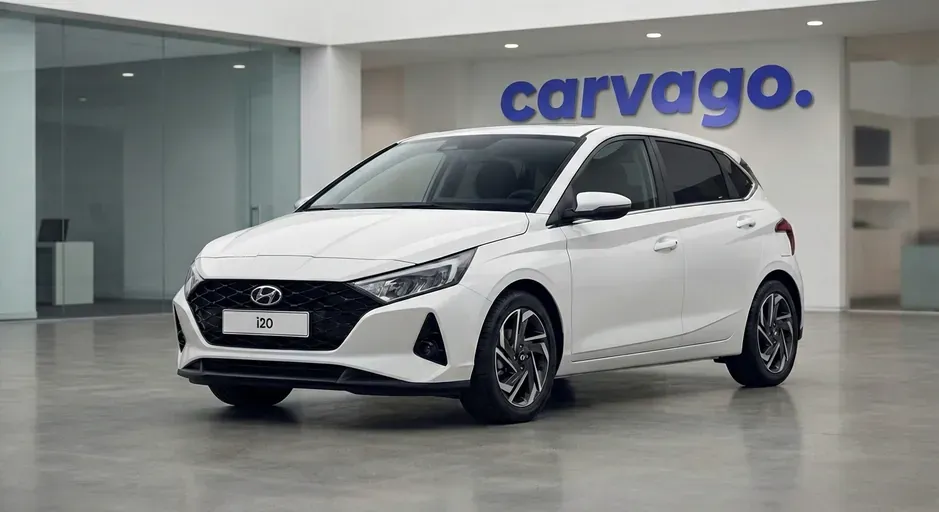
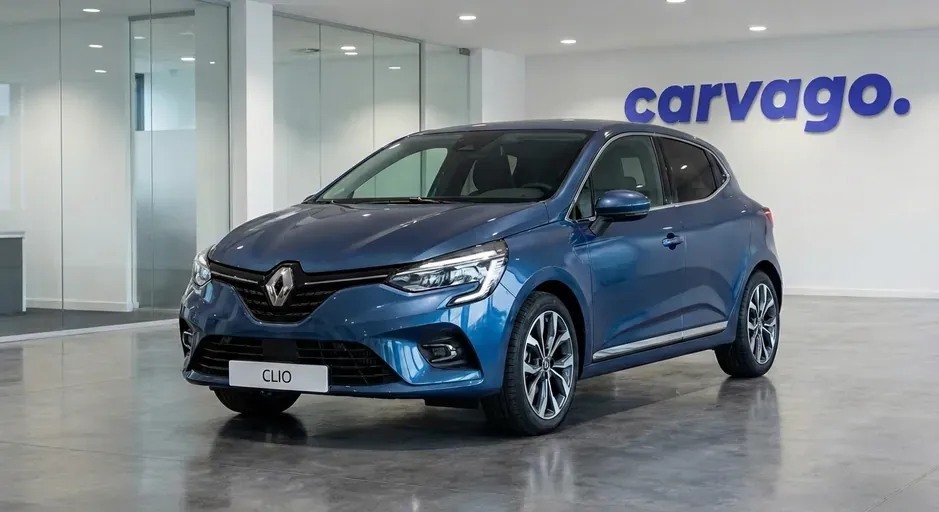
The South Korean Hyundai i20, which successfully replaced the older Getz model after its historic debut and firmly established itself in the small car segment, appeals to customers on the used car market primarily with its exceptionally spacious interior, generous equipment, and confident modern design. Its challenger today is the traditional French bestseller Renault Clio, which is sold on the Japanese market under the alternative name Renault Lutecia for licensing reasons, and whose earlier sedan body derivatives were known in various parts of the world as Thalia, Symbol, or Nissan Platina. Let's take a detailed look at how these two exceptionally strong competitors from the compact city hatchback category fare in our direct comparison and which of them will be a better choice in all respects for your daily journeys.
Both cars represent typical representatives of the B-segment (small cars), which have matured significantly in recent years. If we focus on the generations relevant to the market for roughly four-year-old used cars, namely the third-generation Hyundai i20 and the fifth-generation Renault Clio, we find that both models have easily surpassed the four-meter mark. This previously unthinkable growth in small city hatchbacks brings drivers benefits in the form of better directional stability and a more mature appearance. Given their very similar format, you won't have to make major compromises in overall usability when choosing, meaning both cars perform very well not only in the city but also on weekend trips.
A detailed look at the numbers shows that the fifth-generation Renault Clio, at 1798 mm, is a full 23 mm wider than the Hyundai i20, which maintains a width of 1775 mm. The length of the standard Renault Clio ranges closely between 4050 and 4053 mm, while the standard Hyundai i20 starts at 4040 mm (with its sporty N variant or newer facelifts reaching up to 4075 mm). The wider stance gives the French representative a sense of greater confidence on the road and provides the front occupants with slightly more shoulder room. Conversely, the slightly narrower and, in the base version, slightly shorter body of the South Korean model is an advantage when navigating narrow streets daily, as even a few saved centimeters make parallel parking in crowded city centers easier.
Regarding height and wheelbase, both competitors stick to modern proportions with a dynamic, rather low profile. The height of both cars oscillates around the 1440 to 1455 millimeter mark, which helps keep the center of gravity low for more confident driving characteristics. A crucial metric for longitudinal interior space is the wheelbase, where the Hyundai i20 offers exactly 2580 mm and the Renault Clio an almost identical 2583 mm. This negligible difference of just three millimeters shows that both manufacturers designed their platforms with maximum emphasis on cabin space utilization, so any choice between these models will not depend on knee room itself, but rather on preferences for exterior design or overall cabin width.
| Parameter | Hyundai i20 Hatchback | Renault Clio Hatchback |
|---|---|---|
| Width (mm) | 1775 | 1798 |
| Length (mm) | 4040 - 4075 | 4050 - 4053 |
| Height (mm) | 1440 - 1455 | 1440 |
| Wheelbase (mm) | 2580 | 2583 |
When choosing a small city car, trunk capacity is often a deciding factor, especially if the car is to serve as the main or only vehicle in the family. Both the Hyundai i20 and Renault Clio prove in their current generations that even in the B-segment, they can offer plenty of space—enough for a weekend shopping trip or a longer holiday for two. While these models were previously seen more as nimble city runabouts, today their trunks boldly match the values of cars a class larger. This makes them very practical and versatile companions from a used car perspective.
If we look at standard five-door hatchbacks among roughly four-year-old used cars, the numbers are very interesting and relatively balanced. The Hyundai i20 (3rd generation, from 2020) offers a very decent 352 liters in its base configuration, forming a symmetrical and easily usable space. However, the Renault Clio (5th generation, from 2019) slightly leads in the standard configuration, as its conventional internal combustion versions provide a volume of 340 to 391 liters (the highest values are achieved by versions with factory LPG). In practice, this small difference means valuable space for a few extra small bags. However, it is necessary to be very careful when choosing electrified powertrains. Batteries always take their toll – in the mild-hybrid Hyundai i20, the trunk capacity drops to 262 liters, and in the full-hybrid Renault Clio E-Tech, the space shrinks to 254 to 301 liters. Conversely, after folding down the rear seats, the balance of power shifts in favor of the Korean car, which offers a maximum volume of 1,165 liters, slightly surpassing the Clio with its 1,069 liters.
A very important difference between the two competitors is the historical range of body styles. While the Hyundai i20 has always relied only on the basic five-door hatchback in the modern era, Renault offered the exceptionally practical Grandtour variant until 2020. This Renault Clio Estate (4th generation) boasts an above-standard base volume of 443 liters, which grows to a massive 1,380 liters after folding the seats. Even though you can no longer find this practical version among the latest four-year-old used cars in the fifth generation, for those interested in slightly older models with a maximum emphasis on strollers and family usability, the estate version of the Clio represents a choice that the Hyundai i20 cannot match.
| Parameter | Hyundai i20 Hatchback | Renault Clio Hatchback | Hyundai i20 Estate | Renault Clio Estate |
|---|---|---|---|---|
| Base volume (liters) | 352 (262 for hybrid) | 340 - 391 (254 - 301 for hybrid) | - | 443 |
| Max volume with seats folded down (liters) | 1165 (1075 for hybrid) | 1069 (979 for hybrid) | - | 1380 |
The fifth-generation Renault Clio slightly leads in base trunk volume, while the Hyundai i20 surprises with more space when the seats are fully folded. However, before buying either used car, check if it is a hybrid version, which significantly limits the internal luggage capacity.
Although towing heavy trailers is not usually the primary purpose of small city hatchbacks, the differences in trailer weight between the Hyundai i20 and Renault Clio models can play an important role for practical-minded buyers. Knowing these limits is key to the correct and safe use of the tow bar, whether for moving house or leisure activities.
The third-generation Hyundai i20 (on the market since 2020) offers surprisingly solid parameters for its class. With the turbocharged 1.0 T-GDI engine, it can tow a maximum braked trailer weight of up to 1 110 kg, without any compromises even in the version with 48V mild-hybrid technology. The weaker naturally aspirated 1.2 version can handle a standard 910 kg braked load. The unbraked trailer weight for all i20 versions is limited to a somewhat conservative 450 kg.
On the other hand, the fifth-generation Renault Clio approaches braked trailers uniformly. Across almost the entire engine range – from the popular TCe petrol engines to the full-hybrid E-Tech Hybrid variant – the maximum braked capacity is set at exactly 900 kg. However, where the French representative scores significantly is the capacity for unbraked trailers. Depending on the specific specification and equipment, this ranges from 580 to 670 kg, which is a noticeable difference compared to its Korean competitor.
In practice, these differences mean that while the Hyundai i20 provides more confidence and reserve for a small caravan or a heavier braked utility trailer, the Renault Clio can safely transport a heavier standard unbraked trailer. This represents ideal space for a few extra suitcases or loading heavier construction material, which is a capacity absolutely sufficient for weekend shopping or a longer holiday.
In conclusion, if you plan to tow heavier braked loads more often, the Hyundai i20 will be the more logical choice. For common garden and hobby use with a simple unbraked trailer, however, the Renault Clio offers slightly more user freedom thanks to its higher limit.
| Model and motorization | Braked weight of trailer (kg) | Unbraked weight of trailer (kg) |
|---|---|---|
| Hyundai i20 1.0 T-GDI / 48V-Hybrid | 1110 | 450 |
| Hyundai i20 1.2 | 910 | 450 |
| Hyundai i20 N | 1110 | 450 |
| Renault Clio TCe 90 / 100 | 900 | 580 - 630 |
| Renault Clio E-Tech Hybrid 140 / 145 | 900 | 655 - 670 |
| Renault Clio Blue dCi 85 / 115 | 900 | 630 |
The fifth-generation Renault Clio and the third-generation Hyundai i20 (cars well-suited for the used car segment at around 4 years of age) take very different approaches to their engine lineups. The Clio scores with an unusually wide range that, alongside classic petrol engines, includes the immensely popular factory LPG drive, exceptionally efficient diesel units (a rarity in the B-segment today), and the advanced E-Tech full-hybrid system for urban efficiency. In contrast, the Hyundai i20 bets on a simpler and clearly defined range of exclusively petrol units. It utilizes advanced mild-hybrid technology (48V) combined with the innovative iMT manual transmission, which can electronically disengage the gear during coasting. For those seeking a purebred sporty driving experience, the Korean model offers the top-tier i20 N hot hatch, for which the more civilly and economically tuned Clio has no direct challenger.
The third-generation Hyundai i20 (on the market since 2020) offers a clear palette of powertrains. The reliable naturally aspirated 1.2 MPi four-cylinder with 62 kW serves as an ideal entry point. It will please more conservative drivers looking for maximum durability and simplicity, primarily for shorter routes. However, the bulk of sales consists of the modern turbocharged 1.0 T-GDI three-cylinder with 74 or 88 kW. These engines are commonly found in used car dealerships as 48V mild-hybrids, which smooth out acceleration and help reduce average fuel consumption. They are available with a 7-speed DCT dual-clutch automatic or an interesting 6-speed intelligent manual transmission (iMT), which lacks a mechanical link to the clutch pedal. Adrenaline lovers should definitely turn their attention to the flagship i20 N version with a turbocharged 1.6-liter four-cylinder and a solid output of 150 kW (204 hp). According to production data, this highly acclaimed model ended production in late 2024, and its availability is now limited exclusively to the used car market.
| Engine Type | Fuel | Power (kW) | Torque (Nm) | Transmission |
|---|---|---|---|---|
| 1.2 MPi | Petrol | 62 | 118 | 5MT |
| 1.0 T-GDI | Petrol | 74 | 172 | 6MT / 7DCT |
| 1.0 T-GDI 48V | Petrol (Mild-hybrid) | 74 / 88 | 172 / 200 | 6iMT / 7DCT |
| 1.6 T-GDI (i20 N) | Petrol | 150 | 275 | 6MT |
The fifth-generation Renault Clio boasts a very diverse selection of power units. The base consists of naturally aspirated 1.0 SCe three-cylinder engines (48 and 53 kW), which, mainly due to a lack of low-end pull, serve best for city commuting. Much more versatile dynamics are guaranteed by the turbocharged 1.0 TCe three-cylinder (66 or 74 kW), which has been sold throughout its production run in the popular and affordable factory version running on liquefied petroleum gas (TCe 100 LPG / Eco-G 100). A peculiarity of used Clios on the market is the availability of proven and efficient 1.5 Blue dCi diesel four-cylinders (63 to 85 kW). Although these did not make it into newer model years due to strict emissions standards, they remain the absolute top choice for drivers covering long distances. The technological gem is the E-Tech Hybrid full-hybrid powertrain (103/105 kW), which uses a naturally aspirated 1.6 petrol engine, two electric motors, and a clutchless multi-mode automatic transmission, allowing it to often drive purely on electricity in the city. More dynamic 1.3 TCe petrol four-cylinders (96 or 103 kW), developed in cooperation with Mercedes, were also temporarily available.
| Engine Type | Fuel | Power (kW) | Torque (Nm) | Transmission |
|---|---|---|---|---|
| 1.0 SCe 65/75 | Petrol | 48 / 53 | 95 | 5MT |
| 1.0 TCe 90/100 | Petrol | 66 / 74 | 160 | 5MT / 6MT / CVT |
| 1.0 TCe 100 LPG (Eco-G) | Petrol / LPG | 74 | 170 | 5MT / 6MT |
| 1.3 TCe 130/140 | Petrol | 96 / 103 | 240 / 260 | 6MT / 7EDC |
| 1.5 Blue dCi 85/100/115 | Diesel | 63 / 74 / 85 | 220 / 260 | 6MT |
| E-Tech Hybrid 140/145 | Petrol (Full-hybrid) | 103 / 105 | 144 + 205 | Multi-mode automatic |
While the Renault Clio excels with a phenomenally wide range of engines (including the exceptionally economical factory LPG, diesel units, and the E-Tech full-hybrid drive), the Hyundai i20 counters with clearly profiled, agile petrol engines and, above all, the stunning and uncompromising i20 N hot hatch.
Choosing the right engine is absolutely crucial for long-term satisfaction with a roughly four-year-old used car. Our recommendations are based on real-world experience, mechanical reliability, actual fuel consumption, and user-friendliness. An interesting aspect of this comparison is the completely different approach the manufacturers take to the design of small-displacement engines, which form the backbone of their sales. While the third-generation Hyundai i20 relies on direct fuel injection for its turbocharged one-liter engine to provide sharper dynamics, the fifth-generation Renault Clio uses indirect injection (MPI), making its engines a mechanical rarity that is highly resistant to the pitfalls of city driving. Availability data also shows that while the more powerful pure petrol TCe 100 version of the Clio was discontinued at the end of 2020 and fully replaced by the 90 hp variant (with 100 hp remaining reserved mainly for factory LPG versions), some mild-hybrid (48V) versions of the one-liter engine gradually disappeared from the market for the Hyundai i20, making them very difficult to find on the used car market today.
The turbocharged 100 hp (74 kW) one-liter three-cylinder is the most rational choice in the range for the third-generation Hyundai i20. Compared to the base 1.2 naturally aspirated four-cylinder, it offers significantly better low-end flexibility thanks to 172 Nm of torque, which you will appreciate during safe overtaking or when merging onto the highway. Real-world fuel consumption for this engine reliably stays around a favorable 6 liters per 100 km. It is a mechanically robust unit, but due to the use of direct fuel injection, it carries the risk of gradual carbon buildup on the intake valves, especially if the car is driven exclusively on short city trips with a cold engine. When buying a used car, focus on the engine's idle after it has warmed up – if the engine stumbles, vibrates, or jerks slightly during smooth acceleration, these could be the first signs of carbonization. The advantage, however, is that this issue can be easily prevented by regularly refueling with high-quality additive-treated fuel and by warming up the car and giving it a "good run" on a longer highway route at least a few times a month. In terms of overall balance, this engine is best suited for drivers with a more dynamic style and a mixed route profile (city, country roads, occasional highway).
If you are choosing a four-year-old fifth-generation Renault Clio, the absolute king of reliability is the 90 hp (66 kW) 1.0 TCe turbocharged three-cylinder. Its greatest technical advantage and a huge benefit for the used car market is the use of indirect fuel injection (MPI). This system naturally washes the intake valves with petrol, making the engine completely immune to the fatal carbon buildup that plagues most of today's competitors. The engine offers a pleasantly flat torque curve (160 Nm) and real-world fuel consumption of just over 5.5 liters of petrol. A certain weakness of units from the first years of production (especially 2020 and 2021 models) is that they were paired only with a five-speed manual transmission, which pushes the RPMs unnecessarily high on the highway and increases cabin noise – six-speed gearboxes were only added to the range in subsequent years. During the test drive, listen carefully to the engine immediately after a cold start for any rattling that might reveal a stretched timing chain. This problem is a typical consequence of delaying service intervals. Therefore, always look for earlier oil changes in the service history, ideally every 15,000 km, rather than after an unnecessarily long 30,000 km. From a user perspective, the one-liter TCe is an absolutely ideal choice for commuters and city users looking for a long-term reliable car with minimal risks and inexpensive servicing.
Official fuel consumption figures provided by manufacturers often represent an unreachable ideal measured in laboratory conditions. When choosing a used car, it is therefore crucial to monitor real-world data from everyday use. In this comparison, we focused on relevant models available on the market of roughly four-year-old used cars, namely the third-generation Hyundai i20 (from 2020) and the fifth-generation Renault Clio (from 2019). All stated values are based on independent data from the popular community portal Spritmonitor.de, where thousands of drivers from across Europe enter their actual refueling receipts.
| Model and Engine | Average Consumption (l/100 km) |
|---|---|
| Renault Clio 1.5 Blue dCi 100 (74 kW) | 4.5 |
| Renault Clio E-Tech Hybrid 140 (103 kW) | 4.8 |
| Hyundai i20 1.0 T-GDI 48V-Hybrid (74 kW) | 6.1 |
| Renault Clio 1.0 TCe 90 (66 kW) | 5.8 |
| Hyundai i20 1.2 MPi (62 kW) | 6.2 |
| Hyundai i20 1.0 T-GDI (74 kW) | 6.4 |
| Renault Clio 1.0 TCe 100 LPG (74 kW) | 6.8 (LPG) |
Looking more closely at the measured data, we encounter several surprising trends. While small turbocharged three-cylinder engines promise favorable consumption, in the real world, they are extremely sensitive to driving style. While Renault manages to keep the popular 1.0 TCe 90 engine safely below the six-liter mark, the competing one-liter 1.0 T-GDI unit from Hyundai is noticeably thirstier, averaging over 6.4 l/100 km. An unexpected finding is also the fact that the mild-hybrid technology (48V) in the i20 model saves only a few tenths of a liter of fuel in practice, meaning the small naturally aspirated 1.2 MPi engine can paradoxically often offer better values than the more sophisticated purely petrol turbo. Regarding the comparison with diesel, the modern 1.5 Blue dCi in the Renault still safely dominates with an average of 4.5 liters; however, efficient full hybrid and petrol versions have come so close to it that purchasing a used diesel only pays off for drivers with exceptionally high highway mileage.
For typical users, several key recommendations emerge from this data. Drivers who spend most of their time on short commutes in suburban traffic will clearly appreciate the classic naturally aspirated four-cylinder 1.2 MPi in the Hyundai, which also promises high service reliability. However, those primarily sensitive to a tight budget should consider the highly sought-after factory Renault Clio 1.0 TCe 100 LPG version – although the absolute volumetric consumption of gas is slightly higher (around 6.8 l/100 km), thanks to half-price LPG at filling stations, it is hands down the cheapest way to travel. For drivers spending a lot of time in traffic jams within congested metropolises, the Clio E-Tech full hybrid system is a technological gem, effectively recuperating energy and easily keeping consumption below five liters.
In conclusion, it can be confirmed that in the battle between these two models, fuel consumption can become a major deciding factor. The Renault Clio wins convincingly in terms of efficiency – its turbocharged units are more economical in real-world conditions, and the customer has a choice of unrivaled efficient alternatives such as full hybrid drive or LPG. The Hyundai i20 loses slightly in absolute numbers at the filling stations, but this minor handicap may be partially offset for more conservative drivers by the peace of mind provided by a simple and mechanically robust naturally aspirated engine.
Both models are staples of the European market and represent a very rational choice in the B-segment (small cars). Looking at cars approximately 4 years old – the third-generation Hyundai i20 and the fifth-generation Renault Clio – we find that their price tags on the used car market are very balanced. Decisions will therefore be based more on specific preferences regarding engines and remaining warranty.
A used Hyundai i20 holds its value very well for several pragmatic reasons.
The fifth-generation Clio made a huge leap in interior quality and driving characteristics, which is positively reflected in the interest in used cars. The average price of a roughly 4-year-old Clio is around the €10,000 mark.
Below you will find an approximate price range for cars around 4 years old, depending on the engine and equipment:
| Model (2021–2022 models) | Base equipment (naturally aspirated engines) | Mid-range (T-GDI / TCe / LPG) | Top versions (N-Line / E-Tech Hybrid) |
|---|---|---|---|
| Hyundai i20 | €9,000 – €10,000 | €11,000 – €12,000 | €12,000 – €14,000 |
| Renault Clio | €9,000 – €10,000 | €10,000 – €12,000 | €12,000 – €14,000 |
While a used Renault Clio attracts with highly economical versions with factory LPG or the sophisticated E-Tech hybrid, the Hyundai i20 wins over buyers with its desirable naturally aspirated four-cylinder and the security of a remaining five-year factory warranty.
At first glance, it is easy to state that both models boast a prestigious five-star Euro NCAP rating in their careers; however, for those interested in a used car, it is absolutely crucial to put these numbers into a broader context. The testing and evaluation methodology is evolving very rapidly and becomes stricter every year. Therefore, percentage results achieved in different years cannot be simply and directly compared. What meant an excellent result under older standards may not suffice under newer ones – today's tests account for advanced frontal crash simulations using a mobile progressive deformable barrier, monitor the accuracy of cyclist detection, and very carefully analyze critical scenarios for safe intersection crossings.
The current fifth generation of the Renault Clio entered the testing laboratories in 2019, where it comfortably earned a full five stars according to the regulations of the time. In its day, the Clio literally excelled in adult occupant protection with a score of 96% and also recorded a fantastic performance in child seat protection with a result of 89%. The body structure and shell strength of this French model are exemplary, and in terms of passive safety, it was one of the highest-rated cars in its segment at the time. However, these results occurred before the massive introduction of tougher accident prevention protocols, when modern assistants did not play as vital a role as they do in newer cars.
The third generation of the Hyundai i20 entered the market slightly later, and its safety (along with its sister model, the Bayon, from which valid data for the i20 is derived) was officially evaluated in 2021. By then, however, a significantly more demanding testing methodology was in place. A stricter view of chest loads during impact and pressure for a new level of active assistance meant that, despite its solid technological equipment, the car had to settle for four stars. While the ratings for adult protection (76%) and child protection (82%) seem lower on paper than the Clio's, they reflect far more uncompromising assessment limits for crashes. At the same time, thanks to better sensors, the i20 achieves an excellent score (76%) for the protection of vulnerable road users, including pedestrians and cyclists.
| Parameter | Hyundai i20 | Renault Clio |
|---|---|---|
| Year of testing | 2021 | 2019 |
| Adult occupant protection | 76 % | 96 % |
| Child occupant protection | 82 % | 89 % |
| Vulnerable road users protection | 76 % | 72 % |
| Safety assist systems | 67 % | 75 % |
When comparing both cars for the purpose of purchasing a four-year-old used vehicle, the models approach overall safety from two different sides, both with excellent results. In terms of cabin resilience during an impact, the Renault Clio represents an exceptionally sturdy foundation – it is a fantastically built car boasting a full five stars. The Hyundai i20, on the other hand, is somewhat penalized by the disadvantage of incomparably stricter 2021 rules, but in reality, it possesses a slightly more modern radar and camera system that much more consistently meets today's requirements for accident prevention directly in city traffic.
While the Renault Clio appeals with brilliant passive occupant protection and a five-star rating from 2019, the Hyundai i20 underwent uncompromisingly strict tests in 2021 and provides an assistance package better calibrated for the demanding obstacles of today's traffic.
In addition to standard equipment, each of the models offers several unique features and technological innovations that can be decisive for the customer during the final selection. While one car aims for digitalization and sporty style, the other bets on premium materials and top-tier powertrain efficiency.
With the current generation of the i20 model, Hyundai places a huge emphasis on technologies that were until recently reserved for vehicles from higher segments.
The fifth generation of the Clio model brought a huge revolution, especially in build quality and powertrain options, aiming to offer a more premium car experience at an affordable price.
Excellent rear seat space and a generous wheelbase for its class
Modern and smooth infotainment with a 10.25" display in higher trim levels
Rich standard safety and assistance equipment even in base versions
Bold and distinctive exterior design that visually sets the car apart from the competition
Reliable engines with well-functioning mild-hybrid assistance for reduced fuel consumption
Greater presence of hard and cheaper-feeling plastics in the interior
Stiffer chassis setup that filters sharp city bumps less effectively
More noticeable road noise and wind noise at highway speeds
Specific operation of the intelligent manual transmission (iMT) requires getting used to
The Hyundai i20 is an ideal choice for drivers who demand surprisingly mature interior space and top-tier digital technologies from a small city car. It excels in everyday usability with an emphasis on rich safety equipment, although one must accept a slightly stiffer chassis tuning.
Very high-quality interior workmanship with a high proportion of soft-touch materials
Top-tier luggage capacity in its class (up to 391 liters for pure internal combustion versions)
Excellent suspension comfort and superb cabin soundproofing
Highly efficient E-Tech full-hybrid powertrain with extremely low fuel consumption in the city
Elegant and timeless design that ages slowly
Significantly more cramped legroom and headroom in the rear seats compared to the i20
Occasional slower responses and poorer clarity of the Easy Link onboard system
Higher trunk loading sill, which makes handling heavy objects more difficult
Poorer rear-diagonal visibility due to very wide C-pillars
The Renault Clio will primarily appeal to customers looking for French charm, a more premium cabin feel, and high travel comfort on the used car market. It serves excellently as an elegant car for couples or individuals who value above-standard trunk volume and a quiet ride more than ample rear-seat space.
Based on our own inspections through the CarAudit service, breakdown statistics, and technical inspection reports, we have compiled an overview of the most common problems that buyers of roughly four-year-old used cars of these models should watch out for.
The third-generation Hyundai i20 is considered an above-average reliable car within its class, yet specific technical shortcomings can occur, especially in mild-hybrid versions and selected engines.
The third-generation i20 scores with durable mechanics and space, but when choosing a used car, watch out for the condition of the clutch in manuals and the battery health in mild-hybrid versions.
The fifth generation of the Renault Clio has significantly improved in terms of reliability compared to its predecessors and does not suffer from fatal mechanical failures; most complications concern software and minor onboard elements.
The Clio V has successfully shed its old mechanical ailments and is a durable car, but you must expect occasional infotainment errors and a stubborn trunk lock.
When buying a used car, a thorough inspection is key. Here are some specific points to focus on for these two models. Given the increasing technical complexity of today's cars, we recommend a comprehensive car audit before making a final decision, which will reveal hidden defects that are easily overlooked during a standard test drive.
On paper, the fifth-generation Renault Clio offers a larger luggage compartment with a volume of 391 liters compared to 352 liters for the Hyundai i20. However, the i20's trunk has a more regular shape, and there is no significant step when the seats are folded down, making it easier to handle larger items. For hybrid and mild-hybrid versions of both cars, expect the trunk volume to decrease by several dozen liters due to the batteries.
The Hyundai i20 benefits from its excellent space packaging and provides significantly more legroom and headroom for rear passengers. The Renault Clio has less space in the back and feels more cramped due to smaller windows and a sloping roofline. If you plan to frequently carry older children or adults in the back, the i20 is definitely the more comfortable choice.
Both cars are above average for the B-segment in terms of reliability and do not suffer from any serious systemic defects. The Hyundai i20 is mechanically very robust, and with roughly four-year-old used cars, you can still benefit from the remainder of the generous five-year factory warranty with no mileage limit. The Renault Clio uses proven and durable TCe engines, although minor infotainment software glitches were more common in the early model years.
For driving in heavy city traffic, the Renault Clio E-Tech Hybrid excels, as it can drive largely on electricity in the city with a real-world fuel consumption of around 4.5 l/100 km. The Hyundai i20 relies on conventional engines or mild-hybrid technology in the 1.0 T-GDi powertrain, which helps reduce emissions but cannot match the efficiency of the full hybrid Clio in the city. However, if we compare the standard pure gasoline versions without electric motor assistance, the average fuel consumption of both models is very similar.
In this generation, the Renault Clio offers one of the most premium interiors in its class, with a high proportion of soft-touch plastics and a portrait-oriented display that resembles a tablet. The Hyundai i20 uses mostly harder and more basic-looking plastics, but the interior is superbly put together and very durable. Both cars, in roughly four-year-old examples, typically feature full support for smartphone integration via Apple CarPlay and Android Auto.
Choosing between four-year-old used Hyundai i20 and Renault Clio depends primarily on your daily priorities and requirements for the car's interior layout. The South Korean representative scores with an unprecedentedly spacious rear cabin, top-tier digital equipment, and the peace of mind of a remaining five-year factory warranty, making it an ideal choice for rational drivers and small families. On the other hand, the French bestseller will appeal to customers looking for a more premium interior finish, highly efficient engines led by factory LPG or the advanced E-Tech hybrid system, and overall higher driving comfort with excellent sound insulation. If you spend most of your time in city traffic jams or are looking for an elegant and economical car primarily for one or two passengers, the Clio will be a better companion overall, while for more frequent trips with adult passengers in the back and maximum technological equipment, go for the i20.
Sources: ADAC, mdcr.cz, aktualne.cz, mobilmania.cz, dopravniinfo.cz, portalridice.cz
This article was prepared using artificial intelligence tools. The section guarantor is Petr Dušek.
Citroën C3 vs. Hyundai i20 Comparison: Which hatchback is better? Read a detailed comparison of equipment, engines, and driving characteristics with a final verdict.
Apr 15, 2026
Fiat 500 or Kia Picanto? Our detailed comparison will help you choose the right city car. Detailed tests, features, and verdict.
Apr 14, 2026
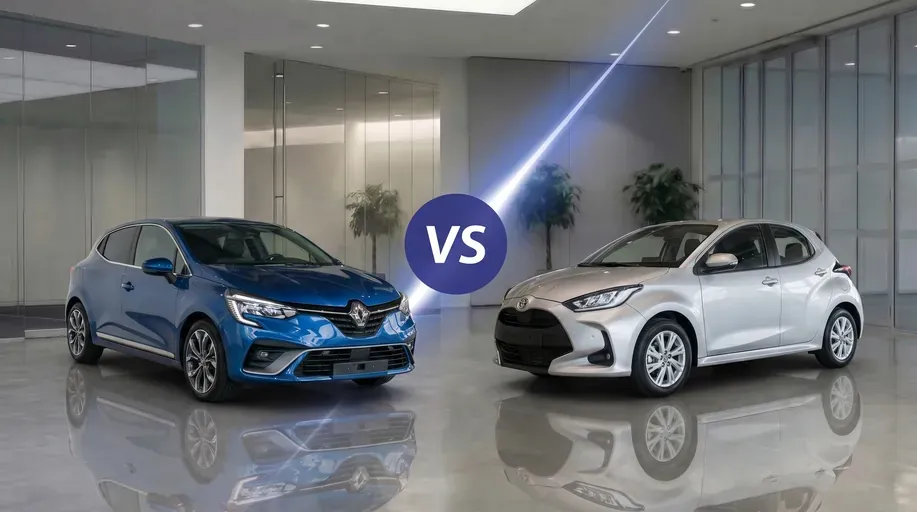
Detailed comparison: Renault Clio vs. Toyota Yaris. Which city hatchback should you choose? We evaluated fuel consumption, features, and reliability. Discover our verdict!
May 2, 2026