Articles

Car battle

Honda Accord vs. Mazda 6: Complete comparison 2026

Detailed comparison: Honda Accord vs Mazda 6. Discover the real differences in driving dynamics, features, and reliability of used models. Read our verdict.

May 16, 2026

VS
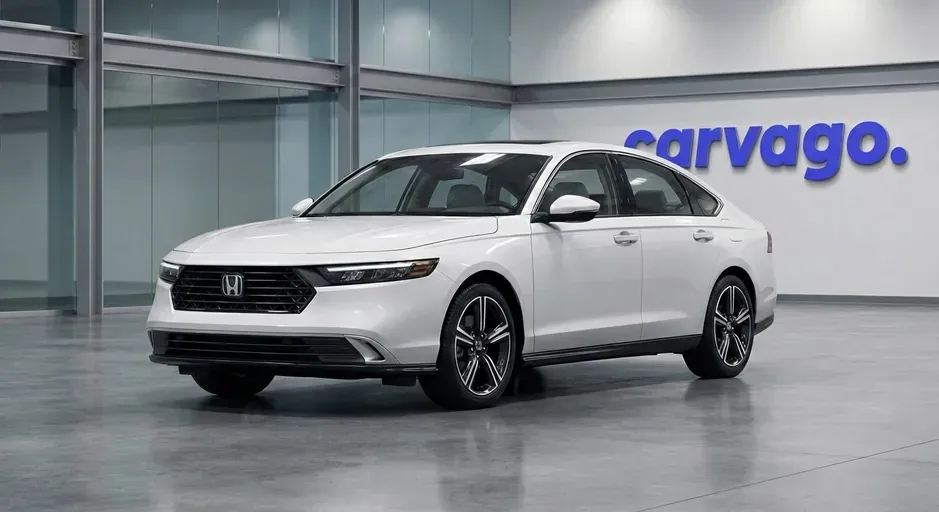
Honda Accord

Honda Accord

Mazda 6

Mazda 6

Introduction

The Honda Accord, also known as the Honda Inspire in some markets, represents a long-standing benchmark for reliability and comfort in the mid-size class, with an emphasis on a spacious interior and innovative technologies. On the other hand, there is the Mazda 6, formerly sold in its home market of Japan under the name Mazda Atenza, which captures drivers' attention with its unmistakable design and excellent driving characteristics focused on a sportier experience behind the wheel. In the following detailed comparison, we will look at which of these two popular Japanese models will be the better choice for you on the used car market.

Comparison of External Dimensions

When comparing the external dimensions of these two Japanese competitors, we will focus on the generations most relevant to today's used car market – the final European, eighth generation of the Honda Accord and the popular GJ generation of the Mazda 6. At first glance, the difference in overall body length is apparent. While the Honda Accord sticks to the more compact traditions of the mid-size class with a length of 4725 mm for the sedan version, the Mazda 6 in the same body style measures up to 4870 mm, which is a significant 145 mm more. This increase gives the Mazda a more majestic appearance and more legroom for passengers, although the longer body may be a slight disadvantage when parking in narrow city streets every day.

A completely unique feature of the Mazda 6 is its approach to the wheelbase. For the sedan, it reaches an above-standard 2830 mm, which surpasses the Honda Accord (2705 mm) by a massive 125 mm. Interestingly, however, for the more practical estate version, Mazda shortened the wheelbase to 2750 mm and the overall length to 4805 mm to maintain agile and sporty handling. Despite this shortening, the Mazda estate still comfortably outperforms the Honda Accord Tourer in terms of space, as the Accord's wheelbase remains the same for both body versions. As for the width of the car, both manufacturers happen to agree to the exact millimeter – both models have a width of 1840 mm, which in practice means a very similar and generous sense of airiness at elbow level.

ParameterHonda Accord SedanMazda 6 SedanHonda Accord EstateMazda 6 Estate
Width (mm)1840184018401840
Length (mm)47254865-487047504800-4805
Height (mm)1440145014701480
Wheelbase (mm)2705283027052750

In terms of overall physical proportions, the interpretation of the data is quite clear. If you prefer maximum interior space in your future car – especially for rear-seat passengers – and don't mind a slightly longer vehicle, the Mazda 6 clearly leads thanks to its generous wheelbase. The Honda Accord, on the other hand, benefits greatly from its slightly more modest external dimensions, which, combined with its high-quality chassis, makes it a more agile and easier-to-maneuver car in tighter spaces, while not losing a single millimeter to the Mazda in terms of interior cabin width.

Trunk Volume

When choosing a used mid-size car, trunk capacity often plays a decisive role, especially if you are looking for a reliable family car. The differences in overall practicality between individual models can be vast, which has a direct impact on how easily you can pack for the family. Whether you need a trunk sufficient for weekend shopping and longer vacations, or just space for a stroller and sports equipment, extra liters always come in handy. In the case of comparing the Honda Accord and Mazda 6, it is also necessary to take into account the specifics of the European used car market. While a roughly four-year-old used car is reliably represented by the still-popular Mazda 6 (GJ generation), for the Honda Accord, you have to reach for the older 8th generation (produced until 2015) due to the end of sales in Europe.

If we look at the elegant sedan body styles, the volume differences between standard internal combustion engines are not dramatic. The Mazda 6 offers a solid base volume of 480 liters, while the Honda Accord lags only slightly behind with a value of 467 liters. You will hardly notice a difference of just 13 liters in practice, and for both cars, the narrower loading opening is more of a limiting factor for transporting larger items. However, a completely different situation arises with modern electrified powertrains. An example of a version with reduced capacity is the latest Mazda 6e (GN generation), where the massive installation of the battery system reduced the sedan's base volume to a very modest 336 liters and the maximum capacity to 1074 liters.

By far the most important for most buyers, however, is the comparison of the more practical family variants, i.e., station wagons (Estate), where the different approach of both carmakers is clearly shown. The Mazda 6 Estate is the clear favorite with a base volume of 522 liters, and after folding down the rear backrests, it creates a spacious loading area with a total volume of 1664 liters. In contrast, the Honda Accord Estate (sold as the Tourer) intentionally prioritized dynamic lifestyle design at the expense of pure utility value, so its trunk has a below-average 406 liters at the base. The maximum volume is then only 1252 liters. In practice, this means that with the Mazda 6 you get space for several extra suitcases, while for the Honda you will have to pack for a family vacation with much more thought.

ParameterHonda Accord SedanMazda 6 SedanHonda Accord EstateMazda 6 Estate
Base volume (liters)467480406522
Max volume with seats folded down (liters)--12521664

A Clear Victory for the Family 🏆

While the battle of the trunks is very close for the sedans, the Mazda 6 clearly dominates in the much more sought-after estate category, offering families incomparably higher practicality and versatility compared to the more stylish but space-limited Honda Accord.

Discover the true condition of the car thanks to an independent inspection

Order CarAudit™

Trailer Weights

When choosing a practical mid-size car, towing capacity plays a key role, whether you plan to tow a caravan for a family holiday or need to transport heavier materials to a cottage. In the context of the market for approximately four-year-old used cars, the comparison between the Honda Accord and Mazda 6 is very specific. While the Mazda 6 in its popular GJ generation (suitable for finding a nearly new car) offers excellent and fully up-to-date values, the Honda Accord was no longer sold as new on the European market at this age. Even so, it is worth comparing how it stands historically against more modern competition.

  • Standard and maximum capacities: The Mazda 6 standardly tows 1500 kg of braked trailer with petrol engines (e.g., 2.0 and 2.5 SKYACTIV-G) and a respectable 1600 kg with the more powerful diesel versions 2.2 SKYACTIV-D. The Honda Accord in its last available 8th generation offered a very similar base (1500–1600 kg for petrol), but with the top diesel 2.2 i-DTEC, it could tow a maximum of up to 1700 kg, making it one of the strongest towers of its time.
  • Unbraked trailers and practicality: An interesting difference can be found with lighter unbraked trailers. The older Accord was on paper limited to just 500 kg for all engine versions. In contrast, the more modern Mazda 6 can tow 550 to 750 kg (depending on the specific weight of the car and engine). In practice, this means that with the Mazda you have safe room for a few extra suitcases and its capacity is perfectly sufficient for a weekend purchase of heavier building materials or transporting wood in a standard trailer.
  • Specific versions: In some modern cars, towing capacity often suffers due to the presence of heavy batteries. The advantage of the Mazda 6 is that even its mild-hybrid versions with the i-ELOOP system do not suffer from reduced towing capacity and fully maintain their full technical values.

Conclusion: If your priority is a modern car around four years old, the Mazda 6 is the only realistic and fully satisfactory choice from this pair. Its parameters more than cover the needs of an average family and recreational travelers. Although the Honda Accord historically offered a maximum towing capacity 100 kg higher in its powerful diesel versions, given the end of its sales in Europe, it is now a significantly older used car alternative.

Model and motorizationBraked weight of trailer (kg)Unbraked weight of trailer (kg)
Mazda 6 2.0 SKYACTIV-G (107 - 121 kW)1300 - 1500550 - 680
Mazda 6 2.5 SKYACTIV-G (141 - 143 kW)1500680 - 750
Mazda 6 2.2 SKYACTIV-D (110 - 135 kW)1600750
Honda Accord 2.0 (115 kW)1500500
Honda Accord 2.4 (148 kW)1600500
Honda Accord 2.2 i-DTEC (110 - 132 kW)1700500

Overview of Most Common Motorizations

When comparing the engines of the Honda Accord and Mazda 6, we encounter two completely different approaches to engineering and, at the same time, a vast age gap between the two models on the used car market. While the Mazda 6 in its latest generation (GJ) offers modern technology with an emphasis on naturally aspirated petrol engines with unusually high compression ratios and efficient diesels, the eighth-generation Honda Accord relies on an older design of high-revving i-VTEC engines and exceptionally refined i-DTEC diesels. The fundamental difference for today's buyer is that the Mazda 6 is commonly available as a nearly new, roughly four-year-old car. In contrast, European sales of the Honda Accord ended back in 2015. Both cars, however, target more demanding drivers who appreciate reliability and above-average driving characteristics; with the Honda, you will just have to accept a significantly older production date.

Honda Accord (8th generation)

The European career of the eighth-generation Honda Accord ended in 2015, which means you won't find this model on the market for attractive four-year-old used cars. In dealerships, you'll have to look for vehicles at least ten years old, which, however, bravely offset their age with legendary mechanical durability. The basis of the petrol range is the honest naturally aspirated 2.0 i-VTEC (115 kW), while the top-of-the-line 2.4 i-VTEC engine with 148 kW will satisfy drivers longing for the typical high-revving character of older Japanese cars, although it demands slightly higher fuel consumption. For long motorway journeys, the 2.2 i-DTEC diesels were a great choice, excelling in their time for their exceptional quietness and smoothness. They were offered in two power versions – the standard with 110 kW and a boosted variant for the Type-S version with 132 kW and 380 Nm of torque. Honda's automatic transmissions in this generation had only five speeds, which already lags behind more modern gearboxes in terms of dynamics and efficiency.

Engine typeFuel typePower (kW)Torque (Nm)Transmission
2.0 i-VTECPetrol1151926MT / 5AT
2.4 i-VTECPetrol1482346MT / 5AT
2.2 i-DTECDiesel1103506MT / 5AT
2.2 i-DTEC 180Diesel1323806MT

Mazda 6 (Generation GJ)

A completely different situation prevails with the Mazda 6, whose GJ generation was produced until 2024, making it perfect for the market of nearly new four-year-old used cars. Under the Skyactiv philosophy, Mazda went its own way and consistently ignored the trend of downsizing and turbocharging with small turbochargers for its petrol engines. The foundation is the exceptionally reliable 2.0 SKYACTIV-G available in 107 kW and 121 kW versions. For lovers of a smooth ride with plenty of power reserve, however, the best choice is the large naturally aspirated 2.5 SKYACTIV-G four-cylinder with 143 kW, which was standardly paired with an excellent, smooth-shifting six-speed automatic. If you cover tens of thousands of kilometres a year, Mazda offers twin-turbocharged 2.2 SKYACTIV-D diesel engines (110 kW or 135 kW). These have very decent pull thanks to torque of up to 445 Nm. Compared to the Accord, Mazda also adds an interesting practical advantage – for diesel estates, it was possible to pay extra for all-wheel drive (AWD) on the more powerful versions.

Engine typeFuel typePower (kW)Torque (Nm)Transmission
2.0 SKYACTIV-G 145Petrol1072136MT
2.0 SKYACTIV-G 165Petrol1212136MT / 6AT
2.5 SKYACTIV-G 194Petrol1432586AT
2.2 SKYACTIV-D 150Diesel1103806MT / 6AT
2.2 SKYACTIV-D 184Diesel1354456MT / 6AT

Decision by year 📅

While you can easily acquire a nearly new Mazda 6 with advanced and dynamic Skyactiv engines as a modern four-year-old used car, the reliable and driver-engaging Honda Accord will now only please a narrow group of buyers who don't mind looking for a vehicle at least ten years old.

Choosing the right engine is a key step for long-term satisfaction with a vehicle, which is why our recommendations are based on real-world performance, actual fuel consumption, owner experiences, and mechanical reliability. When comparing these two Japanese icons, we encounter a fundamental age difference on the used car market. While the Mazda 6 was sold as new until 2024, making it easy to choose from ideally broken-in cars around four years old, the Honda Accord definitively disappeared from the European market with the end of its eighth generation in 2015. In both cases, however, the automakers are linked by one fascinating fact – at a time when the rest of the world was massively downsizing engines and adding turbochargers, the Japanese stubbornly stuck with high-revving and honest naturally aspirated petrol engines, which today represent the proverbial holy grail of reliability.

For the Honda Accord, we recommend: 2.0 i-VTEC, 115 kW

Given that production of the Accord for Europe ended in 2015, you won't find this car in the popular four-year-old used car category. However, if you accept that you are buying an older car from the end of production (2011–2015 models), the naturally aspirated 2.0 i-VTEC petrol engine is the safest choice of all. For its displacement, this engine offers a great balance between linear pull, refined operation, and reliability, with real-world fuel consumption staying within reasonable limits of 7.5 to 8.5 liters per 100 km with a manual transmission. From a technical standpoint, it is a bulletproof unit where you practically only deal with routine maintenance. Its only major maintenance weakness is the occasional need to check and adjust valve clearances, as VTEC engines do not have hydraulic lifters. For cars of this age, however, pay much closer attention to the bodywork and chassis itself, where corrosion may already be appearing (especially wheel arches, door bottoms, and suspension arms). This engine is ideal for conservative drivers who appreciate mechanical durability and don't mind downshifting to push the engine into the rev range where its power beautifully builds up.

For the Mazda 6, we recommend: 2.0 SKYACTIV-G 165, 121 kW

If you are aiming for a car around four years old, the Mazda 6 with the 2.0 SKYACTIV-G 165 naturally aspirated petrol engine (available until the end of the model's production) will delight you with absolutely minimized service risks and extraordinary fuel efficiency. Thanks to an extremely high compression ratio and sophisticated aerodynamics, even a fully loaded estate can typically achieve 6.5 to 7 liters of petrol per 100 km, which is close to the values of diesel cars. The main argument for this engine choice, however, is the departure from the problematic 2.2 SKYACTIV-D diesels, where owners in the past struggled with carbon buildup and engine oil dilution due to incomplete DPF filter regenerations. With this petrol engine, on the other hand, direct injection works reliably, and thanks to well-designed thermal management, the engine does not suffer from carbon buildup nearly as much as its European competitors. A certain negative for some might be the linear but rather gradual dynamics at low revs – the engine simply behaves like a classic "naturally aspirated" unit and requires working with the precise manual transmission and higher revs for a brisker pace. It is simply the perfect choice for drivers who frequently drive shorter routes in city and suburban traffic and are looking for a calm, refined, and above all, completely predictable family car.
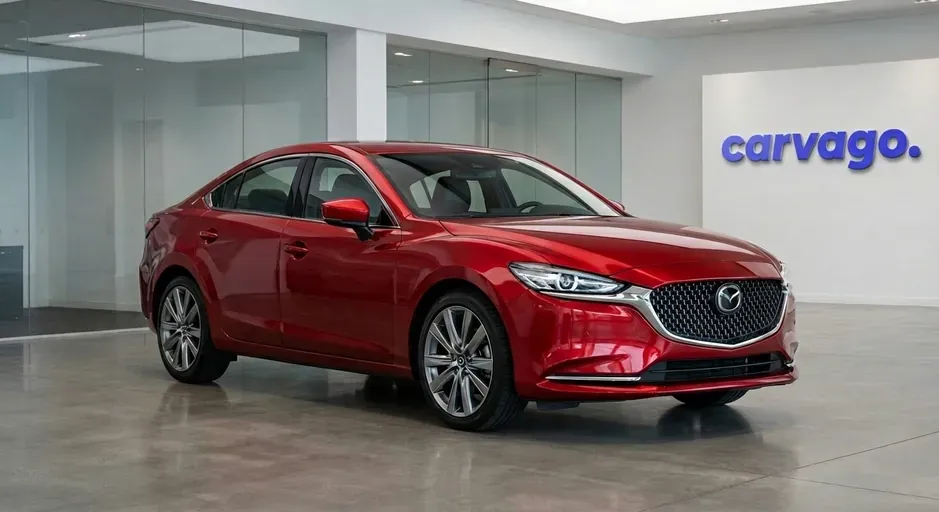
Real Fuel Consumption

Manufacturer-stated fuel consumption figures often differ from reality in real-world driving, frequently by one to two liters. For an objective comparison, it is therefore always more useful to rely on long-term data from users themselves. The averages listed below are based on statistics from the popular independent portal Spritmonitor, which collects records from thousands of drivers in everyday traffic. We focused on the most common engine versions, but it is important to emphasize the significant generational difference in availability on the used car market. While the Honda Accord disappeared from Europe with the end of the eighth generation (sold until roughly 2015), the Mazda 6 in the GJ generation represents a perfectly relevant choice even as a roughly four-year-old used car.

Model and engineAverage consumption (l/100 km)
Honda Accord 2.0 i-VTEC (115 kW)7,6
Honda Accord 2.4 i-VTEC (148 kW)8,7
Honda Accord 2.2 i-DTEC (110 kW)5,9
Mazda 6 2.0 Skyactiv-G (121 kW)6,8
Mazda 6 2.5 Skyactiv-G (143 kW)7,5
Mazda 6 2.2 Skyactiv-D (110 kW)5,5

When interpreting this data, it is very interesting to observe the different approaches of both Japanese manufacturers to emissions and fuel consumption. Neither brand succumbed to the trend of small-displacement turbocharged engines in these generations, yet the results differ. Mazda's innovative Skyactiv-G gasoline engines use an unusually high compression ratio, making them unexpectedly efficient in practice. The base two-liter in the Mazda 6 regularly drops below the seven-liter mark, something many smaller turbo engines might envy. Conversely, the Honda Accord relies on the traditional i-VTEC system. Its engines love to rev, but to achieve similar dynamics to the more modern Mazda, they require more frequent downshifting and higher revs, which pushes consumption up by an average of one liter. This trend is also confirmed for diesel units – the significantly more modern and lighter Mazda with the 2.2 Skyactiv-D diesel averages five and a half liters, while the older (though indestructible) 2.2 i-DTEC from Honda needs roughly six liters of fuel.

From the perspective of a typical driver, these figures bring clear conclusions. If you are looking for a gasoline car with excellent reliability for shorter routes, commuting to work, or calmer driving in the city and on country roads, the naturally aspirated two-liter in the Mazda 6 will be very kind to your wallet. On the other hand, those who cover tens of thousands of kilometers a year, mainly on highways, should clearly opt for the diesel variants in both cars, which excel in both real-world range and flexible acceleration when overtaking. Those interested in higher dynamics choosing the flagship gasoline engines (Honda 2.4 and Mazda 2.5) must expect average consumption shifted towards eight to nine liters, which is, however, a fair price for the powerful and silky-smooth operation of larger displacements.

Overall, it can be summarized that although fuel consumption is often not the only deciding criterion for a used car, the generational and technological lead is clearly on the side of the Mazda 6. Its efficiency proves that a modern naturally aspirated engine can be surprisingly economical, making the Mazda a more logical choice for those who count every kilometer. For die-hard Honda fans, the slightly higher consumption of the older Accord will be an acceptable price to pay for its legendary mechanical durability.

Price Range and Used Car Offerings

Used Car Market Situation and Price Range

When looking for a used car approximately 4 years old (around the 2021 and 2022 model years), buyers will encounter two completely different market realities for these two models. While the Mazda 6 is a long-standing staple on the European market, the 10th generation Honda Accord (2018–2022) was never officially offered through the dealer network here.

Mazda 6: Wide Selection and Stable Prices

In its third generation (following the last major facelift in 2018), the Mazda 6 benefits from extraordinary popularity among both private and corporate customers. There is an ample supply of used cars in dealerships, with a fairly even split between family estates (Wagon) and elegant sedans.

  • More affordable units: Prices for typical four-year-old used cars start at approximately €18,000 to €21,000. For this amount, you can usually find vehicles with the reliable 2.0 Skyactiv-G engine in lower or mid-range trims and with slightly higher mileage.
  • Top-tier versions: If you are looking for more exclusive pieces with the more powerful 2.5 Skyactiv-G engine in top trims such as Homura, Takumi, or Sports-Line and with low mileage, prices commonly reach between €27,000 and €31,000.
  • Value retention: Mazda's naturally aspirated petrol engines enjoy an excellent reputation on the market for long-term reliability. As a result, the depreciation of these vehicles on the used car market is very gradual.

Honda Accord: An Overseas Rarity

In our region, the 10th generation Honda Accord is primarily a choice for automotive enthusiasts specifically looking for a car that is engaging to drive and uncommon in Europe. Most cars offered here are individual imports, most often from North America.

  • Price range: Despite the very limited supply, prices for well-maintained four-year-old used cars remain relatively high. Vehicles from 2020 to 2022 with 1.5 VTEC Turbo engines, or the excellent 2.0 VTEC Turbo, or the hybrid powertrain, usually cost between €21,000 and €29,000.
  • Purchase risks: Given their imported origin, it is absolutely crucial to thoroughly verify the history of an Accord using the VIN code. A significant percentage of vehicles are imported to Europe from American salvage auctions after accidents and subsequently repaired. It is also necessary to check in detail that the lighting has been properly homologated for European traffic.
Compared Model (approx. 4 years old)Typical Price RangeAvailability on the Czech Market
Mazda 6 (3rd generation GL)€18,000 – €31,000Very good (official distribution)
Honda Accord (10th generation)€21,000 – €29,000Very rare (individual import)

Long-term Costs and Servicing

From the perspective of running costs, a widely available car makes more sense. With a used Mazda 6, the owner can benefit from predictable service costs and, above all, a wide network of authorized and independent service centers. The availability of both common and body parts from original or aftermarket manufacturers is completely problem-free in Europe.

In contrast, while the Honda Accord is mechanically one of the most robust models that can reliably handle hundreds of thousands of kilometers, its overseas origin can complicate ownership. Specific interior parts, bodywork, or certain electronic components may not be available in European warehouses. In the event of a minor accident or a non-standard fault, this often means long waiting times for the delivery of necessary parts from the USA and, naturally, a higher bill for their logistics.

Reason vs. Exclusivity ⚖️

While the Mazda 6 offers a rich selection of used cars, hassle-free European servicing, and overall very predictable costs, the imported Honda Accord will appeal to customers seeking driving excellence, for which they must set aside considerable time to thoroughly verify the history of every advertised unit.

Safety and Euro NCAP Rating

Both models, the Honda Accord and Mazda 6, are historically perceived as highly safe vehicles, with both brands having achieved five-star ratings in Euro NCAP crash tests in the past. However, it is crucial to assess these results in the context of the testing year. Euro NCAP methodology and protocols are constantly evolving and becoming more stringent over the years. While older tests focused primarily on passive safety and body rigidity, modern protocols place immense emphasis on advanced active systems – from cyclist detection to emergency braking when turning at intersections. Percentage scores from different years are therefore completely incomparable.

The Mazda 6 (in its third generation after the second major facelift) underwent Euro NCAP testing in 2018 according to the very strict standards of the time and earned a full five stars. It performed exceptionally well, particularly in adult occupant protection (95%) and child protection (91%), demonstrating the high rigidity of its body structure and sophisticated restraint systems. Protection of vulnerable road users reached a respectable 66%, and safety assist systems scored 73%. These results reflect a level of active safety that was above standard for its time, with the car featuring functions such as autonomous emergency braking and lane-keep assist. From the perspective of today's even stricter methodologies, the validity of the certificate for older cars is gradually expiring, but for a roughly four-year-old used car, it still represents a top level of verifiable protection.

In contrast, the Honda Accord presents a rather specific situation on the European used car market. Its latest generation (for example, the 10th generation, which corresponds to an age of about four years on the market) was not offered in Europe through the official sales network at all. For this reason, any relevant Euro NCAP test data for the modern Accord is missing. Its last recorded European test took place with the eighth generation back in 2009. Although the modern Honda Accord excels in the extremely demanding American IIHS crash tests and offers the advanced Honda Sensing assistance package, current figures are simply missing within the closely monitored European tables, which explains the empty values in the comparison.

If you are looking for a car with tangible proof of safety for local traffic, the Mazda 6 offers the European customer a more documented and comprehensive safety package confirmed by 2018 Euro NCAP standards. While the Honda Accord globally ranks among the safest in the mid-size class, when buying a used car in Europe, you will have to rely "only" on its excellent overseas reputation without a local five-star label.

ParameterHonda AccordMazda 6
Year of testingNot tested (data missing for newer generations)2018
Adult occupant protection-95 %
Child protection-91 %
Vulnerable road user protection-66 %
Safety assist systems-73 %

Verified European Safety vs. Overseas Standard 🛡️

The Mazda 6 features officially certified five-star safety from 2018, while the modern Honda Accord avoided Euro NCAP tests due to its absence from our market and relies on excellent ratings from American testing facilities.

Comparison of Interesting Equipment Features

In addition to standard equipment, each of the models offers several unique features that can be decisive for the customer. While one vehicle bets on the latest assistance systems and stunning interior spaciousness, the other focuses on a traditional driving experience and premium interior craftsmanship approaching luxury classes.

Honda Accord: Technological Sophistication and Generous Space

  • Infotainment and Connectivity: At the heart of the multimedia system is an 8-inch touchscreen, which offers wireless support for Apple CarPlay and Android Auto in higher trim levels. The technological impression is underscored by the Active Noise Cancellation (ANC) system, which uses speakers to actively suppress unwanted noise from the chassis and engine, ensuring above-average quietness in the cabin.
  • Powertrain and Transmissions: Customers in the used car market particularly appreciate the efficient hybrid system (e:HEV), but for enthusiasts, an interesting draw is the turbocharged 2.0-liter four-cylinder (related to the engine from the hot Civic Type R). This is additionally paired with a unique 10-speed automatic transmission for exceptionally smooth and rapid acceleration.
  • Safety Electronics: The Honda Sensing suite of assistance systems is standard across all trim levels in this generation. It includes advanced adaptive cruise control, a precise lane-keeping assistant, and a traffic sign recognition system.
  • Smart Solutions and Comfort: With its fastback body style, the Accord dominates its class in terms of rear-seat passenger space. Record-breaking legroom makes it an ideal family vehicle for long journeys without compromising trunk volume or the car's sporty silhouette.

Mazda 6: Premium Craftsmanship and Unity with the Driver (Jinba Ittai)

  • Infotainment and Ergonomics: Mazda Connect goes against the grain and does not rely primarily on touch control. Instead, it uses an intuitive rotary controller (Commander Control) located on the center console. The goal is to minimize the need to take one's eyes off the road. Additionally, the driver is aided by a Head-Up display that projects important information directly onto the windshield.
  • Chassis and Handling: The unique G-Vectoring Control Plus (GVC Plus) system is a brand specialty. When entering and exiting a corner, the system imperceptibly adjusts engine torque and slightly brakes the outer wheels. The result is smoother cornering, more confident chassis behavior, and less passenger fatigue during long drives.
  • Powertrain and Transmissions: Instead of hybrids and complex automatics, Mazda relies on proven yet innovative naturally aspirated Skyactiv-G engines with a high compression ratio, or the powerful 2.5 Turbo unit. Most cars on the market are equipped with a classic 6-speed automatic transmission with a torque converter, which prioritizes smoothness and direct throttle response.
  • Design and Premium Details: In higher trim levels (such as Takumi), the Mazda 6 offers materials more commonly found in premium German brands – fine Nappa leather, genuine Japanese Sen wood details, Ultrasuede microfiber, and ventilated front seats. Unlike the Honda, a huge advantage for the Mazda 6 on the European market is the availability of a highly elegant and practical station wagon (Wagon) version.

Key Advantages and Disadvantages

Honda Accord

Pros

Excellent cabin spaciousness, especially superior legroom in the rear seats

Economical and powerful powertrains (including a very efficient hybrid version)

Confident and sporty driving characteristics that mask the car's size

High reliability and long-term low operating costs

Very large luggage compartment for the sedan class

Cons

Higher levels of aerodynamic and road noise in the cabin at highway speeds

Complete absence of all-wheel drive (AWD)

Very low seating position, which can make entry and exit difficult for some passengers

Significantly limited availability on the European used car market (cars are often individual imports)

The Honda Accord is an ideal choice for those looking for an exceptionally spacious, reliable, and engaging sedan with low operating costs. It perfectly suits families and commuting managers who prioritize maximizing interior space and the efficiency of hybrid or turbocharged engines.

Mazda 6

Pros

Premium interior craftsmanship using soft-touch and high-quality materials

Top-tier driving characteristics with excellent steering and chassis feedback

Attractive, elegant, and timeless exterior design (Kodo design)

Option to choose the very popular and practical estate body style (Wagon)

Availability of reliable naturally aspirated engines with smooth operation and linear power delivery

Cons

More cramped space in the rear seats compared directly to competitors

More outdated and slower infotainment system with a smaller screen

Smaller luggage compartment volume both on paper and in practice

Higher fuel consumption for more powerful non-turbo gasoline engines

The Mazda 6 will primarily appeal to enthusiastic drivers who value top-tier dynamics, precise steering, and a premium cabin feel. It is a car for individualists who prioritize emotional design, traditional non-downsized engines, and driving pleasure over absolute practicality and trunk space.

Common Problems and Owner Complaints

Based on data from long-term owner experiences, service bulletins, and results from a comprehensive car inspection, we have compiled an overview of the most common problems you should watch out for with these used cars.

Honda Accord

The tenth generation of the Honda Accord (from 2018–2022) is generally among the very reliable and above-average rated cars; however, even it has seen several typical defects over the years.

  • 1.5 VTEC Turbo engine: The most frequently discussed issue is oil dilution by gasoline. It occurs especially in colder months during frequent short city trips when the engine doesn't have time to warm up fully. Regular oil changes help extend its lifespan.
  • Air Conditioning: In a relatively large number of units, refrigerant leaks occur due to leaks in the AC condenser. Honda responded to this defect in some regions with an extended warranty, so it's good to check the service history.
  • Infotainment and Electronics: Owners occasionally complain about the center display freezing, Bluetooth dropouts, or problems with stable Apple CarPlay/Android Auto connections. The solution is usually a system reset or installing newer software.
  • Assistance Systems (Honda Sensing): Radars and cameras of the assistance systems are sensitive to dirt. When driving in snow, slush, or heavy rain, temporary deactivation of systems and false obstacle warnings may occur.

Honda Accord: Watch out for short trips

Although the Accord is mechanically very reliable, the 1.5 Turbo engine requires occasional longer drives to prevent oil dilution by gasoline. The air conditioning must then be thoroughly checked for potential leaks when buying.

Mazda 6

The third-generation Mazda 6 after the latest facelifts (around 2018–2022) is mechanically very durable, yet it has its weak points that every physical inspection of a used car focuses on.

  • 2.2 Skyactiv-D engines (diesel): With diesel units, there is a risk of diesel particulate filter (DPF) clogging and engine oil dilution by diesel due to incomplete regenerations during frequent city driving. Compared to gasoline engines, carbon deposits in the intake form much more frequently here.
  • 2.5 Skyactiv-G engines (gasoline): In both turbocharged and naturally aspirated versions from earlier production years, problems with coolant leaks around the cylinder head or near the water pump occasionally occurred. The defect manifests as coolant loss and overheating.
  • Bodywork and Paint: Especially with the popular optional Soul Red Crystal paint, owners report a very thin and soft layer of paint that is prone to stone chips. Repairs of this paint after scratches are also technologically and financially quite demanding.
  • Electronics and Interior: A common defect revealed by almost every detailed technical car inspection is the failure of the electric folding motors for the exterior side mirrors. Slower responses of the older MZD Connect infotainment version after starting also appear.

Mazda 6: Great gasoline engines, but fragile paint

The Mazda 6 will please with excellent and reliable gasoline engines; however, avoid diesel units for predominantly city traffic. The most visible weakness remains the delicate paint, which very easily picks up road chips.

Tips for Buying a Used Car

When buying a used car, a thorough inspection is key. Here are some specific points to focus on for these two models, regardless of your choice. Especially with vehicles around four years old, the first signs of wear may start to appear, which you might not notice with the naked eye.

When choosing a Honda Accord:

  • Air conditioning condenser: In this model, refrigerant leaks appear after a few years of operation due to a vulnerable condenser that poorly resists flying stones. During the test drive, turn the temperature to minimum and check if the system can start blowing icy air within a few seconds.
  • Engine oil level and smell (1.5 VTEC Turbo): If the car was used mainly for short trips in the city and in colder climates, engine oil dilution with gasoline can occur. Pull out the oil dipstick – if the level is high above the MAX mark or you can clearly smell fuel from the mixture, be alert. A detailed and professional physical inspection of the used car will help safely identify this problem.
  • CVT transmission smoothness: The automatic continuously variable transmission (CVT) in gasoline engines must change ratios perfectly smoothly under all circumstances. If you feel jerking or hesitation when starting, crawling in traffic jams, or stepping hard on the gas, it often indicates neglected transmission fluid replacement.
  • Infotainment stability and connectivity: Thoroughly click through all functions of the dashboard display and try pairing with a phone via Apple CarPlay or Android Auto. The system must not freeze or restart spontaneously – this would indicate the need for a software update or even replacement of a faulty head unit.
  • Honda Sensing system functionality: Check the instrument cluster for any driver assistance system errors. A poorly calibrated or slightly damaged front radar (e.g., after a minor "bump" in a parking lot) will disable the adaptive cruise control and lane-keeping system.

When choosing a Mazda 6:

  • Paint thickness and corrosion protection: Mazda is famous for beautiful colors (especially the popular Soul Red Crystal shade), but the paint layer tends to be very thin and prone to chipping from highway stones. Carefully inspect the front parts and fender edges. To avoid unpleasant surprises with masked rust or poorly repaired paint, an independent technical inspection of the car is recommended, which also includes professional paint thickness measurement.
  • Vibration during braking: A known ailment of the Mazda 6 is faster-worn or thermally warped front brake discs. During the test drive, try to brake smoothly but more firmly from a speed of around 90 km/h on a safe section. Any pulsing in the brake pedal or steering wheel vibration means an early need for brake replacement.
  • Mirror folding mechanism: Plastic gears in electrically folding side mirrors wear out or break over time. During the inspection, fold and unfold the mirrors several times in a row. If they get stuck, don't unfold completely, or if you hear a loud spinning of the motor, a mechanism repair will be necessary.
  • Lubrication status in diesel versions (2.2 Skyactiv-D): Although four-year-old used cars are more often gasoline, pay special attention to diesels. These engines suffered from carbon buildup and diesel fuel entering the oil due to incomplete particulate filter (DPF) regenerations. A warning signal is a louder metallic sound at idle. It is ideal to request a service history report confirming more frequent oil changes.
  • Ghost touches (MZD Connect): In older models or cars that have stood in the sun for a long time, so-called "ghost touches" can occur, where the touchscreen registers non-existent clicks on its own. Stop the car with the engine running and watch for a few minutes to see if the infotainment starts switching stations or wandering through the menu on its own. A thorough comprehensive car inspection should reliably cover testing of all onboard electronics.

FAQ: Most Frequently Asked Questions

The Honda Accord is significantly more spacious, both in terms of rear legroom and trunk space. Its trunk offers a generous volume of 473 liters, while the Mazda 6 has a smaller trunk with a volume of 424 liters. For family use or frequent travel with more luggage, the Accord is the more practical choice.

The Mazda 6 has long stood out with an interior that, through its materials and top-notch craftsmanship, confidently challenges the premium class. It offers an elegant and minimalist design, the use of real leather or wood in higher trims, and excellent acoustic cabin insulation. While Honda offers a very high-quality, modern, and ergonomic cabin, the Mazda feels overall more luxurious and cozy in terms of materials.

Both cars are among the best-driving sedans on the used car market, but the Mazda 6 offers slightly more communicative steering and a more natural feel for sporty driving in corners. The Accord, on the other hand, excels in straight-line dynamics, especially if you go for the powerful version with the potent two-liter turbo engine. Mazda, conversely, bets on the smooth pull of large-displacement naturally aspirated and turbocharged engines with excellent throttle response.

The Honda Accord is the clear winner in operational efficiency, primarily thanks to its very economical hybrid variant (e:HEV), which can realistically achieve around 5 l/100 km. In the model years examined, the Mazda 6 does not offer a full hybrid powertrain and relies exclusively on classic gasoline engines. For the Mazda, real combined fuel consumption usually ranges between 7 and 8 l/100 km depending on the chosen engine.

Both Japanese automakers traditionally have an excellent reputation and are among the most reliable options on the used car market. Mazda 6's Skyactiv naturally aspirated engines are considered exceptionally durable, though they require careful and timely oil changes. For the Honda Accord, the reliability of both hybrid units and classic turbo engines is highly rated, while the mechanical craftsmanship of both vehicles guarantees a long service life without major breakdowns.

Conclusion: Which Model to Choose?

Our Verdict

Choosing between these two Japanese cars depends primarily on your priorities and your willingness to make compromises when searching the used car market. The Mazda 6 represents a much more rational and accessible choice for the European customer, attracting buyers with a wide selection of nearly-new four-year-old cars, captivating driving dynamics, reliable naturally aspirated engines, and a highly practical estate body style. In contrast, the Honda Accord will appeal more to die-hard car enthusiasts who appreciate its vast interior space and don't mind the more complex verification process for used cars imported from overseas, or looking for significantly older, albeit mechanically indestructible, units from previous official distribution. Therefore, if you are looking for a trouble-free, elegant family car with a clear history and predictable maintenance costs, the Mazda 6 is the clear favorite of the two, while the Accord remains an attractive but rather exclusive alternative for individualists.

Find your ideal car

Sources: ADAC, mdcr.cz, garaz.cz, fdrive.cz, emobility.cz, carsandcoffee.cz

This article was prepared using artificial intelligence tools. The section guarantor is Petr Dušek.

Related articles

Car battle

Audi A4 vs. Jaguar XE: Complete comparison 2026

Detailed comparison of the Audi A4 and Jaguar XE. Discover real-world experiences, differences in equipment, driving characteristics, and the final verdict. Which used sedan should you choose?

May 12, 2026

Car battle

Peugeot 508 vs. Renault Talisman: Complete comparison 2026

Detailed comparison of used Peugeot 508 vs. Renault Talisman. Which French car has better engines, equipment, and reliability? Find out in our verdict.

May 9, 2026

Car battle

Ford Mondeo vs. Škoda Superb: Complete comparison 2026

Detailed comparison: Ford Mondeo vs. Škoda Superb. Which used car offers better space, engines, and driving dynamics? Read our verdict and choose wisely.

May 2, 2026

We accept online card payments as well as wire transfers.

visa payment provider logovisa-electron payment provider logomastercard payment provider logomaestro payment provider logodiners-club payment provider logodiscover payment provider logo