Car battle
BMW řady 2 Gran Tourer vs. Volkswagen Touran: Complete comparison 2026
BMW 2 Series Gran Tourer vs Volkswagen Touran. A detailed comparison of family MPVs, including a space test and final verdict. Choose your ideal used car!
Apr 14, 2026
Articles
Car battle
Detailed comparison of the Ford S-Max vs. Volkswagen Sharan MPVs. Find out which used car offers more space, better driving characteristics, and reliability for the family.
May 9, 2026
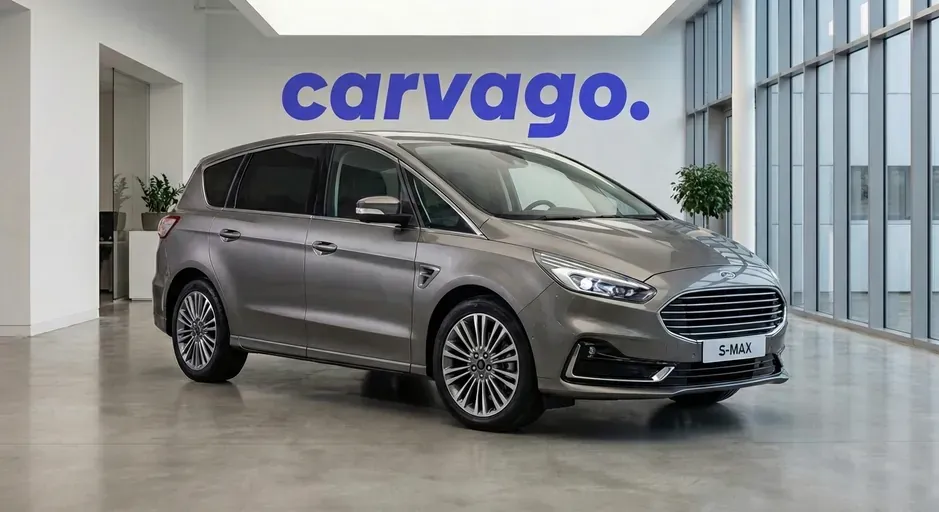
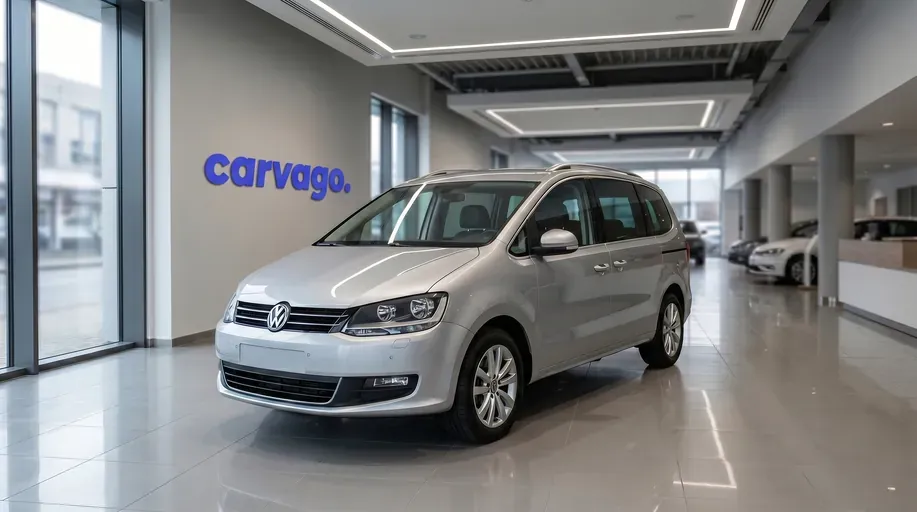
Ford S-Max represents a unique phenomenon in the MPV market, proving that even a seven-seater family car can offer a truly dynamic and sporty driving experience alongside generous interior space. Standing against it is the Volkswagen Sharan, often closely associated and structurally almost identical to its sister model, the SEAT Alhambra, which instead bets on maximum conservative utility, unrivaled travel comfort, and highly practical sliding side doors. Let's take a detailed look at which of these two popular family cruisers makes more sense on the used car market in terms of everyday practicality, costs, and reliability.
Volkswagen Sharan represents a traditional and functional approach to family cars, which is clearly reflected in its overall size. With a length of 4854 mm and a height of 1720 mm, it is 50 to 58 mm longer and a significant 65 mm taller than the Ford S-Max. In practice, this means the Sharan offers a boxier body shape that maximizes interior space, provides generous headroom for passengers, and makes handling child car seats easier. The Ford S-Max, on the other hand, maintains a more dynamic and sportier silhouette. While the slightly lower roofline takes away a few centimeters of headroom, it contributes significantly to better aerodynamics and overall more agile road behavior.
When looking at the width, the tables turn in favor of the Ford. With a width of 1916 mm, the S-Max is 12 mm wider than the Sharan (1904 mm). This extra width gives the S-Max a more muscular and planted stance, which can mean slightly more shoulder room in the interior, although it may also require more caution when parking in tight underground garages. However, the Volkswagen Sharan clearly dominates in the wheelbase category, measuring 2919 to 2920 mm. This is a substantial 70 mm more than the 2850 mm of the S-Max. This longer wheelbase guarantees not only excellent directional stability during long highway journeys but, above all, noticeably more legroom for passengers in the second and third rows of seats.
In conclusion, the exterior dimensions clearly dictate the character of both cars and directly influence your choice. If your absolute priority is maximum usable volume, an abundance of legroom, and you appreciate the taller build of a classic family hauler, the longer and taller Volkswagen Sharan is the more rational choice. The Ford S-Max, conversely, will appeal to drivers who need a practical and spacious car but prefer wider, lower, and overall sportier proportions, making it the most driver-appealing car in its class.
| Parameter | Ford S-Max Van | Volkswagen Sharan MPV |
|---|---|---|
| Length (mm) | 4796 - 4804 | 4854 |
| Width (mm) | 1916 | 1904 |
| Height (mm) | 1655 | 1720 |
| Wheelbase (mm) | 2850 | 2919 - 2920 |
Trunk space is often the most important criterion for family MPVs, ultimately deciding the final choice on the used car market. When buying a roughly four-year-old vehicle, every liter counts, as it is the interior volume that makes these cars versatile everyday companions. Both vehicles represent the absolute top tier for large families; however, they approach maximum utility with different design philosophies, which is reflected in the overall shape of the trunk. A larger trunk makes a fundamental difference in daily usability – it means room for several extra suitcases, easy storage of a stroller without the need for tedious folding, and overall significantly greater transport variability.
The second-generation Ford S-Max (2015–2023) combines elegant and dynamic design with still very solid practicality. In the standard five-seat configuration, it provides a basic trunk volume of 700 liters, which is perfectly sufficient for weekend shopping or a longer vacation. When using all seven seats, the available space naturally decreases to 285 liters. However, if you fold down both the second and third rows of seats, you turn the vehicle into a very capable workhorse with a transport capacity of up to 2020 liters. It is worth mentioning that if you are considering the newer full-hybrid versions (2.5 Hybrid), the maximum capacity is slightly compromised by the battery installation, and with all seven seats occupied, the volume in these versions drops to just 185 liters.
The second-generation Volkswagen Sharan, on the other hand, has played it safe from the start with practical boxy lines and is considered an uncompromising hauler among used family cars. In the standard five-seat layout, it offers a massive basic volume of 955 liters (when using the space up to the roof). Even when all seven seats are occupied, it offers slightly more space than its competitor with a capacity of 300 liters. After folding all rear backrests into a flat floor, the Sharan boasts a breathtaking volume of 2430 liters. In terms of absolute capacity, the Volkswagen wins hands down and will serve significantly better those who frequently transport oversized cargo. The Ford S-Max appeals to drivers for whom 700 liters is more than enough and who would rather trade some volume for more attractive curves.
| Parameter | Ford S-Max MPV | Volkswagen Sharan MPV |
|---|---|---|
| Base volume (liters) | 700 | 955 |
| Max volume with seats folded down (liters) | 2020 | 2430 |
While the Ford S-Max attracts with more dynamic proportions and space that is entirely sufficient for most families, the Volkswagen Sharan is the uncrowned king of practicality with a gigantic trunk that won't disappoint even during a complex move.
Family MPVs do not only serve for the comfortable transport of passengers, but for many buyers, they also play a crucial role as towing vehicles for family caravans, trailers, or heavier loads. When comparing the second generation of both models, which represent typical examples on the market for roughly four-year-old used cars, the Volkswagen Sharan emerges as the winner in terms of towing capacity. While for the Ford S-Max, the standard values for weaker diesel units (for example, the 2.0 EcoBlue with 88 kW) hover around 1500 kg and the maximum for the most powerful diesel two-liters reaches the 2000 kg mark, the Sharan pushes the limits significantly higher. Its common 2.0 TDI versions start with a towing capacity of 2000 kg, and more powerful specifications allow for towing a braked trailer weighing up to an impressive 2400 kg. Even with the basic petrol engines, Volkswagen is better off – the 1.4 TSI unit reliably handles 1800 kg, whereas the Ford with the 1.5 EcoBoost engine offers a towing capacity of only 1600 kg.
Also worth mentioning for the S-Max model is the newer 2.5 Hybrid version. Due to the implementation of batteries and the specific design of the electric powertrain, it has to make do with a reduced towing capacity of 1560 to 1750 kg, depending on the specific equipment. In practice, these differences mean that while the Ford S-Max is perfectly adequate for transporting bicycles on a tow bar or a lighter trailer fully sufficient for weekend shopping or a longer camping holiday, the Volkswagen Sharan provides a significantly larger margin and can tow even more massive twin-axle caravans or boat trailers. In conclusion, it can be stated that if you are looking for a reliable workhorse focused primarily on regular towing of heavy loads, the Sharan represents a more suitable choice thanks to its more robust towing power. However, for normal family purposes and occasional towing of average loads, both cars will serve you without any problems.
| Model and engine | Braked trailer weight (kg) | Unbraked trailer weight (kg) |
|---|---|---|
| Ford S-Max II 1.5 EcoBoost | 1600 | 750 |
| Ford S-Max II 2.0 EcoBoost | 1800 | 750 |
| Ford S-Max II 2.0 EcoBlue / 2.0 TDCi | 1500 - 2000 | 750 |
| Ford S-Max II 2.5 Hybrid | 1560 - 1750 | 750 |
| VW Sharan II 1.4 TSI / OPF BMT | 1800 | 750 |
| VW Sharan II 2.0 TSI (BMT) | 2000 - 2200 | 750 |
| VW Sharan II 2.0 TDI SCR BMT | 2000 - 2400 | 750 |
The range of engines for both family MPVs clearly shows the different approaches of the carmakers in the final years of production, which plays a key role for those interested in a roughly four-year-old used car. While the Ford S-Max tried to keep up with the times and constantly innovated its range – culminating in the deployment of a full hybrid powertrain – the Volkswagen Sharan relied on a proven and narrow range of classic internal combustion engines. For the buyer, this means a choice between Ford's technological variety, which will satisfy even more dynamically oriented drivers, and Volkswagen's conservative certainty with its economical units. The choice should thus reflect your typical mileage; diesels will be ideal for long-distance highway trips, while petrol or, in Ford's case, an exceptionally efficient hybrid makes sense for mixed or urban traffic.
Under the hood of the Ford S-Max from 2018 to 2022, we find a fairly diverse company. The basic petrol engine was the reliable 1.5 EcoBoost four-cylinder, while highway cruisers were powered by modern 2.0 EcoBlue diesels, which replaced the older TDCi generation from 2018. These diesels were offered in several power versions, including the top-of-the-line and dynamic Bi-Turbo version, some of which could be combined with all-wheel drive (AWD) and a smooth-shifting eight-speed automatic transmission with a rotary selector. As availability data shows, classic internal combustion engines – including diesels – gradually disappeared from the S-Max range at the turn of 2020 and 2021. For used cars from the youngest model years, the 2.5 Hybrid (FHEV) full hybrid powertrain is exclusively typical. This combines a large-displacement naturally aspirated four-cylinder with an electric motor and a continuous CVT transmission, through which Ford brought a very economical and mechanically durable alternative, ideal for suburban commuting.
| Engine type | Fuel | Power (kW) | Torque (Nm) | Transmission |
|---|---|---|---|---|
| 1.5 EcoBoost | Petrol | 118 / 121 | 240 | 6MT |
| 2.0 EcoBlue | Diesel | 110 / 140 | 370 / 400 | 6MT / 8AT |
| 2.0 EcoBlue Bi-Turbo | Diesel | 177 | 500 | 8AT |
| 2.5 Hybrid | Petrol (HEV) | 140 | 200 (combustion) / 280 (electric) | CVT |
The Volkswagen Sharan, on the other hand, offers a much narrower but time-tested selection of power units. In the years relevant for purchasing a roughly four-year-old used car, the range shrank practically to just two core engines: the 1.4 TSI petrol four-cylinder (in later years with an OPF particulate filter) and the legendary 2.0 TDI SCR BMT diesel engine. The two-liter diesel, which could also be purchased with 4MOTION all-wheel drive and the popular DSG dual-clutch transmission, is an absolute favorite among used car buyers thanks to its excellent fuel consumption and endurance on long routes. However, an important fact emerges from the available data – Volkswagen ended production of these sought-after diesel engines for the Sharan model as early as the end of 2020. Therefore, if you are looking for the youngest possible car from 2021 or 2022, you will be limited exclusively to the 1.4 TSI petrol engine, which was the only one to remain in the range until the final termination of production of the entire model.
| Engine type | Fuel | Power (kW) | Torque (Nm) | Transmission |
|---|---|---|---|---|
| 1.4 TSI (OPF BMT) | Petrol | 110 | 250 | 6MT / 6DSG |
| 2.0 TDI (SCR BMT) | Diesel | 110 / 135 | 340 / 380 | 6MT / 6DSG / 7DSG |
While the Volkswagen Sharan bets on a proven and economical diesel classic, which surprisingly gave way to a purely petrol version in the last years of production, the Ford S-Max impresses with a wider range topped by a modern full hybrid system perfectly suited for the city.
Choosing the right engine is absolutely crucial for long-term satisfaction with a family car, which is why our recommendations are based on real-world experience, mechanical reliability, actual fuel consumption, and owner feedback. Although both of these MPVs relied on powerful and efficient two-liter diesels for most of their lives, their final years on the market showed a very interesting divergence. While Ford completely phased out diesel engines for the S-Max at the end of 2021, replacing them with a reliable 2.5 Hybrid full hybrid powertrain, Volkswagen took the path of gradual reduction for the Sharan, quietly discontinuing the popular 2.0 TDI diesel in August 2020 and allowing the model to finish its run until 2022 primarily with the 1.4 TSI petrol engine. However, if you are looking for a used car roughly four years old, in both cases, it makes the most sense to go for the proven diesel classics from the end of the production run, which represent the most rational choice for heavy MPVs.
This two-liter diesel represents an ideal compromise between purchase price, performance, and running costs on the used car market. For the heavy S-Max, 110 kW of power is perfectly adequate, and thanks to 370 Nm of torque, the car easily handles a full load or highway climbs. Real-world fuel consumption remains at a respectable 6 to 6.5 liters per 100 km. Overall, the 2.0 EcoBlue engine (available until the end of 2021) is very reliable and perfectly suited for drivers who regularly cover long distances. Weak points include the urea injection system (AdBlue), where pump failures occasionally occur, and the risk of oil dilution with diesel fuel. This typically happens if the car is used exclusively for short city trips and the control unit constantly interrupts the diesel particulate filter (DPF) regeneration. Therefore, when purchasing, insist on a clear service history and physically check that the engine oil level on the dipstick does not exceed the maximum mark – this would clearly indicate diesel contamination. If you avoid purely city driving, this is unrivaled as the best choice in the entire Ford model range for highway and long-distance commuters.
In the case of the Volkswagen Sharan, the choice is clear – the legendary 2.0 TDI four-cylinder diesel from the EA288 family. Since production of this engine for the Sharan definitively ended in the second half of 2020, you will have to look for cars from the very last production series on the market for roughly four-year-old used cars. These units are extremely sought after by buyers and sell quickly. The 1.4 TSI OPF BMT petrol alternative, which was one of the few to remain in the lineup until 2022, struggles much more with a fully loaded and heavy MPV, resulting in noticeably higher fuel consumption. In contrast, the 110 kW version of the 2.0 TDI offers a perfect match of torque (340 Nm) and exemplary real-world fuel consumption of around 6.5 l/100 km. The engine is mechanically very durable and absolutely ideal for covering thousands of kilometers on family vacations. When choosing a used car, pay particularly close attention to the condition of the water pump – a known weakness of these engines is coolant leakage in the timing belt area. You can easily spot this potential problem by checking the level in the expansion tank, which should never be below the minimum mark, and by looking for dried pink coolant stains in the engine bay. As with the Ford, frequent city driving leads to faster DPF clogging, so this engine clearly benefits from regular runs on the highway.
Every experienced motorist knows that paper consumption values given by manufacturers often differ significantly from real-world operation, and for large, heavy family MPVs, this is doubly true. To get a more accurate picture, we analyzed user data from servers like the German Spritmonitor, where thousands of regular drivers share their actual fuel costs over the long term. We focused on roughly four-year-old used cars, i.e., models and engines from 2020 to 2022, which represent the most relevant choice for families on the current secondary market.
| Model and engine | Average consumption (l/100 km) |
|---|---|
| Volkswagen Sharan 1.4 TSI OPF (Petrol) | 8.2 |
| Ford S-Max 1.5 EcoBoost (Petrol) | 8.5 |
| Ford S-Max 2.0 EcoBlue (Diesel) | 6.2 |
| Volkswagen Sharan 2.0 TDI SCR (Diesel) | 6.9 |
| Ford S-Max 2.5 Hybrid (HEV) | 6.4 |
Looking at real data, it's clear that physics cannot be cheated. Small-displacement turbocharged petrol engines (1.4 TSI for Volkswagen and 1.5 EcoBoost for Ford) may attract with a lower purchase price and very quiet operation, but when trying to move a vehicle weighing over 1.7 tons, they simply work hard. The result is an average consumption safely exceeding the 8-liter mark, which jumps even higher when fully loaded. Conversely, traditional diesel units prove they rightfully belong in family haulers. The Ford S-Max with the more modern 2.0 EcoBlue diesel shows excellent efficiency with an average of 6.2 liters per 100 km. Volkswagen's proven two-liter TDI asks for just under 7 liters on average, which is still a very decent result considering the car's proportions.
For typical users, these trends lead to very clear recommendations. If you spend most of your time on highways or often travel with a full car over longer distances, the two-liter diesels from both brands represent the logical and by far the most economical choice. Drivers who, on the other hand, spend most of the week commuting in the city (for example, daily school runs), should avoid diesel engines due to the risk of DPF filter clogging. In such a regime, it makes the most sense to opt for the full-hybrid Ford S-Max, which combines the advantages of a petrol engine with an exemplary consumption of 6.4 liters, completely outclassing the petrol alternatives.
So, is fuel consumption the deciding factor when choosing between these cars? From our comparison, the Ford S-Max emerges as the winner. Its modern diesel engines can be slightly more economical in the real world than those in the aging Sharan, but the real trump card is the highly efficient 2.5 Hybrid variant. Volkswagen was unable to adequately respond to this technology in its long-overdue generation of the Sharan, whose production was ending during this period. However, if your heart beats for a traditional and reliable family TDI, the Sharan certainly won't ruin you with its operating costs.
The market for used family MPVs is currently very specific. Both the Ford S-Max and Volkswagen Sharan recently ended their long production runs, with Sharan production ending in 2022 and the S-Max following in 2023. Buyers looking for roughly four-year-old cars are thus choosing from the very last units produced. Although classic MPVs are slowly disappearing from the European market in favour of SUVs, both of these large-capacity models hold their value surprisingly well.
A used Ford S-Max from 2020 to 2022 represents an attractive offer for drivers looking for the ideal compromise between family space and sportier driving characteristics. In the listings, you will most often come across 2.0-litre diesels, and for the youngest model years, the popular hybrids.
The Volkswagen Sharan traditionally benefits from the strong reputation of the German brand, which is logically reflected in a slightly slower decline in its residual value. The supply of roughly four-year-old used cars is stable and limited mainly to the proven 1.4 TSI petrol engines and the legendary 2.0 TDI diesel.
| Used car comparison (2020–2022) | Ford S-Max | Volkswagen Sharan |
|---|---|---|
| Base price (higher mileage) | from approx. €16,000 | from approx. €17,000 |
| Average price (well-maintained units) | €19,000 – €23,000 | €21,000 – €27,000 |
| Price of nearly new and top versions | up to €31,000 | up to €38,000 |
| Typical available engines | 2.0 EcoBlue, 2.5 FHEV | 1.4 TSI, 2.0 TDI |
When comparing the market for four-year-old used cars, the Ford S-Max generally comes out as the more affordable choice. Volkswagen maintains a more premium price tag even as a used car, which on one hand means a higher initial investment, but on the other promises better resale value in a few years.
While the Ford S-Max often offers more modern technology for the same money, including a hybrid powertrain, the Volkswagen Sharan guarantees an exceptionally slow drop in value and the status of an indestructible family cruiser.
When choosing a used family car, passenger safety is an absolute priority. Euro NCAP crash tests serve as an independent assessment. For older generations of cars on the used market, however, it is crucial to understand the context and, above all, the year the vehicles were tested. The methodology and rigor of both crash and assistance tests evolve and become stricter every year. For this reason, it is not possible to simply and directly compare the percentage results of vehicles tested in different years. What would have easily earned five stars in the past would result in a much more average rating today when faced with new protocols (such as advanced cyclist detection or specific intersection collisions).
The second-generation Ford S-Max underwent full Euro NCAP testing in 2015 and received the highest possible rating of five stars at the time. The vehicle demonstrated an excellent level of passive safety, with an identical score of 87% for both adult and child passenger protection. It also performed very well by the standards of the time in protecting vulnerable road users (79%) and safety assist systems (71%), aided by the pre-collision assist with pedestrian detection available at the time of testing. Although the S-Max offers robust crumple zones, it is important to mention that the 2015 Euro NCAP certification officially expired in early 2022 due to the age of the test.
The Volkswagen Sharan has been on the market even longer. During its initial testing in 2010, it safely earned a full five stars. However, from the perspective of today's market for 4 to 5-year-old used cars, its re-testing from late 2019 is much more important. Much stricter testing criteria were already in place for this new assessment, based on which the Sharan received a revised rating of four stars. Adult protection remained at an excellent level with 89% (even a slightly higher score than the S-Max), and child protection reached a good 78%. The reduction in the overall rating is a direct result of lower percentage scores for pedestrian protection (59%) and safety assist systems (62%). The older platform design of the Volkswagen logically lost valuable points in demanding modern scenarios such as cyclist detection and other advanced autonomous emergency braking modes.
While the Ford S-Max boasts a better overall point score from an older and less stringent methodology, the Sharan's four-star result from 2019 better reflects how the vehicle meets modern safety standards. Both family MPVs are very safe vehicles in terms of structural rigidity and physical cabin protection. However, the S-Max gives a slightly better impression regarding child protection on board, not only due to the higher score but also thanks to the very clear and modern child seat mounting points.
| Parameter | Ford S-Max | Volkswagen Sharan |
|---|---|---|
| Year of testing | 2015 | 2019 |
| Adult occupant protection | 87 % | 89 % |
| Child occupant protection | 87 % | 78 % |
| Vulnerable road user protection | 79 % | 59 % |
| Safety assist systems | 71 % | 62 % |
Do not let the absence of one star in a modern and very strict test discourage you; both MPVs are solid and reliably engineered vehicles that can protect your family extremely effectively in the event of a collision.
In addition to the basic equipment, both models offer more than just the usual standard, and each has its own distinct approach to added value, which is reflected in a range of unique functional and technological solutions.
The Ford S-Max has long built its reputation as a family car that can also entertain the driver. Its equipment and design elements therefore often focus on dynamics and modern technology.
The Volkswagen Sharan represents the pinnacle of functional design, where every detail has been designed with maximum comfort and the seamless daily operation of larger families in mind.
Excellent driving characteristics and an agile chassis for an MPV
Attractive and sportier body design
Option of all-wheel drive (AWD) for selected engines
More modern onboard technology and user-friendly SYNC 3 infotainment
Powerful and refined diesel engines (especially the 2.0 EcoBlue version)
Absence of practical sliding side doors makes handling in tight parking lots more difficult
The third row of seats (in the seven-seater version) is very cramped and suitable mostly for children
Due to the dynamically sloping roof, there is less headroom for rear passengers
Slightly smaller maximum luggage capacity compared to boxier MPVs
Ford S-Max is an ideal choice for active drivers who need to transport a larger family but refuse to give up the joy of driving. With its dynamic appearance and perfectly tuned chassis, it forms a perfect compromise between everyday practicality and sportier style, even at the cost of minor concessions in the spaciousness of the rear rows.
Maximum emphasis on practicality thanks to sliding side doors
Huge interior space and a regular shape of the luggage compartment
Three individual seats in the second row and enough space even for adults in the third row
Highly efficient and reliable 2.0 TDI diesel engines
Excellent build quality and overall robustness of interior materials
Older platform, as this generation has been on the market with continuous updates since 2010
Very conservative, almost van-like design
More cumbersome driving behavior and more noticeable body roll in corners
Higher purchase price on the used car market and a premium brand surcharge
The Volkswagen Sharan will primarily appeal to large families looking for uncompromising space, high travel comfort, and top-notch utility value. Although its design and technology feel somewhat older, as an unbeatably practical hauler with convenient access via sliding doors, it makes great sense on the used car market.
Based on our own CarAudit inspections, long-term user experience, failure statistics, and service reports, we have compiled an overview of the most common problems that buyers of both used family cars should watch out for.
Ford S-Max (second generation) is considered a very well-built and driver-attractive family car; however, with increasing mileage and age, specific faults associated mainly with modern diesels and electronics may appear.
Despite occasional software quirks and the sensitivity of diesels to short city routes, the S-Max represents a durable and reliable family car. A thorough independent inspection of the car's technical condition before purchase should focus primarily on the automatic transmission service history and the correct function of the DPF filter.
Volkswagen Sharan is a long-standing fixture in the family segment, but its advanced technology, exceptionally rich equipment, and more complex construction bring several typical weak points that can significantly increase maintenance costs.
Sharan offers top-tier versatility and comfort, but convenience features like electric side doors and emission reduction systems can bring expensive repairs with higher mileage. Before purchasing, a thorough physical inspection of the used car is key to check the condition of the dual-clutch automatic and reveal any hidden play in the heavy chassis.
When buying a used car, a thorough inspection is key. Here are a few specific points to focus on for these two models, which is why a comprehensive car inspection should always take place before the final decision.
The Volkswagen Sharan has a major advantage in the form of rear sliding doors, which significantly simplifies handling child seats in narrow parking lots. In contrast, the Ford S-Max uses conventional opening doors, which require more free space next to the car for comfortable entry. For daily family use in the city, the German model is thus noticeably more practical.
Yes, the Ford model has long been rated by experts as the best-driving MPV on the market thanks to its agile chassis and very precise steering. Its competitor from Volkswagen is set up much more conservatively, and its domain is primarily a calm, smooth, and maximally comfortable ride on the highway. For drivers who like to enjoy a more spirited drive on country roads even with a family car, the S-Max is the clear choice.
Thanks to its strictly purposeful and boxier body, the Volkswagen is overall more spacious and offers tolerable comfort even for adult passengers in the optional third row. In a five-seat configuration, it has a giant trunk with a volume of 711 liters, while the more aerodynamic Ford has a value of 700 liters. For regular use of all seven seats, the Sharan is objectively a more suitable and comfortable solution.
Yes, both of these vehicles are among the few on the market that offer three full-sized, equal, and independently sliding seats in the second row. Furthermore, both the Ford S-Max and the Volkswagen Sharan feature ISOFIX anchors in all three positions. Installing and safely securing three child car seats side-by-side is therefore not the slightest problem for either model.
In the market for nearly new used cars, it pays to look for proven and economical two-liter diesel engines (2.0 EcoBlue for Ford and 2.0 TDI for VW), which have enough power for a heavy family car. However, if you are looking for a cleaner alternative primarily for the city, Ford also offers an exceptionally well-made full hybrid version with a 2.5 FHEV engine in younger model years. Whichever powertrain you choose, always insist on a documented history of regular oil changes for automatic transmissions.
The final decision between the Ford S-Max and the Volkswagen Sharan depends primarily on whether you prioritize driving pleasure or uncompromising space in a family car. If your absolute priority is maximum utility, an unbeatably large trunk, and the everyday practicality of sliding side doors, the more conservative Sharan represents an unsurpassed family hauler. Conversely, the Ford S-Max is the ideal choice for active drivers looking for agile handling, a more attractive design, and a more modern solution in the form of a very efficient full-hybrid powertrain. While the Volkswagen excels on the used car market with its transport capacity and exceptionally stable residual value, Ford offers a more affordable and much more fun-to-drive compromise for a large family.
Sources: ADAC, forbes.cz, novinky.cz, techfocus.cz, dopravniinfo.cz, veteran.cz
This article was prepared using artificial intelligence tools. The section guarantor is Petr Dušek.
BMW 2 Series Gran Tourer vs Volkswagen Touran. A detailed comparison of family MPVs, including a space test and final verdict. Choose your ideal used car!
Apr 14, 2026
Comparison: Citroën Grand C4 SpaceTourer (Picasso) vs Renault Grand Scénic. A detailed comparison of space, equipment, and prices. Which 7-seater MPV is better for you?
Apr 13, 2026
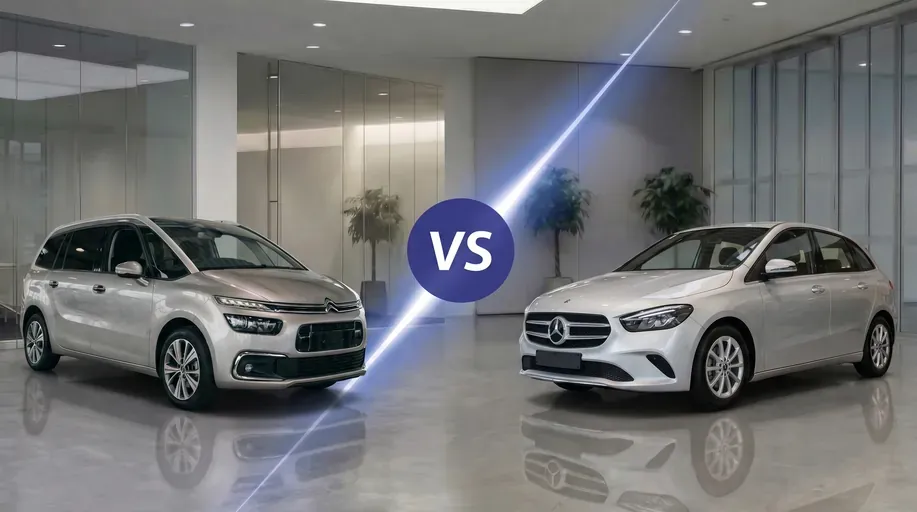
Citroën Grand C4 SpaceTourer (Picasso) or Mercedes-Benz B-Class? A detailed comparison of space, reliability, and equipment with a clear verdict for your choice.
May 3, 2026