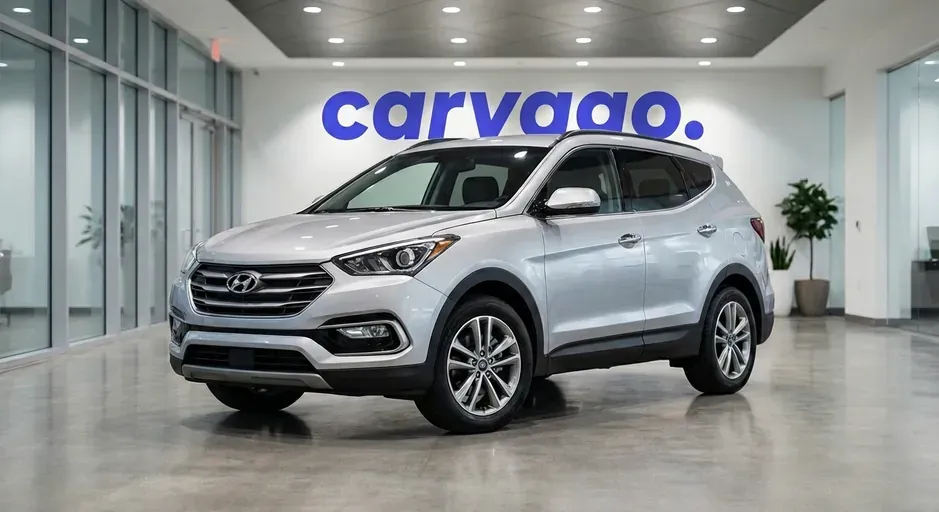
Hyundai Santa Fe vs. Volkswagen Tayron: Complete comparison 2026
Detailed comparison of Hyundai Santa Fe vs Volkswagen Tayron. We compared space, equipment, and driving characteristics. Read our verdict and choose the right SUV.
Apr 8, 2026
Articles
Car battle
Detailed comparison of Ford Edge vs. Hyundai Santa Fe. Discover real-world experiences with used cars, a comparison of equipment and space, and read our final verdict.
April 17, 2026


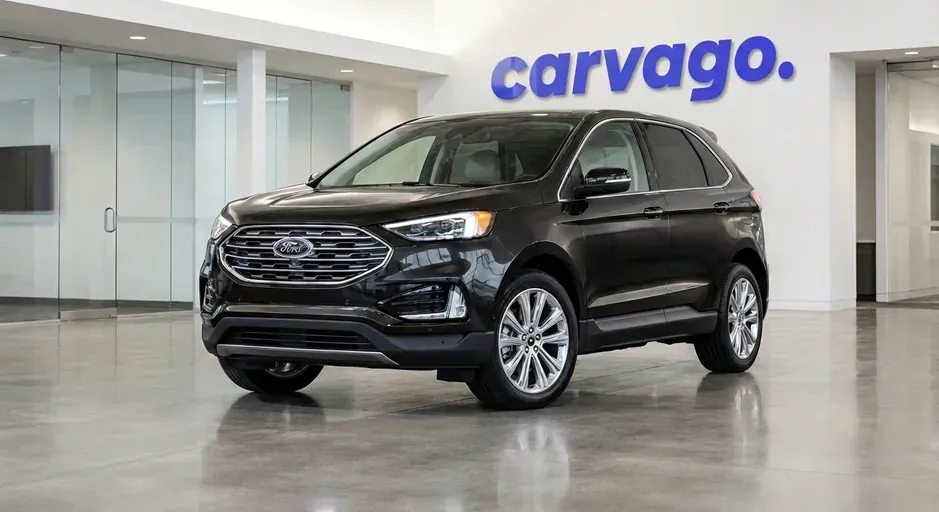
Ford Edge, also known as the Ford Endura in the Australian and New Zealand markets, is a dynamically styled SUV that relies on an attractive combination of generous interior space and typical American comfort. Its rival is the popular South Korean model Hyundai Santa Fe, which in its extended version became famous as the Hyundai Maxcruz or Santa Fe XL, and which attracts family drivers primarily with its extraordinary versatility, smart ergonomics, and rich technological equipment. The following comparison will reveal in detail the strengths and weaknesses of both these vehicles and help you find out which of them will stand up better in everyday use and become the smarter choice for your needs.
When looking at the exterior dimensions of these two family cruisers, the American origin of the Ford Edge is evident at first glance. If we focus on models approximately four years old on the used car market, we are comparing the 1st generation Ford Edge (whose sales in Europe ended around 2020) with the 4th generation Hyundai Santa Fe. The Ford makes a more massive overall impression on the road and outgrows its Asian rival in most physical dimensions. In practice, this means that while the Ford offers a more dominant stance and a sense of greater protection, the more compact Santa Fe will be slightly easier to navigate through the narrow streets and underground garages of European cities.
Looking at the specific numbers, the Ford Edge reaches a length of up to 4827 mm and boasts a very generous width of 1928 mm. In contrast, the competing 4th generation Hyundai Santa Fe is a maximum of 4785 mm long and 1900 mm wide. The American representative is thus 42 mm longer and 28 mm wider. Although this might not seem like a massive difference from the table values, the Ford's above-standard width can mean that standard parking spaces at shopping centers will feel a bit tighter. However, this minor disadvantage when parking is fully compensated for by excellent shoulder room, making the Ford an ideal choice for taller or broader passengers.
A key parameter for longitudinal interior space is the wheelbase, where the Ford Edge clearly has the upper hand. With a value of up to 2850 mm, it surpasses the Santa Fe and its 2765 mm by a significant 85 mm. This generous dimension translates directly into literally king-sized legroom in the rear seats. Furthermore, with a maximum height of 1751 mm, the Ford is noticeably taller than the Santa Fe (1685 mm). As a result, the Edge provides a better and more elevated view from the driver's position, while the lower silhouette of the Hyundai model offers the advantage of less body roll in corners and better overall aerodynamics during highway travel.
The following table shows the ranges of dimensions for the examined generations of both vehicles available on the used car market (1st generation for the Ford Edge and 4th generation for the Hyundai Santa Fe).
| Parameter | Ford Edge SUV | Hyundai Santa Fe SUV |
|---|---|---|
| Length (mm) | 4808 - 4827 | 4770 - 4785 |
| Width (mm) | 1928 | 1890 - 1900 |
| Height (mm) | 1686 - 1751 | 1680 - 1685 |
| Wheelbase (mm) | 2848 - 2850 | 2765 |
Trunk capacity plays an absolutely crucial role when choosing a large family SUV. Whether you're dealing with daily logistics with children or planning a long vacation, extra liters mean significantly less stress when packing. Both the Ford Edge and the Hyundai Santa Fe are robust vehicles that offer extraordinary transport capacity, although each model approaches the use of interior space slightly differently. For those interested in a used car approximately four years old, well-chosen generations of both vehicles represent the embodiment of absolute practicality, but small differences in total volume and interior variability can tip the scales in the final decision.
The Ford Edge (sought after primarily in its facelifted first-generation version from the years just before the end of European sales around 2020) offers a solid base volume of 602 liters in its huge and symmetrically shaped trunk. After fully folding the rear seats, this space grows to an impressive 1,847 liters. Its main domain is a very wide loading opening and regular wall shaping without disruptive alcoves. Thanks to this, it provides space for several extra suitcases and easily swallows a bulky stroller and sports equipment. As a result, this car is fully sufficient for weekend shopping and longer vacations for four without the need to make any compromises.
On the other hand, the fourth-generation Hyundai Santa Fe (a typical representative of the used car market from 2020 to 2024) counters with an even more generous base volume and slightly more sophisticated sliding seat variability. In the standard five-seat configuration, it offers a trunk with a generous volume of 634 liters. After folding the rear bench, you also get an excellent maximum space of 1,704 liters. However, with this model, it is crucial to monitor the chosen engine – if you go for the popular plug-in hybrid (PHEV) version, you must account for a slightly reduced space that fell victim to the built-in batteries, reducing the base capacity to 621 liters. Despite this small tax for electrification, the Santa Fe remains an exceptionally practical family all-rounder.
While the Hyundai Santa Fe slightly wins in base trunk volume and offers excellent flexibility for daily family tasks, the Ford Edge scores with its total transport capacity after folding the rear seats. So, if you're looking for a vehicle for the occasional transport of exceptionally bulky loads, the American representative with the blue oval badge will serve as an unsurpassed workhorse, while the Korean SUV excels in daily family usability.
| Parameter | Ford Edge SUV | Hyundai Santa Fe SUV |
|---|---|---|
| Base volume (liters) | 602 | 634 |
| Max. volume with seats folded (liters) | 1,847 | 1,704 |
While the Hyundai Santa Fe scores with a slightly larger base trunk and excellent variability for every day, the Ford Edge offers a literally giant cave for transporting the largest loads after folding the rear seats.
When choosing a family SUV, towing capacity often plays a key role, whether you plan to tow a heavy caravan or just need to attach a trailer. In the context of roughly four-year-old used cars, the Ford Edge (1st generation, available until 2020) and the Hyundai Santa Fe (4th generation) offer quite different approaches that can fundamentally influence your decision.
Across all its diesel engines (the older 2.0 TDCi and the newer 2.0 EcoBlue), the Ford Edge offers very consistent values, providing a standard and maximum braked trailer weight of 2000 kg. You don't have to search through specifications for long – with any Edge, you get a reliable workhorse whose towing power is sufficient for weekend shopping as well as longer holidays with a larger caravan.
The towing capabilities of the fourth-generation Hyundai Santa Fe are much more dependent on the chosen engine:
Final Evaluation: If your absolute priority is the maximum possible load on the tow bar, the fourth-generation diesel Hyundai Santa Fe with a limit of up to 2500 kg is the clear choice. The Ford Edge, on the other hand, brings complete certainty in the form of 2000 kg for all common versions, making it a worry-free and fully sufficient all-rounder. Choosing a used Santa Fe requires caution in the case of hybrid powertrains, which could unpleasantly limit you when planning a family holiday with a heavy caravan. The maximum weight of an unbraked trailer is limited for both cars by the standard legislative maximum of 750 kg.
| Model and engine | Braked trailer weight (kg) | Unbraked trailer weight (kg) |
|---|---|---|
| Ford Edge 1st gen (2.0 TDCi / 2.0 EcoBlue) | 2000 | 750 |
| Hyundai Santa Fe 4th gen (2.2 CRDi) | 2000-2500 | 750 |
| Hyundai Santa Fe 4th gen (2.4 GDI) | 2000 | 750 |
| Hyundai Santa Fe 4th gen (1.6 T-GDI Hybrid) | 1650 | 750 |
| Hyundai Santa Fe 4th gen (1.6 T-GDI Plug-in Hybrid) | 1350 | 750 |
Both of these majestic SUVs take a different approach to their powertrain offerings. While the Ford Edge relied exclusively on the massive torque of diesel engines in the European market, the fourth-generation Hyundai Santa Fe (offered between 2018–2024) gradually electrified its range. For those looking for a roughly four-year-old used car, this means a clear choice: with Ford, you'll find proven 2.0-litre diesel engines in various power levels, while Hyundai offers not only the powerful 2.2 CRDi four-cylinder diesel but also modern full-hybrid (HEV) and plug-in hybrid (PHEV) petrol versions with the 1.6 T-GDI engine. If you're looking for maximum traction and pull for heavy trailers, the powerful diesel all-wheel-drive versions from both brands will be ideal. Conversely, those who spend a lot of time in the city and appreciate silence and lower consumption will be pleased by the electrified variants from Hyundai.
Ford Edge bet everything on one card in Europe – and that card is diesel. Older models (2016–2018) used 2.0 TDCi engines, which were supplied in a 132 kW (180 hp) version and a twin-turbocharged bi-turbo variant with 154 kW (210 hp). With the arrival of the facelift at the end of 2018, these units were replaced by cleaner and more efficient 2.0 EcoBlue engines, which are much more relevant for the younger used car market. The base was a 110 kW (150 hp) version with an eight-speed automatic, the middle ground was a 140 kW (190 hp) variant for the manual, and the top was the powerful 2.0 EcoBlue Bi-Turbo providing 175 kW (238 hp) and a massive 500 Nm of torque. All more powerful variants were paired with all-wheel drive as standard. Sales of the model in Europe ended in late 2020, so you will exclusively encounter cars manufactured up to this date on the used market.
| Engine type | Fuel | Power (kW) | Torque (Nm) | Transmission |
|---|---|---|---|---|
| 2.0 TDCi (until 2018) | Diesel | 132 | 400 | 6MT / 6AT |
| 2.0 TDCi Bi-Turbo (until 2018) | Diesel | 154 | 450 | 6AT |
| 2.0 EcoBlue | Diesel | 110 / 140 | 370 / 400 | 8AT / 6MT |
| 2.0 EcoBlue Bi-Turbo | Diesel | 175 | 500 | 8AT |
The fourth generation of the Hyundai Santa Fe underwent a significant transformation during its life cycle. Between 2018 and 2020, older 2.0 CRDi units and the 2.4 GDI petrol engine were available, but when looking for a roughly four-year-old used car, you will be primarily interested in the range following the major facelift at the end of 2020. At that time, naturally aspirated petrol engines and the weaker diesel disappeared from the range, and the improved 2.2 CRDi turbodiesel (148 kW), paired with a new eight-speed dual-clutch transmission (8DCT), took center stage. A major innovation was the hybrid systems available with both 2WD and 4WD. The basic 1.6 T-GDI HEV hybrid has a combined output of 169 kW (230 hp), while the top-of-the-line plug-in hybrid version (PHEV) with a larger battery offers a system output of 195 kW (265 hp) and the possibility of pure electric driving with a stated range of around 58 km.
| Engine type | Fuel | Power (kW) | Torque (Nm) | Transmission |
|---|---|---|---|---|
| 2.4 GDI (until 2020) | Petrol | 138 | 241 | 6AT |
| 2.0 CRDi (until 2020) | Diesel | 110 / 136 | 400 | 6MT / 8AT |
| 2.2 CRDi | Diesel | 147 / 148 | 440 | 8AT / 8DCT |
| 1.6 T-GDI Hybrid | Petrol/HEV | 169 | 350 | 6AT |
| 1.6 T-GDI Plug-in-Hybrid | Petrol/PHEV | 195 | 350 | 6AT |
While the Ford Edge will appeal to lovers of traditional and powerful diesel engines ideal for long motorway journeys and towing, the Hyundai Santa Fe wins with a more modern and broader range, which includes highly efficient hybrid versions that excel primarily in the city and on country roads.
When choosing an engine for these massive, approximately two-ton SUVs, torque and fuel consumption at highway speeds play a crucial role. Although the new car market has leaned heavily towards petrol hybrids in recent years, reliable diesel engines remain the most sensible choice for the roughly four-year-old used car market and long-term satisfaction. Diesel units in both cars offer unrivaled pulling power, refined operation, and reasonable running costs for those who use the car for long family trips, towing caravans, or highway commutes.
Since the Ford Edge ended its presence on the European market at the end of 2020, you will be looking for cars from the end of its production cycle in used car dealerships. From the available range, the top-of-the-line two-liter with two turbochargers from the facelifted version of the first generation is by far the best choice.
In the used car market for vehicles around four years old, you will come across the fourth generation of the model (produced until 2024), for which this diesel four-cylinder is the absolute ideal. Given that the diesel engine has completely disappeared from the range in the latest fifth generation from 2024, this specification is extremely sought after among those interested in a used Santa Fe.
As is often the case in the automotive world, official fuel consumption figures provided by manufacturers often differ more or less from everyday reality. To get the most accurate picture of actual operating costs, it is best to rely on real-world data shared by drivers themselves on community platforms, such as the popular portal Spritmonitor.de. To make the comparison relevant for the current used car market and reflect vehicles approximately four years old, we have selected engines from the facelifted first generation of the Ford Edge (sought-after models from production years 2019–2020) and from the modern fourth generation of the Hyundai Santa Fe (production years 2020–2024).
| Model and Engine | Average Consumption (l/100 km) |
|---|---|
| Ford Edge 2.0 EcoBlue | 6.6 |
| Ford Edge 2.0 EcoBlue Bi-Turbo | 7.2 |
| Hyundai Santa Fe 2.2 CRDi | 6.5 |
| Hyundai Santa Fe 1.6 T-GDI Hybrid | 6.9 |
| Hyundai Santa Fe 1.6 T-GDI Plug-in-Hybrid | 1.6 |
Looking at the real-world data, several interesting trends emerge. For SUVs of this size and weight, traditional diesel engines still maintain excellent efficiency. The 2.2 CRDi unit from Hyundai and the standard 2.0 EcoBlue version from Ford can run with a very pleasant consumption of around six and a half liters. The more powerful Bi-Turbo variant from Ford logically consumes slightly more fuel, but an average of 7.2 l/100 km is still a reasonable value given the available power. Surprisingly, Hyundai's electrification performs well. It turns out that a hybrid powertrain with a small-displacement turbocharged gasoline engine (1.6 T-GDI Hybrid) in a heavy car does not automatically mean it will guzzle fuel – thanks to the help of the electric motor, it manages with an average of less than seven liters. The extremely low value of 1.6 l/100 km for the Plug-in-Hybrid version is impressive on paper, but in practice, it fully reflects a specific sample of users who really consistently and regularly charge their car.
In terms of typical use, these figures bring clear recommendations. If you are one of those drivers who regularly cross the country on highways and cover longer distances daily, a diesel engine (whether in the Ford or the diesel Santa Fe) will represent the safest choice with stable consumption. Conversely, for family trips, city driving, or daily suburban commuting, a classic diesel is not suitable. This is where you will fully appreciate Hyundai's hybrid technologies, which can reduce fuel consumption to an absolute minimum in traffic jams and during slow driving. In the case of a plug-in hybrid, you can drive these short routes almost exclusively on electricity, provided you charge regularly at home.
In conclusion, operating costs and fuel consumption should play a crucial role when deciding between these two vehicles. While the Ford Edge in the selected generation relies exclusively on the proven diesel classic created for highway travel, the fourth-generation Hyundai Santa Fe offers much broader options. Its sophisticated hybrid powertrains make great economic sense, especially for those drivers whose territory is more city streets and shorter distances.
When looking at the used car market for vehicles approximately 4 years old (i.e., model years roughly 2020 to 2022), a noticeable price difference is apparent. While the Ford Edge gradually withdrew from the European market earlier and listings are dominated by cars from 2019 to 2021, the fourth-generation Hyundai Santa Fe still scores very strongly after its recent facelift, and its residual value remains higher overall.
| Model | Common Price (higher mileage) | Price for a Well-Maintained Unit (lower mileage, top trim) | Typical Powertrains on the Market |
|---|---|---|---|
| Ford Edge | from €21,000 | up to €33,000 | Diesel (2.0 EcoBlue) |
| Hyundai Santa Fe | from €27,000 | up to €39,000 | Diesel (2.2 CRDi), HEV, PHEV |
In terms of value for money when buying a used car, the Ford Edge emerges as the more affordable choice for those interested in a large family SUV with a classic diesel engine. While the Hyundai Santa Fe requires a significantly higher initial investment, it compensates with more modern cabin technology, more sophisticated assistance systems, and the availability of highly efficient electrified powertrains.
While the Ford Edge attracts with an excellent ratio of interior space and affordable prices for older used cars, the Hyundai Santa Fe confidently justifies its higher price tag with more modern technology, desirable hybrid engines, and a slower depreciation rate.
Both compared models achieved the prestigious five-star Euro NCAP safety rating in their time; however, context is crucial for an objective assessment. Crash test methodologies are gradually becoming more stringent – newer tests introduce more demanding frontal collision simulations, more advanced monitoring of child passenger vulnerability, and stricter requirements for automatic detection of cyclists at intersections. Percentage scores from different years cannot be taken as entirely equivalent. Nevertheless, these certifications, whose validity has formally expired given the age of the used cars (Euro NCAP guarantees it for approximately six years), give us a very clear picture of the protection these vehicles offer their occupants.
The Ford Edge underwent Euro NCAP testing in 2016 with an overall five-star result. The car recorded a very strong result in safety assistants (89%), confirming the advanced active equipment for accident prevention that Ford offered at the time. In the category of passive adult protection, it earned 85%. However, child protection was rated at 76%, as the methodology at the time revealed slight reserves in chest and neck protection for dummies simulating older children on booster seats during specific frontal impact scenarios. Protection of vulnerable road users reached an average of 67%.
The Hyundai Santa Fe (fourth generation) underwent safety testing in 2018 and also took home five stars, but according to a significantly more demanding and newer protocol. This model excelled in the area of raw passive safety at the time – adult protection reached an excellent 94% and child passenger protection an exemplary 88%. This points to a very rigid, modernly dimensioned body structure with optimal rear seat belt settings. For assistance systems, the Hyundai received 76%, which primarily reflected the aforementioned stricter scoring of active safety compared to 2016. The result for pedestrian and cyclist protection (67%) remained percentage-wise identical to the Ford.
From the perspective of current safety requirements, the Hyundai Santa Fe comes out better in the comparison. Although the Ford Edge is a very well-equipped car in terms of active assistants and feels robust on the road, the Santa Fe, thanks to a construction tested according to newer standards, can rely on a demonstrably higher level of passive protection, which is especially true for child passengers in the rear seats.
| Parameter | Ford Edge | Hyundai Santa Fe |
|---|---|---|
| Year of testing | 2016 | 2018 |
| Adult occupant protection | 85 % | 94 % |
| Child occupant protection | 76 % | 88 % |
| Vulnerable road user protection | 67 % | 67 % |
| Safety assistance systems | 89 % | 76 % |
Thanks to the more recent testing date and significantly higher rating in rear passenger protection, the Hyundai Santa Fe offers a more modern and safer environment for everyday family travel.
In addition to standard equipment, each of the models offers several unique features that can be decisive for the customer, clearly demonstrating the different approach of both carmakers to user added value.
The Ford Edge bets on comfort on long journeys, a massive appearance, and specific technologies aimed at suppressing external disturbances.
The Hyundai Santa Fe primarily targets families, maximum safety innovations, and top-tier electrification of powertrains among newer used cars.
Excellent cabin soundproofing thanks to the Active Noise Control system
Generous interior space and above-standard interior width in the second row
Powerful and refined 2.0 EcoBlue diesel engine (especially in the bi-turbo version)
Extremely comfortable chassis ideal for long highway journeys
Rich standard equipment in used cars, often in the luxury Vignale specification
Absence of a seven-seater version (available only for five passengers)
Outdated dashboard design and older generation infotainment
Higher real-world fuel consumption and overall operating costs
Discontinuation of sales in Europe may mean a faster decline in residual value
The Ford Edge is a typical American SUV that scores on European roads primarily with its smooth ride and huge space for five passengers. It is an ideal choice for drivers who often cover long highway distances and appreciate above-average acoustic comfort over the latest technological gadgets.
Option of a seven-seater version for larger families
High-quality interior workmanship with a distinct premium feel
Availability of modern fuel-efficient powertrains including full-hybrid (HEV) and plug-in hybrid (PHEV)
Top-tier assistance systems and a high level of active safety
Excellent reliability backed by a five-year factory warranty (often still partially valid for four-year-old cars)
The third row of seats is spatially suitable mostly for children
The battery in the plug-in hybrid version slightly reduces the luggage compartment volume
Driving performance is purely focused on comfort, completely without dynamic ambitions in corners
The massive center console with a large number of buttons can seem confusing at first
Hyundai Santa Fe represents a modern family cruiser that attracts with the variability of its seven-seater interior and advanced hybrid and diesel technologies. It will primarily appeal to large families looking for maximum safety, a luxury-feeling cabin, and an excellent price-to-value ratio on the used car market.
Based on long-term user experience, service reports, and our own data, which is regularly provided by a comprehensive car audit, we have compiled an overview of the most common problems that buyers of approximately four-year-old used cars of these models should watch out for.
For the second-generation Ford Edge (especially after the facelift), most complaints revolve around chassis component wear, software bugs, and, for some engines, more serious mechanical faults associated with emission systems.
The Ford Edge is a robust SUV that pays the price for its weight with faster chassis and brake wear. For diesel versions, it is crucial to check the smooth operation of the automatic transmission and the cleanliness of the emission systems.
The fourth-generation Hyundai Santa Fe (including facelifted versions) is generally among the above-average reliable SUVs, yet specific faults can occur, especially in the area of electronic assistants and the behavior of dual-clutch transmissions.
The Santa Fe is considered a very reliable choice, but it is necessary to monitor the condition of the dual-clutch transmission and the correct functioning of the onboard assistants. Diesel versions require regular highway trips for a long life.
When buying a used car, a thorough inspection is key. Here are some specific points to focus on for these two models to avoid unpleasant surprises.
Hyundai Santa Fe offers a larger and more versatile luggage space, which in the five-seater version reaches a generous volume of 634 liters. Ford Edge lags slightly behind with a basic volume of 602 liters, but excels with a wide entry opening for easy loading. Additionally, the Santa Fe benefits from the possibility of sliding rear seats, which significantly increases its everyday family practicality.
The Hyundai Santa Fe is considered the more reliable choice, especially thanks to robust engines and overall better results in reliability rankings. With the Ford Edge from the end of production, watch out for occasional problems with the automatic transmission and fluid leaks in EcoBlue diesel engines. An advantage of a used Santa Fe around four years old is the fact that it often still falls under the generous five-year factory warranty with no mileage limit.
The Hyundai Santa Fe is more economical thanks to advanced full-hybrid and plug-in hybrid technology, with which it is possible in practice to achieve around 6 to 7 liters per 100 kilometers. The Ford Edge, on the other hand, relies primarily on heavier diesel units, which in real-world operation typically consume between 7.5 and 9 liters. Especially in urban and suburban traffic, the South Korean car's hybrid powertrain gives owners a noticeable financial advantage.
The clear choice for larger families is the Hyundai Santa Fe, as unlike its competitor, it is commonly sold in a practical seven-seater version. The Ford Edge was supplied to the European market exclusively as an exceptionally spacious but strictly five-seater SUV. Although the third row in the Hyundai is more suitable for children or shorter trips, it brings families much-needed extra flexibility.
The Ford Edge excels in highway comfort thanks to its American origin, smooth suspension, and top-notch sound insulation with an active noise cancellation system. The Hyundai Santa Fe has a stiffer, more European-tuned suspension, which makes it feel more confident in corners, but it can be harsher on broken roads. For frequent and long highway journeys, the Ford is exceptionally relaxing, while the Hyundai represents a more universal compromise for various types of roads.
The final decision between these two robust SUVs depends primarily on whether you prefer highway comfort or rather modern technology and family versatility. Ford Edge represents the ideal choice for drivers who spend a lot of time on long routes, appreciate top-tier acoustic insulation, huge interior space for five passengers, and are looking for a more affordable used car with a powerful diesel engine. In contrast, the fourth-generation Hyundai Santa Fe perfectly meets the needs of modern families, offering them smarter use of interior space with the option of seven seats, advanced safety assistants, and highly efficient hybrid powertrains. While the American cruiser with the blue oval excels as a tireless highway workhorse, the South Korean representative safely justifies its higher purchase price as a more versatile, safer, and technologically advanced companion for everyday life.
Sources: ADAC, aktualne.cz, e15.cz, autosalon.tv, smartmania.cz, doprava.cz
This article was prepared using artificial intelligence tools. The section guarantor is Petr Dušek.

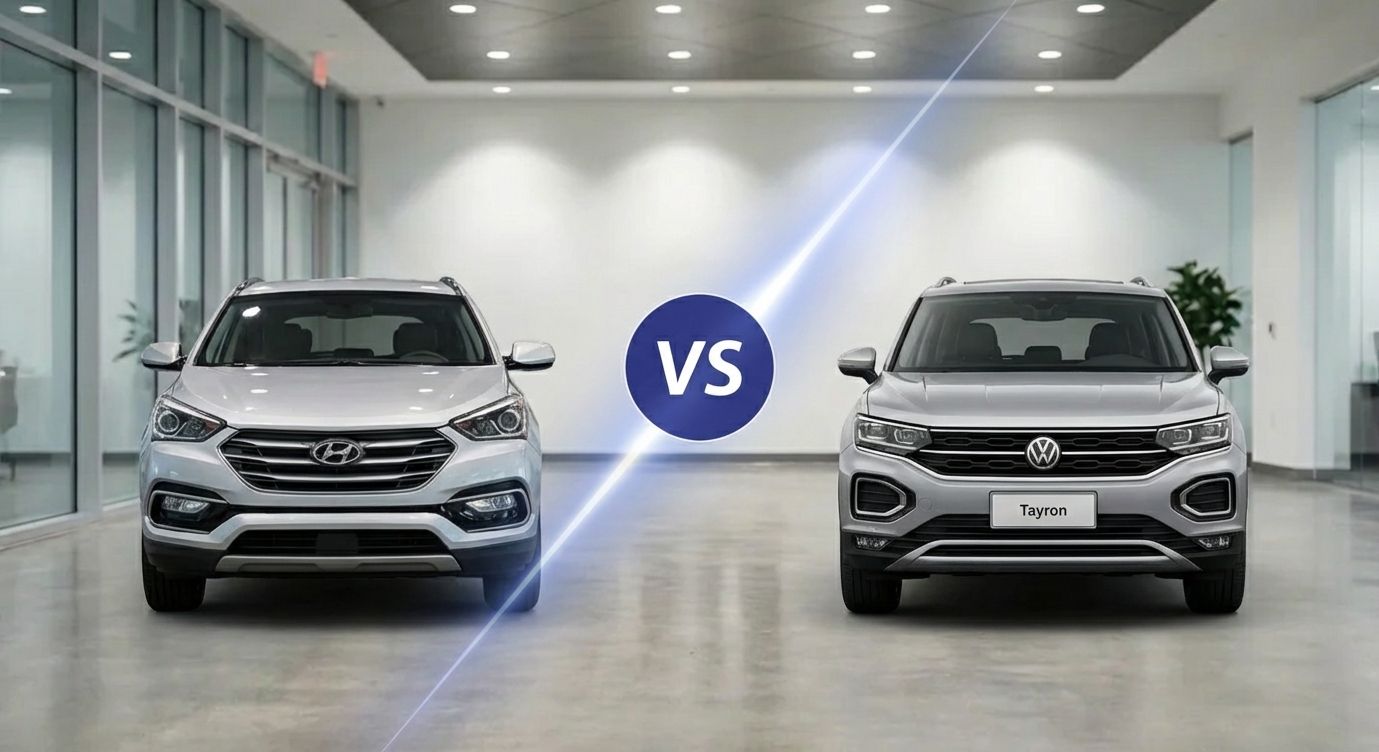
Detailed comparison of Hyundai Santa Fe vs Volkswagen Tayron. We compared space, equipment, and driving characteristics. Read our verdict and choose the right SUV.
Apr 8, 2026

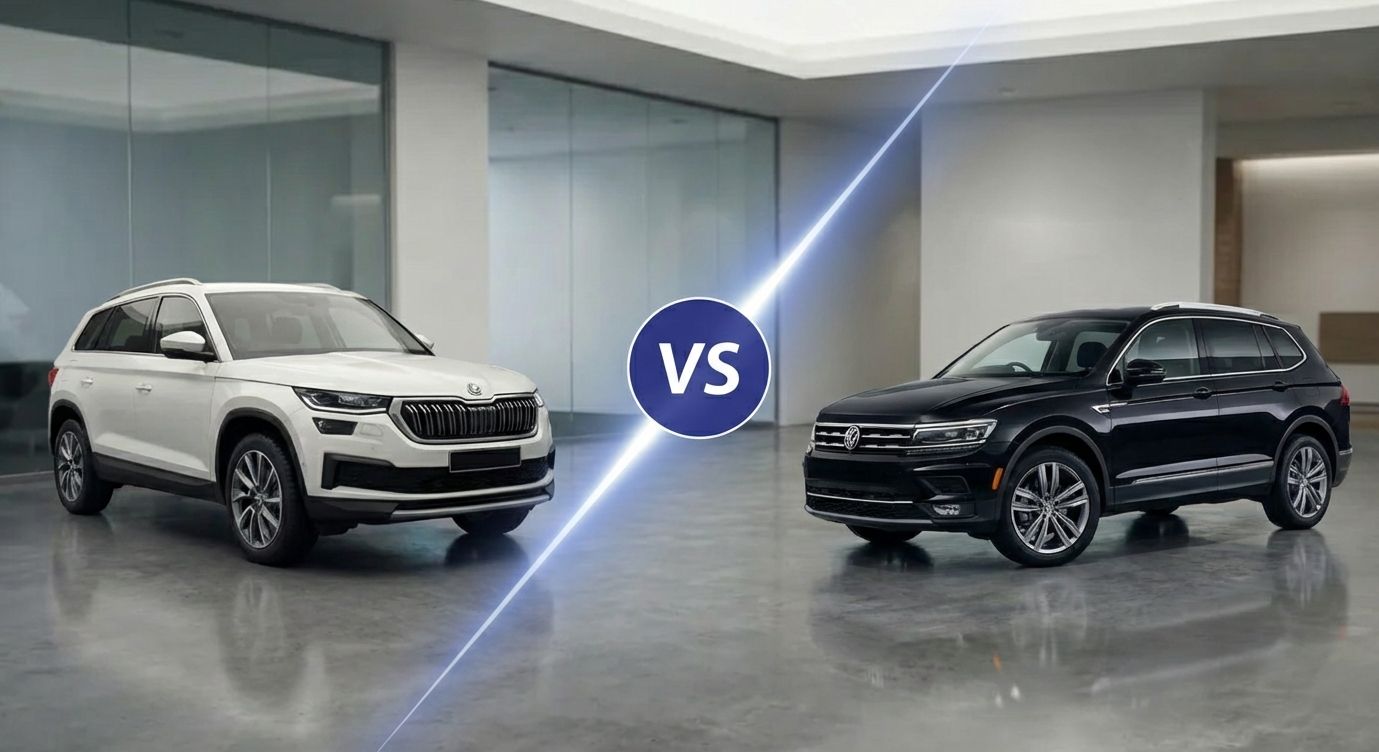
Škoda Kodiaq vs. VW Tiguan Allspace: Which 7-seater SUV is better? Our detailed comparison, real-world insights, and verdict will help you choose.
Apr 13, 2026

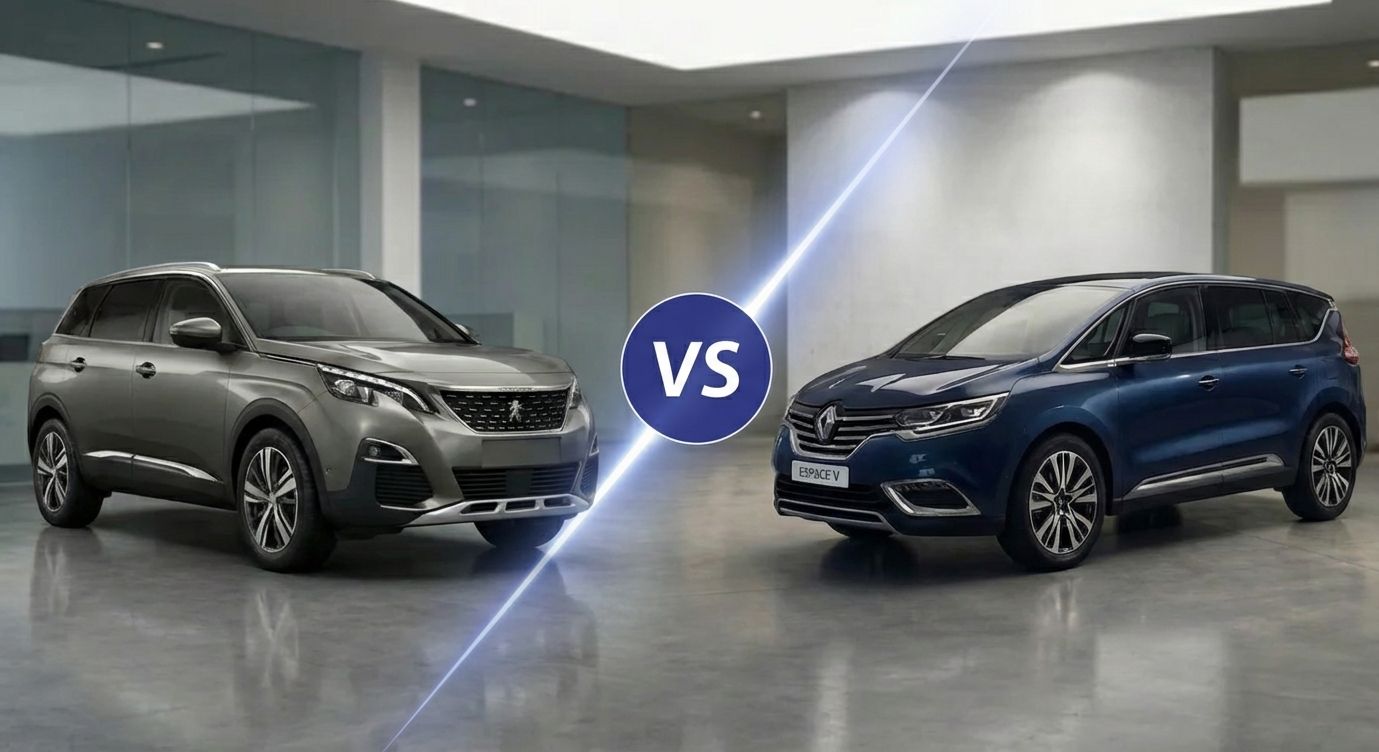
Detailed comparison of Peugeot 5008 vs Renault Espace. We reveal real-world experiences, equipment details, and a clear verdict. Find out which 7-seater car to choose.
Apr 13, 2026