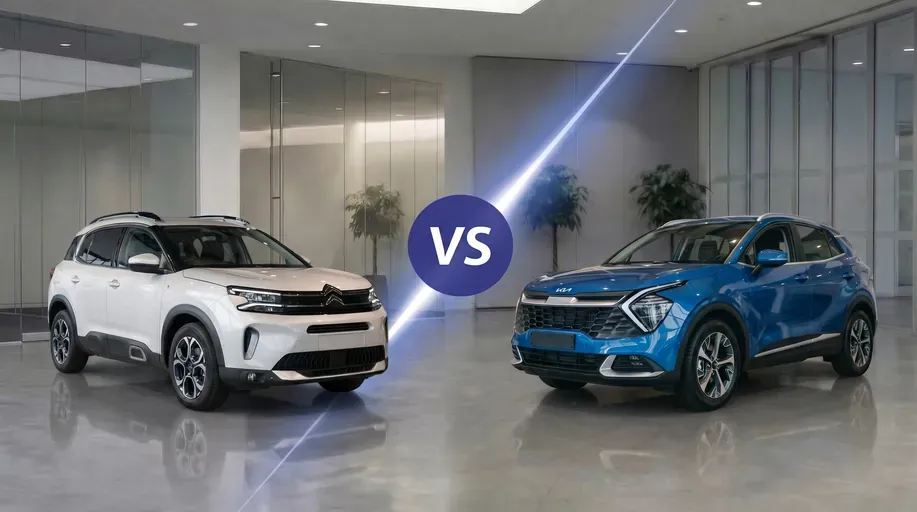
Car battle
Citroën C5 Aircross vs. Kia Sportage: Complete comparison 2026
Detailed comparison of used SUVs: Citroën C5 Aircross vs. Kia Sportage. We compared comfort, space, reliability, and equipment. Read our final verdict!
Apr 20, 2026
Articles
Car battle
DS 7 Crossback vs Volvo XC40: Which premium SUV to choose? Read our detailed comparison of used cars, engine differences, and our clear verdict before buying.
May 17, 2026
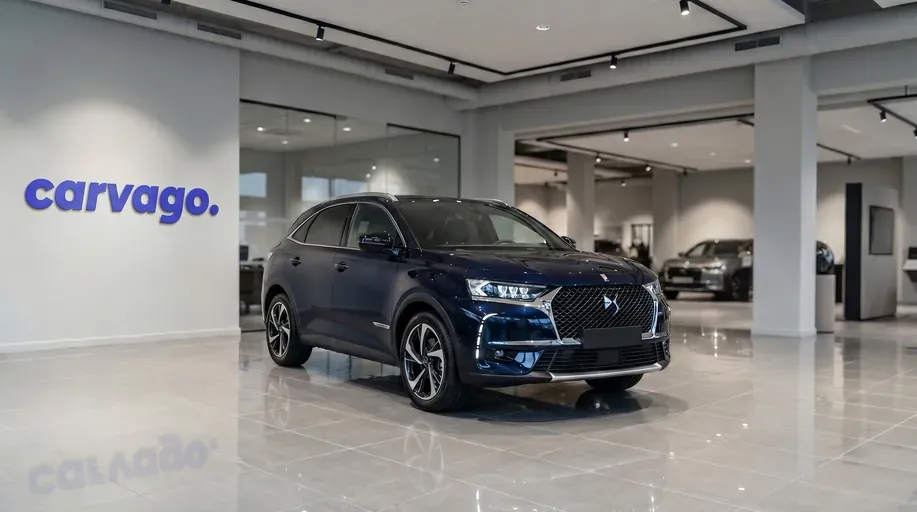
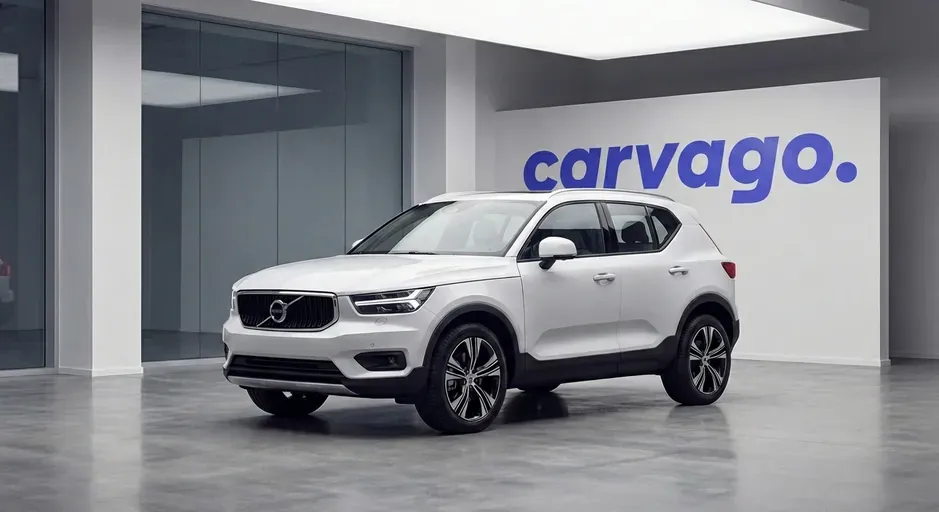
The French DS 7, commonly sought after on the used car market under its original name, DS 7 Crossback, brings unmistakable avant-garde elegance and a strong emphasis on luxury craftsmanship to the premium compact SUV segment. Its challenger today is the Swedish Volvo XC40 – an exceptionally popular and robust representative of the class (whose electric versions were labeled XC40 Recharge and more recently EX40), which appeals to drivers with its cleverly designed minimalist interior, excellent ergonomics, and legendary safety levels. Let's take a detailed look at how these two completely different approaches to modern premium travel fare in a head-to-head battle and which model will make more sense for your daily needs.
Looking at the exterior dimensions, it is clear at first glance that although both cars target premium customers, each approaches it with a slightly different philosophy. The DS 7, with its overall proportions, sits on the boundary between a compact and a mid-size SUV, giving it a more prestigious, elegant, and sleek appearance. In contrast, the Volvo XC40 is a typical representative of premium compact SUVs, betting on a muscular, boxier body.
A fundamental difference exists in the overall length, where the DS 7 measures 4 573 mm, which is a significant 133 to 148 mm more than the Volvo XC40 (4 425 – 4 440 mm depending on the model year and specific engine). The French representative logically also benefits from a longer wheelbase of 2 738 mm compared to 2 702 mm for the Swedish competitor. This difference of almost 4 centimeters in favor of the DS 7 manifests in practice as more generous legroom for rear-seat passengers and a slightly smoother and more stable ride on the highway. Volvo, on the other hand, thanks to its shorter body and wheelbase, scores with significantly better agility, making it an ideal choice for stress-free parking and maneuvering in tight urban garage spaces.
Regarding body width, the DS 7 at 1 895 mm is 32 mm wider than the XC40 (1 863 mm). This provides the crew with an airier feel in the cabin and more shoulder room, while from the outside, it gives the car a visually more stable and sportier stance on the road. However, Volvo makes up for this width and length handicap with height. With values reaching up to 1 652 mm, it exceeds the DS 7 (1 618 mm) by 34 mm. Volvo's taller and more upright body structure not only makes daily entry easier and ensures excellent visibility from the car but also provides passengers with more generous headroom. As a result, the DS 7 attracts with a more aerodynamic silhouette suitable for long family trips, while the Volvo XC40 bets on maximum visibility and user-friendliness in heavy city traffic.
| Parameter | DS 7 SUV | Volvo XC40 SUV |
|---|---|---|
| Width (mm) | 1895 | 1863 |
| Length (mm) | 4573 | 4425 - 4440 |
| Height (mm) | 1618 | 1647 - 1652 |
| Wheelbase (mm) | 2738 | 2702 |
When choosing a premium SUV on the used car market, trunk volume is often a key factor, especially if you are looking for a practical family car. In this comparison, two slightly different approaches within the segment face off. While the French representative ranks among the larger compact SUVs and bets on generous dimensions, the Swedish competitor chooses a more compact format, which naturally reflects in its overall transport capacity and focus.
If we look at specific numbers, the DS 7 clearly has the upper hand here and offers significantly greater variability. In its basic configuration, it provides a generous 555 liters, which represents space for several extra suitcases or the easy storage of a bulky stroller. After folding the rear seats, the capacity grows to a staggering 1750 liters. In contrast, the Volvo XC40 provides a standard volume of 428 to 452 liters for regular internal combustion versions, which can be expanded to a maximum of 1304 to 1328 liters. Although the Swedish model's trunk is practically shaped and perfectly sufficient for weekend shopping, you will have to think about a roof box when packing for a longer vacation.
A fundamental difference in spaciousness occurs when looking at electrified versions, which are highly sought after in the market for roughly four-year-old cars. If you are considering a plug-in hybrid, the Volvo XC40 in T4 and T5 Recharge versions reduces its trunk to 405 liters due to the space-intensive battery placement (maximum volume for these versions drops to 1281 liters). The DS 7, on the other hand, excels in clever interior packaging – its E-Tense plug-in hybrid models maintain the exact same capacity of 555 liters as the regular diesel or gasoline versions, which is a major advantage in this class.
| Parameter | DS 7 SUV | Volvo XC40 SUV |
|---|---|---|
| Basic volume (liters) | 555 | 405 - 452 |
| Maximum volume with seats folded (liters) | 1750 | 1281 - 1328 |
For families and drivers who regularly transport larger amounts of luggage or sports equipment, the DS 7 emerges as the winner from this comparison. It offers uncompromising space regardless of the chosen engine. The Volvo XC40, on the other hand, targets couples and urban-oriented drivers, for whom the smaller trunk is compensated by more compact exterior dimensions and the associated easier maneuverability.
If a large and variable trunk is your priority, the DS 7, with its 555 liters even in hybrid versions, effortlessly beats the more compact Volvo XC40.
Towing weight, or towing capacity, is a crucial parameter for buyers with an active lifestyle. Although both vehicles primarily target the premium SUV segment, their capabilities as towing vehicles differ quite significantly, reflecting the different technical approaches of the two manufacturers.
Despite its overall more compact dimensions, the Volvo XC40 proves to be a surprisingly capable workhorse. In its more powerful diesel and petrol engine variants (such as the D4, B4, or B5 models), it can tow a braked trailer weighing an impressive 2,100 kg, while standard internal combustion versions start at a very solid 1,600 kg. The larger DS 7 Crossback lags slightly behind in this regard. Its absolute maximum is 1,850 kg with the powerful BlueHDi 180 diesel engine, while standard petrol engines (PureTech) can handle between 1,290 and 1,550 kg depending on the version. The value for an unbraked trailer is set at an identical and maximum possible 750 kg for both vehicles, in accordance with European legislation and chassis tuning.
A fundamental difference for those interested in an approximately four-year-old used car occurs with the electrified variants. While the towing capacity for the DS 7 plug-in hybrid versions (E-Tense) drops to a below-average 1,200 to 1,250 kg, its Swedish competitor maintains a much higher degree of versatility. Its plug-in hybrid and fully electric variants (Single and Twin Motor) can reliably handle trailers weighing 1,500 to 1,800 kg.
From a practical standpoint, the choice of vehicle will strongly influence your real-world possibilities. While the lower capacities of the DS 7 (especially in hybrid powertrains) are easily sufficient for a light trailer for weekend shopping of bulky items or transporting building materials, there is no room for heavier loads. However, if you plan to tow a heavy twin-axle caravan for a long holiday or need to safely transport horses in a trailer, the Volvo will provide exactly the performance and safety margin you need.
Conclusion
A clear winner emerges from the comparison of towing capacities. If towing heavy trailers and overall flexibility are priorities for you, the Volvo XC40 offers significantly better and more confident values across its engine range. Despite its smaller body, the Swedish SUV represents a significantly more versatile and reliable choice.
| Model and engine | Braked trailer weight (kg) | Unbraked trailer weight (kg) |
|---|---|---|
| DS 7 Crossback 1.5 BlueHDi (130) | 1430 - 1500 | 750 |
| DS 7 Crossback 2.0 BlueHDi (180) | 1850 | 750 |
| DS 7 Crossback PureTech (130, 180, 225) | 1290 - 1550 | 750 |
| DS 7 Crossback E-Tense (225, 300) | 1200 - 1250 | 750 |
| Volvo XC40 B3 / T2 / T3 | 1600 | 750 |
| Volvo XC40 D3 | 1600 - 2000 | 750 |
| Volvo XC40 B4 / B5 / D4 / T4 / T5 | 1800 - 2100 | 750 |
| Volvo XC40 PHEV (Twin Engine, Recharge) | 1800 | 750 |
| Volvo XC40 EV (Single / Twin Motor) | 1500 - 1800 | 750 |
When choosing a premium compact SUV approximately four years old (model years 2020–2022), the DS 7 Crossback and Volvo XC40 represent two different philosophies under the hood. Both brands responded to tightening emission standards, but each went its own way, which is key for customers' final decision-making. The French DS 7 maintains a more conservative and comfortable approach – relying primarily on an economical foundation of proven turbocharged internal combustion engines and powerful plug-in hybrids, which makes sense for drivers covering long distances or those who want a luxurious ride without range limitations. In contrast, the Swedish Volvo XC40 offers more radical electrification. From around 2020, it completely abandoned diesel engines and focused on efficient mild-hybrids and powerful plug-in hybrid units. Furthermore, the XC40 boasts purely electric variants, making it an ideal candidate for modern-minded drivers who move mainly in the city and its wider surroundings.
In the range of used DS 7 Crossback cars from 2020 to 2022, the foundation consists of economical engines, most of which are paired with a smooth-shifting 8-speed automatic transmission. Fans of long highway journeys will appreciate the traditional four-cylinder 1.5 BlueHDi diesel with 96 kW (130 hp). However, it is necessary to mention an important fact regarding the more powerful diesel variant – according to data, the originally very popular 2.0 BlueHDi 180 was discontinued during 2020, so you will no longer find it in newer used cars. Among the petrol engines, there is a choice between the three-cylinder 1.2 PureTech 130 and the more powerful four-cylinder 1.6 PureTech with 133 kW and 165 kW. However, DS places the greatest emphasis on the E-Tense plug-in hybrid models. The front-wheel-drive version delivers a system output of 165 kW, but the pinnacle of the entire model range is the E-Tense 300 with two electric motors, which is the only one to offer all-wheel drive (4x4) and a confident output of 220 kW.
| Engine type | Fuel | Power (kW) | Torque (Nm) | Transmission |
|---|---|---|---|---|
| 1.2 PureTech 130 | Petrol | 96 | 230 | 8AT / 6MT |
| 1.6 PureTech 180 | Petrol | 133 | 250 | 8AT |
| 1.6 PureTech 225 | Petrol | 165 | 300 | 8AT |
| 1.5 BlueHDi 130 | Diesel | 96 | 300 | 8AT / 6MT |
| 2.0 BlueHDi 180 | Diesel | 130 | 400 | 8AT |
| E-Tense 225 | Plug-in Hybrid | 165 | 360 | 8AT |
| E-Tense 300 4x4 | Plug-in Hybrid | 220 | 520 | 8AT |
The range of four-year-old Volvo XC40 cars has undergone a far more significant technological transformation compared to DS, and you will practically no longer find diesel there – the production of the popular D3 and D4 diesel engines definitively ended in 2020. The foundation of the conventional range for 2021 and 2022 thus consists of modernized four-cylinders with a 48V mild-hybrid system (labeled as B3 and B4). These complement the earlier purely petrol T-series engines, which gradually disappeared from the price lists. Environmentally conscious drivers will be attracted to the Recharge T4 and T5 plug-in hybrids, which cleverly combine a three-cylinder internal combustion engine with an electric motor and rely on a precise 7-speed dual-clutch transmission (7DCT). Volvo's absolute specialty is the purely electric Recharge variants. While the Single Motor with 170 kW and single-axle drive will satisfy most daily needs, the brutal Twin Motor version (sometimes referred to as P8) features two electric motors, 300 kW of power, 660 Nm of torque, and crushing acceleration that no DS 7 engine can match.
| Engine type | Fuel | Power (kW) | Torque (Nm) | Transmission |
|---|---|---|---|---|
| T2 / T3 | Petrol | 95 / 120 | 245 / 265 | 8AT / 6MT |
| B3 (Mild-Hybrid) | Petrol | 120 | 265 | 7DCT / 8AT |
| B4 (Mild-Hybrid) | Petrol | 145 | 300 | 7DCT / 8AT |
| D3 / D4 | Diesel | 110 / 140 | 320 / 400 | 8AT / 6MT |
| Recharge T4 | Plug-in Hybrid | 155 | 405 | 7DCT |
| Recharge T5 | Plug-in Hybrid | 192 | 425 | 7DCT |
| Recharge Single Motor | Electric | 170 | 330 | 1-speed transmission |
| Recharge Twin Motor | Electric | 300 | 660 | 1-speed transmission |
While the DS 7 remains a reliable choice for high-mileage drivers thanks to its economical diesel and comfortable plug-in hybrids, the Volvo XC40 absolutely dominates among customers looking for advanced mild-hybrids or full electric drive for modern suburban life.
Choosing the right engine is absolutely key for long-term satisfaction with a car. While the DS 7 relies on the typical French pursuit of maximum acoustic comfort and focuses significantly on plug-in hybrids (E-Tense) among roughly four-year-old used cars, the Volvo XC40 offers an unusually diverse range – from small-displacement three-cylinders to advanced mild-hybrid units and fully electric versions. In the category of used cars from 2021 to 2022, both brands present very different approaches to technology. The following recommendations are based on a balance of performance, real-world fuel consumption, and long-term mechanical reliability.
Official fuel consumption figures provided by manufacturers often differ significantly from what the trip computer shows in everyday use. Although modern measurement methodologies have slightly narrowed this gap, it remains true that a car's actual appetite depends primarily on driving style, vehicle weight, and your typical route profile.
For the most accurate comparison of four-year-old used cars (vehicle generations from 2020–2022), we rely on aggregated user data from the independent platform Spritmonitor.de. This data reliably reflects the daily experiences of thousands of regular drivers on European roads and provides a realistic picture of how much fuel these premium SUVs actually require.
Data source: Spritmonitor.de /
| Model and Engine | Average Consumption (l/100 km) |
|---|---|
| DS 7 1.5 BlueHDi 130 (Diesel) | 5.7 |
| Volvo XC40 D3 / D4 (Diesel) | 6.5 |
| Volvo XC40 B3 / B4 (Petrol, Mild-hybrid) | 7.2 |
| Volvo XC40 T2 / T3 (Petrol) | 7.3 |
| DS 7 1.6 PureTech 180 / 225 (Petrol) | 7.6 |
| DS 7 E-Tense 225 / 300 (PHEV) | 4.5 |
| Volvo XC40 T4 / T5 Recharge (PHEV) | 4.8 |
Looking at the real-world data, it is immediately apparent that the French DS 7 benefits from its more aerodynamic and overall smoother design, which is positively reflected especially in the diesel engines. Its entry-level 1.5 BlueHDi diesel is among the most fuel-efficient powertrains in its class, managing to stay below the six-liter mark in normal driving. Volvo's diesel engines (D3 and D4), which were sold in the first generation until 2020, require about a liter more fuel due to their boxier design and higher body weight. A surprising finding is that the entry-level three-cylinder petrol engines in the Volvo (T2 and T3) offer practically no fuel savings compared to the larger and more powerful mild-hybrid four-cylinders (B3 and B4). The weaker engines simply have to "work harder" with the heavy vehicle. Both SUVs also offer modern plug-in hybrids, which on paper impress with consumption around two liters. In reality, with an occasionally depleted battery and longer trips, expect values between 4.5 and 5 liters per hundred kilometers.
So, which powertrain is right for whom? If you are a typical highway traveler or frequently commute long distances, the diesel DS 7 will be the clear rational choice thanks to its excellent efficiency. Conversely, those who spend the vast majority of their time in city traffic jams and on short suburban routes should consider the plug-in hybrid versions of both models – provided, of course, they have the option to charge regularly at home or at work. Volvo's petrol versions make the most sense for drivers with lower annual mileage who prioritize robust reliability over minor savings at the gas station.
In conclusion, fuel consumption could be a strong argument for purchasing a DS 7, especially if a classic, extremely fuel-efficient diesel is a requirement for you. While the Swedish Volvo XC40 is somewhat thirstier due to its poorer aerodynamics and more massive build, for the average user with an annual mileage of around 15,000 kilometers, a difference of a few tenths of a liter of fuel will not be the main factor that decides the entire battle.
When searching for a premium second-hand SUV in the category of roughly four-year-old vehicles (2021–2023 model years), both models move in similar price ranges, but the market for them has quite different dynamics. While the Swedish representative benefits from a strong brand name and maintains its residual value very stably, the French model attracts with an unrivaled price-to-luxury ratio and generous equipment.
Volvo XC40 (2021–2023)
The market for used Volvo XC40 cars is broad and stable on the domestic market. The cheapest units, typically with basic petrol engines (T3 designation) and mileage over 100,000 kilometers, currently start at the €21,000 mark. The happy medium in the form of mild-hybrid variants (B3, B4) in mid-level trim levels with mileage up to roughly 60,000 km ranges between €27,000 and €31,000. Fully electric Recharge versions or models in the top-tier sporty R-Design trim (or more modern Plus/Ultimate Dark) then climb to €35,000 to €41,000.
DS 7 Crossback / DS 7 (2021–2023)
For the DS 7 Crossback model (which has borne the shortened DS 7 designation since the 2022 facelift), a slightly faster initial depreciation is noticeable. Entry-level models, often with the reliable 1.5 BlueHDi diesel engine or the older 2.0 BlueHDi and higher highway mileage, can be purchased from as low as €19,000. Cars with lower mileage in popular and exceptionally rich trims like Performance Line or Rivoli sell for around €25,000 to €29,000. Top-of-the-line E-Tense plug-in hybrid versions (300hp or 360hp) with all-wheel drive, on the other hand, hold their price quite well and often approach the €33,000 to €41,000 mark.
| Model | Base models (higher mileage) | Happy medium (lower mileage) | Top versions (PHEV / EV / TOP trim) |
|---|---|---|---|
| Volvo XC40 | from approx €21,000 | €27,000 – €31,000 | €35,000 – €41,000+ |
| DS 7 / DS 7 Crossback | from approx €19,000 | €25,000 – €29,000 | €31,000 – €41,000 |
Main price differences on the market:
If your priority is minimal depreciation and easy future resale, the Volvo XC40 is a safe bet, while a roughly four-year-old DS 7 represents an elegant way to get a significantly more luxurious and spacious interior for the same money.
Both compared models, the DS 7 and the Volvo XC40, received the maximum five-star rating in independent Euro NCAP safety tests. When examining safety in the used car market, however, it is crucial to put these results into the correct context and take the year of testing into account. Euro NCAP methodology and protocols are constantly evolving and becoming significantly stricter. For this reason, percentage results from older years cannot be directly compared with today's standards, which test in detail, for example, new crisis scenarios at intersections, advanced cyclist detection, or more complex side impacts.
The DS 7 model (originally launched as the DS 7 Crossback) underwent a series of crash tests in 2017, while the Swedish Volvo XC40 was tested by the organization a year later, in 2018. Both cars already offered highly advanced technology for their class at that time, including advanced autonomous emergency braking (AEB) systems detecting obstacles and pedestrians. The Volvo XC40 came away from the tests with a near-perfect score for adult passenger protection, confirming that safety is an absolute priority for this brand. It is worth keeping in mind that due to the change in testing standards, the original Euro NCAP certifications for these model years have already formally expired (the organization limits their validity to six or seven years). For buyers of a roughly four-year-old used car, however, these models continue to represent a top level of protection.
| Parameter | DS 7 | Volvo XC40 |
|---|---|---|
| Year of testing | 2017 | 2018 |
| Adult occupant protection | 91 % | 97 % |
| Child occupant protection | 87 % | 87 % |
| Vulnerable road users protection | 73 % | 71 % |
| Safety assist systems | 76 % | 76 % |
The detailed results show that the cars perform almost identically in many areas. Both the French and Swedish representatives scored an identical 87% for child protection in child seats and also earned exactly the same 76% in the safety assist category. The main difference can be found in overall passive adult protection – the Volvo XC40 benefits greatly from its legendary and exceptionally rigid body with a rating of 97%, while the DS 7 achieved a very good, but still slightly lower, 91%. Conversely, the DS 7 regained a slight lead in pedestrian consideration (73% compared to 71% for the Volvo). Thus, even with a slight passage of time, both models offer an extremely comprehensive package of active and passive safety features that easily meet the needs of a modern family.
Although both vehicles have older Euro NCAP certifications from today's strict perspective, the Volvo XC40 slightly dominates the used car market with its phenomenal structural adult protection, while the DS 7 keeps pace and scores with its excellently balanced active safety equipment.
In addition to standard equipment, each model offers several unique elements that can be decisive for the customer, with both cars choosing a completely different approach to increasing value and comfort. While the French representative bets on flamboyant luxury and avant-garde technology, the Swedish competitor scores with extraordinary everyday practicality and advanced connectivity.
Unique and avant-garde exterior and interior design that stands out from the mainstream
High ride comfort thanks to the suspension with camera road scanning (Active Scan Suspension)
Premium materials, precise cabin craftsmanship, and excellent sound insulation
Generous luggage compartment with a capacity of 555 liters
Powerful and efficient E-Tense plug-in hybrid powertrains
Slower and less intuitive multimedia system in older model years
Faster depreciation on the used car market compared to established premium competitors
Uncommunicative steering and more pronounced body roll during dynamic driving
All-wheel drive (4x4) is available exclusively on the most expensive plug-in hybrid versions
The DS 7 is ideal for individualists looking for maximum driving comfort who want to stand out from the crowd thanks to French charm and a fresh design. On the used car market, it represents a very interesting choice because, thanks to a steeper initial depreciation, you can get a luxuriously equipped SUV at an exceptionally attractive price.
Top-tier active and passive safety supported by an excellent Euro NCAP rating
Very good residual value retention on the used car market
Highly practical interior with clever storage spaces and incomparably comfortable front seats
Wide range of powertrains on the used car market, including the successful all-electric Recharge version
Fast and modern infotainment (especially in newer models with the Android Automotive system)
Significantly smaller base luggage capacity (452 liters) compared to the DS 7
Stiffer suspension tuning, which filters out sharp bumps less effectively on larger wheels
Higher real-world fuel consumption in older pure gasoline engines
More limited legroom and a cramped feel for adult passengers in the rear seats
The Volvo XC40 will primarily appeal to rational drivers and smaller families who demand uncompromising safety, great ergonomics, and a sense of robustness. It is a stylish and exceptionally practical compact SUV for everyday use, which may not offer French suppleness but rewards with reliability and minimal depreciation over time.
Based on data from long-term user experience, service center reports, recall databases, and outputs provided by our Independent Car Audit, we have compiled an overview of the most common problems for both models that prospective used car buyers should watch out for.
Although the DS 7 attracts with its avant-garde luxury and precise craftsmanship, for roughly four-year-old used cars, it requires careful engine selection and a thorough check of all onboard electronics.
In the French SUV, the main risks are infotainment whims and, in diesel versions, chronic issues with the urea pump. The basis of a safe purchase is therefore a documented service history and a thorough diagnosis of the entire vehicle.
The Swedish compact SUV is considered a solidly built and very safe car; however, it also suffers from several specific ailments, often related to software and, in heavier versions, faster wear of consumable parts.
The Volvo XC40 is very durable mechanically, but owners are occasionally troubled by connectivity outages associated with the TCAM module and faster-wearing brakes. Diesel engines require regular longer trips so that the particulate filter does not suffer.
When buying a used car, a thorough inspection is key. Here are some specific points to focus on for these two premium SUVs, as both have technical specifics that require caution. Before making a purchase, it is always worth getting a comprehensive car inspection that can reveal hidden and very expensive defects.
DS 7 is overall a larger car and in its standard configuration offers a generous luggage capacity of 555 liters. Volvo XC40 falls into a more compact category, which is reflected in its smaller trunk with a capacity of 452 liters. For frequent family travel with more luggage, the French SUV is the more practical choice.
The French model excels in exceptional ride comfort, especially when equipped with a suspension system that uses a camera to read the road and predictively adjust the dampers. In contrast, the Volvo offers a slightly stiffer and more confident chassis, providing stable and neutral driving characteristics with an emphasis on a maximum sense of safety.
In this generation, Volvo stands out with a very wide range that includes not only internal combustion engines and plug-in hybrids but also the popular fully electric Recharge versions. The DS 7, on the other hand, relies primarily on classic engines and powerful E-Tense plug-in hybrid units with all-wheel drive capability, but does not offer a pure electric vehicle.
Both cars embody a premium approach, but each in a completely different way. The DS 7 will dazzle lovers of the avant-garde with luxury materials, Nappa leather, pearl stitching, and design details on the dashboard. The XC40, by contrast, bets on typical Scandinavian minimalism, top-notch ergonomics, clever storage spaces, and intuitive infotainment.
Volvo is a historical synonym for safety, and the XC40 model has long demonstrated robust construction and the reliability of its safety and assistance systems. The DS 7 is also a very safe car meeting high standards, but specific luxury and electronic equipment features may be slightly more expensive to maintain in older used cars.
The final decision between these two premium SUVs depends primarily on your lifestyle and daily priorities. If you are looking for generous space, original French luxury, and exceptional travel comfort for long family trips, the DS 7 with its larger trunk and smooth suspension is exactly for you. On the other hand, the Swedish Volvo XC40 represents the ideal companion for a safe and practical suburban life, where it excels with great handling, a cleverly designed interior, and an advanced range of mild-hybrid and purely electric powertrains. While the DS 7 scores with an excellent price-to-premium-equipment ratio on the used car market, the robust Volvo attracts with timeless minimalism, versatility, and unrivaled resale value retention.
Sources: ADAC, e15.cz, idnes.cz, emobility.cz, autorevue.cz, autotrip.cz
This article was prepared using artificial intelligence tools. The section guarantor is Petr Dušek.
Detailed comparison of used SUVs: Citroën C5 Aircross vs. Kia Sportage. We compared comfort, space, reliability, and equipment. Read our final verdict!
Apr 20, 2026
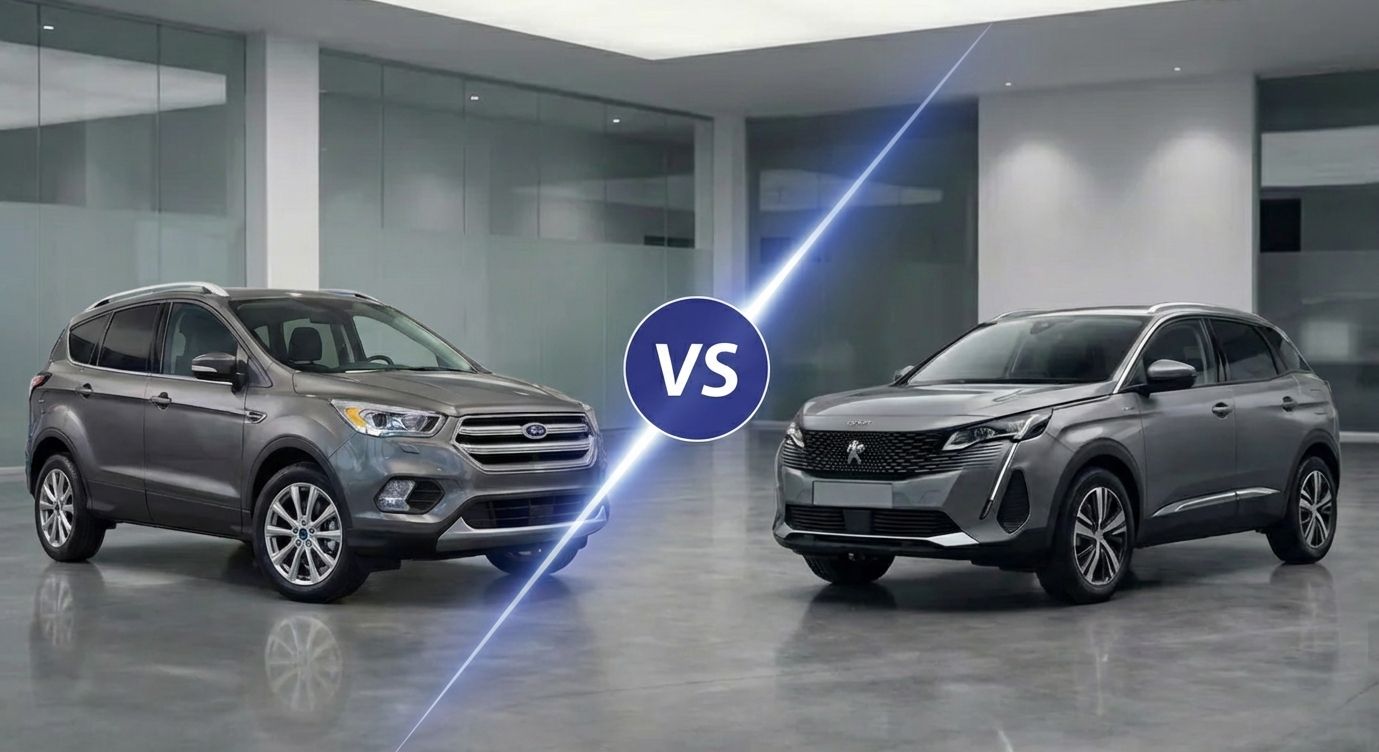
Ford Kuga vs Peugeot 3008: Which family SUV is better? A detailed comparison, real-world insights, and a clear verdict to help you choose.
Apr 13, 2026
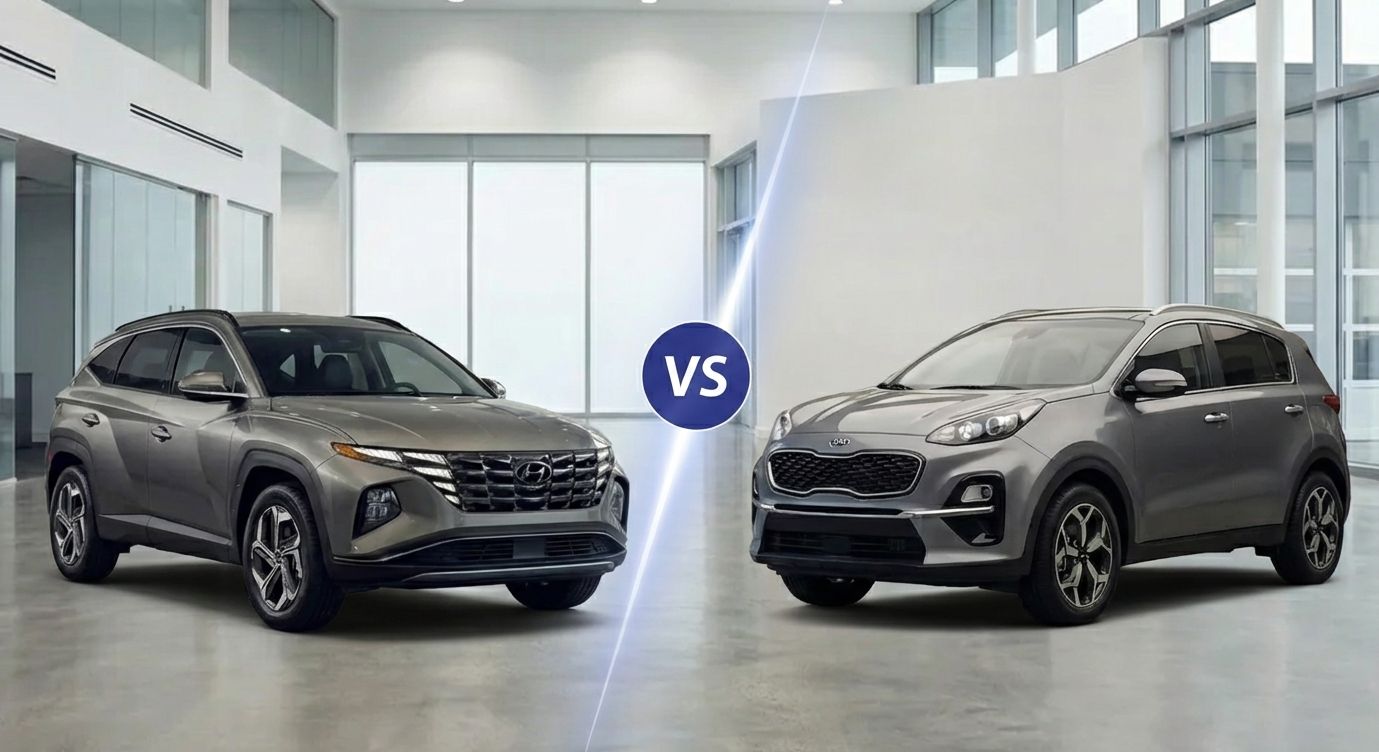
Hyundai Tucson vs. Kia Sportage: A detailed comparison of design, engines, and practicality to help you choose. Read our final verdict.
Apr 13, 2026