Car battle
Audi Q8 vs. BMW X5: Complete comparison 2026
Detailed comparison of Audi Q8 vs BMW X5. Real-world experience, comparison of equipment, driving characteristics, and the final verdict. Find out which luxury SUV to choose!
May 3, 2026
Articles
Car battle
Detailed comparison of the luxury SUVs BMW X7 and Volvo XC90. We reveal real-world experiences, differences in equipment and space. Read our verdict before you buy!
May 13, 2026
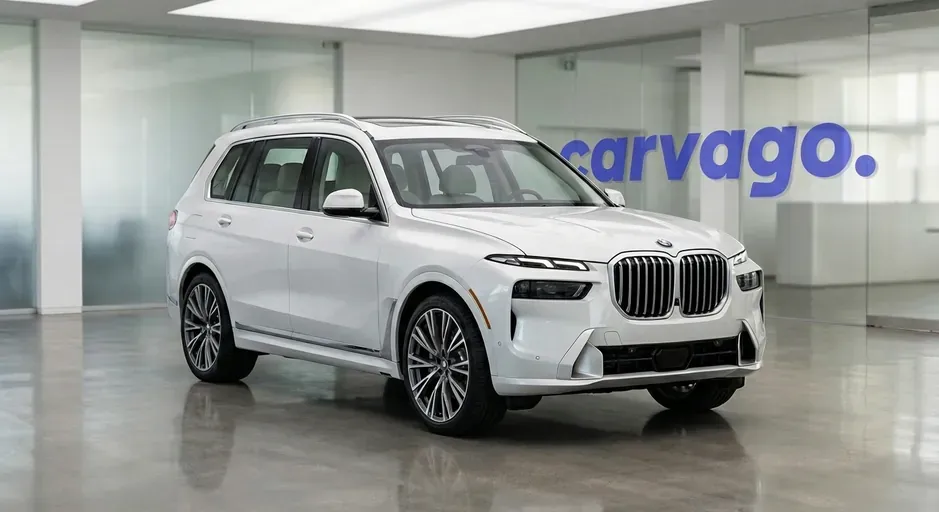
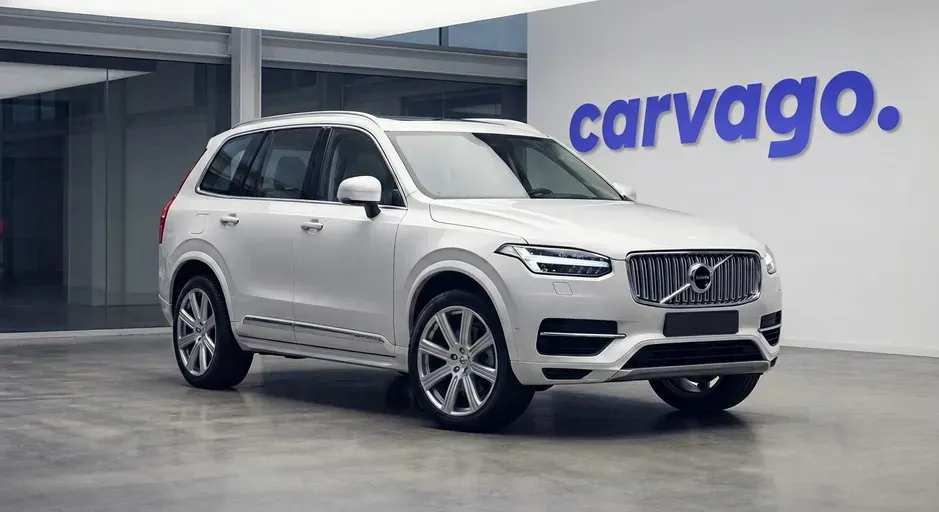
BMW X7 represents the majestic pinnacle of luxury from the Munich-based automaker, offering uncompromising interior space, powerful engines, and cutting-edge technology. On the other hand stands the Volvo XC90, the embodiment of Scandinavian elegance and a pioneer in automotive safety, which attracts with its minimalist design and highly comfortable interior. In the following comparison, we will analyze the key differences in detail and find out which of these two premium family cruisers represents a more attractive choice on the market for nearly new used cars.
Looking at the exterior dimensions of the BMW X7 and the Volvo XC90, it is immediately apparent that both brands approach the concept of a luxury family SUV slightly differently. While Volvo maintains more restrained and, by European standards, somewhat more practical proportions, the BMW X7 feels like a genuine American cruiser on the road. With a total length ranging from 5151 to 5181 mm (depending on the version and facelift), the Bavarian model is more than 200 millimetres longer than its Swedish rival, which stays just below the five-metre mark (4950–4953 mm). In everyday use, this means that the Volvo XC90 is slightly easier to park at a shopping centre or in underground garages, whereas the BMW X7 often significantly overhangs standard European parking spaces.
The fundamental difference for interior space is defined by the wheelbase. The BMW X7 boasts an impressive wheelbase of 3105 mm, which is a substantial lead of over 12 centimetres compared to the 2984 mm of the Volvo. This value is most evident in the passenger space in the second and especially the third row of seats. While the Volvo XC90 serves as an excellent seven-seater for transporting children or for shorter distances, the BMW X7 can offer more full-fledged comfort even for adult passengers in the very back seats. The Bavarian vehicle is also 30 to 60 mm taller (1805–1835 mm), which enhances its majestic exterior stance and provides the occupants with an extra margin of headroom.
As for width, both SUVs require great attention when driving through narrow lanes or older garages. The BMW X7 measures exactly two metres (2000 mm) across its entire generation, while the vast majority of Volvo XC90 engine variants have a width of 1931 mm. However, for top-tier Volvo versions like the T8 plug-in hybrid, the width can climb up to 2008 mm due to specific bodywork details. Choosing between these models from the perspective of exterior dimensions clearly points to user priorities: the Volvo XC90 represents a huge but still reasonably manoeuvrable SUV, while the BMW X7 is the embodiment of absolute interior space and uncompromising majesty at the cost of reduced agility in tight city streets.
| Parameter | BMW X7 SUV | Volvo XC90 SUV |
|---|---|---|
| Length (mm) | 5151 - 5181 | 4950 - 4953 |
| Width (mm) | 2000 | 1931 - 2008 |
| Height (mm) | 1805 - 1835 | 1771 - 1776 |
| Wheelbase (mm) | 3105 | 2984 |
Trunk capacity is one of the key decision criteria for those interested in large family SUVs like the BMW X7 and Volvo XC90. Both models target large families and offer the popular seven-seat layout, which brings the necessity of a compromise between the number of passengers and cargo space. Differences in total capacity and interior variability can thus play a crucial role in daily use. A larger trunk means not only easier weekend shopping but also less stress when packing for long family vacations, where it's often necessary to fit strollers, sports equipment, and many other essentials.
The BMW X7 (G07 generation, typical for the used car market around 2022) offers quite impressive interior space that matches its giant exterior dimensions. Depending on whether the third-row seats are upright or folded, the basic trunk volume ranges from 326 liters when all seven seats are occupied to a generous 750 liters in a five-seat configuration. If you need to transport truly large and bulky items and fold down the second row of seats as well, you get a gigantic transport capacity with a maximum volume of up to 2120 liters, making the Bavarian model a true luxury "hauler."
The competing Volvo XC90 (2nd generation) presents itself as an extremely practical and family-oriented SUV, but in a direct comparison, it offers more modest values. Standard combustion versions provide 302 liters of space behind the third row of seats; after folding it down, the volume increases to a solid 709 liters. It is important to point out the T8 (Recharge) plug-in hybrid powertrain, which reduces the basic seven-seat capacity to 262 liters due to the placement of battery cells. The maximum volume after folding all rear seats stops at 1816 liters for hybrids and 1874 liters for purely combustion versions. In practice, this means that the BMW X7 offers nearly 250 liters more when the seats are fully folded, representing space for several extra suitcases, which you will definitely appreciate under a full family load.
| Parameter | BMW X7 SUV | Volvo XC90 SUV |
|---|---|---|
| Basic volume (liters) | 326 - 750 | 262 - 709 |
| Max. volume with seats folded (liters) | 2120 | 1816 - 1874 |
Thanks to its giant dimensions, the BMW X7 clearly beats the Volvo XC90 in both total and basic transport capacity, making it the ideal choice for those who require uncompromising space and often travel with a large amount of luggage.
When focusing on the ability to tow trailers, the differences between the BMW X7 and the Volvo XC90 are quite fundamental and represent an important factor for buyers planning to hitch heavier loads behind their vehicle. Towing capacity directly affects the overall practicality of the vehicle and determines how versatile the large SUV can be.
The BMW X7 is an absolute leader in this discipline on the market for approximately four-year-old used cars (G07 generation). Whether you opt for the standard diesel six-cylinder xDrive30d or the top-of-the-line V8 M50i, the maximum permitted weight of a braked trailer always reaches an exemplary 3,500 kg. This capacity is ideal for towing large horse trailers, heavy boats, or massive caravans with generous space for a few extra suitcases.
The second-generation Volvo XC90, on the other hand, offers somewhat more modest values, which also vary depending on the selected engine. The maximum weight of a braked trailer for this Swedish car is 2,700 kg, which you achieve with more powerful versions such as the B5 Diesel or the petrol B6. The standard B5 petrol engine can tow 2,400 kg. However, if you choose the highly sought-after T8 plug-in hybrid variant on the used car market, you must expect a reduced capacity in the range of 2,350 to 2,400 kg. The reason is the higher kerb weight of the car caused by heavy traction batteries. Nevertheless, even this reduced value is fully sufficient for weekend shopping for bulky materials, towing a standard family caravan, or a longer holiday. The weight of an unbraked trailer is then legally limited to the usual 750 kg for both SUVs.
In conclusion, if your primary requirement is towing exceptionally heavy loads without any compromises, the BMW X7 is the clear choice. The Volvo XC90, on the other hand, will appeal to drivers whose towing requirements fall within the normal average and for whom a slightly lower capacity will be more than enough.
| Model and engine | Braked trailer weight (kg) | Unbraked trailer weight (kg) |
|---|---|---|
| BMW X7 (all engines, e.g. xDrive30d, M50i) | 3500 | 750 |
| Volvo XC90 B5 Diesel / B6 | 2700 | 750 |
| Volvo XC90 B5 (Petrol) | 2400 | 750 |
| Volvo XC90 T8 Twin Engine / Recharge (PHEV) | 2350 - 2400 | 750 |
Looking under the hood of these two large luxury SUVs, we encounter diametrically different engineering approaches that have a fundamental impact on dynamics, refinement, and operating costs. The BMW X7 remains faithful to traditional large-displacement engines, offering silky-smooth inline six-cylinders and powerful V8s. This brings prestige and a massive power reserve, which is crucial for a vehicle weighing over 2.4 tons. The Volvo XC90, on the other hand, has taken the progressive path of downsizing and relies exclusively on two-liter four-cylinder engines across its entire model range. However, the Swedes cleverly compensate for the smaller displacement with advanced turbocharging and electrification, whether in the form of mild-hybrids or top-tier plug-in hybrid technology. While the Munich offering of powerful diesels will be more appealing to those who devour highway kilometers in a fully loaded car, Volvo will undoubtedly score with its efficiency in the city and an exceptionally powerful plug-in hybrid that allows for purely electric driving.
The Bavarian automaker built the range of power units for the X7 model primarily on its proven inline six-cylinders and flagship V8s. All engines are paired as standard with the excellent eight-speed Steptronic automatic transmission and xDrive intelligent all-wheel drive. If you are looking for a roughly four-year-old car on the used market (around the 2022 model year), you will come across the xDrive40d diesel variant, which is considered an ideal compromise in terms of reliability and operating costs. This mild-hybrid diesel six-cylinder with 250 kW of power offers a massive 700 Nm of torque, allowing the colossus to accelerate with absolute ease. Those seeking absolute dynamics will appreciate the M50i gasoline V8 and its modernized successor, the M60i (introduced in 2022), which deliver a breathtaking 390 kW and a very sporty performance.
When choosing older used cars, keep production history data in mind: the entry-level xDrive30d diesel and the technological marvel in the form of the quad-turbocharged M50d diesel flagship ended their journey in the price list during 2020. They are essentially no longer present on the market for four-year-old used cars and have been fully replaced by the popular xDrive40d version.
| Engine Type | Fuel Type | Power (kW) | Torque (Nm) | Transmission |
|---|---|---|---|---|
| xDrive40i | Gasoline | 250 - 280 | 450 - 520 | 8-speed Steptronic |
| M50i / M60i | Gasoline | 390 | 750 | 8-speed Steptronic |
| xDrive30d | Diesel | 195 | 620 | 8-speed Steptronic |
| xDrive40d | Diesel | 250 - 259 | 700 - 720 | 8-speed Steptronic |
| M50d | Diesel | 294 | 760 | 8-speed Steptronic |
The second-generation Volvo XC90 made automotive history as a confident pioneer of an exclusively four-cylinder strategy for large SUVs. Earlier standard engine options in the form of classic gasoline (T5 and T6) and diesel (D4 and D5) units were sufficient for safe driving, but they are less relevant for four-year-old used cars – these purely internal combustion engines were phased out between 2019 and 2020. The automaker replaced them across the board with modern and more efficient mild-hybrids with the new B5, B6, and B5 Diesel designations.
When choosing a younger used car, the most sought-after choice is the B5 Diesel mild-hybrid (173 kW and 480 Nm), whose starter-generator helps smooth out starts and reduces consumption on longer trips. For fans of modern technology and drivers primarily in suburban settings with charging options, the T8 plug-in hybrid (formerly known as T8 Twin Engine) is a total hit. Its system combines a turbocharged gasoline engine with an electric motor, reaching a total system output of up to 335 kW in newer versions with extended range. It thus offers lightning-fast dynamics and, at the same time, very quiet electric driving through the city.
| Engine Type | Fuel Type | Power (kW) | Torque (Nm) | Transmission |
|---|---|---|---|---|
| B5 | Gasoline (Mild-Hybrid) | 184 | 350 | 8-speed Geartronic |
| B6 | Gasoline (Mild-Hybrid) | 220 | 420 | 8-speed Geartronic |
| T5 / T6 | Gasoline | 184 - 235 | 350 - 400 | 8-speed Geartronic |
| B5 Diesel | Diesel (Mild-Hybrid) | 173 | 480 | 8-speed Geartronic |
| D4 / D5 | Diesel | 140 - 173 | 400 - 480 | 8-speed Geartronic |
| T8 (Plug-in Hybrid) | PHEV (Gasoline+Electric) | 288 - 335 | 640 - 709 | 8-speed Geartronic |
While the BMW X7 will appeal to more demanding drivers with the unrivaled sovereignty and refinement of its large six-cylinders on long journeys, the Volvo XC90 represents an absolutely perfect solution for families commuting from the suburbs, for whom a powerful and efficient plug-in hybrid for emission-free operation makes sense.
Choosing the right engine is crucial for long-term satisfaction, as the following recommendations are based on real-world experience, driving dynamics, actual fuel consumption, owner feedback, and mechanical reliability.
In general, the BMW X7 and Volvo XC90 take completely different approaches to powering their flagships. For the G07 generation, BMW relies on majestic three-liter straight-six and V8 engines, which perfectly suit the character of a heavy, 2.5-ton luxury SUV and offer a massive reserve of power. A fascinating fact about the Bavarian brand is how efficiently its large six-cylinder engines can run, thanks to perfect synchronization with the ZF eight-speed gearbox. In contrast, the Volvo XC90 (2nd generation) follows a strict and bold philosophy of exclusively using two-liter four-cylinder Drive-E engines. This results in a slightly higher engine workload under full load, but it also brings a significantly lighter front end (improving cornering agility) and overall lower operating costs for service and insurance. While you can choose aggressive and "insanely" powerful versions with the BMW, Volvo scores points with calming smoothness and focuses more on ecological technologies, led by plug-in hybrids.
This diesel straight-six (engine code B57) from 2020–2022, enhanced with 48V mild-hybrid technology, represents the absolute ideal in the market for approximately four-year-old used cars. It offers a perfect balance between premium refinement, generous practicality, excellent efficiency, and top-tier mechanical reliability.
For the Swedish SUV, the B5 Diesel mild-hybrid powertrain (173 kW / 235 hp) is clearly the most sensible choice on the four-year-old used car market. Note – as data archives suggest, the B5 Diesel definitively ceased production at the end of 2024, as Volvo has completely ended the production of diesel engines. This means that used diesel vehicles from 2020–2022 will become highly sought-after items.
Official fuel consumption figures for large premium SUVs are often far from reality. For an objective comparison of both models, we did not rely on manufacturers' marketing brochures but used real-world data from hundreds of drivers. We focused exclusively on engine versions and generations corresponding to cars roughly four years old, which are currently the most sought-after on the used car market (BMW X7 generation G07 and Volvo XC90 2nd generation from 2020–2022).
Data source: Spritmonitor.de
| Model and engine | Average consumption (l/100 km) |
|---|---|
| Volvo XC90 B5 Diesel (173 kW) | 7.8 |
| BMW X7 xDrive30d (195 kW) | 8.5 |
| BMW X7 xDrive40d (250 kW) | 8.7 |
| Volvo XC90 B5 Petrol (184 kW) | 9.8 |
| Volvo XC90 B6 (221 kW) | 10.7 |
| BMW X7 xDrive40i (245/250 kW) | 11.5 |
| BMW X7 M50i (390 kW) | 13.5 |
| Volvo XC90 T8 Recharge (PHEV) | 6.8* |
(Note: *The consumption of the T8 Recharge version depends heavily on the frequency of charging the battery from the grid.)
As real-world data clearly shows, diesel engines still make the most sense for such large and heavy vehicles. An interesting finding is that although Volvo, as part of its "downsizing" philosophy, relies exclusively on a two-litre four-cylinder with mild-hybrid technology for the B5 diesel version, its fuel savings compared to the refined three-litre six-cylinder xDrive40d in the BMW are not at all vast in real-world driving. The difference is about one litre per 100 kilometres, while on the motorway and when fully loaded, the larger Bavarian engine will handle the vehicle's weight and air resistance with much less effort.
For purely petrol versions, you must naturally expect significantly higher operating costs. The silky six-cylinder in the BMW (xDrive40i) averages 11.5 litres, while the more powerful B5 and B6 petrol four-cylinders in the Volvo oscillate around 10 to 11 litres.
The plug-in hybrid Volvo XC90 T8 Recharge is a chapter of its own. Although official manufacturer figures promise consumption in the low single digits (in Volvo's case, most often 1.2 – 2.7 l/100 km), the real-world average of just under 7 l/100 km clearly shows how much depends on user behavior. Once the battery is depleted on a longer journey, the car relies on a thirsty petrol engine, which also has to pull the massive weight of the empty batteries. Without regular plugging in, consumption can easily reach 10 litres.
While fuel consumption might not be the most important decision criterion for a premium used car with a price tag approaching €82,000, the right choice based on your driving profile will significantly enhance your daily experience with the vehicle. While Volvo scores points with its accessible plug-in hybrid as the perfect vehicle for suburban commuting, BMW, with its large-displacement diesel engines, confidently reigns over long European motorways.
Looking at the used vehicle market roughly four years after their initial registration (primarily 2021 and 2022 models), a vast price difference is evident between these competitors. Both large SUVs target a different clientele and have different original purchase prices, which is directly reflected in today's market prices.
The BMW X7 represents the absolute pinnacle in the Munich automaker's hierarchy, and this is also reflected in the secondary market. Prices for four-year-old used cars remain relatively high, matching both the prestige and the generous engine options.
In contrast, the Nordic Volvo profiles itself as a much more affordable path to full-fledged seven-seater luxury. The selection on the used car market is wide, and prices fall into very reasonable waters.
| Parameter | BMW X7 (G07) | Volvo XC90 (2nd Gen) |
|---|---|---|
| Estimated price range | €60,000 – €95,000 | €37,000 – €58,000 |
| Most common engines on the market | xDrive30d, xDrive40d | B5 AWD (Diesel/Petrol) |
| Top-tier used versions | M50i (V8), M50d | T8 Recharge (PHEV) |
| Typical mileage of a 4-year-old car | 60,000 – 130,000 km | 70,000 – 150,000 km |
| Nature of depreciation | High in absolute amounts | Steady percentage decline |
While the Volvo XC90 represents an exceptionally affordable and rationally justifiable path to a family premium SUV on the used market, a buyer must pay significantly more for the prestige, dominance, and large six- or eight-cylinder engines of the BMW X7.
In the large family SUV segment, top-tier safety and a five-star Euro NCAP rating are almost taken for granted. However, when choosing a used car, it is crucial to look at the broader context and the year of the test itself. The methodology of independent crash tests evolves dynamically and becomes stricter over time. While solid crumple zones used to be enough for an excellent result, today's standards require advanced simulations of frontal collisions with a mobile barrier, improved cyclist detection, or assistant reactions at complex intersections. Therefore, percentage scores from different testing years cannot be directly compared.
BMW X7 has never officially undergone Euro NCAP testing. Due to the high price tag and relatively limited sales volumes of this luxury cruiser, the organization decided not to physically test the model. However, there is no reason for concern – the X7 shares its basic safety architecture and the entire platform with the smaller BMW X5, which was tested in 2018 and easily achieved the full five-star rating. Furthermore, the X7 features an exceptionally advanced arsenal of active safety assistants, allowing it to react safely to impending collisions. Since there is no official Euro NCAP data for the BMW X7, no values are filled in for it in the comparison table.
Volvo XC90 underwent crash testing immediately after the introduction of its second generation in 2015. Its results were completely groundbreaking at the time. Not only did the car comfortably walk away with a full five stars, but it was the first model in Euro NCAP history to receive 100% in the safety assist category. Adult protection was also extraordinary at 97%. While it is necessary to consider that the 2015 tests did not yet fully include modern emergency scenarios (such as full detection of cyclists turning into the path), Volvo's robust construction and continuous software updates to assistance features throughout production make it an unrivaled fortress even by today's standards.
Safety Evaluation Conclusion
Although Volvo shines in the tables with impressive (though older from today's perspective) results from 2015 and BMW lacks official certification, both cars are among the absolute safest you can buy on the market for roughly four-year-old used vehicles. BMW offers the advantage of a structurally newer platform (model introduced in 2019) and a more modern sensor architecture, while Volvo relies on its legendary safety philosophy, which was ahead of the entire automotive market at the time of its creation.
| Parameter | BMW X7 | Volvo XC90 |
|---|---|---|
| Year of testing | 2015 | |
| Adult occupant protection | 97 % | |
| Child occupant protection | 87 % | |
| Vulnerable road users | 72 % | |
| Safety assist | 100 % |
Both SUVs offer first-class protection for the occupants; Volvo scores with unbeatable results from historical crash tests, while BMW benefits from the advantage of a structurally newer and sensor-advanced platform.
In addition to standard equipment, each model offers several unique features that can be decisive for the customer, and both cars approach added value in their own completely unmistakable way.
Top-tier driving comfort thanks to the standard air suspension and excellent cabin soundproofing
Powerful, reliable, and exceptionally refined inline-six and V8 engines
Full-size third row of seats offering enough space even for adult passengers
Intuitive iDrive multimedia system, which is among the absolute best on the market
First-class build quality and the use of the most luxurious materials in the interior
Significantly higher purchase price for used cars and subsequent regular maintenance costs
Huge exterior dimensions and high weight make maneuvering and parking in urban environments difficult
Controversial design of the giant front kidney grilles, which may not suit everyone's aesthetic taste
BMW X7 is an uncompromising choice for demanding drivers looking for maximum luxury, top-tier technology, and powerful multi-cylinder engines regardless of price. It will particularly appeal to larger families requiring first-class comfort on long highway journeys and a truly usable third row of seats.
Elegant and timeless Scandinavian design that ages much more slowly than the competition
Top-tier level of active and passive safety complemented by excellent Euro NCAP ratings
Significantly more favorable purchase price on the four-year-old used car market compared to the BMW X7
Availability of very efficient plug-in hybrid powertrains (Recharge/T8), which make sense for suburban commuting
Clever family solutions, such as the optional integrated child booster seat
Exclusively four-cylinder engines, which lack the refinement and confidence of German six-cylinder engines at highway speeds
Significantly more limited space in the third row of seats, which is mostly suitable only for children
Firmer suspension tuning and poorer bump absorption in versions without air suspension on large wheels
The multimedia system with a vertical display in older models feels slower and outdated compared to iDrive
Volvo XC90 represents a more rational, family-oriented alternative that scores primarily with its unrivaled reputation for safety and calm Nordic style. It is a perfect car for customers who appreciate the possibility of electric driving in the PHEV version, practicality in everyday life, and do not need aggressive sports dynamics or a V8 engine.
Based on data from independent CarAudit inspections, which involve a thorough physical inspection of the vehicle before sale, and long-term user experience from service reports, we have compiled an overview of the most common problems that buyers of roughly four-year-old used cars should watch out for.
The BMW X7 (G07 generation) is among the most luxurious representatives on the market, but its high technological and mechanical complexity can pose certain risks after several years of operation, especially with more powerful engines.
Even though the BMW X7 is a robust SUV overall, it requires strict maintenance. Potential buyers should focus on a detailed inspection of the air suspension and, for V8 models, thoroughly verify that the engine compartment does not suffer from fluid leaks due to high thermal stress.
The second-generation Volvo XC90 attracts with its timeless Scandinavian design and top-tier safety, however, complicated powertrains and onboard electronics can bring unexpected service expenses for used cars.
The second-generation XC90 is an ideal family car, but for peace of mind, a 100% documented service history is an absolute necessity. Pay increased attention to the functionality of the infotainment, the condition of the braking system, and the health of the hybrid components.
When buying a used car, a thorough inspection is crucial. Here are some specific points to focus on for these two models, which is why it is always worth using the CarAudit service for an independent used car inspection.
The BMW X7 is overall a larger and wider car, which is reflected primarily in a significantly more spacious third row of seats, where even adults can sit comfortably. The Bavarian model also has a slightly larger luggage compartment, both behind the second and third rows of seats. The Volvo XC90, on the other hand, is slightly more compact, making it a more agile and practical car for frequent city parking.
BMW offers a classic range of powerful inline six-cylinders and top-of-the-line V8s, which provide excellent dynamics and velvety smooth operation. For this generation, Volvo relies exclusively on two-liter four-cylinders, which it effectively complements with mild-hybrid and powerful plug-in hybrid technology (Recharge version). If you are looking for maximum power, torque, and refinement, the X7 is the better choice, while the XC90 targets ecology and efficiency.
The BMW X7 excels in top-tier travel comfort thanks to the standard air suspension on both axles and excellent cabin soundproofing. The Volvo XC90 offers air suspension only as an option, and its overall tuning is still slightly firmer. On long highway journeys, the German representative provides a noticeably smoother and quieter ride.
Both premium brands represent the absolute pinnacle in safety and have received maximum ratings in crash tests. Volvo has long maintained its status as a pioneer in family safety, offering a very robust construction and top-tuned assistance systems. However, BMW does not lag behind its Swedish competitor in any way and provides equally sophisticated occupant protection and active accident prevention.
The Volvo is usually more economical to operate, especially if you choose the plug-in hybrid version, which allows for daily city driving purely on electricity. The large-displacement and heavier engines in the BMW naturally have higher average fuel consumption, especially in the gasoline variants. Regular service costs and potential post-warranty repairs are high for both luxury SUVs, but BMW tends to be slightly more expensive in this regard.
Choosing between the BMW X7 and the Volvo XC90 on the market for roughly four-year-old used cars depends primarily on your daily use and overall budget. While the Bavarian X7 represents an uncompromising highway cruiser that justifies its significantly higher price tag with full-fledged space in the third row, silky-smooth six-cylinder engines, and the top-tier comfort of air suspension, the Swedish Volvo will appeal more to pragmatically-minded buyers. The XC90 model is the embodiment of timeless safety and Nordic elegance, offering an ideal solution for suburban family use at a much more affordable purchase price, especially thanks to its efficient plug-in hybrid versions. If you often travel long distances with a fully loaded vehicle or tow heavy trailers, an investment in the majestic BMW will reward you with unmatched poise, but for calm daily commuting, the safe Volvo will be a more rational and agile choice.
Sources: ADAC, lidovky.cz, e15.cz, autoweb.cz, autoexpress.cz, doprava.cz
This article was prepared using artificial intelligence tools. The section guarantor is Petr Dušek.
Detailed comparison of Audi Q8 vs BMW X5. Real-world experience, comparison of equipment, driving characteristics, and the final verdict. Find out which luxury SUV to choose!
May 3, 2026
Detailed comparison of Audi Q7 vs BMW X5. We compare engines, spaciousness, and used car prices. Read our verdict and find out which luxury SUV is the better choice.
Apr 21, 2026
Aston Martin DBX vs. Rolls-Royce Cullinan: A detailed comparison of performance, luxury, and features. Read our verdict and find out which premium SUV to choose.
Apr 18, 2026