Car battle
Audi Q7 vs. Volkswagen Touareg: Complete comparison 2026
Detailed comparison of Audi Q7 vs. Volkswagen Touareg. Find out from real-world experience, equipment details, and our verdict which used premium SUV to choose.
May 1, 2026
Articles
Car battle
Audi Q8 vs Land Rover Range Rover: Detailed comparison of used luxury SUVs. Discover the differences in equipment, performance and read our final verdict.
May 3, 2026
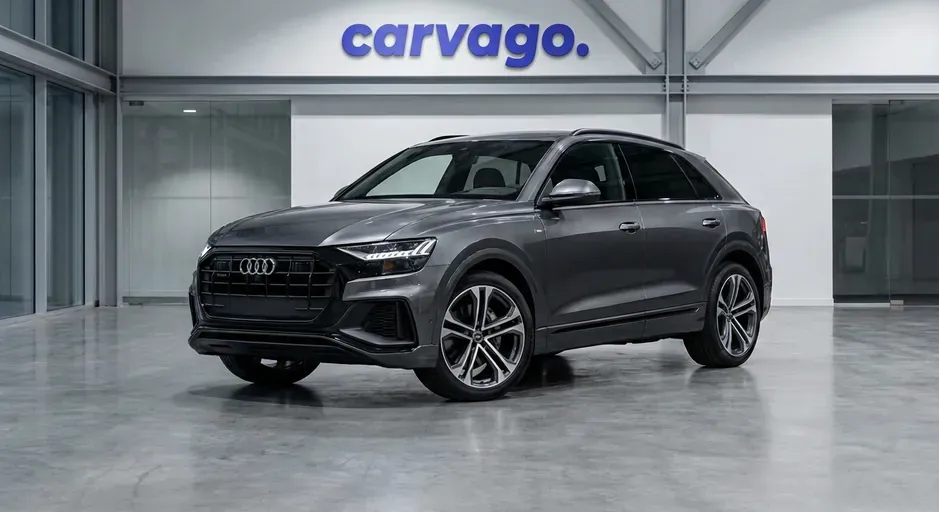
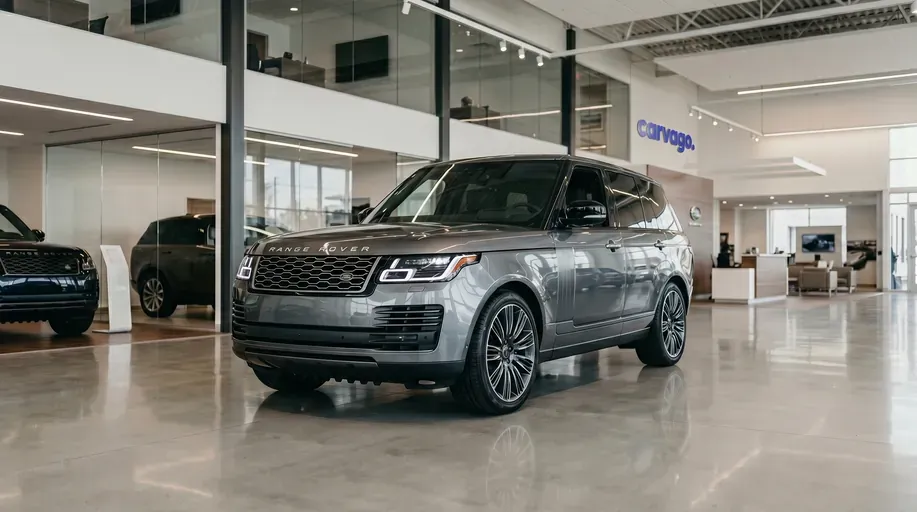
Audi Q8, the flagship of the Ingolstadt-based carmaker, represents a luxurious and sporty SUV coupé, which can also be found on the market in high-performance SQ8 and RS Q8 variants or in the fully electric Q8 e-tron version (formerly known simply as the Audi e-tron). Standing against it is the majestic Range Rover, officially sold under the full name Land Rover Range Rover, which for decades has been considered the absolute benchmark of British elegance and uncompromising capabilities even in the most demanding terrain. Let's take a detailed look at how a direct comparison of these two premium giants turns out and which of them offers a better combination of comfort, advanced technology, and overall driving characteristics for the demanding driver.
When looking at the used car market for vehicles around four years old (i.e., model years 2021 and 2022), the Range Rover is at the transition between the fourth and the incoming fifth generation, while the Audi Q8 remains firmly based on its initial generation designated as 4M. Whichever modern Range Rover you place next to the German representative, you will immediately notice a different approach to the definition of a luxury SUV. While the Audi Q8 bets on a more dynamic silhouette with a sloping roofline and an overall sportier stance, the Range Rover remains faithful to traditional majestic proportions with an emphasis on maximum interior volume.
In terms of numbers, the fifth generation of the standard Range Rover, with its length of 5052 mm, is roughly 66 mm longer than the traditional combustion-engine Audi Q8 (which most commonly measures 4986 mm in length). However, the fundamental difference is found in height – the British aristocrat towers at 1870 mm, which is a staggering 165 mm more than the Audi. Furthermore, the vehicle from the British Isles is slightly wider, with a value of over two meters (2047 mm for the 5th generation). In practice, the Range Rover offers an unmistakable sense of dominance on the road and a fantastic "royal" view, but its massive width and height can make parking in older underground garages with lower ceilings difficult. Conversely, the Audi Q8 feels much more compact behind the wheel and masks its weight with more agile behavior, which significantly facilitates daily maneuvering in cramped city traffic.
As for the cabin spaciousness itself, defined by the wheelbase, the base models are surprisingly similar. Both the standard Range Rover and the Audi Q8 have a wheelbase just below the three-meter mark (2997 mm vs. 2995 mm). However, the British automaker plays a completely different tune thanks to the LWB (Long Wheelbase) variant. This extended version stretches the wheelbase to an impressive 3197 mm and the total length of the car to nearly 5.3 meters, creating a massive space in the rear that is fully comparable to the most luxurious limousines. The Audi Q8 offers no such alternative, leading to a clear conclusion – if you occasionally drive yourself but often use the services of a personal chauffeur, the extended Range Rover is unrivaled in this comparison.
| Parameter | Audi Q8 SUV | Range Rover SUV |
|---|---|---|
| Width (mm) | 1937 - 1995 | 1983 - 2047 |
| Length (mm) | 4915 - 4992 | 5000 - 5258 |
| Height (mm) | 1619 - 1705 | 1868 - 1870 |
| Wheelbase (mm) | 2923 - 2998 | 2922 - 3197 |
When choosing a luxury SUV, luggage space plays a surprisingly important role, whether you are planning daily logistics or family trips to the mountains. In this comparison, the sporty Audi Q8 and the majestic Range Rover go head-to-head, with both models approaching the question of practicality with a different philosophy. The differences in total volume are primarily due to the body shape – while the German representative bets on a sloping roofline, the British icon maintains traditional majestic proportions that promise maximum space utilization for the crew and their cargo.
The Audi Q8 (4M generation), which is a highly sought-after choice on the market for roughly four-year-old used cars, offers a very solid 605 liters of luggage space in its standard configuration. After folding the rear backrests, this value increases to an impressive 1,755 liters, which is more than enough space for weekend shopping or a longer family holiday. However, it is important to remember that if you opt for the popular plug-in hybrid version (TFSI e), the trunk capacity for 2020–2022 models drops to 505 liters as standard and 1,625 liters with the seats folded due to battery placement. Despite this reduction, the trunk remains very accessible and easy to use thanks to its regular shape.
On the other hand, the fifth-generation Range Rover, whose early models from 2021 and 2022 are becoming available as used cars, is in a league of its own when it comes to trunk size. In the basic version with a standard wheelbase, it provides a generous volume of 818 liters, which grows to 1,841 liters after folding the rear bench. In practice, these figures mean space for several extra suitcases without having to compromise on passenger comfort. If you choose the Long Wheelbase (LWB) version, you can count on a volume of up to an amazing 2,176 liters in a five-seat configuration. The British SUV thus represents the ultimate choice for drivers who do not want to make the slightest compromise in transport capacity.
| Parameter | Audi Q8 SUV | Range Rover SUV |
|---|---|---|
| Basic volume (liters) | 605 | 818 |
| Maximum volume with seats folded (liters) | 1755 | 1841 |
In terms of total transport capacity and variability, the clear favorite is the Range Rover, which easily beats its competition thanks to its generous approach to interior space. Due to its dynamic roofline, the Audi Q8 is noticeably smaller, yet it offers trouble-free and fully sufficient practicality for the vast majority of everyday and family tasks.
If you are looking for the absolute maximum transport capacity, the Range Rover is the clear winner thanks to its massive body and huge trunk; however, even the sportier Audi Q8 can easily handle the demands of everyday family life.
When choosing a large luxury SUV, towing capacity often plays a key role, whether you plan to tow a heavy caravan, a boat, or a horse trailer. Comparing roughly four-year-old used cars (around 2022) reveals some quite interesting differences that can fundamentally influence your purchasing decision.
Audi Q8 (4M generation) in its standard internal combustion versions, such as the popular 45 TDI and 50 TDI diesel engines or the 55 TFSI petrol, offers a respectable braked trailer towing capacity of 2,800 kg. However, if you opt for the powerful 60 TFSI e plug-in hybrid variant, the value surprisingly rises to a maximum of 3,500 kg. It is important to be cautious with the fully electric Q8 e-tron models (GE generation), where the maximum braked trailer weight is limited to 1,800 kg due to the overall drive concept and batteries.
Range Rover (transition between the fourth and fifth generation) is a traditional powerhouse in this discipline. Most conventional internal combustion versions, such as the popular D300 and D350 diesels or the P530 petrol V8s, can easily handle the legislative maximum of 3,500 kg. Conversely, a reduced capacity is found in older and newer plug-in hybrid models (P400e, P440e, or P510e), where the additional weight of the batteries drops the maximum limit to 2,500 kg. For some more modern hybrids (e.g., P460e), we find a compromise of 3,000 kg.
From a practical standpoint, both vehicles handle common tasks without issues. While the 1,800 kg value for the electric Audi is fully sufficient for weekend transport of materials on a trailer or a smaller trailer, the Range Rover will be a better companion for transporting large and heavy loads. Its full capacity of 3,500 kg offers a huge reserve and confidence when towing large yachts or multi-horse trailers. The Audi Q8, with its 2,800 kg for standard engines, represents a great middle ground that will safely serve most family caravans.
| Model and engine (selected versions approx. 2020–2023) | Braked trailer weight (kg) | Unbraked trailer weight (kg)* |
|---|---|---|
| Audi Q8 45 TDI / 50 TDI / 55 TFSI (4M generation) | 2800 | 750 |
| Audi Q8 60 TFSI e (4M generation) | 3500 | 750 |
| Audi Q8 e-tron 50 / 55 (GE generation) | 1800 | 750 |
| Range Rover D300 / D350 / P400 / P530 (IV/V generation) | 3500 | 750 |
| Range Rover P565 / 5.0 V8 SC (IV generation) | 3000 | 750 |
| Range Rover P400e / P440e / P510e (IV/V generation) | 2500 | 750 |
(Note: *The weight of an unbraked trailer for vehicles in this category is legislatively limited to the standard 750 kg for the entire European Union.)
When choosing a luxury SUV, the range of powertrains plays a key role, whether you are buying the vehicle for long motorway journeys, brisk dynamic driving, or everyday emission-free commuting in the city. From the perspective of the four-year-old used car market, both cars take different directions. The Audi Q8 has long relied on top-tier and extremely efficient three-litre V6 engines with a typically sportier tuning, which benefit from mild-hybrid (MHEV) technology as standard and work closely with the quattro all-wheel drive. In contrast, the Range Rover represents absolute motoring nobility and diversity. Given that around 2021 and 2022, the Range Rover transitioned to its brand-new, fifth generation (designated L460), you will find a mix of two worlds on the used market. From smooth-running diesel inline-sixes to brand-new Bavarian V8s for lovers of crushing performance, and advanced plug-in hybrids with massive batteries providing a huge electric range for the class. While the Audi Q8 scores with great response, stability, and a slightly firmer driving character, the Range Rover in both generations focuses primarily on velvety smoothness, monstrous torque, and total acoustic isolation from the outside world.
The engine range for the Audi Q8 (4M generation) benefits from shared group architecture and is primarily based on highly reliable V6 units. The diesel pillar, an ideal choice for high-mileage drivers, is the 45 TDI with 170 kW and its more powerful 50 TDI variant boasting a generous 210 kW. Both versions feature a 48V mild-hybrid system that effectively saves fuel through recuperation and the ability to coast with the engine off at motorway speeds. The basis of the petrol range is the very refined and powerful 55 TFSI (250 kW) engine, which also benefits from minor electrification.
For those interested in pure electric commuting, sophisticated plug-in hybrids (PHEV) designated 55 TFSI e and the high-performance 60 TFSI e were included in the range. Both versions use a combustion V6 supported by a powerful electric motor. Looking at real-world market availability data, some specific trim and performance levels of the plug-in hybrids (e.g., the competition plus version) had slightly limited production and appeared in price lists mainly between 2021 and 2022, after which the range was restructured. An intelligent eight-speed Tiptronic transmission handles the smooth transfer of all power in the Q8 without exception.
| Engine Type | Fuel | Power (kW) | Torque (Nm) | Transmission |
|---|---|---|---|---|
| 45 TDI (3.0 V6) | Diesel | 170 | 500 | 8-speed Tiptronic |
| 50 TDI (3.0 V6) | Diesel | 210 | 600 | 8-speed Tiptronic |
| 55 TFSI (3.0 V6) | Petrol | 250 | 500 | 8-speed Tiptronic |
| 55 TFSI e (3.0 V6) | Plug-in Hybrid | 280 | 600 | 8-speed Tiptronic |
| 60 TFSI e (3.0 V6) | Plug-in Hybrid | 340 | 700 | 8-speed Tiptronic |
When examining a Range Rover as a roughly four-year-old used car, we encounter an extraordinary generational turning point. At this time, the manufacturer was replacing the outgoing legendary fourth generation (L405) with the technologically revolutionary fifth generation (L460). This had a major impact on the engines themselves. The vast majority of demand was dominated by modern diesel inline-sixes from the Ingenium family, which under the designations D250, D300, and the flagship D350 provide breathtaking smoothness and torque bordering on 700 Nm. The P400 petrol base is complemented by a true aristocratic gem – the L460 generation received a 4.4-litre twin-turbo V8 engine borrowed from BMW. Under the P530 badge, it definitively replaced the previously widely used and thirstier 5.0-litre supercharged engine, bringing an incredible motorway output of 390 kW (530 hp) to the equation.
Plug-in hybrid units also underwent a fundamental transformation in approximately four-year-old vehicles. While the four-cylinder P400e plug-in hybrid was installed in the older generation until 2021, for the newer generation, engineers opted for the sweet-sounding P440e and P510e six-cylinders. Furthermore, they supplemented them with a massive, nearly 32kWh battery. With such an energy reservoir, a four-year-old fifth-generation Range Rover can outclass the vast majority of hybrid competitors and function as a full-fledged electric vehicle for daily use.
| Engine Type | Fuel | Power (kW) | Torque (Nm) | Transmission |
|---|---|---|---|---|
| D250 (3.0 I6) | Diesel | 183 | 600 | 8-speed Automatic |
| D300 (3.0 I6) | Diesel | 221 | 650 | 8-speed Automatic |
| D350 (3.0 I6) | Diesel | 258 | 700 | 8-speed Automatic |
| P400 (3.0 I6) | Petrol | 294 | 550 | 8-speed Automatic |
| P530 (4.4 V8) | Petrol | 390 | 750 | 8-speed Automatic |
| P400e (2.0 I4) | Plug-in Hybrid | 297 | 640 | 8-speed Automatic |
| P440e (3.0 I6) | Plug-in Hybrid | 324 | 620 | 8-speed Automatic |
| P510e (3.0 I6) | Plug-in Hybrid | 375 | 700 | 8-speed Automatic |
The listed engines primarily reflect the breakthrough models from 2021/2022. Some earlier units, such as the four-cylinder hybrids or the five-litre V8s, were not carried over to the latest generation (L460) at all.
While the sporty Audi Q8 reliably pleases motorway drivers with its refined V6 engines, the Range Rover bets on velvety quiet inline engines and plug-in hybrids with batteries large enough to make it a true electric vehicle in the city.
Choosing the right powertrain is absolutely crucial for long-term owner satisfaction in large luxury SUVs. Our recommendations for roughly four-year-old used cars are based on real-world owner experiences regarding performance, actual fuel consumption, everyday usability, and mechanical reliability. While the Audi Q8 leans towards a sportier character and proven VW Group V6 engines, the British Range Rover underwent a significant line-up overhaul between its fourth and fifth generations. The historically diverse range, which included massive V8s, has been rationally streamlined in recent years, with Range Rover betting on entirely new, incredibly refined straight-six engines from the Ingenium family. Interestingly, both models now make extensive use of mild-hybrid technology, which effectively helps mask the considerable weight of these vehicles and positively impacts real-world fuel consumption.
The three-litre V6 diesel 50 TDI represents the absolutely ideal choice for the Audi Q8 (4M generation). Given that we are targeting the four-year-old used car market, you will find it in abundance (this 210 kW version has been sold with minor variations since 2018).
For the Range Rover from the turn of the fourth (sold until 2021) and fifth generations, the most sensible choice is undoubtedly the 3.0-litre straight-six diesel designated D300 (221 kW / 300 hp).
Official fuel consumption figures provided by manufacturers rarely reflect the reality of everyday driving, especially when talking about large and heavy luxury SUVs. To get the most accurate picture, it is necessary to look at data from the owners themselves, who carefully record their refueling in independent databases, such as the Spritmonitor.de community portal. The following comparison focuses on the engine options of roughly four-year-old used cars (Audi Q8 4M generation and fifth-generation Range Rover), which currently make the most sense on the used car market.
Source: Spritmonitor.de and
| Model and engine | Average consumption (l/100 km) |
|---|---|
| Audi Q8 50 TDI (210 kW) | 8.9 |
| Range Rover D300 (221 kW) | 9.0 |
| Range Rover D350 (258 kW) | 9.5 |
| Audi Q8 55 TFSI (250 kW) | 11.5 |
| Range Rover P400 (294 kW) | 13.2 |
| Audi Q8 55/60 TFSI e (PHEV) | 7.2 |
From the collected data, it is clear that despite advanced technologies and mild-hybrid systems, efficient diesel six-cylinder engines remain the most rational choice for both vehicles.
What does this mean for regular users? If you are among the drivers who regularly cover hundreds of highway kilometers, diesel engines are the clear winner for you, offering an excellent ratio of long range and bearable operating costs. For everyday city commuting, a plug-in hybrid may make sense, but only on the strict condition that you have the opportunity to regularly charge the vehicle at home or at work. Petrol engines will then appeal more to those looking for absolute silence, top-tier refinement, and who do not mind more frequent stops at gas stations.
In conclusion, although fuel consumption is not usually the absolute and only decision criterion in this exclusive price range, the differences in operating costs are not negligible. The diesel Audi Q8 comes out of this battle slightly better thanks to its more aerodynamic silhouette (SUV-coupe body), which ensures higher efficiency even at higher speeds. In contrast, the Range Rover is a full-fledged mobile fortress, where you simply have to pay a little extra at the gas station for its majestic appearance and space.
When choosing a pre-owned premium SUV, depreciation and the original purchase price play a key role. If we focus on models approximately four years old (i.e., model years 2020 to 2022), the situation on the used car market offers a very interesting comparison. Both the Audi Q8 and the Range Rover represent the pinnacle of automotive luxury, but market dynamics and residual value behave somewhat differently for each.
While the Audi Q8 (4M generation) appeared on the market in 2018 and remains a continuous, highly sought-after model with a stable price in these years, for the Range Rover, the years 2020–2022 represent a turning point. Here you will find both the top versions of the outgoing fourth generation (L405) and the first units of the brand-new fifth generation (L460), which significantly raises the overall price average.
| Model | Generation | Typical price from (€) | Typical price to (€) | Most common engine in CZ |
|---|---|---|---|---|
| Audi Q8 | 4M | 49,000 | 74,000 | 50 TDI (3.0 V6 diesel) |
| Range Rover | L405 (until 2021) | 53,000 | 82,000 | 3.0 SDV6 / P400 |
| Range Rover | L460 (from 2022) | 103,000 | 144,000+ | D300 / P530 |
With a roughly four-year-old Audi Q8, you can expect a gradual and very predictable decline in value. This dynamically styled SUV is exceptionally popular on the used car market, which keeps its prices relatively high and makes it a liquid used car.
As a brand-new vehicle, the Range Rover is significantly more expensive than the Audi Q8. In its British rendition, we are talking about the absolute pinnacle of luxury and aristocratic comfort, which is reflected in its purchase price. However, the situation on the used car market is all the more interesting.
When choosing between these two vehicles on the used car market, we recommend considering several key factors:
While the Audi Q8 holds its value steadily as a used car and offers more predictable service costs, the older generation Range Rover provides a much more flamboyant dose of luxury for comparable money, offset by a steeper initial depreciation curve.
Both luxury models, the Audi Q8 and the Range Rover, boast the highest five-star rating in independent Euro NCAP safety tests. When purchasing a used car approximately four years old, however, it is crucial to understand the broader context. The Euro NCAP methodology is constantly evolving; test protocols become stricter with each new edition, and new, complex collision scenarios are introduced. For this reason, percentage scores from different years cannot be simply and directly compared.
Audi Q8 underwent Euro NCAP testing in 2019, where it easily achieved the full five stars. At the time, the car completely dominated in structural strength and adult occupant protection, earning an excellent 93%. Although the 2019 test procedures did not yet include the latest tests for preventing collisions at blind intersections, detailed measurements clearly showed that the robust and precisely engineered body of the German SUV provides the occupants with first-class passive protection against the consequences of an impact.
Range Rover underwent crash tests with its current generation in 2022 and also secured a maximum five-star result. However, the British model had to face significantly stricter protocols that placed enormous emphasis on the active protection of vulnerable road users and more complex scenarios of a frontal collision with a moving obstacle. The resulting score of 84% in adult occupant protection does not mean inferior real-world safety compared to the Audi; rather, it reflects the much stricter and tougher scoring of the newer methodologies. Conversely, the SUV shone in tests of smart systems, where it demonstrated excellent capabilities for rapid autonomous braking and timely prediction of potential collisions.
| Parameter | Audi Q8 | Range Rover |
|---|---|---|
| Year of testing | 2019 | 2022 |
| Adult occupant protection | 93 % | 84 % |
| Child occupant protection | 87 % | 87 % |
| Vulnerable road user protection | 71 % | 72 % |
| Safety assist systems | 73 % | 82 % |
A more detailed look at the test results clearly shows the technological shift. Although the Audi Q8 leads on paper in adult passenger protection, its overall result dates back to before the introduction of the most modern standards for assistance functions. The Range Rover, with a high score of 82% in the safety assist category, demonstrates the significant advantage of a more modern electronic architecture and more sophisticated cameras and radars, which react much more sharply to the sudden and unpredictable behavior of cyclists and pedestrians.
In an overall comparison, both vehicles represent the absolute top of the market and offer an extremely safe haven for the whole family. However, when applying the most demanding current standards, the Range Rover provides a slightly more up-to-date and comprehensive package. Thanks to its 2022 homologation according to more modern Euro NCAP practices, it offers a noticeably more advanced set of active safety features that can prevent serious crisis situations much more effectively.
Although both vehicles guarantee top-tier five-star protection, the Range Rover, thanks to its 2022 testing, offers more advanced assistance systems that slightly better match today's strict safety standards for accident prevention.
In addition to standard equipment, each model offers several unique features that can be decisive for the customer and demonstrate a completely different approach to added value. While Audi bets on modern technology and sporty behavior, Range Rover reigns in the area of traditional luxury and off-road capabilities.
Sporty and attractive SUV-coupe body design with frameless windows
Excellent driving dynamics and road stability thanks to the advanced quattro all-wheel drive
First-class interior build quality and fast infotainment
Reliable and relatively economical diesel engines (especially the 50 TDI V6)
More predictable regular service costs compared to its British competitor
The sloping roofline slightly limits rear passenger headroom and overall trunk volume
Controlling the air conditioning and other basic functions exclusively via touchscreens can be distracting while driving
Stiffer suspension tuning (especially on large optional wheels) reduces overall comfort on broken roads
The Audi Q8 is an ideal choice for dynamically oriented drivers looking for a compromise between a luxury SUV and a sporty look. It offers modern technology and excellent driving characteristics on paved roads, making it a perfect representative vehicle for everyday use with excellent ergonomics and build quality.
Unsurpassed ride comfort on long journeys thanks to the top-tier air suspension
Phenomenal off-road capability thanks to the advanced Terrain Response system
A huge and incredibly luxurious interior that is easy to enter
Iconic and majestic design that ensures absolute prestige on the road
Great visibility from the vehicle thanks to the traditional high and upright driving position (the so-called "Command Driving Position")
Below-average reliability in older model years and a higher risk of expensive electronic faults
Extremely high costs for routine maintenance, spare parts, and fuel consumption
Very steep depreciation on the used car market
Significant external dimensions and high curb weight make maneuvering in narrow city streets and parking garages difficult
The Range Rover will appeal to very demanding buyers who require the absolute maximum in luxury, prestige, and travel comfort, regardless of whether they are driving on a highway or through a muddy forest section. It is truly a royal SUV, but one must anticipate significantly higher operating costs and have a sufficient financial reserve for potential servicing.
Based on our own CarAudit inspections, breakdown statistics, service reports, and long-term testing, we have compiled an overview of the most common problems that buyers of used cars around four years old should watch out for. Given the technological complexity of both premium SUVs, a thorough physical inspection of the used car should take place before every purchase.
The Audi Q8 is a premium flagship with advanced architecture, where robust mechanics are occasionally troubled by complex assistance and mild-hybrid electronics.
The biggest bogeyman for used Audi Q8s is the expensive starter-generator in mild-hybrid diesel versions and occasional software quirks of the infotainment. However, if the car has a verifiable service history, it is mechanically a very solid choice.
Range Rover represents the benchmark of British luxury, whose generations surrounding the four-year age mark (the end of the popular L405 production and the arrival of the L460) traditionally require increased caution and a detailed inspection of the used car by an expert.
Buying a used Range Rover requires courage and an unconditional financial reserve. Repairs to the complex air suspension, solving mysterious electronic errors, and specific maintenance make it a car where it doesn't pay to skimp on prevention even in the slightest.
When buying a used car, a thorough inspection is key, and both of these large luxury SUVs have their specifics that you should focus on before signing the contract. Given their technological complexity, a comprehensive car audit is always appropriate to help detect expensive hidden defects in time.
Range Rover offers overall more passenger space and a larger luggage compartment thanks to its traditional tall body. Audi Q8 has a sloping coupe-style roof, which slightly limits rear headroom and trunk volume. For maximum family practicality and transporting bulkier items, the British car is the better choice.
The Range Rover is a legend for off-road driving, offering the advanced Terrain Response system, massive ground clearance, and deep wading capability. The Audi Q8 is tuned primarily for the road, and while it features the excellent quattro all-wheel drive, it lacks the low-range gearbox and off-road geometry of its rival. For demanding off-roading, the Range Rover is the clear winner.
The Audi Q8 benefits from the robust and proven technology of the Volkswagen Group, resulting in more stable results in independent reliability ratings. For roughly four-year-old used cars, the Range Rover is more often associated with expensive repairs to complex electronics and the complicated air suspension. Although operating costs are high for both luxury SUVs, Audi represents a more predictable and overall more affordable choice in terms of service.
On normal roads, the Audi Q8 dominates dynamically, offering sportier and more confident cornering thanks to its lower center of gravity and more agile chassis. The Range Rover, on the other hand, is oriented towards absolute comfort, perfectly absorbing bumps, and riding in it feels like first-class cruising. If you prefer sharper handling, choose the German car, while the Range Rover excels in relaxed and majestic highway comfort.
The Audi Q8 relies on the MMI system with dual touchscreens, characterized by fast response, top-notch graphics, and intuitive controls. The Touch Pro Duo system in used Range Rovers (before the latest generation) looks very elegant but sometimes suffers from slower touch responses. In terms of overall system reliability and daily speed of operation in several-year-old used cars, Audi clearly has the upper hand.
Choosing between a four-year-old Audi Q8 and a Range Rover ultimately represents a choice between sporty efficiency and uncompromising British luxury. The German SUV-coupe will primarily appeal to drivers looking for a technologically advanced used car with confident on-road handling, agile control, and overall more predictable service costs. In contrast, the majestic Range Rover clearly reigns supreme in terms of interior space, smooth highway comfort, and unrivaled off-road capabilities, making it the ultimate choice for demanding travelers desiring maximum prestige. If you prefer reliable everyday versatility with a dynamic touch, the Audi Q8 will be the more rational choice for you, while for absolute comfort and a royal feeling behind the wheel – albeit with the need to account for a higher financial reserve for maintenance – go for the Range Rover.
Sources: ADAC, e15.cz, auto.cz, elektromobil.cz, autoweb.cz, autospektrum.cz
This article was prepared using artificial intelligence tools. The section guarantor is Petr Dušek.
Detailed comparison of Audi Q7 vs. Volkswagen Touareg. Find out from real-world experience, equipment details, and our verdict which used premium SUV to choose.
May 1, 2026
BMW X7 vs. Volkswagen Touareg. Our detailed comparison of design, performance, and practicality will help you choose the right luxury SUV.
Apr 14, 2026
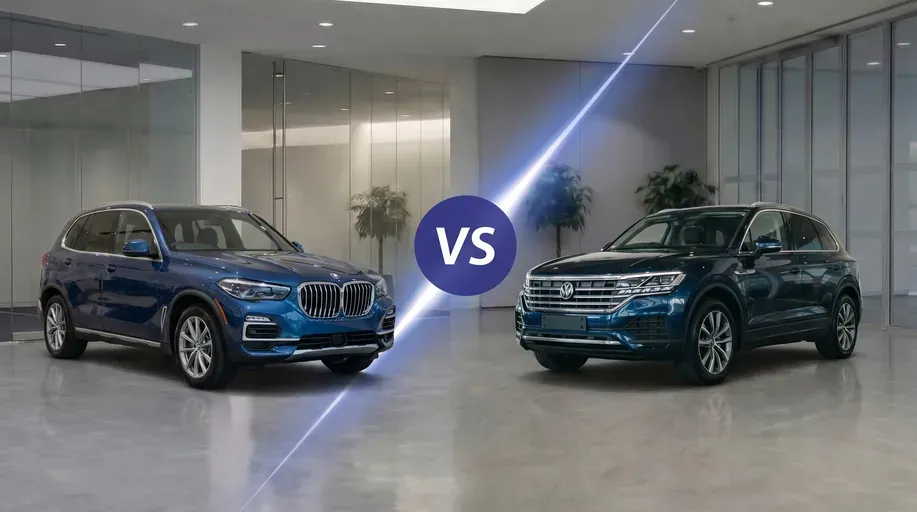
Detailed comparison of used BMW X5 vs Volkswagen Touareg. Find out which premium SUV to choose. We bring real-world experiences, equipment details, and a clear verdict.
Apr 27, 2026