Articles

Car battle

Audi e-tron GT vs. Tesla Model S: Complete comparison 2026

Audi e-tron GT vs Tesla Model S: A comprehensive comparison of premium electric vehicles. Find out everything about real-world range, performance, and features, and read our verdict.

April 23, 2026

VS
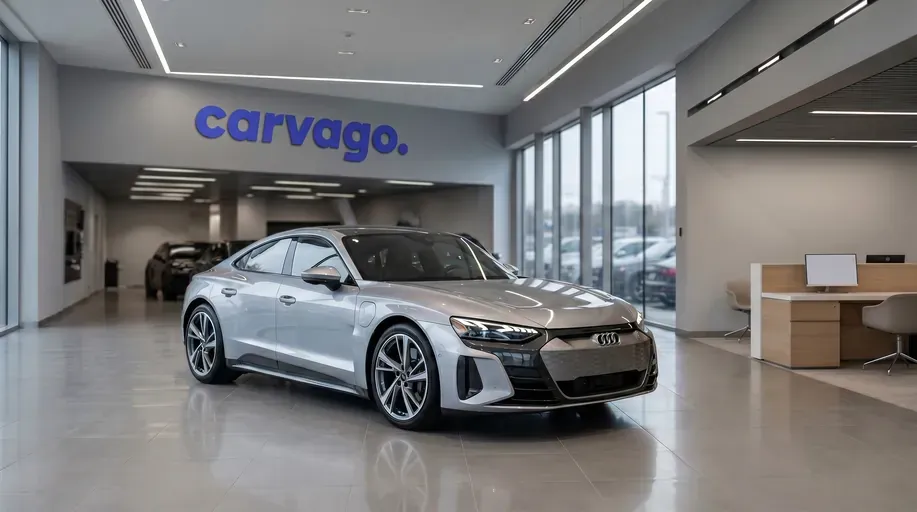
Audi e-tron GT

Audi e-tron GT

Tesla Model S

Tesla Model S

Introduction

The Audi e-tron GT is a stunning electric grand tourer that combines precise German craftsmanship with dynamic driving characteristics and a fascinating design. Standing against it is the pioneering Tesla Model S, a technologically constantly improved electric liftback that has for many years defined the absolute standards in terms of maximum range and breathtaking acceleration. Let's take a detailed look at how these two premium giants fare in a head-to-head battle and which of them represents the smarter choice for your purchase on the luxury used electric car market.

Comparison of External Dimensions

Looking at the exterior dimensions, it is immediately clear that both the Audi e-tron GT and the Tesla Model S play in the elite league of large luxury electric vehicles. Both cars are around five meters in length. If we focus on the models most commonly found on the used car market at around four years of age (typically 2020 to 2022 model years), the Tesla offers a length ranging from 4970 to 5021 mm, depending on the specific version. At 4989 mm, the Audi sits right in the middle of this American range. Parking both vehicles in narrow city streets will require a certain amount of caution, further complicated by a significant width approaching the two-meter mark.

However, a fundamental difference can be found in the height and wheelbase. The Audi e-tron GT bets on a radically sporty silhouette with a height of just 1413 mm, making it look more planted and aerodynamic with a very low center of gravity. The Tesla Model S is noticeably taller at 1431 to 1445 mm. On one hand, this difference contributes to slightly easier entry and a greater sense of airiness in the Tesla's cabin; on the other hand, in terms of pure design, the Audi looks significantly more like a hunkered-down gran turismo.

Regarding the wheelbase, the Tesla has the technical upper hand with a value of 2960 mm, while the Audi offers 2898 mm. In practice, these 62 mm in favor of the Tesla translate into better longitudinal legroom for rear passengers. The American liftback is thus able to maximize its interior space slightly better, while the e-tron GT consciously sacrifices part of its internal spaciousness on the altar of dramatic exterior lines.

ParameterAudi e-tron GT CoupéTesla Model S Sedan
Length (mm)49894970 - 5021
Width (mm)19641964 - 1987
Height (mm)14131431 - 1445
Wheelbase (mm)28982960

From the perspective of daily use and spatial proportions, the Tesla Model S represents the more practical choice. Its longer wheelbase and taller body structure ensure more generous space for the occupants. In contrast, the Audi e-tron GT, with its lower and overall more compact proportions, clearly targets drivers who prefer a sporty seating position and unmistakable aggressive design, even at the cost of minor compromises in rear-seat spaciousness. However, both cars command respect with their generous dimensions and require a larger parking space.

Trunk Volume

Luggage space is often a deciding factor for used car buyers, especially if they are looking for a car that can handle family holidays, weekend trips, or transporting larger items. Although both the Audi e-tron GT and Tesla Model S are top-tier fully electric vehicles (ideal to purchase as roughly 4-year-old used cars from 2021–2022 production), their approach to practicality and interior space is diametrically different. While one model prioritizes an uncompromisingly elegant silhouette, the other maximizes the advantages of the electric platform for unrivaled family usability. The difference in total base volume is nearly 400 liters, which in real life represents space for several extra suitcases.

The Audi e-tron GT (FW generation, 2021–2024), designed with a low silhouette and the proportions of a sporty four-door coupe, offers a standard rear trunk with a volume of 405 liters. In the top RS version, this space is slightly reduced to 350 liters due to the installation of a premium audio system. A significant plus, however, is the practical front trunk (so-called frunk) with a volume of 85 liters, where you can ideally hide charging cables away from the main cargo. Although the rear seats can be folded in a practical 40:20:40 ratio (which significantly facilitates the transport of longer items such as skis), Audi does not state an official maximum volume value after folding, as the closed body concept does not allow for efficient loading up to the roof. For weekend shopping or a holiday for two, this space is fully sufficient, but for a larger family, it may already mean the necessity of packing compromises.

On the other hand, the Tesla Model S (1st generation) benefits from its practical liftback body type with a huge fifth door, which makes loading oversized items as easy as possible. Most popular versions from this period offer a massive combined base volume of 793 liters. This consists of a generous rear trunk and a very spacious 89-liter "frunk" under the front hood. If you fold the rear seats, the Model S literally transforms into a transport cave – the maximum capacity increases to an impressive 1,645 liters. This giant space is not only perfectly sufficient for weekend shopping and longer holidays but also easily accommodates bulky sports equipment or building materials from a DIY store.

In terms of luggage space, the choice is quite clear. If you need maximum family usability and a giant transport capacity, the Tesla Model S clearly dominates thanks to its liftback concept. The Audi e-tron GT, on the other hand, is the choice for those who find a more compact trunk sufficient for their lifestyle and who prefer a top-tier sporty look over the ability to carry half a household.

ParameterAudi e-tron GT CoupéTesla Model S Liftback
Base volume (liters)405793
Maximum volume with seats folded (liters)Not specified1645

📦 Tesla as a mover, Audi for style

If luggage volume is an absolute priority for you and you are looking for practicality for the family, the Tesla Model S, with its huge liftback space, confidently outclasses the Audi e-tron GT.

Discover the true condition of the car thanks to an independent inspection

Order CarAudit™

Trailer Weights

When choosing a premium electric grand tourer or sedan, towing capacity is not always the most frequent priority, but for many buyers in the used car market, it can represent significant added value and an element of everyday practicality. The ability to hitch a trailer is useful not only for transporting construction materials but also for connecting a caravan, which opens up entirely new travel possibilities. In terms of towing capacity, however, these two electric competitors from roughly four-year-old models differ diametrically.

The Audi e-tron GT (FW generation, focusing on 2021–2024 models) was designed from the start as a purebred sports car, where aerodynamics and driving dynamics play the main role. As a result, this model completely lacks approval for towing a trailer. The manufacturer specifies no permitted weight for braked or unbraked trailers for the e-tron GT. In practice, this means that a tow bar can be used on this car at most in the form of a special adapter for a bicycle rack, not for towing itself.

In contrast, the Tesla Model S – both in the standard dual-motor version and the extremely powerful Plaid version (models from 2022 onwards) – considers utility much more. This model has an official capacity for a braked trailer with a maximum weight of 1600 kg. Both the standard and maximum stated values are identical in this case and do not differ even for the top motorizations. This capacity is quite sufficient for a weekend shopping trip for bulky items at a DIY store or a longer holiday with a compact caravan, while the car, thanks to its enormous power, will hardly feel the weight of the trailer. When a trailer is attached, the car will easily transport equipment and thus offer space for several extra suitcases that would no longer fit in the trunk itself.

Summary of towing capabilities
If the ability to hitch and tow a trailer or caravan is key for you, the decision on the used car market will be quite simple. The Tesla Model S will offer you excellent flexibility and a high degree of practicality, while with the purist Audi e-tron GT, you will have to rely only on its internal luggage space and a roof box.

(Note: The Audi e-tron GT is not listed in the table because the manufacturer does not allow trailer towing for this generation and there is no homologated data for it.)

Model and motorizationBraked trailer weight (kg)Unbraked trailer weight (kg)
Tesla Model S (from 2022)1600750
Tesla Model S Plaid (from 2022)1600750

Overview of Most Common Motorizations

When comparing the powertrains of the Audi e-tron GT and the Tesla Model S on the market for roughly four-year-old used cars, we encounter two completely different approaches to high-performance electric vehicles, even though both cars rely exclusively on all-electric drive with all-wheel drive. Differences in the powertrains affect not only dynamics but also overall efficiency and driving feel, which is crucial for those interested in a luxury EV. Audi emphasizes consistent and repeatable performance, sophisticated thermal management, and a top-tier 800V architecture enabling ultra-fast charging (up to 270 kW). A technological rarity in the Audi is the use of a two-speed automatic transmission on the rear axle, which ensures lightning-fast take-offs while also providing better efficiency at highway speeds. Tesla, on the other hand, rules in terms of absolute numbers – its models offer slightly larger battery capacity, superior paper range, and brutal straight-line acceleration thanks to advanced electric motors paired with a classic single-speed transmission. The choice of powertrain thus depends on the driver's profile: lovers of traditional sporty characteristics and millimeter precision in corners will appreciate Audi's technology (shared with the Porsche Taycan), those interested in record-breaking range on a single charge will confidently reach for standard Tesla versions, while fanatics craving hypercar performance will find the absolute ceiling in the top-tier three-motor derivatives of the Model S.

The range of powertrains for the Audi e-tron GT in the FW generation is relatively straightforward, and on the used market from 2021 to 2024, it revolves around two main dual-motor versions with standard quattro all-wheel drive and a battery with a usable capacity of 84 kWh. The base is the e-tron GT quattro model, which standardly provides 350 kW, but when Launch Control is activated, the system can briefly offer up to 390 kW and 640 Nm. This version represents an ideal balance for everyday luxury travel. For more demanding, performance-oriented drivers, the top-tier RS e-tron GT version is available, whose massive 440 kW (up to 475 kW in overboost) and 830 Nm of torque bring acceleration on par with thoroughbred supercars. Given that production of this pre-facelift standard e-tron GT quattro powertrain for the period we are monitoring has already ended (replaced by 2024+ models), both of these specifications are gems exclusively available precisely on the used market and represent a ticket into the world of uncompromising electric dynamics.

Motor typeFuelPower (kW)Torque (Nm)Transmission
e-tron GT quattroElectricity350 / 390630 / 6402-speed auto
RS e-tron GTElectricity440 / 4758302-speed auto

The palette of Tesla Model S powertrains is historically much richer, but when looking for an approximately four-year-old car, you will primarily encounter the top versions from 2019 to 2022, all of which benefit from all-wheel drive and a massive approximately 100 kWh battery. The extremely popular Long Range variant (available from 2019–2021, and thus now withdrawn from primary production) offers an impressive 413 kW and became famous for its phenomenal range, benefiting drivers who cover vast distances on highways. The older Performance sports model (also produced until early 2021 and phased out of the new car market) upped the ante to 580 kW with brutal acceleration that drew the attention of stoplight sprint enthusiasts. However, if you look for units from late 2022, the ruler of electric cars is already appearing on the market – the three-motor Plaid version. With an incredible 760 kW and 1,420 Nm of torque, it ranks among the fastest-accelerating production cars on the planet. The older, and now unavailable, Long Range and Performance variants, however, still count as some of the best buys on the market for customers looking for immense range at more affordable prices.

Motor typeFuelPower (kW)Torque (Nm)Transmission
Long RangeElectricity4136601-speed auto
PerformanceElectricity58011401-speed auto
PlaidElectricity76014201-speed auto

Electric Symphony vs. Absolute Brute Force ⚡

While the Audi e-tron GT charms drivers with its sophisticated two-speed transmission and perfectly tuned traction, the Tesla Model S dominates with its giant batteries, range, and, in the Plaid version, absolutely crushing, breathtaking acceleration that is hard to match on the used market.

Choosing the right powertrain for premium electric vehicles is not just about raw power, but primarily about the balance between real-world range, charging speed, battery thermal management, and long-term reliability. Both of these flagships offer extreme acceleration even in their base versions, but from the perspective of buying a roughly four-year-old used car, it is crucial to choose a version that does not suffer from excessive wear on the chassis and expensive components, while offering the best ratio of price to everyday utility.

For the Audi e-tron GT, we recommend: e-tron GT quattro (350 kW / 476 hp)

This base powertrain from the years 2021 to 2024 represents the ideal entry point into the world of electric grand tourers. Although this specific version is no longer produced as new and has been replaced by updated variants, it makes the most sense for the four-year-old used car market. It offers the J1 platform fully shared with the Porsche Taycan, and its output of 350 kW (up to 390 kW / 530 hp with overboost) is more than sufficient for both regular and very dynamic driving. While the RS version attracts with even more aggressive performance, it carries a much higher risk of expensive wear on the air suspension, brakes, and premium tires in the used market.

  • Why it's the best choice: Compared to the more powerful RS versions, the chassis and drivetrain are less stressed by sudden jolts, which has a positive effect on the lifespan of the aluminum control arms and bushings in this heavy electric vehicle. It provides a perfect balance between luxurious comfort and sporting stiffness.
  • Technical advantages: The 800V architecture allows for extremely fast charging at up to 270 kW (charging from 5 to 80% in about 22 minutes). The torque curve is beautifully smooth, and the real-world range for this version reliably hovers around 380–420 km depending on highway speeds and wheel size.
  • What to watch out for: Audi addressed several major recalls for models from 2022–2024. It is absolutely critical to verify via the VIN at an authorized service center whether the high-voltage battery modules have been inspected and potentially replaced due to the risk of an internal short circuit (affected cars had charging temporarily limited to 80% via software). Furthermore, during the test drive, check the functionality of the PTC heater, which occasionally fails in these model years, and test the infotainment to rule out screen freezing (usually reliably fixable with a software update).
  • Who it's for: For lovers of classic precision steering who spend a lot of time on highways, have access to ultra-fast chargers, and want a premium vehicle that is quiet and comfortable but can mask its weight on a twisty backroad.

For the Tesla Model S, we recommend: Model S Maximum Range / Dual Motor (approx. 500 kW / 670 hp)

For the Tesla Model S, the ideal target in the used market is the "Maximum Range" version (produced between 2019 and 2021), or the standard dual-motor version starting from 2022 (representing the so-called Palladium refresh). Although you will no longer find these variants in this form in current price lists, they represent an unrivaled offer on the used market. Intentionally avoid older P100D versions or used Plaid versions with extreme 1020 hp output – in the used market, choosing the "Long Range / Maximum Range" model will save you a lot of money on ruined tires and worn-out half-shafts.

  • Why it's the best choice: This powertrain offers the best ratio of massive range and crushing performance (0 to 100 km/h acceleration even in the base dual-motor version is around 3.2 seconds). The 100 kWh battery in these more modern model years already has very well-managed thermal management and shows low degradation (usually only around 10% loss after 150,000 km).
  • Technical advantages: Tesla's software efficiency and the car's excellent aerodynamics mean the lowest real-world electricity consumption in this class. A huge advantage is the native access to the Tesla Supercharger network – the car intelligently plans the route for you and prepares the battery temperature for the fastest possible recharge.
  • What to watch out for: Pay close attention to the front half-shafts (CV joints) when purchasing. If you feel vibrations transmitted to the steering wheel and body during hard acceleration from lower speeds, they will need to be replaced (a very common occurrence in dual-motor versions). Also carefully check the adaptive air suspension – the car must not "sit" crookedly due to air spring leaks after standing overnight. For early units from post-facelift production (2021/2022 model years), also check the alignment of exterior panels and listen for rattles in the interior, where assembly quality occasionally fluctuated.
  • Who it's for: For tech enthusiasts and drivers looking for maximum interior space who want a highway cruiser with the best and most reliable charging ecosystem for worry-free travel across all of Europe.

Real Fuel Consumption

Official energy consumption values according to standardized cycles often look very tempting, but real-world practice on the roads is usually different. Actual real-world consumption depends heavily on the route profile, outdoor temperature, and, for such powerful cars, primarily on driving style. How are these luxury electric vehicles performing roughly four years after production? A look at shared data from drivers themselves on the popular community portal Spritmonitor.de and the results of long-term tests give us a much more accurate picture of what kind of battery capacity depletion one actually needs to account for on the road.

Model and powertrainAverage consumption (kWh/100 km)
Tesla Model S Plaid (2022–2025)18.7
Tesla Model S Standard Range (2019)18.9
Audi e-tron GT (2021–2024)20.3

When interpreting real-world data, the distribution of power is quite clear and reveals obvious trends. Tesla has long been considered the benchmark for energy efficiency in the field of electric vehicles, and this is confirmed even with the extremely powerful Model S Plaid variant. Despite its immense power, real-world consumption remains at a very favorable 18.7 kWh/100 km. Paradoxically, this is less than in the case of the base Audi e-tron GT (2021–2024) model, which consumes an average of 20.3 kWh/100 km. This difference shows that the German automaker placed greater emphasis on sporty proportions, stable thermal management, and wide tires for this grand tourer. Tesla, on the other hand, benefits from its years-long lead in aerodynamics and constant software tuning to maximize range.

For a typical buyer choosing from used cars on the market, these numbers have very practical implications. If you spend a lot of time on highways and regularly drive long distances across the country, the Tesla Model S appears to be the more economical choice. For it, lower consumption means not only faster travel with fewer stops at charging stations but also lower operating costs at expensive fast chargers. However, for drivers who commute shorter distances to work and have the option of a home wallbox, the slightly higher consumption of the Audi e-tron GT will not represent a major obstacle, and they will hardly notice the higher energy expenses in their budget.

From an overall perspective, while consumption is usually not the absolutely decisive factor for a purchase in this premium price category, it perfectly illustrates the different philosophies of both brands. Tesla Model S focuses on an uncompromising symbiosis of range and brutal acceleration, which it turns into a highly functional whole. On the other hand, the Audi e-tron GT prioritizes an unmistakable driving experience and classic sports car behavior, for which it simply takes a small toll from its owners in the form of higher electrical energy consumption.

Price Range and Used Car Offerings

The premium used electric vehicle market offers very attractive opportunities approximately four years after production. The original price tags of both these cars often approached the €123,000 to €164,000 mark. Today, for models from 2021 and 2022, you can expect a significant price drop, making them a much more affordable entry point into the world of electric luxury with extreme performance.

Audi e-tron GT (Model Years 2021–2022)

The e-tron GT, which shares its advanced technical foundation and 800V architecture with the Porsche Taycan, has seen a relatively steep decline in value on the used market (often exceeding 50%). For second-hand buyers, however, this is great news, as they can acquire a full-fledged luxury gran turismo for the price of an average new SUV.

  • Standard e-tron GT quattro: Prices for roughly four-year-old vehicles on the European market start just above €45,000. Better-maintained examples with lower mileage or extensive optional equipment typically cost around €53,000 to €58,000.
  • Sporty RS e-tron GT: If you crave uncompromising dynamics and a sharper chassis setup, the top-tier RS version logically holds a higher absolute price. You should expect to pay roughly €62,000 to €76,000 depending on overall condition and mileage.

Tesla Model S ("Palladium" Facelift, Model Years 2021–2022)

When searching for a four-year-old used Tesla Model S, you will primarily encounter models produced after the major facelift, which introduced a revolutionary interior with a horizontal display and the often-controversial Yoke steering wheel. Compared to its German rival, the Tesla holds its residual value slightly better on the secondary market.

  • Model S Long Range / Dual Motor: The version focused on maximum efficiency and range most commonly appears in listings between €49,000 and €62,000. Interest in these models remains high thanks to reliable software and continuous OTA (over-the-air) updates that keep the car "fresh" even after years.
  • Model S Plaid: The extreme tri-motor version with over 1,000 horsepower is a more exclusive commodity on the used market. Its price usually starts at €64,000 and can reach €78,000 for exceptionally well-maintained 2022 vehicles.

Comparison Table of Estimated Used Car Prices

Model (years 2021–2022)Estimated price fromEstimated price toMarket specific
Audi e-tron GT quattro€45,000€60,000Great price-to-design ratio, faster initial depreciation
Audi RS e-tron GT€62,000€76,000Prestigious and slightly cheaper alternative to the Porsche Taycan Turbo
Tesla Model S Long Range€49,000€62,000More stable residual value, unmatched real-world range
Tesla Model S Plaid€64,000€78,000Most affordable entry into the 1,000+ hp extreme performance club

💰 Extreme performance for a fraction of the original price

Both models represent an exceptionally tempting purchase after four years of operation; the Audi e-tron GT currently benefits from a more significant price drop, making it a fantastic choice for lovers of design and premium materials, while Tesla scores with unrivaled technological parameters and more stable value.

Safety and Euro NCAP Rating

Safety is a key factor when choosing a used electric car, where it's not just about simply earning five stars, but primarily about the context. Although car manufacturers often boast about maximum Euro NCAP ratings, it is always necessary to consider the year of testing. The testing methodology is constantly evolving and becoming stricter – tests from recent years include much more demanding simulations of frontal impacts with a moving barrier, advanced cyclist detection, or emergency scenarios at intersections. Percentage results from different years cannot be directly compared, and certification according to newer protocols always has a much higher informative value.

The Tesla Model S underwent Euro NCAP crash tests at the end of 2022, according to some of the strictest rules valid for the 2020–2022 period. The results were absolutely excellent. The car easily earned the maximum five stars, and the organization even named it the safest car in the executive sedan class for that year. The American electric car dominated mainly thanks to modern technologies that can actively prevent accidents, for which it received an extraordinary 98% in the safety assist systems category. Adult occupant protection (94%) and child occupant protection (91%) were also top-notch, and the car achieved very good results in terms of consideration for vulnerable road users (85%).

In the case of the Audi e-tron GT, however, we encounter an obstacle in the form of missing official data. This specific car has never been tested by Euro NCAP, and therefore no official percentage score can be provided for it. This, of course, does not mean it is an unsafe car. Structurally, the car is based on the same platform (J1) as the Porsche Taycan, which achieved a five-star rating in 2019. Furthermore, Audi equips the e-tron GT as standard with the advanced Audi pre sense system, an extensive network of airbags, and collision avoidance assist. However, without a specific score from the modern era, its real-world performance cannot be objectively compared with current competition.

In terms of verifiable safety and certification according to the latest standards, the Tesla Model S is the clear winner in this comparison, as it offers one of the best and most advanced safety packages on the market. With the Audi, on the other hand, you have to rely primarily on theoretical structural assumptions, the brand's premium reputation, and its technological kinship with its sister model, the Taycan.
ParameterAudi e-tron GTTesla Model S
Year of testingNot tested2022
Adult occupant protection-94 %
Child occupant protection-91 %
Vulnerable road users protection-85 %
Safety assist systems-98 %

Safety Crown for Tesla 🛡️

The Tesla Model S benefits from excellent and verifiable results in the rigorous 2022 tests, while the Audi e-tron GT lacks an official rating and relies mainly on the quality of its shared platform.

Comparison of Interesting Equipment Features

In addition to standard equipment, each model offers several unique features that can be decisive for the customer, with both cars approaching added value in completely different ways.

Audi e-tron GT: Engineering Precision and Driver Focus

  • Electronics and Charging: Thanks to its advanced 800V architecture (shared with the Porsche Taycan), the e-tron GT offers ultra-fast charging at up to 270 kW. In practice, this means that at a suitable fast-charging station, you can add approximately 100 km of range in just 5 minutes, significantly facilitating long-distance travel.
  • Chassis and Driving Dynamics: Three-chamber adaptive air suspension combined with available all-wheel steering ensures incredible comfort for the occupants on the highway while providing sharp, go-kart-like response during sporty driving on country roads.
  • Sport Variants: The top-of-the-line RS e-tron GT version brings not only extreme performance exceeding 600 hp but also unique functional design elements, such as an optional lightweight carbon fiber roof to lower the center of gravity.
  • Smart Design and Ergonomics: Unlike today's absolutely minimalist trends, Audi purposefully retains physical buttons for climate control, seat heating, and drive mode selection. This allows the driver very intuitive control even during dynamic driving without having to take their eyes off the road.
  • Iconic and Brand Features: The car features the e-tron sport sound system, which creates a synthetic but highly sophisticated acoustic profile that enhances the futuristic driving feel. Top-tier headlights with Matrix LED technology, optionally supplemented by laser high beams, ensure uncompromising safety at night.

Tesla Model S: Extreme Minimalism and Technological Dominance

  • Powertrain and Extreme Performance: The revolutionary Plaid version features three electric motors with carbon-sleeved rotors, giving the car over 1,000 hp. It is one of the fastest-accelerating production cars in the world, pushing the perception of electric propulsion to a whole new level.
  • Infotainment and Onboard Systems: The interior is dominated by a massive horizontal 17-inch high-resolution touchscreen with motorized tilt toward the driver or passenger. The computing power of this system rivals modern gaming consoles. Rear-seat passengers have their own 8-inch display for watching movies or controlling comfort zones.
  • Smart Design and Innovation: Facelifted "Palladium" generation models introduced the innovative (and somewhat controversial) aviation-inspired "Yoke" steering wheel. Traditional stalks behind the wheel have disappeared, and the car features an Auto Shift out of Park function, where the onboard computer uses cameras to estimate whether you want to drive forward or reverse out of a parking spot.
  • Technology and Telematics: Tesla is an absolute pioneer in OTA (Over-the-Air) updates. The automaker can remotely improve not only infotainment graphics but also optimize range, the charging curve, or enhance brake and chassis behavior.
  • Assistance Systems and Safety: The legendary Autopilot system with hardware readiness for Full Self-Driving (FSD) constantly improves the car's ability to navigate complex traffic situations. A specialty for daily health protection is the oversized HEPA filter with an integrated "Bioweapon Defense Mode," which can keep the cabin completely clean even in highly polluted environments.

Key Advantages and Disadvantages

Audi e-tron GT

Pros

Stunning exterior design and a sporty low silhouette reminiscent of a concept car

First-class build quality and premium materials in the interior

Top-tier driving dynamics and a chassis sharing the platform with the Porsche Taycan

Very fast charging (up to 270 kW) thanks to advanced 800V electrical architecture

Cons

Noticeably shorter range per charge and overall lower efficiency compared to Tesla

Smaller luggage compartment and more cramped headroom for rear-seat passengers

Due to its high curb weight, it loses some of its agility in tight corners

Audi e-tron GT is the embodiment of a luxury electric grand tourer that will primarily appeal to drivers looking for perfect build quality, emotive design, and refined driving characteristics. It is an ideal choice on the used car market for those who prioritize traditional automotive luxury and a sporty feel behind the wheel over the absolute longest range.

Tesla Model S

Pros

Unrivaled range per charge and overall energy efficiency of the powertrain

Extreme dynamics and straight-line acceleration, especially in the phenomenal Plaid version

Huge and practical luggage space thanks to the liftback body style and a voluminous front trunk (frunk)

Seamless and integrated access to the extensive and reliable Tesla Supercharger fast-charging network

Top-tier infotainment with massive performance and constant over-the-air (OTA) software updates

Cons

Build quality, panel gaps, and interior soundproofing do not reach the standards of German premium competitors

The controversial "Yoke" steering wheel (typical for used cars from 2021 onwards) makes maneuvering in the city and during parking more difficult

The infotainment does not support phone mirroring via the popular Apple CarPlay and Android Auto interfaces

Driving behavior and steering feel somewhat detached and less sporty in corners

Tesla Model S remains the absolute leader in technological innovation, range, and overall practicality in the electric sedan segment. It will thrill its owners with brutal power, an unrivaled user ecosystem, and interior space, but it requires certain compromises in ergonomics and the premium feel of materials.

Common Problems and Owner Complaints

Based on service reports, recalls, breakdown statistics, and our own CarAudit inspections, we have compiled an overview of the most common problems that buyers of roughly four-year-old used examples should watch out for. Before purchasing any used electric car in this price category, we strongly recommend undergoing a detailed used car inspection.

Audi e-tron GT

This model shares the J1 platform with the Porsche Taycan, which brings very similar mechanical reliability, but also identical teething troubles from the first years of production (2021–2022).

  • High-voltage battery: Audi had to address the risk of moisture entering the battery modules due to imperfect sealing as part of recall campaigns, which in extreme cases could lead to a short circuit. When purchasing, it is necessary to verify whether the vehicle has undergone the recall.
  • 12V battery: Frequent complaints are directed at the unexpected discharge of the classic 12V battery. If this happens, the car cannot be unlocked or started, even if the main high-voltage battery is fully charged.
  • Heating failures (PTC heater): A known defect is the failure of the high-voltage cabin heater, which manifests as a sudden loss of heating in the winter months. Repairs tend to be complicated at non-authorized service centers.
  • On-board electronics and MMI: The infotainment system can occasionally freeze, restart, or lose connection with the MyAudi mobile app. Often, only a major software update from the manufacturer helped.
  • Charging port covers: The electrically operated charging port doors can get stuck, primarily due to moisture, dirt, or freezing of the sensor in winter.

Audi e-tron GT: Solid technology with occasional software quirks

Although the e-tron GT is mechanically top-notch and has a robust chassis, it can be troublesome mainly due to software, 12V battery issues, and recall actions for battery module seals from the start of production.

Tesla Model S

In the generation produced since 2021 (after the significant "Palladium" facelift), Tesla has moved forward in the technologies used; however, cars from the first years of production struggle with typical ailments associated with the introduction of new features.

  • Steering wheel wear (Yoke): On 2021 and 2022 models, the vegan leather on the innovative U-shaped steering wheel degrades and peels extremely quickly. Many owners had to replace the steering wheel after only a few tens of thousands of kilometers.
  • Front drive shaft vibrations (Shudder): Especially in the extremely powerful Plaid versions, but also in the Long Range, noticeable vibrations from the front axle occur during sharp acceleration. This is a design weakness that, combined with enormous torque, excessively wears out the drive shafts.
  • Heat pump system: Post-facelift cars received a thermal management system (Octovalve), which experienced freezing and sensor failure in severe frosts, leading to a loss of interior heating. The problem was addressed by updates and sensor replacements.
  • Fit and finish quality: Although the situation is gradually improving, with used cars from 2021 and 2022, one must still expect uneven gaps between body panels, local paint defects, or creaking plastics in the interior.
  • Active Noise Cancellation (ANC): In some vehicles, faulty calibration of the ANC system causes unpleasant low-frequency booming in the cabin, which can make more sensitive passengers feel tired.

Tesla Model S: Extreme performance, inconsistent assembly quality

The Model S impresses with unrivaled dynamics and an advanced powertrain, but buyers of four-year-old used cars must expect faster wear of some interior parts and tolerate traditional shortcomings in build quality.

Tips for Buying a Used Car

When buying a used car, a thorough inspection is key. Even though both are premium electric vehicles with advanced technology, both models have their specifics and weak points to watch out for. An ideal step before purchase is therefore an independent technical inspection of the car, which will reveal any expensive hidden defects.

When choosing an Audi e-tron GT:

  • Condition and capacity of the high-voltage battery (SOH): Request an accurate diagnostic report of the battery's health (State of Health). Although Audi uses advanced thermal management with 800V architecture, if the previous owner charged the car exclusively at ultra-fast DC stations, it can result in faster battery degradation.
  • Condition of the air suspension: During the test drive, manually test all height levels of the suspension settings. The compressor should work quietly and smoothly. The car must not sag to one side after standing for a long time. Given the curb weight exceeding 2.3 tons, suspension components (arms, joints) take an extreme beating.
  • Software and infotainment stability (MMI): In early model years (around 2021), problems with the central display freezing, phone connection dropouts, or delayed parking camera responses often appeared. Check if the system runs smoothly and if the car has the latest software version installed.
  • Charging port mechanics: The car has two charging ports (standard on both front fenders). Check if the electrically operated doors open and close without sticking and if the pins in the connector itself are not damaged, scorched, or corroded.
  • Brake disc wear: Due to strong recuperation from the electric motors, conventional brakes are rarely used. This often leads to significant corrosion of the brake discs (unless the car has carbon-ceramic brakes) or seized brake calipers.

When choosing a Tesla Model S:

  • Condition of axles and front control arms: The Model S has long suffered from play in the front axle and wear of the control arms. During the test drive, listen for distinct squeaking, creaking, or knocking when driving over bumps, speed bumps, or when turning in place. A comprehensive inspection of the car on a lift is strongly recommended.
  • Drive Unit noise: During the test drive, perform sharp acceleration and then let the car recuperate. Listen for loud whining, buzzing, or mechanical clicking from the electric motors when the load changes (so-called "milling noise"). This can be a precursor to the necessary replacement of bearings or the entire unit.
  • Build quality and fit and finish: For a used Tesla, always thoroughly check the alignment of the body panels (gaps) and the condition of the seals around the frameless windows, through which aerodynamic noise can penetrate the interior. A common problem with older cars is also the malfunctioning mechanism of the retractable door handles.
  • Degradation and real-world range: Directly in the dashboard menu, check the maximum estimated range when charged to 100%. Tesla allows very easy access to this data. Also, inquire about the car's history – whether part of the capacity was software-locked due to an older warranty module replacement.
  • Wear of the Yoke steering wheel and displays: If you are choosing a post-facelift car (around 2021/2022) equipped with the controversial "Yoke" steering wheel, carefully inspect its surface. The material of the rim from the first years of production was prone to extreme peeling and crumbling. For displays, check if they suffer from yellowing edges or leakage of special fluid (so-called "screen delamination").

FAQ: Most Frequently Asked Questions

Tesla Model S has a significantly longer range in all respects, which, depending on the version, reliably exceeds the 600-kilometer mark on a single charge. Audi e-tron GT offers a decent but noticeably shorter real-world range of around 400 to 450 kilometers. For frequently covering hundreds of kilometers without the need for stops, the American car is the more practical choice.

Audi excels with top-tier premium craftsmanship, the use of luxury materials, and almost perfect cabin soundproofing, exuding traditional German quality. Tesla bets on a futuristic and minimalist design with a dominant central display. However, in terms of panel fit precision and the perceived quality of some plastics, it lags slightly behind its German competitor.

The German representative uses advanced 800V architecture, allowing it to reach a peak charging power of up to 270 kW and charge the battery from 5 to 80% in less than 23 minutes. While Tesla supports charging at up to 250 kW at its Supercharger stations, its charging curve drops off faster. Audi thus maintains high power for longer, and you will spend slightly less time at the appropriate charging points.

The Tesla Model S, especially in the extreme tri-motor Plaid version, is absolutely unbeatable in straight-line acceleration and offers hypercar-level acceleration. However, the Audi e-tron GT scores overall with much more confident and sportier handling in corners. Thanks to a lower driving position, a perfectly tuned chassis, and precise steering, it provides a better connection between the driver and the road.

Tesla is much more practical in terms of interior and luggage space, as its liftback body style with a large tailgate offers a huge rear trunk with a volume of nearly 800 liters and a spacious front storage area (frunk). The Audi e-tron GT has a traditional sedan body with a narrow trunk opening and a total volume of only 405 liters. For family travel with lots of bags, the American model is the clear winner.

Conclusion: Which Model to Choose?

Our Verdict

While the Tesla Model S dominates the used car market with its unrivaled efficiency, massive range, and stunning everyday practicality enhanced by its spacious liftback body, the Audi e-tron GT represents a driver-engaging grand tourer with precise premium craftsmanship. The German representative is the ideal choice for those looking for traditional automotive luxury, uncompromising sports handling in corners, and ultra-fast charging in a roughly four-year-old car, even at the cost of a smaller trunk. Conversely, the American pioneer will appeal more to tech enthusiasts and families requiring maximum transport capacity, worry-free long-distance travel thanks to the Supercharger ecosystem, and crushing straight-line acceleration. Both cars now offer extreme performance for a fraction of their original purchase price, so your final decision will depend primarily on whether you prefer absolute utility and software dominance, or emotive design and a perfect driving experience.

Find your ideal car

Sources: ADAC, denik.cz, svetmotoru.cz, mobilmania.cz, autozive.cz, autohit.cz

This article was prepared using artificial intelligence tools. The section guarantor is Petr Dušek.

Related articles

Car battle

Porsche Taycan vs. Tesla Model S: Complete comparison 2026

Porsche Taycan vs. Tesla Model S: Which electric car is better? We compared real-world range, performance, and equipment. Read our verdict and make your choice easier.

Apr 14, 2026

Car battle

Audi e-tron GT vs. Porsche Taycan: Complete comparison 2026

Audi e-tron GT vs. Porsche Taycan Comparison: Which luxury electric car should you choose? Find out everything about performance, real-world range, and read our final verdict.

Apr 14, 2026

Car battle

BMW i7 vs. Mercedes-Benz EQS: Complete comparison 2026

Detailed comparison of the BMW i7 and Mercedes-Benz EQS. Discover real-world range, luxury equipment details, and read our verdict. Which electric car to choose?

Apr 19, 2026

We accept online card payments as well as wire transfers.

visa payment provider logovisa-electron payment provider logomastercard payment provider logomaestro payment provider logodiners-club payment provider logodiscover payment provider logo