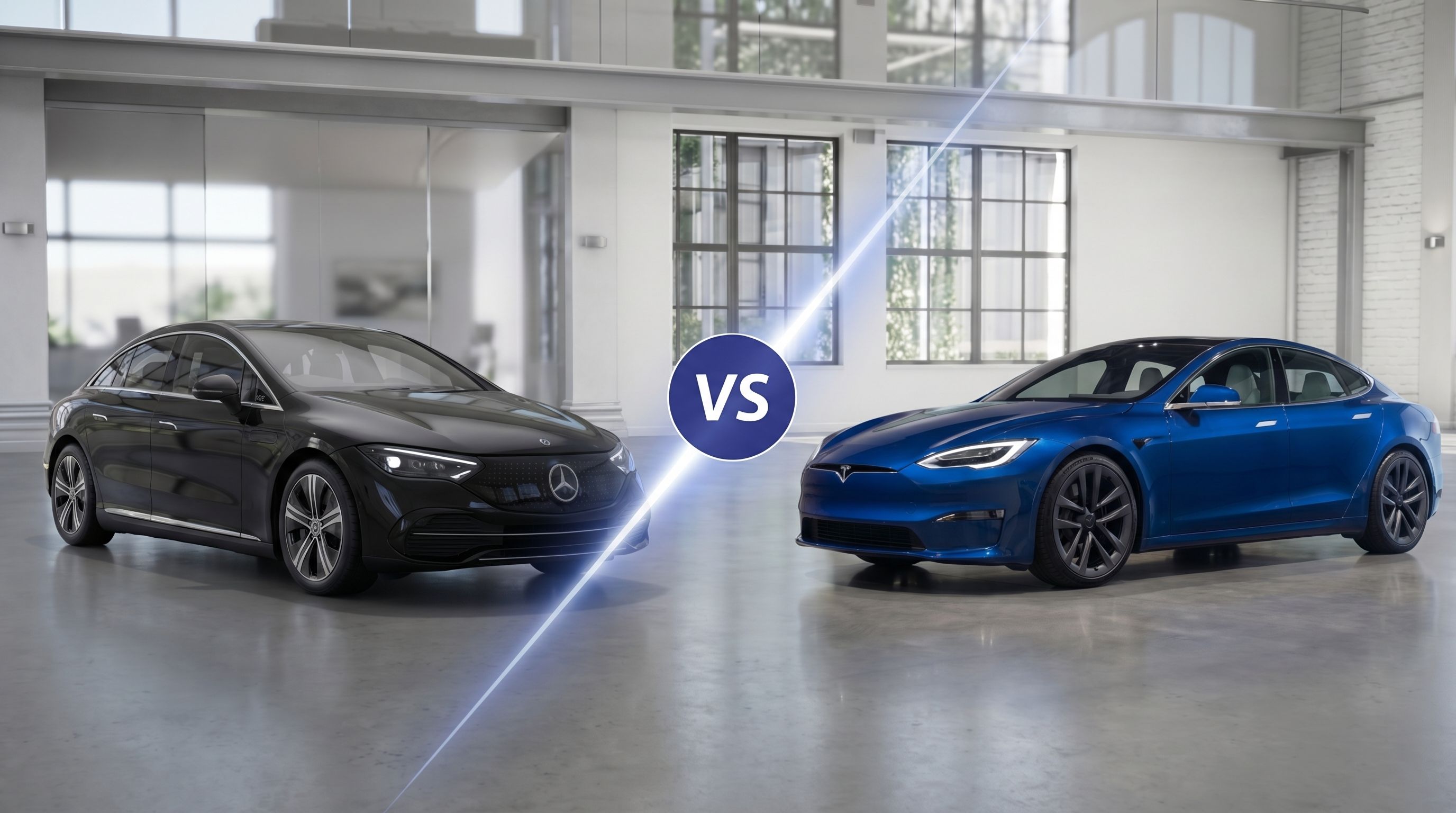
Car battle
Mercedes-Benz EQE vs. Tesla Model S: Complete comparison 2026
Mercedes-Benz EQE vs Tesla Model S: A detailed comparison of range, technology, and comfort. Our final verdict will help you choose the best electric car.
Apr 13, 2026
Articles
Car battle
Detailed comparison of Audi e-tron GT vs Mercedes-Benz EQE. Compare real-world range, performance, and equipment. Our verdict will make it easier for you to choose a used electric car.
May 20, 2026
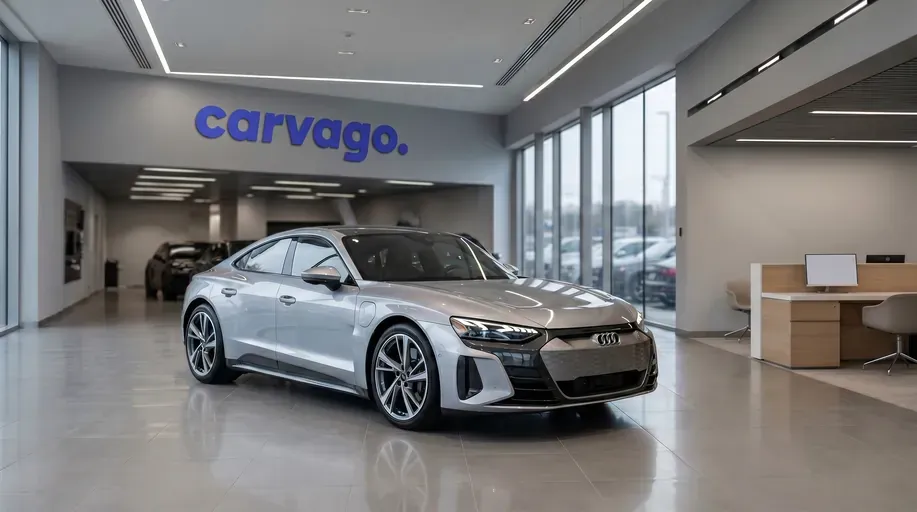
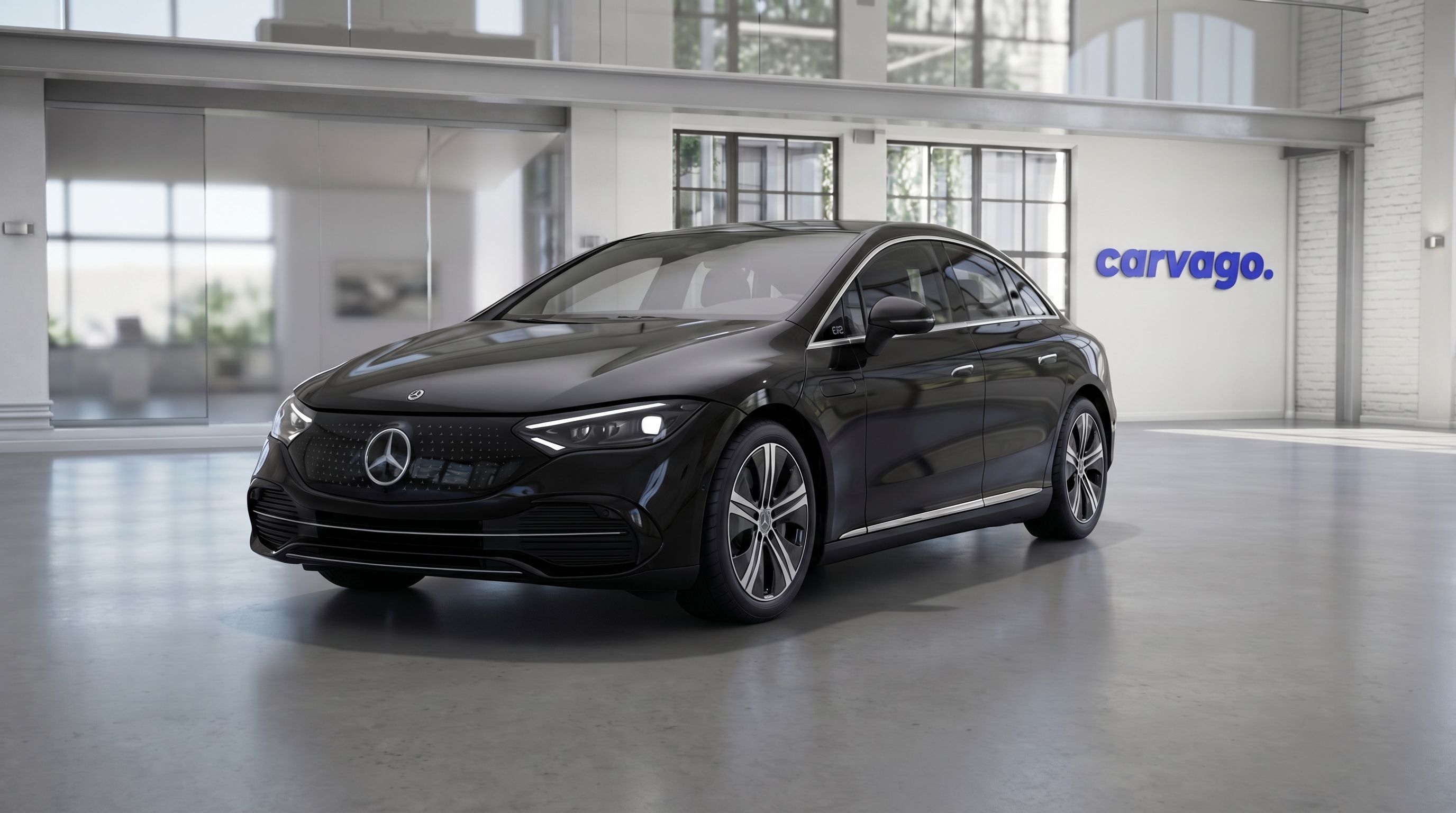
Audi e-tron GT represents the embodiment of a pure electric gran turismo, combining stunning sporty design with breathtaking driving dynamics. On the other hand stands the Mercedes-Benz EQE (also known as the EQE Sedan to distinguish it from the SUV version of the same name), a luxury executive electric car focused on maximum travel comfort, cutting-edge digital technologies, and extraordinary aerodynamic efficiency. The following comparison will detail the key differences between these two premium models and help you find out which one better suits your ideas of a perfect electric vehicle.
Looking at the exterior dimensions of both premium electric vehicles from 2021 to 2024, the different approach of both automakers to design and the overall vehicle concept quickly becomes apparent. The Audi e-tron GT is a classic representative of sports cars with a low and wide silhouette. With a length of 4989 mm, it is 25 to 43 mm longer than the Mercedes-Benz EQE (4946–4964 mm depending on the AMG version), but the main visual and practical difference lies in the height. The Audi measures just 1413 mm in height, which is nearly 100 mm less than the Mercedes (up to 1510 mm). This fact gives the Audi an extremely low center of gravity and a predatory look, but at the same time, it means slightly more challenging entry and a more sportily tailored cabin.
The Mercedes-Benz EQE, on the other hand, benefits maximally from its dedicated electric platform with wheels positioned as far as possible in the corners of the body, which is most evident in the wheelbase. While the width of both cars is almost identical (1964 mm for the Audi vs. 1961 mm for the Mercedes), the EQE offers a massive wheelbase of 3120 mm. That is a full 222 mm more than the e-tron GT (2898 mm). In practice, this means that the Mercedes can offer a significantly longer cabin on a slightly shorter overall footprint, which translates directly into generous legroom for rear passengers.
When it comes to maneuverability in the city and parking, both models require a certain amount of caution. Their width approaching two meters means that in narrow underground garages or at shopping centers, they will take up the maximum available space, and getting out of both cars will be more difficult due to wider sills and longer doors.
| Parameter | Audi e-tron GT Coupé | Mercedes-Benz EQE Sedan |
|---|---|---|
| Length (mm) | 4989 | 4946 - 4964 |
| Width (mm) | 1964 | 1961 |
| Height (mm) | 1413 | 1492 - 1510 |
| Wheelbase (mm) | 2898 | 3120 |
How do these dimensions affect the choice?
While the similar exterior width and length of both cars mean very similar requirements for parking space size, the differences in height and wheelbase clearly define their distinct characters. The Audi e-tron GT intentionally sacrificed some internal spaciousness in favor of unrivaled aerodynamics and fantastic sporting proportions that will delight enthusiastic drivers. The Mercedes-Benz EQE, on the other hand, thanks to its 222 mm longer wheelbase and taller body construction, excels in maximizing interior comfort and airiness, making it a significantly more practical choice for family use or frequent travel with adult passengers in the rear seats.
When choosing a luxury electric car on the used car market, practicality plays a surprisingly important role, even in the category of sports coupes and elegant sedans. Neither of the compared models – Audi e-tron GT (in the 2021 to 2024 specification) and Mercedes-Benz EQE (2022 generation to present) – can be considered classic family haulers. Nevertheless, they offer luggage spaces that are perfectly sufficient for a weekend shopping trip, a getaway for two, or storing several suitcases. The fundamental difference lies in their overall concept and approach to utilizing the internal layout of the electric platform.
The Mercedes-Benz EQE sedan variant pleases with a base luggage capacity of 430 liters, which remains the same for most engine versions. Although this space is perfectly adequate for regular travel, the disadvantage is the classic trunk lid with a narrower loading opening. If you need to transport longer items, the rear seat backrests can be folded down, increasing the total usable space to 895 liters. However, a minor user disappointment is the absence of a front trunk, or "frunk." Charging cables must therefore share space with your luggage in the rear of the car, which can be quite impractical when the trunk is full of travel bags.
The Audi e-tron GT takes a slightly different approach. At the rear, it offers a standard capacity of 405 liters, while in top versions (such as the RS e-tron GT Performance), this space is reduced to 350 liters due to the presence of additional technology and an audio system. The rear backrests can be practically split in a 40:20:40 ratio, although the manufacturer does not officially state the exact maximum volume after they are fully folded for this coupe. However, Audi's major trump card is the presence of an additional frunk under the front hood with a volume of approximately 85 liters. This separate storage space is absolutely ideal for storing dirty charging cables or smaller luggage. Audi thus offers a slightly more thoughtful solution for everyday life with an electric car.
| Parameter | Audi e-tron GT Coupe | Mercedes-Benz EQE Sedan |
|---|---|---|
| Base volume (liters) | 405 | 430 |
| Max volume with seats folded down (liters) | N/A | 895 |
While the Mercedes-Benz EQE offers a slightly more voluminous main trunk, the Audi e-tron GT wins buyers over with its practical front trunk, thanks to which you don't have to laboriously rearrange all your bags every time you charge.
The ability to tow a trailer is not always a given for premium electric vehicles, even though it is a parameter that fundamentally affects the overall practicality of the car for many buyers. Whether you are planning to fit an e-bike rack or occasionally tow a small trailer, the differences between the sporty Audi e-tron GT and the luxury Mercedes-Benz EQE sedan are vast and perfectly illustrate the focus of both models.
Looking at models around four years old (generations launched between 2021 and 2022), the Mercedes-Benz EQE offers a permitted braked and unbraked trailer weight of 750 kg for its standard versions. This value is consistent across the entire range of engines available at the time, whether you choose the entry-level EQE 300, the more powerful EQE 500, or even the sporty AMG variants. Conversely, for the Audi e-tron GT (FW generation from 2021–2024), no trailer towing values are listed in the specifications. This purebred grand tourer with its low center of gravity is simply not homologated or designed for tow bar installation or towing loads at all.
In practice, these differences mean that the Mercedes-Benz provides owners with significantly more versatile usage options. The 750 kg limit is perfectly adequate for weekend trips to buy bulky materials, hauling garden waste, or securely mounting a robust rack for several heavy e-bikes, which is a major plus for active holidays. With the Audi, on the other hand, you have to rely solely on the basic trunk capacity, and the car offers no extra flexibility for transporting larger items.
Overall, it can be said that if you expect your car to be able to tow even a light trailer or comfortably carry family bikes on a tow bar, the Mercedes-Benz EQE is the clear and, in fact, the only choice in this comparison. The Audi e-tron GT remains true to its DNA as a purist sports car, where towing practicality has been sacrificed for pure performance and aerodynamics.
| Model and motorization | Braked weight of trailer (kg) | Unbraked weight of trailer (kg) |
|---|---|---|
| Mercedes-Benz EQE 300 (2022–2024) | 750 | 750 |
| Mercedes-Benz EQE 350 / 350+ (2022–2024) | 750 | 750 |
| Mercedes-Benz EQE 500 (2022–2024) | 750 | 750 |
| Mercedes-Benz EQE 43 AMG / 53 AMG (2022–2024) | 750 | 750 |
While both premium brands target customers looking for a luxury executive electric vehicle, their approach to powertrains differs fundamentally, which is crucial for used car buyers. The Audi e-tron GT, sharing its innovative 800V platform with the Porsche Taycan, focuses primarily on uncompromising sporty performance. Even the base model always offers quattro all-wheel drive and a technological specialty in the form of a unique two-speed gearbox on the rear axle, providing rocket-like acceleration from a standstill and higher efficiency at highway speeds. Power outputs for four-year-old cars start at a staggering 350 kW and peak with the RS version at a continuous output of 440 kW. In contrast, the Mercedes-Benz EQE (V295 generation available since 2022) is built on a modular architecture tuned for maximum silence, comfort, and the longest possible range. The three-pointed star brand therefore serves up a much wider and more civil spectrum of power outputs – from the exceptionally efficient rear-wheel-drive EQE 300 with 180 kW aimed at range hunters, to the heavyweight highway interceptor EQE 53 AMG with a crushing 460 kW. If you are a sport-oriented driver who prefers driving emotions and handling, the Audi will captivate you with its raw dynamics. For high-mileage drivers who strictly monitor consumption or are looking for the perfect balance between dynamics and a reasonable budget, the wide and more rational range from Mercedes makes more sense.
The range of Audi e-tron GT powertrains from 2021 to 2024 is completely straightforward from a used car market perspective, and you won't find any weak compromises with single-axle drive. The base, yet extremely agile, e-tron GT quattro version features two electric motors with a continuous output of 350 kW (up to 390 kW in overboost mode) and a massive 630 Nm of torque. The purely performance-oriented RS e-tron GT pushes these boundaries with a continuous output of 440 kW (up to 475 kW using Launch Control) and 830 Nm of torque, making it one of the most explosive models on the used EV market. It is very important to mention that newer, more powerful variants after the facelift, such as the S e-tron GT or the extreme RS e-tron GT Performance introduced in late 2024, are not yet common on the typical four-year-old used car market, so buyers will realistically choose exclusively between the two original specifications mentioned.
| Engine type | Fuel type | Power (kW) | Torque (Nm) | Transmission |
|---|---|---|---|---|
| e-tron GT quattro | Electric | 350 / 390 (boost) | 630 | 2-speed automatic |
| RS e-tron GT | Electric | 440 / 475 (boost) | 830 | 2-speed automatic |
For the rival Mercedes-Benz EQE, the situation on the used car market is significantly more diverse, as the manufacturer designed the model as the electric equivalent of the popular E-Class for very varied user profiles. The rational foundation of the range consists of efficient versions with rear-wheel drive only and a standard single-speed reduction gear – these are the entry-level EQE 300 specification with 180 kW and the very popular EQE 350 (or the range-optimized EQE 350+) producing 215 kW. For drivers who require all-wheel traction for mountain driving or poor surfaces, there is the EQE 350 4MATIC model (the same 215 kW, but significantly better torque of 765 Nm) and the more powerful universal compromise EQE 500 4MATIC with 300 kW. Those looking for top performance can reach for AMG division derivatives on the used market, specifically the EQE 43 AMG and EQE 53 AMG models. While these offer a completely different level of dynamics exceeding even the base Audi, one must expect significantly higher energy consumption and a shorter range compared to the standard single-motor rear-wheel-drive versions.
| Engine type | Fuel type | Power (kW) | Torque (Nm) | Transmission |
|---|---|---|---|---|
| EQE 300 | Electric | 180 | 550 | 1-speed automatic |
| EQE 350 / 350+ | Electric | 215 | 565 | 1-speed automatic |
| EQE 350 4MATIC | Electric | 215 | 765 | 1-speed automatic |
| EQE 500 4MATIC | Electric | 300 | 858 | 1-speed automatic |
| EQE 43 AMG 4MATIC | Electric | 350 | 858 | 1-speed automatic |
| EQE 53 AMG 4MATIC+ | Electric | 460 | 950 | 1-speed automatic |
While Audi will uncompromisingly impress you in any version with raw sporty performance and unique technology featuring a two-speed gearbox, Mercedes offers a much more diverse and refined range for the EQE, making it easier for both the thrifty high-mileage driver and the AMG extreme dynamics enthusiast to find their match.
Choosing the right motorization is key for electric vehicles for long-term satisfaction, reliability, and travel comfort, with both cars approaching propulsion quite differently. While the Audi e-tron GT uses an 800V architecture focused on extremely fast charging and, thanks to a two-speed gearbox on the rear axle, provides crushing acceleration at higher speeds, the Mercedes-Benz EQE relies on a 400V system and smooth pull focused on silence and maximizing highway range. From the perspective of the used car market, where roughly four-year-old cars from the start of production are currently beginning to appear, it is important to focus not only on paper performance but primarily on charging history, real efficiency, and potential teething troubles from the first years of production.
For models from 2021 to 2024 (pre-facelift generation), the base e-tron GT quattro motorization with 350 kW, which briefly increases to 390 kW (530 hp) in Boost mode, is clearly the best choice. On the used car market, paying extra for the stiffer and more expensive RS version doesn't make much sense, as even the standard version offers dynamics that will completely amaze the vast majority of drivers and maintains a better balance for everyday driving. The car's main technological weapon is the 800V architecture, thanks to which it handles a charging power of up to 270 kW – in practice, this means replenishing energy from 10 to 80% in an excellent 23 minutes.
During a physical inspection of a used car, always insist on a diagnostic of the traction battery's condition (SoH – State of Health). Very frequent ultra-fast charging stresses the battery, and if the previous owner regularly charged the car to 100% and left it standing in the heat, capacity degradation may be higher. Furthermore, focus on the condition of the brake pads and uneven tire wear, which takes a toll on the chassis with a weight of over 2.3 tons very quickly. This model is ideal for dynamically minded drivers who want to cover longer distances with minimal delay at chargers and appreciate precise and sporty driving characteristics with reliable all-wheel drive.
In the case of the Mercedes-Benz EQE (generation 295, for cars from 2022–2023), we recommend going for the EQE 350 version with rear-wheel drive and an output of 215 kW (292 hp). Although you can also find all-wheel-drive versions (4MATIC) or a variant with lower power (EQE 300) on the market, the 350 version as a "pure" rear-wheel drive is the most sensible choice on the used market. The absence of a front electric motor significantly reduces mechanical resistance and overall consumption, which, combined with a large usable battery capacity (roughly 90 kWh), helps maximize the real range approaching the 500-kilometer mark without having to compromise on comfort.
As part of checking a used car, focus thoroughly on the speed and smoothness of the complex MBUX infotainment and all assistance systems. Early 2022 models can occasionally suffer from software "glitches" that can only be resolved by an extensive update at an authorized service center. Given that all the massive torque (565 Nm) is transmitted only by the rear axle, carefully check the wear level of the rear tires, which tend to disappear very quickly. The EQE 350 motorization is tailored for managers and highway travelers who prefer uncompromising silence in the cabin, smooth comfort, and want to rely as much as possible on a generous range on a single charge.
Official electricity consumption values provided by manufacturers often differ significantly from the catalog figures in real-world operation. Although the WLTP methodology has brought more realistic figures than older standards, for large and heavy electric vehicles, the influence of driving style, outdoor temperature, and especially speed remains absolutely critical. While official materials show optimistic consumption values from roughly 16 to 21 kWh/100 km, the reality on ordinary roads is usually 10 to 20% higher. To get a more reliable picture, we used long-term data from real users of the popular crowdsourcing platform Spritmonitor.de, which faithfully reflects the daily experiences of drivers with cars available on the used car market.
| Model and powertrain | Average consumption (kWh/100 km) | Source |
|---|---|---|
| Mercedes-Benz EQE 300 (180 kW) | 18.5 | Spritmonitor.de |
| Mercedes-Benz EQE 350+ (215 kW) | 19.2 | Spritmonitor.de |
| Mercedes-Benz EQE 500 (300 kW) | 21.0 | Spritmonitor.de |
| Mercedes-Benz EQE 43 AMG (350 kW) | 23.4 | Spritmonitor.de |
| Audi e-tron GT quattro (350 kW) | 23.2 | Spritmonitor.de |
| Audi RS e-tron GT (440 kW) | 24.5 | Spritmonitor.de |
The collected data across available powertrains reveal clear trends in the efficiency of modern electric drives. The Mercedes-Benz EQE (V295 generation available since 2022) clearly benefits from the excellent aerodynamics of its bodywork and its specific teardrop-like profile. The most efficient variants with standard rear-wheel drive, such as the 300 and 350+ models, can easily achieve real-world consumption below 20 kWh/100 km. Conversely, adding a second electric motor and the associated 4MATIC all-wheel drive (e.g., the 500 version) immediately adds at least 2 kWh extra. For the Audi e-tron GT (produced since 2021), it is evident at first glance that wider tires, the standard high-performance dual-motor drive, and a different platform design take their toll. The average consumption of the base e-tron GT easily exceeds the 23 kWh/100 km mark, while the brutal RS variant climbs close to the 25 kWh limit.
For typical users, these values provide a crucial guide for selection. If you are the type of driver who spends most of the work week covering hundreds of kilometers on highways and primarily cares about maximum real-world range and cost savings, the base rear-wheel-drive Mercedes-Benz EQE models are the most sensible choice on the market. At higher speeds, their efficiency is exemplary. In contrast, in heavy city traffic, you must account for the fact that with both rivals, a weight exceeding 2.3 tons will consume a huge amount of energy during constant stop-and-go driving, even though advanced recuperation can recover some of it. If you decide to purchase an Audi e-tron GT, you must expect that you are primarily buying an enthusiastic sports car; slightly higher operating costs and more frequent stops at charging stations are the expected price for driving emotions here.
In conclusion, it can be said with certainty that measured energy consumption should be one of the key factors helping to tip the scales one way or the other. The Mercedes-Benz EQE defends its title as an excellent, very economical, and efficient highway cruiser. In contrast, the Audi e-tron GT bets purely on design extravagance and uncompromising driving dynamics, for which it consciously sacrifices part of its efficiency. For rational buyers and long-distance travelers, the Mercedes represents a significantly smarter choice.
Purchasing a second-hand premium electric vehicle is currently one of the most advantageous ways to enjoy a luxury ride. Both the Audi e-tron GT and the Mercedes-Benz EQE belong to the category of cars that experience a steep decline in value in the first few years after leaving the production line. After about three to four years of operation, you can find these models on the used car market for a fraction of their original purchase prices, which often approached or exceeded the €103,000 to €123,000 mark.
The e-tron GT appeared on the market slightly earlier than its Stuttgart competitor, which is reflected in the wider range of available used cars around 4 years old.
The Mercedes-Benz EQE is slightly newer to the used car market, yet its depreciation curve perfectly mirrors the trend of luxury electric vehicles at the time. The advantage for second-hand buyers of this model is the huge emphasis on long range and modern assistance systems.
| Model (age approx. 3–4 years) | Typical mileage | Approximate starting price | Common price for a well-maintained unit |
|---|---|---|---|
| Audi e-tron GT | 80,000 - 100,000 km | ~ €47,000 | €60,000 |
| Mercedes-Benz EQE | 60,000 - 80,000 km | ~ €45,000 | €56,000 |
When choosing a 3 to 4-year-old electric car, it is crucial to have the SoH (State of Health) checked via diagnostics, which shows the actual state of high-voltage battery degradation. The good news is that for 2021 and 2022 models, both Audi and Mercedes-Benz are safely protected by a factory battery warranty. For both manufacturers, this standardly covers 8 years or 160,000 kilometers driven. However, be sure to check the service book thoroughly to see if the original owner regularly underwent the prescribed inspection services, which is an absolute necessity for premium brands to potentially claim this warranty.
Whether you choose the sporty and aggressive Audi or the uncompromisingly comfortable Mercedes, by buying a 4-year-old used car, you get a technologically advanced electric vehicle for less than half of its original price.
When evaluating the safety of premium electric vehicles on the used car market, the highest standard is automatically expected. However, it is crucial to put crash test results into the correct context and particularly monitor the year of testing. The methodology and protocols of the independent Euro NCAP association have been constantly tightening over the years. While older tests focused primarily on structural passive safety during the impact itself, modern ones place enormous emphasis on active safety assistants, advanced automatic braking scenarios, cyclist detection, and handling crisis situations at intersections. For this reason, percentage scores from different years cannot be directly and fairly compared.
An interesting fact about the Audi e-tron GT is that this car has not yet been officially and independently tested by Euro NCAP. For this reason, there is no specific data that could be included in the evaluation. Prospective buyers of this model often rely on its structural kinship with the Porsche Taycan, with which the Audi shares a platform. The Taycan underwent testing in 2019 and received a full five-star rating; however, in terms of today's much stricter methodologies (especially for assistance systems), this rating is somewhat dated.
In contrast, the Mercedes-Benz EQE underwent rigorous Euro NCAP testing in 2022 and easily achieved the maximum five-star rating according to the very demanding standards in force at the time. The results show total dominance in adult occupant protection (95%) and child protection (91%). The car also excelled in the categories of vulnerable road user protection (83%) and safety assist systems (81%). The high score for safety assistants reflects the fact that the EQE features top-tier active safety elements, including advanced automatic emergency braking (AEB) with pedestrian detection and comprehensive protection when turning. Furthermore, Mercedes received an excellent rating for this model's innovative Active Emergency Stop Assist system, which can safely stop the vehicle and secure help in an emergency.
In a direct comparison from the perspective of certified safety, the situation is clear. While with the Audi e-tron GT we must rely on the technical assumptions of the platform and the lack of official data, the Mercedes-Benz EQE offers exact and highly above-average results from recent times. For a buyer looking for an uncompromising and objectively proven level of modern safety, the Mercedes is the clearer and more verifiable choice on the used car market.
| Parameter | Audi e-tron GT | Mercedes-Benz EQE |
|---|---|---|
| Year of testing | 2022 | |
| Adult occupant protection | 95 % | |
| Child occupant protection | 91 % | |
| Vulnerable road user protection | 83 % | |
| Safety assist systems | 81 % |
While the Audi e-tron GT does not have its own Euro NCAP rating and prospective buyers must rely only on its architectural kinship with the Porsche Taycan, the Mercedes-Benz EQE offers stunning and realistically measured results from 2022, making it an exceptionally safe and verified choice on the used car market.
In addition to standard equipment, each model offers several unique features that can be decisive for the customer, with both vehicles approaching added value and the premium experience in completely different ways.
Stunning and sporty exterior design with a wide stance
800V architecture enabling ultra-fast charging (with power up to 270 kW)
Excellent driving characteristics and precise steering thanks to the shared platform with the Porsche Taycan
Excellent ergonomics with the retention of traditional physical buttons for climate control
Top-notch build quality and premium materials in the interior
Limited headroom for adult passengers in the rear seats
Smaller luggage capacity (405 liters) and a very shallow front trunk
Real-world range on a single charge is rather average for its class
High purchase prices even on the used car market
The Audi e-tron GT is the ideal choice for enthusiastic drivers looking for uncompromising sporty performance, breathtaking design, and who appreciate the benefits of lightning-fast 800V charging on long journeys. This model prioritizes emotion, driving experience, and driving dynamics over absolute family practicality, making it an exclusive Gran Turismo for the demanding.
Extremely quiet interior and unrivaled acoustic comfort even at high speeds
Excellent aerodynamics contributing to a very long real-world range
Top-tier chassis comfort, especially in versions equipped with air suspension
Highly advanced MBUX infotainment and some of the best assistance systems on the market
Generous legroom for rear-seat passengers
The polarizing "teardrop" body design simply won't suit everyone
Absence of a front trunk (frunk) and poorer rearward visibility
Strange and unnatural brake pedal feel due to the recuperation settings
Relatively small trunk opening, as it is structurally a classic sedan
The Mercedes-Benz EQE, on the other hand, is the perfect highway cruiser for those who demand absolute silence, exemplary travel comfort, and a technology-packed interior. It focuses primarily on maximum efficiency and passenger comfort, appealing more to managers and calmer drivers who spend long hours behind the wheel.
Based on our own experiences, long-term user reviews, service reports, and reported recalls, we have compiled an overview of the most common problems you should watch out for when choosing these premium electric vehicles. Before the purchase itself, we always recommend booking a comprehensive car audit, which will help reveal any hidden defects and check the real condition of the high-voltage system.
The Audi e-tron GT shares the J1 chassis platform with the Porsche Taycan, which gives it phenomenal driving characteristics but also means sharing certain "teething troubles," mainly in the early model years.
The Audi e-tron GT is a mechanically exceptionally durable car; most problems consist of software freezes, issues with the 12V battery, and occasionally malfunctioning heating.
The Mercedes-Benz EQE represents the brand's technological showcase. However, the extreme amount of advanced electronics, assistants, and giant displays takes its toll in the form of electronic faults.
The basic architecture of the EQE's drivetrain and battery is reliable, but the onboard electronics, the complex MBUX system, and malfunctioning pop-out door handles can often mar the user experience.
When buying a used car, a thorough inspection is crucial, and for such technologically advanced electric vehicles, this is doubly true. Both vehicles have their specifics to watch out for when choosing, which is why an Independent technical inspection of the car is recommended for peace of mind.
Thanks to its more aerodynamic shape and focus on maximum efficiency, the Mercedes-Benz EQE has a significantly longer standardized range, which exceeds 600 km for the rear-wheel-drive version (e.g., the 350+ version). The Audi e-tron GT, on the other hand, focuses more on dynamics, and its real-world combined range is usually around 450 to 480 km. If you frequently travel long distances, the EQE is a more practical choice with fewer stops.
The Audi e-tron GT dominates in charging speed thanks to its advanced 800V architecture. At a fast-charging station, it can accept power up to 270 kW, allowing the battery to be recharged from 10 to 80% in less than 23 minutes. The Mercedes-Benz EQE relies on a standard 400V system with a maximum output of 170 kW, so the same charge takes approximately 10 minutes longer.
The Mercedes-Benz EQE offers an overall more spacious and airy cabin, especially in the rear seats, making it a better choice for comfortable travel for adult passengers. The EQE's luggage compartment holds 430 liters, while the Audi e-tron GT offers a slightly smaller rear trunk (405 liters) but cleverly adds a practical front storage space (the so-called frunk) with a volume of 85 liters for storing charging cables.
For lovers of dynamic driving, the Audi e-tron GT is the clear choice, sharing the same chassis platform as the Porsche Taycan and offering much stiffer, sportier driving characteristics with a low center of gravity. The Mercedes-Benz EQE, on the other hand, is tuned more for absolute comfort, offering a softer ride on air suspension and excellent isolation from the outside world, but not sporty sharpness.
Mercedes-Benz scores with its top-tier MBUX system, which in higher trim levels can even offer the giant Hyperscreen dashboard with a display in front of the passenger. Audi, by contrast, bets on a more traditional interior layout and retains useful physical buttons for climate control in conjunction with the MMI system. While Mercedes attracts fans of massive digital innovations, Audi will much better suit drivers who prefer classic ergonomics.
The choice between these attractive used cars ultimately depends on whether you prefer uncompromising sporty emotions or maximum travel comfort in an electric vehicle. Audi e-tron GT will undoubtedly appeal to enthusiastic drivers with its aggressive design, top-tier driving characteristics, and ultra-fast 800V charging, albeit at the cost of slightly higher consumption and a less spacious interior. Mercedes-Benz EQE, on the other hand, excels as an extremely efficient and quiet highway cruiser that pampers its occupants with an airy cabin, longer real-world range, and the latest digital technologies. So, if you are looking for a charming driver's gran turismo for dynamic driving, go for the Audi, while for everyday rational swallowing of hundreds of kilometers in absolute silence and luxury, the Stuttgart sedan will be a much smarter and more practical choice.
Sources: ADAC, denik.cz, e15.cz, auto-mania.cz, autoservis.cz, motorsportrevue.cz
This article was prepared using artificial intelligence tools. The section guarantor is Petr Dušek.
Mercedes-Benz EQE vs Tesla Model S: A detailed comparison of range, technology, and comfort. Our final verdict will help you choose the best electric car.
Apr 13, 2026
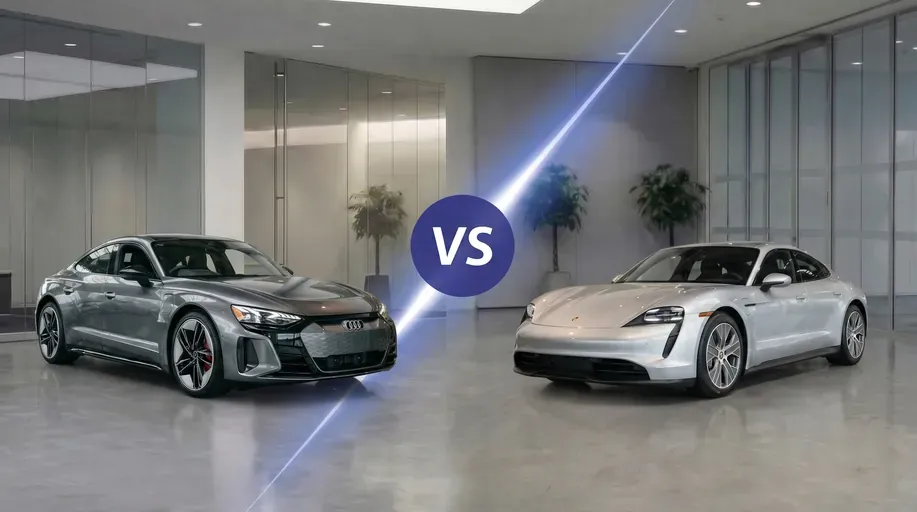
Audi e-tron GT vs. Porsche Taycan Comparison: Which luxury electric car should you choose? Find out everything about performance, real-world range, and read our final verdict.
Apr 14, 2026
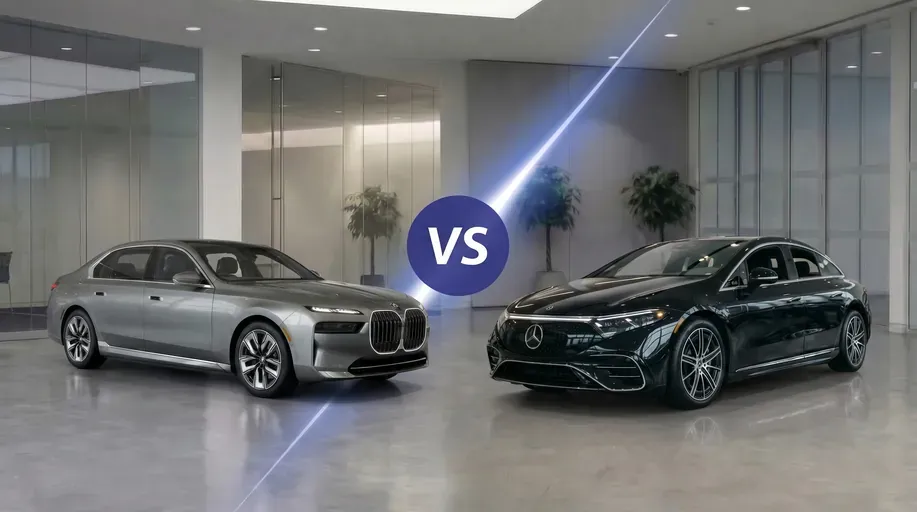
Detailed comparison of the BMW i7 and Mercedes-Benz EQS. Discover real-world range, luxury equipment details, and read our verdict. Which electric car to choose?
Apr 19, 2026