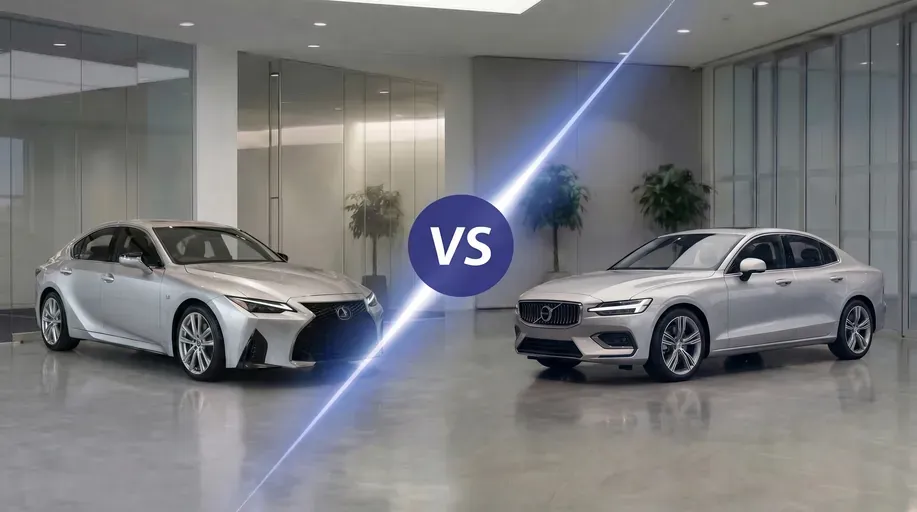
Car battle
Lexus IS vs. Volvo S60: Complete comparison 2026
Lexus IS vs Volvo S60: A detailed comparison of premium sedans. Discover the key differences in driving characteristics, equipment, and reliability before your purchase.
May 2, 2026
Articles
Car battle
Detailed comparison of the Audi A4 vs BMW 3 Series. Discover details about engines, equipment, and used car reliability. Our verdict will help you choose the right premium car.
May 4, 2026
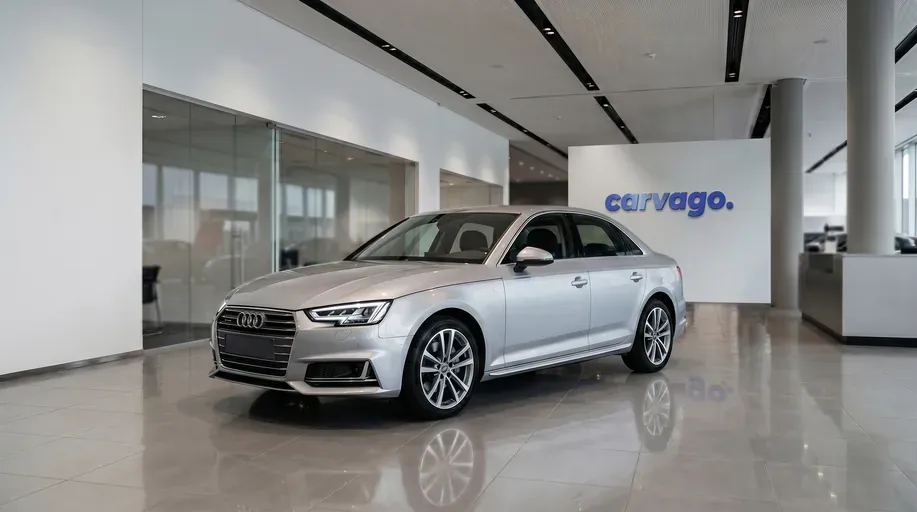
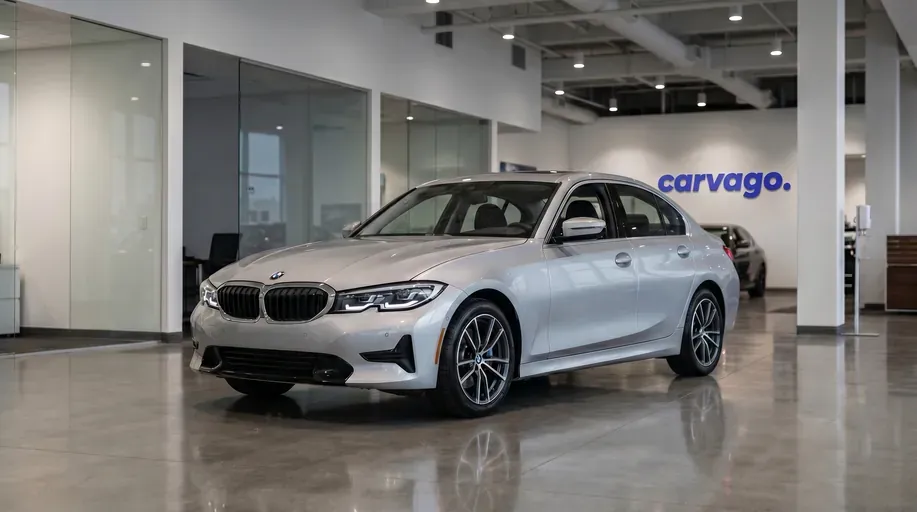
The Audi A4, also known on the market by its internal generation designation B9 and in the practical estate body style as the Avant, represents the benchmark of precise German engineering with a focus on timeless design and top-tier interior craftsmanship. In contrast, the BMW 3 Series, popularly nicknamed the "three" and hidden under the factory codes G20 for the sedan or G21 for the Touring estate, has long defined the absolute standards of sporty driving characteristics and driving pleasure in the premium mid-size class. Now we will take a detailed look at how these long-time rivals stand in a direct comparison and which of them represents a more tempting choice when buying on the market for nearly-new used cars.
When comparing external dimensions on the used car market – focusing on models roughly four years old, namely the currently widely represented Audi A4 (B9) and BMW 3 Series (G20/G21) generations – we encounter very interesting conceptual differences. In its facelifted versions, with a length of 4,762 mm, the Audi A4 is 49 mm longer than the rival BMW 3 Series, which measures 4,713 mm. The Ingolstadt representative is also 20 mm wider (1,847 mm compared to 1,827 mm for the BMW). In practice, this means the Audi feels slightly more robust and expansive on the road. Conversely, the BMW's advantage is slightly easier maneuverability in cramped urban spaces, while the Audi's wider and longer body may require a bit more caution when parking in tight garages. Differences in overall proportions thus highlight the choice between the Audi's elegant robustness and the BMW's more compactly tailored dynamics.
However, a much more significant difference can be found in the wheelbase, which is absolutely key for both interior space and overall driving characteristics. The BMW 3 Series boasts a generous wheelbase of 2,851 mm, which is a full 31 mm more than what the Audi A4 offers (2,820 mm). This technical detail clearly stems from the traditional Munich architecture, which favors rear-wheel drive and allows the front axle to be pushed as far forward as possible. The advantage of the longer wheelbase in the BMW is reflected not only in higher directional stability on the highway but also in shorter body overhangs. Audi, on the other hand, builds on a concept with a longitudinally mounted engine positioned further over the front axle, which logically extends the front overhang. You will thus be choosing between the BMW's more athletic and balanced stance on one hand and the confidence stemming from the Audi's robustly tailored overhangs on the other.
The height of both vehicles is very similar, although minor differences appear here as well. Depending on the version and body style, the BMW 3 Series rises to values between 1,435 and 1,445 mm, while the Audi A4 Sedan sits slightly lower to the ground with a height of around 1,428 mm. In the popular estate body variants (Avant for Audi and Touring for BMW), both cars meet in an almost identical range above 1,434 mm. The overall design direction shows that Audi engineers focused on visually lowering and widening the body for this model. As a result, the Audi makes sense primarily for those who prefer a visually wide car with a strong presence, while for the BMW, the primary factor is that fantastic wheelbase dictating unrivaled sporty proportions.
Here is an overview of key values for models roughly four years old (B9 generation for Audi and G20/G21 for BMW). Minor variations based on equipment, potential packages, or slight facelifts during the period are taken into account.
| Parameter | Audi A4 Sedan | BMW 3 Series Sedan | Audi A4 Estate | BMW 3 Series Estate |
|---|---|---|---|---|
| Width (mm) | 1842 - 1847 | 1827 | 1842 - 1847 | 1827 |
| Length (mm) | 4726 - 4762 | 4709 - 4713 | 4725 - 4762 | 4709 - 4713 |
| Height (mm) | 1427 - 1428 | 1435 - 1445 | 1434 - 1435 | 1440 - 1445 |
| Wheelbase (mm) | 2820 | 2851 | 2820 | 2851 |
Luggage space is often a deciding factor for both families and managers who spend a lot of time on the road. Although both the Audi A4 and the BMW 3 Series belong to the premium mid-size class, where driving dynamics and comfort usually take precedence, both models can offer very solid practicality. When choosing a roughly four-year-old used car, you will most often focus on the current generations – Audi A4 (B9) and BMW 3 Series (G20/G21). While the differences in boot volumes are not vast at first glance, they have their indisputable significance for a detailed comparison of family usability.
Looking at the classic three-box body styles, the BMW 3 Series Sedan offers a base volume of 480 liters, slightly surpassing the Audi A4 Sedan with its 460 liters. In practice, this difference provides space for a few extra suitcases, making the Munich model feel somewhat more usable overall. However, be careful when choosing plug-in hybrid versions, which you can find in abundance on the used car market. The battery placement in the BMW 320e model reduces the sedan's boot capacity to just 375 liters, which may already necessitate compromises when packing for a family.
Much more sought-after variants for family use on our market are the practical estate versions, where the battle is even closer. The BMW 3 Series Touring (Estate) provides a basic luggage compartment of 500 liters, while the Audi A4 Avant (Estate) follows closely with 495 liters. After folding down the rear seats, the BMW offers a maximum transport capacity of 1510 liters, while the Audi stays close behind with 1495 liters. In any case, both of these values are perfectly sufficient for a weekend shopping trip or a longer holiday. Alternative powertrains must be considered again – for the BMW Touring, the volume drops to 410 liters in the plug-in hybrid version (1420 liters when folded), while for the Audi in the g-tron (CNG) gas version, you will measure 415 liters at base and 1415 liters with the seats down.
| Parameter | Audi A4 Sedan | BMW 3 Series Sedan | Audi A4 Estate | BMW 3 Series Estate |
|---|---|---|---|---|
| Base volume (liters) | 460 | 480 | 495 | 500 |
| Max volume with seats folded down (liters) | - | - | 1495 | 1510 |
In terms of absolute numbers, BMW emerges as the slight favorite from this duel, although for the immensely popular estate versions, we are talking about a difference of only five liters in base volume. Both representatives will serve you without hesitation for everyday family travel, so the main decision will lie more in the choice of engine and accepting the smaller boot in hybrid variants.
Although the BMW 3 Series offers a slightly more spacious luggage compartment on paper for both the sedan and estate, both competitors from the German premium segment will easily satisfy the demands of everyday family transport.
When choosing a premium mid-size car intended for an active lifestyle, trailer weight plays a key role. For many buyers, towing capacity is the deciding factor, whether it's for hauling construction materials on the weekend or summer travel with a caravan. In approximately four-year-old used cars – namely the Audi A4 (B9 generation) and BMW 3 Series (G20/G21 generation) – we find interesting differences in this regard that can tip the scales one way or the other.
Both the base and maximum braked trailer weight values differ between the two rivals. The BMW 3 Series offers a very confident baseline – for most common engines, such as the 320i or 320d models, the standard braked trailer weight is a generous 1,600 to 1,800 kg. In contrast, the Audi A4 starts with a towing capacity between 1,400 and 1,500 kg for its base petrol (e.g., 35 TFSI) or weaker diesel versions (30 TDI). However, if you opt for more powerful engines, such as the six-cylinder Audi A4 50 TDI, the maximum braked trailer weight climbs up to 1,900 kg. Both manufacturers have set the maximum unbraked trailer weight for these model series at the European legislative limit of 750 kg.
When choosing, it is also necessary to pay attention to electrified versions, where limitations often occur. For example, the plug-in hybrid BMW 320e has its maximum braked trailer capacity reduced to a fixed 1,500 kg. Similar values (1,400–1,500 kg) for Audi's base and economical engines mean that while the car can easily handle a smaller trailer sufficient for weekend shopping or hauling garden waste, it may represent a compromise for a heavy family caravan. Conversely, more powerful versions from both brands provide plenty of reserve for towing a large caravan or worry-free boat transport.
Conclusion: If towing heavy trailers is a daily priority for you, the BMW 3 Series offers the assurance of more stable and higher values (1,600–1,800 kg) starting from mid-range trim levels and common four-cylinder engines. The Audi A4 only reaches similar or higher figures with more powerful two-liter engines (40 TDI) or top-of-the-line six-cylinders (50 TDI with an excellent 1,900 kg), which simply requires a slightly more careful selection of a specific unit on the used car market.
| Model and motorization | Braked weight of trailer (kg) | Unbraked weight of trailer (kg) |
|---|---|---|
| Audi A4 30 TDI (100 kW) | 1,500 | 750 |
| Audi A4 35 TFSI (110 kW) | 1,400 - 1,500 | 750 |
| Audi A4 40 TDI (140 - 150 kW) | 1,700 - 1,800 | 750 |
| Audi A4 50 TDI (210 kW) | 1,900 | 750 |
| BMW 320e (120 kW) | 1,500 | 750 |
| BMW 320i (135 kW) | 1,600 - 1,800 | 750 |
| BMW 320d (140 kW) | 1,600 - 1,800 | 750 |
Both of these premium carmakers approach their powertrain offerings with a different philosophy, although they share the advantage of a premium architecture with longitudinally mounted engines. While the Audi A4 (B9 generation) benefits from the advanced MLB Evo platform and offers a superbly sound-insulated range of mild-hybrid petrol and diesel engines – including the legendary 3.0 TDI V6s – the BMW 3 Series (G20/G21 generation) relies on the more dynamic Munich school. The CLAR architecture gives the Bimmer ideal weight distribution, primary rear-wheel drive, and, unlike the Audi, a strong lineup of plug-in hybrids (e.g., 320e and 330e versions). For those interested in an attractive four-year-old used car (around the 2022 model year), this means that at Audi, they will find a dominance of highway-tuned diesels and S tronic dual-clutch transmissions, while BMW will satisfy drivers seeking a sportier character with the silky eight-speed Steptronic torque-converter automatic. Both brands rely primarily on two-liter four-cylinder units as standard, but connoisseurs will also find what they're looking for thanks to the authoritative top-tier six-cylinders.
The engine range for the Audi A4 after the significant facelift (often referred to as B9.5, cars from roughly late 2019 to 2024) underwent a renaming and simplification of displacements. In the data from available production years, you can notice that the previous base engine, the 1.4 TFSI, is now completely missing from the newer models' lineup – it gradually disappeared from the price lists. Instead, the current petrol base for younger used cars is an efficient but detuned two-liter four-cylinder bearing the 35 TFSI designation. The centerpiece of used car sales for roughly four-year-old cars is, in any case, the economical 2.0 TDI diesel (from 30 TDI versions to the popular 40 TDI), which is considered an unsurpassed benchmark for long-distance highway travelers. The vast majority of these engines are paired with a seven-speed S tronic dual-clutch automatic transmission. If you're aiming for the absolute top of the standard range, the majestic 3.0 V6 diesel awaits you in the 45 TDI and 50 TDI variants. Unlike the weaker versions, this one works exclusively with an eight-speed Tiptronic torque-converter automatic and permanent quattro all-wheel drive.
| Engine | Fuel | Power (kW) | Torque (Nm) | Transmission |
|---|---|---|---|---|
| 35 TFSI (2.0) | Petrol (MHEV) | 110 | 270 | 6MT / 7-speed S tronic |
| 40 TFSI (2.0) | Petrol (MHEV) | 140 / 150 | 320 | 7-speed S tronic |
| 45 TFSI (2.0) | Petrol (MHEV) | 180 / 195 | 370 | 7-speed S tronic |
| 30 TDI (2.0) | Diesel | 100 | 320 | 7-speed S tronic |
| 35 TDI (2.0) | Diesel (MHEV) | 120 | 380 | 7-speed S tronic |
| 40 TDI (2.0) | Diesel (MHEV) | 140 / 150 | 400 | 7-speed S tronic |
| 45 TDI (3.0 V6) | Diesel | 170 | 500 | 8-speed Tiptronic |
| 50 TDI (3.0 V6) | Diesel (MHEV) | 210 | 600 | 8-speed Tiptronic |
The Bavarian competitor, the BMW 3 Series (current G20/G21 generation), brings slightly different dynamics and broader electrification options to the used car market. While for young, roughly four-year-old models, the market mainstream consists of similarly conceived petrol and diesel two-liters (very often available 320i and 320d variants), BMW stubbornly cherishes its tradition and has managed to keep petrol straight-sixes in the lineup – namely the M340i with an uncompromising 275 kW of power. A major trump card for those interested in low-emission mobility is BMW's strong support for plug-in hybrid systems represented by the 320e and 330e models, which you won't find at all in the competing Audi of the generations examined. A significant change in the market for younger used BMWs affected shifting – while it was previously possible to choose, classic manual transmissions have practically disappeared from the range (appearing only in the base 318d from the first years of production), and the role has been fully taken over by the phenomenal and reliable eight-speed Steptronic torque-converter automatic from ZF. This can be configured with either classic rear-wheel drive or the xDrive system.
| Engine | Fuel | Power (kW) | Torque (Nm) | Transmission |
|---|---|---|---|---|
| 318i (2.0) | Petrol | 115 | 250 | 8-speed Steptronic |
| 320i (2.0) | Petrol | 135 | 300 | 8-speed Steptronic |
| 330i (2.0) | Petrol | 190 | 400 | 8-speed Steptronic |
| M340i (3.0 R6) | Petrol (MHEV) | 275 | 500 | 8-speed Steptronic |
| 318d (2.0) | Diesel | 110 | 320 | 6MT / 8-speed Steptronic |
| 320d (2.0) | Diesel (MHEV) | 140 | 400 | 8-speed Steptronic |
| 330d (3.0 R6) | Diesel (MHEV) | 210 | 650 | 8-speed Steptronic |
| 320e (2.0 PHEV) | Plug-in Hybrid | 150 | 350 | 8-speed Steptronic |
| 330e (2.0 PHEV) | Plug-in Hybrid | 215 | 420 | 8-speed Steptronic |
While the Audi A4 attracts used car buyers with brilliantly dampened diesel four-cylinders and unsurpassed highway cruising comfort, the BMW 3 Series wields the unbeatable ZF automatic, a wider range of hybrids, and a typically sportier performance fully focused on the driver as its main weapon.
Choosing the right engine is absolutely crucial for long-term satisfaction with a car. Our recommendations are based on real-world experience, driving dynamics, actual fuel consumption, and mechanical reliability for used cars around four years old. Interestingly, both the Audi A4 (B9 generation facelift) and the BMW 3 Series (G20/G21 generation) saw a massive rollout of mild-hybrid (MHEV) technology for their popular two-liter engines during this period. This 48V or 12V system significantly smoothed out the operation of the often-dreaded start-stop system and contributed to unrivaled operating efficiency for both rivals. Although the market also offers top-tier six-cylinder engines, for the vast majority of buyers of used premium mid-size cars, the improved four-cylinder diesel engines make the most sense in terms of price, residual value, and reliability.
This two-liter turbodiesel (internally designated as EA288 evo) is the most sensible and popular choice in the A4 model hierarchy. Compared to the weaker 35 TDI version, it offers a noticeably better power reserve while maintaining practically identical running costs. Furthermore, in the 2020–2023 model years (B9 generation), the engine received more sophisticated mild-hybrid assistance.
The 320d engine, code-named B47, in the current G20 (sedan) and G21 (estate) generation is objectively one of the best four-cylinder diesel engines ever created by the automotive industry. While the much older N47 generations were sometimes haunted by timing chain issues, the modern B47 is an exceptionally reliable, refined, and mechanically robust unit.
Official fuel consumption figures provided by car manufacturers often become a hard-to-reach ideal in the real world, especially in the case of older or overly optimistic measurement methodologies. Actual operational efficiency depends primarily on driving style, route profile, and, last but not least, the actual load of the vehicle. To get the most accurate and objective picture possible, we relied on independent user data collected across Europe, primarily from the database of the crowdsourced portal Spritmonitor.de. Here, drivers have been carefully recording their refueling for a long time, allowing us to transparently compare how the most popular engines of roughly four-year-old used cars stand against each other – specifically premium representatives in the form of the Audi A4 (B9 generation) and the BMW 3 Series (G20/G21 generation).
Source:
| Model and engine | Average consumption (l/100 km) |
|---|---|
| Petrol engines | |
| Audi A4 35 TFSI 110 kW | 7.0 |
| BMW 320i 135 kW | 7.1 |
| Audi A4 40 TFSI 150 kW | 8.2 |
| Diesel engines | |
| Audi A4 35 TDI 120 kW | 5.6 |
| BMW 320d 140 kW | 5.8 |
| Audi A4 40 TDI 150 kW | 6.5 |
When interpreting these numbers, a long-term trend typical for the premium mid-size class becomes quite clear – two-liter diesel engines still represent an absolute masterpiece of efficiency here. The Bavarian 320d model, despite its very respectable 140 kW output, achieves excellent average fuel consumption, easily keeping pace with the Audi 35 TDI engine, which is slightly weaker on paper, while offering a subjectively more powerful feel in terms of everyday dynamics. On the other hand, a slight surprise is hidden in the table for petrol units. The popular myth that modern turbocharged two-liter petrol engines nowadays drive for almost as much as diesel falls apart with these heavier family cars. For the more powerful Audi A4 40 TFSI version, the average for real users commonly climbs above the eight-liter mark. On the other hand, the BMW 320i, also thanks to its excellently tuned engine management and superb eight-speed gearbox, stays at a surprisingly reasonable 7.1 l/100 km, making it an exceedingly rational choice.
For a typical used car buyer, this brings clear recommendations. If you are a driver who regularly swallows hundreds of highway kilometers and is looking for a long-distance cruiser for frequent business trips or weekend trips to the seaside, the diesel engine remains an unmatched tool for saving the household budget. The particularly refined unit in the 320d or the slightly more modest 35 TDI will fulfill exactly what you expect from it. However, the situation is completely opposite for drivers who spend the vast majority of their time in the city and on shorter suburban routes. Here, petrol engines make clear sense – in such a regime, complex diesels with their DPF filters would suffer and actually lose all their consumption advantage through more expensive future servicing.
In the end, it can be said that fuel consumption will play a major role in deciding between the Audi A4 and the BMW 3 Series more when choosing your ideal engine, rather than as a direct deciding argument between these two rivals. Both manufacturers possess highly advanced technology, and for comparably powerful versions, the differences on the trip computer are at most in the range of tenths of a liter. Therefore, preferences regarding design, drive layout (front-wheel drive for Audi versus rear-wheel drive for BMW), or affinity for a specific brand will have a much greater say in the final selection.
Both cars have long represented the most desirable options in the premium mid-size class. If we focus on roughly four-year-old cars (manufactured around 2022), we are comparing the popular Audi A4 generation (B9 after a significant facelift) and the BMW 3 Series (G20/G21 generation, both pre- and post-LCI facelift). BMW benefits from an overall newer basic architecture, while Audi offers proven and well-established technology on the market. This is logically reflected in used car prices, where BMW holds a slightly higher value.
Prices naturally depend on mileage, engine choice, and the attractiveness of the equipment (S line for Audi vs. M Sport for BMW). The following table shows common market prices for cars from approximately 2022 with a mileage of around 60,000 – 100,000 km on the Czech market.
| Category / Engine | Audi A4 (B9 facelift) | BMW 3 Series (G20/G21) |
|---|---|---|
| Base models (e.g., 35 TFSI, 318i) | from €23,000 | from €27,000 |
| Popular mid-range (diesels) (e.g., 40 TDI, 320d) | €27,000 – €31,000 | €31,000 – €35,000 |
| Powerful engines and 4x4 (e.g., 45 TFSI, 330i xDrive) | €31,000 – €35,000 | €35,000 – €41,000+ |
| Six-cylinders and sports versions (S4, M340i) | approx. €45,000 | €49,000 – €57,000 |
(The prices listed are approximate for cars in very good condition with a documented service history).
When buying a premium mid-size car, it is necessary to keep in mind that although the purchase price has dropped by thousands compared to a new car, the prices of spare parts and labor rates in authorized service centers remain "premium."
Costs for common consumables such as brakes, shock absorbers, or tires are at very similar levels for both rivals.
While a four-year-old Audi A4 impresses with a more favorable purchase price due to the longer life cycle of its generation, the BMW 3 Series requires a slightly deeper reach into your pocket, which it compensates for with slower depreciation and a more modern technological foundation.
Both premium models, the Audi A4 and the BMW 3 Series, boast a maximum five-star rating in safety tests by the independent organization Euro NCAP. When choosing a used car, however, it is crucial to put these results into the context of the time when the tests were actually performed.
Euro NCAP methodology and testing protocols constantly evolve and become significantly stricter over the years. Therefore, percentages obtained in different years cannot be directly compared. Modern protocols include more complex simulations of frontal and side impacts, stricter cyclist detection tests, and complicated intersection scenarios that older cars did not encounter at all during their tests. For this reason, the validity of the rating officially expires after about six to seven years.
The Audi A4 (B9 generation) underwent Euro NCAP crash tests in 2015. At the time, the car excelled with its rigid body and standard automatic emergency braking system (Audi pre-sense city), which monitored vehicles and pedestrians. However, the certification of this five-star result has formally expired due to the age of the test. It is worth noting that requirements for assistance systems and the protection of vulnerable road users were simply not as demanding in 2015.
The BMW 3 Series (G20 generation) was tested four years later, in 2019. The car thus had to face significantly tougher criteria. In this more modern context, a score of 97% for adult occupant protection is an extraordinary achievement, placing the Bavarian sedan at the top of its class. Furthermore, BMW benefited from a more sophisticated active hood and more advanced autonomous braking systems that react in detail to cyclists as well, which was positively reflected in the excellent rating for the protection of vulnerable road users.
In conclusion, both cars offer highly reliable occupant protection. However, the BMW 3 Series benefits from more recent engineering development and, in the market for 4-year-old used cars, represents a noticeably more modern and comprehensive safety package certified according to much stricter standards.
| Parameter | Audi A4 | BMW 3 Series |
|---|---|---|
| Year of testing | 2015 | 2019 |
| Adult occupant protection | 89% | 97% |
| Child occupant protection | 87% | 87% |
| Vulnerable road user protection | 75% | 87% |
| Safety assist systems | 75% | 76% |
Although both cars are structurally above-average in safety, the BMW 3 Series passed significantly stricter tests from 2019 and, with a phenomenal score of 97% for adult protection, provides a more modern and reliably tested level of safety for used cars.
In addition to standard equipment, each model offers several unique features that can be decisive for the customer and clearly demonstrate the different approaches of both premium brands to detail and everyday use.
First-class interior build quality and materials used
Excellent and exceptionally clear Audi Virtual Cockpit digital instrument cluster
Very quiet and comfortable chassis ideal for long highway journeys
Quattro all-wheel drive providing maximum traction and confidence in poor conditions
Subtle and timeless exterior design that ages slowly even after years
Less engaging and rather sterile driving experience compared to its Munich rival
Slightly less legroom for rear-seat passengers
Occasional hesitation of the seven-speed S tronic dual-clutch transmission when crawling in traffic jams
Front-engine layout brings more noticeable understeer in base versions (with front-wheel drive)
The Audi A4 is the perfect choice for drivers who demand maximum refinement, top-notch craftsmanship, and seamless highway comfort from their car. It will appeal to rational buyers who prefer understated premium elegance and unshakable stability over sporty antics on winding backroads.
Top-tier driving dynamics thanks to an agile chassis and excellent weight distribution
Phenomenal eight-speed ZF automatic transmission with lightning-fast and smooth responses
Exceptionally intuitive iDrive multimedia system with a physical rotary controller
Highly efficient power units combining dynamics with low real-world fuel consumption
Slightly better longitudinal space for adult passengers in the rear seats
Stiffer suspension tuning, which reduces comfort on broken roads in versions with the M Sport package
The digital instrument cluster (Live Cockpit) is less clear and harder to configure than Audi's
Higher purchase prices for used cars with more desirable engines and extensive optional equipment
Rougher operation of base four-cylinder diesel engines when cold
The BMW 3 Series (G20 generation) has long been considered the benchmark for driving experience in the mid-size class and is tailored for those who want to actively enjoy driving. It offers an unrivaled connection between machine and driver, excellent ergonomics, and modern technology, albeit at the cost of slight compromises in overall ride comfort on poor roads.
Based on our own statistics, service reports, owner feedback, and results from comprehensive car inspections, we have compiled an overview of the most common problems that buyers of approximately four-year-old used cars of these models should watch out for.
Audi A4 generation B9 (post-facelift) is considered a very solid and sturdily built car, yet specific defects appear that are worth checking thoroughly during selection.
BMW 3 Series (generation G20/G21) pleases with excellent workmanship and robust power units, however, even this popular premium model has its weak points, especially in the area of electronics and specific engine parts.
When buying a used car, a thorough inspection is key. Here are some specific points to focus on for these two popular premium models. A professional used car inspection before making a final decision can save you a lot of worry and unexpected expenses for future repairs.
The BMW 3 Series has long been considered more engaging for drivers thanks to its rear-wheel drive and excellent weight balance, which ensures great handling in corners. The Audi A4, on the other hand, excels with top-tier stability and absolute confidence in poor grip conditions, especially when equipped with the famous quattro all-wheel drive. If you're looking for a sporty experience behind the wheel, BMW wins; for a calm and safe ride, Audi is the ideal choice.
For roughly four-year-old used cars (B9 and G20 generations), the interior dimensions of both cars are very similar and offer plenty of comfort for four adult passengers. The trunk volume for the sedan body style is an identical 480 liters in both cases. In the more practical station wagon versions (Avant and Touring), you'll find a volume of 495 liters in the Audi and 500 liters in the BMW, so the space differences are completely negligible in everyday life.
Both manufacturers offer exceptionally efficient 2.0-liter diesel engines (2.0 TDI and 320d), with long-term real-world fuel consumption around 5 to 6 liters per 100 kilometers. In real-world driving, the BMW is often slightly more economical thanks to its excellent aerodynamics and perfectly tuned eight-speed ZF automatic transmission. However, it's important to keep in mind that hourly service rates and spare parts prices are comparably high for both premium brands.
In the Audi A4, minor infotainment software bugs can occasionally occur, and at higher mileages, wear on the S tronic dual-clutch transmission. The BMW 3 Series is considered mechanically very robust, but it is recommended to shorten oil change intervals to 15,000 km and to thoroughly check the condition of the adaptive suspension when buying.
The iDrive system in the BMW 3 Series is often rated by experts as the most intuitive on the market, mainly thanks to the retention of the practical rotary controller on the center console. The Audi A4 relies on the MMI system, which in newer model years uses a large touchscreen exclusively, which can be more distracting for the driver while driving. Digital instrument clusters are top-notch in both cars, but Audi's "Virtual Cockpit" offers slightly clearer graphics and better map integration.
Although both of these premium mid-size representatives are a top choice on the used car market at around four years of age, each appeals to a different type of driver. The Audi A4 B9 generation excels with unrivaled highway comfort, precise interior craftsmanship led by the excellent Virtual Cockpit system, and represents an ideal choice for those looking for an exceptionally quiet and elegant mile-muncher with a slightly more favorable purchase price. In contrast, the BMW 3 Series (G20/G21) clearly dominates with its phenomenal driving dynamics, perfect interplay between the engine and the eight-speed ZF transmission, and intuitive iDrive controls, making it the perfect partner for individuals seeking an active driving experience. The final decision thus depends entirely on your priorities – whether you prefer maximum travel tranquility and the unshakable confidence of the four rings, or sacrifice some ride suppleness for unrivaled Bavarian driving pleasure.
Sources: ADAC, aktualne.cz, lidovky.cz, elektromobil.cz, techfocus.cz, retroauta.cz
This article was prepared using artificial intelligence tools. The section guarantor is Petr Dušek.
Lexus IS vs Volvo S60: A detailed comparison of premium sedans. Discover the key differences in driving characteristics, equipment, and reliability before your purchase.
May 2, 2026
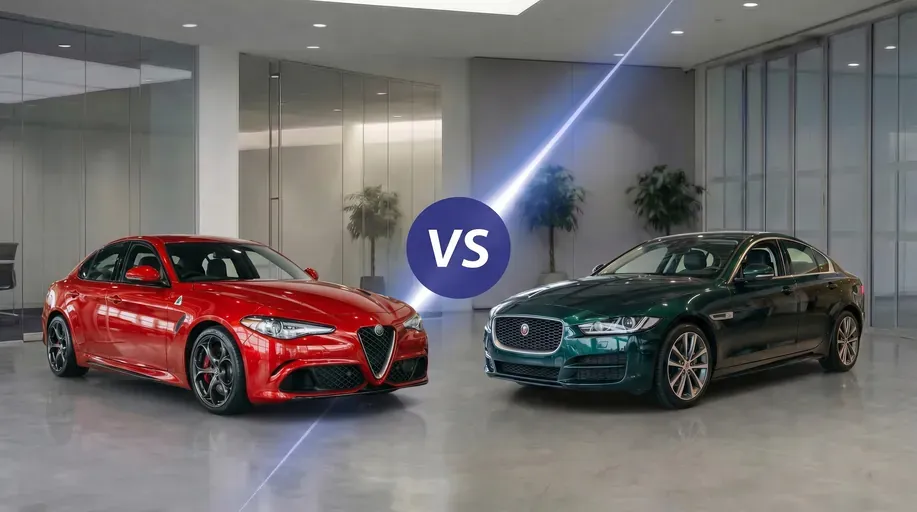
Detailed comparison of Alfa Romeo Giulia vs Jaguar XE. Discover real-world experiences, differences in driving characteristics, and the verdict on which sedan to choose.
Apr 23, 2026
Detailed comparison of Renault Talisman vs. Toyota Camry. Discover the real differences in reliability, equipment, and fuel consumption. Find out which car to choose based on our verdict.
Apr 8, 2026